Get the latest garden guides in your inbox →
Gardening Latest
  • General Gardening
  • Lawn Care
  • Plant Care
  • Composting
  • Soil Health
  • Backyard
  • Garden Muse Magazine
  • General Gardening
  • Lawn Care
  • Plant Care
  • Composting
  • Soil Health
  • Backyard
  • Garden Muse Magazine
  • News
  • Gardening Calendar
  • Garden Structures
  • Vegetable Garden
  • Vertical Garden
  • Raised Beds
  • Hydroponics
  • General Equipment
  • Community Gardens
Garden Themes
  • Spiritual Garden
  • Hydroseeding
  • Seeding and Laying Sod
  • Artificial Grass
  • Lawn Care Equipment
  • Plants
  • Trees
  • Planting Tools
  • Composting Basics
  • Fertilizer
  • Alternative Growing Mediums
  • Front Yard
  • Backyard Activities
  • Landscaping
Gardening Latest

Explore by state

Which state is your garden in?

Currently viewing Michigan

All states

Northeast

  • Connecticut —
  • Delaware 28
  • Maine —
  • Maryland 14
  • Massachusetts 31
  • New Hampshire —
  • New Jersey 15
  • New York 24
  • Pennsylvania 24
  • Rhode Island —
  • Vermont —

Southeast

  • Alabama 14
  • Arkansas —
  • Florida 14
  • Georgia 15
  • Kentucky 28
  • Louisiana 13
  • Mississippi —
  • North Carolina 13
  • South Carolina 27
  • Tennessee 11
  • Virginia 13
  • West Virginia —

Midwest

  • Illinois 13
  • Indiana 16
  • Iowa 27
  • Kansas —
  • Michigan 15
  • Minnesota 13
  • Missouri 13
  • Nebraska —
  • North Dakota —
  • Ohio 15
  • South Dakota —
  • Wisconsin 29

Southwest

  • Arizona 14
  • Colorado —
  • Nevada —
  • New Mexico —
  • Oklahoma —
  • Texas 13
  • Utah —

West

  • Alaska —
  • California 14
  • Hawaii —
  • Idaho —
  • Montana —
  • Oregon —
  • Washington —
  • Wyoming —

No state matches that search.

Site menu

Gardening Latest
  • General Gardening
    • News
    • Gardening Calendar
    • Garden Structures
    • Vegetable Garden
    • Vertical Garden
    • Raised Beds
    • Hydroponics
    • General Equipment
    • Community Gardens
    Garden Themes
    • Spiritual Garden
  • Lawn Care
    • Hydroseeding
    • Seeding and Laying Sod
    • Artificial Grass
    • Lawn Care Equipment
  • Plant Care
    • Plants
    • Trees
    • Planting Tools
  • Composting
    • Composting Basics
  • Soil Health
    • Fertilizer
    • Alternative Growing Mediums
  • Backyard
    • Front Yard
    • Backyard Activities
    • Landscaping
  • Garden Muse Magazine

Explore

  • About GardeningLatest.com
  • Contact Us

Get the latest from the garden

New guides on lawn care, plants and backyard projects, sent when they go up.

Subscribe →

Follow

  • Facebook
  • X
  • Pinterest
  • YouTube
Michigan Gardening

Hickory Tussock Caterpillars Sting Plenty of Michigan Gardeners, and Here’s What to Do Right Away

If a fuzzy white caterpillar with black tufts brushes your skin, the itchy or burning rash that follows usually comes…

NL

By Nora Lindqvist

November 24, 2026 · 6 min read

Hickory Tussock Caterpillars Sting Plenty of Michigan Gardeners, and Here’s What to Do Right Away
Hickory Tussock Caterpillars Sting Plenty of Michigan Gardeners, and Here's What to Do Right Away

If a fuzzy white caterpillar with black tufts brushes your skin, the itchy or burning rash that follows usually comes from tiny loose hairs, and quick first aid can help. The steps are simple: use a tool to move the caterpillar, lift hairs with tape, wash gently, and cool the skin with wrapped ice.

Some situations, like hairs in an eye or breathing trouble, need medical help instead. Here is what to do, in order, the next time one lands on you in the yard.

At a glance

Where
Michigan Gardening
Hardiness zone
6 −10 to 0°F
Read
6 minutes
Published
November 24, 2026

How the hairs can irritate skin

How the hairs can irritate skin
© Natural Sewickley

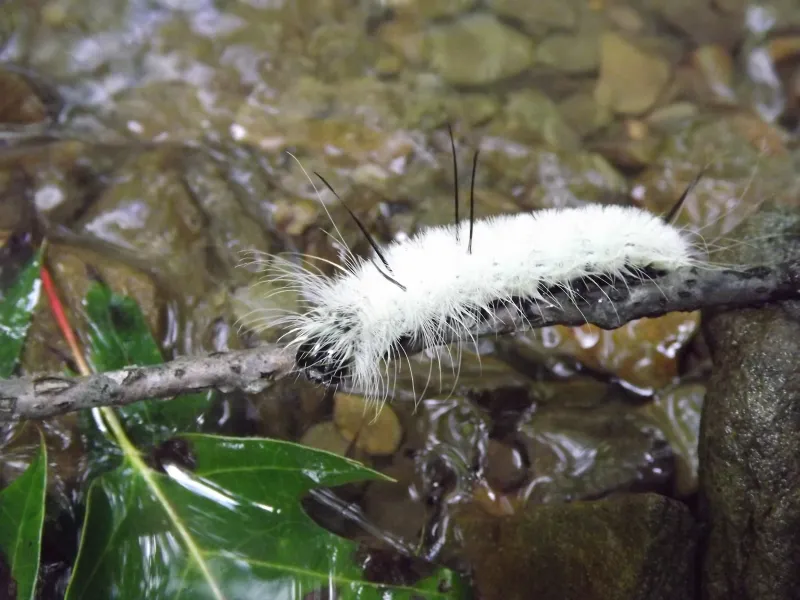
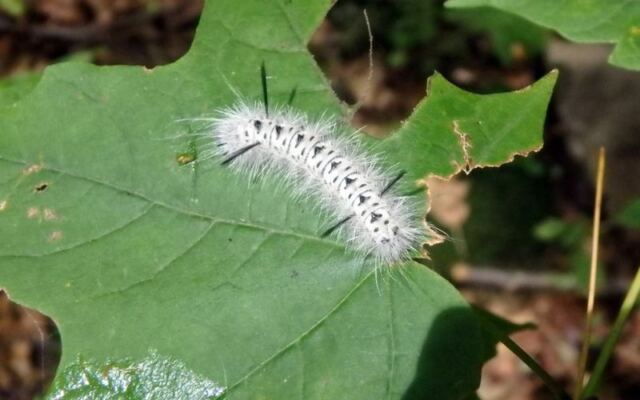
The hickory tussock caterpillar, Lophocampa caryae, is covered in soft-looking white and black hairs. Those hairs can detach, and UMass Extension notes that touching the caterpillar or its cocoon can leave hairs on the skin, where they may irritate it.

People often say these caterpillars “sting,” but that is shorthand. The problem comes from loose hairs lodging in skin, not from a stinger that injects venom the way a bee or wasp does.

That difference matters because the first-aid steps focus on removing hairs rather than treating a venom injection.

Timing gives helpful context. Mature caterpillars may be present from July through September, and in fall they may wander across landscapes, looking for places to settle in.

That does not mean every sighting or every encounter happens in those months.

It also does not tell us how many Michigan gardeners run into them. Seasonal presence is documented, but how often people are exposed is not established.

According to Penn State Extension, contact generally leads to a localized rash and itching, which is why a calm, step-by-step response makes sense.

Move the caterpillar without touching it
Move the caterpillar without touching it
© Rosslyn Redux

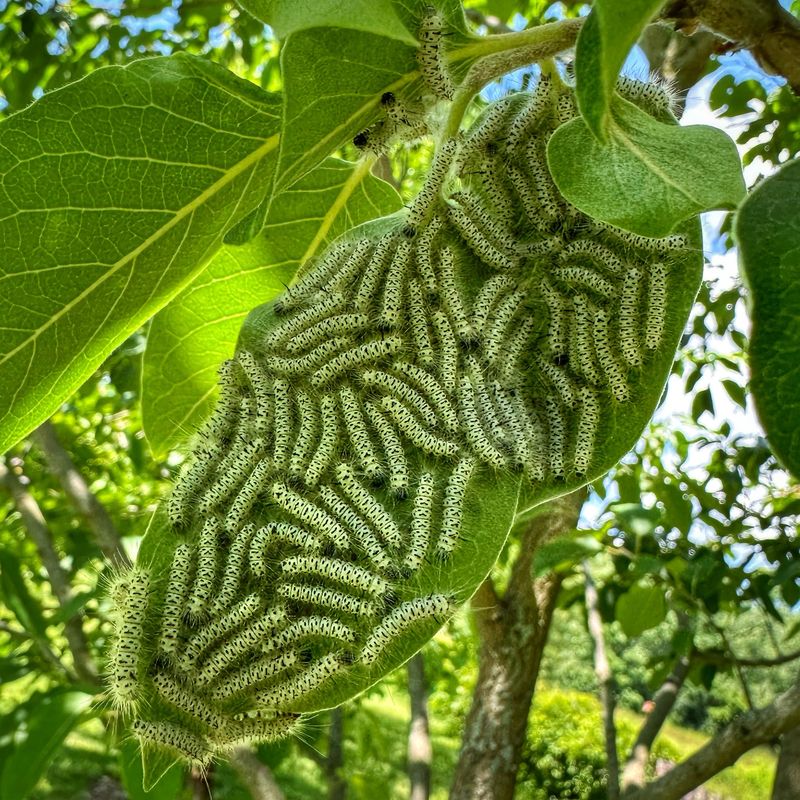
Stopping further contact comes first. If a caterpillar is still on your arm, shirt, or a family member, lift it off with a tool such as a stick, a folded piece of paper, or tweezers, as poison control guidance advises, instead of using bare fingers.

Resist the urge to swat or brush it away with your hand. Doing that can press more hairs into your skin and spread them across your palm and fingers.

Most skin-only contact stays a skin problem, but a few situations call for different handling.

You also do not need to pick one up to figure out what it is. A photo taken from a short distance works well, and you can compare it with extension identification pages later.

Keep children and pets back while you deal with it.

Once the caterpillar is gone, move to a spot where you can see your skin clearly. The tape and washing steps come next, and they go best when you are not rushed.

Lift hairs with tape, then wash

Lift hairs with tape, then wash
© Reddit

Hairs left on the skin keep irritating it, so lift them before anything else. Press a piece of sticky tape gently onto the affected area, then peel it away.

Repeat with fresh pieces, as poison control guidance describes.

Use light pressure. Pressing and lifting is the goal, not dragging the tape back and forth.

After the tape, wash the area with soap and water. Pat dry with a clean towel rather than scrubbing.

Do not rub the skin at any point. Rubbing can push hairs deeper and make the itch and burn worse.

This sequence is only for hairs on skin. If anything may have reached an eye, tape and soap are not the answer, and the medical help section below explains what to do instead.

Also check places hairs may hide, like a collar, waistband, or the backs of your hands, and change clothes if they touched the caterpillar.

Cool the area and ease itching carefully
Cool the area and ease itching carefully
© A-Z Animals

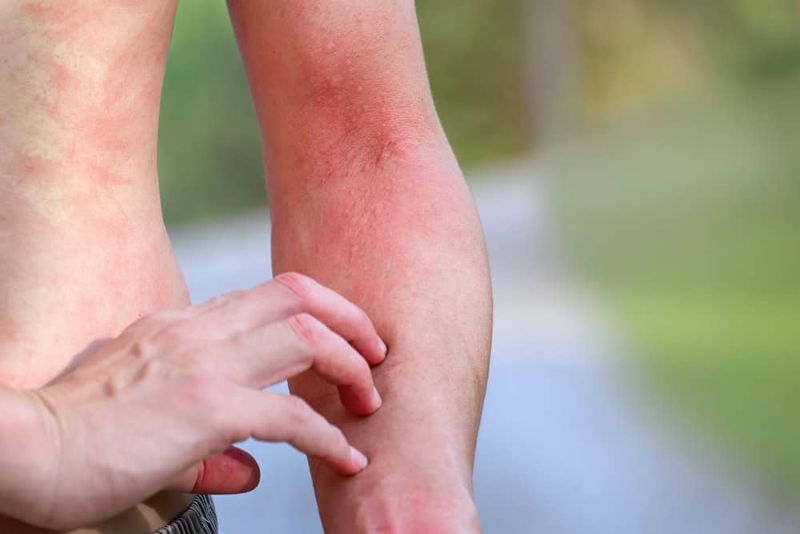
After the hairs are lifted and the skin is washed, cooling can take the edge off the burn. MedlinePlus advises wrapped ice for 10 minutes on and 10 minutes off.

Wrap the ice in a cloth or towel first. Never place ice directly on the skin, since that can cause its own injury.

For itching, poison control guidance lists an antihistamine or hydrocortisone cream as possible options. Follow the directions on the product label, and ask a pharmacist, clinician, or Poison Control for advice that fits your situation, especially for children or if you take other medicines.

These comfort measures are not a stand-in for urgent care. If severe symptoms appear, such as trouble breathing, stop home treatment and get help right away.

Know when to get medical help

Know when to get medical help
© The oak processionary

Most skin-only contact stays a skin problem, but a few situations call for different handling. If hairs may have gotten into an eye, rinse it promptly with water and get medical advice.

Do not treat it like a routine skin rash, and do not rub the eye.

If you breathe in caterpillar hairs, seek medical advice. MedlinePlus advises medical care after inhaling them, even if you feel fine at first.

If hairs may have entered the mouth or been swallowed, contact Poison Control at 1-800-222-1222 or a clinician. They can give advice that fits the exact situation, including the person’s age and symptoms.

Call 911 for trouble breathing, collapse, or seizure. These are not typical results of a hickory tussock caterpillar encounter, but they are emergencies if they happen, and home treatment should never delay urgent care.

Poison control resources, including this caterpillar guidance, also encourage individualized advice when you are unsure. Calling to ask is always reasonable.

Watch how the skin reaction changes
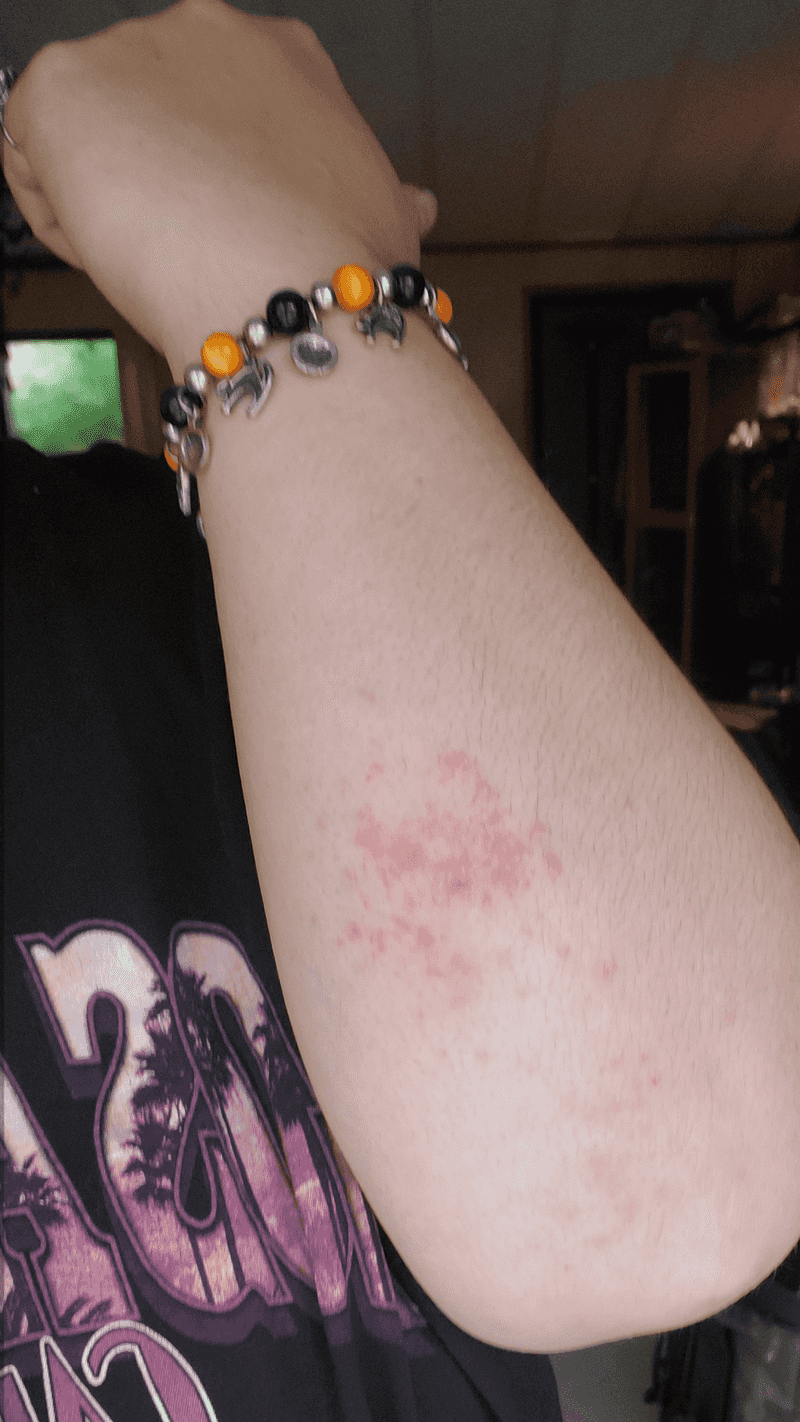
Watch how the skin reaction changes
© Reddit

A localized rash and itching are the usual skin reaction, according to Penn State Extension. Many people see it improve within up to 48 hours, though that is a general expectation, not a guarantee for every person or exposure.

Keep an eye on the area over the next day or two. A spot that slowly calms down fits the typical pattern.

Get medical advice if symptoms persist, worsen, or seem unusual for a simple rash. Spreading redness, growing discomfort, or anything that just feels wrong are good reasons to check in with a clinician.

For case-specific guidance, U.S. Poison Control is available at 1-800-222-1222.

Their staff can help sort out whether home care is enough.

Try not to compare this caterpillar with unrelated species. Severe poisoning syndromes linked to other caterpillars are a different matter, and the usual outcome here is skin irritation.

Still, poison control information recognizes that rare severe reactions can occur with caterpillars generally, so serious symptoms deserve attention.

Cover up for yard work

Cover up for yard work
© In Harmony Sustainable Landscapes

Raking leaves or trimming shrubs in late summer and fall puts your hands and forearms close to where caterpillars crawl. Gloves and long sleeves can reduce contact, as Ask Extension guidance suggests, though they are no guarantee against exposure.

Gloves do not make it safe to pick a caterpillar up. Keep using a tool to move one, and take a quick look at your sleeves and cuffs before heading inside.

The timing helps you plan. UMass Extension describes mature caterpillars as possibly present from July through September and wandering in landscapes in fall.

That is a reason for a little care, not a sign that encounters are common in Michigan.

Keep a roll of tape near the garden gloves. A glance at your arms and a quick tape check can turn a surprise into a small chore, and no one needs to be nervous about their own backyard.

Share this story

NL

Written by

Nora Lindqvist

More from Nora Lindqvist →

About Gardening Latest

Gardening Latest provides in-depth guides to maintaining and enhancing your garden and backyard. Learn how to make the most of the space you have and create a beautiful garden.

More about us →

Latest stories

  • New Jersey GardeningHere’s How New Jersey Gardeners Should Treat a Saddleback Caterpillar Sting the Moment It Happens

    Here’s How New Jersey Gardeners Should Treat a Saddleback Caterpillar Sting the Moment It Happens

    4 min ago
  • North Carolina GardeningCoyotes Are Howling Outside North Carolina Homes After Dark This Season, and There’s a Reason

    Coyotes Are Howling Outside North Carolina Homes After Dark This Season, and There’s a Reason

    10 min ago
  • Michigan GardeningRed Foxes Get Busier in Michigan Yards During Winter, and Here’s What They’re Actually Doing

    Red Foxes Get Busier in Michigan Yards During Winter, and Here’s What They’re Actually Doing

    15 min ago
  • Massachusetts GardeningAn Opossum Near Your Massachusetts Home in Winter Has a Reason, and Here’s What to Do

    An Opossum Near Your Massachusetts Home in Winter Has a Reason, and Here’s What to Do

    20 min ago
  • California GardeningHearing Coyotes Yip and Howl Around Your California Home After Dark? The Season Explains a Lot

    Hearing Coyotes Yip and Howl Around Your California Home After Dark? The Season Explains a Lot

    25 min ago

Gardening by state

Stories for your state, and the hardiness zone most of it gardens in.

Keep exploring

Read next

All Michigan Gardening →
Michigan GardeningRed Foxes Get Busier in Michigan Yards During Winter, and Here’s What They’re Actually Doing
Michigan Gardening

Red Foxes Get Busier in Michigan Yards During Winter, and Here’s What They’re Actually Doing

15 min ago
Michigan GardeningMichigan’s Only Venomous Snake Has Company: a Thumb-Sized Shrew Living in Your Yard
Michigan Gardening

Michigan’s Only Venomous Snake Has Company: a Thumb-Sized Shrew Living in Your Yard

6 hr ago
Michigan GardeningThe Massasauga Isn’t The Only Venomous Creature In Michigan Yards, So Here’s How To Recognize Each One
Michigan Gardening

The Massasauga Isn’t The Only Venomous Creature In Michigan Yards, So Here’s How To Recognize Each One

9 hr ago

More from Michigan Gardening

  • Why Some Michigan Towns Are Overrun With Black Squirrels While Others Never See One

    Nov 23
  • Is Putting Out Corn for Deer in Your Michigan Yard Actually Legal This Winter

    Nov 22
Back to top

Leave a response Cancel

Your email address stays private. Required fields are marked with an asterisk.

Gardening Latest

In-depth guides to maintaining and enhancing your garden and backyard: how to make the most of the space you have, and how to make it beautiful.

  • Facebook
  • X
  • Pinterest
  • YouTube

We may earn a portion of sales from products or services that are purchased through our site as part of our affiliate partnerships with retailers.

Explore

  • About GardeningLatest.com
  • Contact Us
  • Terms and Conditions
  • Privacy
  • Editorial Note:
  • FTC Disclosure

Newsletter

New garden guides and seasonal tips, straight to your inbox.

We’ll email you a link to confirm. Unsubscribe any time.

Almost there! Check your inbox and tap the link to confirm.

© 2026 Gardening Latest. All rights reserved.

Back to top