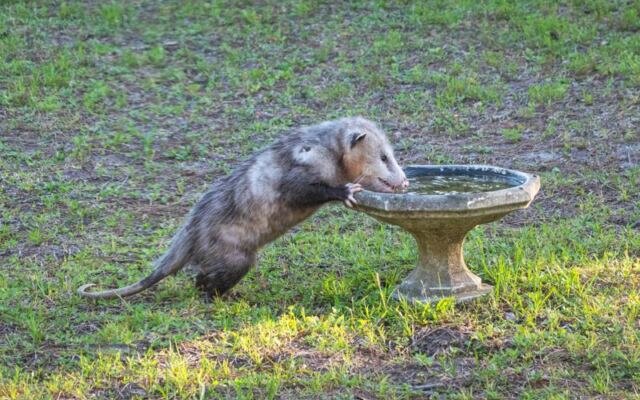
If you spot an opossum near your Missouri home this winter, the short answer is that it is a normal sight, and you usually do not need to do anything dramatic. Opossums stay active in winter, and a home can offer food or shelter that makes a yard worth visiting.
A few calm steps can keep your property less appealing and keep both you and the animal safe. Here is what to do, and what to avoid, before you act.
A winter sighting can be normal
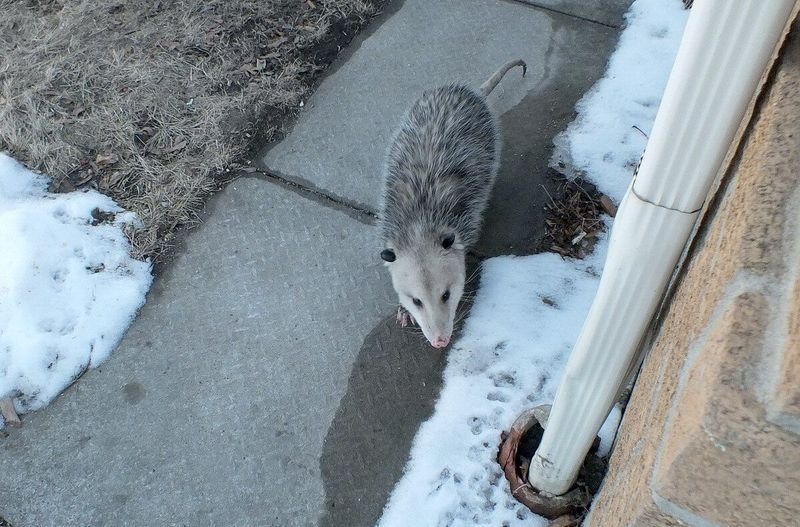
Opossums are common across Missouri, including in neighborhoods, and they are mostly nocturnal. According to the Missouri Department of Conservation field guide, they stay active through the winter.
They do not hibernate.
Cold weather does change how much they move around. During severe cold, an opossum may stay in a den for several days and wait it out.
That means you might see one on a mild night and none at all during a hard freeze.
Researchers who study how opossums cope with temperate climates describe this kind of flexible, weather-driven behavior in a peer-reviewed study on their adaptation to cooler regions. Being active in winter is part of how the species gets by, not a sign that something has gone wrong.
Seeing one in winter, even earlier in the evening than you expected, does not show that the animal is sick or acting abnormally. Opossums often look slow, pale, or a bit scruffy, and they may hiss or open their mouths wide when startled.
That is a normal defensive display.
Winter nights can be hard on a small animal with a bare tail and ears, so an opossum may be searching for a meal when conditions allow. Without other clear signs of trouble, such as obvious injury, a passing opossum is simply a neighbor going about its night.
A home can offer food or shelter
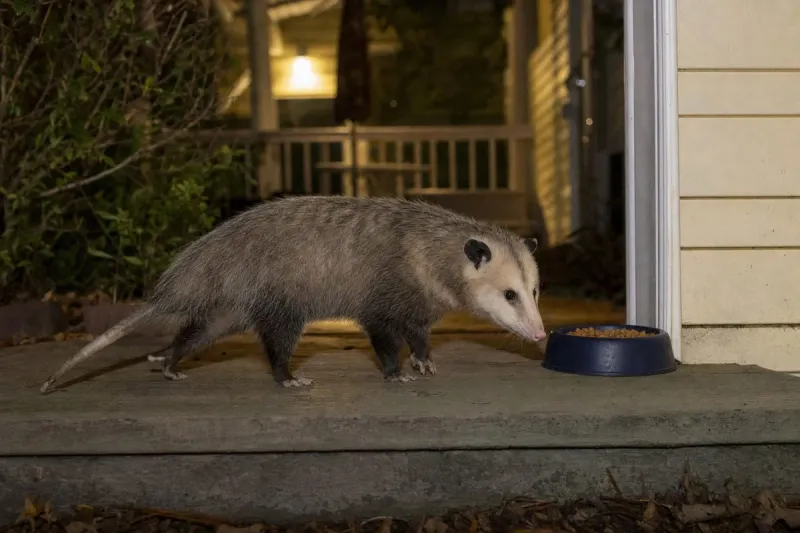
Homes can be handy to wildlife. The Missouri Department of Conservation’s opossum control guidance points to unsecured garbage, outdoor pet food, birdseed, and animal feed as things that can draw them in.
Sheltered spots such as spaces under buildings can also serve as dens.
Opossums are not picky eaters. Their varied diet and use of cozy hiding places are part of why they do well around people, as described in the conservation agency’s Awesome Opossums article.
Still, food and shelter are possibilities, not answers. Seeing an opossum by your porch does not tell you why that particular animal came by.
It may be passing through on a regular route, or it may have found something useful.
The good news is that you can check for these things yourself. Walk your yard in daylight and look for open bins, bowls left out, spilled seed, and dark gaps under decks or sheds.
What you find gives you a simple list of things to fix, which the next sections cover.
Start by removing easy food sources
Most of the time, the best first move is to leave a passing opossum alone. It will usually move on by itself.
Give it space, keep pets inside, and let it go on its way.
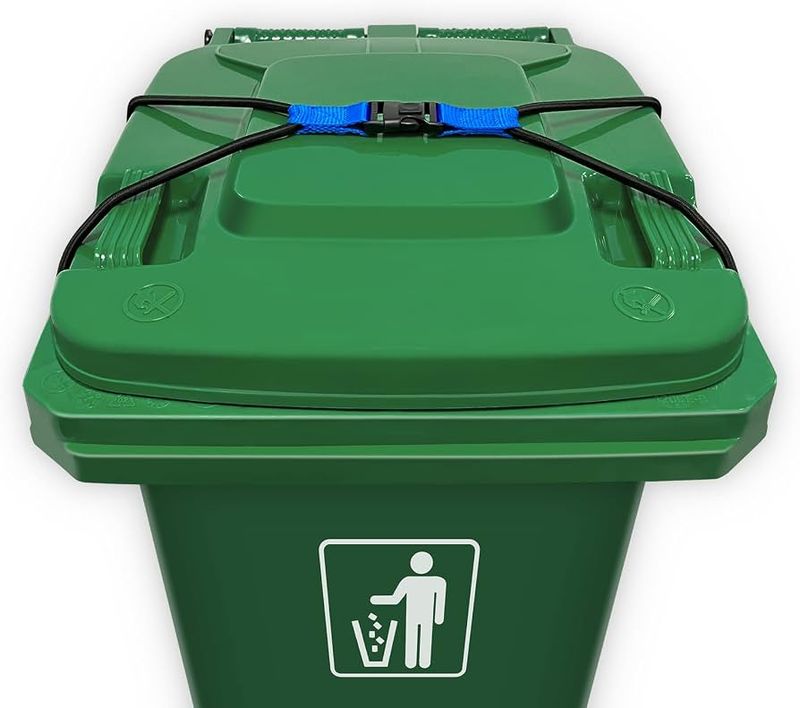
Then make the yard less rewarding. The Missouri Department of Conservation recommends securing garbage, and the agency also advises securing birdseed and animal feed.
A few routine habits go a long way. Use trash cans with tight lids, and put them out the morning of pickup instead of the night before.
Bring pet bowls indoors after meals, and feed pets on a schedule instead of leaving food out overnight.
Sweep up spilled birdseed under feeders, and store seed and feed in containers with secure lids. Pick up fallen fruit and leftovers from outdoor grilling or picnics.
The agency’s Awesome Opossums article also describes how readily opossums use food people leave out.
These steps lower the appeal of your property, but they do not guarantee that an opossum will never come back. Other animals may also pass through, and a yard that is a bit less interesting is the realistic goal.
Treat this as simple housekeeping rather than a battle.
Check beneath buildings before closing an opening
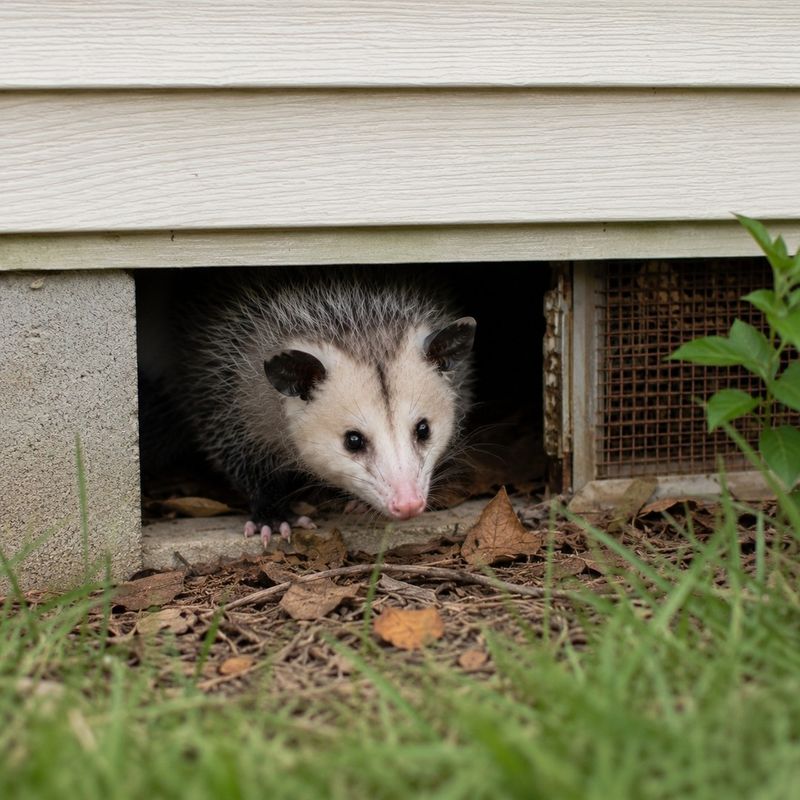
Sometimes an opossum is not just walking through but using a space under a house, deck, or shed. The Missouri Department of Conservation’s control guidance says that closing openings can help keep animals from getting in.
Timing matters, though. If you close an opening while an animal is inside, it can be trapped without food or water.
It may also leave behind young that cannot get out or be cared for, and a stuck animal may damage the structure while trying to escape.
So do not seal an opening until you know the space is empty. Opossums are nocturnal and shelter in dens, as the conservation field guide explains, so a den may be in use even when nothing is visible during the day.
If you cannot confirm that the space is empty, call the Missouri Department of Conservation or a qualified wildlife professional. They can advise you on how to check and what to do next.
This article does not give a do-it-yourself barricade method, because the right approach depends on your building and the situation.
In the meantime, leave the opening as it is and keep children and pets away from it. A short wait for good advice is far better than a rushed fix that causes harm.
Leave injured or orphaned animals to qualified help
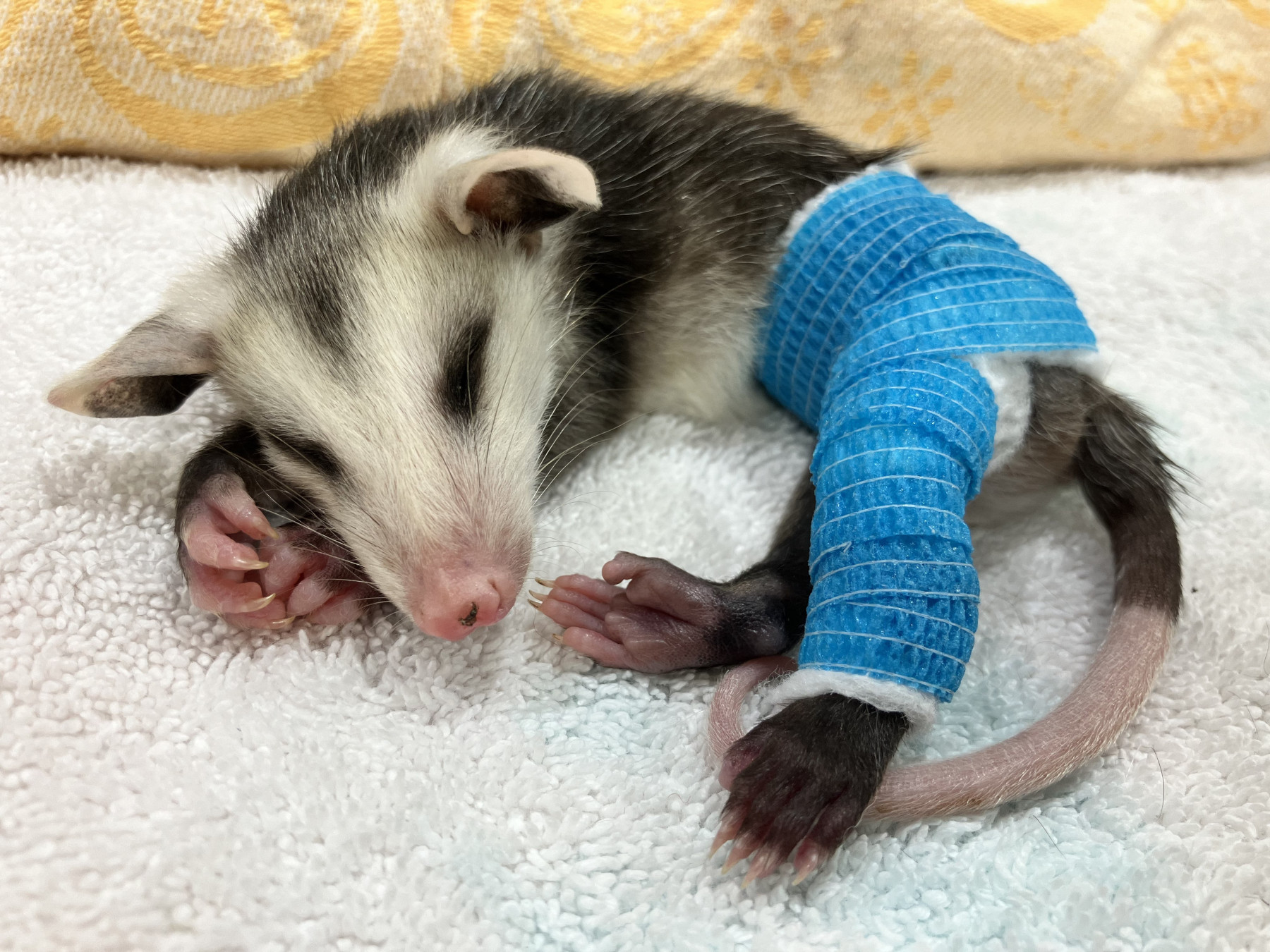
A healthy opossum crossing the yard at night is simply doing what opossums do. Wild animals can bite and scratch, and they are not pets.
Do not pick one up, and do not try to raise one at home.
An animal that appears injured or truly orphaned is a different matter. Signs of injury include visible wounds, dragging a limb, or being unable to move away.
Before stepping in, contact the Missouri Department of Conservation, which has reminded the public to keep wildlife wild.
Be careful with the word orphaned. A baby seen alone is not always abandoned, so confirming the situation before acting matters.
Wildlife centers such as Lakeside Nature Center offer guidance for people who find a mammal in need.
Permitted wildlife rehabilitators have the training, equipment, and legal authority to care for wild animals. Call one for advice, describe what you see, and follow their directions.
Keep your distance while you wait, and keep pets and children away from the animal.
After a bite or scratch, ask for medical advice
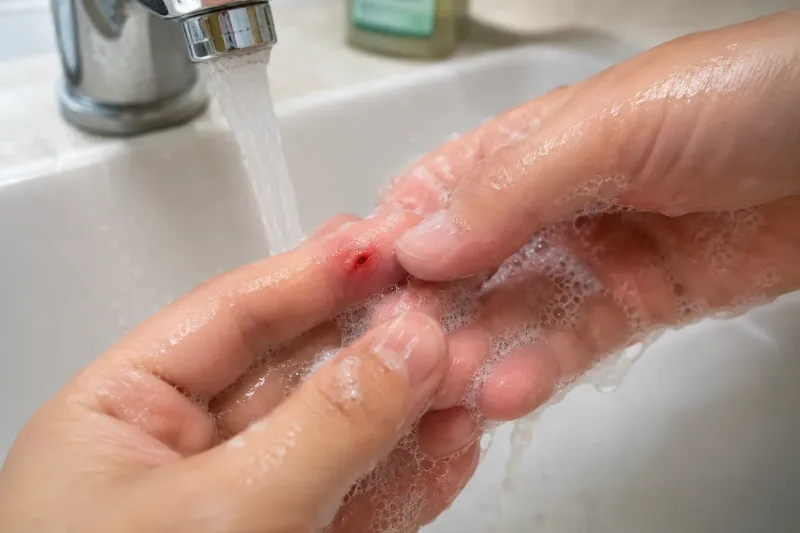
Most opossum encounters never involve contact. If a bite or scratch does happen, or if saliva may have touched broken skin, your eyes, or your mouth, act right away.
Wash the area well with soap and running water.
Then promptly ask a health-care provider or your local public-health authority about next steps. Do this even if the wound seems small, because they can judge whether any treatment is needed.
Missouri’s health department lists opossums as low-risk for rabies in its animal rabies guidance. Low risk is not the same as immune, so the need for exposure advice stays in place.
The state also publishes interim guidance on animal bite and exposure reporting, which professionals use when sorting out these cases. You do not need to read it yourself, but it shows that exposures are taken seriously and handled case by case.
Note when and where the contact happened and what the animal looked like. That information helps the people advising you.
Check Missouri rules before trapping wildlife
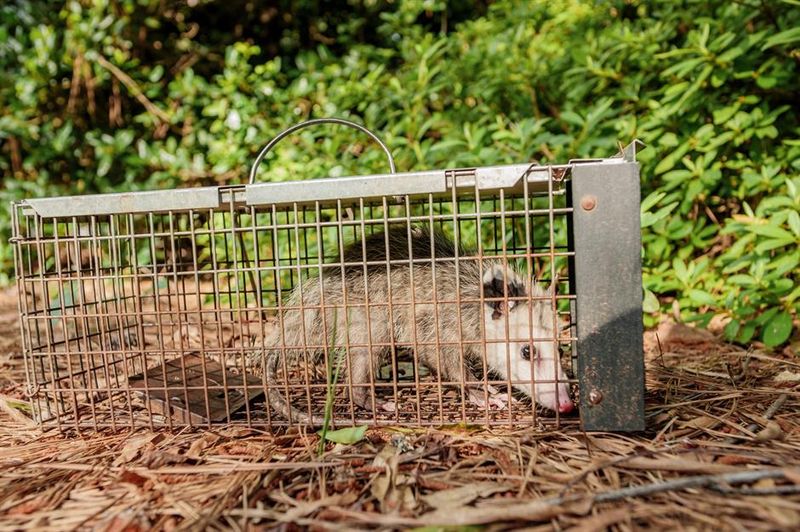
Trapping can sound like a quick fix, but it is not simple. State rules apply when someone traps or kills wildlife that is damaging private property.
The Missouri Department of Conservation points residents to those rules for opossum problems.
The Missouri Code of State Regulations, 3 CSR 10-4, covers taking wildlife that is damaging property and requires compliance with trapping rules. It also says captured or killed wildlife must be reported to an MDC agent within 24 hours and disposed of as the agent instructs.
Do not assume that moving an animal somewhere else is allowed. Relocation is not automatically permitted, and rules can change over time.
This article does not offer trapping instructions.
Before doing anything, check the current rules or contact the Conservation Department. Its wildlife control guidelines are a good place to start.
A quick call can save you from a legal mistake and from harming an animal that was not the problem.
Choose the least intrusive next step
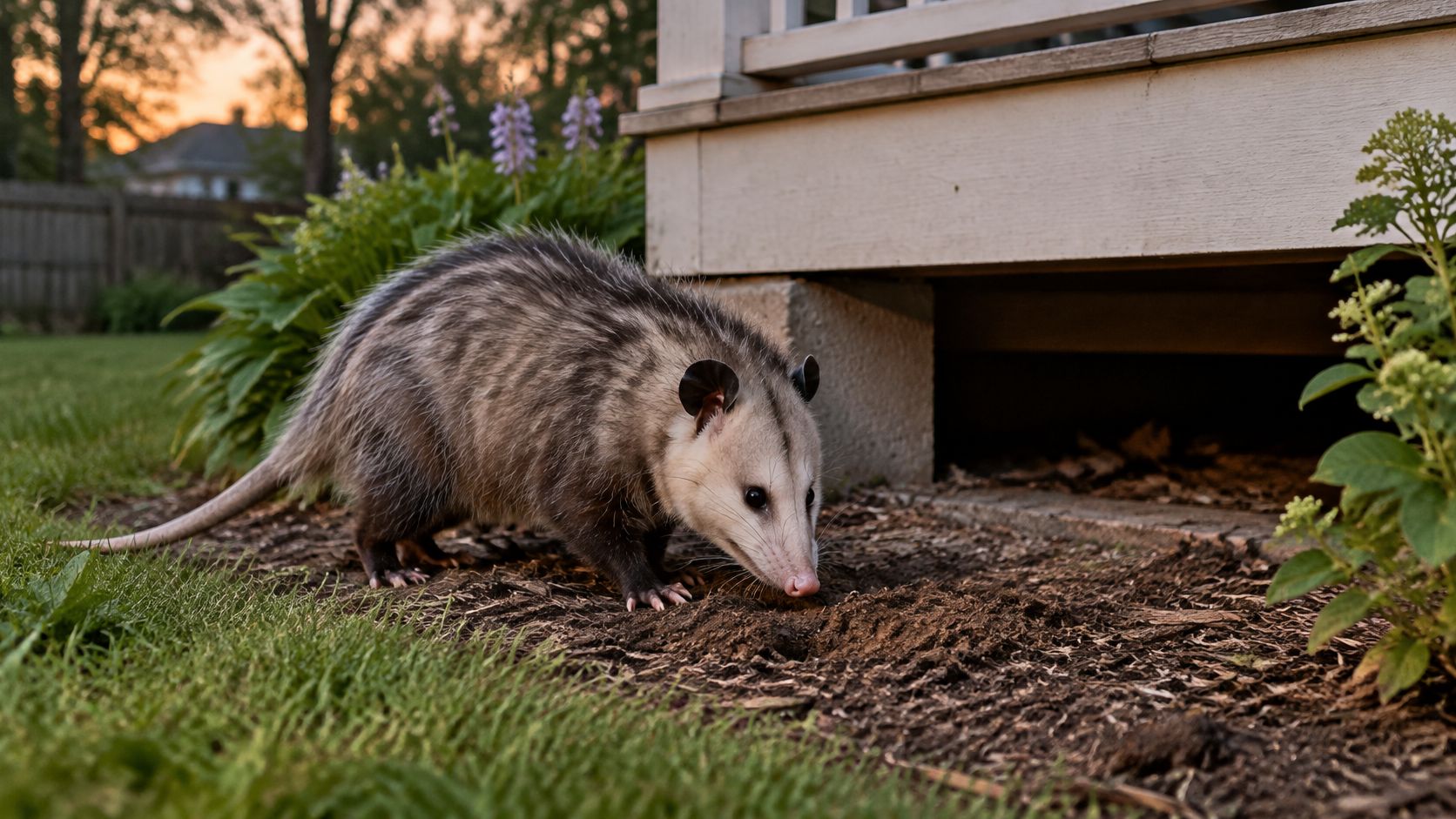
Think of your response as a ladder, and start on the lowest rung. For a passing opossum, that means giving it room and cleaning up food.
The conservation field guide and control guidance are good places to check when you want more detail.
Climb higher only when you need to. Ask for advice before closing a space that might be occupied, before helping an animal that seems hurt, and before any trapping.
Most winter opossums are just getting through the cold, and a quiet yard usually sends them on their way.
Share this story