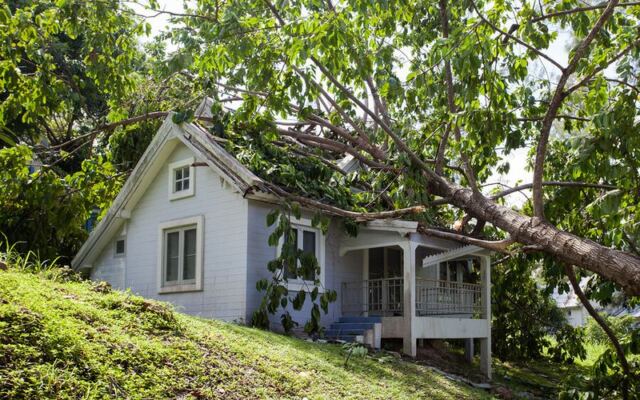
When monsoon winds throw a neighbor’s tree into your yard, the first call to make is to your own insurance company. Whether your neighbor must pay is a different question, and the answer depends on the facts.
Knowing the difference can save you stress, money, and a few risky mistakes. Here is how to stay safe, protect your claim, and understand where the law gets murky.
Contact your insurer, but don’t assume who is liable
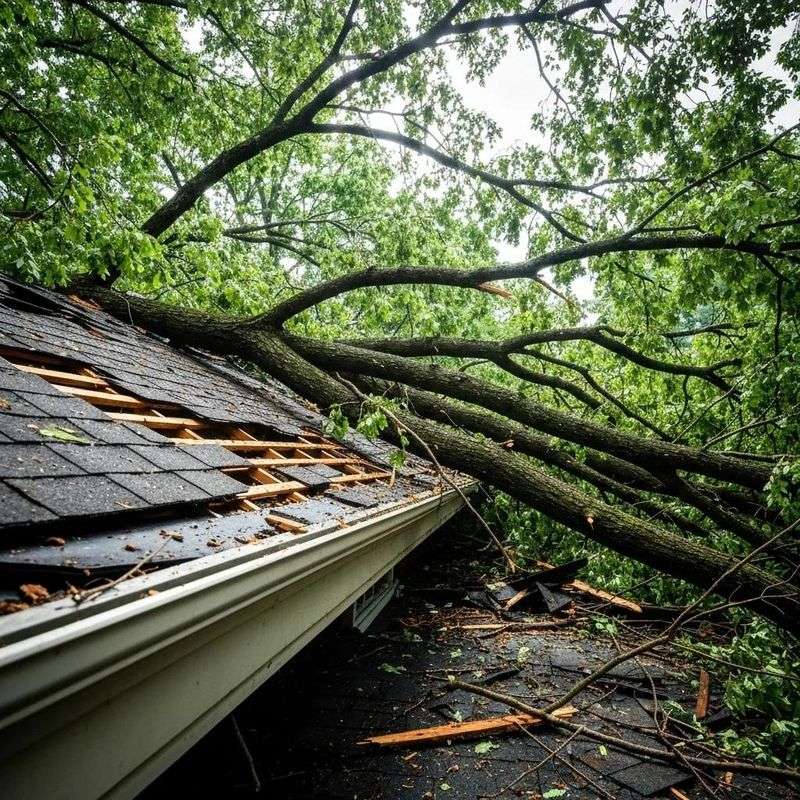
If a tree fell on your house or your car, call your own insurer promptly. That is the practical first move, and it does not settle whether your neighbor may owe you anything.
Arizona insurance regulators say a homeowner may claim under a homeowners policy when a tree hits the house, and that vehicle damage generally calls for comprehensive auto coverage.
Insurance coverage and legal responsibility are two separate questions. Coverage turns on the words of your policy.
Responsibility turns on the facts about the tree, the property, and what people knew beforehand.
Many people assume the neighbor pays because the tree grew on the neighbor’s land. The tree’s location alone does not establish who must pay.
Others assume a storm lets the neighbor off the hook. Storm conditions do not by themselves resolve liability either, and calling it an act of God is not a complete answer.
Courts also tend to be careful about creating duties between landowners. In Quiroz v.
Alcoa, the Arizona Supreme Court cautioned against treating foreseeability alone as a universal basis for a landowner duty.
So make the insurance call, keep notes, and hold off on blaming anyone. The later sections cover safety, documentation, coverage, and what the cases can and cannot tell you.
Keep clear of the tree and downed lines
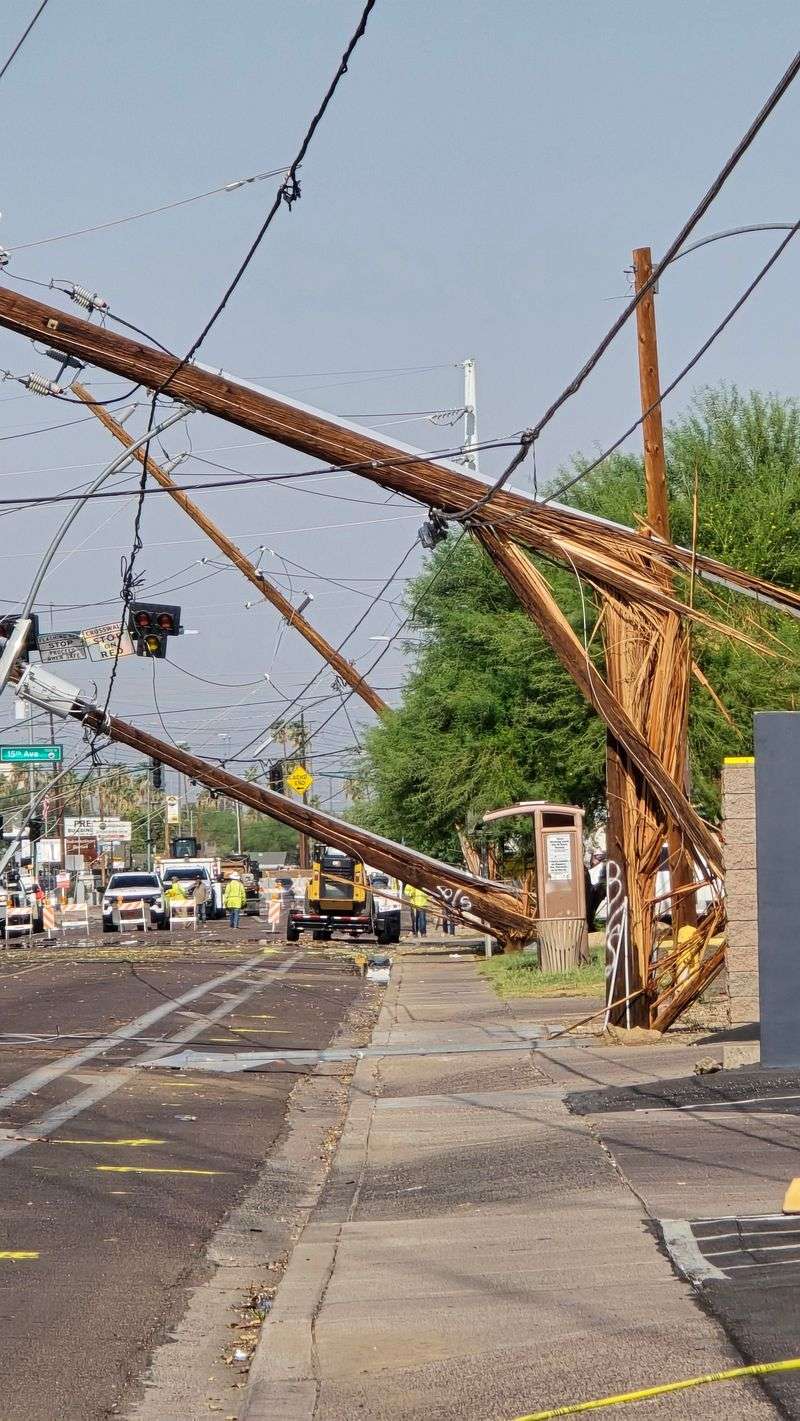
Before anything else, think about safety. The National Weather Service in Tucson monsoon safety guidance says to stay away from trees during severe thunderstorms and never touch a downed power line, even if it looks dead.
If a line is tangled in the branches, keep your distance and keep kids and pets away too.
Large branches that are hanging or stuck in the crown of a damaged tree can drop without warning. University of Arizona Cooperative Extension says heavy pruning after a storm is dangerous, and big suspended limbs should be handled by professionals.
Its advice limits homeowner work to small, low branches.
Skip the idea of grabbing a chainsaw to clear a limb that is large, hanging, near your roof, or close to utilities. That is exactly the kind of job for trained crews with the right gear.
Extension also offers tips on how to hire a tree expert, which can help you vet who shows up at your door after a storm.
If power lines are involved, call your utility or emergency services from a safe distance. Wait for the all clear before you walk near the fallen tree.
Photograph the damage before cleanup
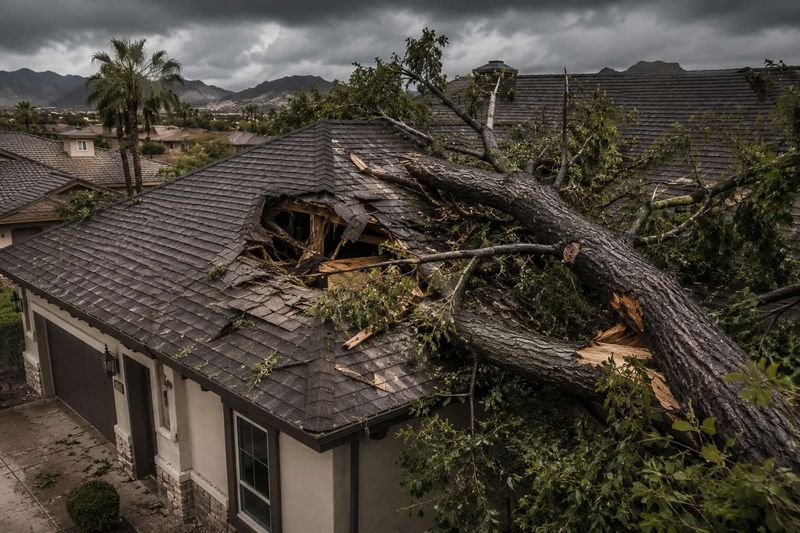
Once the area is safe, grab your phone. Take wide shots that show the tree, your yard, and the fence or roof it hit, then close-ups of each damaged item.
A short video walking around the scene can also help, and so can a photo of the neighbor’s yard where the tree broke off, if you can see it from your side.
Arizona’s insurance department advises photographing or recording damage, keeping records and receipts, and contacting the insurer before repairs or disposal where possible. Throwing away damaged items too soon can make a claim harder to prove.
Waiting is not always possible. You may need to take reasonable steps to prevent further damage, such as covering a hole in the roof with a tarp or boarding a broken window.
If emergency work cannot wait, ask your insurer what documentation it needs.
Keep every receipt for tarps, emergency repairs, and hired help. Write down dates, times, and the names of people you speak with, including the adjuster and any contractor.
Save texts or emails with your neighbor too.
A simple folder, paper or digital, keeps all of this in one place. It will serve you well whether the claim goes only through insurance or turns into a dispute.
Check what your policy covers
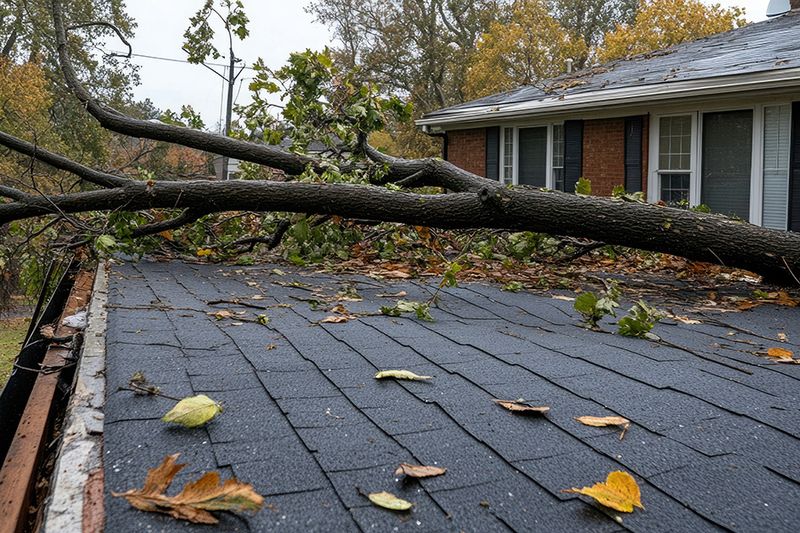
Your actual policy is the document that counts. Arizona’s insurance department says a homeowner may claim under a homeowners policy when a tree falls on the house.
For a damaged car, the same guidance says comprehensive auto coverage is generally needed.
Those statements describe where to start, not what will be paid. Home damage and vehicle damage run through different policies, so you may be calling two companies.
When you talk to your insurer, ask direct questions. What kinds of storm damage are covered?
Are there exclusions that might apply? What is my deductible for wind or tree damage, and are there limits for certain items like fences, sheds, or outdoor structures?
The state also offers general information on homeowners insurance that can help you understand common policy terms before you call. Reading your declarations page ahead of time makes the conversation easier.
Ask for answers in writing when you can. If a claim is denied or comes in lower than you expected, ask the company to explain which policy language it relied on.
Do not assume any loss is covered until the insurer confirms it, and remember a small loss may fall under your deductible.
Tree removal is a separate coverage question
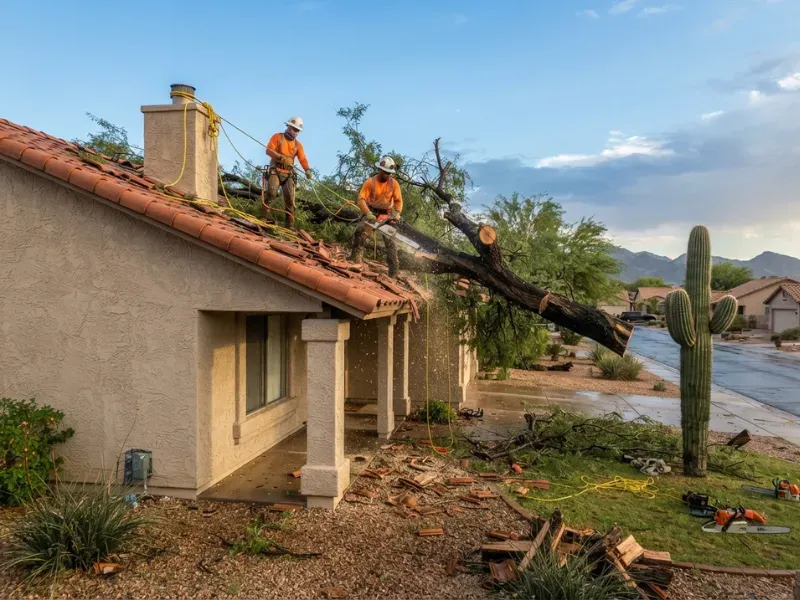
Fixing a damaged roof or car is one thing. Hauling away the tree that caused it is another.
Coverage for removing a fallen tree, clearing debris, or replacing landscaping can work differently from coverage for the damaged structure.
The Arizona guidance discusses coverage when a tree damages a house or a vehicle. It does not promise that every policy pays to remove a tree lying in a yard, and it does not set a universal removal limit.
Picture a tree that lands in your yard without touching the house. Your policy might treat that very differently from one that crushes a patio roof.
Some policies set sublimits for debris removal, and your deductible may swallow smaller bills.
Before hiring anyone, call your insurer and ask what your policy says about tree removal, debris cleanup, and replacing plants or trees. Get a quote from a qualified tree professional and share it with the adjuster if the insurer asks.
If the tree is blocking an entry or sitting on your roof, tell the insurer that emergency work is needed and ask what records to keep. Save photos from before and after, along with invoices, so you have proof of what you paid.
What the tree’s condition and the cases can tell you
Who owns the tree and who pays for the damage are different questions. Neither the tree’s location nor the storm settles it alone.
Evidence about the tree’s earlier condition may matter, such as dead limbs, rot, leaning, or earlier warnings and messages you sent your neighbor. Save any of that, and photos of the tree from before the storm if you have them.
The Arizona cases give limited guidance, not a rule for every neighbor-yard tree fall. Carver involved a tree beside a public highway, where signs like undercutting and rot were relevant.
It is not a direct ruling on a home dispute.
Cannon involved roots crossing a property boundary, and it noted a landowner may cut offending branches or roots at the property line. It was not about a tree toppled by wind.
In Quiroz, the court cautioned against treating foreseeability alone as a universal basis for a landowner duty.
You may also come across Kasha v. Secor, where a neighbor’s tree fell on a home.
It was a nonprecedential decision about claim-preclusion procedure, not a ruling on who was liable for the tree damage.
The practical path is simple. Document the damage, contact your insurer, keep the evidence, and treat any dispute with your neighbor as dependent on the facts.
If talks stall, a licensed Arizona attorney can review your situation.
A fallen tree ends the storm, but the paperwork you keep decides how smoothly the rest goes.
Share this story