Get the latest garden guides in your inbox →
Gardening Latest
  • General Gardening
  • Lawn Care
  • Plant Care
  • Composting
  • Soil Health
  • Backyard
  • Garden Muse Magazine
  • General Gardening
  • Lawn Care
  • Plant Care
  • Composting
  • Soil Health
  • Backyard
  • Garden Muse Magazine
  • News
  • Gardening Calendar
  • Garden Structures
  • Vegetable Garden
  • Vertical Garden
  • Raised Beds
  • Hydroponics
  • General Equipment
  • Community Gardens
Garden Themes
  • Spiritual Garden
  • Hydroseeding
  • Seeding and Laying Sod
  • Artificial Grass
  • Lawn Care Equipment
  • Plants
  • Trees
  • Planting Tools
  • Composting Basics
  • Fertilizer
  • Alternative Growing Mediums
  • Front Yard
  • Backyard Activities
  • Landscaping
Gardening Latest

Explore by state

Which state is your garden in?

Currently viewing Michigan

All states

Northeast

  • Connecticut —
  • Delaware 36
  • Maine —
  • Maryland 22
  • Massachusetts 39
  • New Hampshire —
  • New Jersey 23
  • New York 32
  • Pennsylvania 32
  • Rhode Island —
  • Vermont —

Southeast

  • Alabama 22
  • Arkansas —
  • Florida 22
  • Georgia 23
  • Kentucky 36
  • Louisiana 21
  • Mississippi —
  • North Carolina 21
  • South Carolina 35
  • Tennessee 19
  • Virginia 21
  • West Virginia —

Midwest

  • Illinois 21
  • Indiana 24
  • Iowa 35
  • Kansas —
  • Michigan 23
  • Minnesota 21
  • Missouri 21
  • Nebraska —
  • North Dakota —
  • Ohio 23
  • South Dakota —
  • Wisconsin 37

Southwest

  • Arizona 22
  • Colorado —
  • Nevada —
  • New Mexico —
  • Oklahoma —
  • Texas 21
  • Utah —

West

  • Alaska —
  • California 22
  • Hawaii —
  • Idaho —
  • Montana —
  • Oregon —
  • Washington —
  • Wyoming —

No state matches that search.

Site menu

Gardening Latest
  • General Gardening
    • News
    • Gardening Calendar
    • Garden Structures
    • Vegetable Garden
    • Vertical Garden
    • Raised Beds
    • Hydroponics
    • General Equipment
    • Community Gardens
    Garden Themes
    • Spiritual Garden
  • Lawn Care
    • Hydroseeding
    • Seeding and Laying Sod
    • Artificial Grass
    • Lawn Care Equipment
  • Plant Care
    • Plants
    • Trees
    • Planting Tools
  • Composting
    • Composting Basics
  • Soil Health
    • Fertilizer
    • Alternative Growing Mediums
  • Backyard
    • Front Yard
    • Backyard Activities
    • Landscaping
  • Garden Muse Magazine

Explore

  • About GardeningLatest.com
  • Contact Us

Get the latest from the garden

New guides on lawn care, plants and backyard projects, sent when they go up.

Subscribe →

Follow

  • Facebook
  • X
  • Pinterest
  • YouTube
Michigan Gardening

Why Pavement Ants Pile Up Fresh Hills in Michigan Lawns Right After It Rains

Pavement ants dig soil out of their nests and leave small piles on lawns, and many Michigan homeowners spot those piles…

NL

By Nora Lindqvist

November 27, 2026 · 6 min read

Why Pavement Ants Pile Up Fresh Hills in Michigan Lawns Right After It Rains

Pavement ants dig soil out of their nests and leave small piles on lawns, and many Michigan homeowners spot those piles right after a rain. The piles are real, and the ants behind them are often harmless to grass.

What the rain has to do with it is less clear than it looks. Here is how to figure out what made the piles and whether you need to do anything about them.

At a glance

Where
Michigan Gardening
Hardiness zone
6 −10 to 0°F
Read
6 minutes
Published
November 27, 2026

What a soil pile can tell you

What a soil pile can tell you
© Mi Jalisco Landscaping LLC

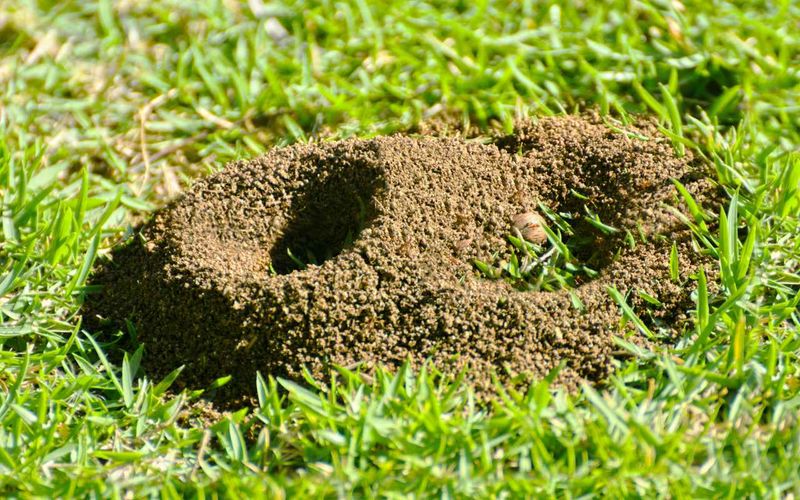
Pavement ants dig out soil as they build their nests, and the loose dirt can end up as a small pile that marks an entrance. Utah State Extension describes pavement ants as soil nesters, so a tidy little heap in the turf can fit their habits.

Many people notice these piles right after a rain, and that timing is easy to see. A pile you spot after a storm only tells you when you looked.

It does not show that the rain caused the digging, and the sources reviewed for this article do not establish rain as a trigger for fresh pavement-ant mounds in Michigan.

The ants may have been adding to that pile for days. Wet ground can also make loose soil easier to see against dark, damp grass, so a pile can seem to appear overnight when it grew gradually.

A mound is also only a clue. University of Minnesota Extension notes that several kinds of ants nest in lawns, and other critters leave piles too.

So the smart path is to look for the mound-maker before deciding what to do. The sections ahead cover what pavement ants leave behind, what else can leave piles, how swarms differ from soil, and when action makes sense.

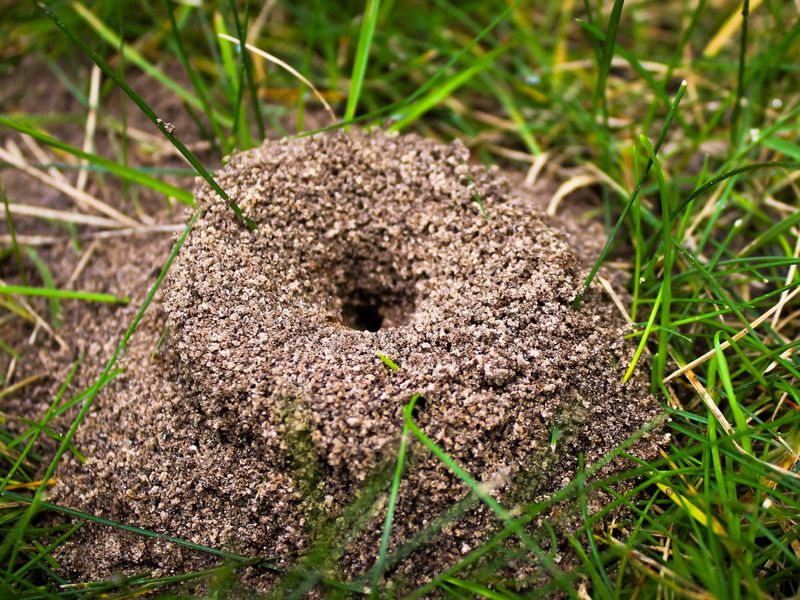
How pavement ants leave small soil piles
How pavement ants leave small soil piles
© Gardening Know How

Pavement ants are small, dark ants that nest in soil. As they tunnel, they carry grains of dirt up and drop them near the opening, which builds a small crater or pile.

That pile can mark where the nest entrance sits.

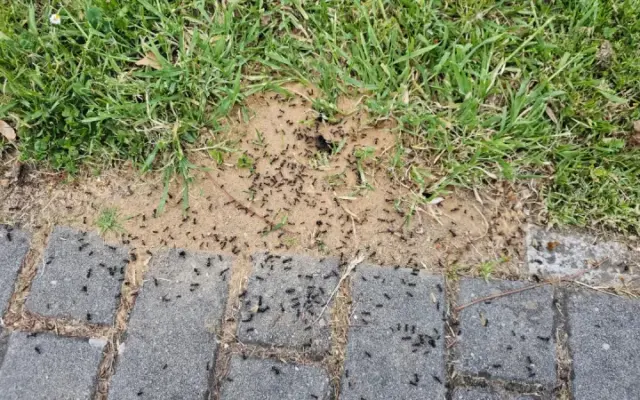
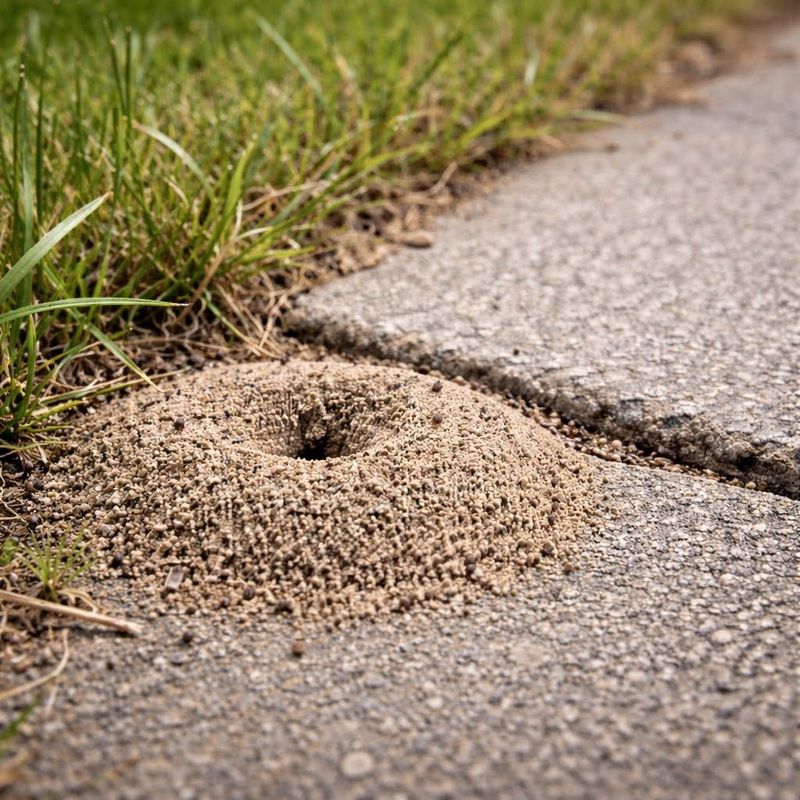
The name suggests a spot beside concrete, and they do often nest in soil under sidewalks, driveways, and stones, as Utah State Extension notes. Those hidden spots protect the nest, and the ants push excavated soil out through cracks and gaps.

Swarming refers to winged reproductive ants leaving the nest to mate and start new colonies.

The common name does not mean every nest has to sit next to pavement. University of Minnesota Extension says pavement ants can also turn up in turf, so a pile in the middle of a lawn could still be theirs.

If you want to know the name of the ant, the current University of Minnesota name is Tetramorium immigrans. You may see the older name, T. caespitum, in older fact sheets.

The name matters less than what you observe at the nest: are small ants coming and going from the opening?

Seeing ants at an entrance is a useful clue, but it is still not a final answer. The next section covers the other makers of lawn piles.

Other things can leave piles in a lawn

Other things can leave piles in a lawn
© Waves Pest Control

A pile of soil does not come with a name tag. Several kinds of ants build lawn mounds, and University of Minnesota Extension describes more than one lawn-nesting species, so calling every pile a pavement-ant nest can send you in the wrong direction.

Earthworms are a strong suspect after wet weather. UC IPM notes that worms often come toward the surface after rain or irrigation and leave castings.

Those small heaps can look a lot like ant soil.

Other animals and insects can also leave holes and soil piles, and Clemson Extension lists several causes of lawn holes. That is one more reason not to decide from the mound alone.

Start by watching the pile for a few minutes. Ants moving in and out of a small opening point toward an ant nest.

Then note clues like whether the pile sits beside pavement, how big it is, its shape, and whether the soil looks granular or like fine, rounded casts. A Cornell pavement-ant fact sheet is a handy reference for the ant itself.

These clues help, but they are not a field test. If knowing the exact culprit matters, collect a specimen and ask your county Extension office or a diagnostic service to identify it.

Winged swarms and soil piles are different
Winged swarms and soil piles are different
© Adams Pest Control

Rain does show up in pavement-ant literature, but in a different story. A Utah State factsheet says pavement ants typically swarm after spring rain.

It uses the older species name, T. caespitum.

Swarming refers to winged reproductive ants leaving the nest to mate and start new colonies. You would see flying or crawling ants with wings, often around walls, windows, or pavement.

That is a different sight from loose soil pushed up by workers.

The swarm note says nothing about how soil piles form, so it should not be used to explain a mound on your lawn. A pile is excavated dirt.

A swarm is a group of winged ants.

Utah State Extension also mentions that pavement ants can swarm in spring, which matches the idea of a seasonal event rather than a rainy-day mound.

If you see winged ants and soil piles at the same time, treat them as two separate observations. One does not prove the other.

Small lawn nests often need no treatment
Small lawn nests often need no treatment
© Paul Munns Instant Lawn

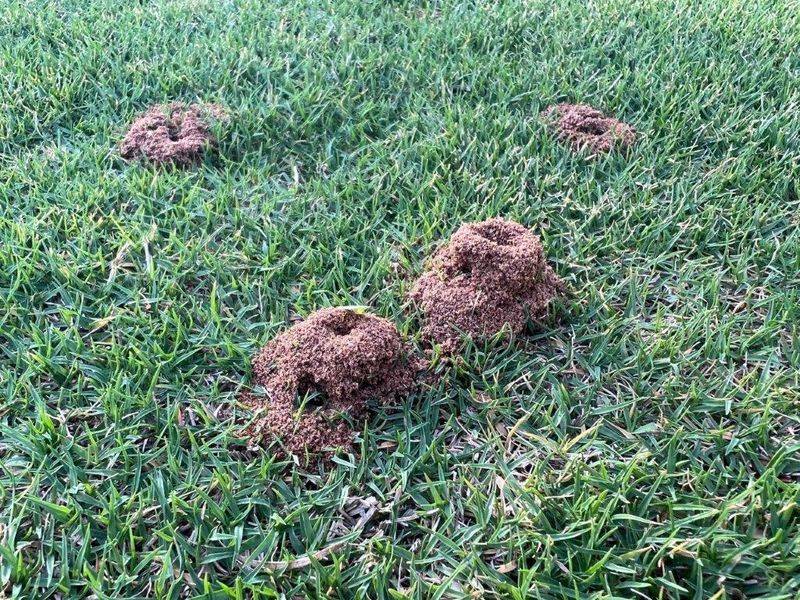
A few small mounds that cause no trouble usually do not call for a fight. University of Minnesota Extension says lawn ants generally do not feed on grass and advises tolerating their nests where possible.

Penn State Extension agrees that ants seldom cause serious lawn damage. The mounds are mostly a looks issue, and a quick brush with a broom or rake can level them.

That advice fits quiet lawn activity. It does not mean every ant nest is harmless in every setting.

A nest that undermines a patio edge, sits where children play, or sends ants into the house deserves a closer look.

Treating every mound is not a sensible default, since you may be dealing with earthworms or other ants that cause no harm at all. Giving small nests some tolerance saves time and avoids unnecessary products.

Keep an eye on the spot over a few weeks. If it stays small and stable, you can leave it be.

Identify the problem before choosing control
Identify the problem before choosing control
© Gardening Know How

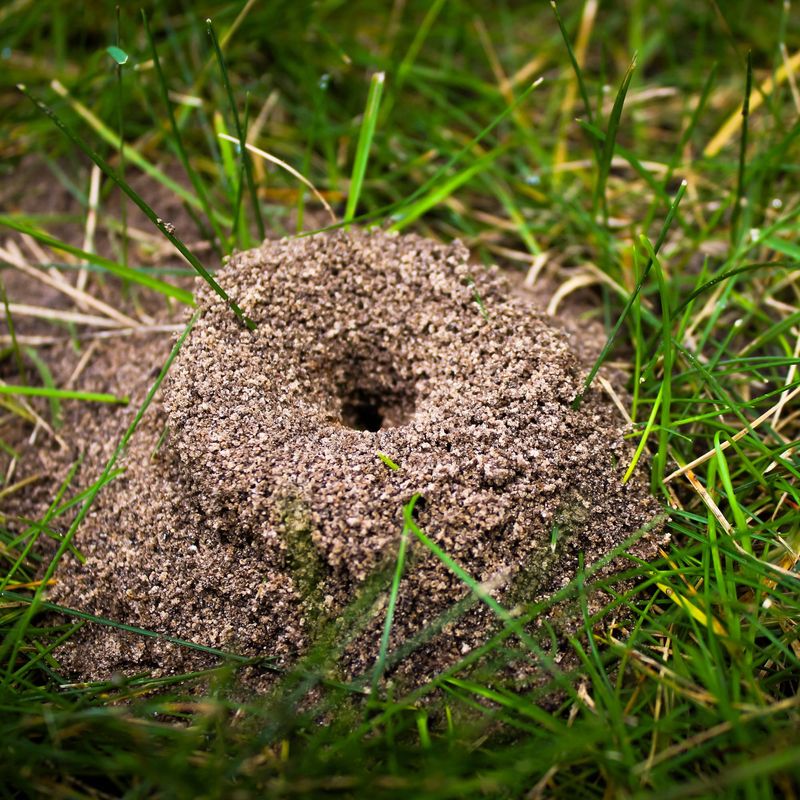
If the ants are a real nuisance, begin by confirming that they are ants and finding where they are active. Follow the trails to the entrance.

University of Minnesota Extension also says flooding a nest with water is not an effective control method, so skip that trick.

Treating the whole lawn or spreading insecticide broadly is not a good first move either. It can miss the nest and affect creatures you did not mean to target, especially if the piles turn out to be earthworm castings.

If you decide a pesticide is warranted, use only a product labeled for the intended pest and site, and follow its directions. That includes the precautions for people and pets.

EPA guidance on pesticide labels explains why the label is the rule book for legal and safe use.

Here is the sequence in short: check for ants at the opening, think about other mound-makers, and tolerate minor activity when it causes no problem. Control comes last, and only when the nuisance is real.

A pile after a storm is a good prompt to go look. It is not an order to spray.

Share this story
NL

Written by

Nora Lindqvist

More from Nora Lindqvist →

About Gardening Latest

Gardening Latest provides in-depth guides to maintaining and enhancing your garden and backyard. Learn how to make the most of the space you have and create a beautiful garden.

More about us →

Latest stories

  • New Jersey GardeningUnder New Jersey Law, a Neighbor’s Branches Over Your Yard Are Fair Game to Trim Until You Reach the Property Line

    Under New Jersey Law, a Neighbor’s Branches Over Your Yard Are Fair Game to Trim Until You Reach the Property Line

    5 min ago
  • North Carolina GardeningNorth Carolina Yuccas Pour Everything Into That Giant Flower Stalk, So Here’s When Cutting It Off Makes Sense

    North Carolina Yuccas Pour Everything Into That Giant Flower Stalk, So Here’s When Cutting It Off Makes Sense

    11 min ago
  • Massachusetts GardeningRaking Leaves in Massachusetts? Here’s What We Know About the Northern Short-Tailed Shrew’s Venom

    Raking Leaves in Massachusetts? Here’s What We Know About the Northern Short-Tailed Shrew’s Venom

    21 min ago
  • California GardeningPull One Seedling and More Pop Up: This Invasive Tree Is Spreading Through California Neighborhoods

    Pull One Seedling and More Pop Up: This Invasive Tree Is Spreading Through California Neighborhoods

    26 min ago
  • New York GardeningThe Glossy Nuts New York Children Gather Every Fall Are Actually Poisonous

    The Glossy Nuts New York Children Gather Every Fall Are Actually Poisonous

    31 min ago

Gardening by state

Stories for your state, and the hardiness zone most of it gardens in.

Keep exploring

Read next

All Michigan Gardening →
Michigan GardeningFrom Detroit to Grand Rapids, This Invasive Tree Is Sprouting Faster Than Homeowners Can Pull It
Michigan Gardening

From Detroit to Grand Rapids, This Invasive Tree Is Sprouting Faster Than Homeowners Can Pull It

2 hr ago
Michigan GardeningMichigan Gives You the Right to Prune a Neighbor’s Overhanging Branches, Just Not Past the Property Line
Michigan Gardening

Michigan Gives You the Right to Prune a Neighbor’s Overhanging Branches, Just Not Past the Property Line

6 hr ago
Michigan GardeningMichigan Gardeners Keep Spotting Giant Flower Stalks on Their Rhubarb, and Here’s Why and Whether to Cut Them
Michigan Gardening

Michigan Gardeners Keep Spotting Giant Flower Stalks on Their Rhubarb, and Here’s Why and Whether to Cut Them

9 hr ago

More from Michigan Gardening

  • Red Foxes Get Busier in Michigan Yards During Winter, and Here’s What They’re Actually Doing

    Nov 25
  • Hickory Tussock Caterpillars Sting Plenty of Michigan Gardeners, and Here’s What to Do Right Away

    Nov 24
Back to top

Leave a response Cancel

Your email address stays private. Required fields are marked with an asterisk.

Gardening Latest

In-depth guides to maintaining and enhancing your garden and backyard: how to make the most of the space you have, and how to make it beautiful.

  • Facebook
  • X
  • Pinterest
  • YouTube

We may earn a portion of sales from products or services that are purchased through our site as part of our affiliate partnerships with retailers.

Explore

  • About GardeningLatest.com
  • Contact Us
  • Terms and Conditions
  • Privacy
  • Editorial Note:
  • FTC Disclosure

Newsletter

New garden guides and seasonal tips, straight to your inbox.

We’ll email you a link to confirm. Unsubscribe any time.

Almost there! Check your inbox and tap the link to confirm.

© 2026 Gardening Latest. All rights reserved.

Back to top