That tall stalk shooting up from your rhubarb is a flower stalk, and if you grow the plant for its tart leaf stalks, you should remove the whole thing near the crown. It does not mean your plant is dying.
Rhubarb flowers as a normal part of its life cycle, and a few simple steps keep the clump going strong. Here is how to spot it, remove it safely, and care for the plant afterward.
A tall central stalk means the plant is flowering
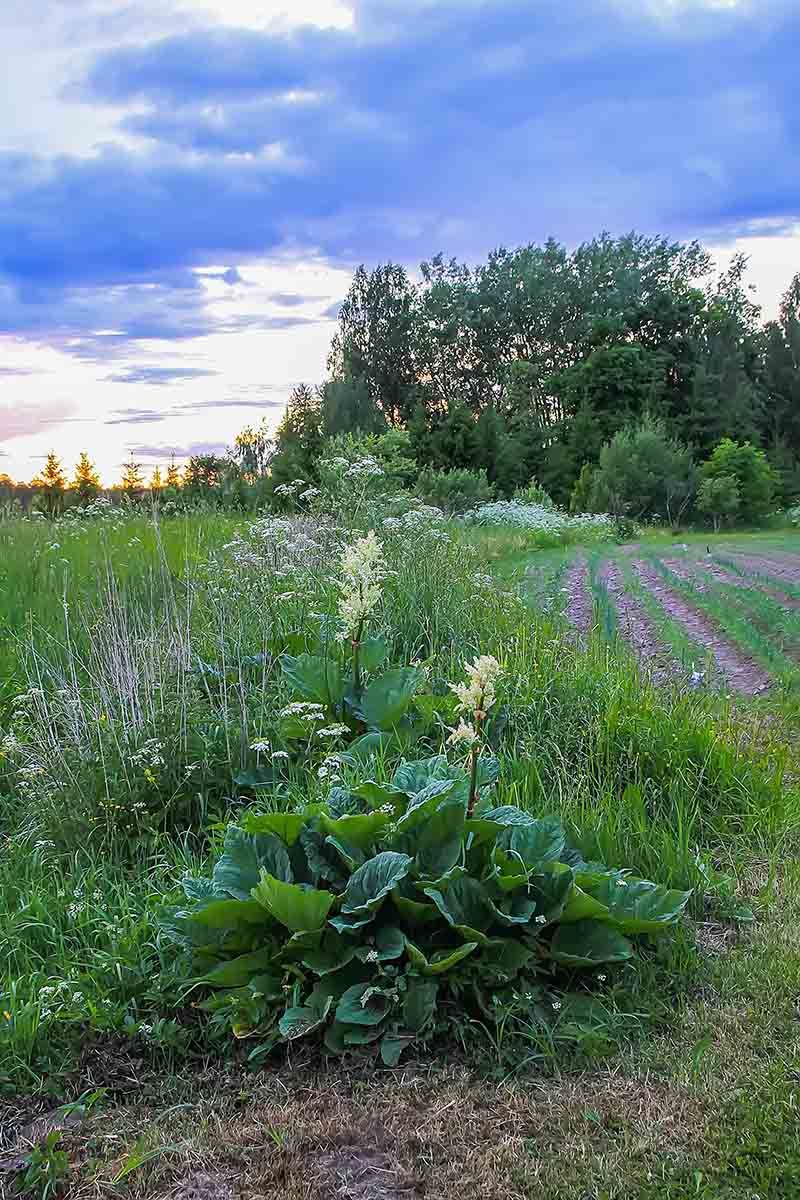
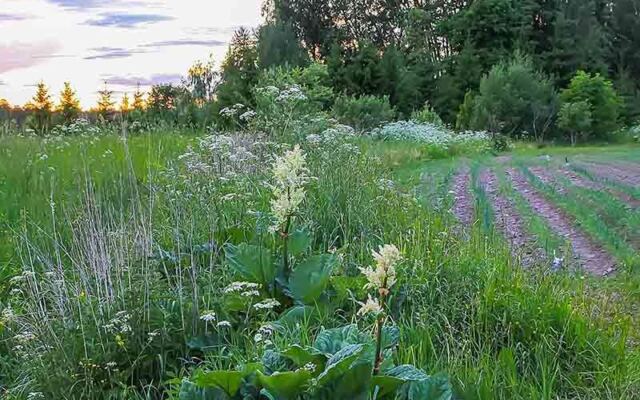
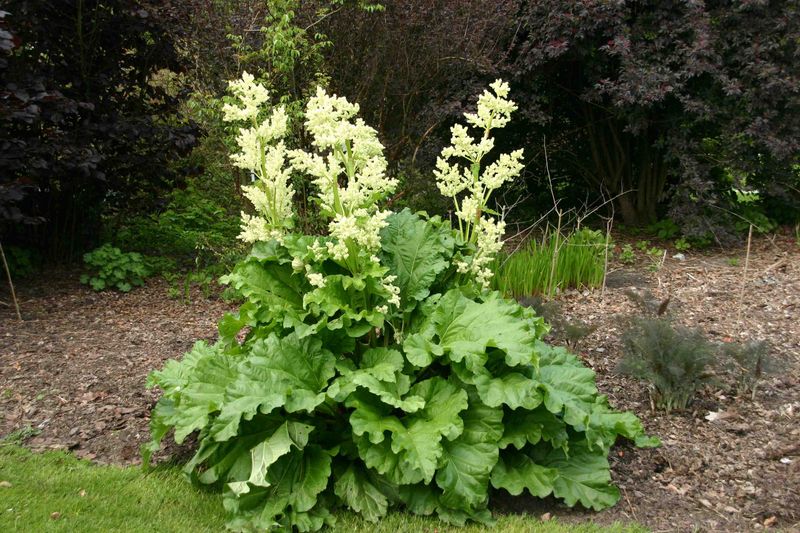
Walk out to the garden one morning and you might find a thick, upright shoot rising from the middle of your rhubarb, taller than the leaves around it. Topped with a bunch of small creamy flowers, it looks nothing like the red or pink stalks you cut for pies.
Gardeners call this bolting, and it simply means the plant is flowering.
Flowering is part of rhubarb’s reproductive cycle. As Purdue Extension explains, it is a natural event, not a sign that the clump is failing.
Nothing about a single flower stalk calls for emergency treatment.
Telling the two kinds of stalks apart is easy once you know what to look for. Leaf stalks grow from the crown and each one ends in a broad leaf blade.
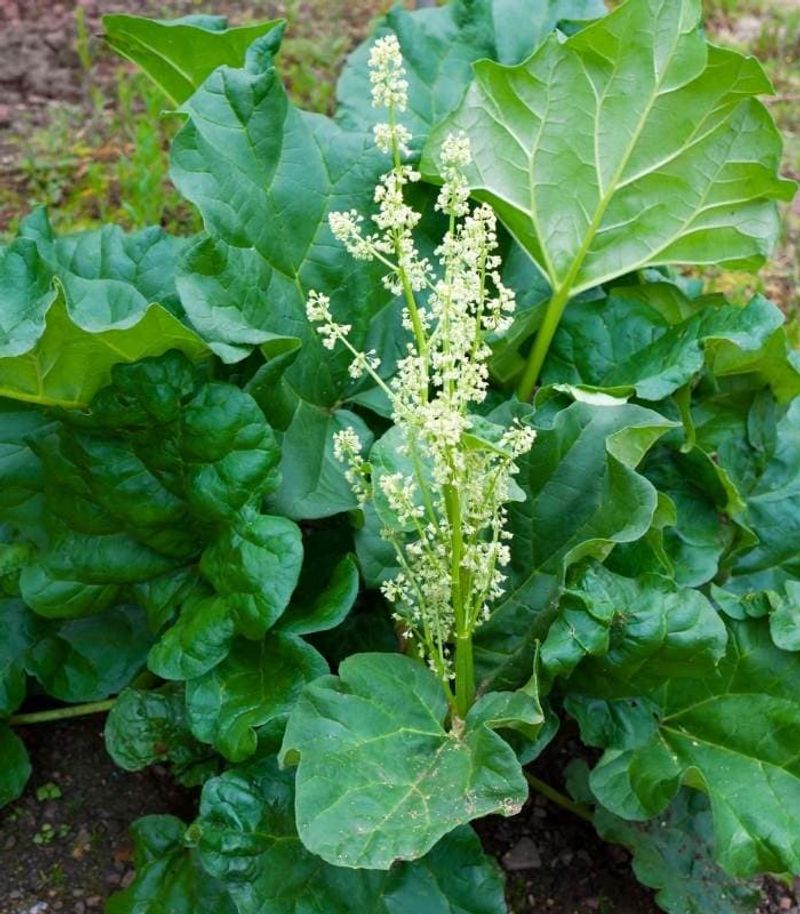
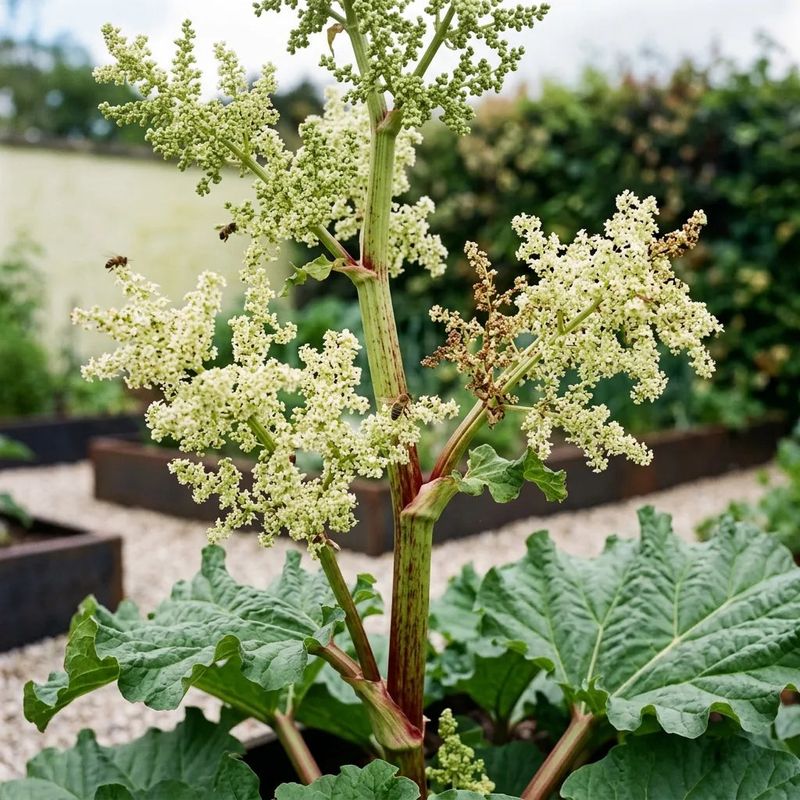
The flower stalk is thicker, rounder, and branches near the top into a flower head, and it usually stands well above everything else.
So why remove it? Flowering and making seed take energy that could otherwise go into leaf stalks or into storage for next year.
Iowa State University Extension notes this, and that is why gardeners who grow rhubarb for eating generally take the flower stalk out. Think of it as routine garden housekeeping rather than a rescue mission.
Several factors can lead rhubarb to flower
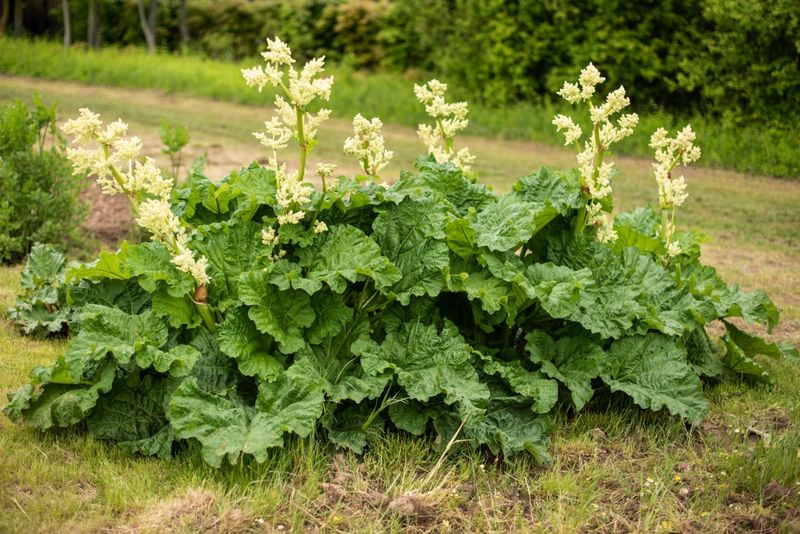
Gardeners love a single clear answer, but rhubarb does not offer one. A few things can nudge a plant toward flowering, and a stalk by itself will not tell you which one is at work.
Plant maturity is one. Older, well-established clumps may flower more readily, and some varieties are simply more likely to bolt than others.
Sources such as Purdue Extension list age and cultivar among the possible reasons.
Conditions can play a part too. Iowa State mentions heat, drought, and poor nutrition as possible contributors.
Notice the word possible. Each one may matter in some gardens and not at all in others.
That means a flower stalk is not proof that your plant is thirsty or hungry. A healthy, mature clump in good soil can bolt without any single problem you could fix.
Likewise, the size or timing of the stalk will not reveal the cause.
It also means you should not blame New Jersey weather for the bloom. Nothing in the sources links a specific local condition to your plant’s flowering.
A better approach is to remove the stalk, then look at the plant’s general care, such as water and soil, as part of normal upkeep.
Remove the whole flower stalk close to the crown
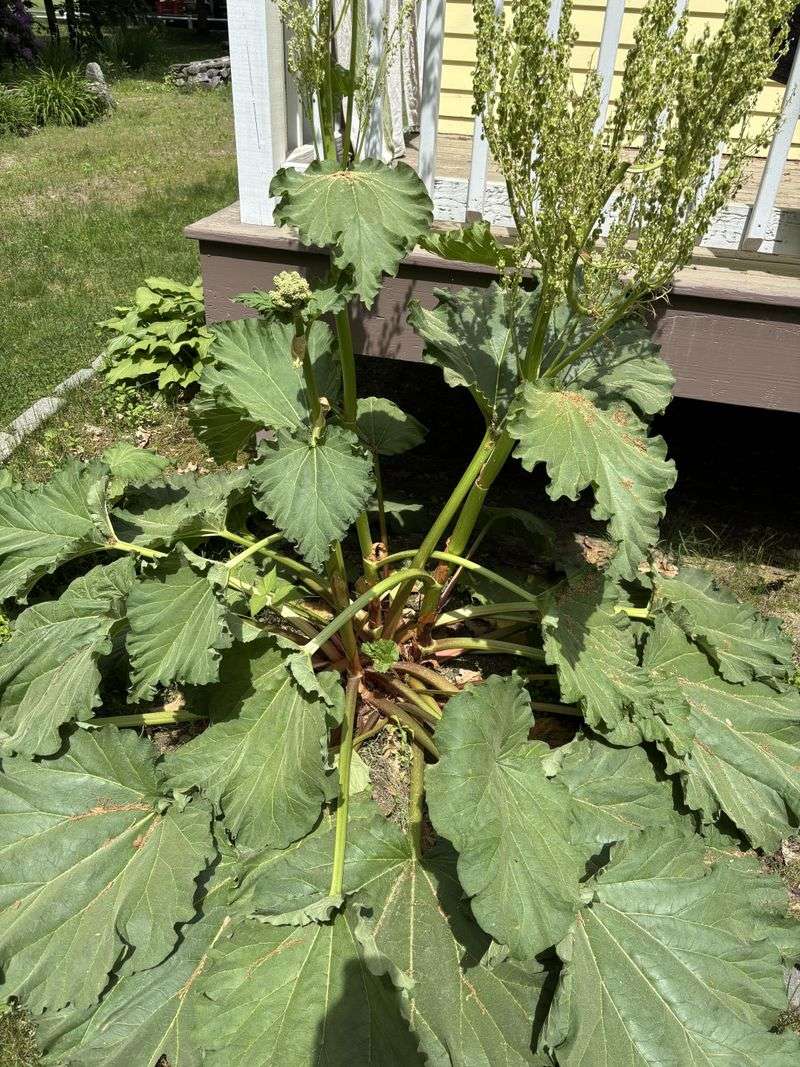
Pinching off only the flower head is tempting, but it leaves a thick stalk behind that keeps drawing on the plant. The better move is to take out the entire flower stalk, all the way down near the crown, which is the base where the stalks emerge.
Extension guidance covers two ways to do it. The New England Vegetable Management Guide recommends cutting the stalk close to the crown or pulling it.
If it slides out easily with a gentle tug, that works fine.
If it resists, stop pulling. Grab a clean, sharp knife or pair of pruners and cut as low as you can without nicking the crown or nearby leaf stalks.
Wiping the blade first helps avoid spreading problems from other plants.
Forcing a snap is where trouble starts. A hard yank or a ragged break can tear or bruise the crown, and that is the part of the plant you most want to protect.
A clean cut heals better than a rough tear.
The goal is to send the plant’s energy toward leaf stalks. South Dakota State University Extension also advises removing flower stalks.
Still, removal favors stalk production but does not guarantee a bigger harvest, so treat it as good practice rather than a promise.
Keep the leaves and maintain steady care
After the flower stalk is gone, resist the urge to tidy up further. The big green leaves are the plant’s solar panels.
They collect energy that rhubarb stores for later growth, as the New England Vegetable Management Guide points out.
So leave them in place. Do not strip the plant while removing the flower stalk, and take care when harvesting that you are not leaving the clump bare.
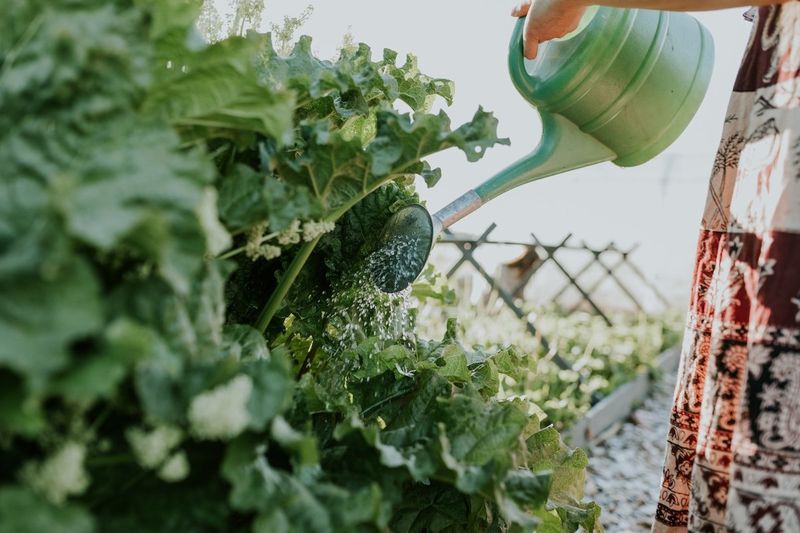
Steady, ordinary care is the next step. Water during dry spells so the soil does not bake around the crown.
Iowa State suggests watering in dry weather, and a deep soak now and then beats frequent sprinkles.
Reasonable fertility helps too. University of Minnesota Extension covers feeding rhubarb in home gardens.
Flowering by itself is not a reason to fertilize, though, since it does not show the plant is underfed.
Fertilizer amounts from other states are not New Jersey recommendations, so skip copying someone else’s recipe. A soil test through your local extension office is the safer way to learn what your bed actually needs.
If another flower stalk appears, choose what you want from the plant
Cutting one stalk does not always end the story. Some plants send up another after the first is removed, as Purdue Extension notes.
A second stalk is not a failure on your part.
If leaf stalks are your goal, simply repeat the removal. Cut it close to the crown, the same way as before, and keep the leaves.
The New England guide recommends removing flower stalks to favor stalk production, though it cannot promise a particular yield.
You can also choose to let a flower stand. The blooms are tall and feathery, and some gardeners enjoy them as ornamentals.
Flowers left to mature can set seed, and the University of Alaska Fairbanks Cooperative Extension discusses seed in its rhubarb guidance.
The tradeoff is simple. A plant making flowers and seed puts energy into reproduction instead of edible stalks.
That is a fair choice if you want the look or the seed, as long as you accept that.
Neither path guarantees a certain harvest. Removing stalks may favor your pie pile, and leaving them may favor the garden show.
Pick the one that fits what you want from that particular clump.
Flowering does not make the leaf stalks poisonous
A common worry is that a blooming plant turns the whole harvest toxic. That is not so.
Purdue Extension says the ordinary leaf stalks stay edible whether or not the plant has flowered.
The leaf blades are a different matter. They are toxic and should not be eaten.
Penn State Extension advises cutting them off and discarding them before you cook the stalks.
Then there is the flower stalk itself. It looks a bit like a fat rhubarb stalk, which can confuse beginners, but it is a separate thing.
South Dakota State University Extension says flower stalks are not edible, so do not treat it as food.
A quick way to sort it all out at harvest time is to check where each piece comes from. Leaf stalks end in a broad leaf.
The flower stalk rises from the center and ends in a bloom cluster.
Harvest the leaf stalks as usual, trim off the blades, and toss the flower stalk and blades in the compost or trash. Your pie is safe, as long as the right parts end up in it.
For New Jersey gardeners, treat the flower stalk as a routine cue
Here is the short version for your garden. Spot the thick central stalk with the flower head, cut the whole thing near the crown if you want leaf stalks, and keep caring for the leaves and soil.
Then go on with your harvest.
Rutgers confirms in its vegetable garden planning guide that rhubarb is grown as a perennial in New Jersey. That guide does not explain why a plant flowers, so the advice here is general, not a New Jersey bolting diagnosis.
Flowering is a normal event, as Purdue Extension describes it. If the bloom returns, you can decide again what you want from the plant.
A flower stalk is rhubarb doing what plants do, and a sharp pair of pruners is usually the only answer it needs.
Share this story