
Get the latest garden guides in your inbox →
Gardening Latest
  • General Gardening
  • Lawn Care
  • Plant Care
  • Composting
  • Soil Health
  • Backyard
  • Garden Muse Magazine
  • General Gardening
  • Lawn Care
  • Plant Care
  • Composting
  • Soil Health
  • Backyard
  • Garden Muse Magazine
  • News
  • Gardening Calendar
  • Garden Structures
  • Vegetable Garden
  • Vertical Garden
  • Raised Beds
  • Hydroponics
  • General Equipment
  • Community Gardens
Garden Themes
  • Spiritual Garden
  • Hydroseeding
  • Seeding and Laying Sod
  • Artificial Grass
  • Lawn Care Equipment
  • Plants
  • Trees
  • Planting Tools
  • Composting Basics
  • Fertilizer
  • Alternative Growing Mediums
  • Front Yard
  • Backyard Activities
  • Landscaping
Gardening Latest

Explore by state

Which state is your garden in?

Currently viewing North Carolina

All states

Northeast

  • Connecticut —
  • Delaware 40
  • Maine —
  • Maryland 26
  • Massachusetts 43
  • New Hampshire —
  • New Jersey 26
  • New York 36
  • Pennsylvania 36
  • Rhode Island —
  • Vermont —

Southeast

  • Alabama 26
  • Arkansas —
  • Florida 26
  • Georgia 27
  • Kentucky 40
  • Louisiana 25
  • Mississippi —
  • North Carolina 25
  • South Carolina 39
  • Tennessee 23
  • Virginia 25
  • West Virginia —

Midwest

  • Illinois 25
  • Indiana 28
  • Iowa 39
  • Kansas —
  • Michigan 27
  • Minnesota 25
  • Missouri 25
  • Nebraska —
  • North Dakota —
  • Ohio 27
  • South Dakota —
  • Wisconsin 41

Southwest

  • Arizona 26
  • Colorado —
  • Nevada —
  • New Mexico —
  • Oklahoma —
  • Texas 25
  • Utah —

West

  • Alaska —
  • California 26
  • Hawaii —
  • Idaho —
  • Montana —
  • Oregon —
  • Washington —
  • Wyoming —

No state matches that search.

Site menu

Gardening Latest
  • General Gardening
    • News
    • Gardening Calendar
    • Garden Structures
    • Vegetable Garden
    • Vertical Garden
    • Raised Beds
    • Hydroponics
    • General Equipment
    • Community Gardens
    Garden Themes
    • Spiritual Garden
  • Lawn Care
    • Hydroseeding
    • Seeding and Laying Sod
    • Artificial Grass
    • Lawn Care Equipment
  • Plant Care
    • Plants
    • Trees
    • Planting Tools
  • Composting
    • Composting Basics
  • Soil Health
    • Fertilizer
    • Alternative Growing Mediums
  • Backyard
    • Front Yard
    • Backyard Activities
    • Landscaping
  • Garden Muse Magazine

Explore

  • About GardeningLatest.com
  • Contact Us

Get the latest from the garden

New guides on lawn care, plants and backyard projects, sent when they go up.

Subscribe →

Follow

  • Facebook
  • X
  • Pinterest
  • YouTube
North Carolina Gardening

After a Good North Carolina Rain, Fresh Fire Ant Mounds Show You Exactly Where Your Yard Stays Wet

Fresh fire ant mounds after a good North Carolina rain are a signal worth noticing, because they show up just when…

WD

By Wyatt Daniels

November 28, 2026 · 6 min read

After a Good North Carolina Rain, Fresh Fire Ant Mounds Show You Exactly Where Your Yard Stays Wet

Fresh fire ant mounds after a good North Carolina rain are a signal worth noticing, because they show up just when your yard is soggy. Those little piles of loose soil tell you fire ants are active, and they hint that wet conditions got the ants moving.

They can also tempt you to treat the mound as a map of your wettest ground. Here is what the mounds really say, and how to read your yard’s water for yourself.

At a glance

Where
North Carolina Gardening
Hardiness zone
8 10 to 20°F
Read
6 minutes
Published
November 28, 2026

Rain can reveal colonies that were already there
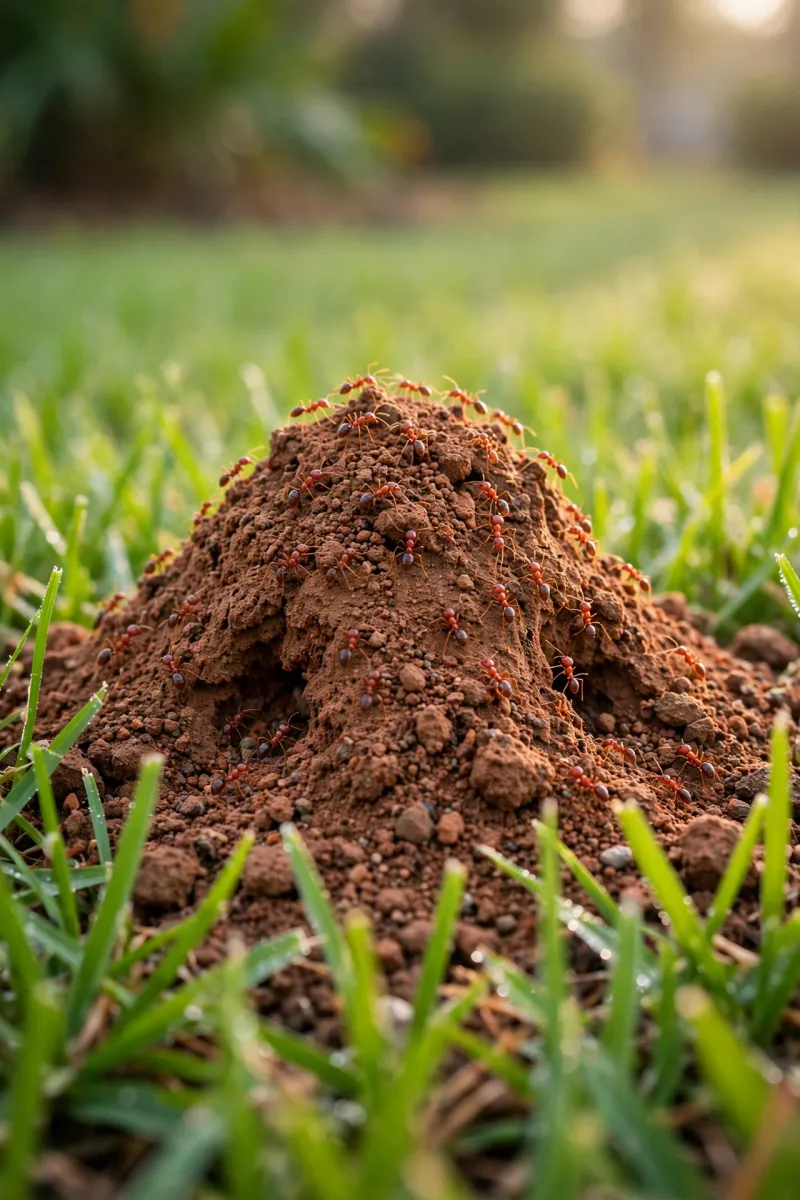
Rain can reveal colonies that were already there
© gray_pest_control

A mound that seems to appear overnight often belongs to a colony that was already living there. N.C.

Cooperative Extension notes that smaller colonies can go unnoticed until heavy rainfall brings the ants closer to the surface. So rain can reveal a colony rather than create one.

NC State also explains that ants build mounds to escape rising groundwater, as described in its fire ant turf guide. After a soaking rain, ants that stayed hidden underground may push soil up into a visible pile.

The result is more activity you can see, not necessarily more ants in your yard.

A newly visible mound is also different from a newly arrived colony. According to NC State’s fire ant biology page, colonies can exist without a visible mound, and young colonies may need time to grow before they build one.

Some fresh mounds are brand new, but you cannot tell that just by looking at one.

Severe flooding is a separate situation. In major floods, fire ants can form floating rafts and move toward high ground, as described in NC State’s storm guidance.

An ordinary rainy week in your yard is not that, so a mound you notice afterward is usually just a colony coming into view.

A mound cannot pinpoint a wet spot

A mound cannot pinpoint a wet spot
© Waves Pest Control

Where a mound sits says less about water than you might expect. NC State reports that fire ants commonly build in sunny areas and near sidewalks or driveways, and that mounds turn up in many soil types, according to its turf guidance.

A mound beside your driveway may reflect warm pavement and open sun as much as soggy ground.

Soggy ground makes mounds easy to spot, which turns the days after a storm into a good time to scout.

The mound itself does a few jobs. NC State’s biology page explains that it helps the colony regulate its temperature, and its height gives elevation that can help protect the colony from flooding.

In other words, the pile is a tool for the ants, built for their comfort and safety.

So a mound can reflect fire-ant activity and recent conditions without naming the chronically wettest spot in your yard. The colony may have been sitting on perfectly well-drained soil and simply responded to a big rain.

Another part of the lawn could stay soggy for days with no mound at all.

Treat the mound as a sign that ants are present, and nothing more. Judging drainage takes a different kind of evidence, and that comes next.

Follow the water to assess drainage
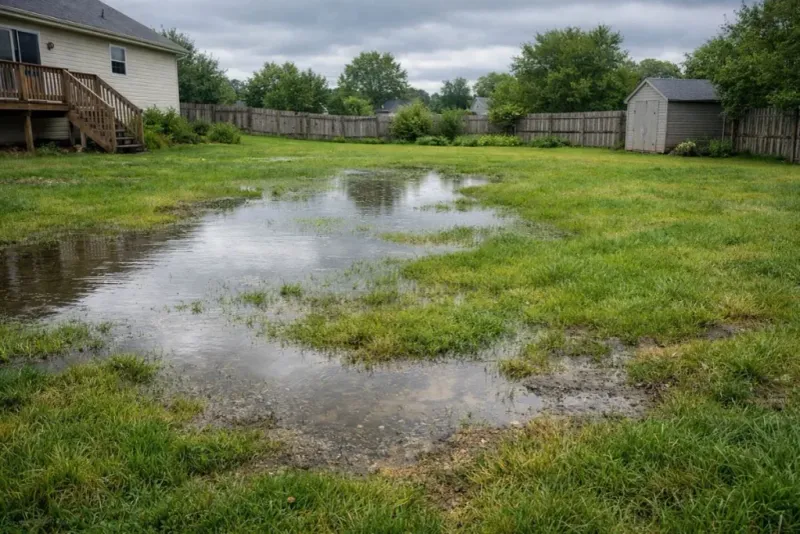
Follow the water to assess drainage
© LawnVista

To learn where your yard stays wet, watch the water itself. Walk the yard during and after a rain and note where puddles form, which direction runoff flows, and which patches are still squishy a day or two later.

A few photos or a quick sketch of those spots will give you a real picture.

Low spots, areas at the bottom of a slope, and places that collect runoff from roofs or paved areas are common trouble spots. Lingering wetness in the same place after several rains is more telling than a single soggy afternoon.

Mounds can stay out of this process entirely, since they are a separate clue.

There is one handy test with a narrow purpose. Utah State University Extension identifies pooling in low spots or planting holes as a drainage concern and says a planting hole ideally drains within 24 hours.

That guidance is about a planting hole, not a pass or fail line for your whole yard.

If you are planning a tree or shrub, dig the hole, fill it with water, and see how long it takes to drain. For the rest of the lawn, rely on repeated observations of pooling, runoff, and wet areas that hang on.

Scout without disturbing the mound
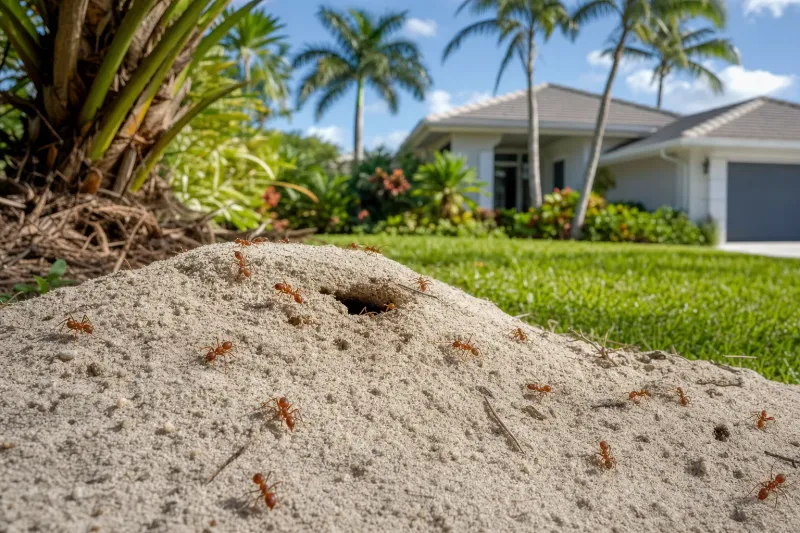
Scout without disturbing the mound
© Waves Pest Control

Soggy ground makes mounds easy to spot, which turns the days after a storm into a good time to scout. Walk the yard slowly and watch where you step.

A mound can hide in tall grass or at the edge of a garden bed.

Keep a respectful distance and do not poke, kick, or rake a mound. NC State warns in its post-storm fire ant guidance that a disturbed colony can rapidly send workers out to sting.

Closed shoes help, and children and pets should be steered clear of any mound you find.

Some people have severe allergic reactions to fire ant stings that need medical attention. Most stings are painful but not dangerous, so there is no need for alarm, yet anyone with trouble breathing, swelling beyond the sting area, or dizziness after a sting should get help right away.

While you look, note how many mounds you see and roughly where they are. A simple list of locations gives you something useful to share with a pest professional or to check against any treatment plan later.

Let the product label guide treatment
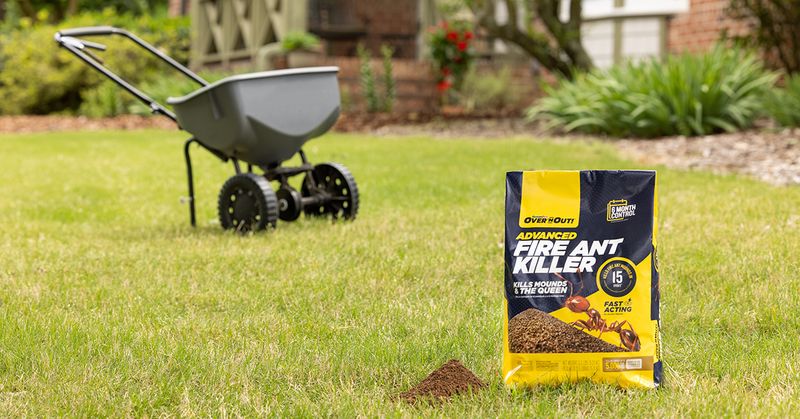
Let the product label guide treatment
© GardenTech

If you decide to treat, the product label is your rulebook. Labels differ, so the safest move is to read the one on the package in your hand before you open it.

As an example, the EPA label for AMDRO Fire Ant Bait says not to apply when the ground is soaking wet. It also says to avoid applying when rain is likely within 24 hours, and to keep the product from reaching storm drains or surface water.

Those directions belong to that product, and other products may give different instructions.

That means the day after a downpour may not be the right time to put bait down, even though the mounds are easiest to see. Check the label for timing, then pick a window that matches it.

You may run across home remedies online. NC State’s fire ant guide identifies gasoline, diesel, chlorine, and ammonia as dangerous and as contaminants of soil and groundwater, so do not use them.

It also says instant grits, molasses, aspartame, and club soda do not work. Skip all of them and stick with labeled products.

Use the mound as a cue, then judge the water
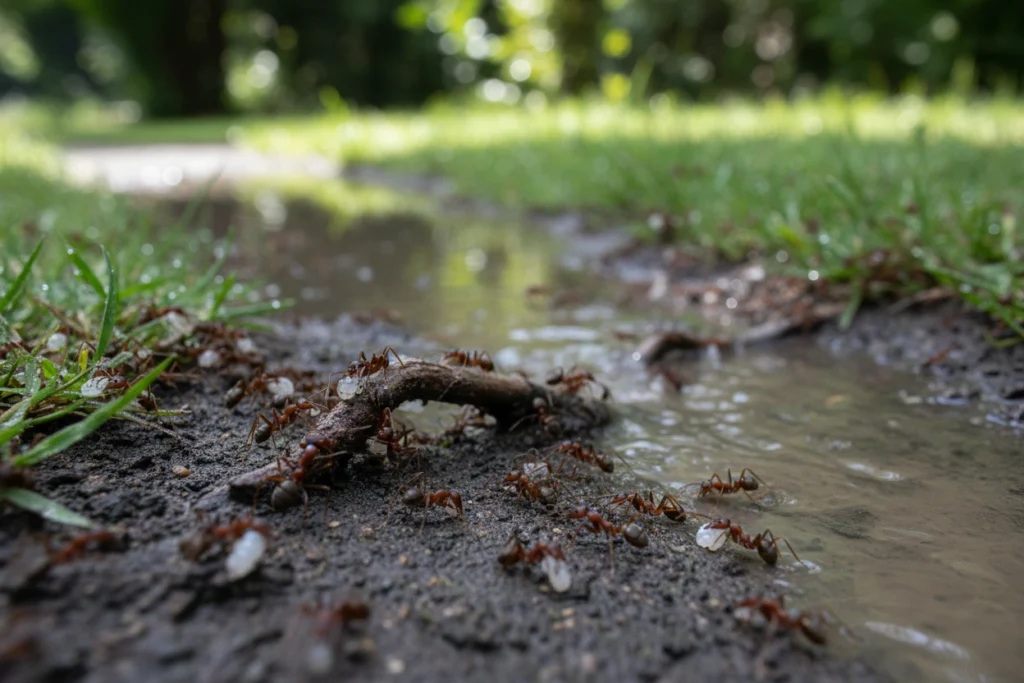
Use the mound as a cue, then judge the water
© Pest Patrol

Rain can make fire-ant activity easier to spot, but a mound alone cannot locate persistent wetness, as NC State’s turf guidance suggests. When drainage is the question, look at pooling, runoff paths, and areas that stay wet, the way Utah State Extension frames drainage problems.

The ants tell you who is home. The puddles tell you where the water goes.

Share this story

WD

Written by

Wyatt Daniels

More from Wyatt Daniels →

About Gardening Latest

Gardening Latest provides in-depth guides to maintaining and enhancing your garden and backyard. Learn how to make the most of the space you have and create a beautiful garden.

More about us →

Latest stories

  • Michigan GardeningSpot a Brown Recluse Look-Alike in Your Michigan Basement This Winter? Here’s What It Really Is

    Spot a Brown Recluse Look-Alike in Your Michigan Basement This Winter? Here’s What It Really Is

    10 min ago
  • Massachusetts GardeningA Porcupine Gnawing on Your Massachusetts Trees This Winter Leaves Damage You Can Still Save

    A Porcupine Gnawing on Your Massachusetts Trees This Winter Leaves Damage You Can Still Save

    15 min ago
  • California GardeningCalifornia Gardeners Back Away From These 7 Critters That Look Venomous but Pose No Real Threat

    California Gardeners Back Away From These 7 Critters That Look Venomous but Pose No Real Threat

    20 min ago
  • New York GardeningThe Late Fall Chill Gives Away The Venomous Critters Living In Your New York Yard

    The Late Fall Chill Gives Away The Venomous Critters Living In Your New York Yard

    25 min ago
  • Ohio GardeningNeighbor’s Branches Hanging Over Your Ohio Yard? You’re Allowed to Trim Them Back to the Property Line

    Neighbor’s Branches Hanging Over Your Ohio Yard? You’re Allowed to Trim Them Back to the Property Line

    31 min ago

Gardening by state

Stories for your state, and the hardiness zone most of it gardens in.

Keep exploring

Read next

All North Carolina Gardening →
North Carolina GardeningThat Tall Flower Stalk Rising From Your North Carolina Kale Means Spring Heat Has Arrived, and Here’s Whether to Cut It
North Carolina Gardening

That Tall Flower Stalk Rising From Your North Carolina Kale Means Spring Heat Has Arrived, and Here’s Whether to Cut It

2 hr ago
North Carolina GardeningNorth Carolina Lets You Cut a Neighbor’s Overhanging Branches, and Here’s Exactly Where You Have to Stop
North Carolina Gardening

North Carolina Lets You Cut a Neighbor’s Overhanging Branches, and Here’s Exactly Where You Have to Stop

6 hr ago
North Carolina GardeningIn North Carolina Neighborhoods, This Invasive Tree Sprouts Back Faster Than You Can Pull It
North Carolina Gardening

In North Carolina Neighborhoods, This Invasive Tree Sprouts Back Faster Than You Can Pull It

9 hr ago

More from North Carolina Gardening

  • Your Neighbor’s Vines Are Spilling Over The Fence, And North Carolina Law Says This About Cutting Them

    Nov 26
  • Red Foxes Cut Across North Carolina Yards All Winter, and Every Trip Has a Purpose

    Nov 25
Back to top

Leave a response Cancel

Your email address stays private. Required fields are marked with an asterisk.

Gardening Latest

In-depth guides to maintaining and enhancing your garden and backyard: how to make the most of the space you have, and how to make it beautiful.

  • Facebook
  • X
  • Pinterest
  • YouTube

We may earn a portion of sales from products or services that are purchased through our site as part of our affiliate partnerships with retailers.

Explore

  • About GardeningLatest.com
  • Contact Us
  • Terms and Conditions
  • Privacy
  • Editorial Note:
  • FTC Disclosure

Newsletter

New garden guides and seasonal tips, straight to your inbox.

We’ll email you a link to confirm. Unsubscribe any time.

Almost there! Check your inbox and tap the link to confirm.

© 2026 Gardening Latest. All rights reserved.

Back to top