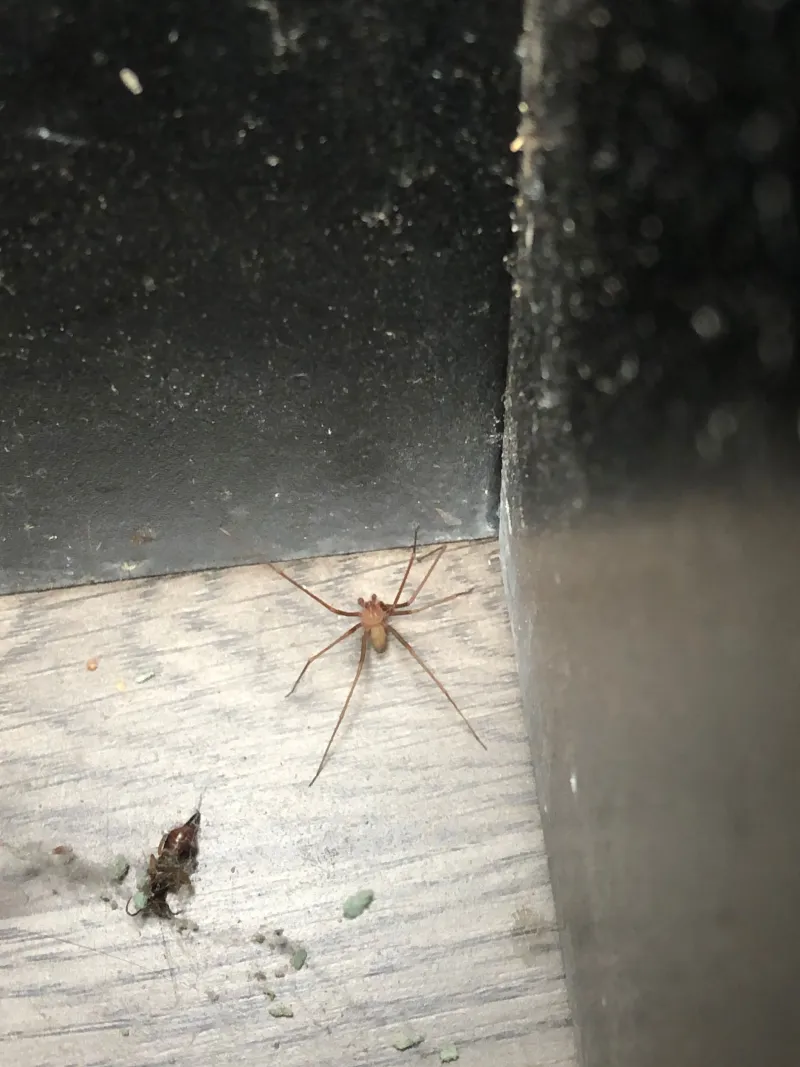
That brown spider in your Michigan basement is most likely a common local spider, not a brown recluse. Still, brown recluses have been confirmed in a few small spots in the state, so it helps to know what to look for.
Color and a violin-like mark can fool almost anyone. A few better clues can help you sort out what you are seeing, and you can do it from a safe distance.
Michigan makes a brown recluse unlikely, not impossible
Before comparing spiders, it helps to know the odds. Michigan lies outside the brown recluse’s native range, so finding one here is unlikely.
Even so, Michigan State University reports confirmed brown recluse finds in isolated spots around the state, so the possibility is real.
Those known populations arrived through human transport, most likely tucked into boxes, furniture, or other moved goods. The spiders did not spread across the state on their own.
That is why a single brown spider in your home is far more likely to be something ordinary.
Certain spiders can be encountered in basements and are often mistaken for recluses. MSU Extension notes that wolf spiders are commonly found in basements and crawlspaces.
Long-legged cellar spiders are another regular sight in dark indoor spaces, as described in the University of Michigan BioKIDS guide.
It also helps to know that brown recluse and recluse spider are not the same label. The brown recluse is one species, and other recluse species exist.
In 2021, a spider found in the basement of an Ann Arbor campus library turned out to be a Mediterranean recluse, not a brown recluse.
So the honest answer sits in the middle. A brown recluse is uncommon here but cannot be ruled out by location alone.
Which marks actually help identify a recluse?
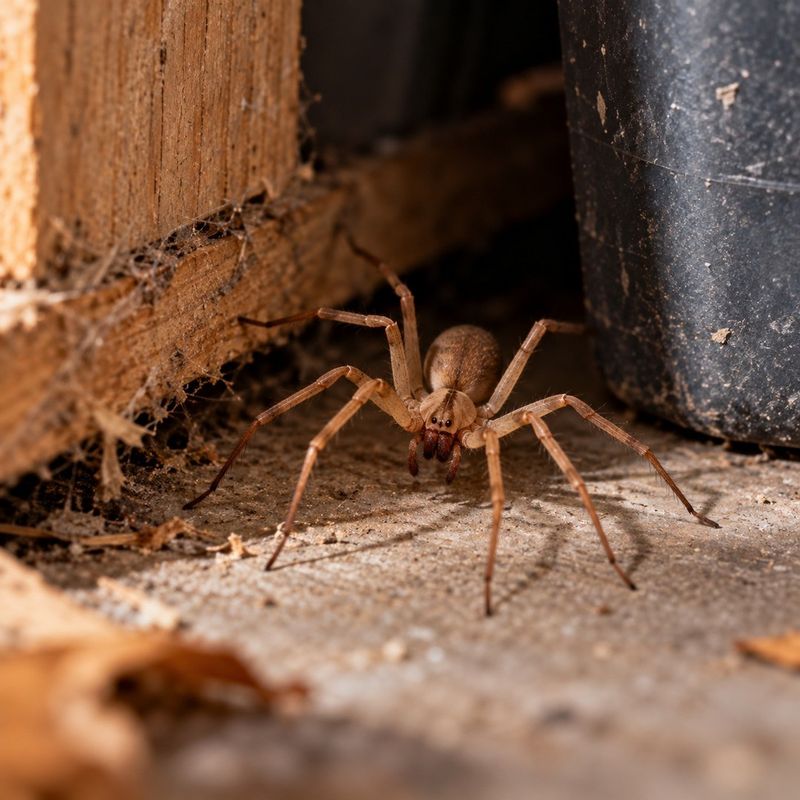
Most people have heard to look for a violin on the back. Unfortunately, that mark is not a dependable test.
UC’s IPM guidance cautions that relying on the violin shape is a common cause of misidentification, since other spiders can show similar markings.
Color, body shape, and where the spider turned up can offer clues. They can narrow the list of suspects, but they do not prove a brown recluse.
A plain tan spider under a basement shelf could be many different species.
Eye arrangement is a more reliable feature. Recluses have six equal-sized eyes arranged in three pairs, while most spiders have eight eyes.
Virginia Cooperative Extension describes this pattern as a key trait for recluse identification.
That said, this is not an easy or definitive test. The eyes are tiny, and seeing them clearly usually takes magnification.
Please do not move closer to a spider or pick one up to check. A sharp photo taken from a safe distance, shared with an expert, is a far better route, and a UC Riverside spider guide explains why many lookalikes get misjudged.
Cellar spiders often have very long, thin legs
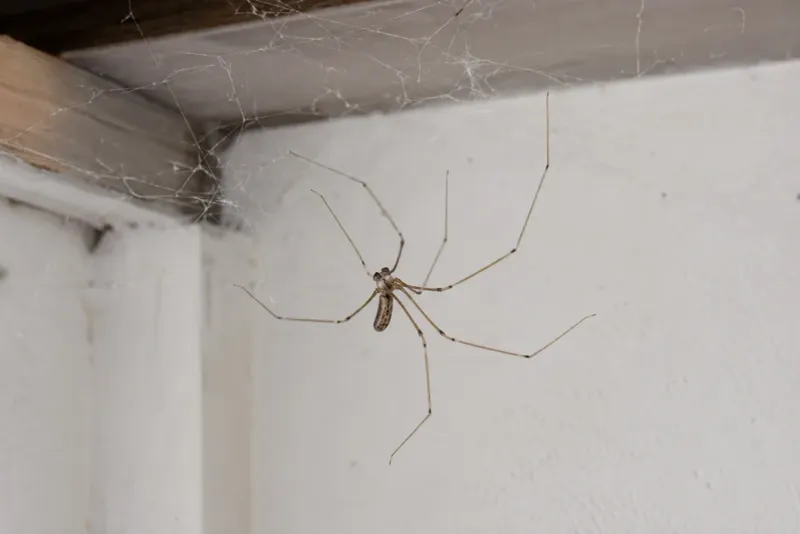
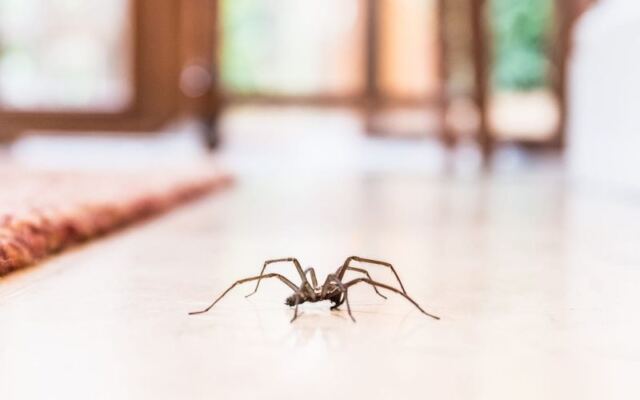
Picture a tiny body held up by legs that seem far too long for it. That is the look many cellar spiders have, and it is one of the easiest clues to spot from across the room.
The University of Michigan BioKIDS guide describes these spiders as having very long, thin legs and small, light-colored bodies.
Cellar spiders tend to hang in loose, untidy webs in dark corners, along ceilings, and in quiet spots like basements and crawlspaces. When disturbed, they may bounce or vibrate in the web.
That habit can help tell them apart from spiders that run across the floor.
These traits are helpful visual clues, not proof of identity. A spider with long, thin legs and a small body fits the cellar spider pattern well, but a quick glance in poor light can mislead anyone.
Legs can look longer or shorter depending on how the spider is posed.
If your spider matches this description, that is reassuring, though not a final answer. When something still seems off, take a photo from a comfortable distance and ask an expert to take a look.
Wolf spiders look sturdier and hunt without webs
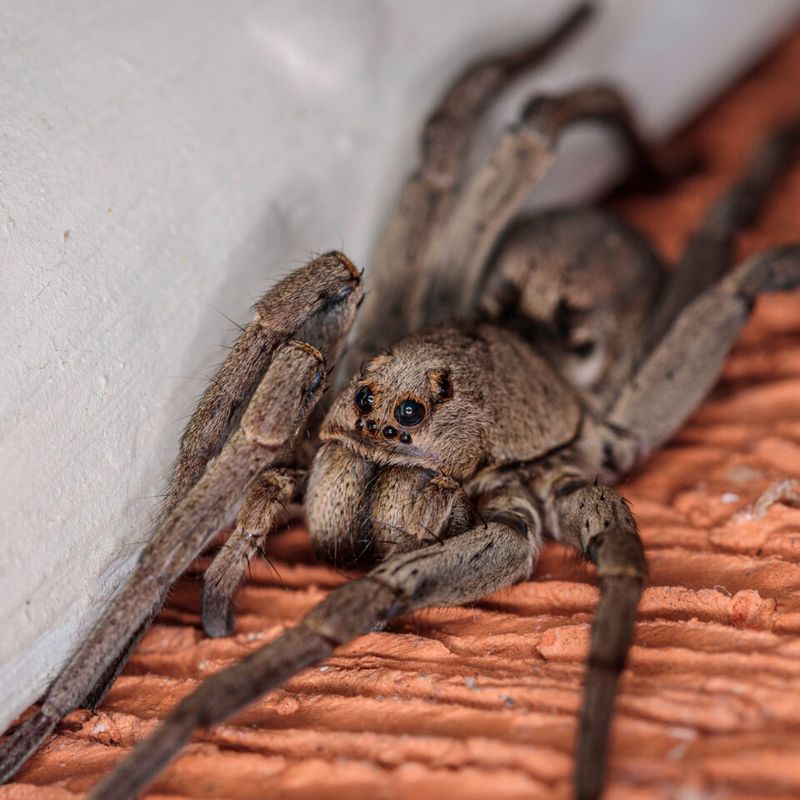
Where cellar spiders look delicate, wolf spiders look built for action. They are generally more robust, with a sturdy body and thicker, hairier legs.
Instead of waiting in a web, they actively hunt prey, so you are more likely to see one crossing the floor than hanging from a ceiling.
Michigan State University reports that wolf spiders are commonly encountered in basements and crawlspaces. They wander in from outside or live near doors and foundation gaps.
Their brown coloring and size make them frequent stand-ins for the brown recluse in worried phone calls.
Compare the two common types side by side. A wolf spider has a heavier build and moves around freely, while a cellar spider has a small body on very long, thin legs and sits in a loose web.
Seeing one pattern or the other can narrow the guesswork a lot.
Still, these are clues, not a substitute for expert identification. A spider that does not match either description deserves a photo from a safe distance and a second opinion, rather than a closer look with your hands.
What should you do with a possible recluse?
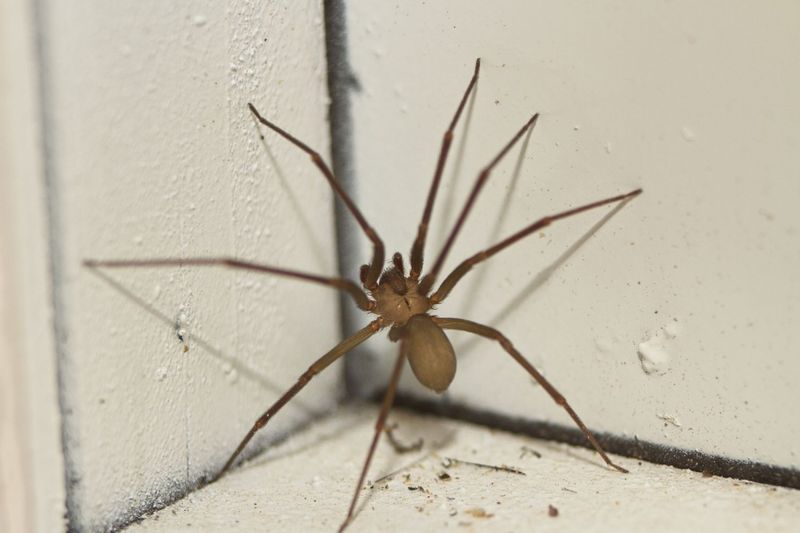
When clues do not settle the question, keep your distance. Do not handle the spider, and do not try to squash it or pick it up.
Take a clear photograph from a safe distance, or contain a specimen only if you can do so without touching it or risking a bite.
Then ask for help. MSU advises sending your photo or specimen to MSU Plant & Pest Diagnostics for confirmation.
It also recommends confirming the identification before considering professional pest control, since control can be difficult and may not be needed for a harmless spider.
You can cut down on surprise contact in the meantime. Poison Control suggests a few habits that help.
Shake out stored clothing, shoes, gloves, and blankets before using them. Reduce clutter in basements and storage areas, since fewer hiding spots means fewer surprises.
Glue traps can also be considered to see what is crawling around.
These are ways to lower the chance of contact, not guarantees. If you suspect an infestation, a pest professional can help once the spider has been properly identified.
Treat a skin lesion as a medical question, not an identification test
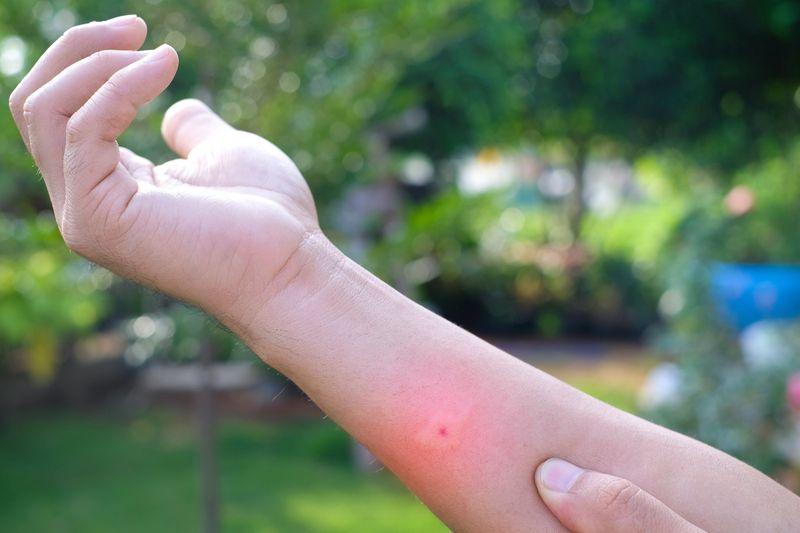
A mark on the skin cannot tell you which creature caused it. Poison Control notes that several infections, other bites, and circulation-related conditions can look like a brown recluse bite.
Without seeing and correctly identifying the spider, a diagnosis is very hard.
That is why guessing from how a wound looks is a poor idea. Calling a sore a recluse bite can delay proper care for something else entirely.
Leave the diagnosis to a medical professional.
If you think a spider bit you, wash the area with soap and water. Then call Poison Control at 1-800-222-1222 for guidance on what to do next.
Reach out sooner rather than later if the area worsens or you feel unwell.
There is some reassurance here too. MSU reports that most confirmed brown recluse bites cause no reaction or only a small reaction, and that necrotic lesions are rare.
No one can promise a particular outcome, but tissue damage is not a given.
Compare, don’t handle, and confirm
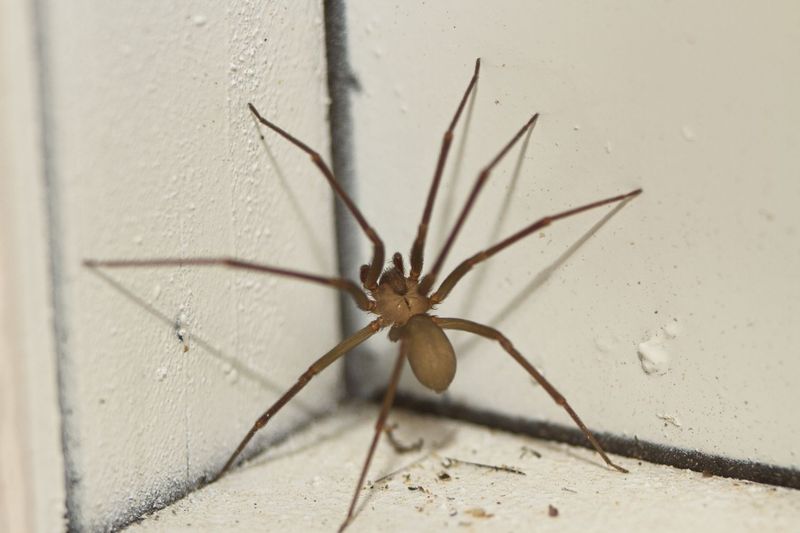
Cellar spiders and wolf spiders have recognizable clues, but a violin-like mark or a basement location cannot confirm a brown recluse. Michigan records, including isolated populations confirmed by MSU, make the possibility real but uncommon.
Looking from a distance and asking an expert beats a close inspection every time, because even markings people trust can mislead.
A good photo and a patient expert will tell you more than any shortcut a spider’s back can offer.
Share this story