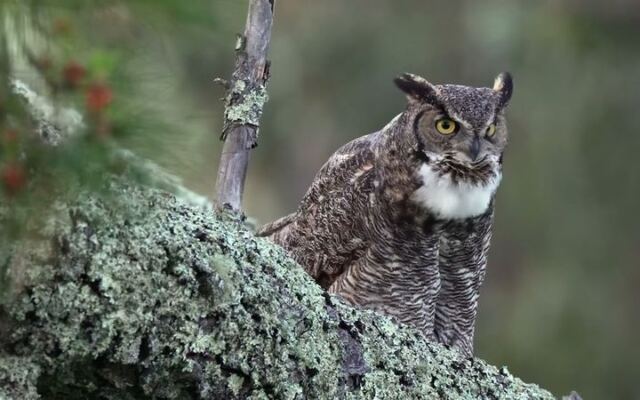
Repeated hooting outside your window most likely means owls are talking to each other. They may be marking their territory or calling to a mate, and in New Jersey that chatter gets louder as winter breeding season begins.
The sound can be eerie in the dark, but it is ordinary bird behavior. Here is what the calls can and cannot tell you, and how to share your neighborhood with these big night hunters.
Hooting is a form of owl communication
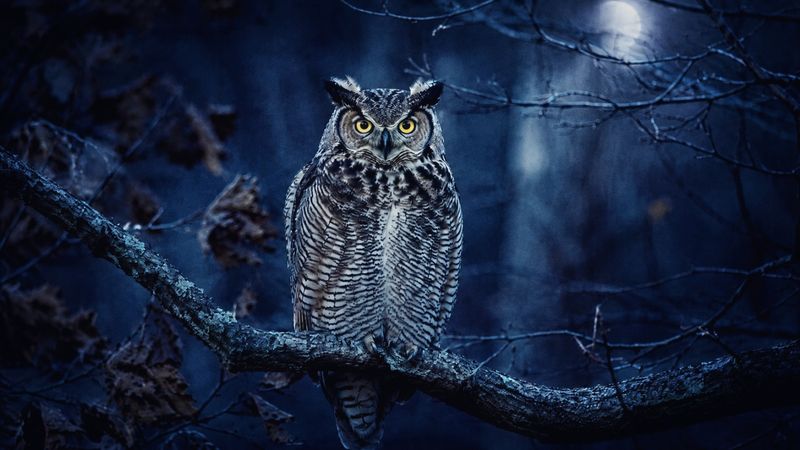
Owls cannot text or phone each other, so they use sound. Great horned owls use deep hoots to share information across dark woods and backyards, where it is hard to see far.
Hooting is simply how they stay in touch.
Two jobs stand out. Cornell Lab life history notes describe mated pairs defending territories with vigorous hooting, especially before egg-laying in winter and again when young birds disperse in fall.
Calls also help owls find and keep mates.
Those are common explanations, not a decoder ring. Hearing one owl hoot at 2 a.m. does not tell you whether it is claiming space, answering a partner, or doing something else.
Owls are not announcing anything about you, either.
The same goes for old stories about owl calls. Nothing in the research links hooting to death, bad luck, storms, or any event in human life.
It is biological communication between birds.
The Cornell recordings of great horned owl sounds are a good way to hear what a typical call sounds like. Hearing it does not signal danger.
An owl that is hooting is usually just a bird going about its night, and it is often a sign that your area has enough habitat to support a top predator.
Why winter calls stand out in New Jersey
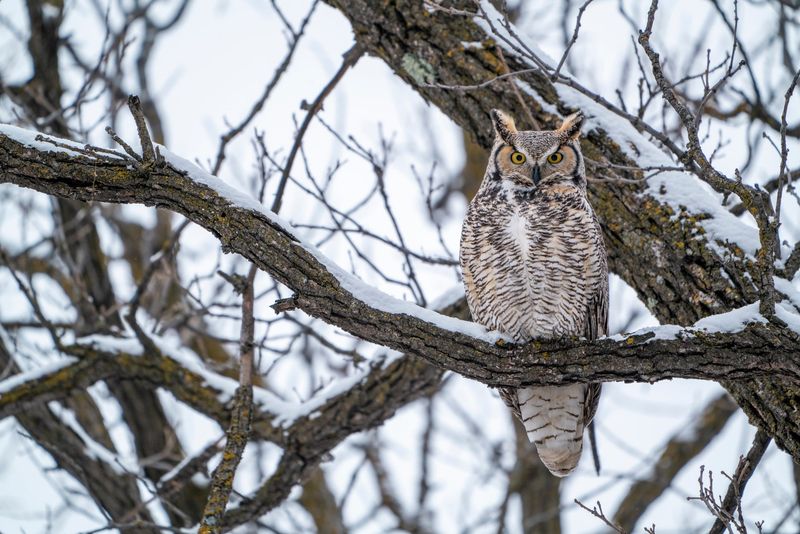
Winter nights are quiet, and that makes owl calls easier to notice. Leaves are off the trees, insects are silent, and sound carries farther through cold air.
A voice that was there all year suddenly seems to be everywhere.
Great horned owls live in New Jersey year-round, so they are not newcomers. According to New Jersey Conservation Foundation, their breeding season begins in early winter.
Mating and nesting activity has been reported in December, with mating continuing into January and early February.
Timing varies from year to year and from owl to owl, so no single date fits everyone. Weather, food, and local conditions can all shift things.
Treat the dates as a general window rather than a schedule.
That window helps explain why residents often start hearing more hooting around the holidays. The foundation’s article on winter raptors describes how these birds get an early start on family life while many other species are still waiting for spring.
Still, a call in January does not prove breeding is underway at your address. Owls hoot at other times too, including in fall.
The season simply makes it more likely that the calling you hear is tied to pairing and territory.
Could the caller be a great horned owl?
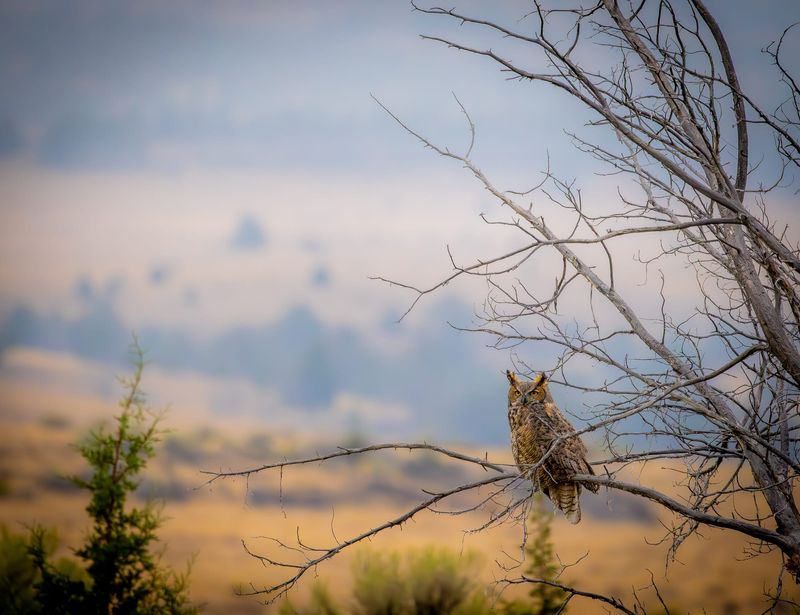
A typical great horned owl call is a series of deep hoots, often with a steady rhythm. New Jersey Conservation Foundation describes it as distinctive, which is helpful if you know what to listen for.
Pairs sometimes call back and forth. According to Cornell’s sound guide, a male and female may duet, and the female’s call is higher-pitched.
If you hear two different pitches trading hoots, that may be what you are hearing.
Even so, the word hooting by itself cannot confirm the species. New Jersey has several kinds of owls, and a sound heard through a bedroom wall in the dark is easy to misjudge.
Hooting also cannot tell you the caller’s sex or how many birds are out there. One owl can sound like two when sound bounces off houses and trees.
If knowing matters to you, play a recording from a reliable species guide and compare it with what you hear. Notice the number of notes, the rhythm, and the pitch.
Write down the date and time, too.
When the match is close but not certain, it is perfectly fine to say it is probably a great horned owl. That honest answer is enough for most backyard listeners.
A call does not locate a nest
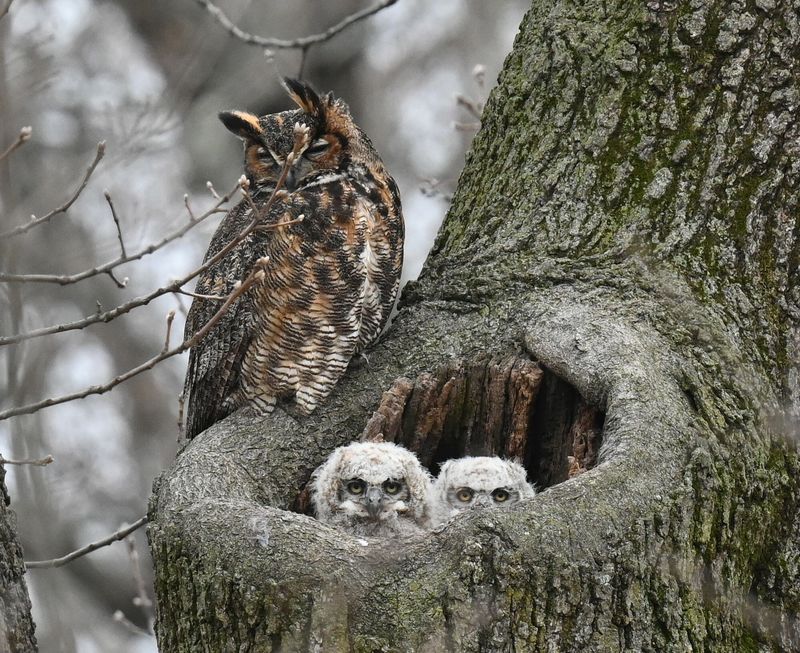
Some people hear hooting and assume a nest is in the backyard oak. That is a natural guess, but the sound alone cannot show whether an owl is nesting on your property or where a nest might be.
Owls can call from a long way off.
Finding a nest is harder than you might expect. As Cornell Lab life history information explains, great horned owls use existing nests rather than building their own.
They may take over an old hawk or crow nest, which blends into the treetops.
Because there is no obvious owl-built structure to look for, a nest can sit unnoticed for weeks. Leafless winter trees reveal more, but even then, a big bundle of sticks may be only an old squirrel or hawk nest.
If you suspect a nest, the best move is to watch from a distance, such as from a window or from across the yard. New Jersey Conservation Foundation encourages people to enjoy these birds without disturbing them.
Do not climb, shake branches, or walk under a spot where you think a nest might be. Skip flash photography and spotlights too.
Hooting on its own generally calls for no action at all, and leaving things alone is the helpful choice.
Small precautions help people and pets coexist with owls
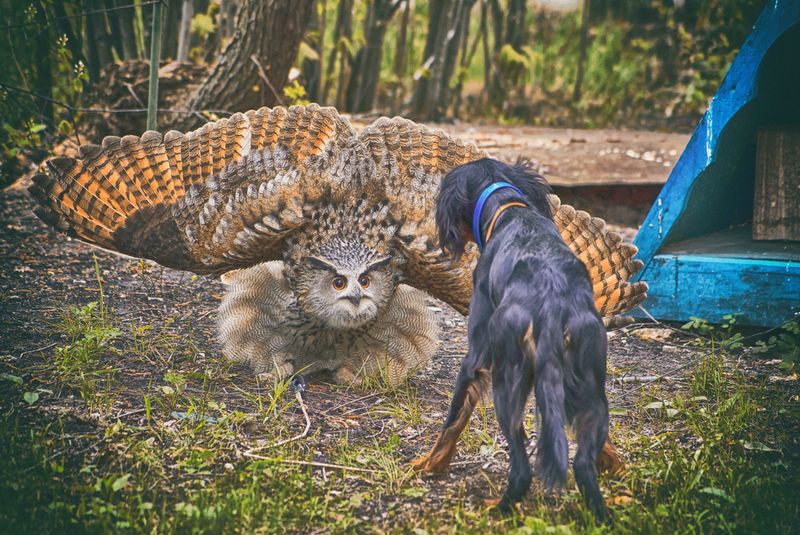
Living near owls takes a few easy habits, not big changes. If you have a small dog or cat, keep it supervised and close when it is outside, especially at night and around dawn and dusk.
A short leash or a quick check at the door is plenty.
These steps are sensible, but they do not mean New Jersey owls are a known threat. The North Carolina Wildlife Resources Commission says an owl is unlikely to carry away a pet, though rare dives at small dogs or cats have been reported.
That is general wildlife guidance from another state, not a New Jersey risk estimate.
A few easy yard habits can add peace of mind. Turn on a porch light before letting a pet out, stay within sight, and bring cats in after dark.
Walk with a flashlight so you can see what is around.
There is one more thing owls would ask of you, if they could. Skip rodent poison.
New Jersey Conservation Foundation cautions that owls may eat poisoned mice.
Sealing gaps in sheds and garages, storing birdseed in tight bins, and using traps that do not poison wildlife can keep mice down. Owls often help with that job themselves.
When should you seek wildlife help?
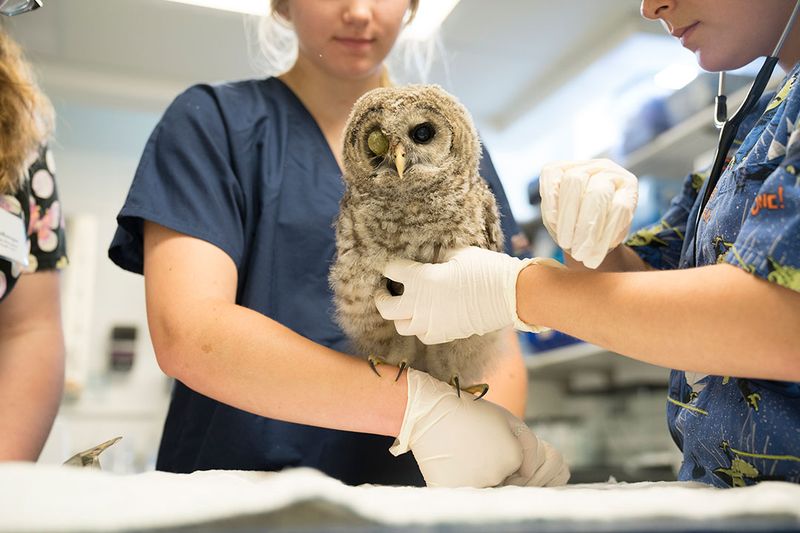
Ordinary hooting needs nothing from you. Help becomes a question only when you see something different, such as an owl on the ground that cannot fly, a visible wound, or a bird that seems weak or soaked.
If an owl appears injured, contact a permitted New Jersey wildlife rehabilitator. The NJ Fish and Wildlife rehabilitator information page explains how to find one.
Do not handle the bird, and do not take it home or keep it. Talons and beaks are powerful.
Young animals can fool us. NJ Fish and Wildlife guidance on young wildlife notes that young wildlife may look abandoned even when parents are nearby, and that possessing injured, orphaned, or ill wildlife without a permit is unlawful.
If you find a young owl, keep your distance and call for advice instead of rescuing it yourself.
Adult owls may defend their young. If an owl swoops or acts defensively, the North Carolina wildlife agency advises people to leave the immediate area.
Walk away calmly and avoid the spot for a while.
Great horned owls are also federally protected. The U.S.
Fish and Wildlife Service says the Migratory Bird Treaty Act prohibits taking protected birds without authorization. Do not capture, harm, or try to remove an owl.
If a nest or an owl is causing a specific concern, contact wildlife authorities.
Give nearby owls room
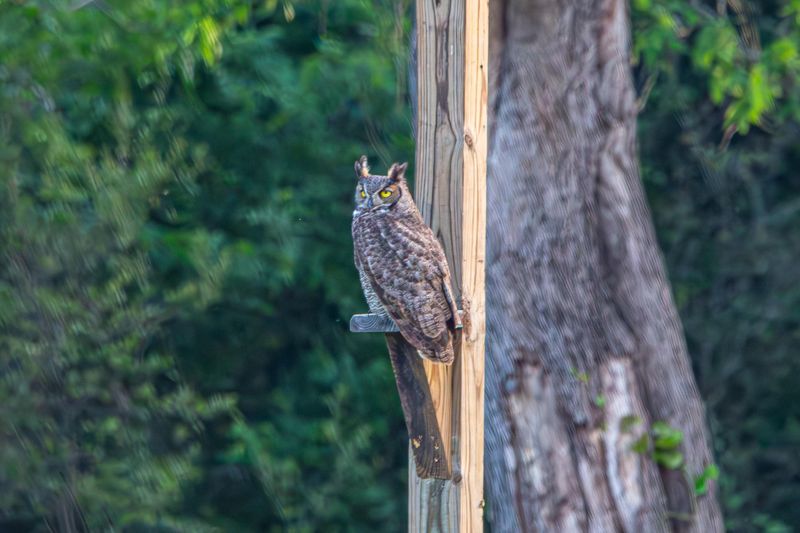
Think of those hoots as neighbors talking, not a message meant for you and not proof of a nest. Cornell’s life history notes show how normal the calling is.
Watch from a distance, and save any action for an apparent injury, when a permitted rehabilitator can help, or for a specific concern to raise with wildlife authorities.
A winter night with an owl calling nearby is a small gift, so open the window and listen.
Share this story