Yellow jackets near your home can be handled safely by cutting off their access to food and staying away from any nest you suspect. You do not need to wipe out every wasp in the neighborhood.
What matters most is where a nest is and whether your family can easily keep clear of it. Here is how to cut down on close calls and pick a smart next step.
Start by reducing encounters, not chasing a nest
Picture a backyard cookout where a few wasps keep circling the soda cans. The best first move is not to hunt for a nest.
It is to make your space less rewarding for the wasps and give them fewer reasons to bump into people.
The New Jersey Department of Health, in its home pest management guidance, recommends limiting yellow jackets’ access to food around people. It also frames the goal as managing encounters around where people live and play, not clearing yellow jackets from a whole area.
That approach makes sense because yellow jackets are predators of other insects. They feed on many pests, so wiping them out everywhere is neither realistic nor necessary.
The real aim is a calmer yard and fewer stings.
Two questions will guide most of your decisions. Where is the suspected nest, and can everyone in your household reliably keep clear of it?
A nest tucked in a quiet corner of the property is a very different situation from one beside the back door.
The sections ahead walk through each step. You will learn how to size up what you are seeing, tidy up the attractants, react calmly to wasps, and decide when a professional makes sense.
Removal is a decision you make based on the situation, not an automatic reflex.
Is that wasp actually a yellowjacket?
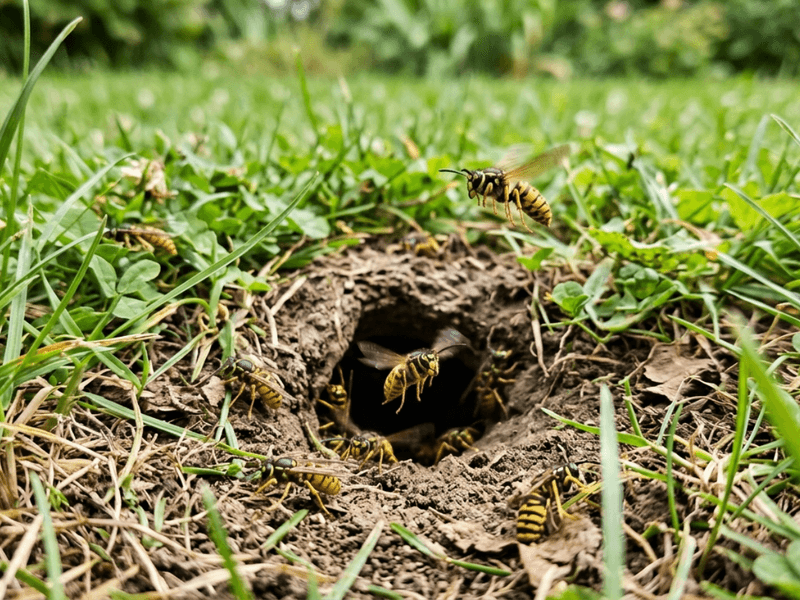
Seeing a black and yellow insect near your picnic does not tell you what it is. Several wasps and bees look alike at a glance.
A single sighting also says nothing about where a nest might be hiding.
Late-summer activity near food can fool people too. Foraging workers wander far from home looking for sugar and protein, so a wasp on your soda can does not prove a nest is close by.
UC IPM guidance on social wasps cautions that identification and nest location should not be guessed from one observation.
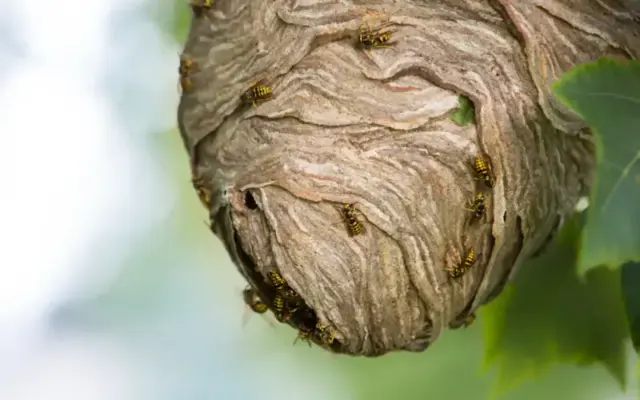
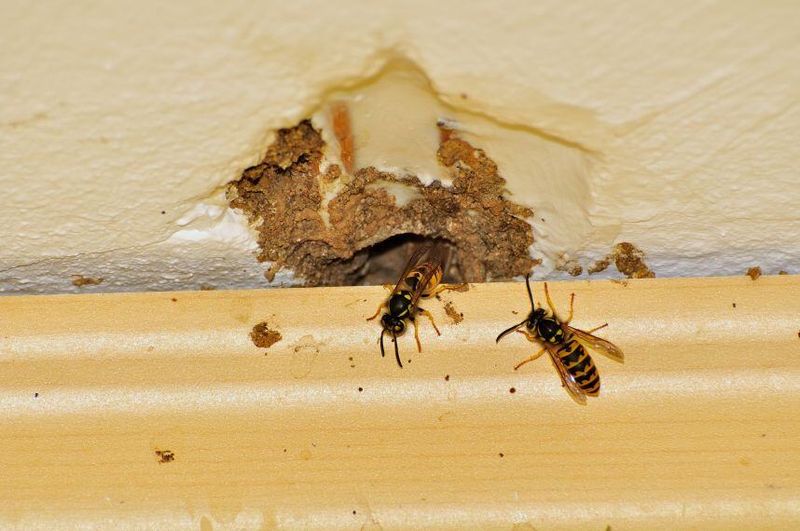
Yellow jackets can nest underground, often in old rodent burrows, or inside building cavities such as wall voids. Some nests go unnoticed until the colony grows and worker traffic picks up.
By then, you may suddenly see many wasps coming and going from one spot.
If you suspect a nest, watch from a comfortable distance. Note whether wasps repeatedly fly to and from the same opening, and write down the spot so you can steer people away from it.
Do not poke, spray, or stand close to get a better look. Disturbing a nest is the fastest way to get stung.
There is no reliable visual shortcut for naming a nest from afar, so patience and distance are your best tools.
Make the yard less inviting
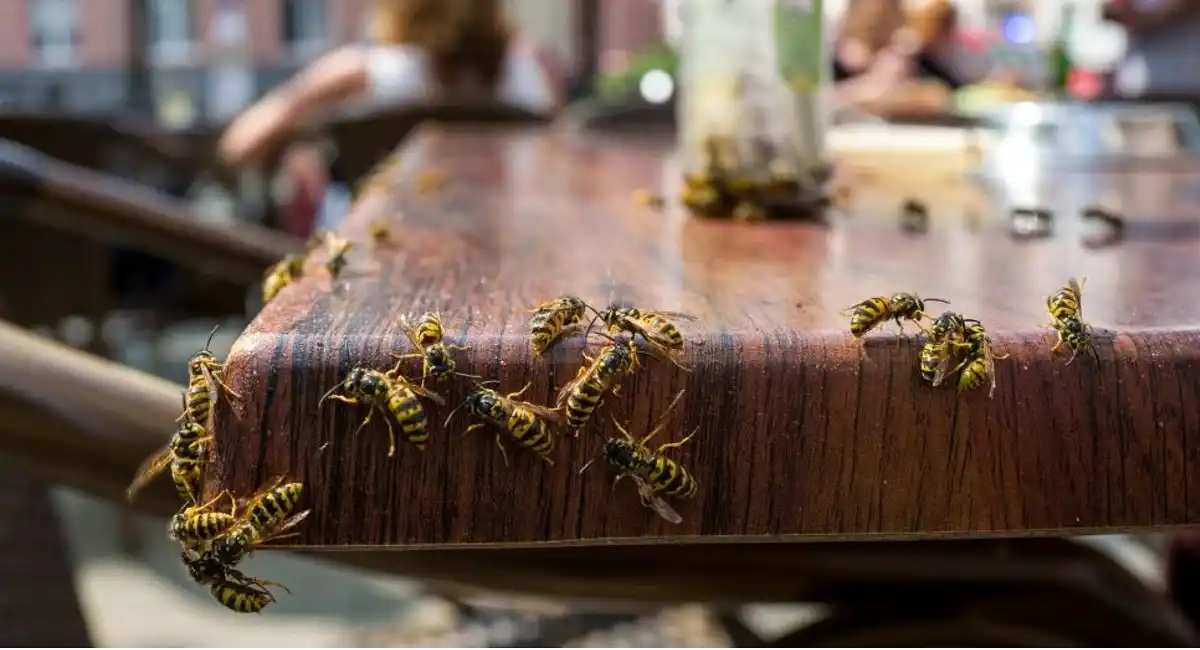
Cutting off food is the easiest and safest thing you can do. Cover food and drinks when you eat outdoors, and check cans before you sip, since wasps love sweet drinks.
Keep garbage cans clean and tightly closed, and pick up ripe fallen fruit from the lawn.
The New Jersey Department of Health also lists repairing screens and sealing building gaps as ways to keep stinging insects out of the house. Fix torn window and door screens so a stray wasp cannot wander inside.
Gap sealing comes with one firm limit. Seal only openings that are not being used by an active nest.
If wasps are flying in and out of a gap, do not seal that suspected active entrance, and ask a professional for advice instead.
The reason is practical. Penn State Extension warns that workers trapped inside can chew or find another way out, which could lead them into your living space.
Keep expectations realistic. These steps lower the number of wasps visiting your patio, but they will not make an established nest disappear.
Think of them as a way to reduce nuisance visits while you decide what to do about any nest.
Stay calm around active wasps
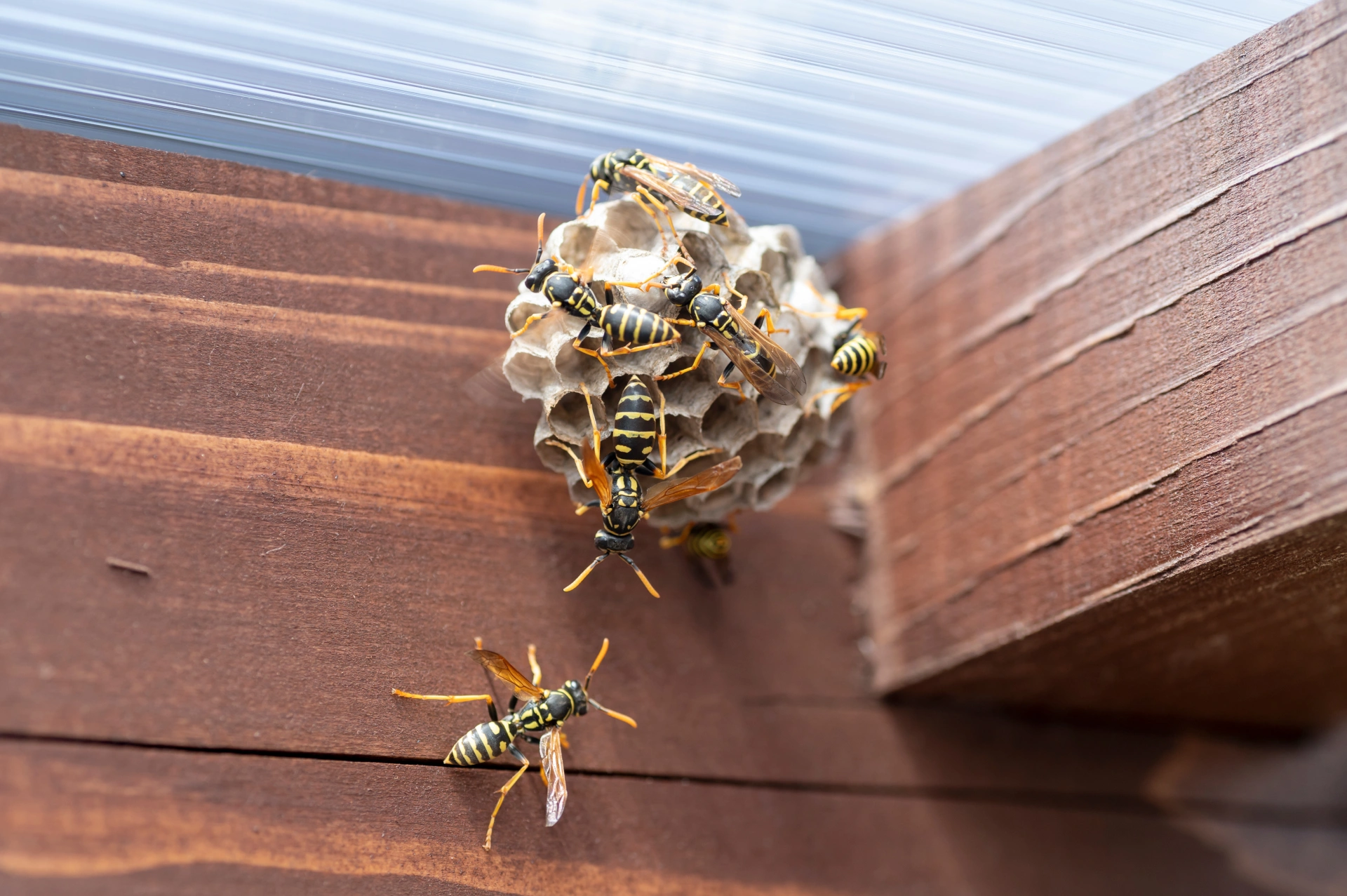
Quick, flailing movements make wasps defensive. Keep well away from any suspected nest, and avoid mowing, trimming, or running equipment near one.
Vibrations and noise can set off a crowd of guards.
If a wasp lands on you, resist the urge to swat. UC IPM advises gently brushing it away or simply waiting for it to leave.
Then walk away slowly.
Most stings cause pain, redness, and swelling around the spot. That is an ordinary local reaction, and washing the area and applying a cold pack usually helps.
Keep an eye on the person for a while afterward.
Some reactions are different. Trouble breathing or swallowing, swelling of the face or mouth, faintness, or other signs of a severe allergic reaction need emergency help right away.
MedlinePlus advises calling 911 for serious allergic reactions.
Anyone with a prescribed epinephrine auto-injector should follow their emergency plan. Tell the people around you where the injector is kept before you head outside.
A sting is not always only a local problem, so know the warning signs ahead of time.
Let the nest’s location guide your next step
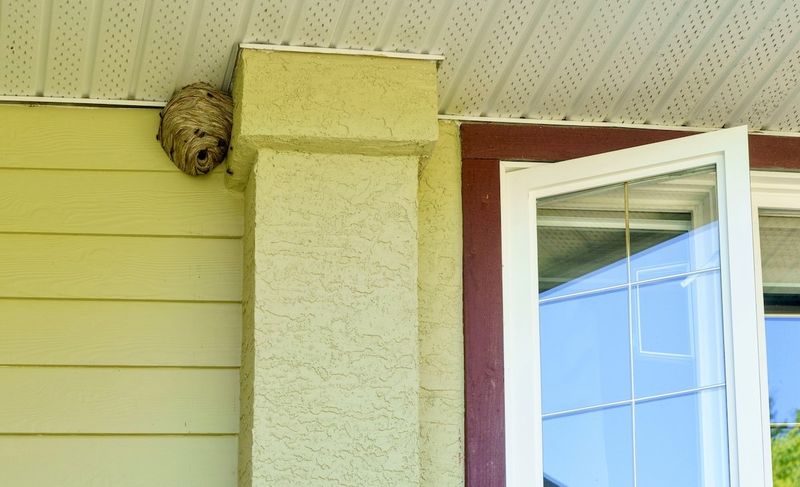
Finding a nest does not automatically mean it has to go. What matters is the exposure: how likely are people to get close to it?
A nest at the far edge of a property that nobody visits may pose little everyday risk if your family can reliably keep clear.
Compare that with a nest beside a doorway, a walkway, or a spot you use often, like a deck or play area. Repeated close encounters make accidental disturbance far more likely.
University of Minnesota Extension describes hidden nests in buildings as especially hard to control and says professional help is usually the best option for those cases.
A visible entrance can also mislead you. A hole in the lawn or a gap in siding may not show how big the colony is or where it sits inside a wall or other cavity.
Treating only the opening you can see may not reach the hidden colony.
Ask yourself a few practical questions. Can I see the nest or only the entrance?
Can children, pets, and guests easily avoid the area? Do I walk past it daily?
Contact a pest-management professional if the nest is hidden or inaccessible, or if people cannot readily avoid the area. Penn State Extension also notes that active entrances should not be blocked.
If the nest is out of the way and everyone can stay clear, leaving it alone can be a reasonable choice.
Know the limits of traps and DIY treatment
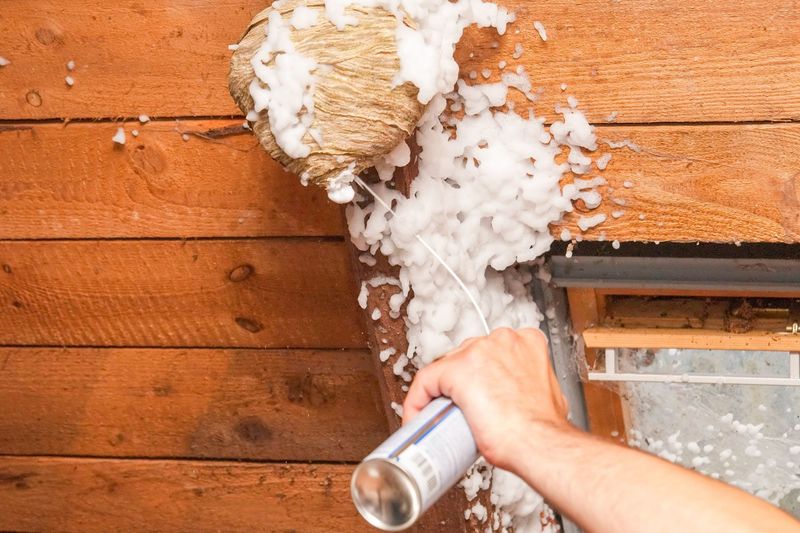
Traps can feel like a fix, but their effect is small. UC IPM notes that traps may reduce some foraging workers locally but usually do not bring numbers down to acceptable levels.
They do not reliably eliminate a colony. If you use one, place it away from where people gather so it does not pull wasps toward you.
Decoy paper-bag nests are another popular idea. There is no clear evidence that they prevent nesting, so do not count on one to keep wasps away.
Some home methods are plainly unsafe. Penn State Extension rejects fire and gasoline because of the risk of burns, fires, and contamination.
Plugging an active entrance is also a bad idea, since workers may find a new exit, possibly into your house.
Common aerosol sprays may not control an entire underground nest. Used on a hidden nest in a building, they can push wasps toward the inside of your home.
No do-it-yourself method is reliably effective for hidden colonies.
If you do use a pesticide, choose only a product labeled for the pest and the site, and follow that product’s own directions. Labels differ, as shown by an example EPA-registered label, so one product’s steps do not apply to another.
When the nest is hidden or hard to reach, a professional is the safer call.
Winter changes the nest outlook
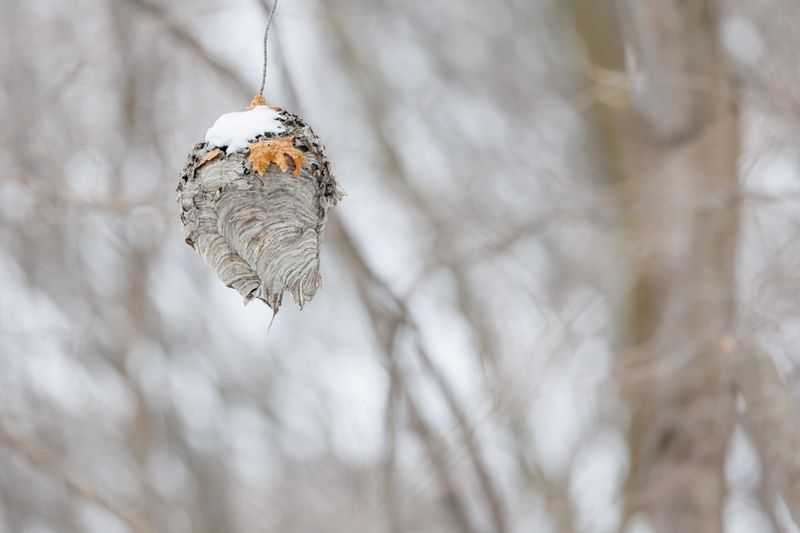
Cold weather brings relief from most yellow jacket trouble. Most colonies last only one season.
As winter approaches, the workers and the old colony die, while new queens find sheltered spots to overwinter and start fresh colonies the following year.
There is one exception worth knowing. Penn State Extension describes occasional survival in warm, insulated structures.
That does not mean every nest survives winter or gets reused, so an empty nest is usually just that.
Season timing also helps you plan. Late summer and fall tend to bring more worker activity around food, so that is a good time to double down on covered drinks and closed garbage cans.
Winter is a quiet moment to check for gaps, as long as no active nest is using them.
The practical decision stays the same all year. Reduce what attracts wasps, as the New Jersey Department of Health recommends, and keep clear of suspected nests.
When a nest is hidden or keeps causing close encounters, bring in a professional, which University of Minnesota Extension also favors for hidden building nests. Otherwise, a quiet nest far from foot traffic can be left to end its own season.
Wasps follow the calendar, and your best defense is a calm, steady plan.
Share this story