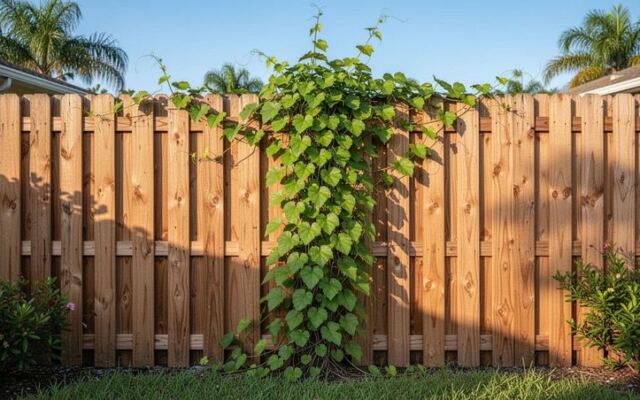
In Florida, you can generally trim a neighbor’s vine back to your side of the property line, and you pay for the work yourself. That sounds simple, but the fence in your yard may not sit on the real boundary.
A wrong cut can also spark a fight or hurt a plant that belongs to someone else. Here is how to handle it the careful way.
Florida’s trimming rule is general, not a vine-specific law
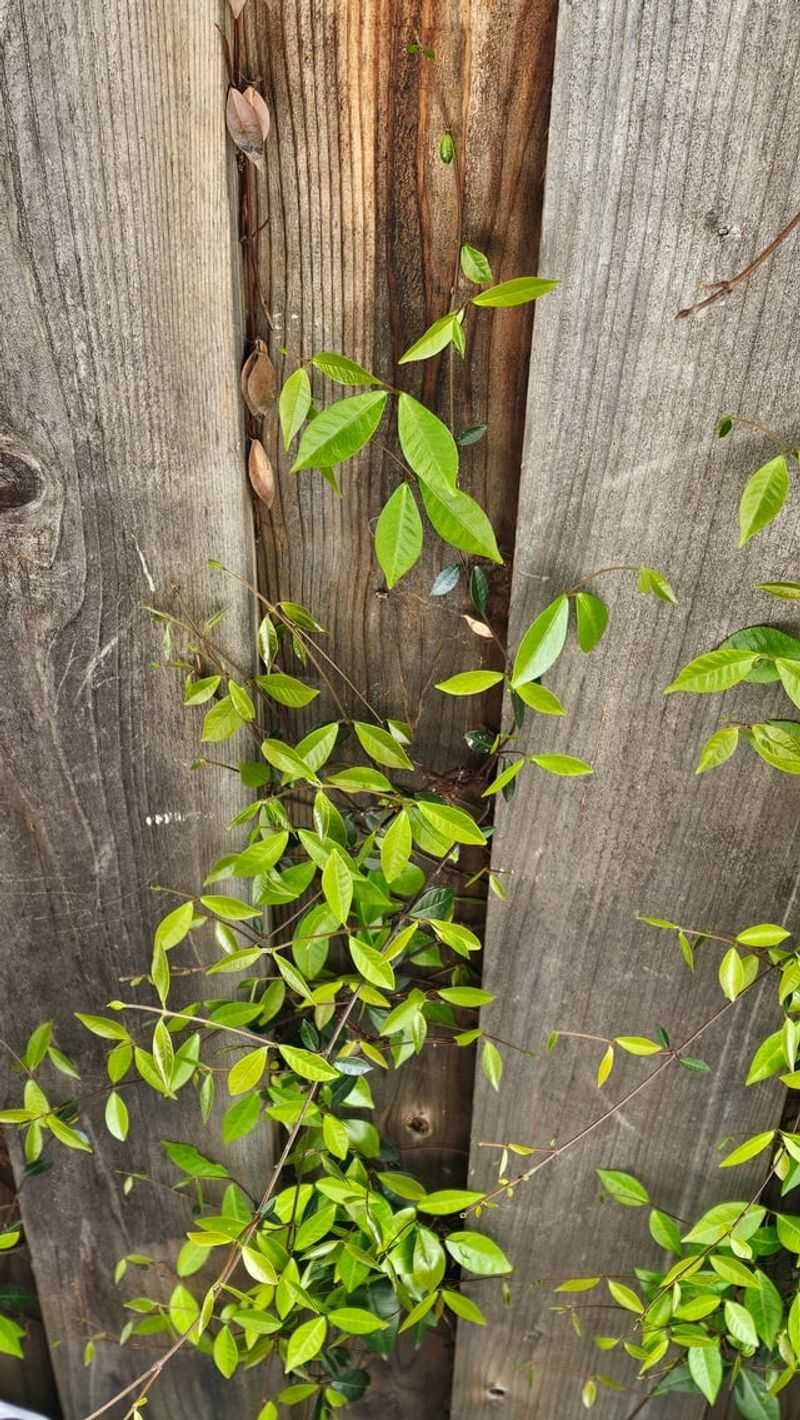
No Florida statute says, in so many words, that you may cut your neighbor’s vines. What exists is a general common-law self-help rule.
UF/IFAS’s property-law handbook summarizes it this way: an adjoining owner may trim vegetation that grows onto their land, up to the property line, at their own expense. The handbook speaks of “other vegetation,” so vines fit within its wording.
The court cases behind the rule, though, mostly deal with trees. Florida appellate decisions such as Balzer v.
Ryan discuss tree branches and roots. No court has specifically ruled on trimming a neighbor’s vine, so treat the rule as a general guide and not as a vine permit.
A recent case adds another reason for caution. In Vaughan v.
USMI Properties Five, LLC, the Sixth District Court of Appeal looked at a dangerous, decayed tree and a negligence claim. It was not a vine case.
The court declined to decide whether Florida recognizes the broader trimming rule in that situation.
That opinion also was not final until the rehearing period ran out and any timely rehearing motion was resolved. So the safest reading is that the self-help rule is widely described, but its edges are not fully settled.
Keep that in mind before you pick up the pruners.
Does the fence mark the property line?
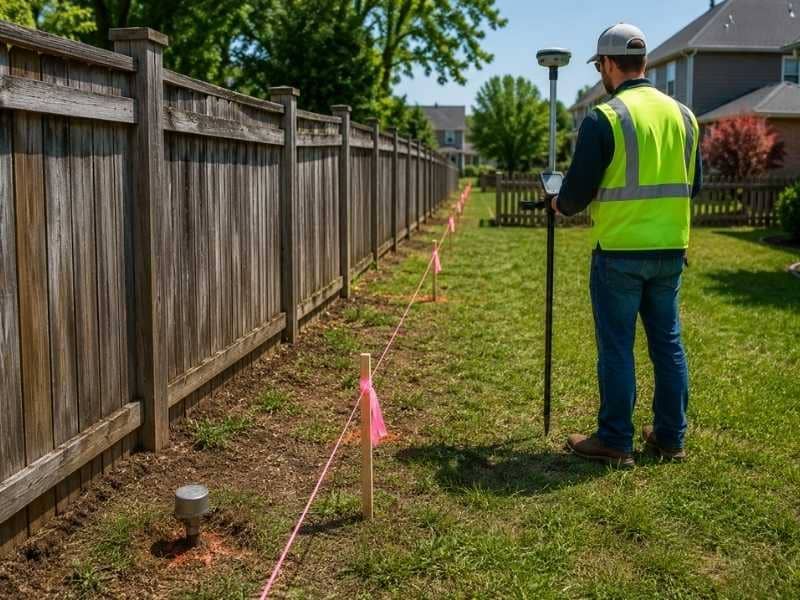
Many people assume the fence sits exactly on the boundary. Often it does not.
UF/IFAS boundary guidance explains that a fence alone is not enough to establish a disputed property line.
That matters because the trimming rule stops at the actual line, not at the fence. If the line is unclear, clarify it before you cut.
A survey or other reliable boundary records can settle the question.
Two habits can help, though the sources do not call them legal requirements. First, take dated photos showing where the vine crosses.
Second, think about talking with your neighbor first. The UF/IFAS Hillsborough County Extension encourages communication between neighbors.
A friendly chat can save you a feud. Your neighbor may even offer to remove the vine, or may tell you a plant matters to them.
Either way, you will know more than you did at the fence.
The property line limits where you cut
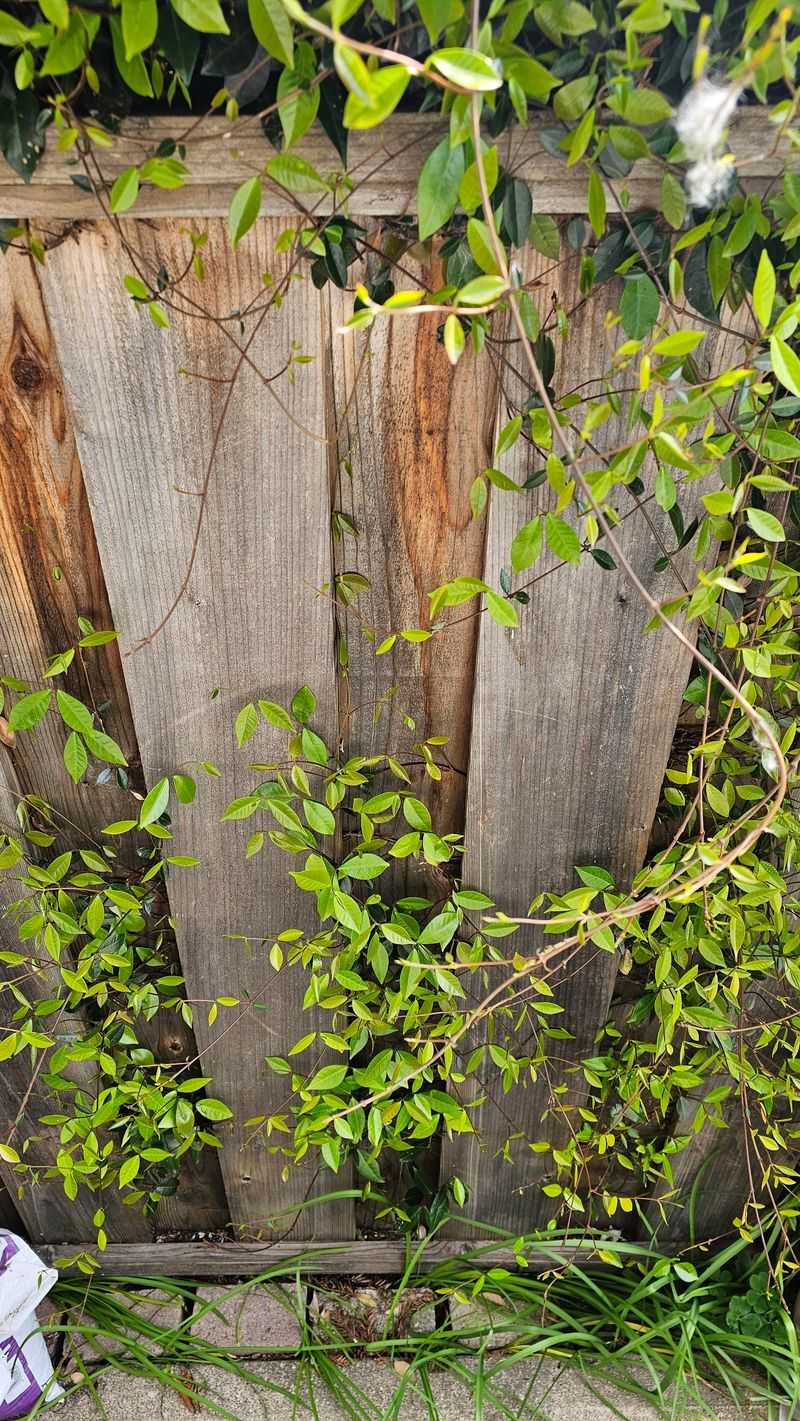
Picture a string stretched along the true boundary. The trimming rule lets you cut what crosses that string onto your side.
According to the UF/IFAS handbook, the work is at your expense and only up to the line.
That means you do not step into the neighbor’s yard to cut. You also do not follow the vine to its roots on their side.
Those moves go beyond what the guidance describes.
What if your cut harms the plant? The sources do not give a clean answer.
In Balzer, the First District said it found no controlling Florida precedent on liability when self-help damages an encroaching tree, and it denied review under a narrow standard. The later Sixth District opinion left the broader question open too.
So do not assume you will be liable, and do not assume you are safe. Trim only what hangs over your side, keep cuts modest, and avoid anything that could kill the whole plant.
Identify the vine before handling it
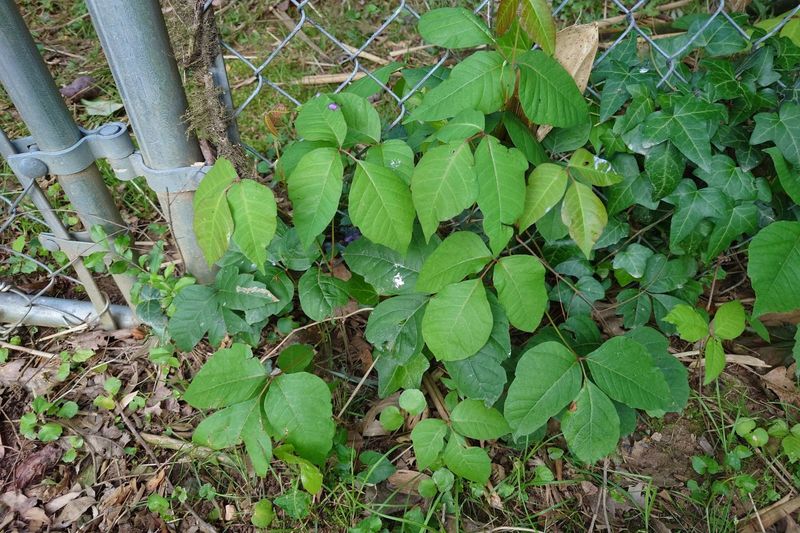
Not every fence vine is friendly. Poison ivy can grow right on fences, and UF/IFAS notes that all parts of the plant, even bare vines, can contain urushiol, the oil that causes the rash.
That means a leafless winter vine can still irritate your skin. If you cannot tell what you are looking at, do not guess and start yanking or cutting.
Your county Extension office is the best place to turn. UF/IFAS vine removal advice says to identify the vine first and use Extension for identification or control guidance.
Take clear photos of the leaves, stems, and any flowers or berries. Share them with the office, and wait for an answer before you touch the plant.
Cut the vine instead of pulling it down
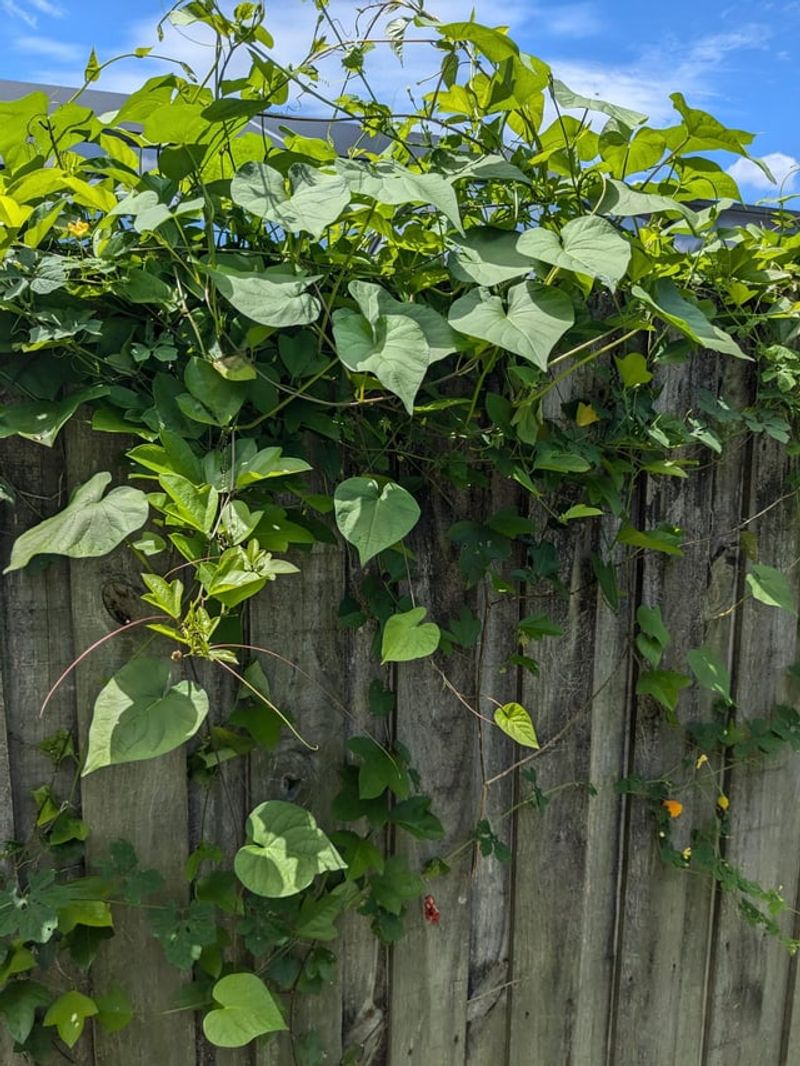
Yanking feels satisfying, but it can cause damage. UF/IFAS advises against pulling vines off fences, trees, walls, or trellises, because the force can harm the support.
Cutting is the safer choice. Snip the vine where it crosses onto your side, and leave the pieces still clinging to the structure instead of tearing them away.
Keep every cut at or inside the property line. Do not reach over to the neighbor’s side to chase the stem.
If the vine climbs a fence that belongs to the neighbor, pulling could damage their property.
Wear gloves and long sleeves, especially if you are unsure what the plant is. For anything beyond simple trimming, ask your county Extension office before you go further.
Some jobs call for a pause, not a pair of pruners
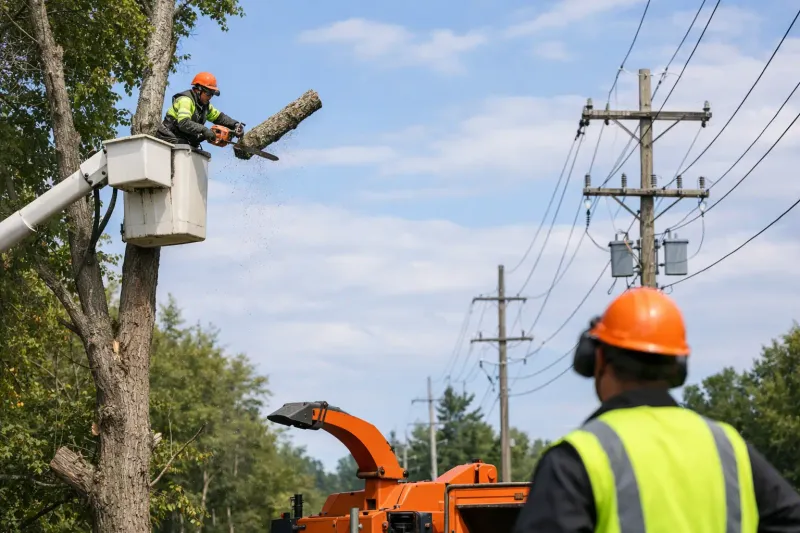
Some situations are simply not do-it-yourself. Never prune near power lines.
UF/IFAS warns that limbs touching power lines are a serious hazard. If a vine or branch is near a line, call the utility company.
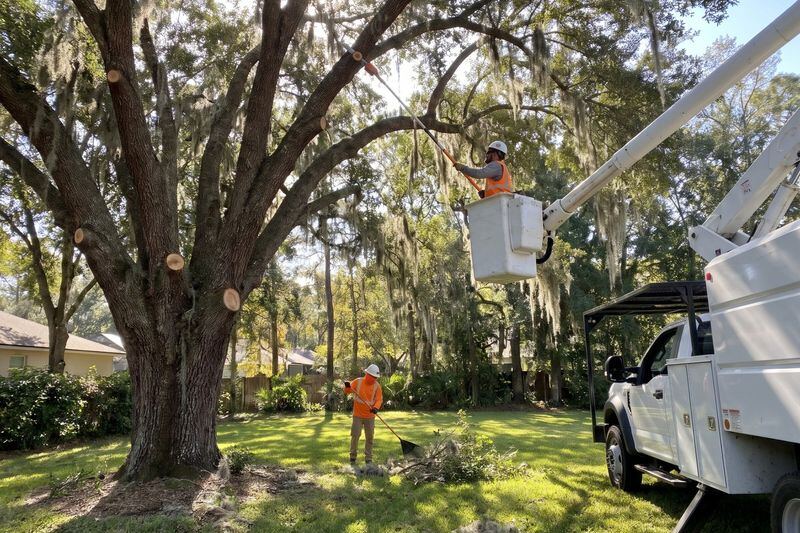
Vine cutting is also different from tree work. For work beyond minor pruning, UF/IFAS recommends hiring an ISA-certified arborist, especially for trees taller than about 15 feet.
A heavy limb with a vine wrapped around it is a tree job.
Local rules may matter too, particularly if the plant is a tree or protected vegetation. Florida Statute 163.045 is narrow.
It deals with local permitting for certain tree work on qualifying single-family residential property when the owner has specific documentation that a tree poses an unacceptable risk.
It is not a general right to trim vines, and it does not exempt ordinary vine cutting from anything. When in doubt, check your city or county rules before cutting.
A careful cut starts with the boundary
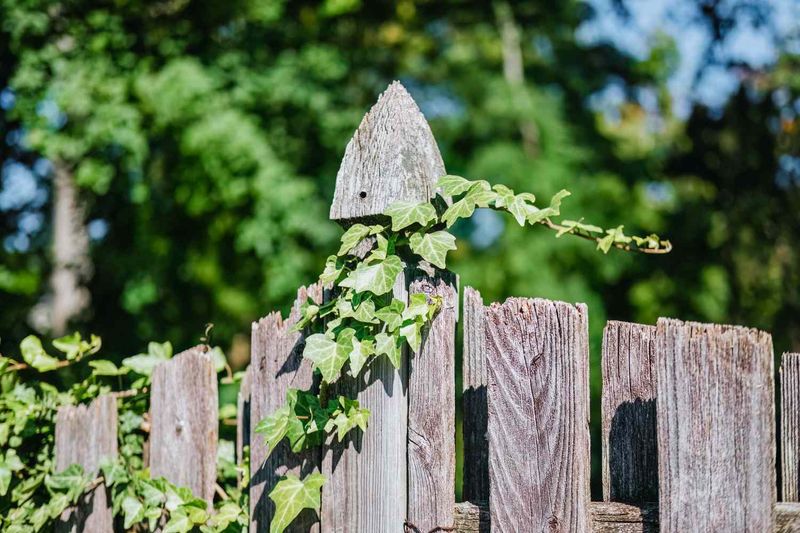
Confirm the real property line, consider a friendly word with your neighbor, and identify the vine. Then cut only what crosses onto your side, as the UF/IFAS handbook describes.
Remember that fences do not prove boundaries, and that cutting beats pulling.
Pause if the line is unclear, the cut could hurt the plant, or the job feels hazardous. A vine grows back, but a bad neighbor dispute can last for years.
Share this story