A tiny, fast-moving animal slips through leaves and dirt, and some people say its saliva is venomous. That claim is partly true, partly uncertain, and often told with more confidence than the science allows.
If you garden or rake leaves in Alabama, it helps to know what this shrew is, where it might show up, and what to do if you ever get nipped. Here is a clear look at the facts and the gaps.
Can Alabama shrews turn up in mulch?
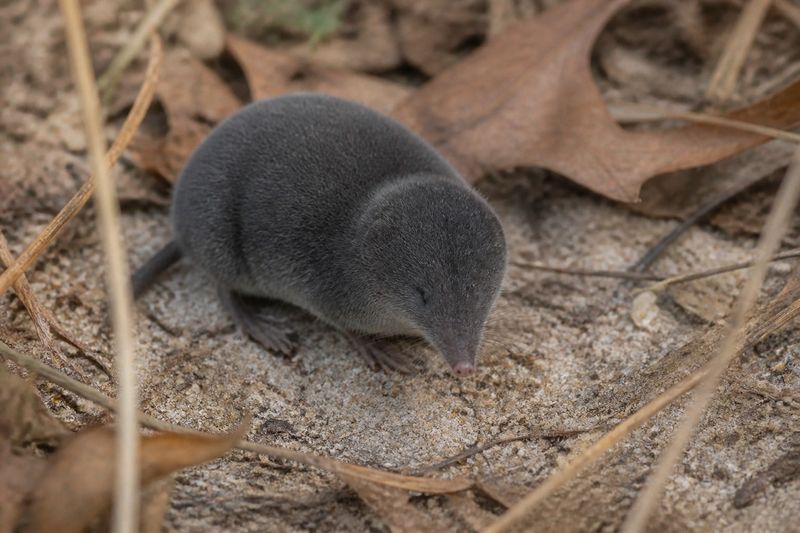
The southern short-tailed shrew, Blarina carolinensis, does live in Alabama. Alabama’s wildlife agency says it is found statewide except in the northeastern region.
The same account calls the animal poorly known in the state and says it may be common in a variety of habitats.
That wording matters. It does not say the shrew is common in yards or garden beds, and no source we reviewed shows a steady population in home landscaping.
What the agency does describe is a taste for covered ground. Its preferred settings include moist, well-drained hardwood forest or pine stands with deep organic matter and cover.
The animal digs its own burrows and may also use tunnels made by other animals. A Texas Tech species account likewise ties the species to ground with plant cover.
So where does mulch fit in? A thick bed of mulch or a pile of damp leaves offers the kind of cover and organic matter a shrew might use, which makes it a plausible place for a chance meeting.
Plausible is not the same as typical, though. Nothing here shows that shrews routinely root through Alabama mulch or settle in yard beds.
If you turn over a pile of leaves next to a wooded edge and see a small, quick animal dart away, a shrew is one possible explanation. Mice, voles, and young lizards are others.
Treat any sighting as an interesting moment rather than proof of a resident colony.
A shrew is not a thumb-sized rodent
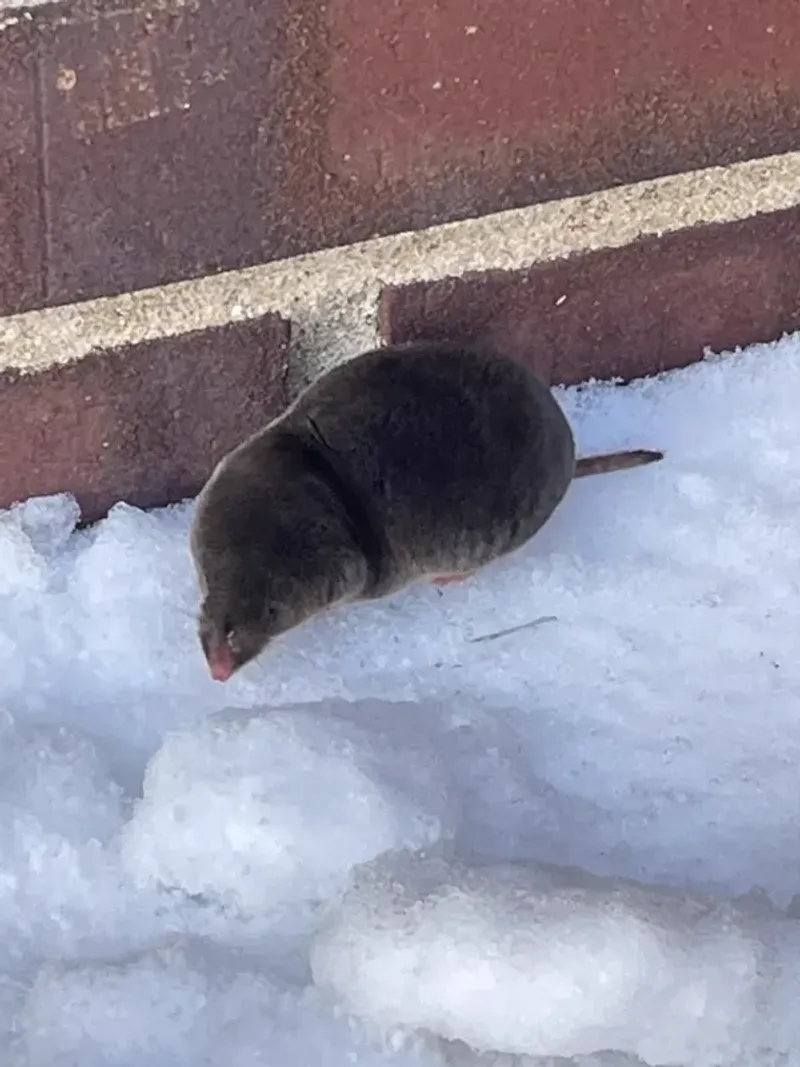
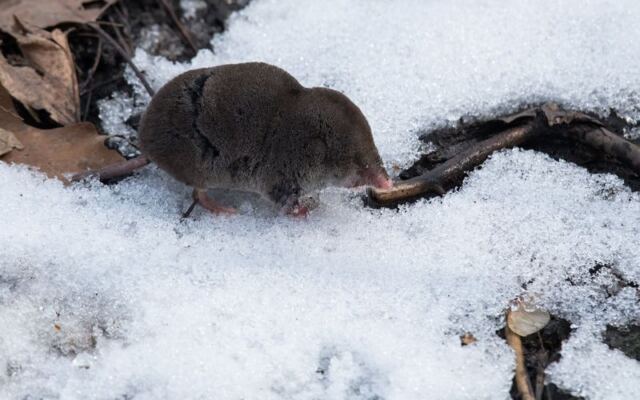
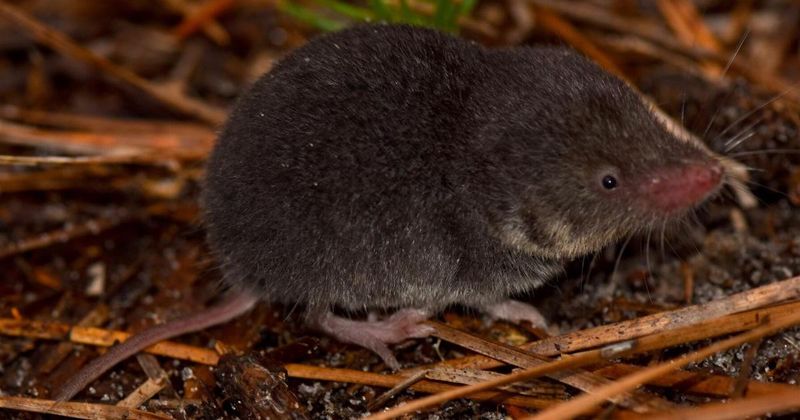
Picture a thumb and you will probably undershoot. Alabama’s account lists a total length of 2.8 to 4.2 inches and a weight of 0.5 to 1.0 ounces.
Light as a few coins, yes, but several inches from nose to tail tip.
The animal is also not a rodent. Shrews belong to a separate group of small mammals, and the differences show up in the face.
A shrew has a pointed snout, while mice and voles have blunter faces with prominent front teeth.
The state description also notes small eyes and small ears, which can be hard to spot on a squirming animal covered in short fur. The forefeet are strong and built for digging, a useful tool for an animal that spends much of its life in burrows and tunnels.
Those traits give you a rough mental picture: a compact, stocky body, a short tail, and a nose that seems to lead the way. Still, a quick flash across a garden path rarely gives enough detail for a sure identification.
Several small mammals share similar colors and sizes, and a brief glimpse can fool anyone.
If you want to know what lives near your home, a clear photo taken from a distance is far more useful than a guess, and it keeps your hands out of the picture.
What does the venom evidence show?
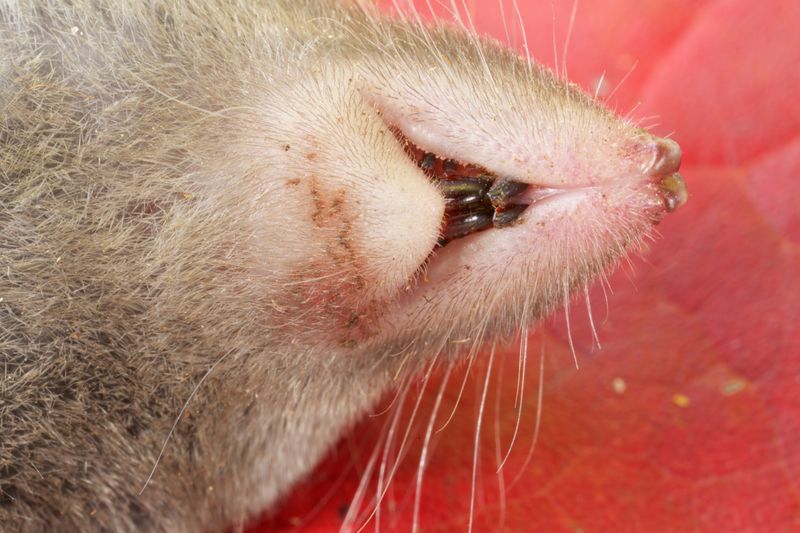
Venom means a toxin delivered through a wound, such as a bite. It is different from being poisonous to touch or eat.
Many people link venom only with snakes and spiders, so a venomous mammal sounds surprising.
Alabama’s wildlife agency describes the southern short-tailed shrew as having mildly venomous saliva that helps it subdue prey. That is a real statement from a state source, and it is why the claim circulates.
Now the catch. A scientific review of venom in shrew-like mammals says the saliva of Blarina carolinensis has not been experimentally tested.
The reason people suspect venom is how prey reacts after being bitten, which is a clue rather than a lab result.
Think of it like seeing wet pavement and guessing it rained. The guess may well be right, but you have not yet checked the sky.
In the same way, the venom idea for this species is reasonable, yet nobody has confirmed it by testing the saliva itself.
That is why careful wording works best: the southern short-tailed shrew is described as venomous by some accounts, and suspected on the basis of prey reactions, but not experimentally confirmed.
It also tells us little about how a bite would affect a person. Mild venom that helps a shrew handle insects or worms does not automatically mean a danger to people, nor does it mean a bite is harmless.
The honest answer is that this has not been established for this species.
The best-known toxin study examined a different shrew
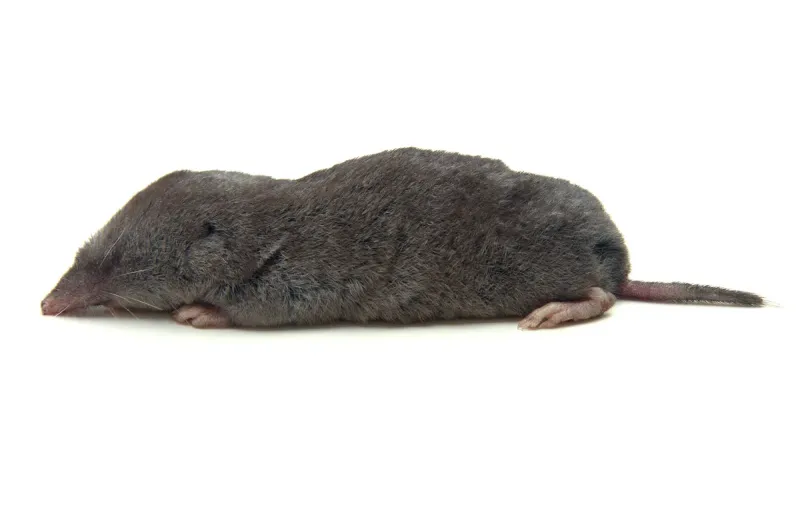
Most of the strong science on toxic shrew saliva comes from a close relative. In 2004, researchers published a study that isolated and characterized blarina toxin.
The animal they worked with was the northern short-tailed shrew, Blarina brevicauda.
The two species share a genus and look alike, which makes it tempting to merge them in your mind. Even so, the northern shrew’s toxin does not become proof about the southern species.
Each animal needs its own testing.
The 2004 paper also discusses reports of people feeling local burning and swelling after Blarina bites. Those reports are about the genus in general.
They cannot be pinned on bites from the southern short-tailed shrew, so it would be wrong to promise any particular reaction.
Compare that with the review mentioned earlier, which says the southern species’ saliva has not been experimentally tested. Put together, the picture is clear: strong evidence exists for one species, and only hints exist for the other.
A practical example helps. If a website says a Alabama shrew’s venom causes burning and swelling in people, check which species the claim rests on.
If the answer is the northern shrew, the claim is borrowed, not measured in Alabama’s southern shrew.
A bite deserves care, not panic
Start with the simplest rule: do not pick up or try to handle a wild shrew. Any unfamiliar wild animal may bite when it feels cornered, and a small body does not mean a harmless one.
If you find one indoors or in a garage, give it room and let it leave, or ask a wildlife professional for help.
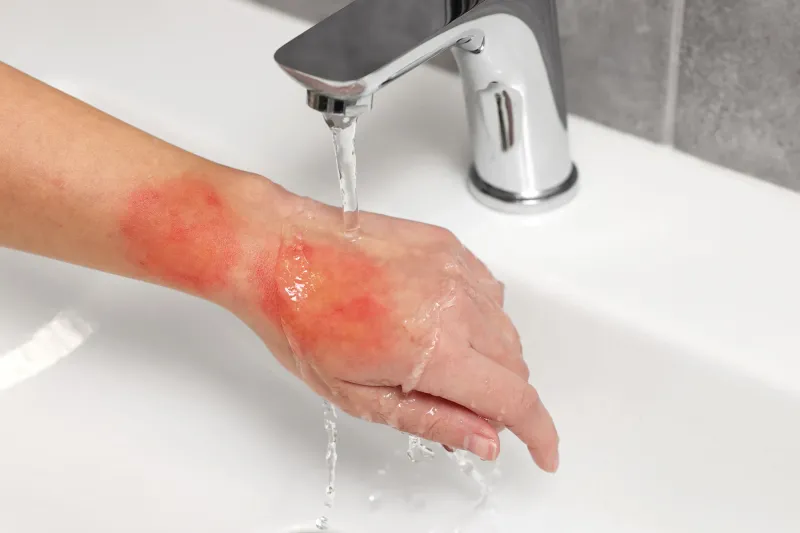
If a bite does break the skin, follow MedlinePlus guidance on animal bites. Wash the wound with soap and warm running water for 3 to 5 minutes.
Then seek medical advice promptly, since the guidance calls for a provider visit within 24 hours for bites that break the skin.
Go for prompt care right away if you notice any of these:
- A deep wound
- A bite to the face, hand, or foot
- Spreading redness or swelling
- Pus
- Red streaks
- Bleeding that will not stop
A clinician can judge the risk of infection and decide whether you need tetanus care. That is the main reason to call, because any broken skin can carry ordinary wound concerns, whatever the animal.
Notice what this advice does not do. It does not try to predict how strong the shrew’s venom might be, since that has not been tested for the southern species.
The steps work the same either way: clean the wound, watch it, and get it checked.
The takeaway: caution without alarm
Seeing a shrew in Alabama is plausible, but the state’s own account does not say mulch beds commonly shelter one. The venom story is likewise softer than it sounds, since a scientific review notes the saliva has not been tested.
Keep your hands off the animal, and if skin is broken, follow the bite-care steps and call a clinician.
A tiny animal in the leaves deserves respect and curiosity, not a scare.
Share this story