Get the latest garden guides in your inbox →
Gardening Latest
  • General Gardening
  • Lawn Care
  • Plant Care
  • Composting
  • Soil Health
  • Backyard
  • Garden Muse Magazine
  • General Gardening
  • Lawn Care
  • Plant Care
  • Composting
  • Soil Health
  • Backyard
  • Garden Muse Magazine
  • News
  • Gardening Calendar
  • Garden Structures
  • Vegetable Garden
  • Vertical Garden
  • Raised Beds
  • Hydroponics
  • General Equipment
  • Community Gardens
Garden Themes
  • Spiritual Garden
  • Hydroseeding
  • Seeding and Laying Sod
  • Artificial Grass
  • Lawn Care Equipment
  • Plants
  • Trees
  • Planting Tools
  • Composting Basics
  • Fertilizer
  • Alternative Growing Mediums
  • Front Yard
  • Backyard Activities
  • Landscaping
Gardening Latest

Explore by state

Which state is your garden in?

Currently viewing Missouri

All states

Northeast

  • Connecticut —
  • Delaware 40
  • Maine —
  • Maryland 26
  • Massachusetts 42
  • New Hampshire —
  • New Jersey 26
  • New York 35
  • Pennsylvania 35
  • Rhode Island —
  • Vermont —

Southeast

  • Alabama 26
  • Arkansas —
  • Florida 26
  • Georgia 27
  • Kentucky 40
  • Louisiana 25
  • Mississippi —
  • North Carolina 24
  • South Carolina 39
  • Tennessee 23
  • Virginia 25
  • West Virginia —

Midwest

  • Illinois 25
  • Indiana 27
  • Iowa 39
  • Kansas —
  • Michigan 26
  • Minnesota 25
  • Missouri 25
  • Nebraska —
  • North Dakota —
  • Ohio 26
  • South Dakota —
  • Wisconsin 41

Southwest

  • Arizona 26
  • Colorado —
  • Nevada —
  • New Mexico —
  • Oklahoma —
  • Texas 25
  • Utah —

West

  • Alaska —
  • California 25
  • Hawaii —
  • Idaho —
  • Montana —
  • Oregon —
  • Washington —
  • Wyoming —

No state matches that search.

Site menu

Gardening Latest
  • General Gardening
    • News
    • Gardening Calendar
    • Garden Structures
    • Vegetable Garden
    • Vertical Garden
    • Raised Beds
    • Hydroponics
    • General Equipment
    • Community Gardens
    Garden Themes
    • Spiritual Garden
  • Lawn Care
    • Hydroseeding
    • Seeding and Laying Sod
    • Artificial Grass
    • Lawn Care Equipment
  • Plant Care
    • Plants
    • Trees
    • Planting Tools
  • Composting
    • Composting Basics
  • Soil Health
    • Fertilizer
    • Alternative Growing Mediums
  • Backyard
    • Front Yard
    • Backyard Activities
    • Landscaping
  • Garden Muse Magazine

Explore

  • About GardeningLatest.com
  • Contact Us

Get the latest from the garden

New guides on lawn care, plants and backyard projects, sent when they go up.

Subscribe →

Follow

  • Facebook
  • X
  • Pinterest
  • YouTube
Missouri Gardening

Saddleback Caterpillar Stings Burn Like Fire, So Missouri Gardeners Should Grab Tape and Ice First

If a saddleback caterpillar touches your skin, keep your hands off it, lift the leftover spines with tape, wash the area…

CR

By Clayton Reeves

November 27, 2026 · 6 min read

Saddleback Caterpillar Stings Burn Like Fire, So Missouri Gardeners Should Grab Tape and Ice First

If a saddleback caterpillar touches your skin, keep your hands off it, lift the leftover spines with tape, wash the area, and press on wrapped ice for possible pain relief. Contact with its spines can hurt, and some people feel it as burning or stinging, though not everyone reacts the same way.

These caterpillars do live in Missouri, but they are not something most gardeners meet often. A few quick steps and a list of warning signs can help you stay calm if one turns up during late-summer or fall yard work.

At a glance

Where
Missouri Gardening
Hardiness zone
6 −10 to 0°F
Read
6 minutes
Published
November 27, 2026

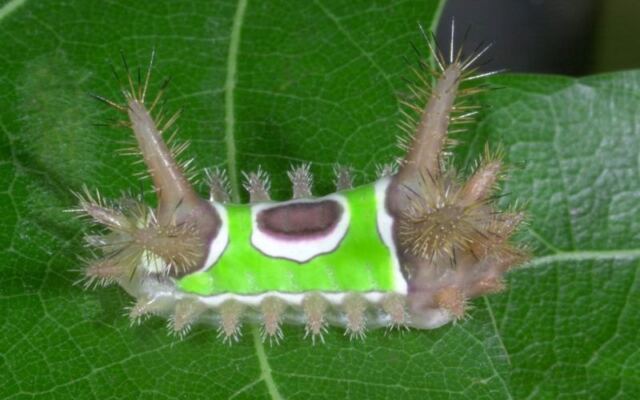
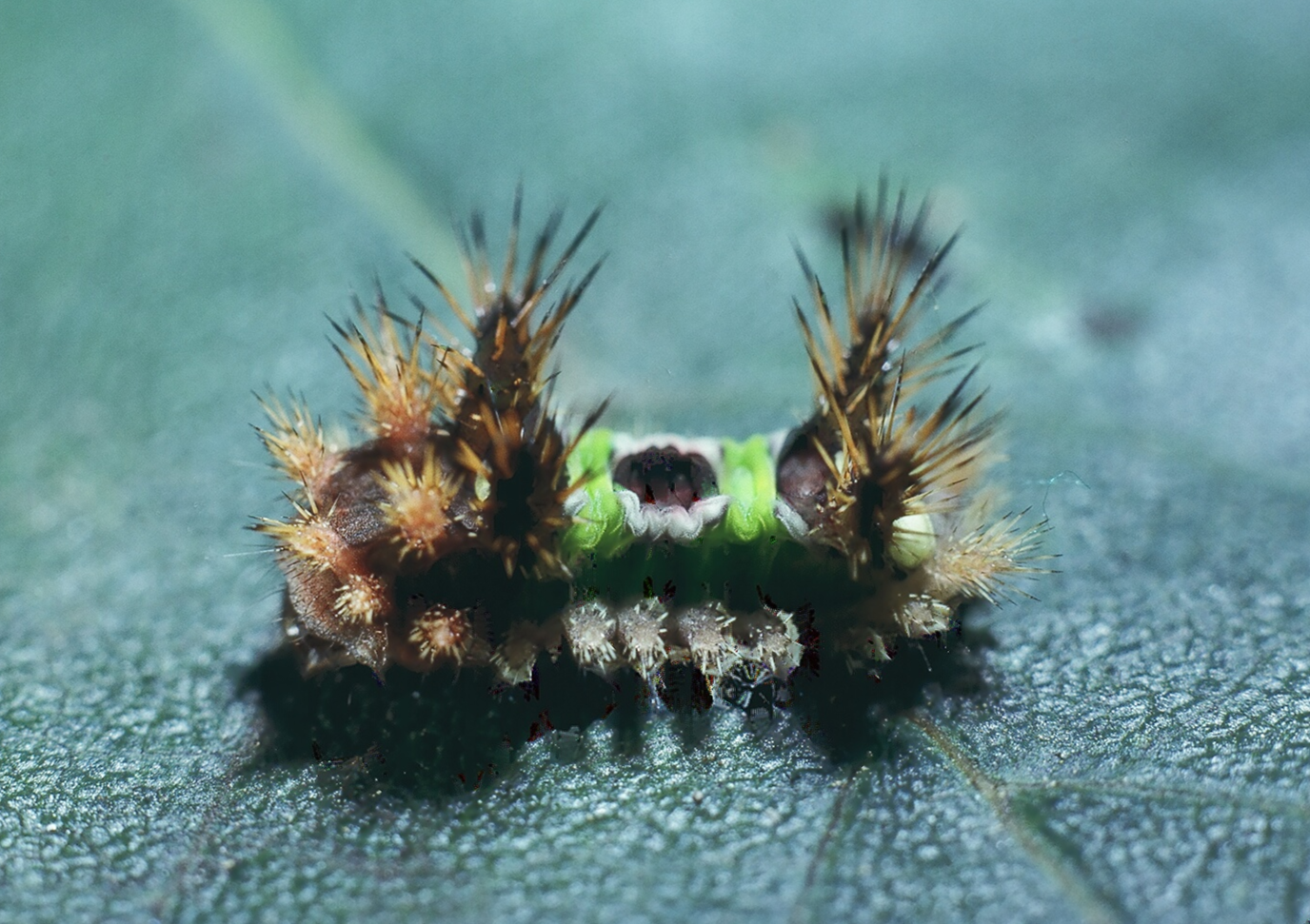
Saddlebacks occur in Missouri, but encounters vary
Saddlebacks occur in Missouri, but encounters vary
© A-Z Animals

Saddleback caterpillars do occur in Missouri. Still, a USDA Forest Service guide to oak caterpillars in Missouri describes their populations as variable and generally very low.

The same guide says they are only occasionally common on white oak.

That context matters for how you think about risk. Most gardeners will never come across one, and a given yard may go years without a single sighting.

A few seasons might bring more, but the guide does not suggest that people across the state run into them regularly.

The Missouri oak-caterpillar guide also reports that saddlebacks mature in September or October. That makes late-summer and fall yard work a reasonable time to stay alert, especially around oaks.

Even so, the guide is a specialist reference for caterpillars found on oaks. It does not give exact encounter dates for the whole state, and it does not count how many gardeners find these insects.

Think of the timing as a loose hint rather than a calendar. If you are raking, pruning, or moving brush under trees in early fall, a little caution costs nothing.

Wear gloves and long sleeves, and look before you grab.

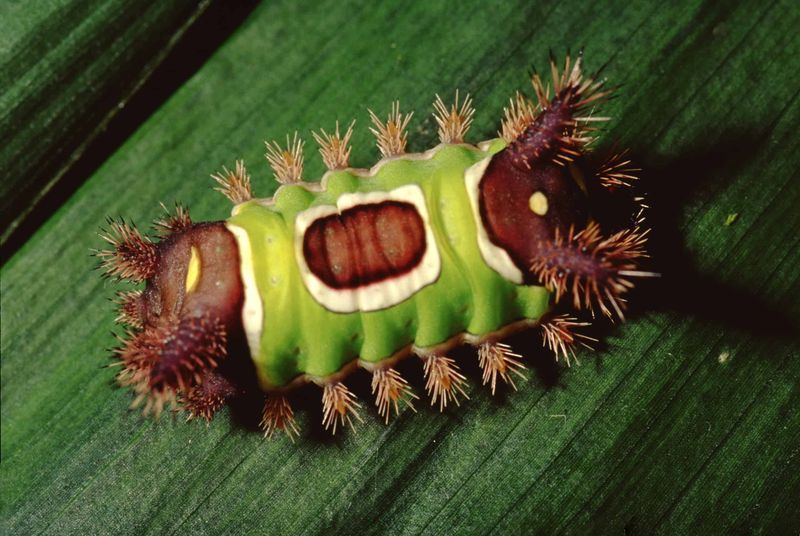
Recognize the saddle, but do not touch it
Recognize the saddle, but do not touch it
© Plant Care Today

Two clues stand out on a saddleback: a green saddle-shaped marking on its back and prominent spiny areas. The Missouri oak-caterpillar guide describes this look and notes that the caterpillar’s sting is painful.

Those features are for spotting it from a distance, not a reason to pick it up for a closer look.

Once the spines are lifted and the skin is clean, cold may help take the edge off.

Do not assume every fuzzy or colorful caterpillar is dangerous, either. Poison Control points out that many caterpillars are harmless, and appearance alone is not a dependable way to sort the harmful ones from the rest.

If you are unsure what you are looking at, the safest move is to leave it alone. Handling a caterpillar to identify it is how many injuries happen, and NC State Extension likewise cautions against touching spiny caterpillars.

Take a photo from a few feet away and look it up later. If one is on a tool, a glove, or a plant you need to handle, use a stick or a piece of cardboard to move it.

Never brush it away with a bare hand.

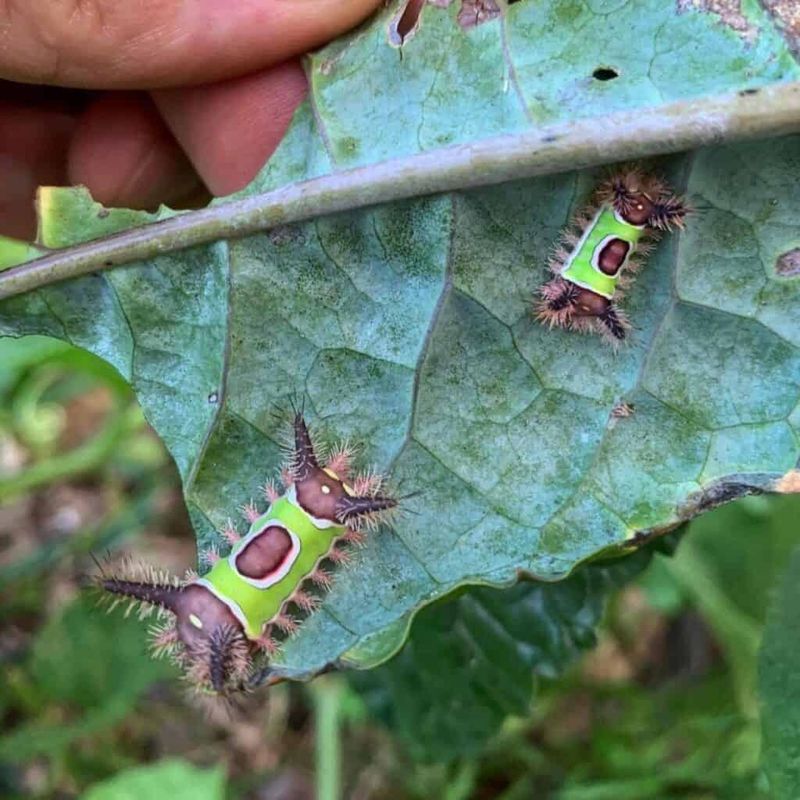
For skin contact, lift spines with tape and wash
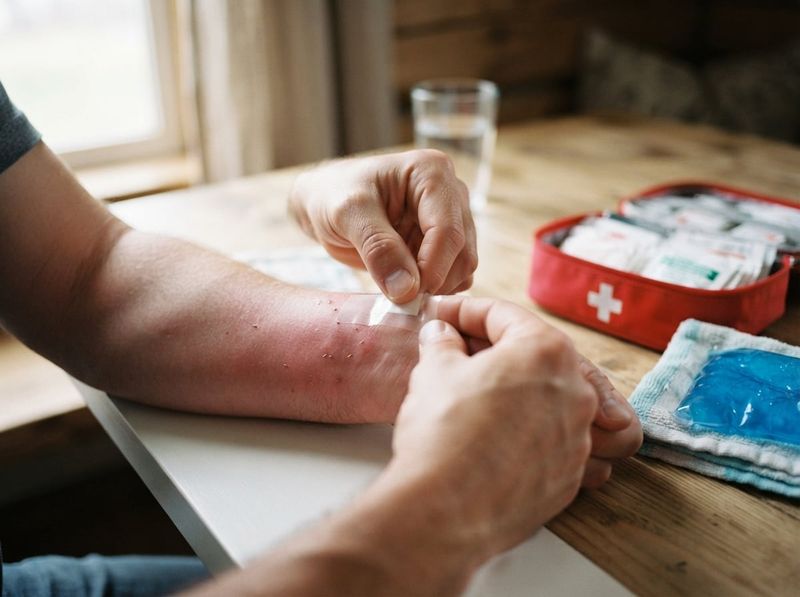
For skin contact, lift spines with tape and wash
© Woodland Tree Service

If a caterpillar is still on your skin, remove it without using your hands. A stick, a folded piece of paper, or a tool will do.

Then focus on the tiny spines or hairs that may be left behind, since contact with those is what causes the injury. This is not a bee-style sting from a stinger.

Press a piece of adhesive tape sticky-side down on the affected skin, then lift it off gently. Use a fresh piece each time and repeat a few times.

Duct tape, packing tape, or masking tape can all work if that is what you have nearby.

Washing comes into the picture too, and the sources do not agree on the order. Poison Control and MedlinePlus describe tape first and washing afterward.

NC State Extension advises washing first and then using tape on any remaining spines. Either way, wash gently with soap and water rather than scrubbing hard.

Tape is recommended general guidance for caterpillar exposure. It has not been proven in controlled trials specifically for saddleback stings, and it may not lift every spine.

It also will not necessarily stop the pain, so keep watching how the skin feels in the hours that follow.

Use wrapped ice for possible pain relief

Use wrapped ice for possible pain relief
© GoodRx

Once the spines are lifted and the skin is clean, cold may help take the edge off. Ice is for comfort only.

It does not remove spines and it does not neutralize venom, so it works as a follow-up step rather than a replacement for tape and washing.

MedlinePlus gives a simple schedule. Wrap the ice in a clean cloth and apply it for 10 minutes, take it off for 10 minutes, and repeat if needed.

Keeping a cloth between the ice and your skin helps protect the area.

If itching becomes the main problem, Poison Control suggests hydrocortisone first. If that does not help, it lists an antihistamine as another option.

Before you reach for either one, check with a clinician or pharmacist about whether it suits you. That advice matters most for children and for people with health conditions or who take other medicines.

Relief varies from person to person, so no cream, pill, or ice routine is guaranteed to stop the symptoms.

Symptoms may last longer than the first sting
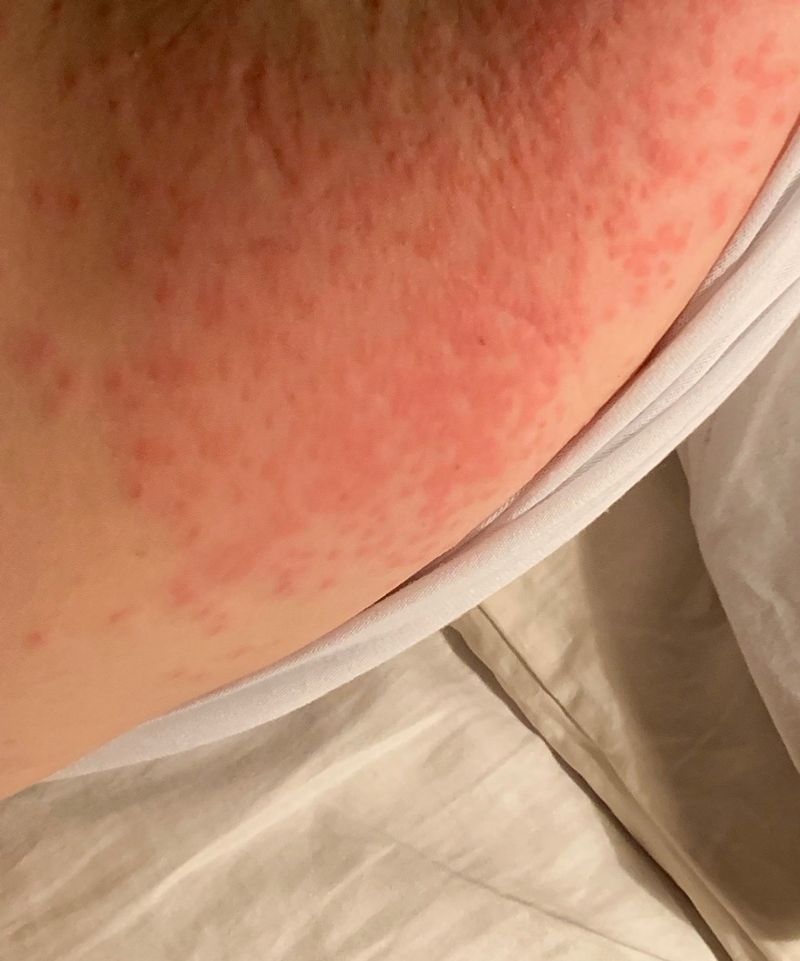
Symptoms may last longer than the first sting
© Catching Health with Diane Atwood

Plan for a recovery that is a bit unpredictable. Poison Control says the pain usually improves within a few hours.

That is a common pattern, not a promise, and some people may feel discomfort for longer.

The skin can take its own time as well. NC State Extension notes that redness and swelling can last over a week.

A patch that still looks irritated a day or two later is not automatically a sign of something wrong.

Since symptoms vary, it helps to keep an eye on the area rather than layering on one remedy after another. In one Poison Control case involving a saddleback, symptoms persisted despite ice and several other measures until tape was advised.

That example shows why checking for leftover spines can be worth another try.

If the pain is getting worse, the redness is spreading, or you are just worried about how it looks, call a doctor or Poison Control for advice. Repeating home remedies over and over is not a substitute for a professional opinion when things do not seem to be settling.

Know when to get medical help
Know when to get medical help
© Poison Control

Most skin contact stays a painful but local problem. Some situations call for faster action, though.

Call 911 for difficulty breathing, fainting, or swelling of the lips, face, or tongue. Do not wait to see whether those signs pass.

Other warning signs call for medical guidance rather than an emergency call. These include blistering, a suspected localized allergic reaction, persistent eye irritation, and inhaled caterpillar hairs.

MedlinePlus lists these among the reasons to get care.

If hairs or spines reach an eye, rinse the eye with water and seek medical help. Do not rub it, and do not rely on home treatment alone.

Eye exposure can need a professional exam, and ongoing irritation is a reason to be seen.

For questions about an exposure in the United States, you can reach Poison Control at 1-800-222-1222. Saving that number in your phone before fall yard work takes only a moment.

A caterpillar that looks small can still cause a big reaction in some people, and a calm response is easier when you already know where the line is.

Share this story

CR

Written by

Clayton Reeves

More from Clayton Reeves →

About Gardening Latest

Gardening Latest provides in-depth guides to maintaining and enhancing your garden and backyard. Learn how to make the most of the space you have and create a beautiful garden.

More about us →

Latest stories

  • Arizona GardeningThis Invasive Tree Keeps Outrunning the Arizona Homeowners Trying to Pull It

    This Invasive Tree Keeps Outrunning the Arizona Homeowners Trying to Pull It

    3 min ago
  • Texas GardeningA Texas Storm Just Put Your Neighbor’s Tree in Your Yard, and Here’s Who Really Pays

    A Texas Storm Just Put Your Neighbor’s Tree in Your Yard, and Here’s Who Really Pays

    8 min ago
  • Georgia GardeningDon’t Panic Over That Giant Flower Stalk on Your Georgia Sweet Onions. Here’s What It Means and Whether to Cut It

    Don’t Panic Over That Giant Flower Stalk on Your Georgia Sweet Onions. Here’s What It Means and Whether to Cut It

    13 min ago
  • Wisconsin GardeningWisconsin Winters Don’t Kill Your Brown Recluse Worries, Because Hobo and Yellow Sac Spiders Move Indoors Now

    Wisconsin Winters Don’t Kill Your Brown Recluse Worries, Because Hobo and Yellow Sac Spiders Move Indoors Now

    19 min ago
  • Missouri GardeningYour Frozen Missouri Lawn Isn’t Empty: A Tiny Mammal With a Venomous Bite Hunts Below All Winter

    Your Frozen Missouri Lawn Isn’t Empty: A Tiny Mammal With a Venomous Bite Hunts Below All Winter

    25 min ago

Gardening by state

Stories for your state, and the hardiness zone most of it gardens in.

Keep exploring

Read next

All Missouri Gardening →
Missouri GardeningYour Frozen Missouri Lawn Isn’t Empty: A Tiny Mammal With a Venomous Bite Hunts Below All Winter
Missouri Gardening

Your Frozen Missouri Lawn Isn’t Empty: A Tiny Mammal With a Venomous Bite Hunts Below All Winter

25 min ago
Missouri GardeningMissouri Homeowners Tend To Meet Their Yard’s Venomous Critters In Late Fall, Not Summer
Missouri Gardening

Missouri Homeowners Tend To Meet Their Yard’s Venomous Critters In Late Fall, Not Summer

3 hr ago
Missouri GardeningThese Venomous Creatures Are Hiding In Missouri Yards, And Here’s How You Tell Them Apart
Missouri Gardening

These Venomous Creatures Are Hiding In Missouri Yards, And Here’s How You Tell Them Apart

21 hr ago

More from Missouri Gardening

  • Plenty of Missouri Gardeners Run From These 7 Venomous-Looking Critters That Are Actually Harmless

    Nov 25
  • Here’s What Those Little Ant Hills in Your Missouri Lawn After a Storm Actually Mean

    Nov 25
Back to top

Leave a response Cancel

Your email address stays private. Required fields are marked with an asterisk.

Gardening Latest

In-depth guides to maintaining and enhancing your garden and backyard: how to make the most of the space you have, and how to make it beautiful.

  • Facebook
  • X
  • Pinterest
  • YouTube

We may earn a portion of sales from products or services that are purchased through our site as part of our affiliate partnerships with retailers.

Explore

  • About GardeningLatest.com
  • Contact Us
  • Terms and Conditions
  • Privacy
  • Editorial Note:
  • FTC Disclosure

Newsletter

New garden guides and seasonal tips, straight to your inbox.

We’ll email you a link to confirm. Unsubscribe any time.

Almost there! Check your inbox and tap the link to confirm.

© 2026 Gardening Latest. All rights reserved.

Back to top