The tree that keeps coming back after you pull it is most likely tree-of-heaven, and its roots are the reason it seems to outrun you. A young seedling can come out whole, but a shoot tied to an established root often returns within weeks.
Knowing which one you have changes what works. Here is how to tell them apart and what Arizona Extension suggests for the harder cases.
How to recognize tree-of-heaven
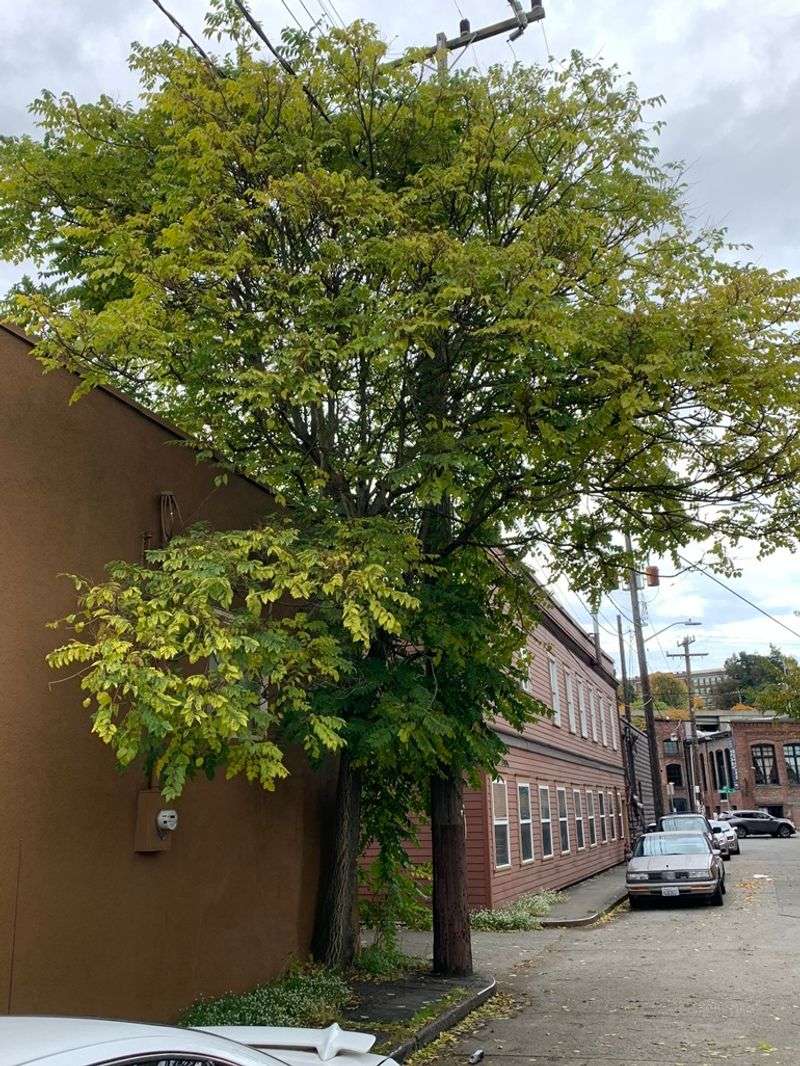
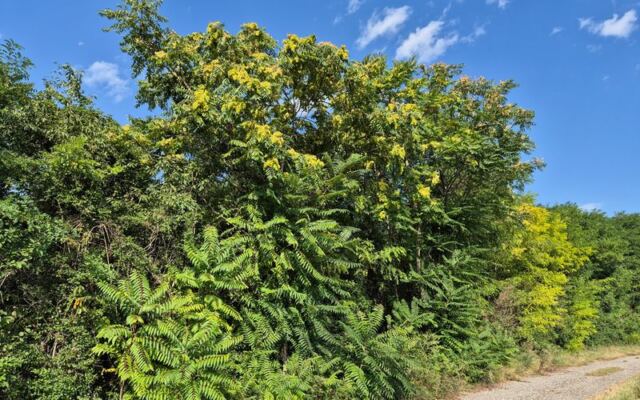
The likely culprit behind your returning shoots is tree-of-heaven (Ailanthus altissima), a non-native tree that has been documented in Arizona. A good first check is the leaf.
Its compound leaves usually carry 11 to 41 leaflets, and each leaflet typically has one or several teeth or lobes near its base while the rest of the edge stays mostly smooth.
Several other trees can fool you. Ash, sumac, walnut, and pecan all have compound leaves and can look similar at a glance.
Treat tree-of-heaven as the likely suspect rather than a certain answer for your tree, and confirm the identification before you treat or remove anything. A local Extension office can help if you are unsure.
The tree does occur in Arizona. A University of Arizona guide reports it in towns and along streams across much of the state, and it was planted in some mining communities.
Even so, it is not equally common everywhere, so you may see plenty in one neighborhood and none in the next.
Arizona lists it as a Class C noxious weed. According to the state agriculture department, that class covers widespread weeds where active control may be recommended based on risk assessment.
The listing is not an order that every homeowner must remove a tree from their own yard.
A seedling and a root sucker need different responses
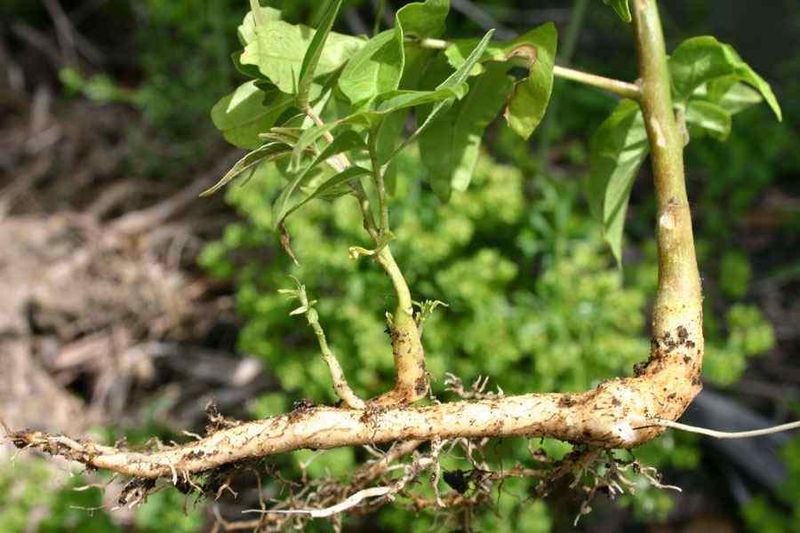
Two shoots can look identical above ground and behave very differently below it. A true seedling grew from a seed and has its own root.
Arizona Extension guidance says young seedlings may be pulled or dug when the soil is moist, as long as the whole plant and root come out.
A root sucker is another story. It grows from an existing lateral root of a larger tree, so it can pass for a separate young tree while still being plugged into the parent root.
The same guidance describes these as nearly impossible to remove effectively by pulling alone.
When you yank only the visible shoot, the source root can stay alive underground. That root may then send up another shoot later, which is why it feels like the plant is outrunning you.
This does not mean pulling itself spreads the tree, and it does not mean every small shoot is a sucker.
Before choosing a response, figure out what is feeding the shoot. Moisten the soil, loosen it, and follow the shoot down.
If it ends in a small root of its own, you likely have a seedling. If it leads sideways into a thicker root, or if a mature tree stands nearby, suspect a sucker, which the Forest Service Southwest field guide also treats as a separate problem from seedlings.
The roots explain why shoots return
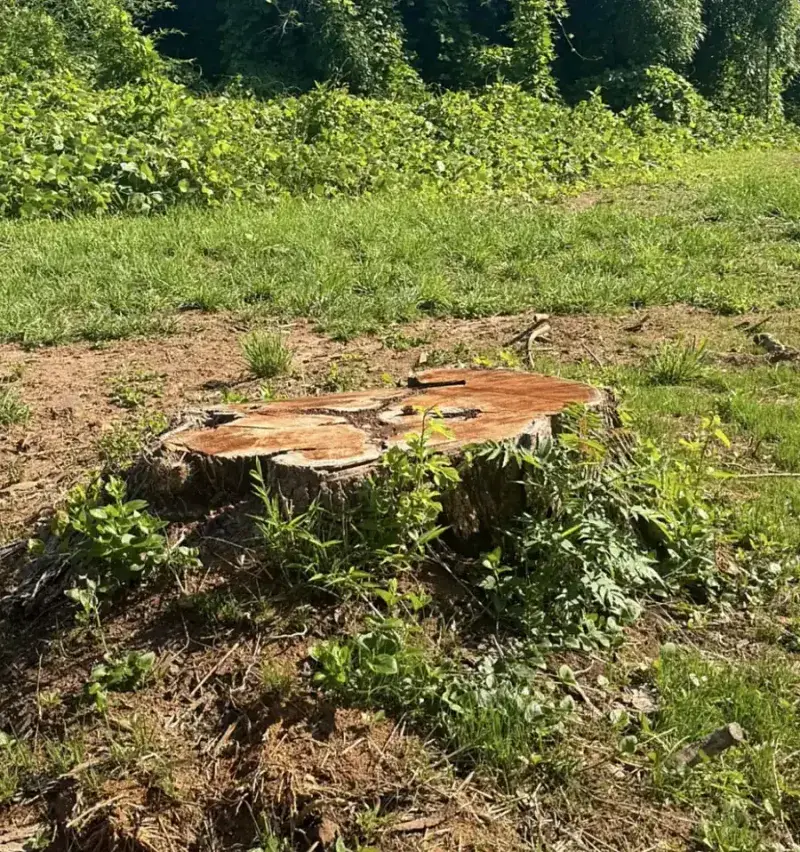
Tree-of-heaven has two ways to spread. Its seeds travel on the wind, which is how new seedlings appear in cracks, fence lines, and neglected corners.
It also sends up shoots from lateral roots, which is how a single tree can end up surrounded by what looks like a small grove.
That second route explains the frustration of pulling a shoot and seeing growth return. The shoot you see may be only one visible outpost of a larger root network.
Removing it does not necessarily affect the roots that produced it.
The distances can be surprising. The Arizona invasive plants profile says mature lateral roots can extend more than 50 feet.
The Southwest field guide reports shoots arising 50 to 90 feet from a tree after its top is removed or its trunk is cut.
Those numbers describe what is possible, not what every tree will do. Soil, water, tree age, and nearby obstacles all shape how far roots run.
A practical takeaway is to look for shoots well beyond the trunk, including across a driveway or in a neighbor’s planting bed, and to treat each one as possibly part of the same plant rather than a stand-alone seedling.
Cutting does not remove the root system
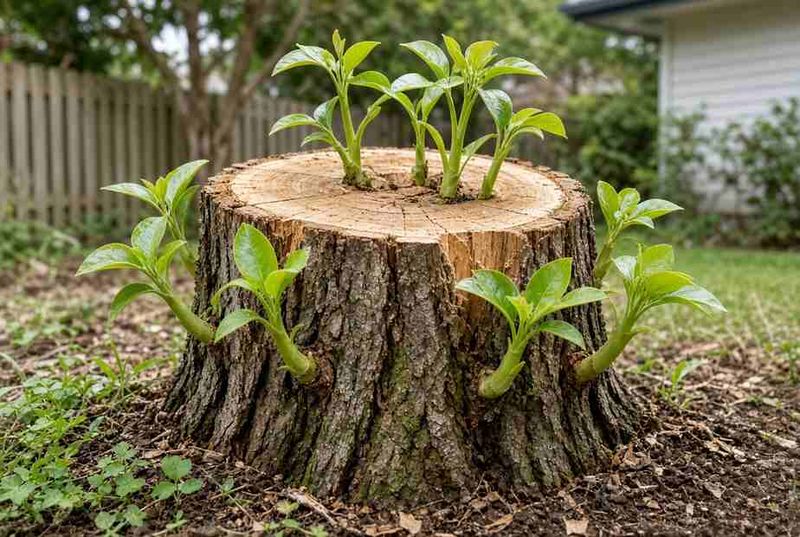
Cutting down a tree feels decisive, but with an established tree-of-heaven the roots stay alive. The Forest Service field guide notes that cutting or mowing can prompt vigorous sprouting, so a single cut is not a dependable fix.
Mechanical-only control tends to need repeated follow-up.
Stump treatment deserves a careful look. Applying something to a cut stump may affect growth at the stump itself.
But the current Arizona Extension guide says cut-stump treatment is not effective at preventing root suckers, and Penn State Extension says the same about suckering. A treated stump is not proof that the connected roots are gone.
Fire is not a shortcut either. The Forest Service fire effects review reports that burning can encourage sprouting, so it should not be treated as a control method.
None of this applies the same way to a small seedling. A seedling has no large root network behind it, so pulling or digging can work when the entire root comes out.
The trouble starts with established trees and the shoots linked to them, where cutting leaves the source intact.
Arizona guidance targets the roots
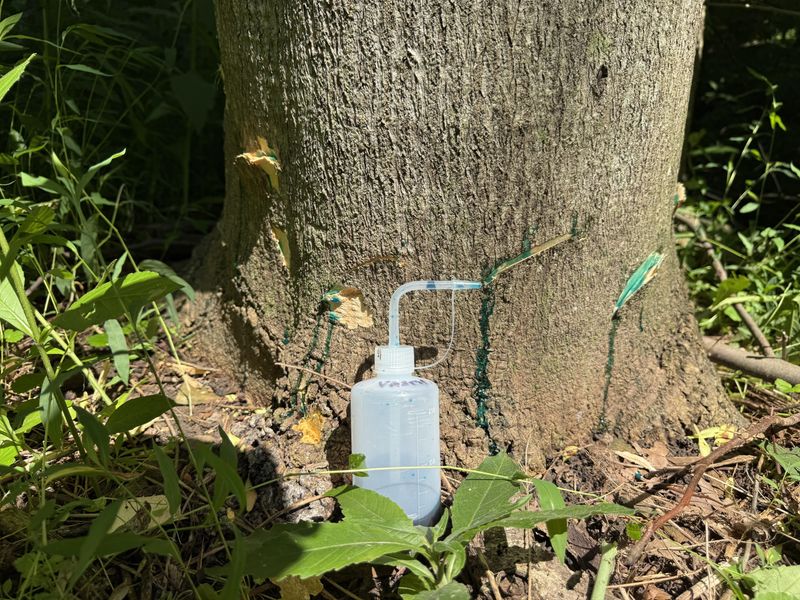
For established trees, Arizona Extension points toward methods meant to reach the root system instead of simply cutting the trunk. The University of Arizona homeowner guide describes foliar treatment, applied to leaves, for seedlings and small plants.
For larger trees it describes basal-bark or hack-and-squirt treatment.
The guide names glyphosate and triclopyr as products used in these approaches. It gives July through September as the optimal control window.
That is Arizona Extension guidance, not a universal recipe, and it never replaces the directions on a specific product label.
Why not just treat the stump? The same guide says cut-stump treatment is not effective at preventing root suckers.
A method that stops at the stump may leave connected roots free to send up shoots, which is the very problem most homeowners are trying to solve.
Every product has its own label, with rules on mixing, timing, protective gear, and where it may be used. Read it fully before you buy and again before you apply.
If your tree is large, or it stands near ornamental trees, shrubs, or a garden you value, contact your local Extension office or a qualified professional rather than improvising a mix of your own.
Plan for follow-up and protect other plants
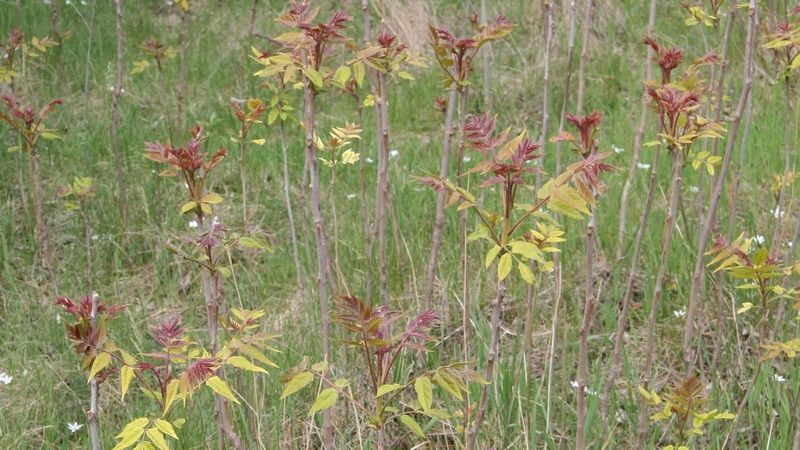
Expect this to be a multi-season project. The Forest Service says tree-of-heaven management requires long-term monitoring, and Oregon State Extension advises that control may take several years and that regrowth needs attention.
New shoots after treatment do not mean you failed. They mean the job is not finished.
A simple routine helps. Walk the yard every few weeks in the growing season, look well beyond the trunk, and note where shoots appear.
Small new seedlings can often be pulled or dug when soil is moist, while shoots on established roots need a root-focused plan.
Protecting nearby plants matters as much as the follow-up. Follow the specific product label, wear the protective equipment it requires, and keep spray or liquid from drifting or touching plants you want to keep.
Arizona Extension specifically cautions about treating near valued ornamental trees and shrubs.
Windy afternoons are a poor time to apply anything. If your tree is large or sits close to plants you care about, local Extension or a qualified professional can help you choose a safer approach than guesswork.
Check what is feeding the shoot
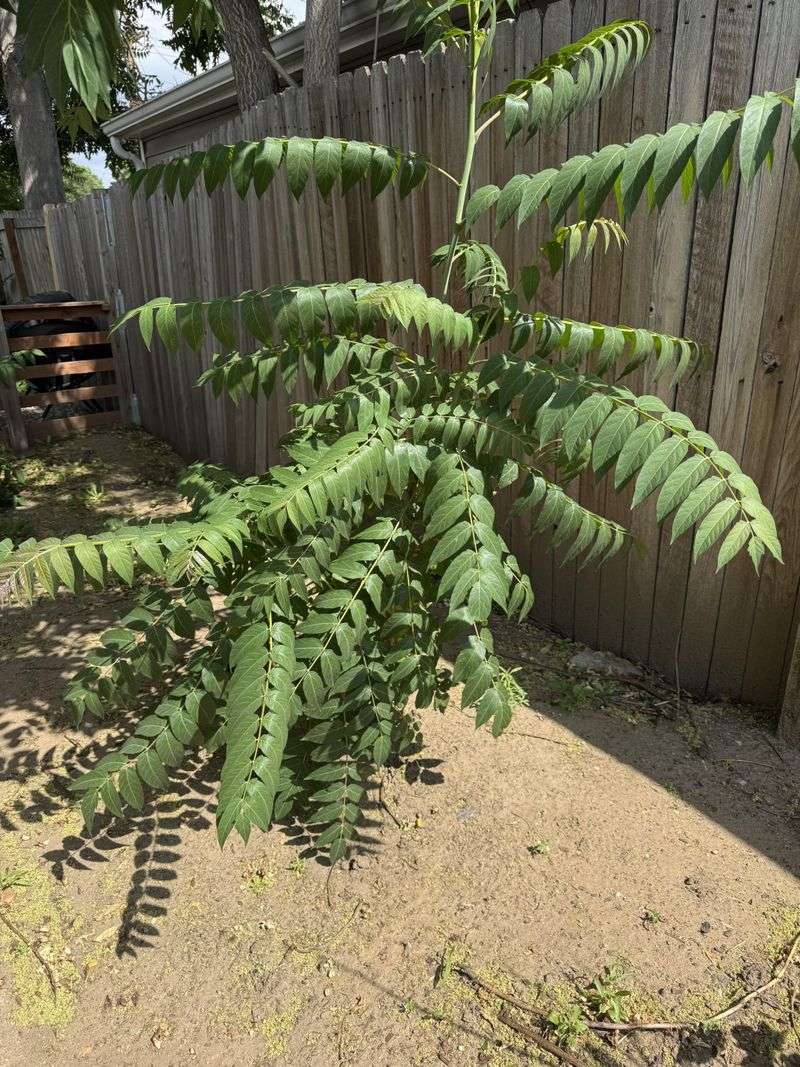
Start with identity: confirm the plant is tree-of-heaven and not an ash, sumac, walnut, or pecan. Next, trace the shoot to learn whether it is a seedling with its own root or a sucker tied to a larger one.
Pulling the visible part does not remove what is feeding it unless the whole root comes out.
For established trees, Arizona Extension guidance favors root-focused, label-compliant treatment with careful follow-up. Nothing here requires every homeowner to act.
The shoot is only the part you can see, and the root is the part that decides what happens next.
Share this story