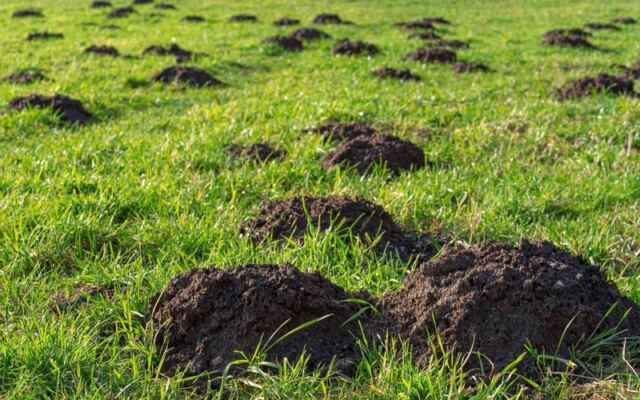
Ant hills dotting your lawn after rain do carry a message, and it is a simple one: ants have piled soil near a nest entrance. That message is smaller than many people think, but it is still useful.
Knowing what a mound can and cannot tell you helps you decide whether to ignore it, hide it, or look closer. Here is how to read the clue and what to do next.
What a lawn mound can tell you
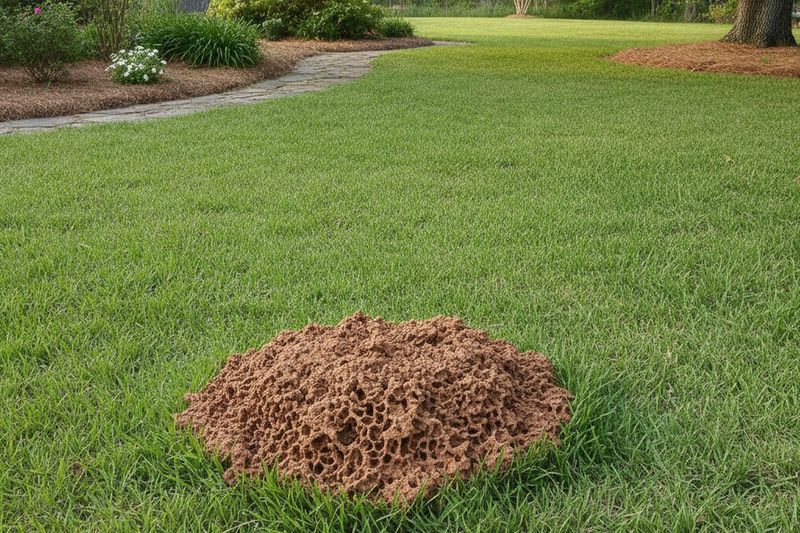
Several kinds of ants nest in soil, and they push loose dirt up and out as they dig. The result is a small pile of crumbly soil around an entrance hole.
That pile is the mound you see on the lawn.
So what does a mound actually show? It shows that soil has been piled near a nest entrance.
It does not show that a colony moved in or formed overnight, because ants may have been working below the grass for a long time before you spotted the pile.
Mounds are also easier to see in some lawns than others. University of Maryland Extension notes that ants nest in soil and that mounds stand out more where turf is thin.
A thick lawn can hide the same amount of dirt that looks obvious on a bare patch.
A mound cannot tell you which ant made it, either. Looks and timing are not enough to name the species, and different species can leave similar piles.
University of Illinois Extension treats turf ants as a group that often needs a closer look before anyone decides what to do.
Think of the mound as a starting clue. It tells you where ants are active, and that is a good first step toward understanding why you noticed it after rain.
What rain may—and may not—explain

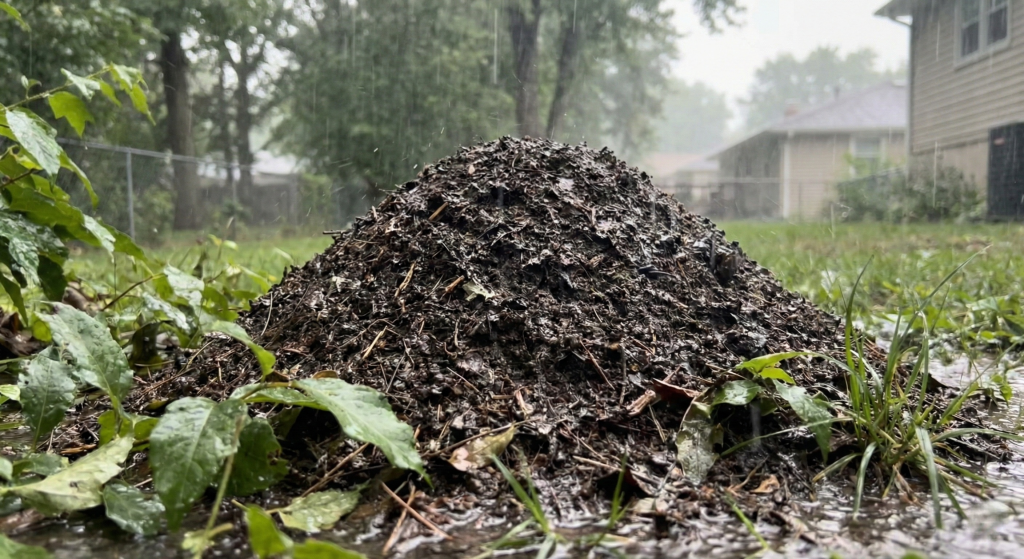
Seeing a mound the morning after rain feels like cause and effect. Yet noticing a mound after rain does not establish that rain caused it.
You may simply have spotted it because the grass was wet, the light was low, or you walked the lawn that day.
There is some research on moisture and digging. A PLOS ONE study looked at soil moisture and excavation in the Chaco leaf-cutting ant, a South American species, in a specific setting.
It is a useful look at how one ant handles wet soil. It says nothing solid about all ants, and it cannot explain what caused a particular mound in a New Jersey yard.
Rain does change what happens on a lawn surface. Maryland Extension describes how rain can bring some lawn invertebrates up to the surface.
That is a general point about lawn creatures, not proof that rain makes ants build visible mounds.
A practical example helps. If a mound appears after a storm, check whether similar piles show up on dry days too.
If they do, rain was likely just the moment you noticed them.
Keep the claim modest: rain may be part of the story for some ants, but a single wet morning cannot settle it.
Can ants predict rain?
The short answer is no, not as far as anyone can prove. Charles Sturt University reports there is no scientific proof that ants predict rain.
The old saying is fun, but it is not a tested forecast.
That does not mean ants ignore their surroundings. The same source notes that some species respond to environmental cues such as temperature or day length.
Those cues are real, yet they are different from knowing a storm is on the way.
Here is why that matters on your lawn. If you see fresh mounds and wonder whether to grab an umbrella, the mounds will not help you.
Checking a weather app or the radar will do far better.
It also works the other way around. A rainy night does not prove ants were preparing for it, and a dry morning with mounds does not mean rain is coming.
Treat the pile as information about soil and nest activity, not about the sky. That keeps your expectations realistic and your yard decisions based on what you can actually see.
Decide whether the mound affects your yard
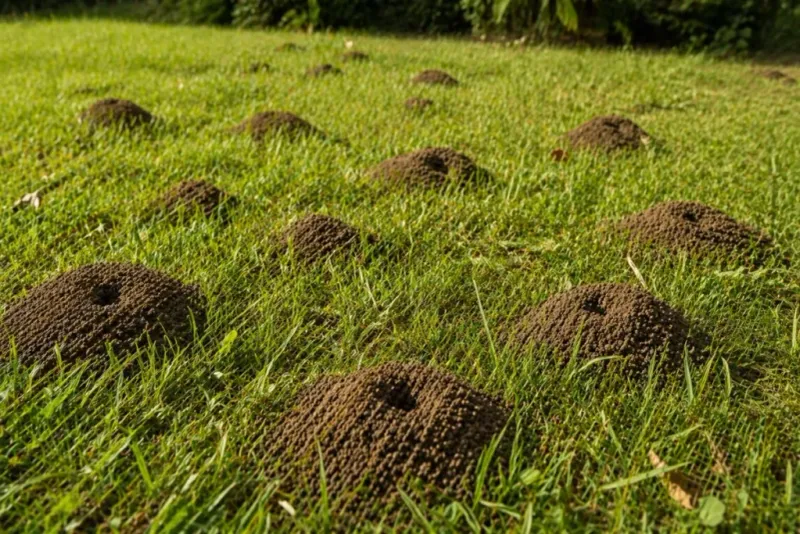
Once you know a mound is only a clue, the next question is whether it matters. Start with three practical checks: does it get in the way of mowing or use of the yard, is it damaging the turf, and does it create a safety concern?
These are homeowner judgments, not a published New Jersey numerical threshold. The sources reviewed give no magic count of mounds that calls for action.
Your own yard and how you use it set the bar.
It also helps to remember that many ants in lawns prey on other insects, as Maryland Extension points out. Not every lawn ant is a problem, and some do quiet work in the background.
Small mounds with no apparent harm do not automatically call for treatment. University of Illinois Extension cautions against repeated treatment of small lawn mounds where there is no obvious damage.
Safety is the one check that deserves a faster look. If children or pets play in the area, or you notice painful stings, take that seriously and get the ant identified.
Otherwise, watch for a week or two and see whether the mounds spread, flatten, or cause trouble.
Make mounds less noticeable with healthy turf
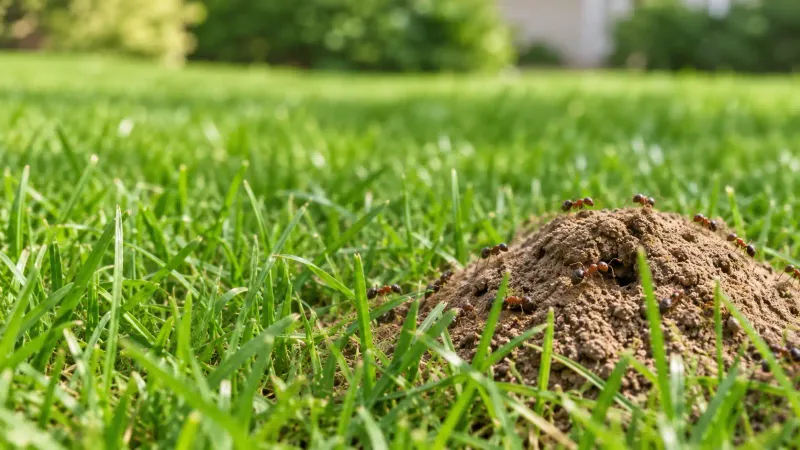
If the ants cause no real harm, you can make their mounds less of an eyesore. Lawn care will not prove to be a cure for ants, but it can change how much you see.
Maryland Extension says high mowing, dense turf, and overseeding tend to make mounds less conspicuous. Taller grass shades loose soil, and thick turf covers bare patches where piles show most.
Try a few simple steps. Raise your mower deck a notch, overseed thin spots in the right season, and keep the lawn evenly cared for.
Knocking down a mound with a rake or broom before mowing can also keep the soil from clumping under the blades.
This approach fits the advice to tolerate ants where they cause no meaningful harm. Illinois Extension leans toward patience with small lawn mounds rather than repeated treatment.
Keep expectations honest. Ants may still be nesting below a thick lawn, and you may simply notice them less.
For many homeowners, that is exactly the goal.
Identify the ant before considering treatment
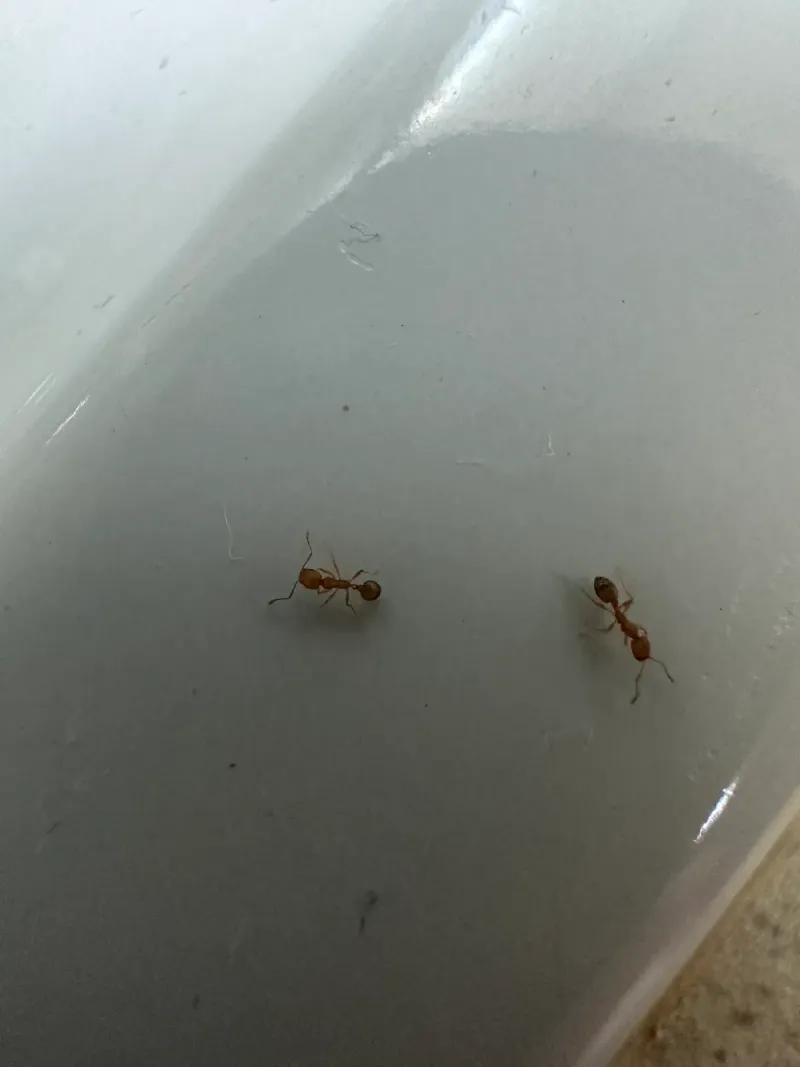
Do not try to name the ant from the mound alone. Appearance and timing cannot identify the species.
A close look at the ant itself, or a photo or sample shared with experts, works much better.
If you are unsure, contact your local extension office. USDA APHIS gives that advice in its imported fire ant overview.
That overview lists affected states and does not establish that every ant species in New Jersey is harmless or dangerous, so it should not be read as a blanket answer either way.
If treatment is still on the table after identification, use only a product labeled for the intended outdoor use and follow its directions. Labels differ a lot, so the details matter.
One EPA product label shows how specific they can be. For that ant bait, the directions call for tamper-proof, spill-resistant stations where children or pets can reach the area, and they prohibit applying it directly to soil or plants.
Those directions belong to that product and do not apply to every ant product.
For local background, Rutgers offers a New Jersey fact sheet on ant management in turfgrass. It dates to 2003, so treat it as locally relevant reading, not a source for current pesticide product choices.
Skip boiling water, household chemicals, or pesticides used only because a mound appeared. They are not default remedies.
Check the mound before deciding what to do
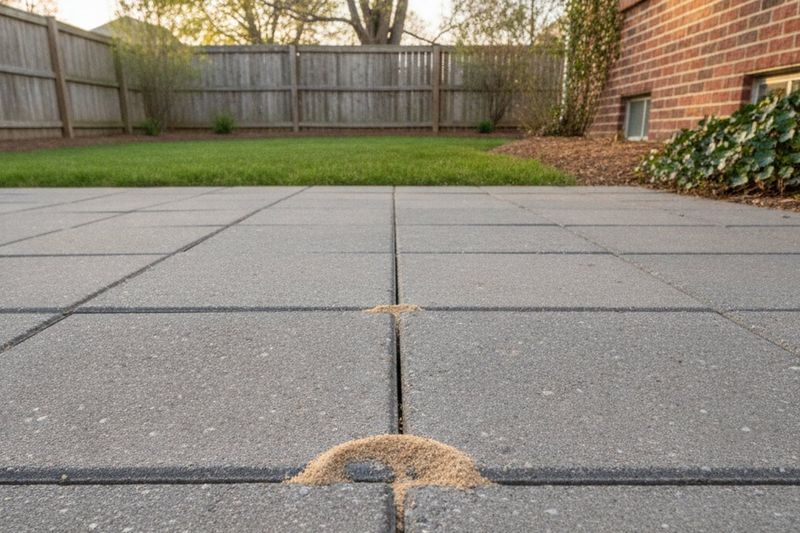
Start with what the mound is: soil piled near a nest entrance. Then look at its real effect on your yard, and do not assume rain predicts a colony’s arrival or calls for pesticide.
A new mound does not automatically require urgent action. Still, assess any safety concern, and seek identification when unsure, using resources like Illinois Extension or your local extension office.
If you choose treatment, follow the specific product label.
A small pile of dirt is a quiet note from the ground, not a siren.
Share this story