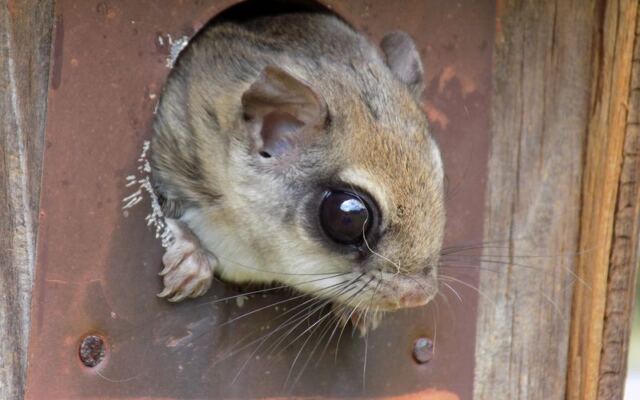
Scratching in your attic after dark often points to southern flying squirrels, small nocturnal animals that live all across South Carolina and sometimes move into attics. Cold weather can push them to look for warm, sheltered spots, so winter is a common time to notice them.
The sounds are a good clue, but they are only the start of the story. Knowing what is up there, and whether babies are present, helps you act in a way that is safe for you and kind to wildlife.
Nighttime attic noise fits flying squirrels, but it does not identify them
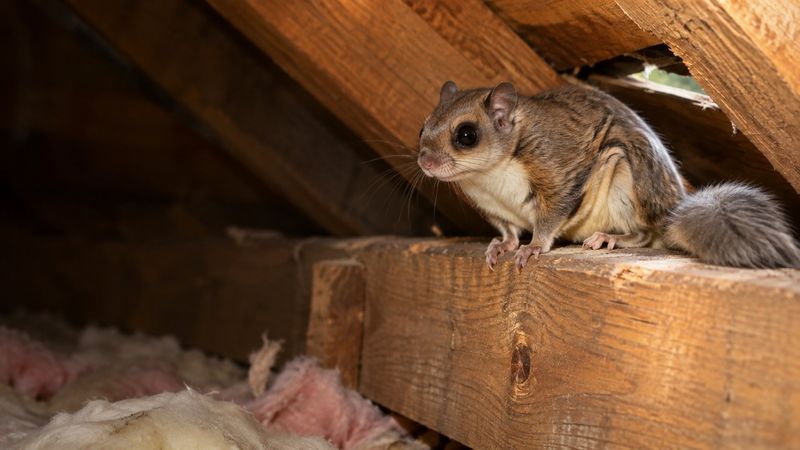
Southern flying squirrels are active at night, and they live throughout South Carolina. According to South Carolina DNR species information, tree squirrels, flying squirrels included, may use attics and soffits.
So when scratching, scampering, or gliding thuds start after dark, flying squirrels are a reasonable suspect.
A suspect is not the same as a confirmed culprit. Mice, bats, and other wildlife can also make noise in an attic at night, and many of those sounds overlap.
A light patter might be a mouse, a flutter or squeak might be a bat, and heavier thumps might be something larger.
Sound alone cannot tell you which animal is up there. It also cannot tell you how many animals are present, or whether young are in a nest.
A single noisy squirrel and a whole group can sound surprisingly alike through a ceiling.
That is why the smart first step is to gather better evidence. University of Georgia Extension guidance on nuisance wildlife stresses identifying the animal before choosing a response.
A clear sighting, camera footage, or a careful inspection will tell you far more than the noise ever can.
Treat the scratching as a clue that something needs a closer look. Hold off on sealing holes, setting traps, or buying repellents until you know who your attic guest really is.
Why flying squirrels sometimes share a den in cold weather
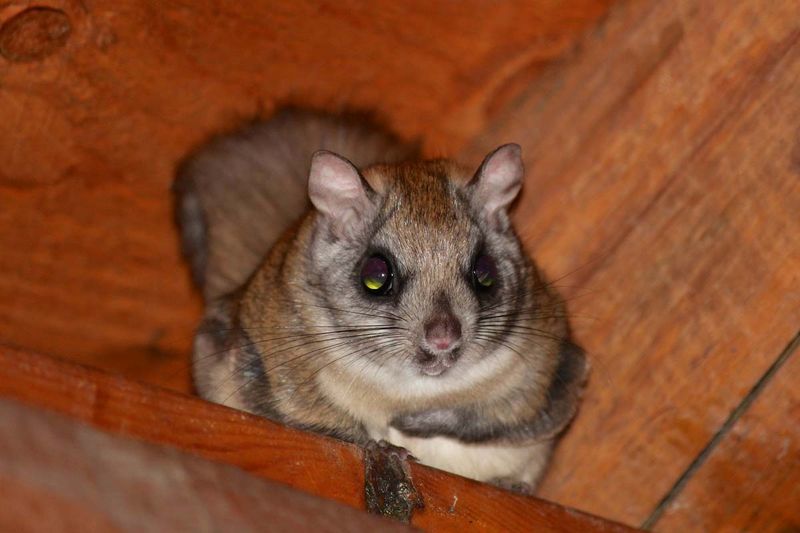
Staying warm is a big deal for a animal that weighs only a few ounces. University of Maryland Extension notes that southern flying squirrels sometimes den together in cold weather, which can help them conserve body heat.
Sharing a cozy space makes sense when temperatures drop.
Sometimes is the key word. Group denning is something these squirrels do on occasion, not something every one of them does every winter.
It does not mean that any attic with noise inside holds a family.
Research backs up that caution. A study of 15 squirrels in southwest Michigan found that individual dens were more common than group dens in what the researchers observed.
That is a small study in one region, so it cannot be stretched to cover every place or season.
For a homeowner, the lesson is practical. An attic might hold one squirrel, several, or none at all.
Group size varies, and you cannot guess it from the noise.
So the idea of a shared winter den is a helpful piece of background, not a diagnosis. It explains why you might find more than one animal, but only a look at your own attic can show what is really there.
Look for evidence beyond the sound
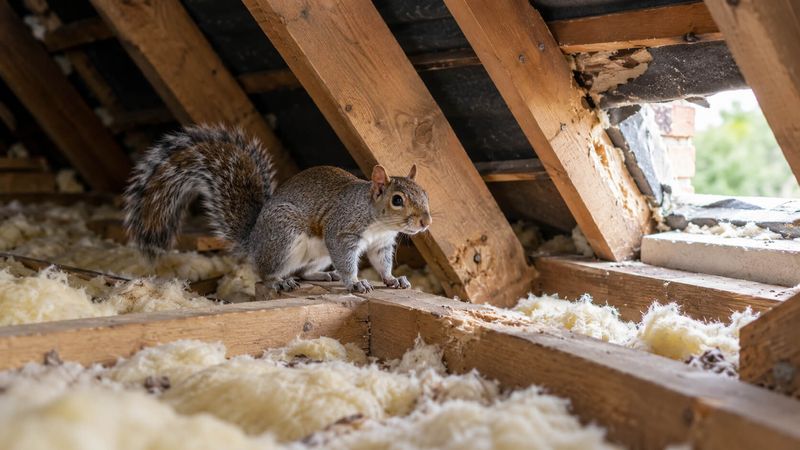
Once you suspect an animal, the goal is to swap guesses for facts. A sighting at dusk is the most direct clue, such as a small, big-eyed squirrel gliding from a tree to your roofline.
A motion-activated camera placed near a suspected entry point can also catch what happens after dark.
A careful inspection adds more detail. Look for gaps along soffits, loose vents, and spots where the roofline meets a wall.
Check the attic itself for shredded insulation, a bundle of leaves or soft material, droppings, or gnawed wood.
No single clue settles the question. Droppings might belong to a mouse, and a hole might be used by something else entirely.
University of Georgia Extension guidance encourages finding out which animal is responsible and how it is getting in before taking action.
Stay safe while you look. Use a good flashlight, watch your footing on the joists, and keep your distance from any nest you find.
Do not poke at it or move it.
If you still cannot tell what is up there, that uncertainty is a good reason to call a qualified wildlife professional. Getting help before you seal or block anything is far better than guessing wrong.
Check for dependent young before closing an opening
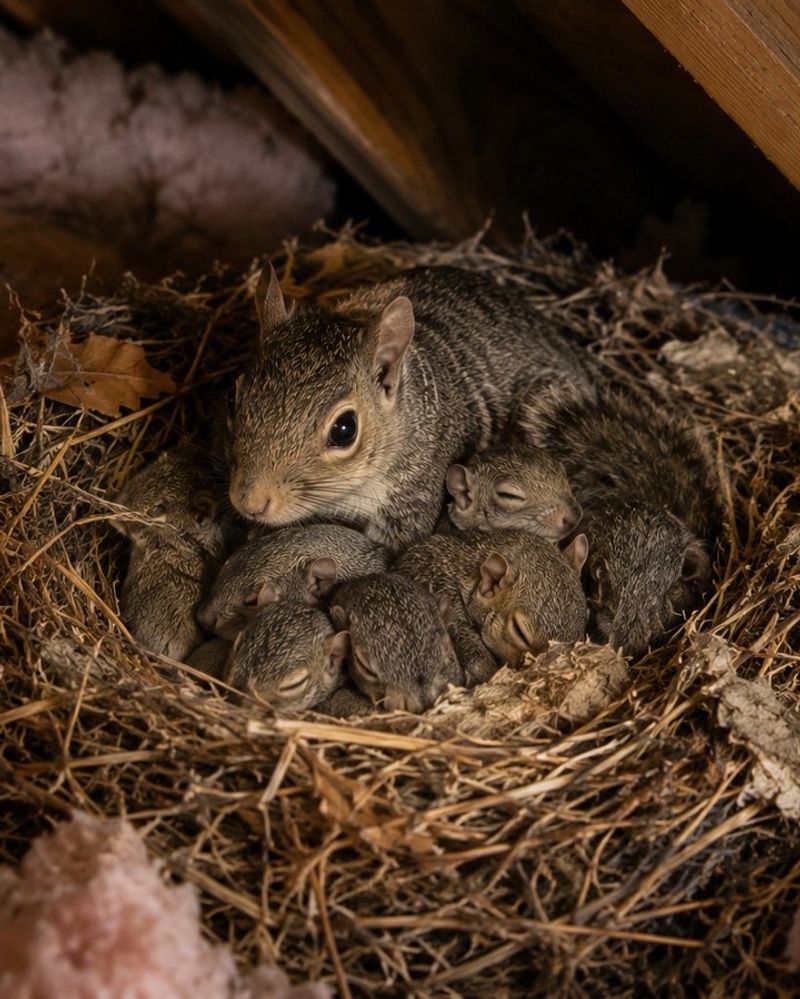
Here is the step people most often skip. Before you seal any hole or place a one-way device, you need to check for a nest and for young that still depend on their mother.
Closing an opening at the wrong time can separate babies from adults, as the Wildlife Center of Virginia explains in its advice on squirrels.
You may have heard that you should evict them before spring babies arrive. As a firm deadline, that is too simple.
University of Maryland Extension reports breeding in February to March and again in June to July, with young nursing for about two months and becoming independent later.
That means a winter or early spring date on the calendar does not guarantee the coast is clear. A nest with babies could be present in other months too.
Only an inspection can show whether dependent young are in your attic.
If you see a nest, hear high-pitched chirping or squeaking that stays in one spot, or simply cannot be sure, stop there. Do not seal anything.
Bring in a wildlife professional who can look safely and decide what to do.
Waiting a little longer is usually kinder and often cheaper than fixing a mistake. Patience protects the babies, and it protects you from a bigger mess later.
Use exclusion only after the attic is ready
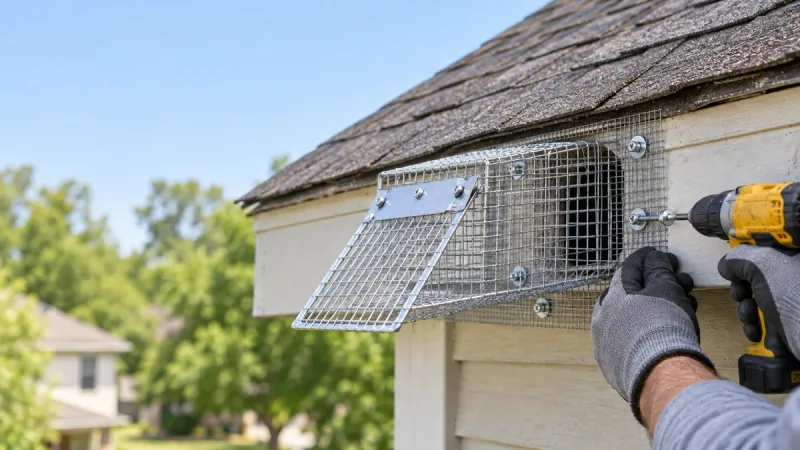
Humane exclusion is a process, not a quick reaction to a scratching sound. It comes after you have identified the animal and checked for young.
Skipping those steps is how families get split up.
A one-way device lets animals leave but not return. The Wildlife Center of Virginia advises that this approach fits only when young can leave with the adults.
If babies are still in the nest, a one-way door can trap them inside while the adults are shut out.
Once you are confident no dependent young remain, the work shifts to the entry points you found. Gaps, damaged vents, and soffit openings are the usual places to look.
Closing them after the animals have left is what keeps new ones from moving in.
No single method suits every attic. Rooflines differ, some attics have many hidden gaps, and the right device depends on the exact opening.
For that reason, this article does not offer one-size-fits-all specifications.
Complicated attics, hard-to-reach openings, or any doubt about young are good reasons to hire help. South Carolina DNR keeps a wildlife control page that points homeowners toward licensed operators who handle this kind of work every day.
Choose help that follows South Carolina rules
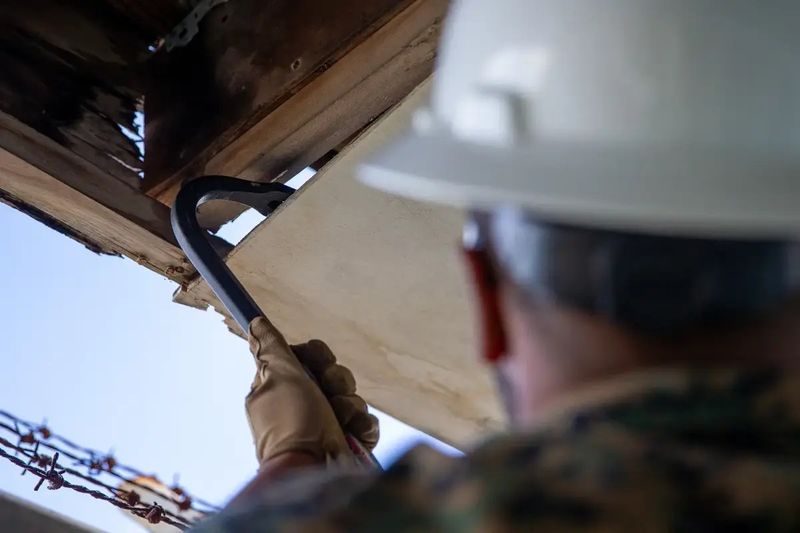
Call a wildlife-control operator when you cannot tell what animal you have, when young may be present, or when your attic is large or awkward to work in. A trained person can inspect safely and plan an exclusion that fits your house.
This also helps you stay on the right side of state rules.
South Carolina DNR advises homeowners to shop around. On its wildlife control operator page, it suggests comparing providers, asking for references, and getting the work described in writing.
A written description helps you understand what you are paying for.
Be wary of anyone who offers to trap your squirrels and drive them somewhere else. The same DNR page says routine wildlife relocation is against state law.
Moving animals also tends to separate them from their young and drop them in unfamiliar territory.
You may be tempted by a do-it-yourself shortcut such as mothballs. The National Pesticide Information Center says mothballs have little or no effect as repellents and warns against using them in ways the label does not describe.
The state squirrel guidance also discourages them.
Skip the smelly shortcut and put your effort into identification, inspection, and a qualified professional. That path is legal, humane, and far more likely to solve the problem for good.
Clean droppings and nesting material with care
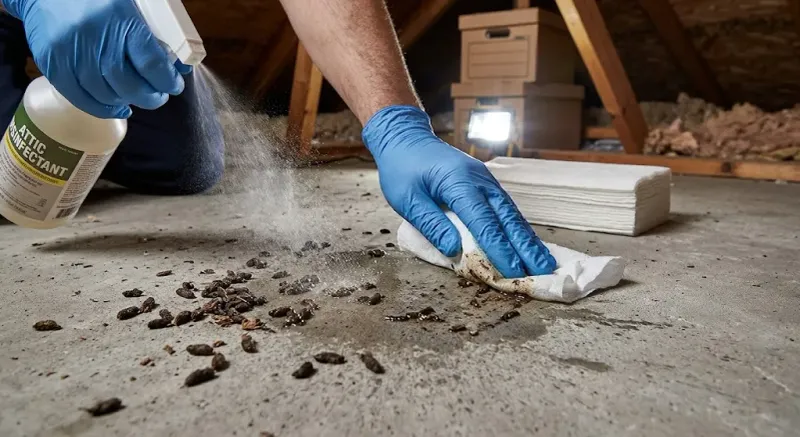
After the animals are gone, the attic still needs attention. Droppings and old nesting material can carry germs, so a careful approach matters.
The steps below come from CDC guidance on cleaning up after rodents, which is general advice for rodent waste. It does not mean flying squirrels in particular carry hantavirus.
Start by putting on gloves. Then wet the droppings and nesting material with a disinfectant instead of dry wiping them.
Let the liquid soak in, and only then wipe the area up with paper towels.
Do not sweep or vacuum the waste. Those actions can kick tiny particles into the air, where you might breathe them in.
Wetting first keeps dust down.
Heavy infestations call for extra precautions, according to the CDC. If your attic has thick layers of droppings or a lot of soiled insulation, consider asking a professional to handle the cleanup.
Wash your hands well when you finish.
A clean, sealed attic is a quiet one. Once the scratching stops, you will know the problem was handled with care for both your family and the wildlife outside.
Share this story