A deep hoot outside your window at night usually means an owl is going about its normal business. It is most likely calling in its territory or keeping in touch with another owl.
The sound does not predict anything strange, and it does not mean the bird is after you. Here is what Alabama owls may be saying, what a call cannot tell you, and how to enjoy the sound safely.
Owls are familiar nighttime callers across Alabama
Step outside after sunset in almost any part of Alabama and you may hear an owl. Great Horned Owls live throughout the state, and Alabama’s wildlife agency describes them as fairly common in all seasons and regions.
They are mostly active at night, and people often hear them around dusk.
So a hoot near your home is not unusual. Great Horned Owls adapt well to woods, farmland, parks, and the edges of towns.
Neighborhoods with tall trees can easily fall inside an owl’s home range.
Hearing a sound is different from confirming who made it. If you did not see the bird, or the call sounded unfamiliar, the safest description is simply an owl, or possibly a Great Horned Owl.
Alabama also has other owls, and the state notes that Barred Owls, which are common here, can be confused with Great Horned Owls.
A few clues can help. Great Horned Owls give deep, soft hoots in a short series.
Barred Owls are known for a rhythmic call that many people hear as a question about who is cooking. Recording the sound on your phone from a window can help you compare it later with online recordings.
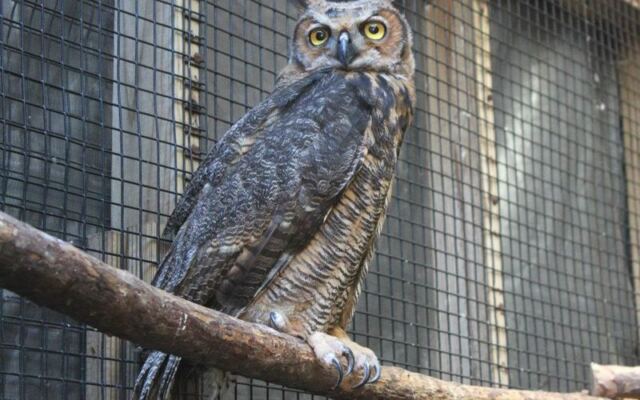
If you do get a look at the bird, notice the feather tufts on its head that look like ears. That feature, along with its large size, points toward a Great Horned Owl.
Without a clear view, it is fine to leave the identification open and simply enjoy the sound.
What an owl’s hoots can communicate
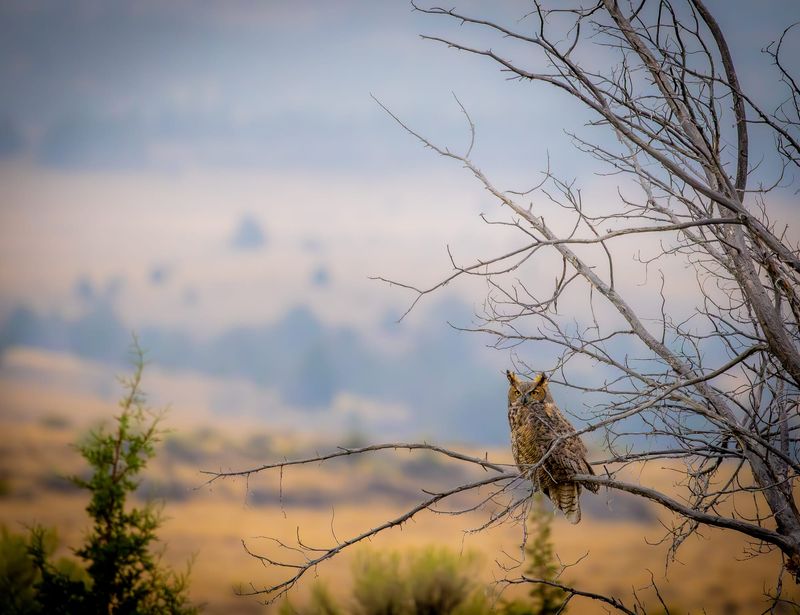
Owl hoots are a form of communication, and a single call can happen in several settings. A research paper on Great Horned Owl vocalizations describes territorial hooting by both males and females.
It also describes duets between mates and exchanges with neighboring or unfamiliar owls.
That means the hooting you hear could be one owl calling alone, a pair answering each other, or birds trading calls across a property line. The International Owl Center also documents several kinds of hoots and other sounds these owls make.
Hooting can happen all year. One study found it more common in fall and winter, but that is a pattern, not a rule.
Hearing an owl in July is just as normal.
Here is where people sometimes get ahead of the science. From your porch, you cannot reliably tell what a particular owl intends, whether the answering bird is its mate, or exactly where either one is sitting.
The research gives a broad picture of how these owls behave. It does not work as a call-by-call translator.
It also has limits. The study was done in Minnesota and included a human-imprinted owl along with wild pairs.
It helps explain general behavior, but it cannot interpret a specific call in an Alabama backyard.
The practical takeaway is simple. Treat the sound as ordinary owl conversation, and skip the guesswork about what it means for you.
Winter calls can overlap with nesting, but do not confirm a nest
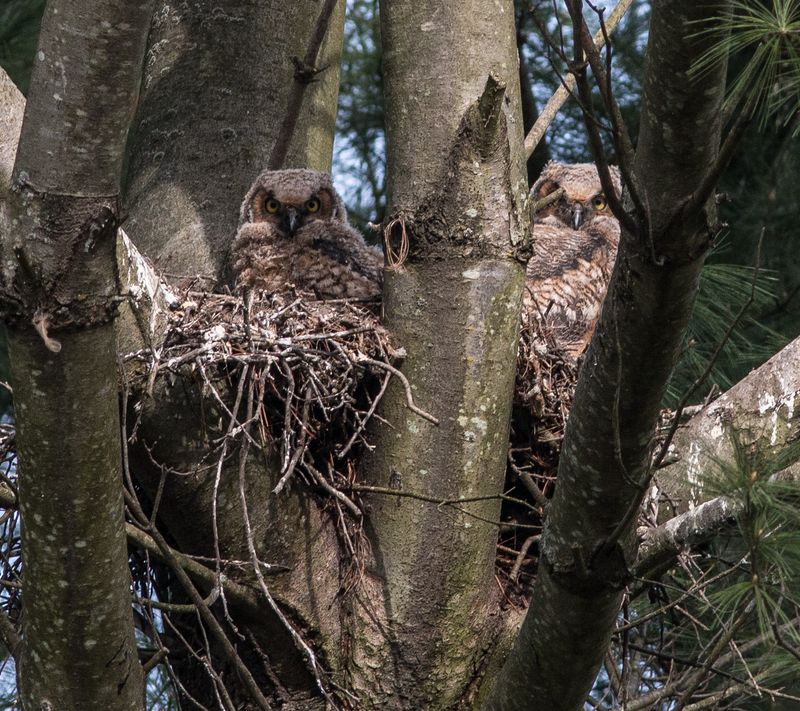
Cold nights in Alabama can be surprisingly lively for owls. Great Horned Owls nest early, and the state’s wildlife agency reports eggs as early as December.
Owlets have been found in nests by mid-to-late January.
Because of that early schedule, winter hooting may coincide with courtship or nesting. A pair may be calling as they settle into a territory or get ready to raise young.
Timing and behavior vary from owl to owl, though, so a winter hoot is a possibility and not a promise.
A call by itself cannot show where a nest is, or even that one exists. The vocalization study describes hooting in several contexts, which is why sound alone is a weak clue.
An owl may be calling from a favorite perch far from any nest.
Distance matters most if you suspect a nest. Adults can be highly protective of nest sites, and an owl defending young is not a bird to test.
Walking out with a flashlight to look for it is more likely to cause trouble than to reveal anything.
A better plan is to keep your usual routines and watch from a window in daylight. If you notice an owl repeatedly sitting in the same big tree, simply give that area some space until the season passes.
A hoot cannot predict a death
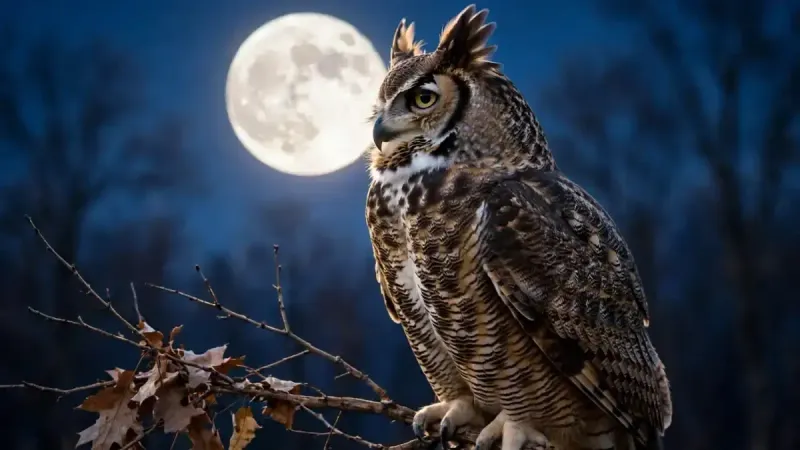
Many families have heard the saying that an owl calling near the house means a death is coming. Beliefs like this have a long history, and a Journal of Social History article documents one such tradition in the American South.
It is worth respecting as part of how some communities talked about loss and the unknown.
Folklore about owls is not the same everywhere, though. Different cultures have linked owls with wisdom, protection, bad omens, or nothing special at all.
No single belief speaks for everyone.
Folklore tells us what people have believed. It does not tell us what owls are doing.
When researchers study Great Horned Owls, they describe hoots in communication settings such as territory and contact between owls. Nothing in that work treats a call as a forecast of human events.
If an owl’s voice stirs up memories or worries, that is a very human reaction, and there is no need to feel foolish about it. You can keep the family story and still know that the bird outside is just doing owl things.
A hoot does not mean an owl is targeting a pet
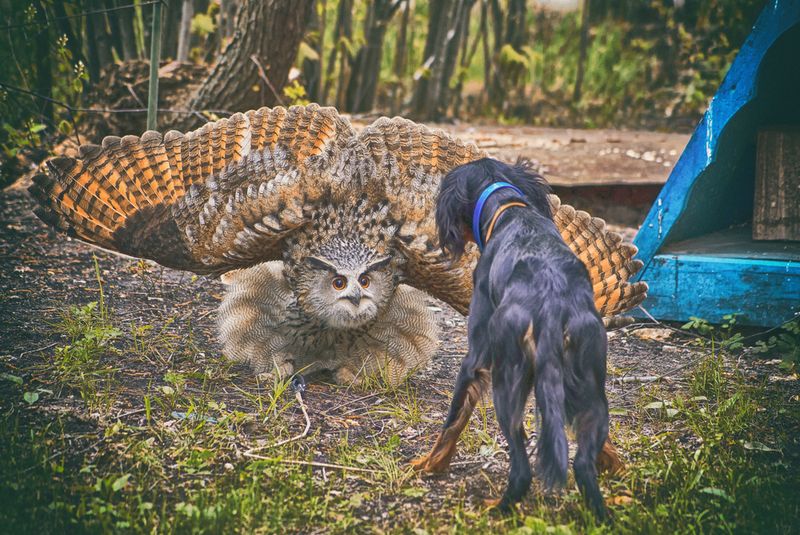
Great Horned Owls are strong hunters with a varied menu. Alabama’s wildlife agency notes that they eat many kinds of prey, including mammals and birds.
That fact tends to make pet owners nervous the moment they hear a hoot.
A hoot, however, is a communication sound. It does not show that an owl has noticed your pet, and it does not mean an attack is planned.
An owl calling from a treetop may not be hunting at all.
The risk is real but modest. Attacks are possible, yet Cornell Lab of Ornithology notes that even small pets may be too heavy for an owl to carry off.
Ordinary care is enough. Stay with small dogs and cats when they go out after dark, and bring them in at night or keep them in a secure shelter.
Chickens, rabbits, and other small animals do best in a covered run or coop with sturdy wire.
Turning on a porch light and watching your pet for a minute before letting it out is a calm habit that costs nothing. There is no reason to panic or to try to chase the owl away.
Listen from a distance and leave the owl undisturbed
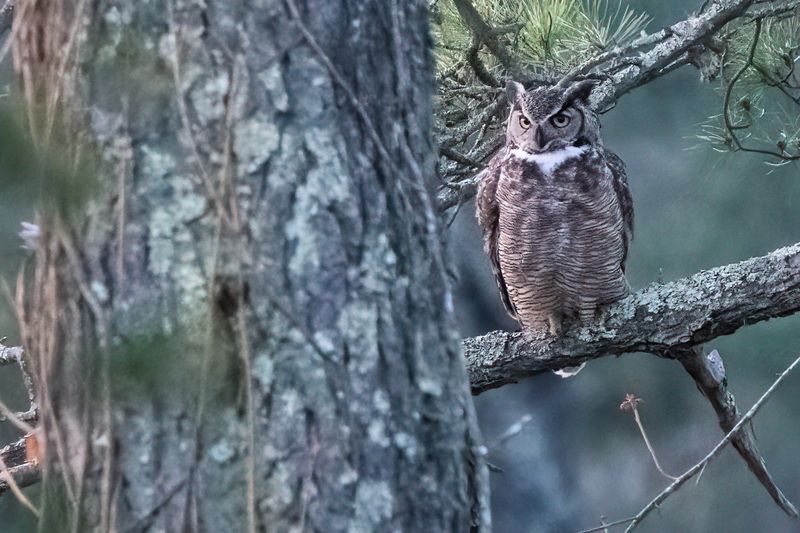
The easiest way to enjoy owls is also the kindest. Stand on the porch or by an open window, listen, and let the bird carry on.
You do not need to see it to appreciate it.
Skip the flashlight. Owl-observation guidance from the International Owl Center asks people to avoid shining lights at owls and to keep their distance, especially near nests.
Do not approach a suspected nest, and never touch an owl or a young bird.
Playing recorded owl calls to bring a bird closer is also a bad idea. Audubon’s ethical photography guide warns that playback can provoke a bird to defend its territory and may disturb nesting owls.
A bird pulled away from its routine may burn energy it needs.
Owls are also protected by law. The Migratory Bird Treaty Act restricts taking protected migratory birds without authorization.
Rules about nests and removal can be complicated, so contact wildlife authorities before disturbing or handling an owl.
If you want a closer look, try daylight and binoculars from well back. A quiet evening and a good ear are usually all it takes.
If an owl looks injured, ask for advice before acting
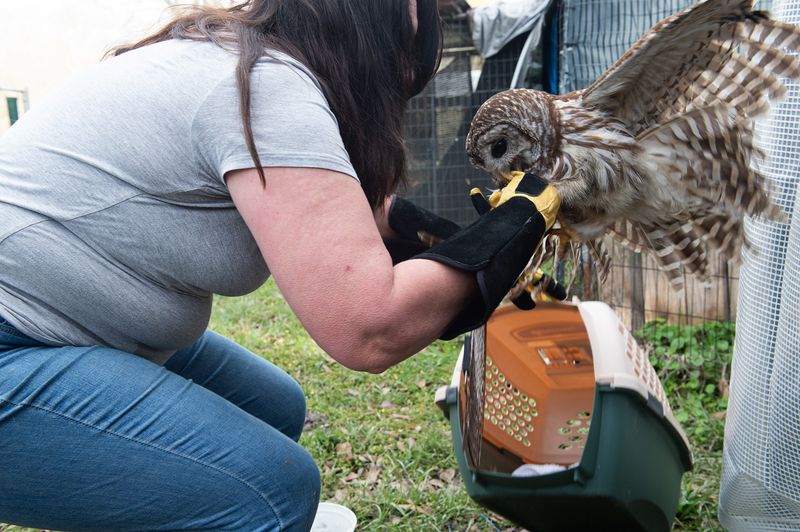
Seeing an owl on the ground or sitting still in daylight can be alarming. Still, an owl that looks hurt may not need help.
Alabama says intervention is often unnecessary, and a bird that seems odd to us may be resting or recovering on its own.
The safest first step is a phone call, not a rescue. Contact a permitted wildlife rehabilitator for advice, and do not handle or keep the bird yourself.
Alabama’s wildlife rehabilitation page warns that injured wildlife can cause serious injury, and a frightened owl has strong talons and a sharp beak.
There is also a legal side. Most people need a permit to possess native wildlife for rehabilitation, so taking an owl home, even with good intentions, can create problems for you and the bird.
The state lists 334-242-3469 for rehabilitation advice, and it also keeps a list of permitted wildlife rehabilitators.
Health is another reason to stay hands-off. Alabama advises people not to touch dead or dying birds because avian influenza has been detected in the state.
Keep children and pets away from the bird as well.
While you wait for guidance, watch from a distance and note where the owl is and what it is doing. That information helps the experts decide what comes next.
Most nights, though, the owl in your yard is simply a neighbor with a good voice.
Share this story