You haul a fresh fir home from a Delaware tree farm, set it up by the window, and a few days later a tiny brown spider strolls across the ornaments. Don’t panic, because that little guy is almost certainly harmless.
Real Christmas trees are mini outdoor habitats, and a whole cast of small creatures can ride along into your living room. Knowing who they are helps you keep calm, protect your home, and still enjoy the smell of a real tree.
1. Tiny Brown Spiders
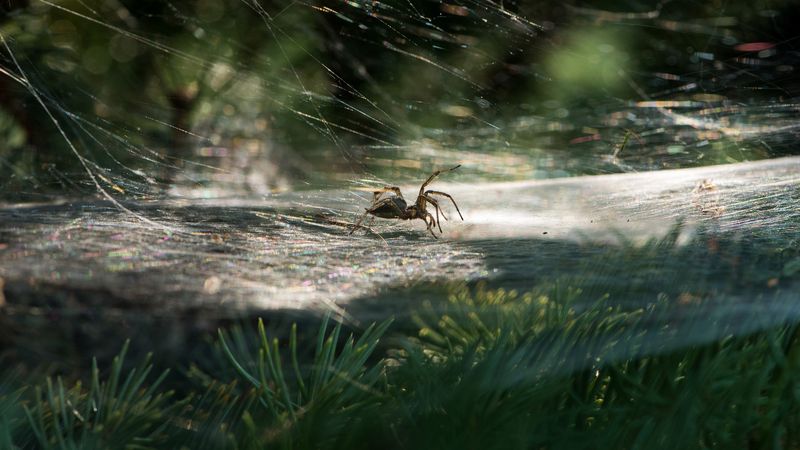
Picture a speck of brown no bigger than a grain of rice, tiptoeing along a needle. Most of these little arachnids are hunting spiders or young orb weavers that tucked themselves into the boughs for winter.
Warm indoor air wakes them up, so they start wandering.
Here’s the good news: their fangs are too small and weak to bother people. They aren’t brown recluses, which are rare in Delaware anyway.
Spiders that hitch a ride usually dry out and die within days because your house has little humidity and no prey.
A gentle vacuum or a cup and a piece of paper will handle any you spot. Honestly, they’re more scared of you than you are of them.
2. Praying Mantis Egg Cases
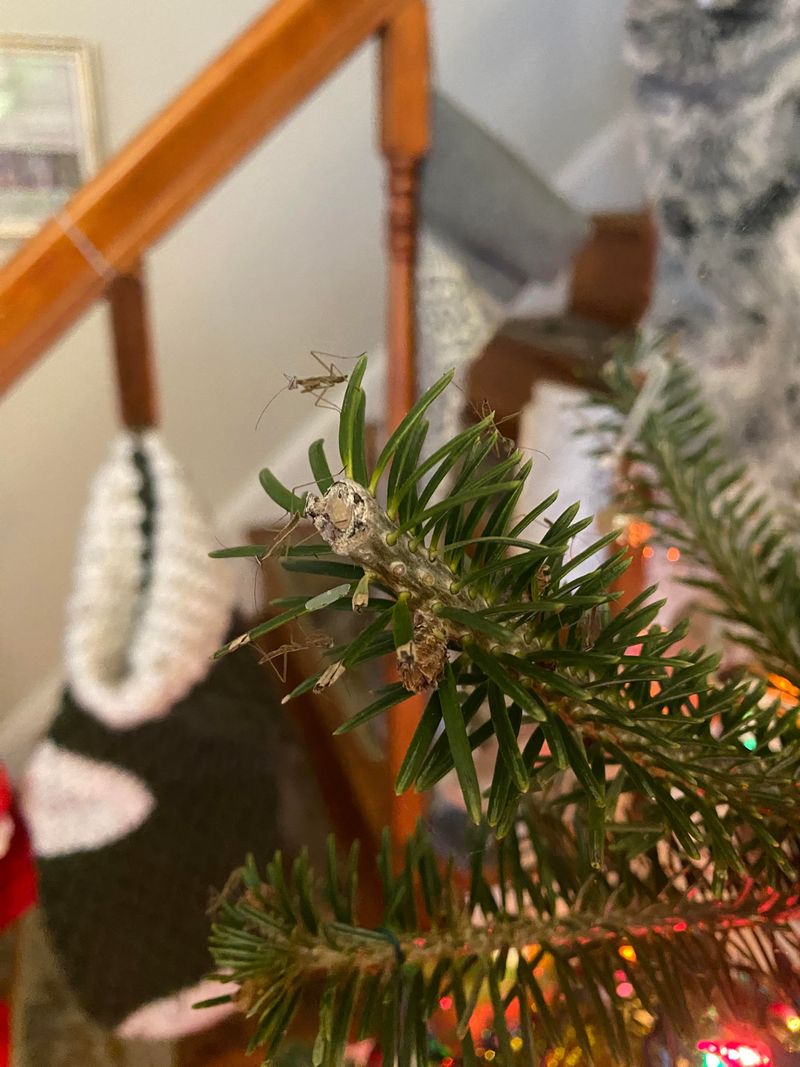
A walnut-sized lump of tan foam stuck to a twig might look like a dried pinecone bit. Look closer, though.
That’s an ootheca, a praying mantis egg case, and it can hold up to 200 babies.
Inside a heated home, those eggs think spring has arrived. Within a couple of weeks, a swarm of tiny mantises could pour out across your presents.
They’re harmless, but they’ll starve quickly with nothing to eat.
If you find one, snip off the twig and place it outside in a shrub. Gardeners love mantises because they eat pests, so you’re actually doing your yard a favor next spring.
3. Aphids
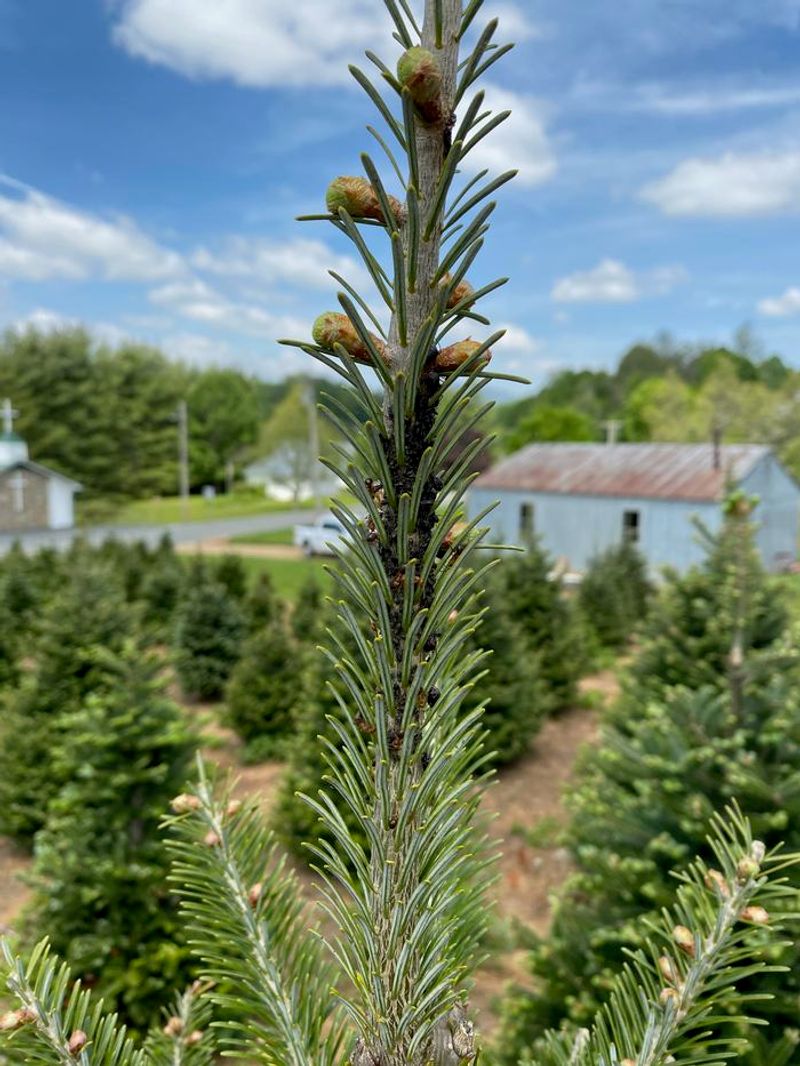
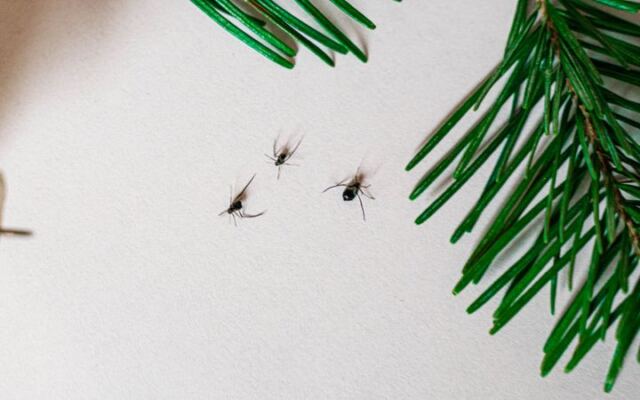
Ever notice tiny black dots on your tree skirt that weren’t there yesterday? Aphids could be the culprits.
These soft little bugs suck sap from conifers, and some species, like the giant conifer aphid, look a lot like ticks at first glance.
Relax. Aphids don’t bite people, don’t infest houses, and can’t survive on your couch.
They simply crawl around confused once the tree warms up.
A quick shake of the tree before you bring it inside knocks most of them loose. Many Delaware tree farms offer a mechanical shaker for exactly this reason, so take advantage of it.
4. Adelgids
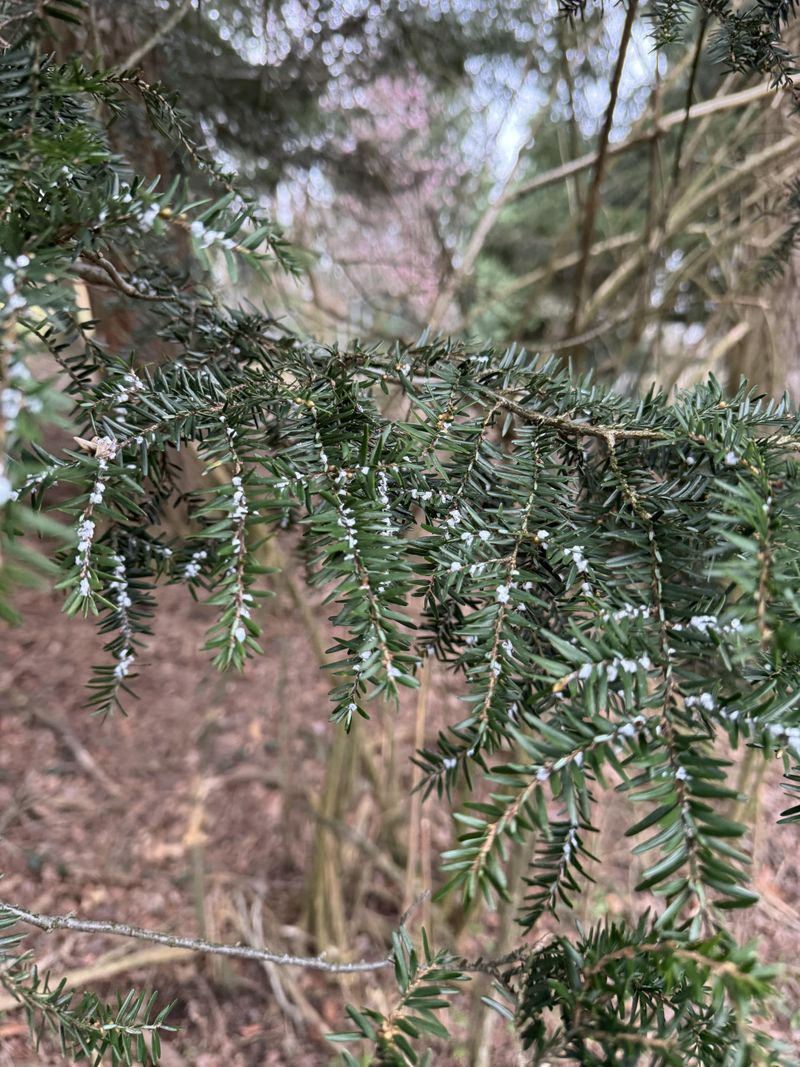
Little white fluffy spots dotting the needles can look like leftover fake snow. Often, they’re adelgids, tiny insects that cover themselves in waxy wool for protection.
Balsam woolly adelgids feed on firs, and they’re a big deal for forests across the Mid-Atlantic. In your living room, though, they’re no threat.
They can’t hurt pets, people, or your houseplants.
The main reason to care is outdoors. When you’re done with the tree, don’t just dump it in the woods.
Use your county’s tree recycling program so these pests don’t spread to healthy trees.
5. Bark Beetles
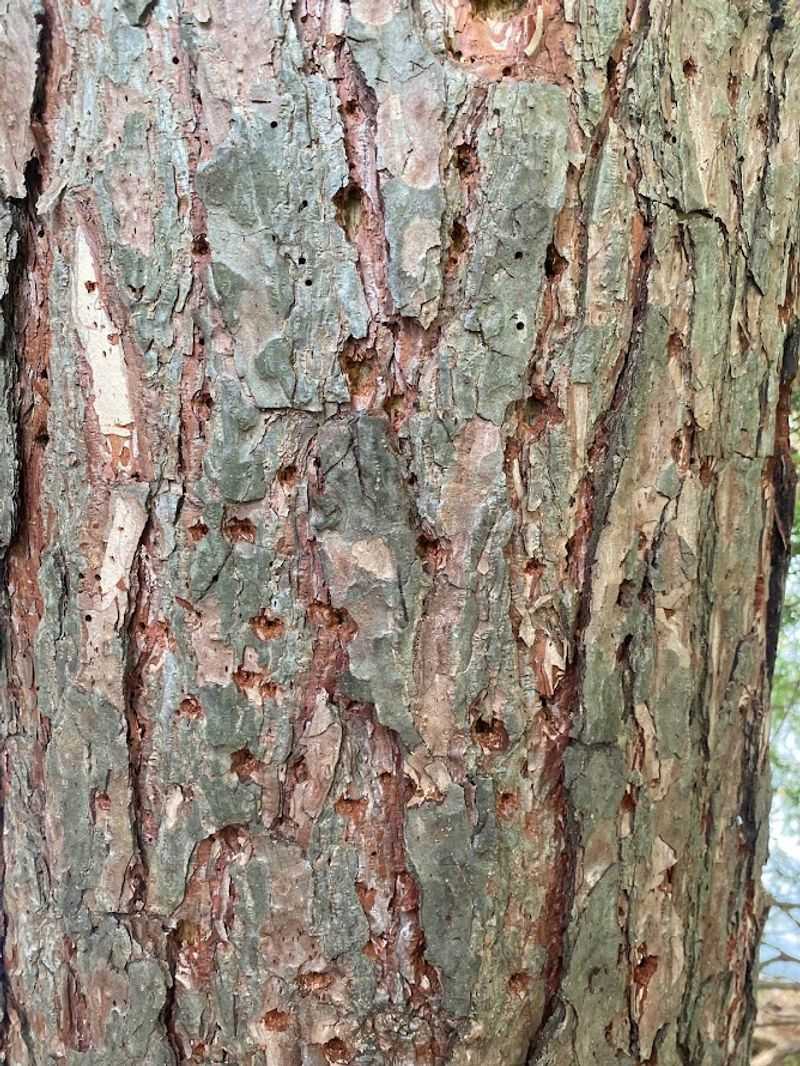
Tiny holes in the trunk with fine sawdust underneath? You may have bark beetles.
They’re small, dark, and about the size of a sesame seed.
These beetles tunnel under bark, but only in stressed or dying conifers. Your furniture and floors are safe, since dry, finished wood isn’t on their menu.
Most beetles will stay hidden inside the trunk the whole season. A few might wander out and bump into windows.
Sweep them up and move on.
6. Spider Mites
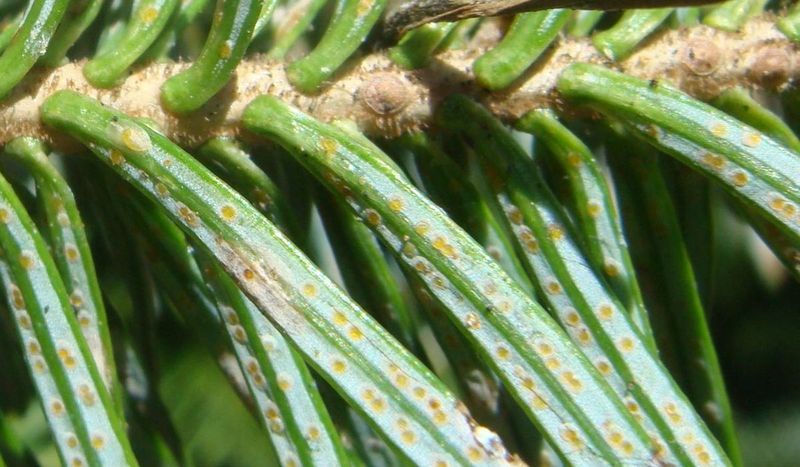
Some hitchhikers are so small you’ll only see them as red streaks if you squash one on white paper. Spider mites are related to spiders, not insects, and they live on the undersides of needles.
Fun fact: one way to check for them is the paper tap test. Hold white paper under a branch, tap the branch, and watch for moving specks.
If dots start crawling, those are mites.
They can’t bite you and won’t move into your carpet. At worst, they might wander onto a nearby houseplant, so keep your potted friends a few feet from the tree.
7. Bird Nests
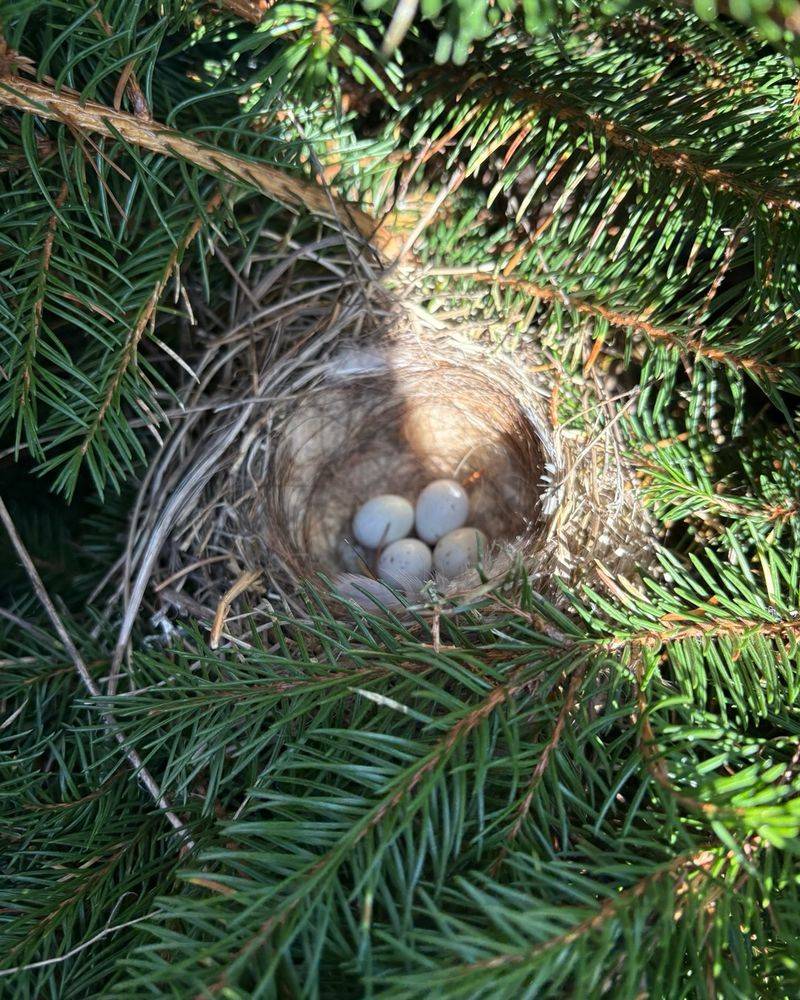
Finding a tiny nest tucked deep in the branches feels a bit like discovering a hidden gift. Many families even consider it good luck, and some European traditions say a nest in the tree brings a happy year.
By December, songbirds have long moved out, so the nest is empty. Still, old nests can hold mites or bits of debris.
If you want to keep it as a keepsake, pop it in a sealed bag in the freezer for a few days first.
Otherwise, simply lift it out and set it outside. It may become cozy material for next spring’s builders.
8. Psocids
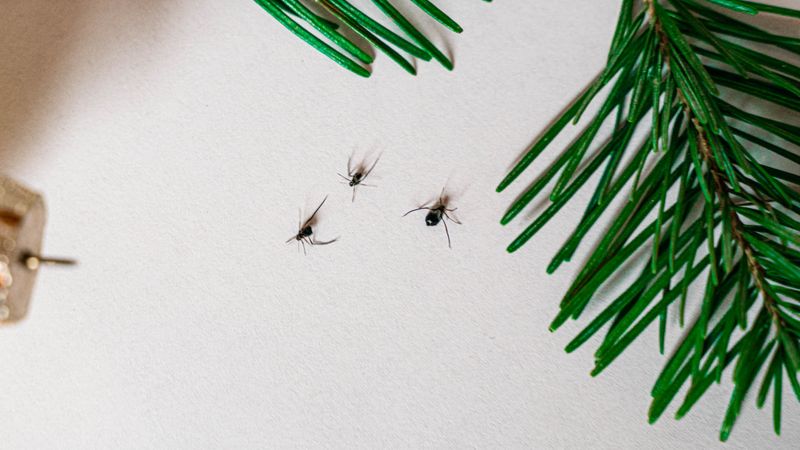
Psocids sound scary, but their nickname, barklice, is a little misleading. They aren’t lice at all and don’t live on people or pets.
These pale, soft insects munch on mold, algae, and lichen on tree bark. They might gather in groups, which can startle you if you spot a cluster near the trunk.
Once your home dries them out, they fade away fast. A vacuum takes care of any stragglers on the floor.
9. Spotted Lanternfly Egg Masses
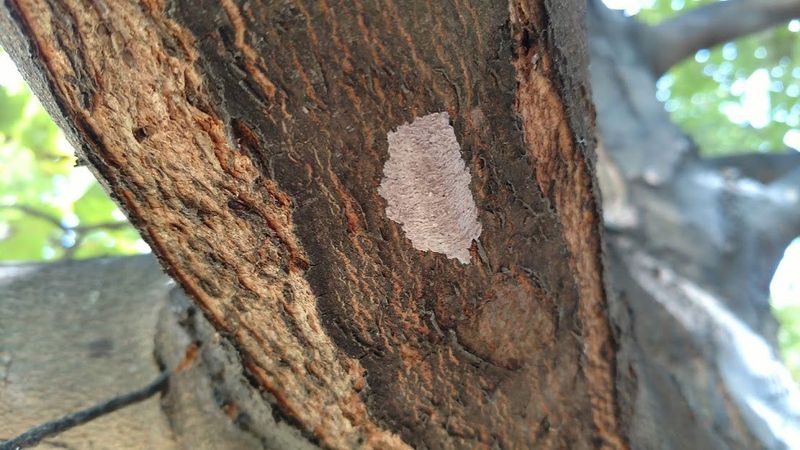
Now here’s the one Delaware really cares about. Spotted lanternflies have spread across northern Delaware, and they lay gray, mud-like egg masses on almost any surface, including trees and tree stands.
Lanternflies don’t bite or sting, but they badly damage grapevines, maples, and fruit crops. A single egg mass can hold 30 to 50 eggs.
Moving one to a new area helps the pest spread.
If you see a smear that looks like dried putty, scrape it into a bag with rubbing alcohol. Then report it to the Delaware Department of Agriculture.
You’ll be helping local farms.
10. Easy Ways to Keep Hitchhikers Out

A little prep at the tree farm saves a lot of surprise later. Ask for a mechanical shake, which rattles loose spiders, needles, and bugs in seconds.
At home, let the tree sit in a garage or on a porch for a day or two. Look over the trunk and branches with a flashlight for egg cases or odd lumps.
Snip and toss anything suspicious outdoors.
Skip bug sprays, since many are flammable and unsafe near lights. A handheld vacuum near the tree stand is your best tool.
With those steps, the only thing filling your home is that wonderful piney smell.
Share this story