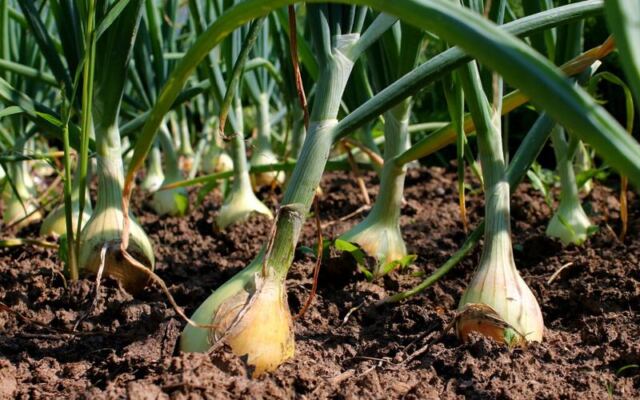
That tall stalk rising from your sweet onion most likely means the plant is bolting, which is a fancy word for flowering sooner than you wanted. You do not need to cut it off to save the bulb, because snipping the stalk is not a dependable fix.
The better move is to harvest a sound onion and use it soon. A bolted bulb can still be good to eat, and knowing what to expect will help you plan your kitchen.
That stalk usually means the onion is bolting
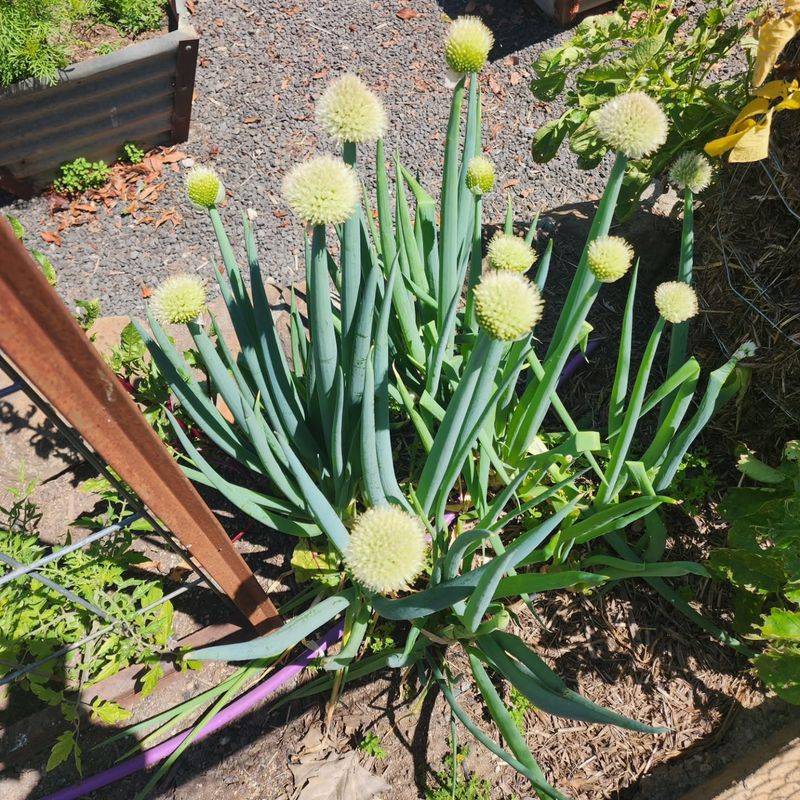
A tall, firm stalk shooting up from the center of an onion, ending in a swelling bud or a round flower head, is most likely a seed stalk. Gardeners call this bolting.
It simply means the onion is flowering earlier than you hoped.
Onions are biennials, so flowering is normally part of their second-year life cycle. In the first year, the plant is supposed to focus on leaves and a fat bulb.
UGA’s Vidalia onion production guide describes this seed-stalk formation as a known issue in onion growing, and University of Missouri IPM explains that onions can flower prematurely.
Sweet onions are not exempt. Bolting is an onion issue in general, not a special danger that targets Georgia onions, and it does not mean you did something terrible.
Because every plant is a little different, treat the stalk as a strong clue rather than a guarantee. If the stalk is thick, hollow, and topped with a bud, bolting is the most likely explanation.
Take a look at the base of the plant too, since that is where you will decide what to do next.
Spotting it early gives you more choices. You can plan a meal around that onion instead of being surprised later.
Cold, plant stage, and variety can all matter
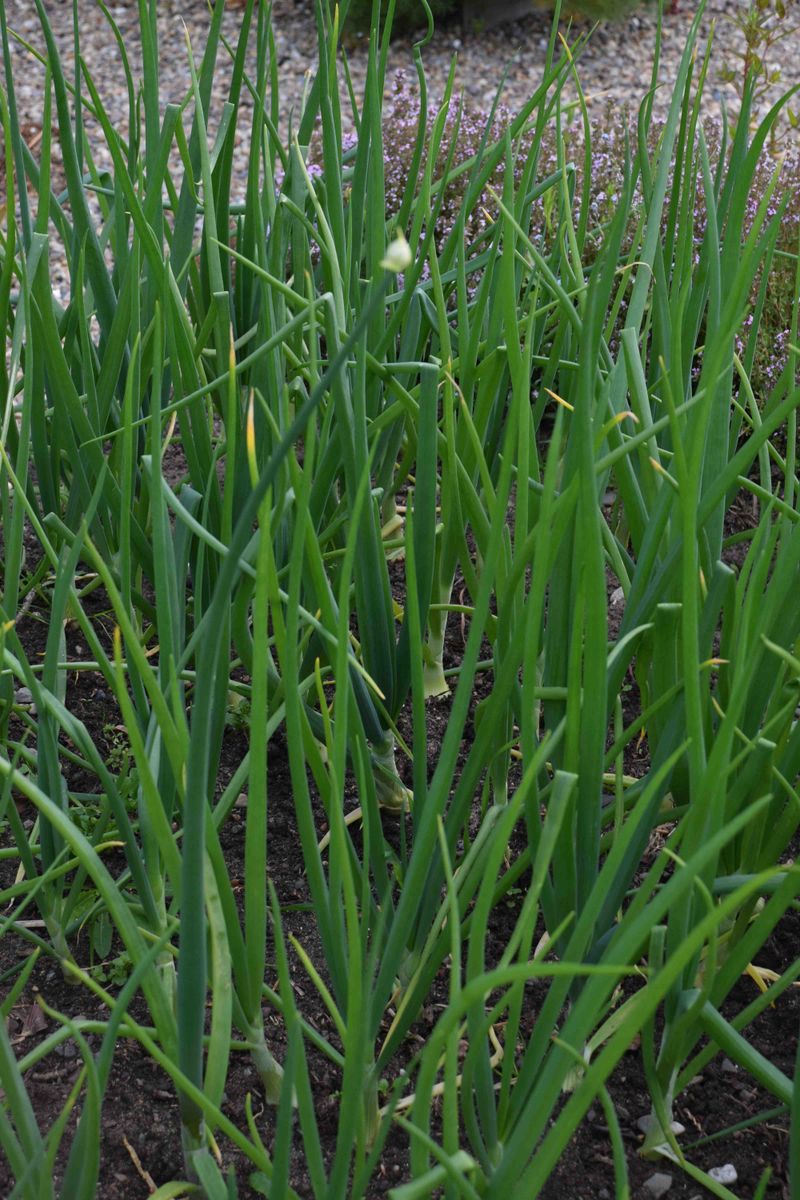
Cold exposure is a recognized trigger for flowering, but it rarely works alone. University of Missouri IPM explains that an onion needs to reach a sufficient leaf stage before it can respond to chilling.
A tiny seedling usually shrugs off a cool spell, while a larger plant may take the hint and start a flower stalk.
Plant development and variety also play a part. Some onion types are more likely to bolt than others, and plants in the same row can behave differently.
That is why you cannot pin one definite cause on your plant, and why blaming a single cold snap is not a safe guess.
Georgia gardeners often mix up two separate processes here. Day length affects onion bulbing, which is why short-day onions are grown in the South.
UGA’s guide treats day length as a bulbing matter, not the trigger for the flower stalk.
A useful clue is your planting history. Think about how big the plants were when the weather turned cold, and which variety you chose.
Jot those details in a garden notebook so next season’s choices are easier.
Not every onion responds the same way, so a neighbor’s healthy bed does not mean yours did anything wrong.
Cutting the stalk is not a reliable reset
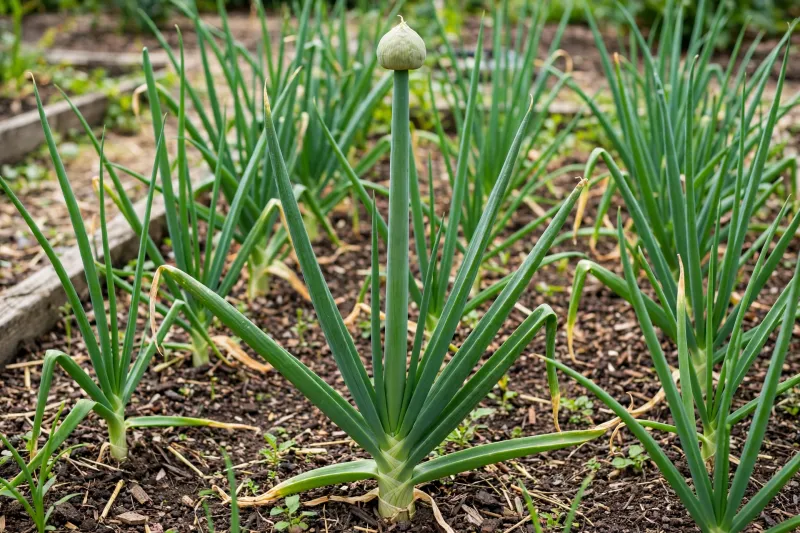
It is tempting to snap off the stalk and hope the onion goes back to normal. Guidance on this is not encouraging.
University of Missouri IPM allows that removing the stalk may help bulb formation, but the benefit is limited and depends on how far along the plant is.
Other sources are more direct. UC Agriculture and Natural Resources says cutting the stalk will not stop bolting and recommends harvesting right away.
Texas A&M AgriLife Extension also says removing the stalk does not eliminate the problem.
So the honest answer is that cutting might help a little in some cases, but you should not count on it. It will not reliably enlarge the bulb or turn it into a keeper for the pantry.
If you want to try it anyway, treat it as a small experiment on one plant. Do not delay harvesting on the other plants while you wait to see what happens.
The more dependable plan is to skip the rescue attempt and move on to harvesting. That saves the bulb while it is still in good shape.
Harvest a bolting onion for prompt use
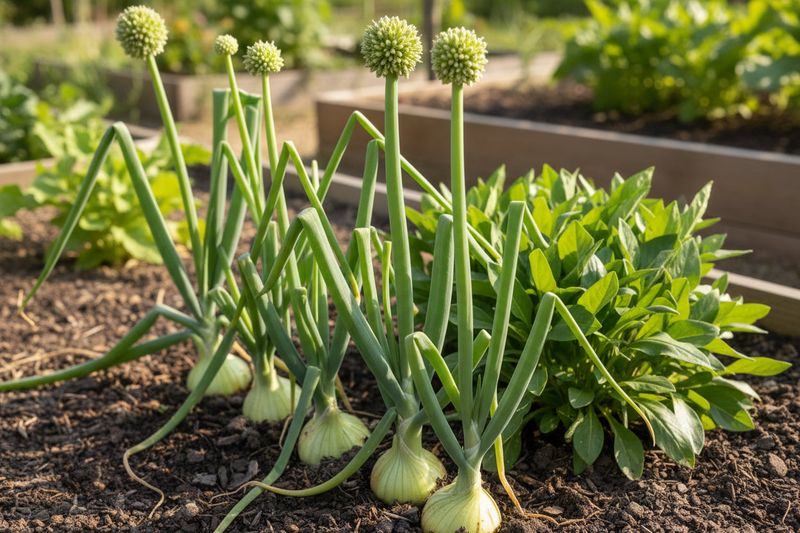
Once you see the stalk, the next step is simple. Dig the onion carefully, taking care not to nick the bulb, and plan to use it soon.
Iowa State University Extension advises harvesting at the first sign of bolting and using the onions promptly.
This is different from the usual harvest rules. Tops falling over is a cue for onions that are maturing normally and heading to dry storage.
A bolting onion is on a different schedule, so leaving it in the ground to wait for those signs is not a good plan.
An Ask Extension answer likewise notes that bolted onions will not make good storage bulbs. That makes quick use the sensible goal.
After digging, check the bulb. Press the neck and the sides gently.
A firm, dry bulb is a good candidate for tonight’s dinner, while one that feels soft deserves a closer look.
Chop and cook what you can this week. Sauté extra onions and freeze them, or slice them for burgers, salads, and soups.
Edible does not mean storage-ready
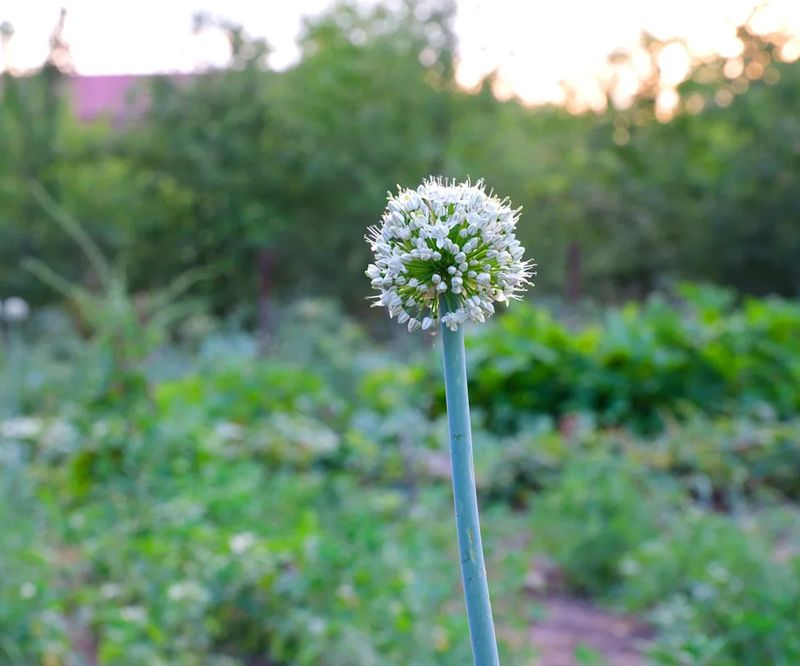
A bolted onion is not a ruined one. Texas A&M AgriLife Extension says the bulb remains edible, so a sound one can go straight into your cooking.
Quality is another matter. A bolted bulb may be smaller than you hoped, and it may look big yet feel lighter than it should.
It can also be more prone to decay than a bulb that never flowered.
Storage is the biggest weak spot. The flower stalk runs up through the center of the bulb, which makes it hard to keep for long.
That is why Iowa State University Extension points gardeners toward prompt use.
The reassurance has a limit. If a bulb is soft, mushy, rotting, or otherwise spoiled, do not eat it.
Bolting guidance does not say that a decayed bulb is safe.
A simple test helps. Slice the onion and check for a firm, clean interior and a normal onion smell.
Trim the tough center core if it bothers you, and use the rest.
Use the onion soon rather than storing it
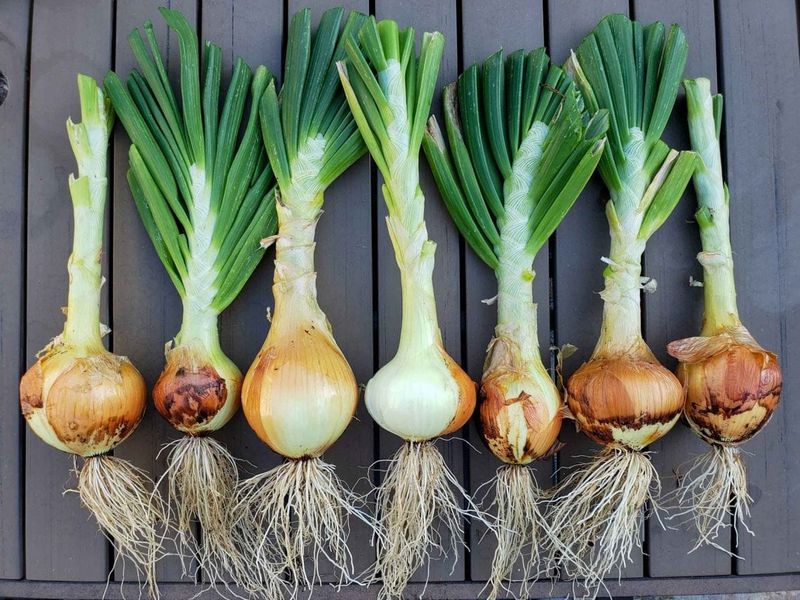
A tall stalk on a sweet onion most likely means bolting, and cutting it is not a dependable way to save the bulb. Dig a sound onion and cook it soon, as Iowa State University Extension suggests.
Since a bolted bulb may be smaller and harder to keep, as Texas A&M AgriLife Extension notes, the kitchen is its best destination.
Think of a bolted onion as dinner arriving a little early.
Share this story