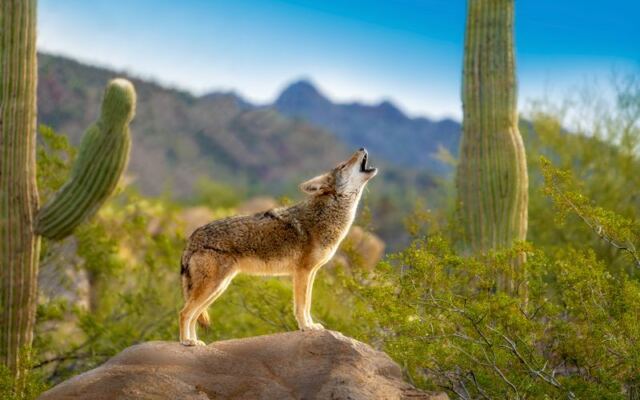
Those yips and howls drifting across the yard after dark really are a kind of conversation, with coyotes calling out and other coyotes answering back. The calls carry broad messages about who is where and who belongs to which family group.
You cannot translate a single howl word for word, but knowing the basics makes the night sounds less spooky. Here is what Iowa coyotes are likely up to, and what you should and should not read into the noise.
What coyote calls can communicate
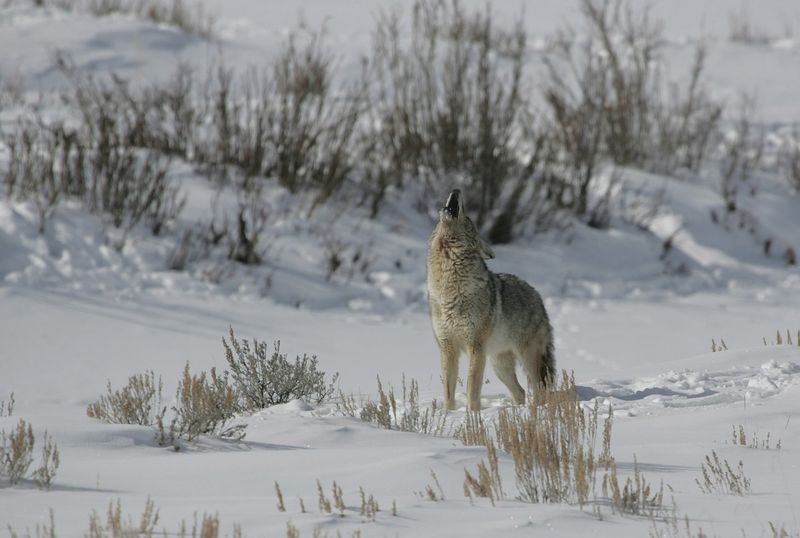
Coyote voices come in a handful of styles: high-pitched yips, sharp barks, and long, rising howls. According to the Iowa Department of Natural Resources, these calls can announce a coyote’s presence to other family groups, help defend territory, and strengthen social bonds within a family group.
They are most often heard at dusk or during the first hour of darkness.
Think of it as a neighborhood with invisible property lines. A howl says, in a general way, that somebody lives here.
USDA APHIS describes howling as a way of communicating location, sometimes prompting other coyotes to respond. A lone coyote may also howl to search for others or to signal that a home range is occupied.
The word pack can be misleading here. In Iowa, a coyote group is usually a territorial pair and their offspring, more like a family than a roaming gang.
Calls can help that family stay in touch across fields, creek bottoms, and the edges of town.
Calling it a conversation is a handy way to picture it, but it is shorthand. Scientists describe broad jobs for these sounds, not a dictionary where one yip means one thing.
When you hear a chorus from your porch, you can say that coyotes are communicating, but you cannot say exactly what they are saying.
That limit is actually good news for your peace of mind. Since a call does not announce a hunt, a threat, or a plan, you do not need to decode it to know how to respond.
The sounds are mostly coyotes keeping track of each other and their space.
Why one coyote may answer another
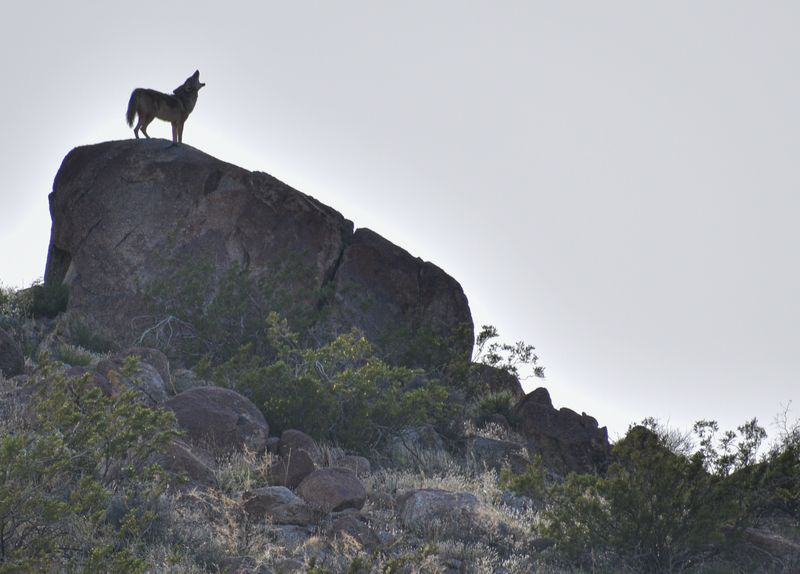
Coyote calls often get a reply, and that is where the conversation idea comes from. One animal sends out a howl, and another voice answers from across the field.
The exchange can help coyotes share where they are, mark out territory, and keep family members connected.
Researchers have tested this. In a Michigan field study of 18 GPS-collared coyotes, Petroelje and colleagues played recorded calls and found that resident coyotes were more likely to answer than transient ones.
That fits with calls serving a territorial and social purpose, since animals that live in an area have more reason to respond.
The study has limits worth knowing about. It used broadcast calls under controlled conditions, so it does not give a listener a way to decode a chorus heard from the back deck.
It also does not show that every reply is a check-in between family members.
Sometimes one coyote may answer another that is a stranger passing through. Sometimes the answering voice may be a relative.
From your yard, you simply cannot tell which it is.
The Iowa DNR describes these calls as part of how family groups communicate with each other, which is a broad frame rather than a specific message. A practical takeaway is that a back-and-forth of howls most likely means coyotes are aware of one another.
It does not mean they are aware of you.
How late November fits the seasonal calendar
Iowa’s coyote year has three broad stretches. The Iowa DNR places dispersal from September through December, breeding from January through March, and pup rearing from April through August.
A call you hear in late November falls inside the dispersal season, when young coyotes may be leaving the area where they were born to find space of their own.
That detail adds some context, but it does not decode the night. Dispersal can mean more coyotes moving through unfamiliar ground, and calls can help animals announce themselves or locate others.
Even so, the calendar cannot tell you why one particular coyote howled at 10 p.m. on one particular night.
It is also why a November howl should not be called a mating song. Breeding comes later, and USDA APHIS gives February and March as typical breeding months.
A howl in November does not prove mating, and it does not mean coyotes are talking to pups either, since pup rearing does not start until spring.
Use the calendar as a loose backdrop, the way you might use the season to guess what birds you will see at a feeder. It frames what is generally going on in the coyote world.
It does not translate a single howl.
If you want a simple rule, treat the season as background and the sound as just a sound. Coyotes calling in late fall is normal for Iowa.
Nothing about the date turns a howl into a warning.
A chorus can sound bigger than it is
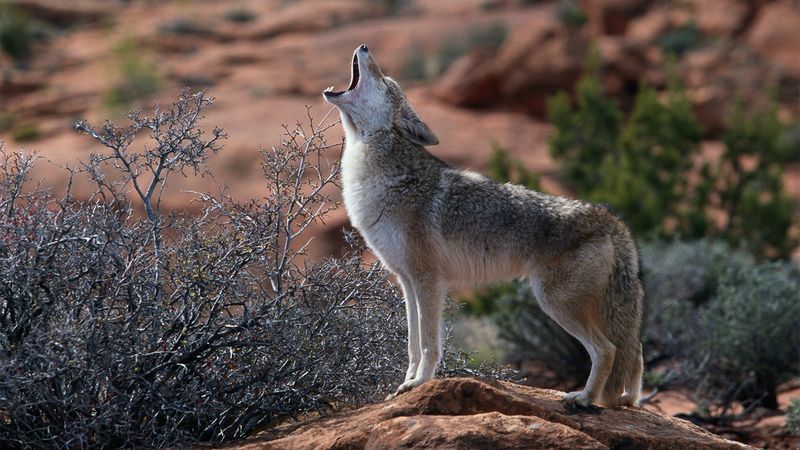
Ever heard what sounded like a dozen coyotes and then spotted just two? You are not alone.
Coyote voices are high, quick, and layered, and in the dark they bounce around fields and tree lines in ways that fool the ear.
Researchers put this to the test. In a study in Human-Wildlife Interactions, 427 participants listened to recordings of one to four coyotes.
On average, listeners overestimated group size by nearly twofold.
That finding is about how people tend to hear, not a rule that every listener will overcount every chorus. Some people will guess closer, and some choruses are easier to judge than others.
The point is that counting by ear is shaky.
Wildlife agencies say the same thing in plain words. USDA APHIS notes that a pair of coyotes can sound like several more animals.
So a wall of yips outside does not mean a large group has gathered near your house.
The practical lesson is simple. Do not try to work out a headcount from sound, and do not let a loud chorus convince you that something dramatic is happening.
If you really want to know how many coyotes are around, a trail camera or a daylight sighting will tell you far more than your ears can.
Nighttime calls do not automatically mean danger

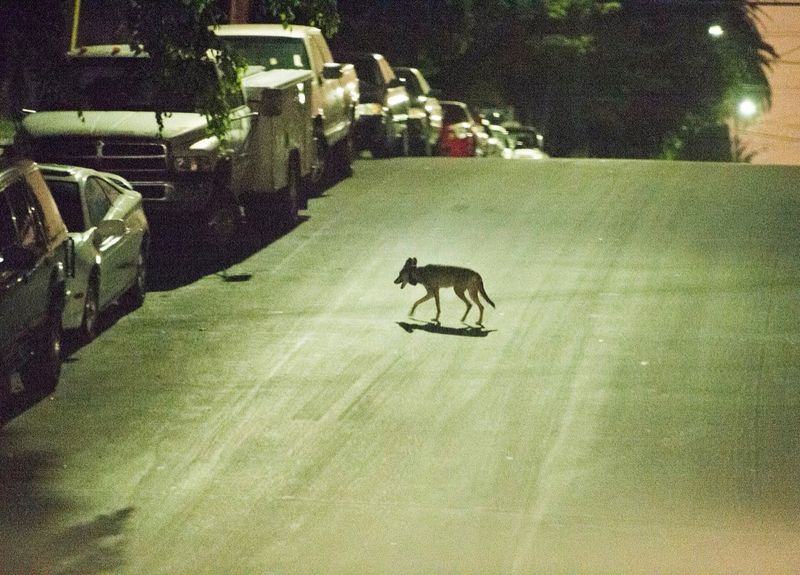
Coyotes are active at dawn, dusk, and after dark, and they can live comfortably in urban areas. Hearing one near your home is ordinary rather than a sign that something has gone wrong.
The Iowa DNR notes that urban coyotes can be heard in the evening, just like their country cousins.
A howl also does not tell you that coyotes have made a kill. It does not tell you that an encounter is about to happen, either.
Sound alone cannot show danger.
Behavior is what matters. Iowa State University Extension says occasional sightings at dawn, dusk, or night, when the coyote shows clear fear of people, require no action.
If sightings become more frequent, it recommends securing food sources and supervising pets.
Things change when a coyote stops acting wary. Habituation to people, aggressive behavior, attacks on pets or livestock, and biting a person are the signs that call for a targeted response.
A coyote that trots away when you step outside is behaving the way a wild animal should.
So when the yips start up at bedtime, you can let them be. Pay attention to what you see, not just what you hear.
A bold coyote in daylight that ignores you is worth a report, while a distant chorus is simply the night doing its thing.
Protect pets and respond safely to a close coyote
Most of the work happens before any coyote shows up. Do not feed coyotes, and keep garbage secured in sturdy containers.
Bring pet food indoors, since food left outside can pull wildlife toward your door, as the Iowa DNR advises.
Supervise pets whenever they are outside, especially small ones. Keep dogs close and leashed where coyotes are present, and step out with them after dark rather than letting them roam.
Iowa State University Extension likewise points to securing food and watching pets when sightings are frequent.
Never approach, chase, or corner a coyote. A cornered animal has fewer options and may act unpredictably.
Give it a clear way to leave.
If a coyote comes too close, stay at a safe distance and make yourself look big by raising your arms. Shout and make loud noises to scare it off.
Do not haze a coyote that looks sick or injured, is cornered, or is with pups.
If the coyote does not leave, or it shows concerning behavior, remove yourself from the situation and alert local authorities. That might mean walking calmly indoors with your pet and calling your city or county office or the Iowa DNR.
A howl is information about where coyotes are and that they are talking. Behavior is what calls for action, and howls alone never do.
The night is allowed to be noisy.
Share this story