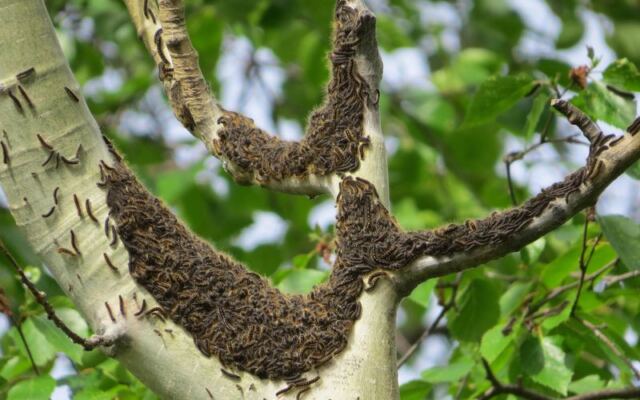
If you found a big black caterpillar with pale spots in Minnesota, it is probably a forest tent caterpillar, and the safest move is to look at it without picking it up. Forest tent caterpillars do not bite people, but some folks can still react to handling them.
Looks can fool you, so a few quick checks will help you work out what you have. Here is how to check the markings and decide what to do next.
The pale markings matter more than the black color
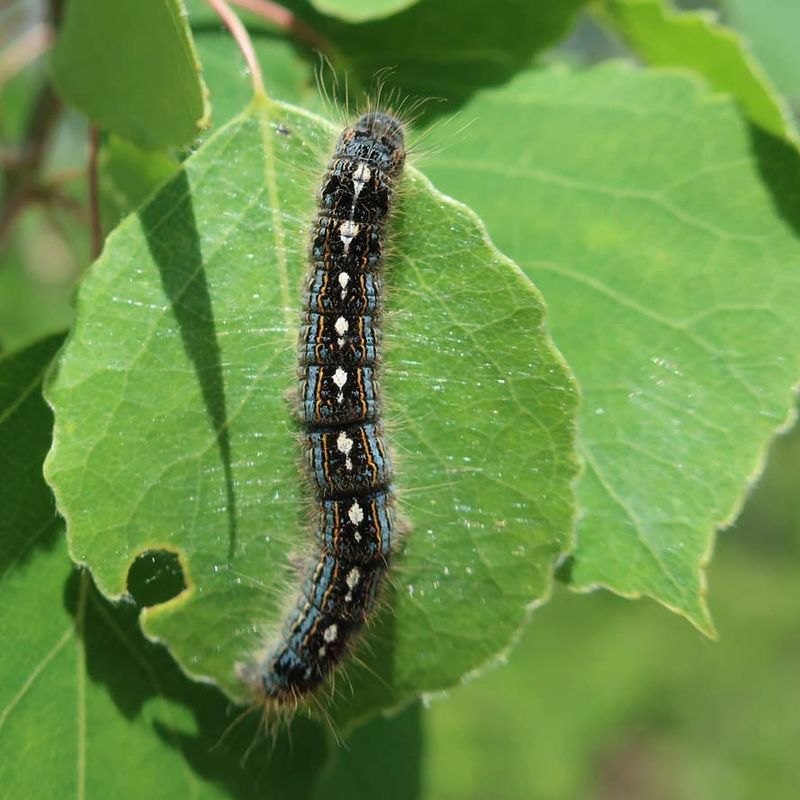
Color alone will not tell you much. In Minnesota, a dark caterpillar with a row of pale, footprint- or keyhole-shaped spots down its back is likely a forest tent caterpillar.
Likely is the key word, because a description is not the same as a confirmed identification.
Start by getting a good look at the back. According to the Minnesota DNR identification guide, the row of keyhole-like marks is the feature that sets this species apart.
The body is also blue-black, with blue stripes along the sides, and the hairs are fine and pale.
Size is another clue. Mature caterpillars reach about 2 to 2.5 inches, so a big one fits, but a big one could also be something else.
UMN Extension describes the same dark body and pale back marks.
If you cannot see the back clearly, do not guess. A sharp photo that shows the back, the sides, the hair pattern and the tree or surface it was on will make any identification more reliable.
Take that picture from a few inches away and keep your hands to yourself while you do it.
So the first step is simple. Check for a repeating row of pale marks, one per body segment, running down the middle of the back.
If that row is missing, you are probably looking at a different caterpillar.
A spring sighting adds context, not proof
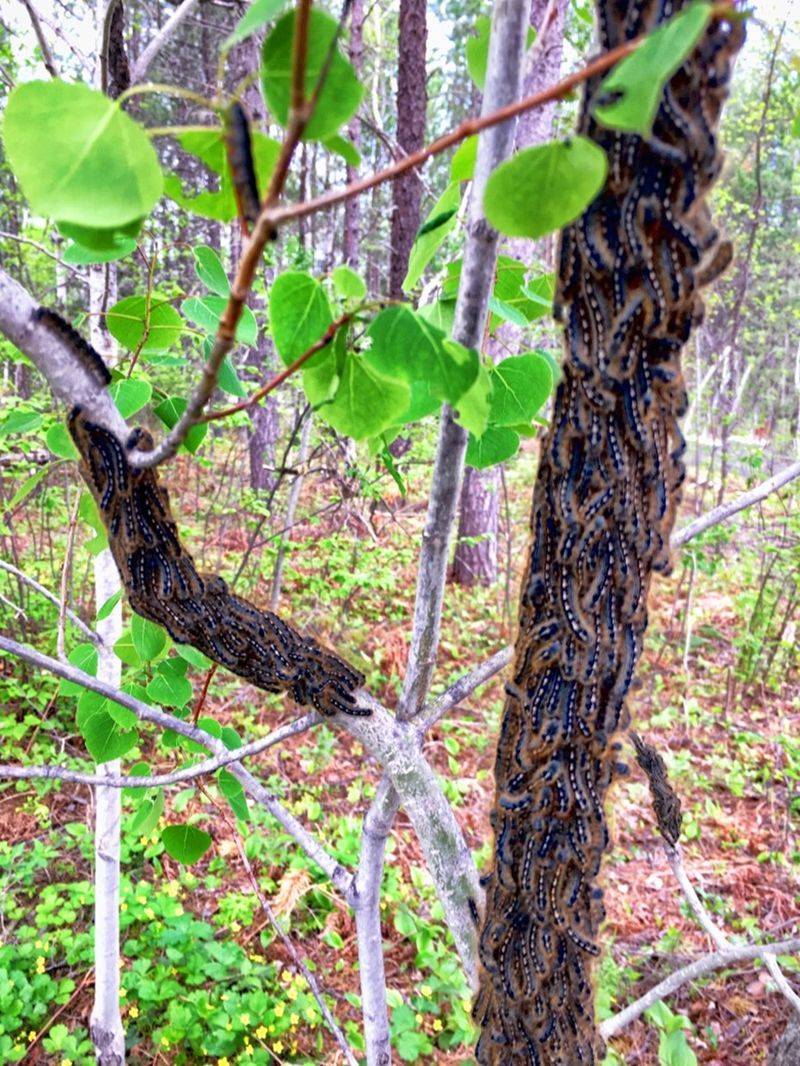
When and where you found the caterpillar can help, as long as you treat those clues as secondary. The back markings come first.
Season and setting only add support.
In Minnesota, the DNR says larvae hatch in early to mid-May, and mature caterpillars spin cocoons from early to late June. A big dark caterpillar crawling around in late spring fits that pattern nicely.
Location matters too. Forest tent caterpillars feed on broadleaf trees and shrubs, including aspen, birch, basswood and oak, as UMN Extension explains.
Finding one on or under those trees makes the guess a bit stronger.
Still, a seasonal match is not proof. Plenty of other caterpillars are out in spring, and timing can shift with weather.
A caterpillar seen outside the usual weeks could still be a forest tent caterpillar, so do not rule one in or out by the calendar alone.
Think of it like a weather forecast. It tells you what is likely, but you still need to look out the window.
In this case, the window is the row of pale marks on the back.
Which look-alike are you seeing?
A few common caterpillars can be mistaken for a forest tent caterpillar, and each has its own giveaway. Checking these features is more reliable than going by color.
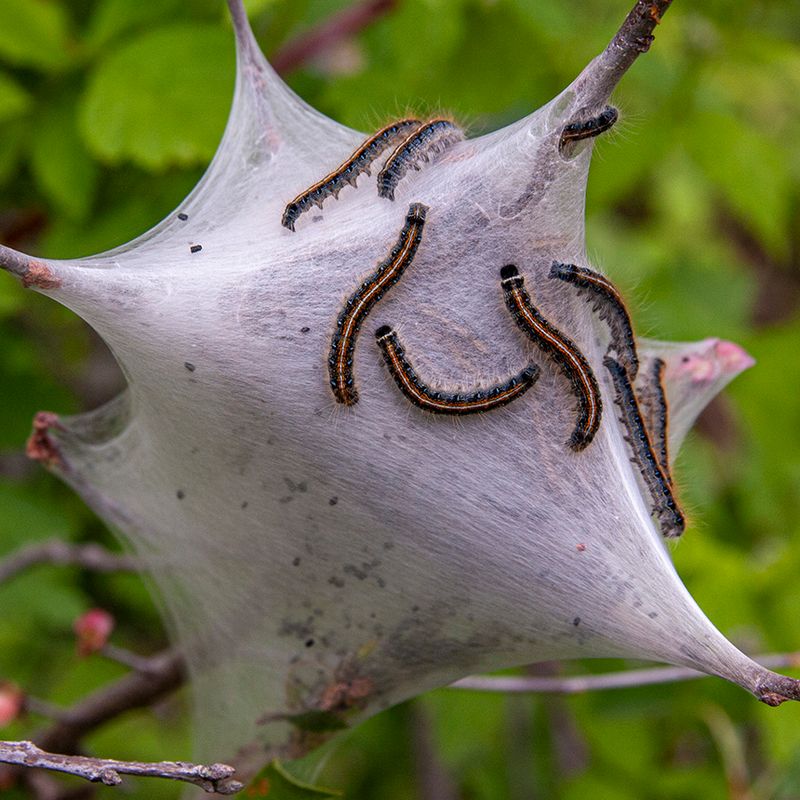
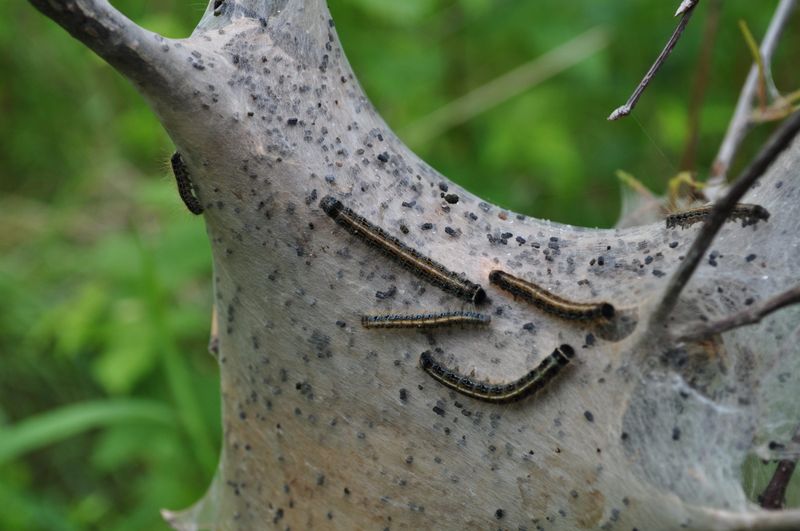
Eastern tent caterpillars have a solid white line down the back. They also build conspicuous tents in tree branches.
Forest tent caterpillars do not build tents at all, and instead spin inconspicuous silk resting mats on bark, as the DNR fact sheet notes. The DNR newsletter comparison covers the difference between the two.
Spongy moth caterpillars, formerly called gypsy moths, have five pairs of blue spots followed by six pairs of reddish spots on the back. That is quite different from the pale footprint-like marks of a forest tent caterpillar.
The Minnesota Department of Agriculture describes this pattern. Seeing a forest tent caterpillar does not mean you have spongy moths, and if you suspect spongy moths you can report them to the department.
Finally, a black, densely bristly caterpillar with red bands between its body segments could be a giant leopard moth caterpillar. Mississippi State Extension describes it as not a stinging caterpillar.
Even so, treat that as a possibility rather than a diagnosis, since color alone is never enough.
When in doubt, photograph it from a safe distance and compare the back pattern against these descriptions.
It does not bite, but handling is still a poor bet
Here is the direct answer to the handling question. Forest tent caterpillars do not bite people, according to UMN Extension.
They are also not described as stinging caterpillars.
That does not mean touching one is risk-free for everyone. UF/IFAS Extension says a few people may have an allergic reaction to handling them.
Not biting and not causing any reaction are two separate things.
There is a second reason to hold back. If you have not confirmed the identification, you may be holding a different species with different hairs.
A caterpillar that looks right from across the yard can turn out to be something else up close.
So the practical advice is to observe it. Watch it crawl, take a photo, and let it carry on.
Kids can look too, as long as they keep their fingers off.
Use a broom or water if it must be moved
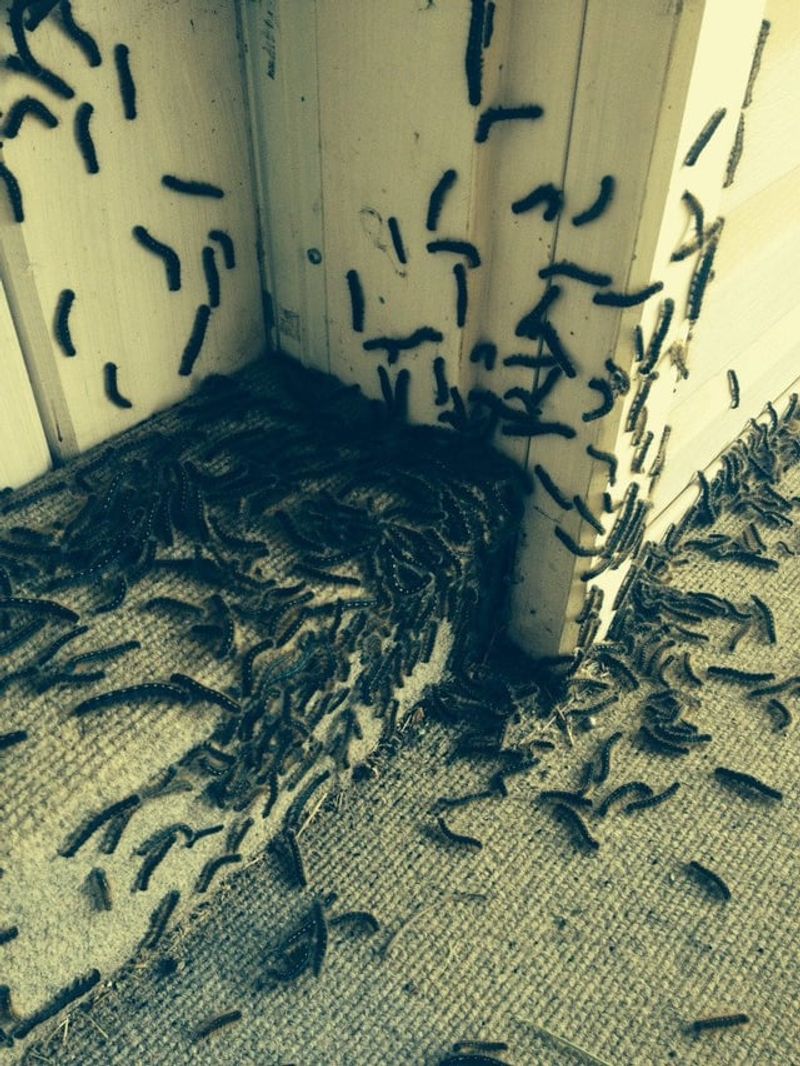
Sometimes a caterpillar ends up where you really do not want it, such as on a wall or porch. Skip the bare hands.
UMN Extension recommends a stiff broom or a spray of water to move them off buildings and other outdoor surfaces.
Be gentle about it, because crushing has side effects. Crushed caterpillars can leave marks on some paints.
When large numbers are crushed on roads, the surface can turn slippery, so take extra care when driving or walking there.
If you do touch one and your skin reacts, act calmly. Poison Control advises gently washing the area with soap and water.
It also describes pressing tape onto the skin and lifting it away to pull off hairs or spines.
Avoid rubbing the spot, since that can push hairs deeper. Watch the area over the next few hours to see whether it settles.
Serious symptoms are a different matter. If someone has difficulty breathing or swallowing, seek urgent medical help right away.
Look closely, then leave it alone
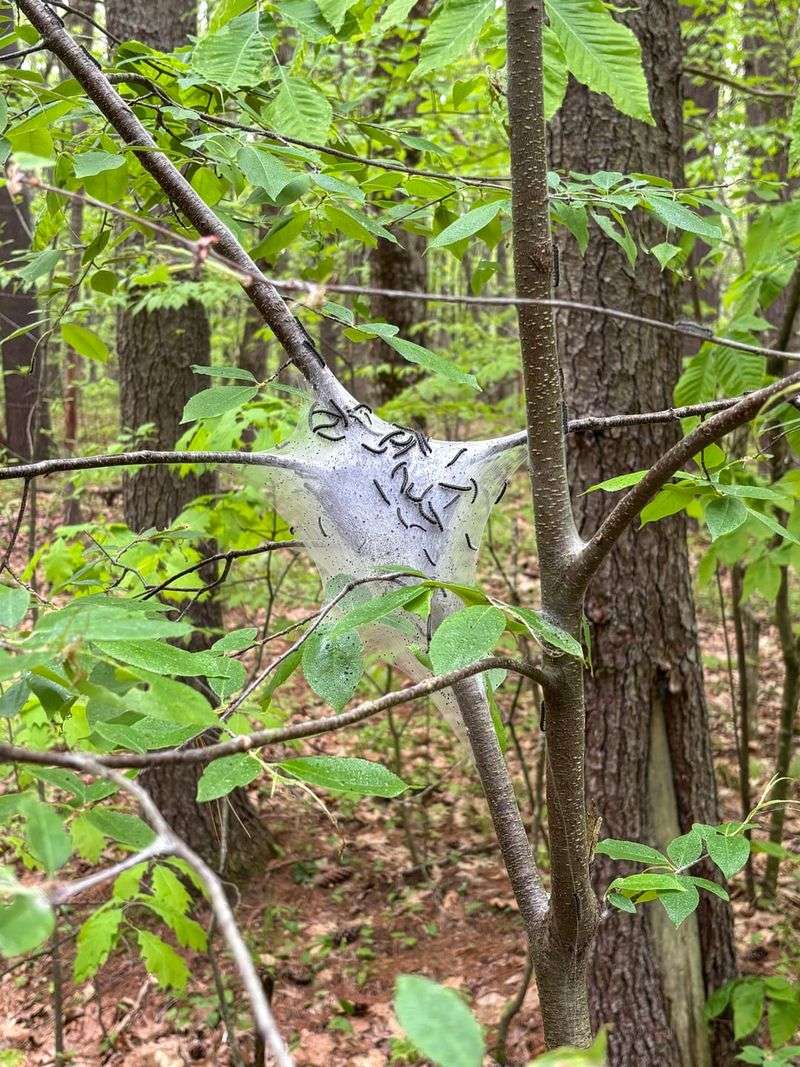
Check the back for that row of pale footprint-shaped marks, and note the other clues from the DNR guide. A likely forest tent caterpillar does not bite, says UMN Extension, but a description alone is not a reason to pick one up.
The best caterpillar encounter is the one where only your eyes do the touching.
Share this story