Deer rubbing their antlers on young Illinois trees is a real fall problem, and a sturdy barrier around the trunk is the best way to keep it from happening again. Bucks scrape and shred bark on thin saplings, and that damage can be serious.
The good news is that you can check your trees, spot the signs, and protect them with simple tools. Here is how to tell what you are seeing and what to do about it.
When do Illinois bucks make rubs?
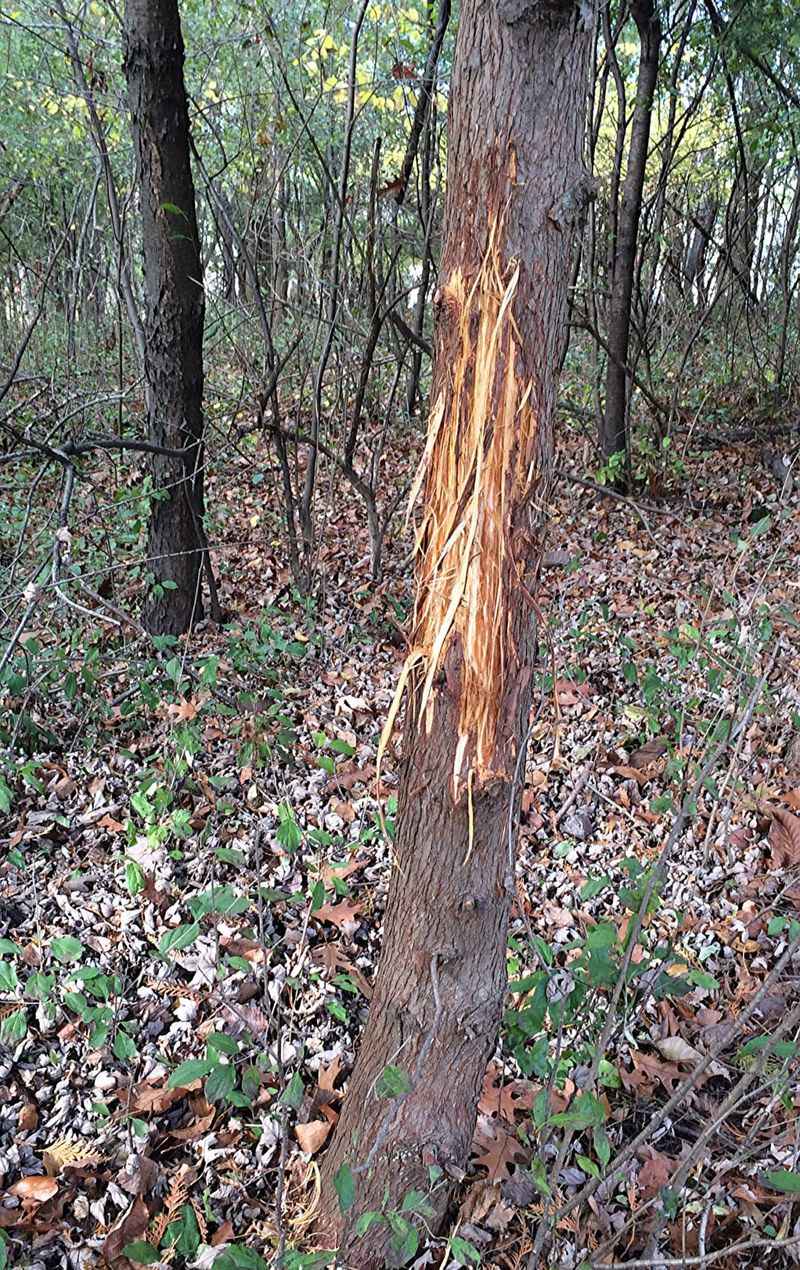
Fall is rubbing season. Illinois Wildlife reports that bucks start rubbing in August, once their antlers harden and the velvet comes off.
Material from the Illinois Natural History Survey places rub-making between the August and September antler change and October. Breeding activity then peaks in mid-November.
That timeline tells you when trees face the most risk. It does not prove that a buck is working on your saplings today, or that rubbing is at its peak on any given week.
Some yards get hit hard, and others never see a single scrape.
Think of the season as a reminder to look. A quick walk around young trees in fall can show whether bucks have already visited, and it gives you time to add protection before the rut ramps up.
A rub is not winter browsing
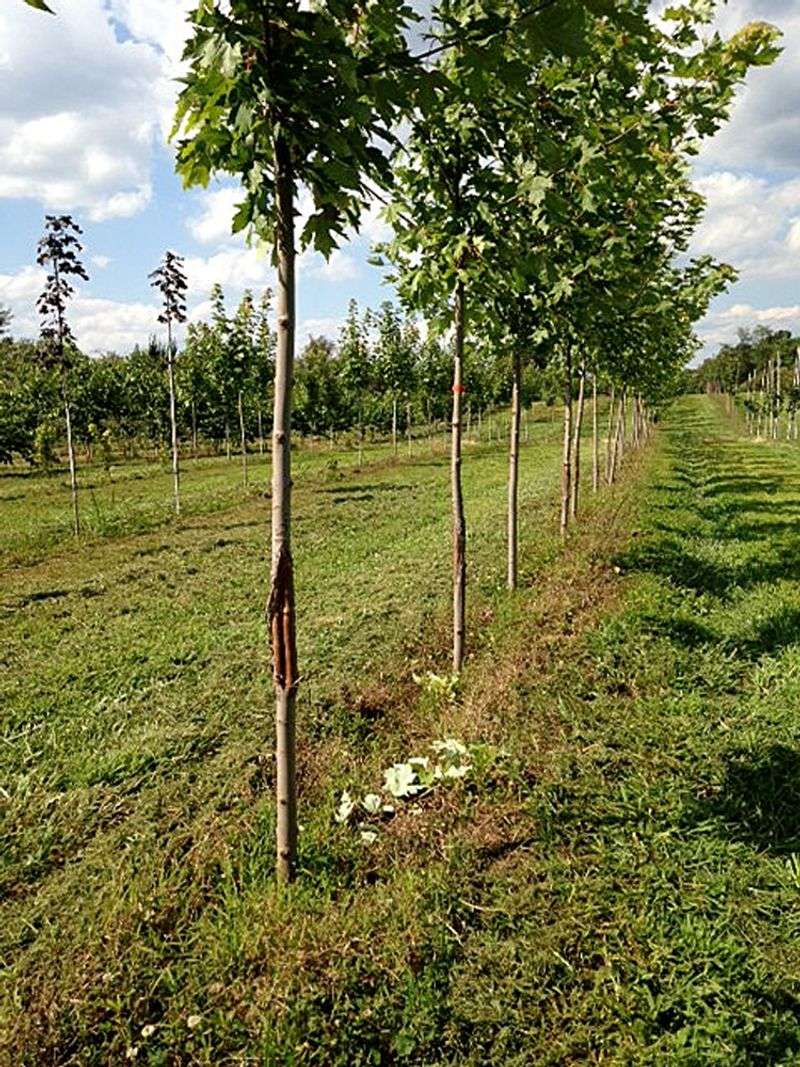
Bark that looks torn, scraped, or shredded in vertical strips is the classic sign of antler rubbing. Illinois Wildlife describes typical rubbing around 2 to 3 feet off the ground.
Iowa State gives a slightly wider range, about 1.5 to 3.5 feet. Look for fresh, pale wood and strips of bark hanging loose or lying on the ground.
Winter browsing looks different. Deer feeding on shoots, stems, or foliage leave ragged, nipped tips on twigs and branches, not scraped trunks.
The difference matters for the fix. The Morton Arboretum covers both kinds of animal damage, and a trunk guard is aimed at rubbing.
It may not keep deer from eating branches above or beside it.
If you see both kinds of damage, you may need to think about protecting the whole plant, not only the trunk, as Iowa State Extension explains in its deer guidance.
Why young trunks are vulnerable
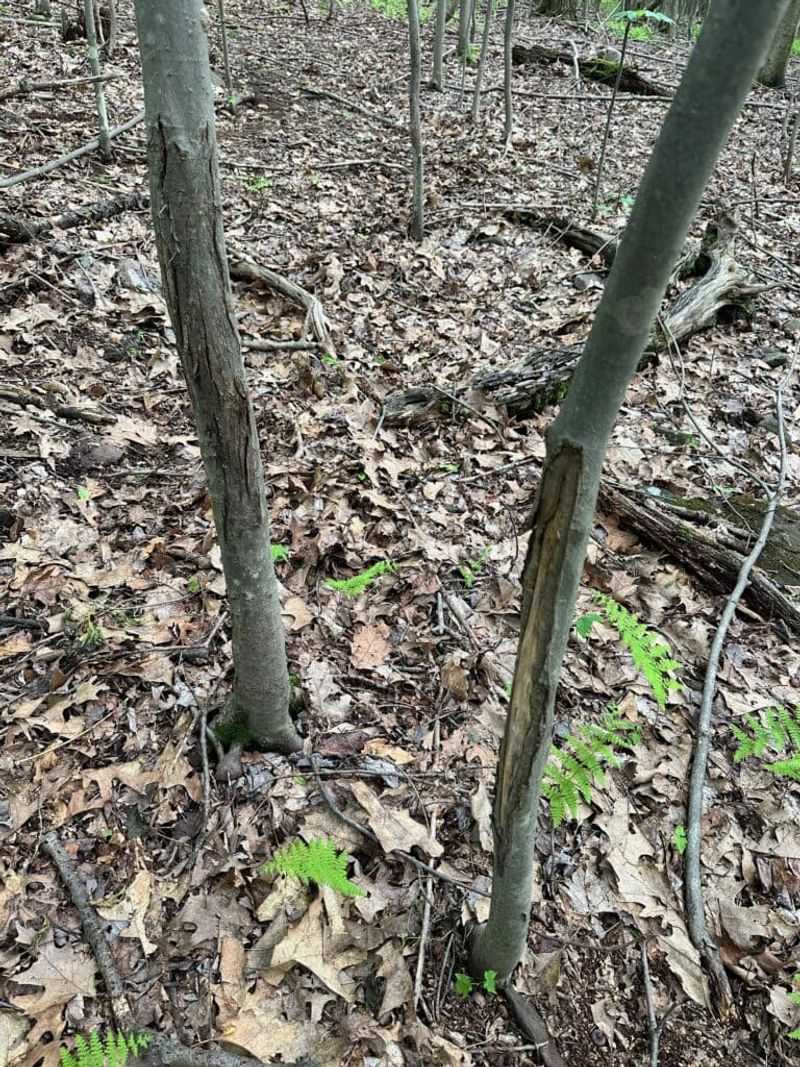
Young trees make easy targets. Their trunks are slim and flexible, and their bark is thin and smooth, so a buck can scrape it away with little effort.
Size changes the picture over time. Iowa State says the risk drops significantly once trunks reach about 3 to 4 inches across, because they become thicker and less bendy.
That number is a general guide, not a promise. A tree near that size can still get rubbed, especially if it stands alone or near a deer path.
So where should you start? Put your newest plantings and thinnest trunks at the top of your list.
Those are the trees where a few minutes of checking and protecting pay off the most.
Inspect the wound before reaching for a guard
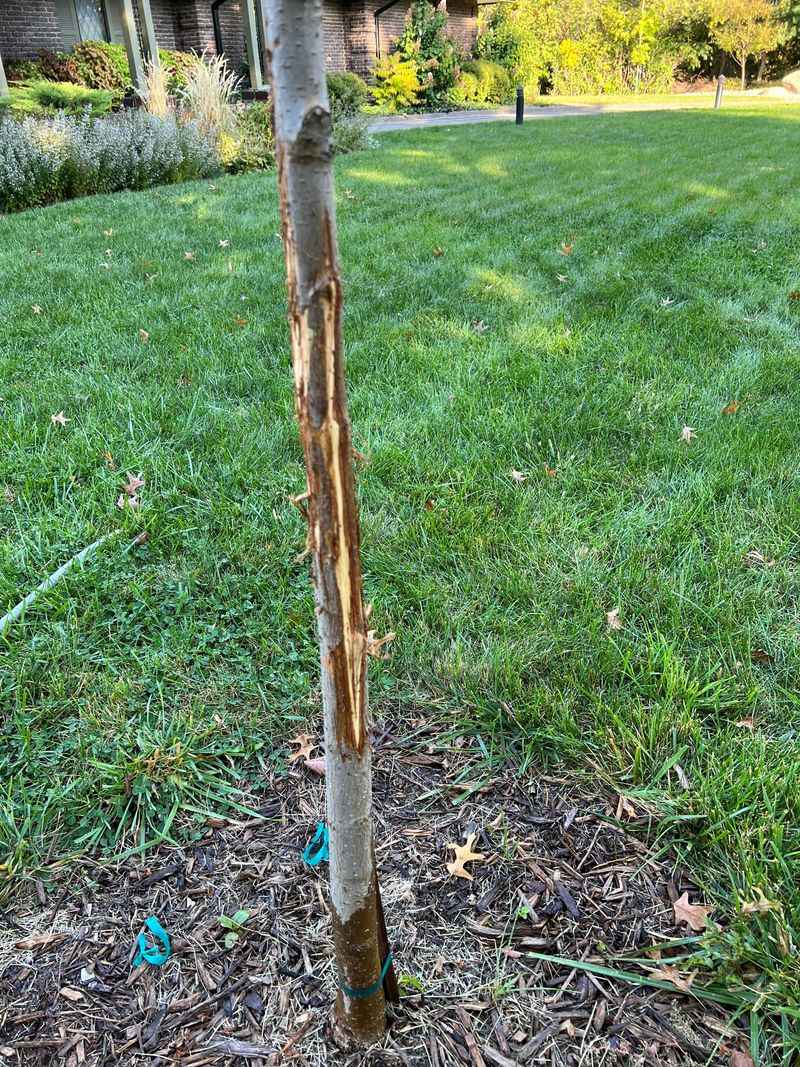
Before buying anything, look closely at the damage. Walk all the way around the trunk and note whether the missing bark is on one side only or wraps the whole circle.
One-sided injury may leave a tree a chance of survival, though the outcome depends on how severe it is. The University of Idaho Extension describes how antler rubbing injures trees and how the extent of damage shapes the result.
Bark stripped all the way around is called girdling. It cuts the tissues that move water and sugars, and growth above the injury will eventually die.
In that case, replacing the tree is often the practical option.
A guard cannot undo any of this. It can only help prevent another rub.
Iowa State also notes that wound dressings, pruning paint, latex paint, and wrapping a damaged area do not save severely damaged trees. Skip those products and put your effort into watching the tree and preventing repeat damage.
There is no single percentage of lost bark that decides a tree’s fate. Focus on whether the injury circles the trunk.
A physical barrier can protect the trunk
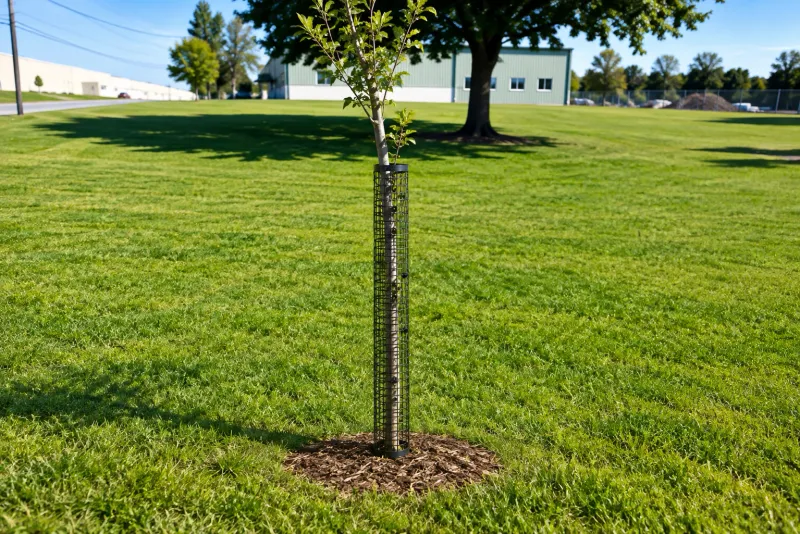
Keeping bucks away from the trunk is the most direct way to prevent rubbing. Iowa State recommends sturdy individual barriers such as welded-wire cylinders, tubes, wraps, or stakes.
Three things decide whether a barrier works: coverage, stability, and room to grow. It has to reach the zone where deer rub, roughly from low on the trunk to about 3.5 feet up.
A short guard can leave exposed bark above it.
It also has to stay put. A cage that a buck can push over or flatten will not do much, so anchor it with stakes where needed.
Finally, leave space between the guard and the trunk so the tree can thicken. The Morton Arboretum advises removing trunk guards or collars in spring so they do not cause harm.
Timing helps too. Ideally, protection goes up by mid-August.
If you missed that window, a suitable barrier installed now may still reduce further damage, even though it cannot repair what is already done.
A barrier that fits well is not a guarantee, but it greatly improves the odds for a young tree.
Check the guard as the tree grows
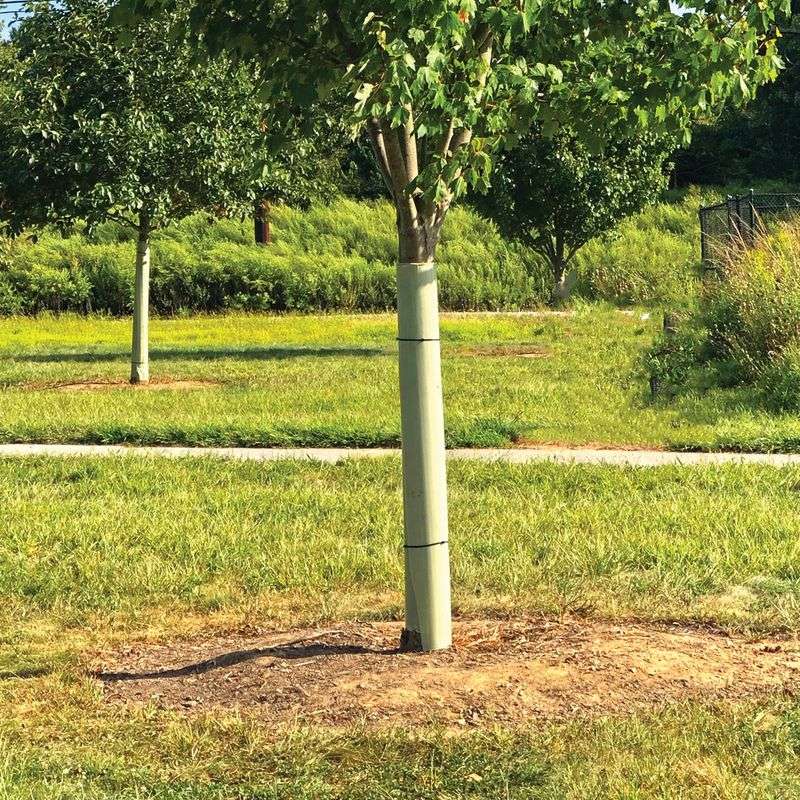
A guard that fit well last fall can become a problem as the trunk widens. Make a habit of checking it and adjusting or removing it if it squeezes the trunk or gets in the way of growth.
Advice on timing varies. Iowa State and the Morton Arboretum both recommend taking guards off in spring.
Utah State Extension says some protectors may stay on year-round if they allow normal development.
Because the sources differ, the safest approach is regular inspection. Slide a hand under the guard, look for tight spots, and make sure nothing is cutting into the bark.
Spraying a repellent is tempting, but it is not a dependable stand-in for a barrier. University of Maryland Extension says repellents are ineffective against this type of damage.
Treat the guard as equipment to maintain, not something to install once and forget.
Protect what can still grow

Start with a walk around your young trees. Check each trunk for scrapes, note whether bark is missing on one side or all the way around, and put a well-fitted barrier on trees that are still vulnerable, as Iowa State advises.
A fully girdled trunk is a serious injury that no wrap can heal, so plan for replacement if needed.
Not every sapling can be saved, but the ones that still have living bark are worth a little cage and a little care.
Share this story