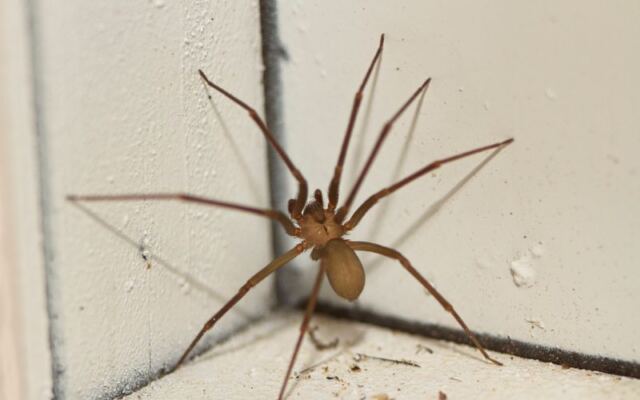
A woodpile stacked against your house can give brown recluses a place to shelter, so storing firewood away from the home is a smart move. Missouri homeowners can run into these spiders, but a nearby pile does not prove that your house is infested.
Brown recluses also hide in other spots, both outside and inside. A few simple habits can cut down on spiders and other pests that come along with firewood.
Brown recluses occur in Missouri, but a woodpile proves little
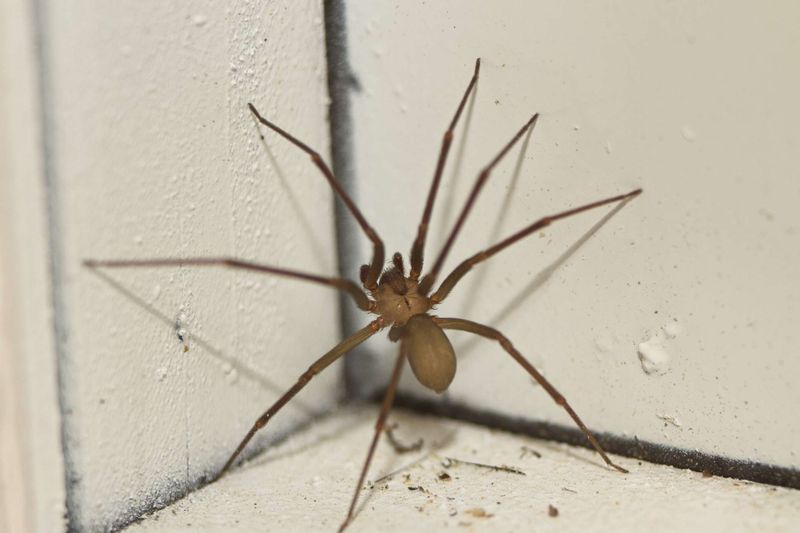
Missouri homeowners have good reason to take brown recluses seriously. The Missouri Department of Conservation presumes these spiders occur statewide, and it notes that they can live indoors.
That means a Missouri house is within the spider’s normal range, whether or not anyone has seen one there.
Indoors, brown recluses tend to settle into quiet, little-used storage areas. Think of cardboard boxes in a basement, a closet shelf that rarely gets opened, or a pile of old clothes in a garage.
The same source says they can bite when they get trapped against skin, such as inside clothing or bedding.
Here is where a bit of perspective helps. Because the spiders live across the state, it is easy to assume that every woodpile hides one.
That is not the case. Living in Missouri, or owning a stack of firewood, does not prove that a particular pile or house has any brown recluses at all.
So why bother with prevention? Because the cost is low and the habits are useful for other reasons too.
Tidying up storage areas, keeping outdoor clutter in check, and handling firewood with a little care all make a home less inviting to spiders and to plenty of other pests. The goal is not to panic over every shadow in the garage.
It is to remove easy hiding places and stay aware of where the spiders like to be.
The next sections walk through what a woodpile can and cannot do, and what you can reasonably change.
A woodpile can shelter spiders, but it is not the only way indoors
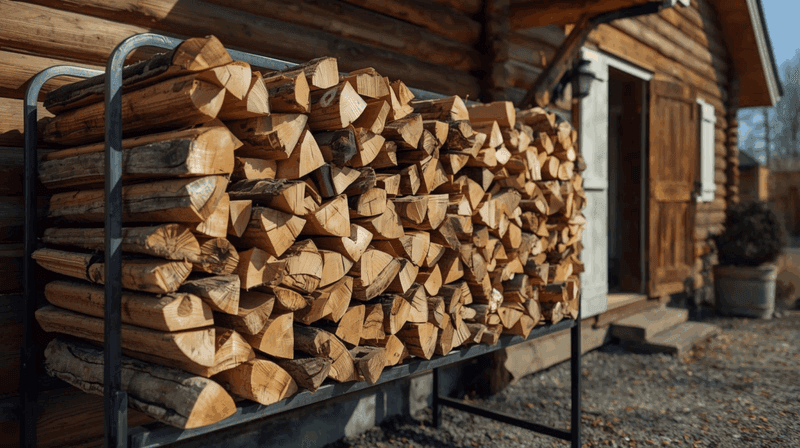
Brown recluses may shelter under woodpiles around homes, according to Alabama Cooperative Extension. A pile pressed against the house is one possible hiding place, and it could be the source of an occasional spider that hitchhikes inside.
That is a reasonable thing to plan around, but it is only one piece of the picture.
Spiders have other ways in. They can slip through gaps around doors, windows, vents, and utility lines.
They can also arrive in stored items, such as boxes carried in from a shed, a storage unit, or a garage. Once inside, they use the same quiet corners they would find outdoors.
Winter deserves a careful word. The sources reviewed do not show that woodpile-related entry rises in winter.
The Alabama source even says recluses may become less active in winter in response to shorter daylight, even inside heated homes. It does not say every spider goes dormant, and it does not describe a woodpile as a cold-season route indoors.
UC IPM points to a practical takeaway: cut down on outdoor debris, including woodpiles, particularly when it sits right next to a house. That makes sense as a precaution.
It does not mean every nearby pile leads to an infestation, and it does not mean a pile is the only thing worth fixing.
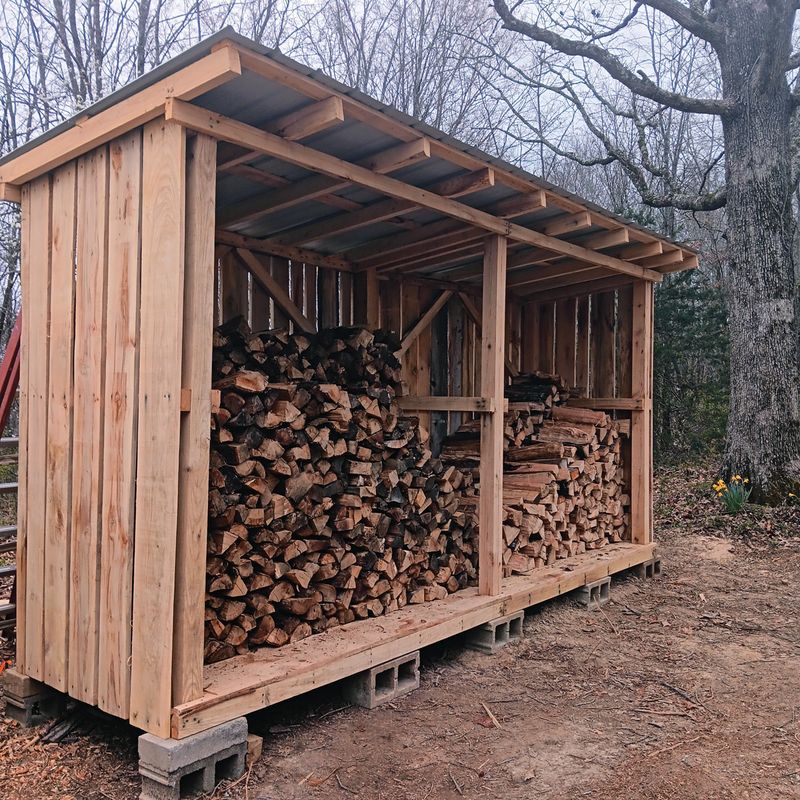
Store firewood off the ground and away from the house

Moving firewood away from the house is the simplest change you can make. Set the stack on a rack, pallet, or a few boards so it stays off the ground.
Then place it away from the walls, rather than leaning on the siding or the back door frame.
Two sources back this up from different angles. UC IPM recommends reducing woodpiles and other outdoor clutter near homes as a brown recluse precaution.
A University of Missouri Extension guide lists outdoor firewood stacks as potential nesting sites for carpenter ants, which is another reason to keep wood from touching the house.
What about distance? No source reviewed names a brown recluse safe distance.
You will not find a proven number of feet that stops spiders. Think of the advice as a direction rather than a measurement: farther from the house is better than against it, and off the ground is better than flat on the dirt.
Other clutter counts too. Old boards, stacked pots, and piles of debris near the foundation offer similar shelter, so clearing them helps as much as moving the wood.
One thing to skip is spraying the firewood. The Missouri Extension guide says spraying firewood to protect it from carpenter ants is not recommended, and nothing in the sources supports insecticide as a fix for spiders in a woodpile.
Bring inside only the firewood you plan to burn soon
Think of the indoor wood rack as a short stop, not a storage unit. Keeping most of your firewood outside and carrying in only what you will burn soon gives pests less time to wander off into your living space.
An Iowa State Extension guide suggests leaving firewood outdoors until a day or two before you plan to burn it.
Firewood can carry all sorts of small passengers. Spiders are one group, but insects and other arthropods ride along too.
Wood that sits for weeks in a warm room gives them time to become active and move around.
Not every hitchhiker is a big deal. University of Maine Cooperative Extension describes a range of insects that turn up with firewood, and the consequences vary by pest.
Many are simply a nuisance, such as beetles crawling out of bark. Some, like wood-boring insects, matter more for trees and wood than for people.
A brown recluse would be only one possible rider among many.
A few easy habits help. Knock logs together outdoors before carrying them in, and bring in small loads rather than a huge stack.
Keep the indoor supply on a rack away from bedrooms and clutter. If you spot a spider or beetle, a jar and a piece of paper work fine for moving it back outside.
Look before reaching into a woodpile
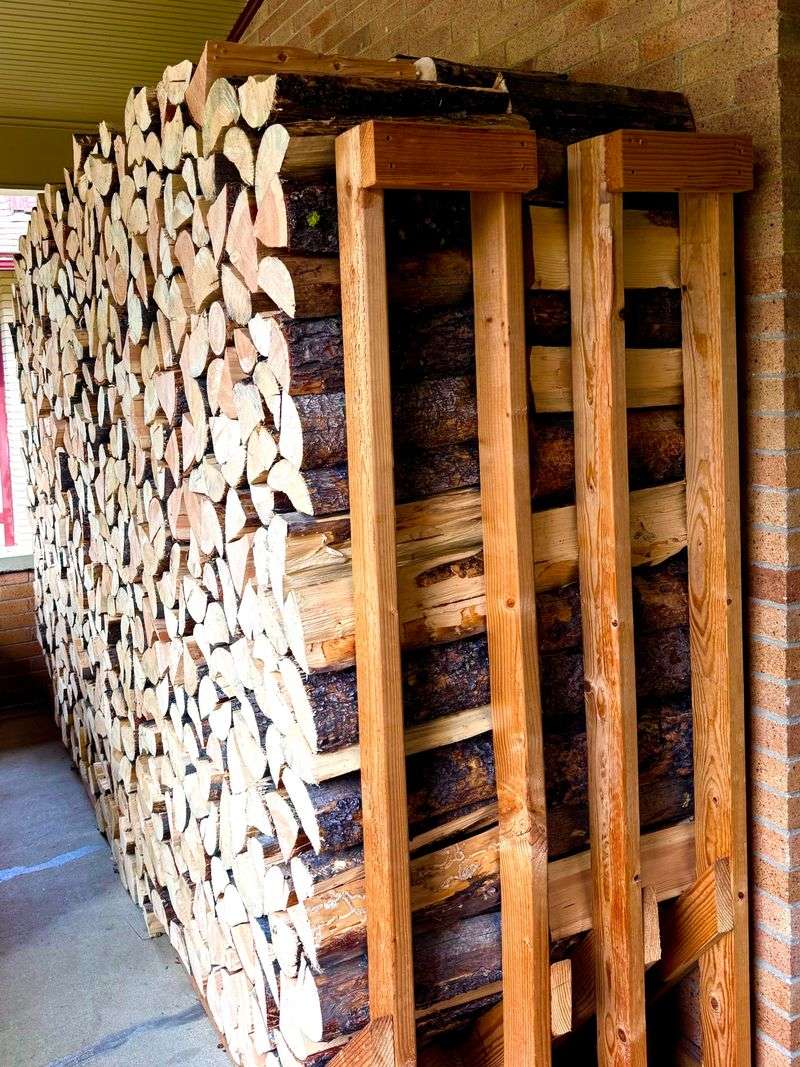
Before you grab a log, take a second to look. The Missouri Department of Conservation advises people to look before putting their hands into lumber piles or similar hiding places.
Dark gaps between logs are the kind of spot where spiders and other small animals like to rest.
This is a habit, not a reason for alarm. Most woodpiles will not have a brown recluse in them, and picking up firewood does not guarantee a bite.
Spiders generally bite when they are squeezed or trapped, so the point is to avoid surprising one with a hand pushed blindly into a crevice.
Simple steps cover it. Wear sturdy work gloves when moving wood.
Lift logs from the outer edge instead of digging into the middle. Glance at the underside of each piece, and shake or tap it before carrying it in.
The same idea applies to other spots where spiders may hide, such as stacked lumber, piles of boards, and shoes or gloves left in a shed. A quick look takes just a moment and costs nothing.
A spider or skin lesion alone cannot confirm a recluse bite
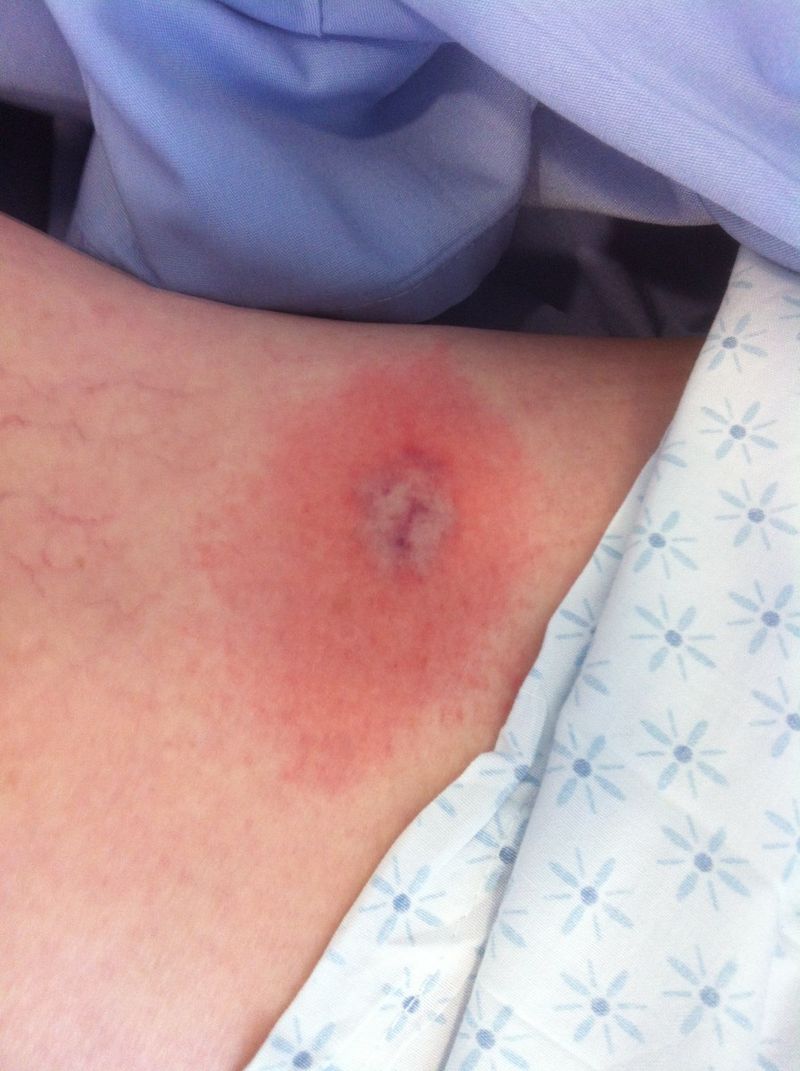
Plenty of spiders look brown, and plenty of skin problems look like bites. Identifying a brown recluse can be difficult, even for people who know spiders well.
The Missouri Department of Conservation describes the brown recluse in detail because many look-alike spiders exist.
The same goes for wounds. Poison Control notes that diagnosing a brown recluse bite is hard without seeing and correctly identifying the spider, and that other conditions can mimic a bite.
A sore, a red patch, or a blister is not proof that a recluse was involved.
So a brown-looking spider in the garage does not confirm a recluse, and an unexplained lesion does not confirm a bite. A confirmed identification means the spider has actually been examined and recognized, not just guessed at from color or a vague memory of its size.
If you have a wound that worries you, see a medical professional. Signs such as a lesion that is growing, getting more painful, or accompanied by fever or feeling unwell are good reasons to get checked.
If you can safely catch the spider, bringing it along may help, but do not delay care to find it.
Calm habits and a clear head serve you better than guesswork, and a doctor can sort out what a skin problem really is.
Share this story