Deer bucks scrape the bark off young Iowa yard trees, and a sturdy barrier around the trunk can stop it by keeping antlers away from the wood. The damage starts earlier than most people expect, in early fall, so the best protection goes up while the weather is still warm.
A barrier only helps if it truly blocks antlers, and it cannot grow back bark that is already gone. Here is how to tell what is happening to your trees and what to do about it.
Why bucks rub trees
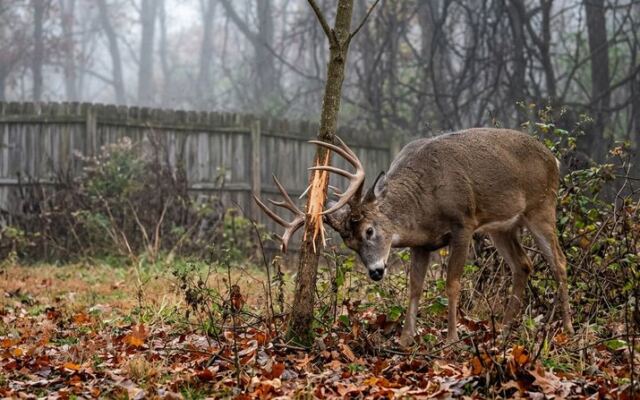
Picture a buck in early fall, with antlers that just finished growing for the year. Those antlers are covered in a fuzzy skin called velvet, and it dries out and itches.
Rubbing against a trunk helps peel it away.
That is only part of the story. Iowa State Extension explains in its deer protection guidance that bucks rub trees both to remove dried velvet and to mark territory.
Neither reason explains every single rub, so a tree can get hit even after a buck’s antlers are clean.
The timing matters for your yard. Rubbing is an early-fall behavior, not something that waits for late fall or November.
By the time leaves are dropping, a young tree may already be scarred.
Bucks do not pick trees at random, either. A slim, smooth-barked trunk is easy to push against and leaves a clear mark, which makes it handy for both cleaning antlers and leaving a signal for other deer.
Your landscaping tree can look like a perfect post to a buck.
Rubbing can strip bark and seriously harm a young tree. Because bark carries water and food between roots and branches, losing it is a real problem, not just a cosmetic one.
Knowing why bucks do this makes it easier to see why a physical barrier is the right tool, and why timing is so important.
How to tell what damaged the trunk
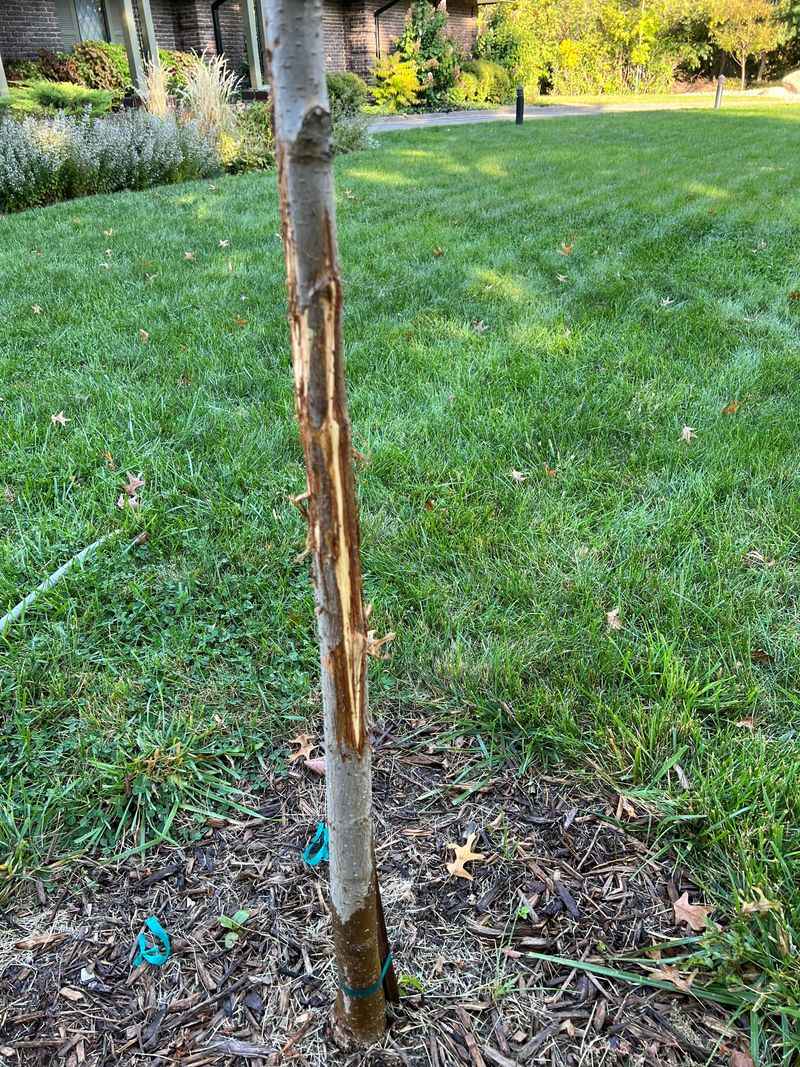
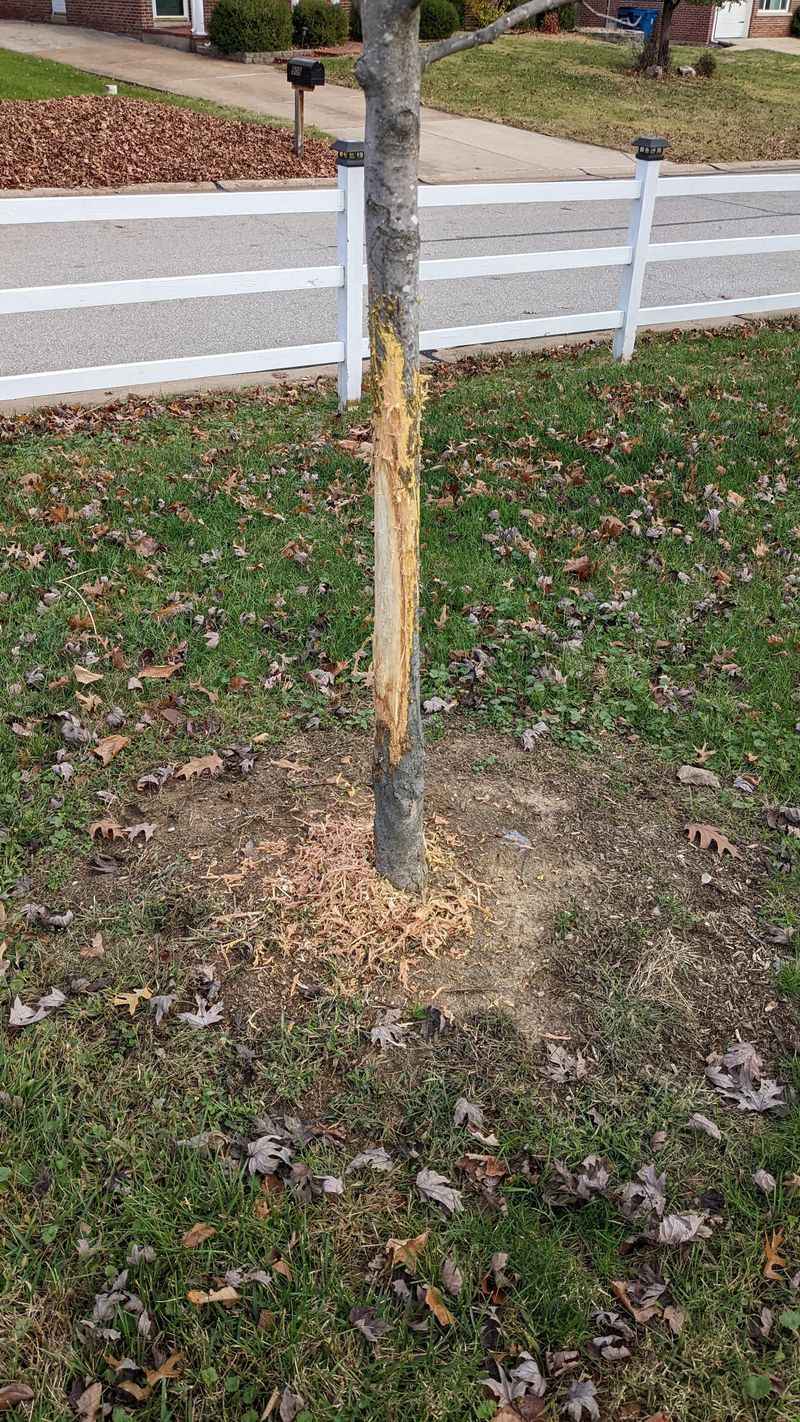
Start with the height. Iowa State says antler-rub damage is typically found about 1½ to 3½ feet above the ground, according to its deer guidance.
Ragged, shredded bark in that zone on a thin trunk points toward a buck.
Season is the next clue. Rubbing happens in fall, while winter problems look different.
During winter, deer may browse foliage, and Iowa State’s winter protection advice notes that rabbits, mice, and voles can chew or girdle trunks.
Those small animals usually work lower on the tree, and snow cover can change how high they reach. A chewed lower trunk or nibbled twigs is a different story from a scraped patch at knee-to-chest height.
Be honest about the limits, though. Appearance alone does not always identify the culprit, and a tree can have more than one problem in the same year.
If you are unsure, think about when you first noticed the damage and where it sits on the trunk.
The cause matters because it shapes your protection. A barrier built to keep antlers away from the trunk is not automatically the right fit for mice or voles, and a guard for small gnawers may not stop a buck.
Matching the material and coverage to the threat saves you from a false sense of security.
Which young trees need protection most
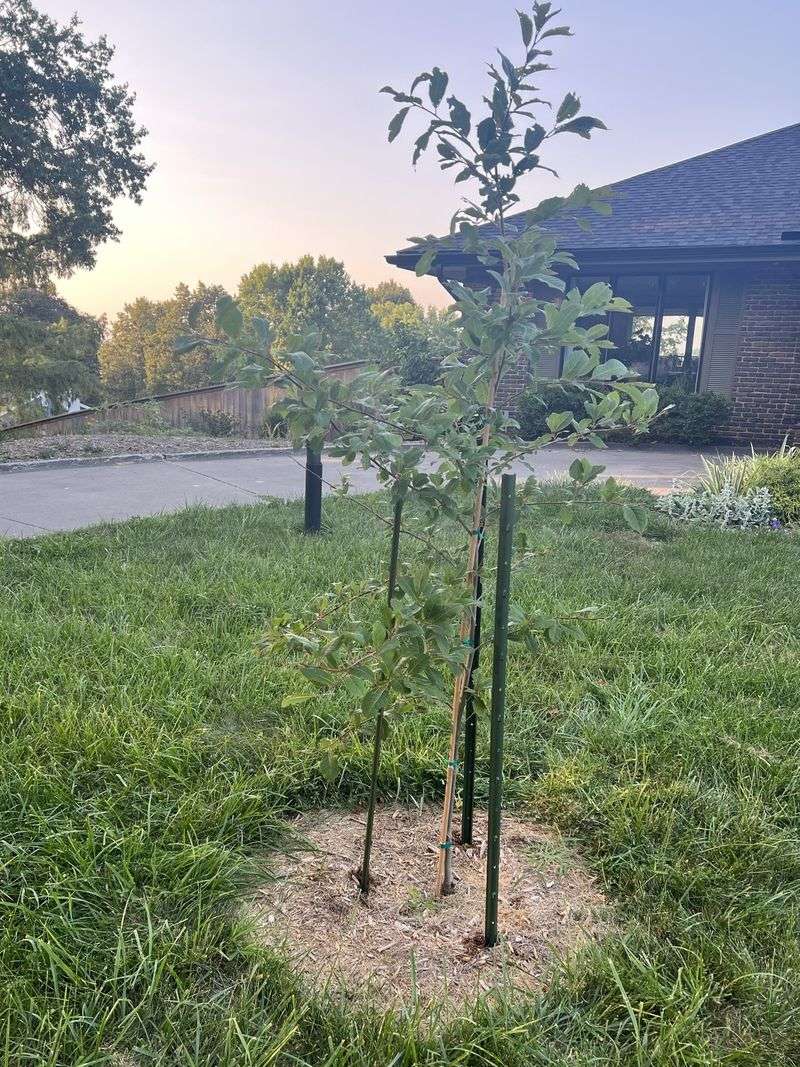
Walk your yard and look at trunks first. Young trees with thin, smooth bark and flexible trunks are the most vulnerable, based on Iowa State’s deer guidance.
A bendy trunk is easy for a buck to push and scrape.
Size is a handy guide for sorting your list. Risk drops significantly once a trunk gets thicker and less flexible, at roughly 3 to 4 inches in diameter.
A tree past that point is much less likely to be seriously harmed.
That means your newest plantings deserve attention first. A sapling put in this spring or last year is a better candidate than a mature maple that has stood for decades.
Measure across the trunk if you are not sure which side of the line a tree falls on.
Think about location as well. A lone tree at the edge of a yard, near a field or woodlot, may get more visits than one tucked beside the house.
Deer wander through neighborhoods, so even a town lot can have visitors.
Do not forget trees you planted for a reason, such as a memorial tree, a young fruit tree, or a replacement for one that was lost. These are worth protecting first because replacing them costs time as well as money.
Rank them, then work down the list as your schedule allows.
Choose a barrier that blocks antlers
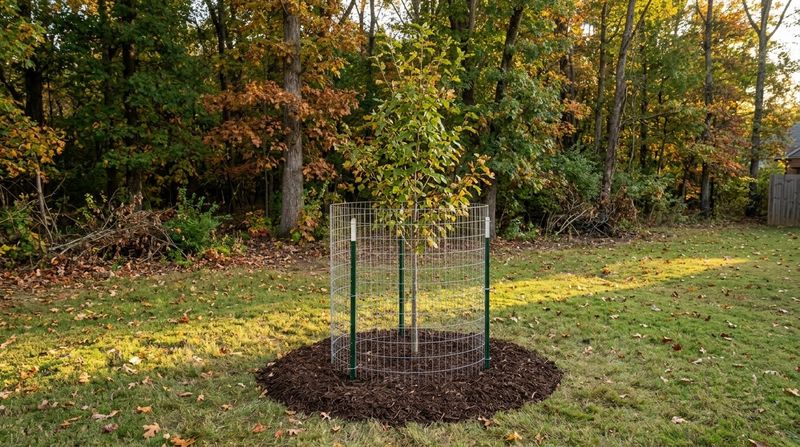
Here is the one rule that matters: a barrier has to keep antlers from reaching the trunk. If a buck can still get its antlers on the bark, the barrier is not doing its job.
Iowa State suggests using three or more sturdy stakes around the tree, with gaps no wider than 18 inches between them. You can also use a suitable tube, wrap, or sturdy wire barrier, as described in its deer protection page.
Notice that wraps appear on the list as one possible option. That does not mean every wrap will stop a buck, and the options do not all work equally well.
A thin, flimsy wrap that a determined buck can push against may not give enough protection.
Think of it like a fence. A strong one keeps the animal at a distance, while a weak one just gives it something to lean on.
Sturdy stakes or wire create space between antlers and bark.
Check your choice against a few questions. Is it firm enough that it will not collapse when pushed?
Does it leave gaps wide enough for antlers to slip through? Does it cover the trunk zone where rubbing usually happens?
Also remember that the stakes you use for antlers may not suit other jobs. A material meant for rabbits or voles may not hold up to a buck, and the reverse can be true as well.
Put the guard in place before rubbing season
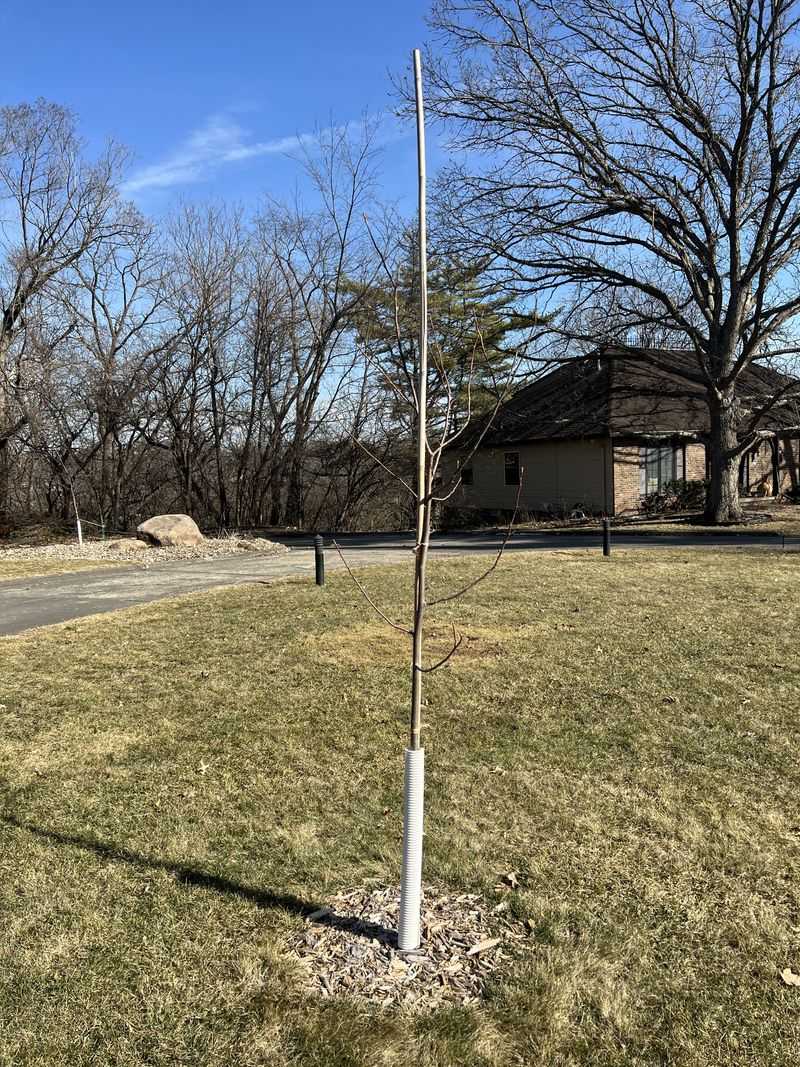
Mark mid-August on your calendar. Iowa State recommends installing antler-rub barriers by then, before rubbing begins in early fall.
It also says to take them off in spring so they do not interfere with tree growth, as laid out in its deer guidance.
Why so early? Because bucks begin rubbing before many people think about deer at all.
Waiting until leaves change can mean the first damage has already happened.
Already past mid-August? A barrier put up later may still prevent more damage.
It just misses the recommended window, so it cannot undo any rubbing that came first.
Do not mix this up with general winter protection. For that, Iowa State’s winter advice says deer guards are typically installed in September or October.
Those dates address different risks, with winter browsing and gnawing coming later than antler rubbing.
If you want one guard to cover both seasons, plan your schedule around the earlier date. Then check that the material and coverage fit each threat you are worried about.
Spring removal is just as practical. Leaving a tight guard on a growing trunk can interfere with growth, so add a reminder for when the weather warms.
A barrier cannot repair bark already lost
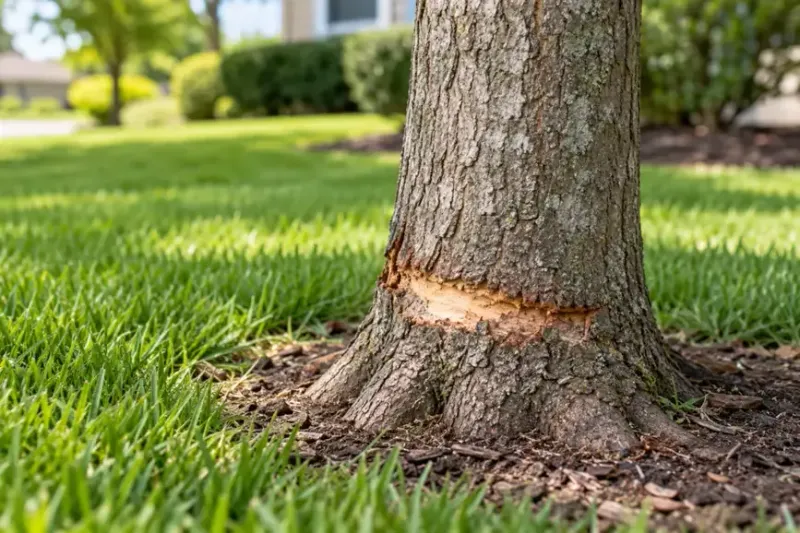
A barrier looks forward, not backward. If a buck already stripped part of your tree, a guard may prevent further contact, but it cannot put bark back where it is gone.
The serious version of this is called girdling. That means bark has been removed over a large portion of the trunk, or all the way around it.
Since bark carries water and nutrients, girdling can kill growth above the injury, according to Iowa State’s deer guidance.
You may be tempted to cover the wound with something. Wound dressings, pruning paints, and wraps do not repair severe rub damage.
A wrap over a hurt trunk is not a treatment, so do not count on it to heal anything.
What you can do is protect what is left. If the tree is still standing and part of the bark remains, keep antlers away so the damage does not get worse.
Then watch how the tree grows in spring.
Small scrapes are different from deep, wide wounds. A shallow scrape on one side is far less worrying than a trunk stripped nearly all the way around.
If you are unsure how serious the injury is, ask your local extension office.
Plan protection for the next season
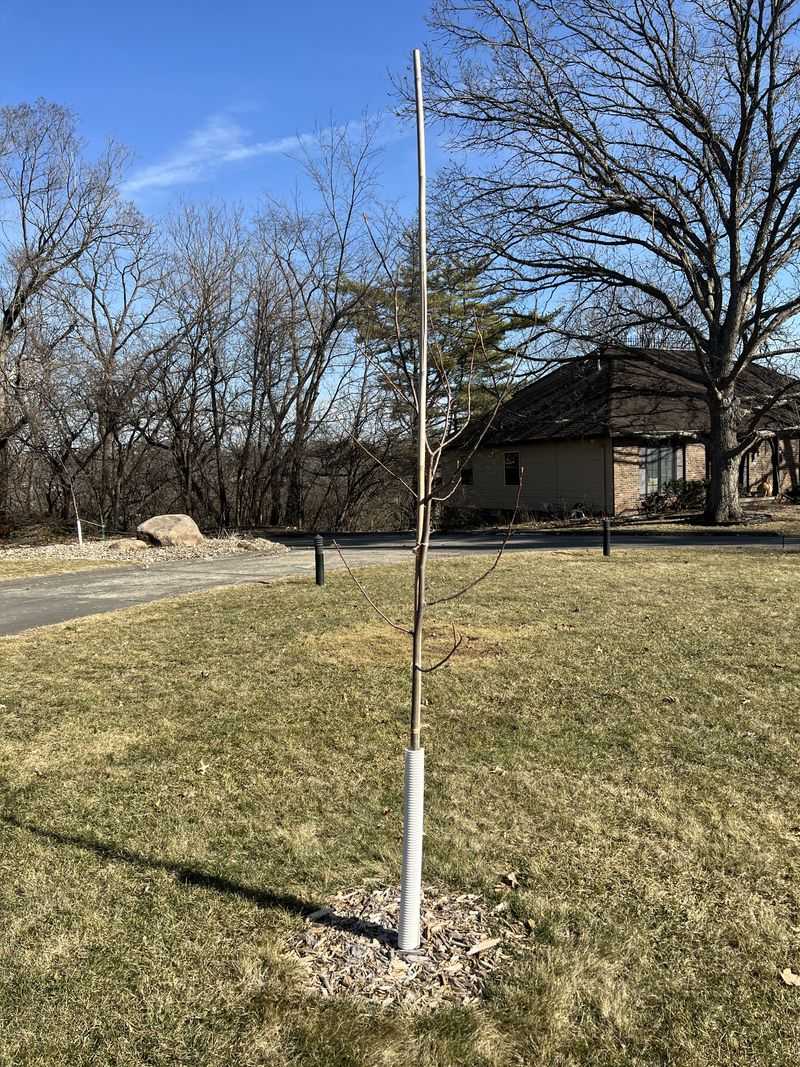
Start with a quick yard walk. Pick out the thin, flexible trunks, since those are the ones Iowa State’s deer guidance flags as most at risk.
Choose a barrier that physically blocks antlers, and plan to have it up by mid-August.
For a tree that is already scraped, keep the focus on stopping more contact. A guard will not heal the trunk, but it can keep the injury from growing.
A buck only needs a few minutes with an unprotected trunk to leave a mark, but a sturdy barrier made ahead of time can leave him nothing to push on.
Share this story