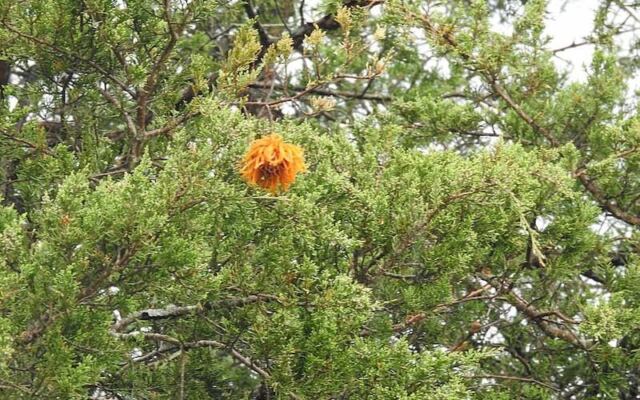
Those bright orange, jelly-like blobs on your Iowa cedar are most likely a rust fungus called cedar-apple rust, showing off its spring spore-producing stage. The tree is usually an eastern red cedar or another juniper, and the growths look far scarier than they are for the juniper itself.
The real question is what the fungus might do to apple and crabapple trees nearby. Here is what is going on, and what measured steps make sense.
Those orange horns are a spring phase of a rust fungus
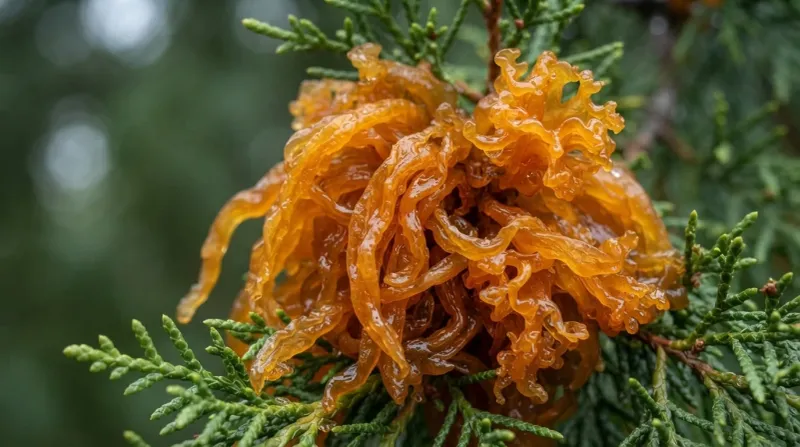
Gooey orange tentacles sprouting from a brown, knobby ball on a juniper branch are most likely cedar-apple rust telial horns. The fungus behind them, Gymnosporangium juniperi-virginianae, forms woody galls on eastern red cedar and some other junipers.
Iowa State Extension describes this appearance and the life cycle behind it.
Timing matters here. The fungus spends winter inside those brown, woody galls, which can look like dried-out lumps or small wooden balls.
The bright orange horns show up when spring rains soak the galls, causing them to swell and turn jelly-like. So the show is a wet-spring phase on galls that were already there, not something that simply grows because winter was damp.
The display is not permanent. As the weather dries, the horns shrivel and look like dull, hardened threads.
University of Minnesota Extension notes that they can swell and turn orange again after later spring rains.
A word of caution about naming what you see. If you are going only on a description or a photo, call these growths likely cedar-apple rust.
Related Gymnosporangium rusts can also make orange growths on junipers, and University of Illinois Extension points to gall size and shape, along with the other host involved, as clues for telling them apart.
What makes this fungus unusual is that it cannot finish its life on juniper alone. It needs a second type of host, which is where apples and crabapples come in.
Why this rust needs both juniper and apple
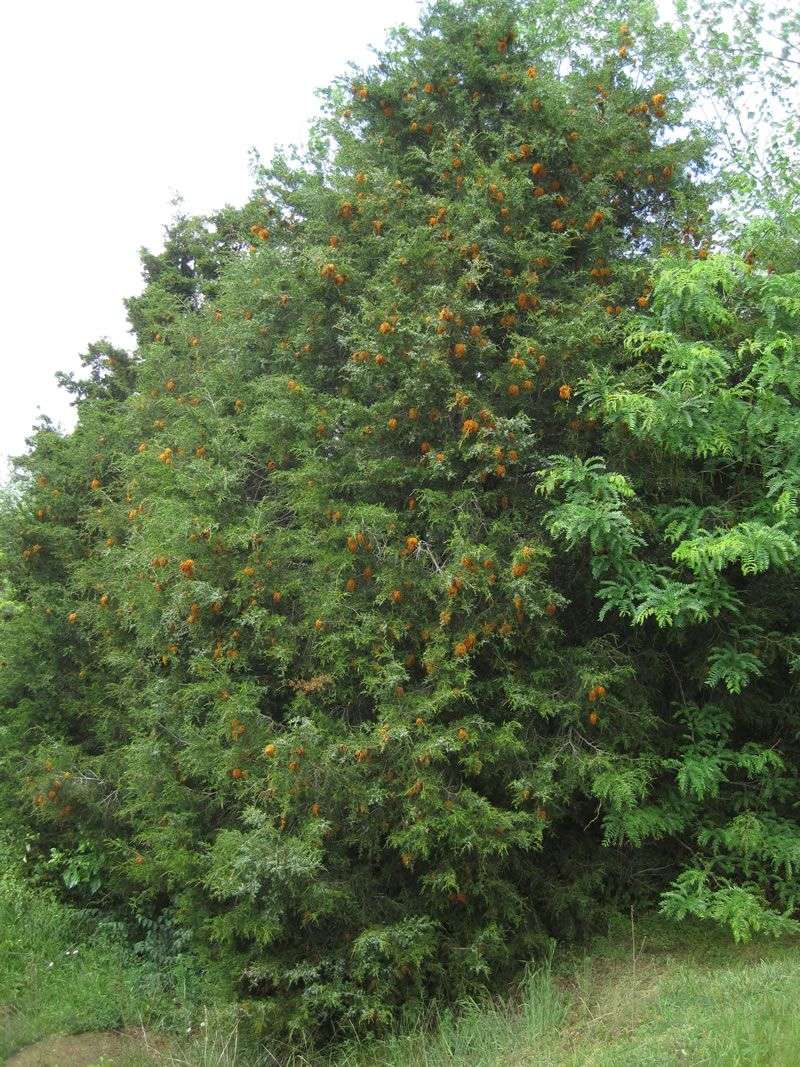
Few diseases have a life story as odd as this one. The cycle takes about two years and swings back and forth between juniper and apple-family hosts.
Iowa State Extension lays out the steps.
It starts on the juniper, where the fungus forms a woody gall on eastern red cedar or certain other junipers. In wet spring weather, the gall produces orange horns, and wind carries spores away.
If those spores land on susceptible apple or crabapple leaves or fruit while the tissue is wet, they can cause infection.
The story does not end there. Later in the season, spores from the infected apple-family leaves or fruit can travel back and infect juniper.
The fungus then takes time to form a new gall, and the whole loop starts again. University of Illinois Extension describes the same back-and-forth.
Watch out for the common name. Despite the word cedar, the usual host here is eastern red cedar, which is actually a juniper, along with some other junipers.
True cedars are not the host, so a tree sold or called a cedar is not automatically a problem.
The two hosts also do not need to share a property. A juniper in a fencerow, a neighbor’s yard, or a nearby pasture can be the source for an apple tree you own, and your own juniper may be catching spores from apples somewhere else.
What rust can do to apple and crabapple trees
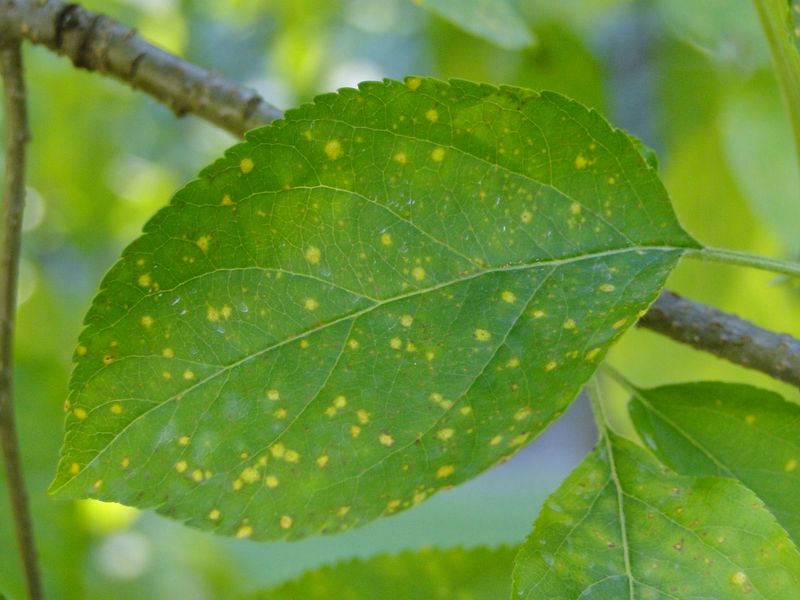
On a susceptible apple or crabapple, the first signs are usually yellow-orange spots on the leaves. Fruit can pick up blemishes too.
Iowa State Extension covers these symptoms for Iowa trees.
Heavy leaf infection may cause leaves to drop early, which can weaken a tree’s look and vigor. That said, possible symptoms are not a guarantee of severe damage.
Some trees show only a few spots, and cultivars differ a lot in how susceptible they are. University of Illinois Extension describes the range of symptoms on apple-family hosts.
If your apples are spotted, you may wonder about eating them. University of Vermont Extension says apples with cedar-apple-rust symptoms are safe to eat, and suggests cutting away the blemished areas if you prefer.
That advice is about the apples only. It does not mean the orange jelly horns on the juniper are something to eat or handle, and nothing in the guidance reviewed here says so.
Look closely at your own trees before worrying. Spots on leaves in late spring, a few marked fruits, or early leaf drop in a wet year are the things to watch for, not a sign that the whole tree is doomed.
The juniper is usually at less risk than the fruit tree
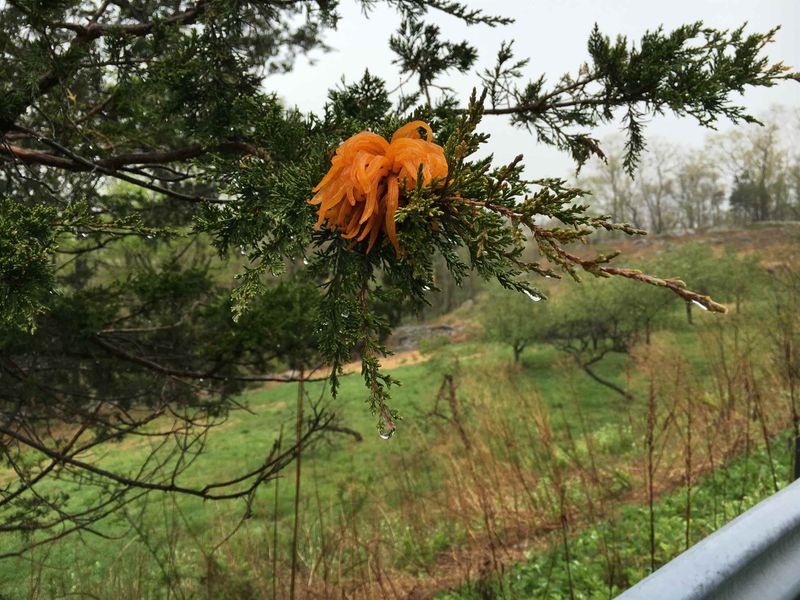
If you were worried about your cedar, here is the calmer news. The galls generally do little harm to junipers, as Iowa State Extension notes.
Severe disease can cause twig dieback, but it is not usually fatal.
That means the idea that a galled juniper must come down overstates the problem. A less drastic move, such as pruning galled twigs, is often a better fit.
It is tempting to blame the closest juniper when apples get spots. Spores can travel well beyond a single yard.
University of Illinois Extension and Iowa State both note that wind can carry them a long way, with Iowa State citing distances up to two miles.
Infections tend to be more common closer to the source but can happen farther away, according to another University of Illinois Extension page. So a nearby juniper does not prove it caused an infection, and cutting down one tree cannot guarantee protection.
For the same reason, a fixed-radius rule for removing junipers is not reliable. Other junipers on neighboring land may still release spores, so no particular distance should be treated as a safe one.
Choose management steps for the host you want to protect
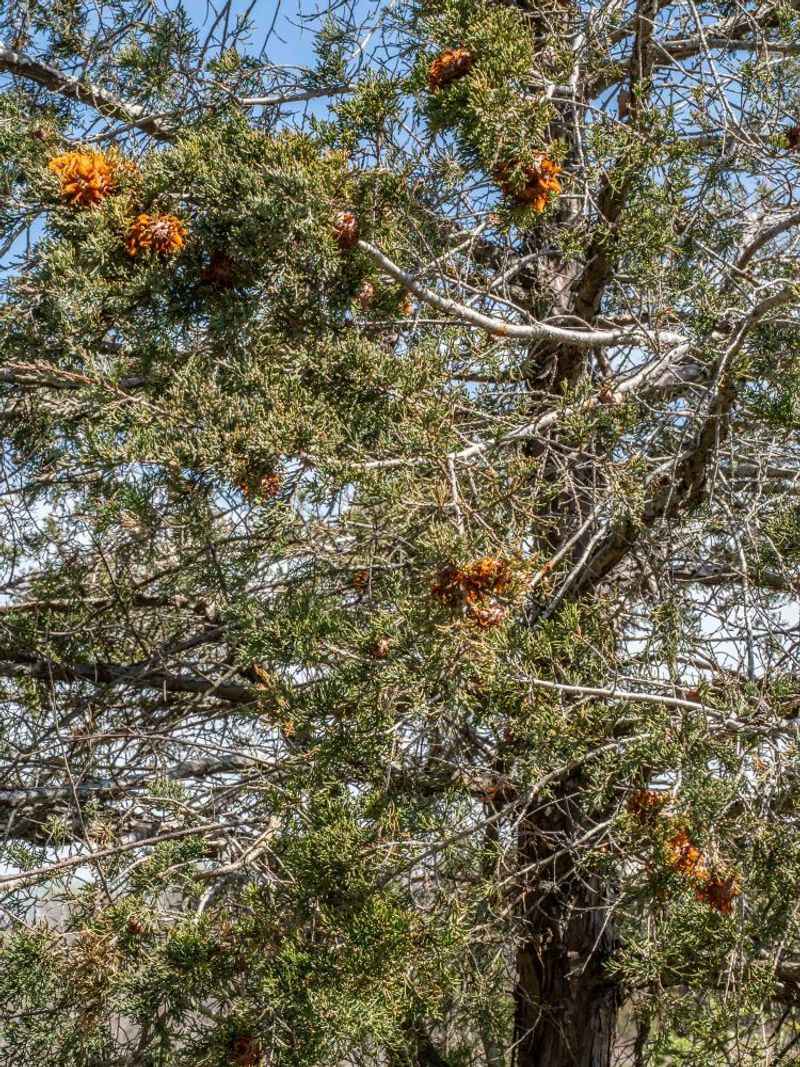
Proportion is the goal. If you can reach them, prune galled juniper twigs in late winter or early spring, before orange horns form.
Iowa State Extension lists this as a way to reduce infection pressure.
Pruning helps, but it is not a guarantee. University of Minnesota Extension points out that it may not prevent disease if infected junipers are growing elsewhere, and spores can still arrive from beyond your fence.
For new plantings, the best long-term step is choosing apple or crabapple cultivars that resist rust and suit your area. Resistance varies by region and cultivar, so use Iowa State’s guidance as your Iowa reference, since it lists examples that fit Iowa conditions.
Fungicides are where advice gets less uniform. Iowa State says properly timed, label-following sprays can protect existing apples or crabapples, and its timing ties to specific spring flowering stages in its apple pest and disease guide.
Minnesota Extension, on the other hand, generally discourages fungicides and says its home-gardener options should not be used on trees bearing fruit for people to eat. Because the advice differs, do not spray just because orange horns appear.
Check current Iowa-specific guidance and read the product label first.
Let the season and the host guide your response
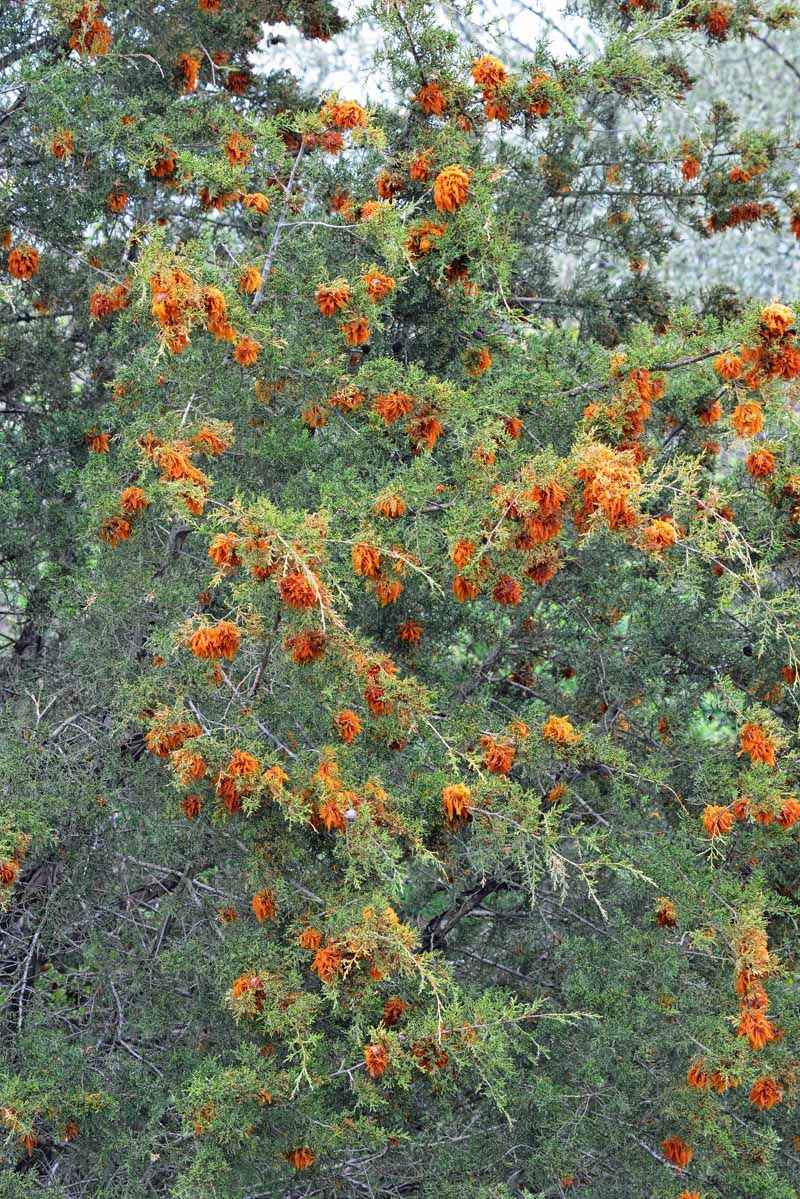
Those orange horns are most likely the spring spore-producing phase of a rust fungus on a juniper. They signal a possible risk to susceptible apples or crabapples, as Iowa State Extension explains, and not an automatic reason to remove the juniper.
Early pruning and resistant plantings are the measured options to keep in mind. A strange orange blob after a spring rain is just a fungus keeping time with the weather.
Share this story