
Front Yard Borders Full Sun: Pretty Edges for Sunny, Exposed Gardens
By noon, the front path is blazing, the lawn edge is fading and that bare strip beside the driveway looks like it lost the fight weeks ago. This is where front yard borders full sun have to do the hard work. They need to handle heat, look good from the street and make the house feel cared for before anyone reaches the door.
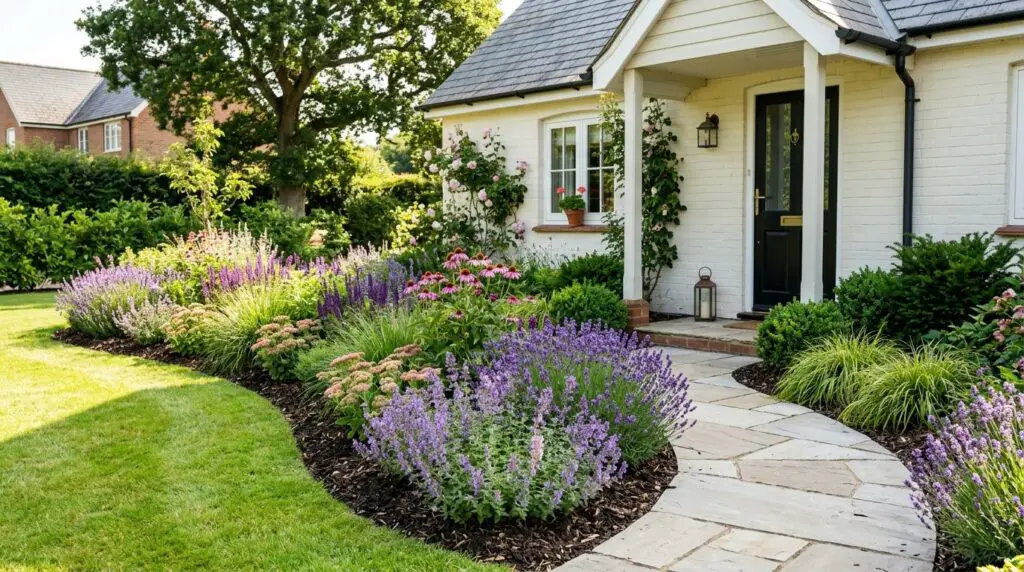
The problem is that sunny front borders are rarely gentle places to plant. They sit beside concrete, brick, gravel and walls that throw heat back at the soil. A plant can look beautiful at the nursery, then sag the first time the afternoon sun hits it. So the answer is not more random flowers. It is a better border with tougher plants, cleaner edges and enough structure to carry it through the hot months.
Full Sun Front Yard Borders Start With the Hottest Strip You Own
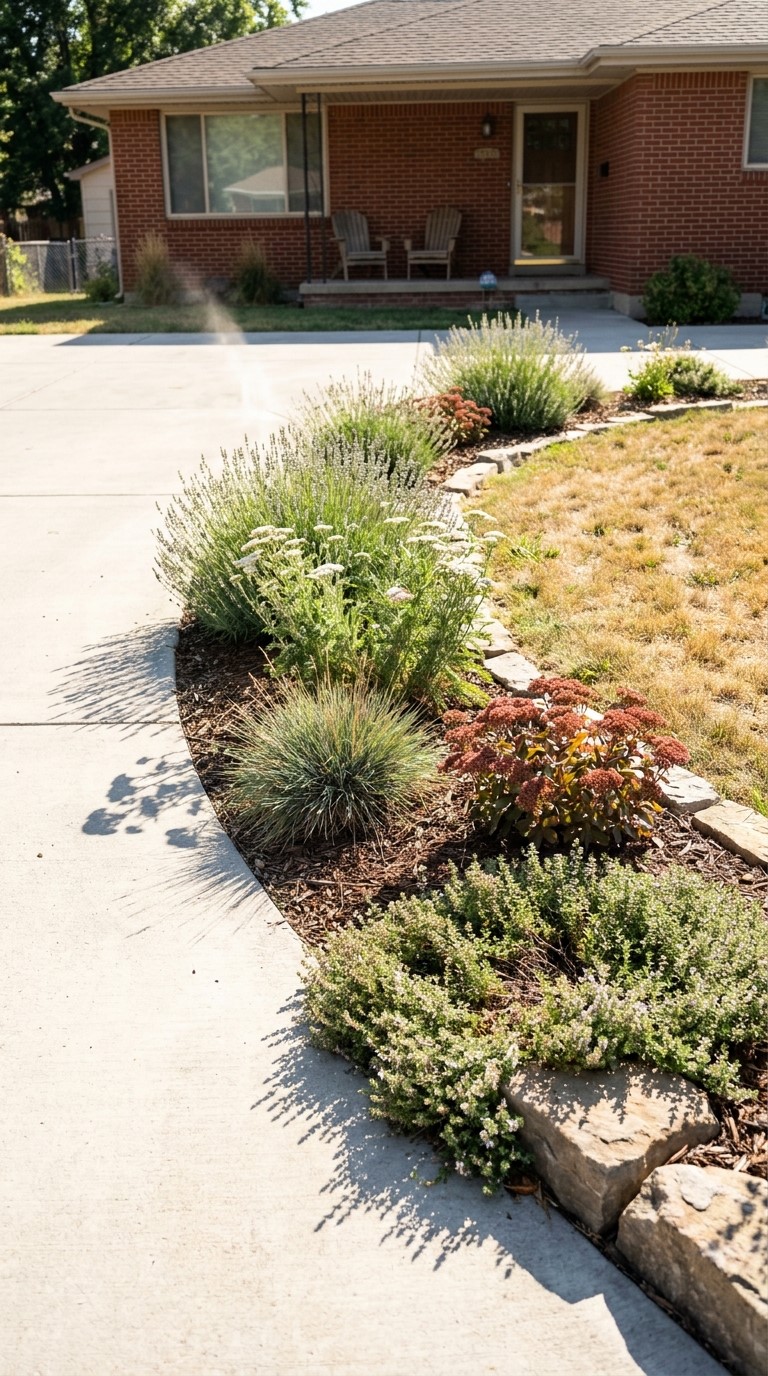
The hottest part of the front yard is often the one people see first. It might be the strip beside the walkway, the bed under the mailbox, the narrow edge by the curb or the dry patch near the driveway. These spots get sun from above and heat from nearby surfaces, which makes them harder than a normal garden bed.
Before buying plants, stand outside at the roughest time of day and watch where the sun lands. Look at the width of the bed, the soil and the nearby hard surfaces. A border against a white wall may bake. A strip beside blacktop may dry out fast. A front porch bed may get shade in the morning and brutal sun later.
Full Sun Landscaping Ideas Begin With the Surfaces Around the Bed
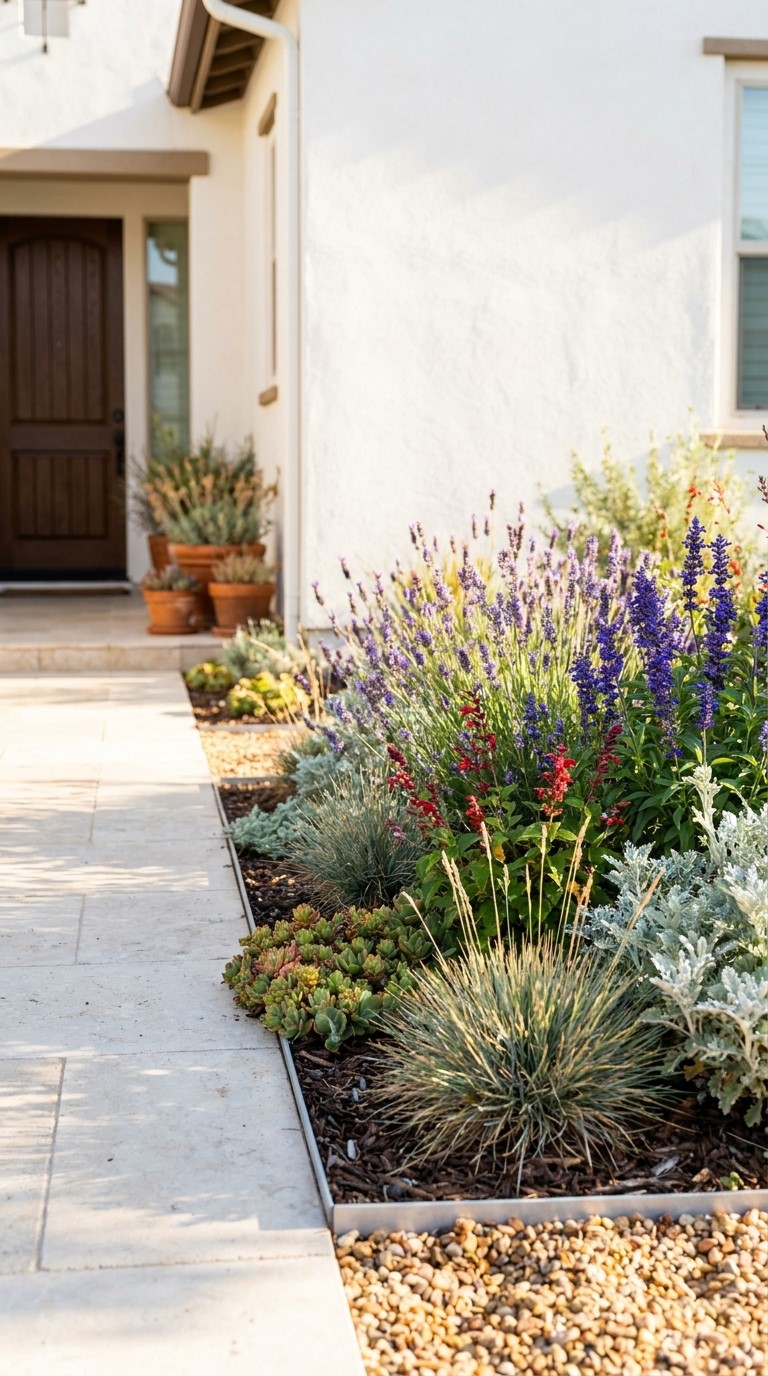
Full sun landscaping ideas work better when you treat the bed as part of the front yard, not as a loose strip of flowers. A path, driveway or brick wall changes the heat level. Even a tidy lawn edge can change how the border reads from the street.
A narrow bed beside a walkway needs plants that stay low and behave themselves. A deeper bed along the house can take small shrubs, grasses and stronger perennials. Near the curb, you want plants that can cope with heat, road dust and a little neglect without looking abandoned by mid-July.
Front Yard Flower Beds Need Shape Before Color
Front yard flower beds often fail because the shape is wrong before the plants go in. A border that is too thin dries out, crowds fast and makes every plant look like an afterthought. Widening the bed by even a foot can make the whole space easier to plant and easier to read.
Straight borders suit formal paths, modern homes and neat front walks. Softer curves work well along a lawn, especially when the house has cottage, farmhouse or older suburban bones. The main thing is to give the bed a clear line. A good shape makes even young plants look more settled.
Full Sun Front Yard Border Ideas for Curb Appeal Without Daily Watering
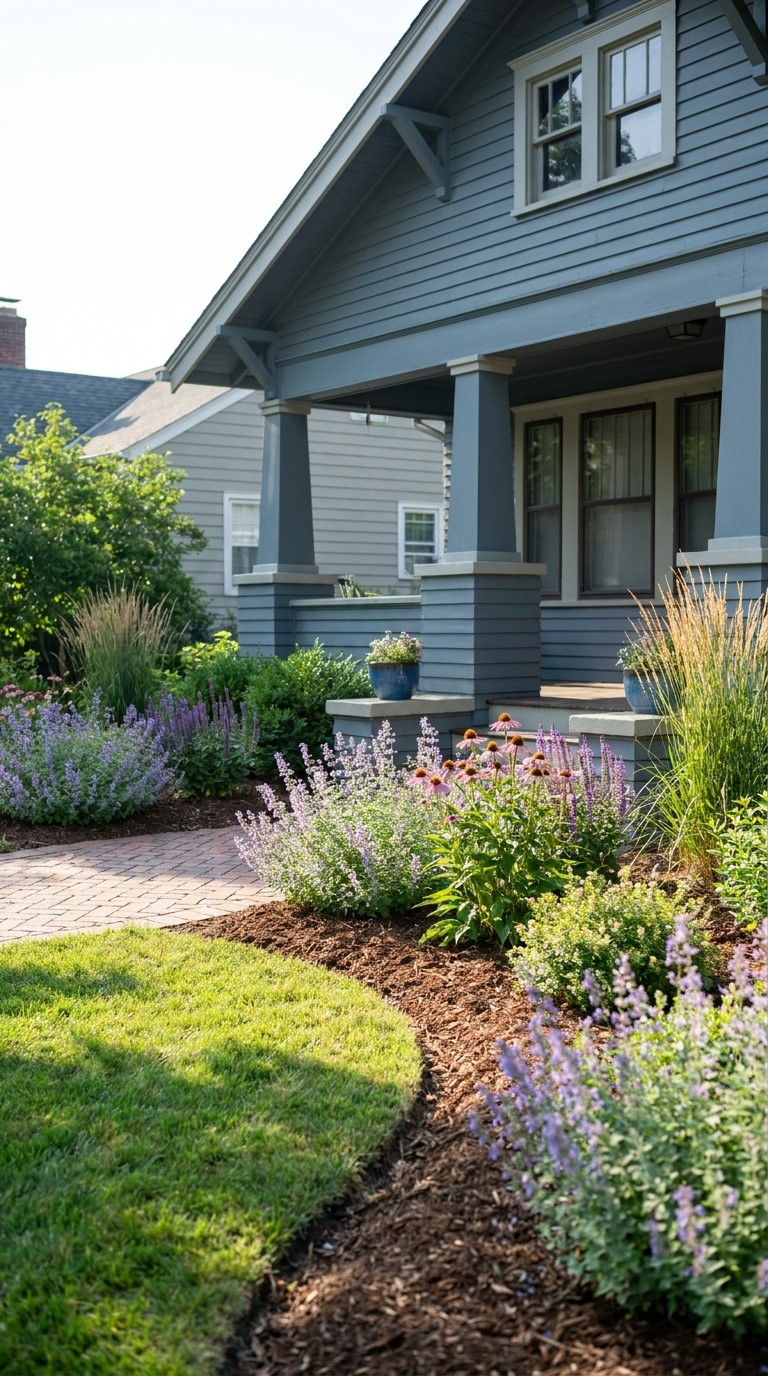
Full sun front yard border ideas should start with the plants that hold the scene together, not the flowers that shout for three weeks and then sulk. Curb appeal comes from shape, repetition and a bed that still looks decent after the first bloom has passed.
This is where many front borders go wrong. People buy a tray of annuals, tuck them into dry soil and hope for a miracle. They look cheerful for a little while, then the watering starts. Miss a few hot days and the border turns tired. A better sunny border uses tough perennials, small shrubs and mulch, with flowers placed where they can shine without carrying the whole bed alone.
Sunny Front Yard Landscaping Looks Better With Repeated Plants
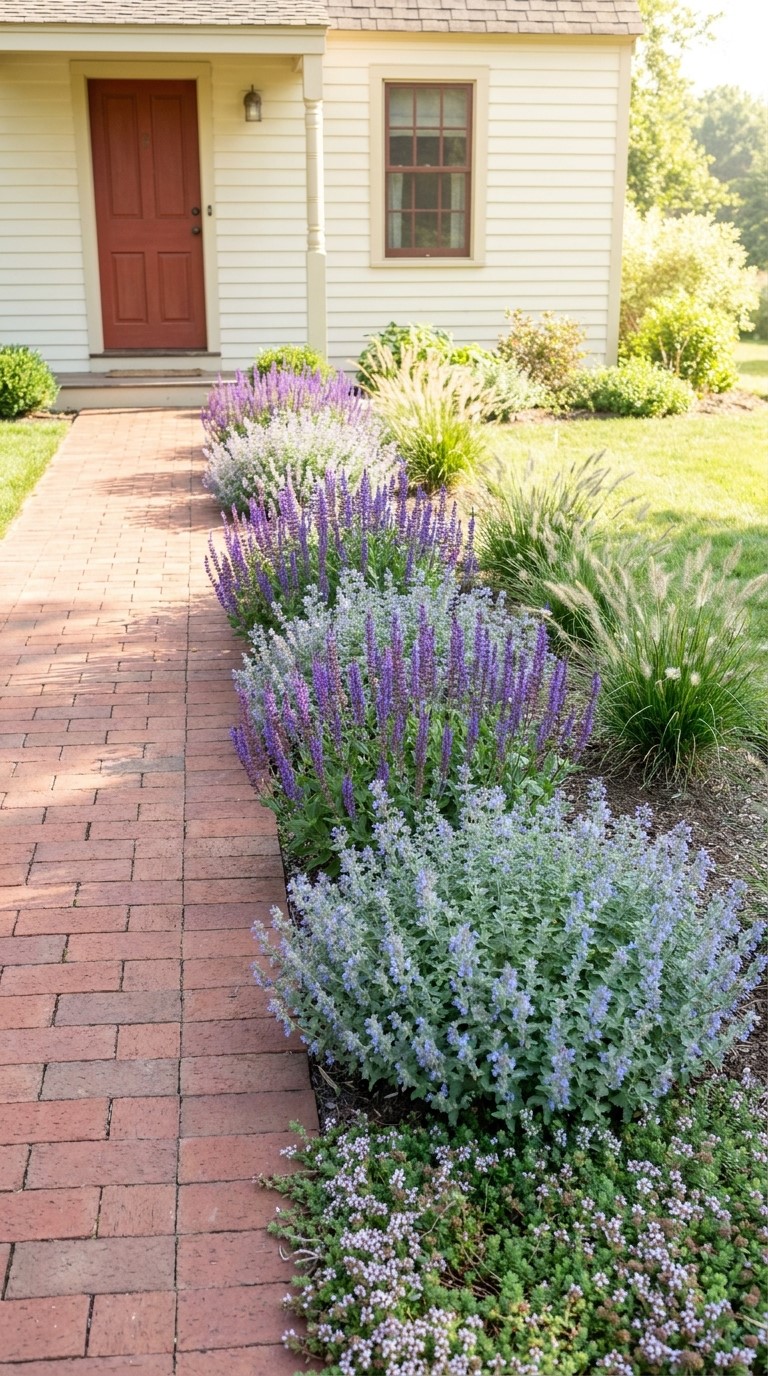
Sunny front yard landscaping feels calmer when plants repeat. One lavender beside one coneflower beside one ornamental grass can look like the discount table came home with you. Three lavender plants running along a path look planned. Five salvia plants placed through a border give the eye something to follow.
Repetition does not have to feel stiff. You can repeat plant shapes, colors or textures. Catmint can soften the front edge. Sedum can bring sturdy late-season texture. Coneflowers can add summer color without looking fragile. A few repeated clumps usually do more for curb appeal than a dozen unrelated plants fighting for attention.
Front Garden Plants Should Frame the House, Not Fight It
Front garden plants need to suit the house as much as the sun. A cottage-style home can handle soft edges, lavender, daisies, salvia and relaxed grasses. A brick ranch may look better with simple bands of perennials and a few compact shrubs. A modern front yard often feels stronger with fewer plant types and cleaner spacing.
Scale matters here. A tiny bungalow does not need shrubs swallowing the windows. A tall house can look odd with only low flowers pressed against the foundation. The border should make the entry feel grounded, soften the hard lines and guide the eye toward the front door.
Low Maintenance Full Sun Front Yard Borders Can Still Look Great
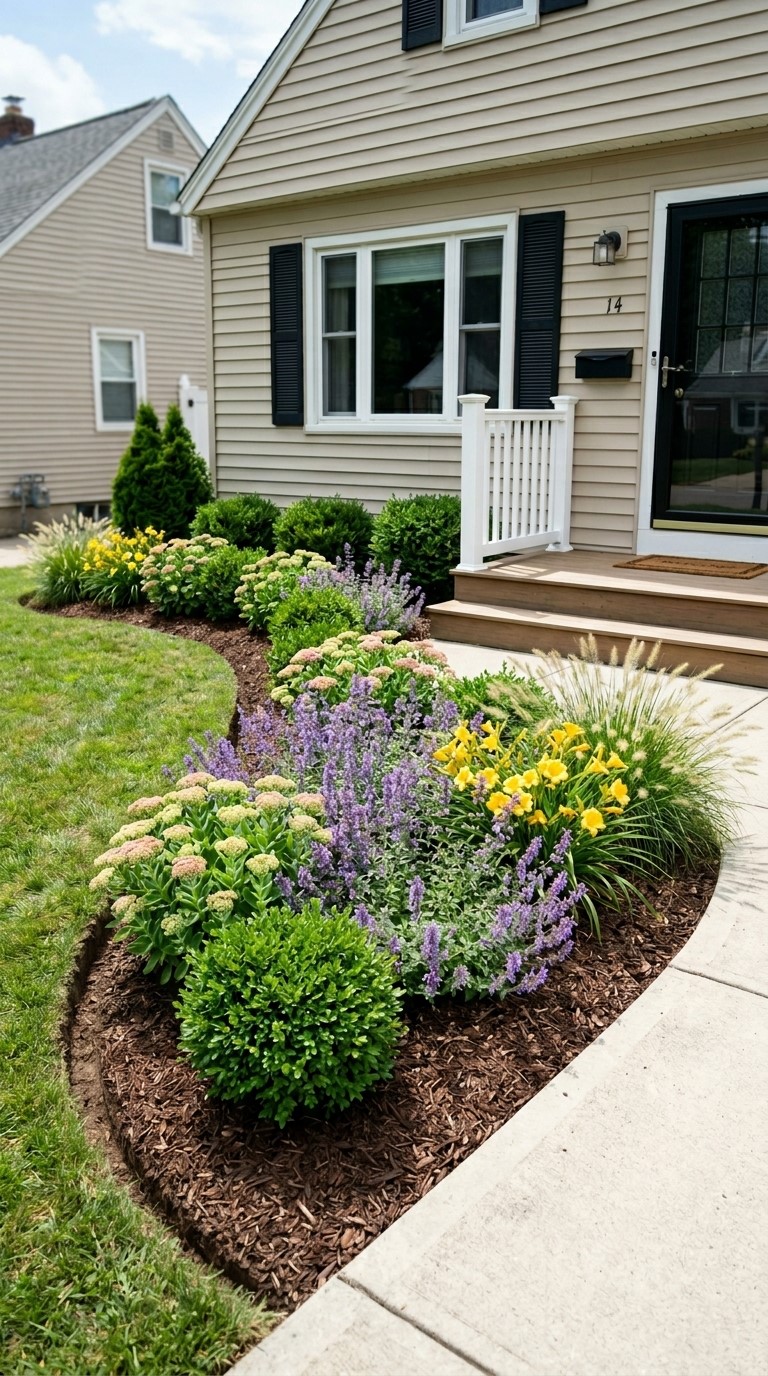
Low maintenance front yard borders full sun do not have to mean blank mulch, two stiff shrubs and a guilty-looking solar light. A sunny border can be easy to care for and still feel full. The trick is choosing plants that hold their shape, cope with dry spells and do not need constant fussing to look decent.
A low-care border also needs fewer plant types than most people think. Too many varieties create more different needs, more gaps and more odd little moments where nothing quite fits. A smaller plant list makes the bed calmer. It also makes upkeep simpler, because you learn what each plant does across the season.
Easy Full Sun Perennials for Tidy Garden Borders
Easy full sun perennials are the backbone of a front yard border that does not demand your Saturday every week. Salvia gives upright color and usually reblooms with a trim. Catmint softens edges and handles heat once it has settled in. Sedum is tough, sturdy and useful when summer flowers start to fade.
Coneflowers, yarrow, daylilies, coreopsis and ornamental grasses can also work well in sunny front beds. Choose varieties that fit the size of the space. Some plants sold in small pots become much bigger than expected, which is fine in a wide border and annoying beside a narrow path.
Low Maintenance Landscaping Works Better With Fewer Plant Varieties
Low maintenance landscaping is often less about finding magical plants and more about resisting the urge to buy one of everything. That mixed cart may feel fun at the garden center, but it can make the front yard look restless once everything grows in.
Try repeating three to five main plants through the border, then add one or two seasonal accents if you want more color. Mulch between plants while they fill out. Leave enough room for mature growth, even if the bed looks a little bare in the first few months. Crowded borders become harder to weed, water and tidy.
Front Yard Full Sun Flower Borders With Color Through the Season
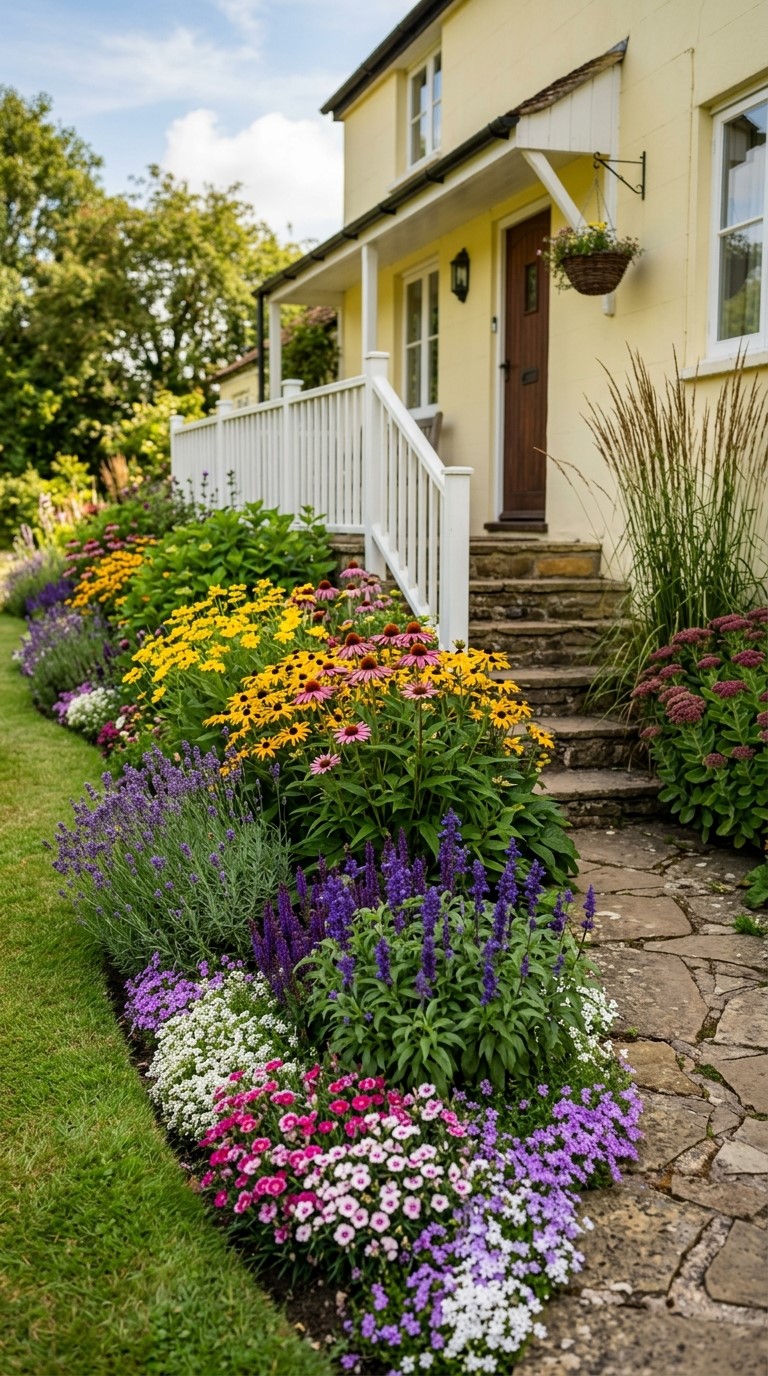
Front yard flower borders full sun need more than one big summer moment. If everything blooms in June, the border can look flat and tired by August. A better planting has a slow handoff: a little spring color, a stronger summer show and something that keeps the bed alive into fall.
Think of the border as a sequence rather than a single picture. Early flowers wake up the edge. Summer perennials carry the color. Late bloomers, seed heads and grasses stop the whole bed from looking finished too soon. This matters in the front yard, where a tired border can make the whole house look a bit neglected.
Full Sun Flowers for Spring, Summer and Fall Front Yard Color
Full sun flowers can cover a long season if you choose them with timing in mind. In spring, creeping phlox, dianthus, hardy geraniums and early salvia can bring color without taking over the bed. These are useful near walkways and front edges, where low growth looks neat.
For summer, coneflowers, black-eyed Susans, daylilies, coreopsis, lavender and blanket flower can give the border more presence. Later in the season, sedum, asters, ornamental grasses and some goldenrods can keep the bed from collapsing into a dull patch of leaves.
Perennial Border Plants Need Good Foliage After Blooming
Perennial border plants should earn their keep after the flowers fade. This is the quiet detail that separates a decent front bed from one that looks ragged by midsummer. Some plants bloom well, then leave behind floppy stems and tired leaves right where everyone can see them.
Look for plants with foliage, seed heads or shape that stays useful. Sedum has thick leaves and sturdy heads. Lavender brings gray-green foliage and a clipped look. Catmint can be cut back and refreshed. Ornamental grasses add movement without needing flowers to look alive.
Drought Tolerant Full Sun Front Yard Borders for Dry, Hot Weeks
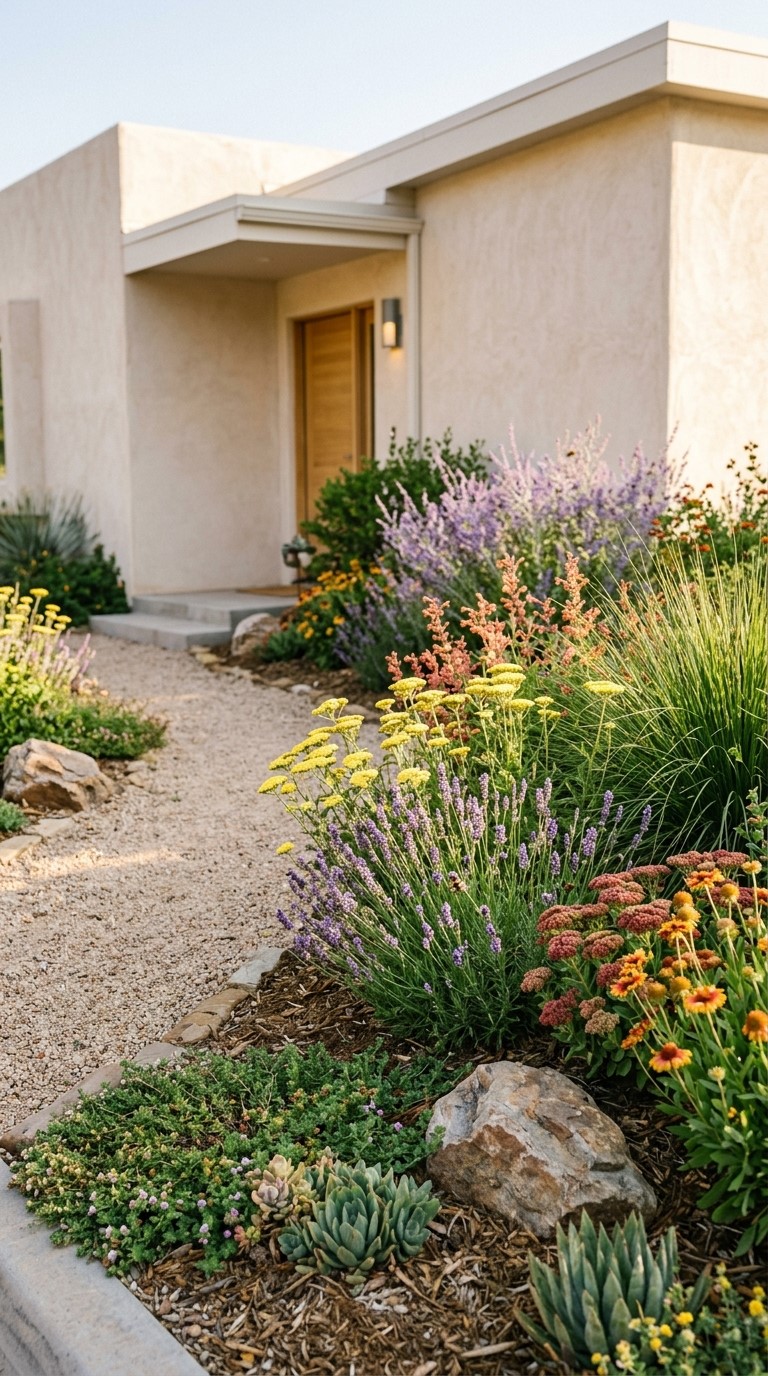
Drought tolerant front yard borders full sun are useful if your summers run hot, your soil drains fast or your area has watering limits. They are also helpful for anyone who forgets the hose once life gets busy. No judgment. Front yards are public, but garden care still has to fit real life.
There is one catch. Drought tolerant plants are not drought-proof on day one. New plants need deep watering while their roots settle in. Once established, the right plants can handle dry stretches with far less drama than thirsty annuals or moisture-loving perennials placed in the wrong spot.
Heat Tolerant Perennials for Front Yard Borders Full Sun
Heat tolerant perennials are a good starting point for tough sunny borders. Yarrow, lavender, Russian sage, coneflower, sedum, blanket flower, agastache and many ornamental grasses can handle bright sun once they are established. They also bring different shapes, so the bed does not feel like a flat row of flowers.
Choose plants for your region as well as your style. Lavender loves sharp drainage and can sulk in heavy wet soil. Some grasses behave beautifully in one climate and spread too much in another. A local nursery can save you from planting something that looks good for one season and then becomes a headache.
Waterwise Landscaping Can Still Look Soft and Pretty
Waterwise landscaping does not have to look like a parking lot with a cactus in it. A dry sunny border can feel soft, full and welcoming when you mix flowering perennials with grasses, small shrubs and a clean edge.
Mulch helps the soil hold moisture and keeps weeds down while plants fill in. Gravel can work in some dry climates, but in hot front yards it can also hold heat around the plants. In many home gardens, shredded bark, composted mulch or leaf mold creates a kinder root zone and a more finished look.
Small Full Sun Front Yard Borders for Tight Lawns and Narrow Beds
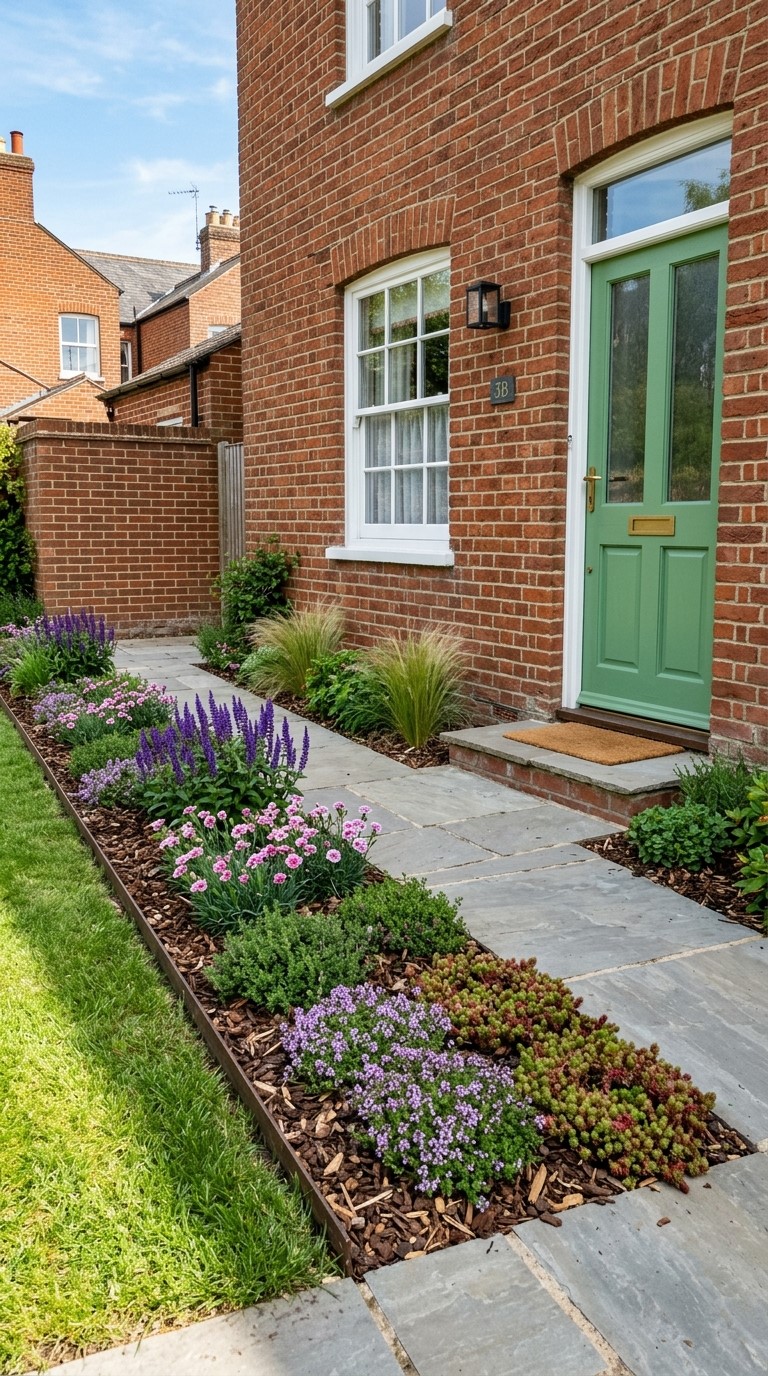
Small front yard borders full sun need discipline. A tiny strip beside the walk can turn messy fast if the plants are too tall, too wide or too floppy. The goal is not to cram in every flower you love. It is to choose plants that make the small space feel cared for.
This is where compact varieties matter. The plant tag is your friend, even when the plant itself looks harmless in a quart pot. A perennial that reaches three feet wide may be perfect in a deep front bed and terrible along a narrow path. Small borders need plants with good manners.
Compact Sun Plants for Small Front Yard Landscaping
Compact sun plants can make small front yard landscaping feel generous without taking over. Dwarf salvia, compact catmint, small sedum varieties, dianthus, creeping thyme, low hardy geraniums and dwarf ornamental grasses can all work in sunny spaces if the soil suits them.
Try to avoid tall plants right at the front edge. They may lean into the lawn, spill over the path or hide the shape of the border. Use lower plants near the edge, then place slightly taller perennials behind them where they have room to breathe.
Low Border Plants Keep Walkways, Mailboxes and Curbs Clear
Low border plants are especially useful around walkways, mailboxes, steps and curb edges. These are the places where plants get brushed by legs, bumped by bags and baked by nearby hard surfaces. A low plant with a mounded habit will usually look better than something tall that needs tying up.
Creeping thyme, dianthus, low sedum, compact catmint and small edging grasses can give these areas a clean finish. Just watch for spread. Some groundcovers behave like guests who do not know when to leave, so match the plant to the size of the space.
Front Yard Walkway Full Sun Borders for Paths That Look Perfect
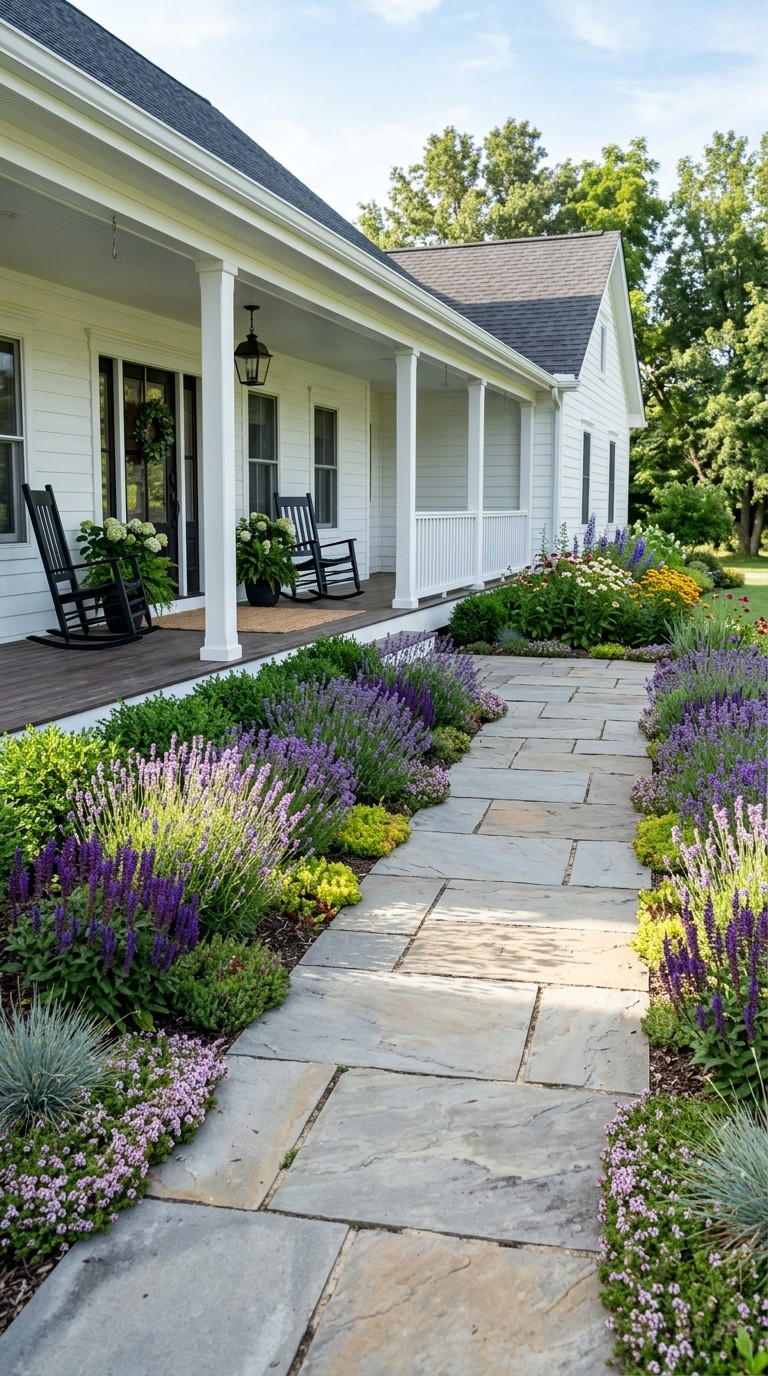
Front yard walkway borders full sun matter because the path is the route everyone notices. It leads guests, delivery drivers and your own tired feet to the door. If the border beside it is bare or messy, the whole entrance feels less welcoming than it could.
A walkway border should feel generous but not grab at ankles. Give plants enough room to reach their mature size without leaning across the path. This is not the place for floppy plants that collapse after rain or tall flowers that need constant staking. Keep it neat, warm and easy to pass.
Sunny Walkway Landscaping Needs Plants That Stay Off the Path
Sunny walkway landscaping works best with mounded, upright or low-growing plants. Compact salvia, lavender, dwarf grasses, low sedum and catmint can all work if they have enough room. The shape of the plant matters as much as the flower color.
Spacing is the unglamorous part that pays off later. Planting too close to the paving may look full at first, but by the second summer the path can feel crowded. Leave a little breathing room between the mature plant size and the walking surface.
Front Path Border Ideas Work Best With a Clear Edge
Front path border ideas look sharper with a clear edge. Brick, stone, metal edging or a clean spade line can make a young border look finished before the plants have filled in. It also keeps mulch from washing onto the path every time it rains.
A clear edge helps the front yard feel cared for even if the planting itself is relaxed. That contrast is useful. Soft plants can spill a little. Flowers can come and go. The line of the bed still tells the eye that the space is being looked after.
Front Yard Full Sun Garden Borders With Shrubs, Grasses and Flowers
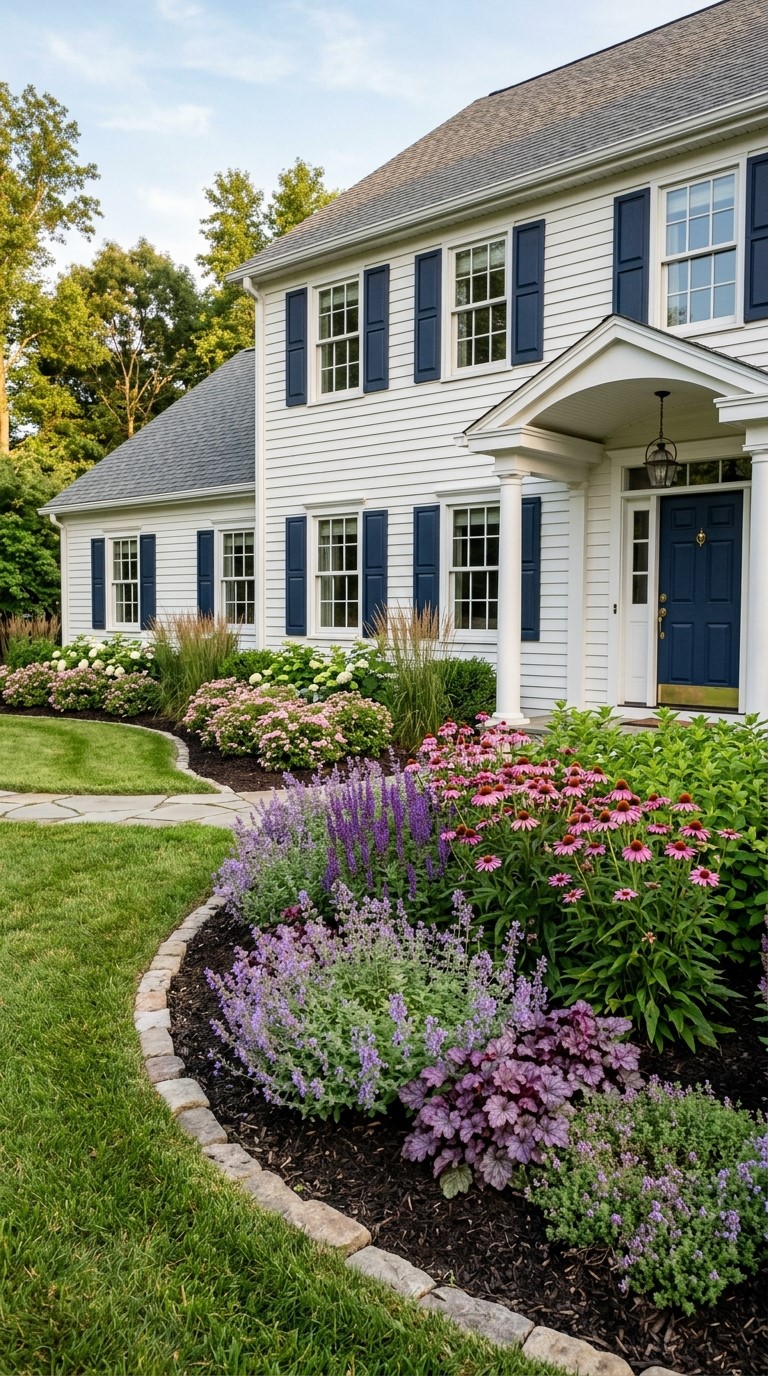
Front yard garden borders full sun look better when they are built in layers. A bed made only of flowers can be lovely for a short spell, then thin and uneven the rest of the year. Shrubs and grasses give the border a frame, while flowers bring the seasonal color most people want.
This does not mean filling the front yard with big shrubs. In fact, oversized shrubs are one of the fastest ways to make a house look hidden and heavy. Choose smaller plants that fit the bed, sit below windows and leave the entry visible.
Full Sun Shrubs Give Front Garden Borders Shape All Year
Full sun shrubs are useful because they give front garden borders a steady shape when the flowers are resting. Compact evergreens, dwarf spirea, small roses, potentilla in cooler areas and tidy boxwood alternatives can all help anchor a sunny bed.
The size on the tag matters more than the size in the pot. A small shrub can grow wide, block a window or crowd a path if it is placed too close to the house. Give shrubs room to become what they are supposed to be, then use perennials around them for color.
Sunny Border Plants Look Better in Layers
Sunny border plants are easier to arrange when you think in layers. Low edging plants belong near the path, lawn or curb. Mounded perennials sit in the middle. Small shrubs and ornamental grasses work toward the back, where they can give height without blocking the view.
This simple structure keeps the bed from looking like a flat row. It also makes maintenance easier. You can reach the front edge, see weeds before they take hold and trim back plants without fighting through a crowded tangle.
A Simple Full Sun Bed Front Yard Border Planting Plan
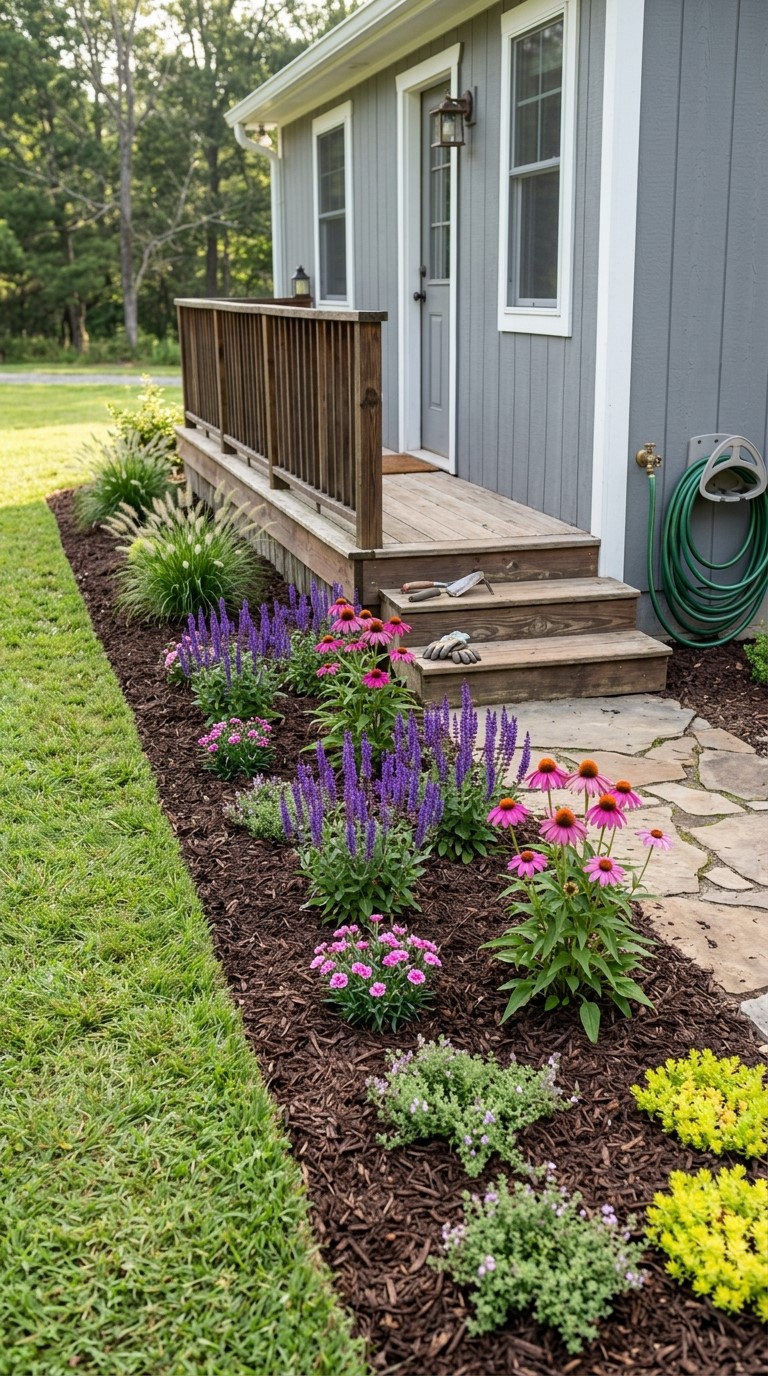
A front yard plans does not need to be complicated. For a sunny bed about ten to twelve feet long, start with two or three compact shrubs or ornamental grasses near the back. These give the bed shape even when nothing is blooming.
In the middle, repeat five perennials such as salvia, coneflowers or compact daylilies. At the front, use catmint, dianthus, creeping thyme or low sedum to soften the edge. Add a few sedum plants or asters for late-season interest. That small mix can look far more polished than a crowded bed full of unrelated plants.
A Full Sun Front Yard Border Layout for Beginners
A full sun front yard border layout for beginners should be easy to read. Taller plants go toward the house, fence or back of the bed. Lower plants sit near the front, where they can soften the edge without hiding it. Repeated plants create rhythm without making the border feel stiff.
Leave gaps at planting time. This feels wrong at first, because new plants are small and the mulch looks too visible. But the second summer often tells the real story. Plants spread, roots strengthen and the border begins to look settled instead of newly assembled.
Front Yard Perennials Need Spacing for Their Second Summer
Front yard perennials need room to grow into their shape. Crowding them for instant fullness can cause problems later, especially in full sun. Tight planting blocks airflow, makes watering harder and gives weeds sneaky little places to hide.
A young border can be helped with mulch, temporary annuals or a few small pots tucked nearby for the first season. Resist the urge to fill every gap with permanent plants. Space is not wasted if it gives the border a better second year.
Curb Appeal Garden Ideas for Keeping Full Sun Borders Neat
Curb appeal garden ideas often come down to maintenance habits that are small but visible. A clean edge, fresh mulch and plants trimmed away from the path can change the whole front yard. None of it is glamorous. It just works.
Full sun borders will always need some attention. Flowers fade. Mulch thins. Perennials lean after storms. The goal is not a perfect bed every day of the year. It is a border that can bounce back with a little care instead of demanding a full rescue every month.
Front Garden Edging Makes Sunny Borders Look Cleaner Fast
Front garden edging is one of the fastest fixes for sunny borders that look messy. It gives the bed a boundary, keeps grass from creeping in and stops mulch from wandering into the lawn or path. Even a simple spade edge can make the border look sharper.
The edging style should suit the house. Brick feels classic. Stone can look relaxed. Metal edging suits cleaner lines. A cut lawn edge works if you are willing to refresh it. The exact material matters less than the line being clear and maintained.
Full Sun Border Maintenance Should Be Simple and Regular
Full sun border maintenance is easier when it becomes a quick check rather than a huge chore. Water new plants deeply while they settle. Pull weeds before they seed. Cut back tired flowers when they make the bed look scruffy. Refresh mulch when bare soil starts showing.
Once plants mature, some will need dividing, trimming or replacing. That is normal. A front yard border is a living edge, and it will shift over time. The best ones stay flexible without losing their shape.
The Front Yard Edge That Finally Pulls Everything Together
A good full sun border changes the way the whole front yard feels. It softens hard paths, cools the look of hot paving and gives the house a more welcoming face. It also solves those awkward strips of lawn that never seem to look good, no matter how often they are mowed.
You do not need a grand garden to get there. A clear bed shape, a few repeated plants, tough flowers, small shrubs and a neat edge can do a lot. The hottest part of the front yard may never be the easiest place to plant, but with the right border, it can become the part that makes the whole home look better.
