
Tall Container Plants for Shade: The Vertical Fix Your Dark Corner Needs
Shade containers fail because everyone starts at ground level.
For years I filled the dim corners of my rental patio with the usual suspects: low ferns, creeping jenny and those dwarf hostas that look like they gave up before you even got them home. They lived. They even spread a little. But the space still felt like a basement with better air circulation. Nothing reached above my knees.
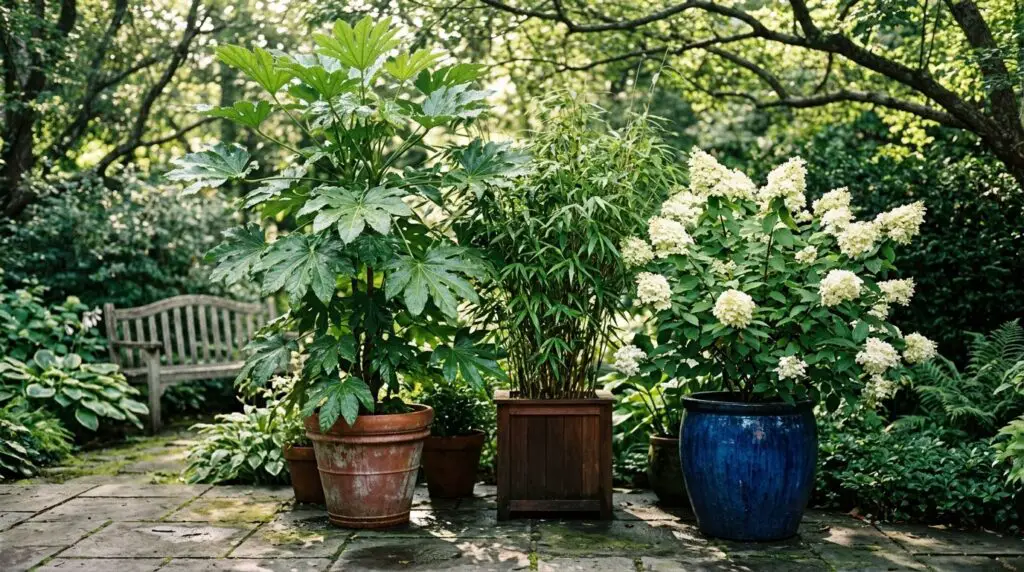
The gardening industry has a blind spot for height. Walk into any nursery and the shade section is a sea of mounded foliage topped with blooms that hover somewhere around your shoelaces. That is fine if you are carpeting a woodland path. It is less fine when you are standing on a balcony in a city where the only view is your neighbor’s kitchen window and a stack of their recycling bins. You need something that stands up and announces itself.
Tall container plants for shade are not a myth. They are not even particularly difficult. They are just buried under an avalanche of advice that assumes you own a yard with established tree canopy and room for a perennial border. Most of us do not. We have pots, ledges and patches of light that last about three hours a day. That is enough.
Most Shade Containers Look Flat Because Nobody Talks About Tall Shade Plants for Pots
Why garden centers push short plants over tall shade plants for pots
Garden centers operate on turnover. A six-inch coral bell fits neatly on a display bench, sells fast and rarely outgrows its pot before someone buys it. Tall shade plants for pots require space, time and a willingness to look rangy for a season while they find their legs. Retailers also know that customers kill big plants faster than small ones. A three-foot fiddle leaf fig dying in a living room is a tragedy. A dead four-inch succulent is Tuesday. So the industry defaults to compact, and the rest of us end up with shade containers that have all the vertical ambition of a doormat.
The psychological difference between ground-level and eye-level greenery
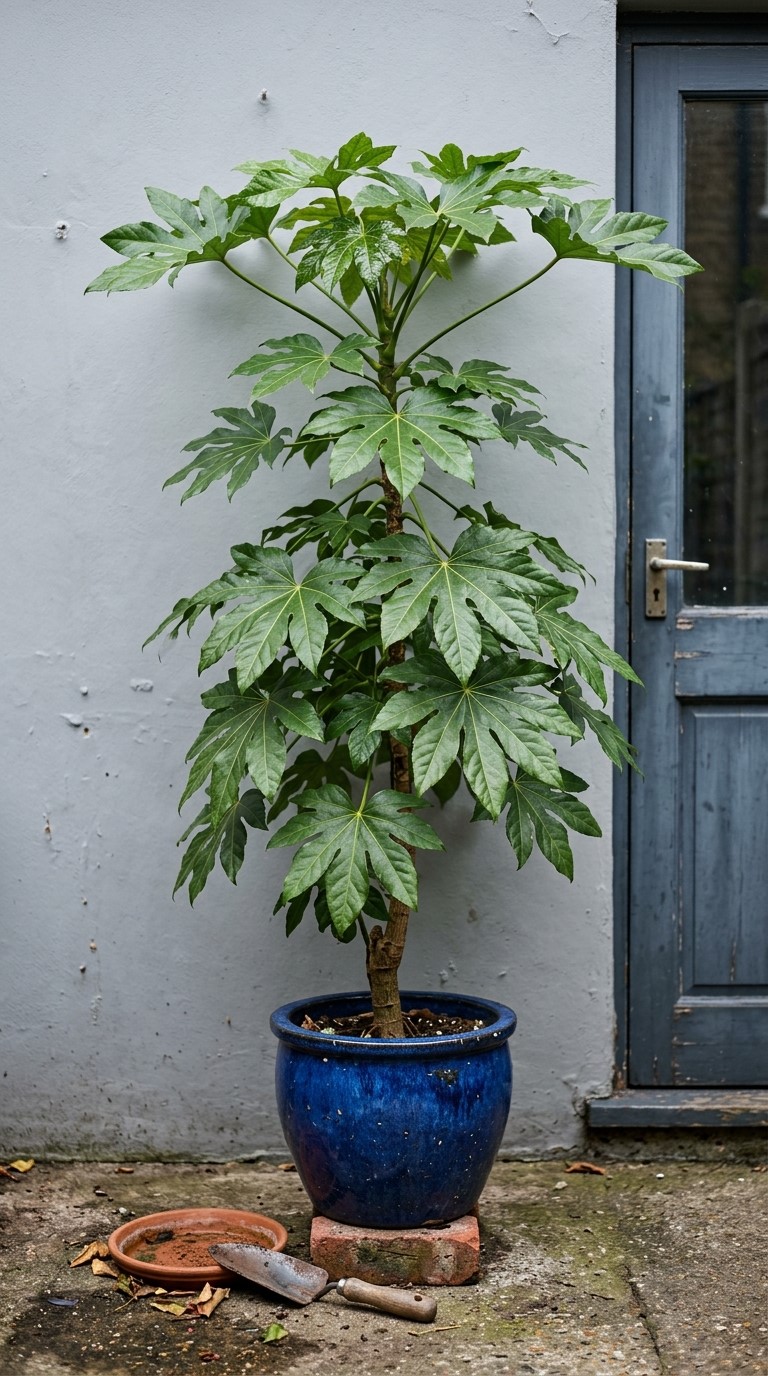
There is a reason interior designers hang art at eye level and not at your ankles. Looking down all day is tiring. A container that forces you to look up changes how you feel about a space. I noticed this after I placed a five-foot fatsia japonica in a glazed pot beside my back door. Suddenly the patio had architecture. The wall behind it receded. The whole area felt less like a storage nook and more like a room that happened to have sky for a ceiling. That is the trick tall potted plants for shade pull off. They borrow height from the plant and give it to you.
Choosing Containers for Tall Shade Plants: The Imporantace of Size
The pot size rule for tall potted plants for shade
Here is where people sabotage themselves. They buy a tall plant, bring it home and stick it in a decorative pot that is barely wider than the root ball. The plant topples in the first breeze, or the roots strangle, or both. For tall potted plants for shade, the container needs to be heavy, wide and deep enough to act as a counterweight. A good rule is one-third pot to two-thirds plant. If your bamboo or camellia is aiming for six feet, the pot should hold at least twenty gallons of soil. Yes, that is enormous. Yes, it is necessary. A tall plant in a small pot is an umbrella in a teacup.
Drainage realities for tall container plants for shade in low light
Shade means less evaporation, which means wet feet, which means root rot. Tall container plants for shade in low light need drainage holes that actually work, not the single sad puncture that came with the pot. I drill extra holes. I elevate pots on feet or bricks so water does not pool underneath. I also skip the gravel layer at the bottom. It is an old myth that creates a perched water table and keeps the roots soggy. Use good potting mix all the way down. The plant will figure out the rest.
The Best Tall Potted Plants for Shade, According to a Reformed Plant Killer
Structural backbone: bamboo, fatsia and the corn plant
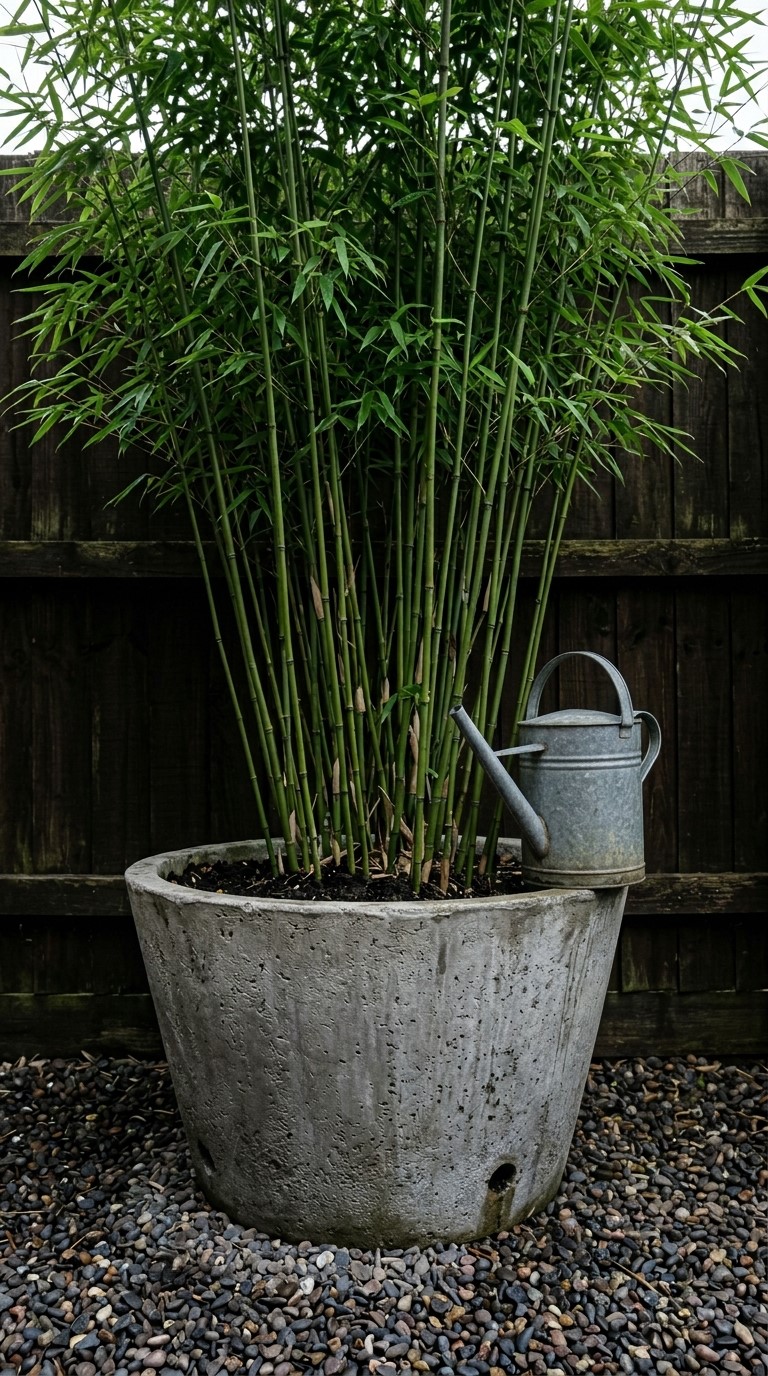
You need something that holds its shape without begging for sun. Clumping bamboo, like Fargesia rufa, gives you a green column that moves in the wind and blocks sightlines without turning into a jungle. Fatsia japonica has leaves the size of dinner plates and a tropical swagger that makes no sense in a temperate climate, which is exactly why I like it. The corn plant, Dracaena fragrans, is practically a houseplant that tolerates outdoor shade in warm zones. All three forgive inconsistent watering. All three grow upright rather than outward. They are the scaffolding around which you build everything else.
Blooms that reach: hydrangeas and camellias as tall potted plants for shade
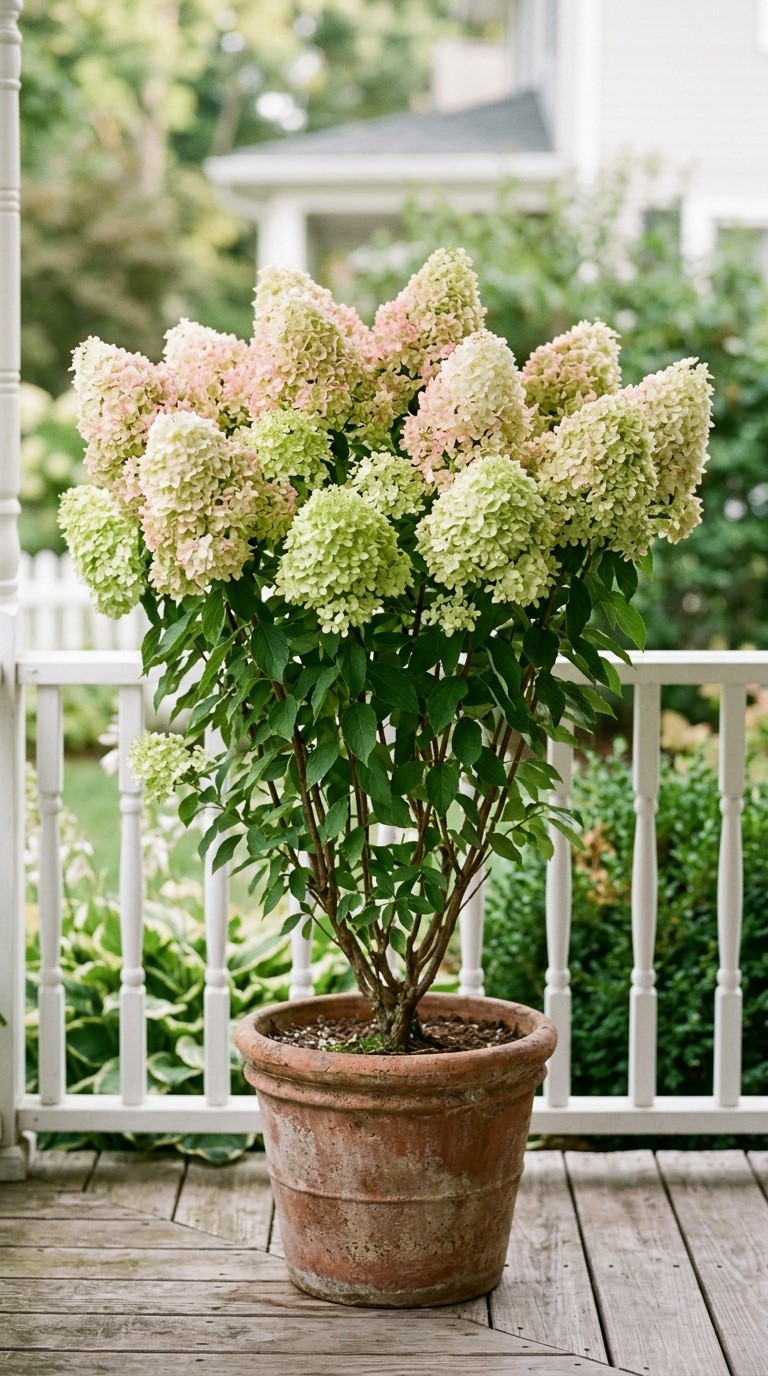
Flowers in shade are not impossible. They just require the right species. Hydrangea paniculata varieties like Limelight or Phantom will hit five feet in a pot and bloom white to pink from midsummer until frost. Camellias are slower but worth the wait, with glossy leaves year-round and flowers that look like they belong on a silk scarf. As tall potted plants for shade, both prefer afternoon protection and a consistent drink. Do not let them dry to the point of wilting. A stressed hydrangea drops its buds like a bad habit, and you will spend the season looking at a very expensive stick.
Foliage drama from big-leafed tall shade plants for pots
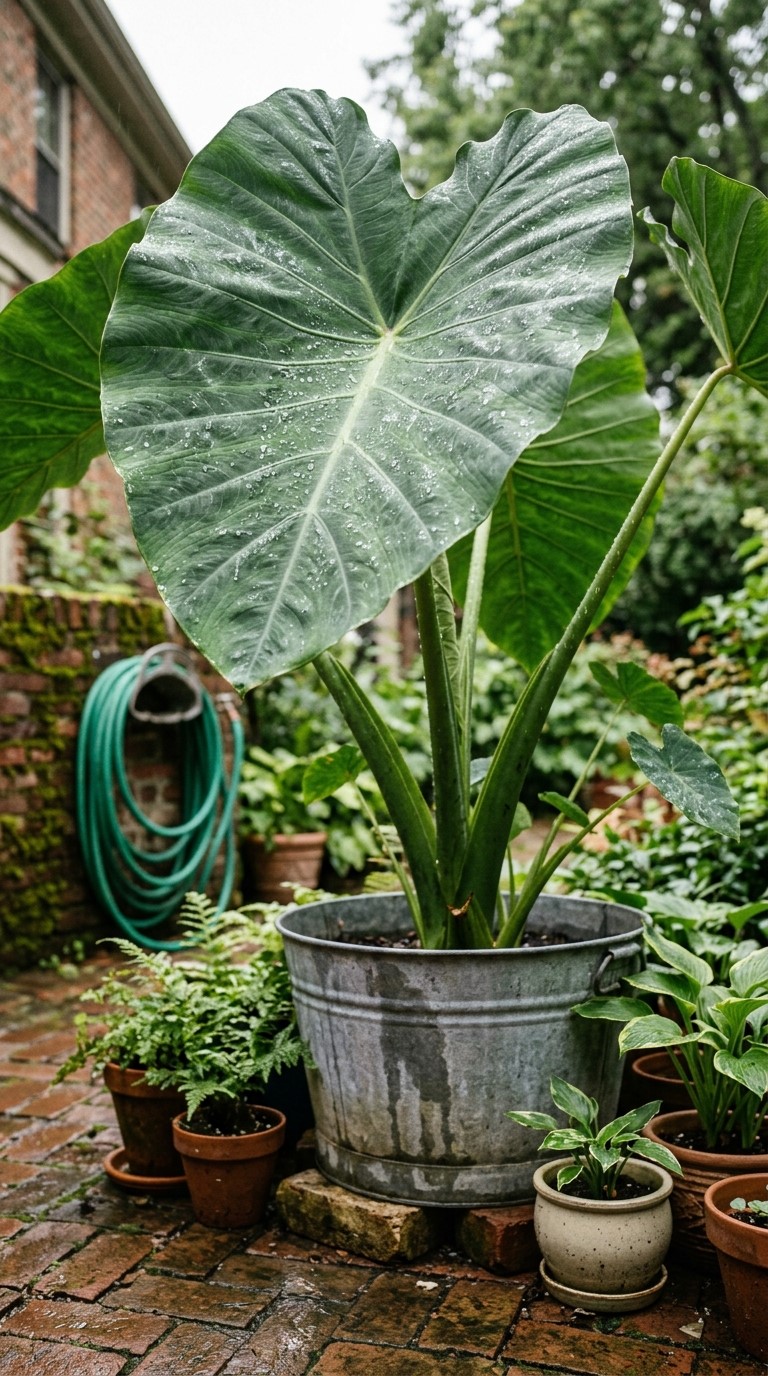
If you are not into flowers, go for leaves that shout. Rodgersia has palmate foliage that looks like it belongs in a dinosaur diorama. Japanese aralia and the various elephant ears, particularly Colocasia esculenta, give you height and heft in a single season. These big-leafed tall shade plants for pots need rich soil and regular feeding, but they repay you with a presence that no petunia could match. I keep a Colocasia in a zinc tub on my patio. By August the leaves are larger than my head. It is absurd and completely wonderful.
Using Tall Shade Plants on Balcony Gardens (Even the Windy Ones)
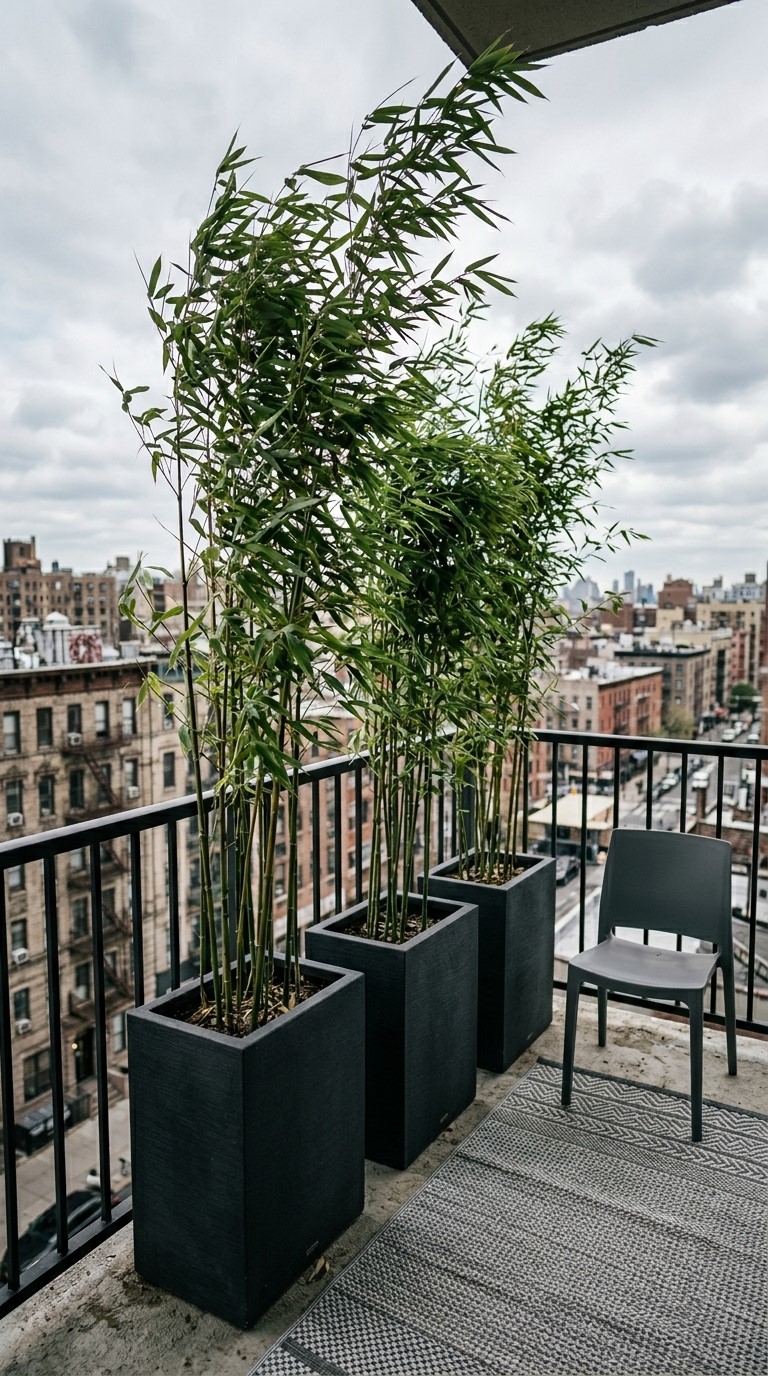
Keeping tall potted plants for shade upright on a high floor
Balconies are wind tunnels. A six-foot plant on the fourteenth floor behaves like a sail. I learned this when a gust took my potted bamboo and deposited it three feet toward the elevator. For tall potted plants for shade on a balcony, you need a ballast. I fill the bottom third of large pots with coarse sand or broken concrete. It adds weight without reducing root space too much. You can also group pots together so they brace one another. Think of it as a plant buddy system. A lone tall plant is a bowling pin. Three together are a fortress.
Lightweight containers for tall shade plants for balcony setups
Concrete and ceramic look great until you try to haul them up a fire escape. For tall shade plants for balcony gardens, I use resin or fiberglass pots that mimic the heavy stuff without the hernia. They are not cheap, but they are not cheap-looking either. Avoid thin plastic for anything over four feet. It flexes in heat, warps in cold and eventually cracks under the pressure of saturated soil. A tall plant in a shattered pot is a mess you do not want to clean off a sidewalk below.
Tall Shade Plants for Patio Corners: Making Low Light Conditionds Look Like They were Planned
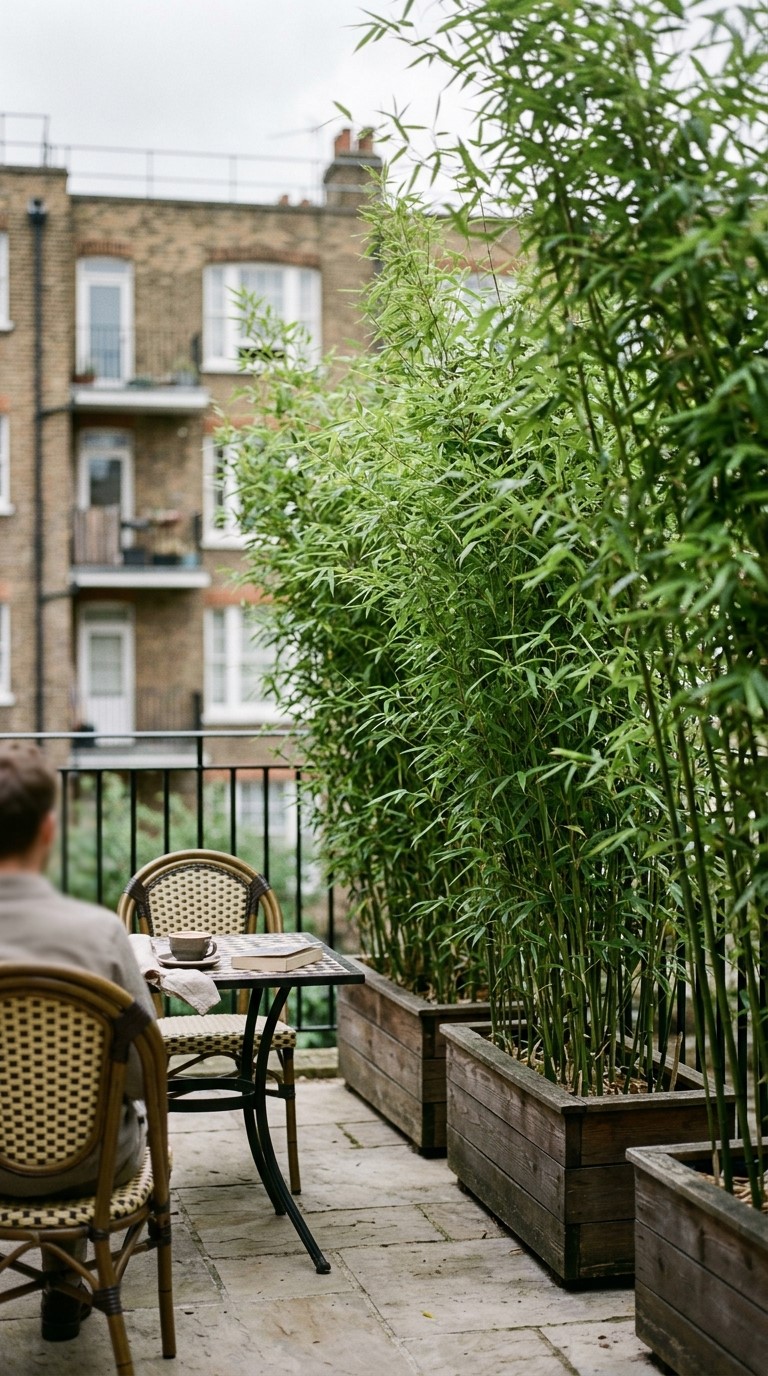
Using tall container plants for shade as living privacy screens
My patio faces another building about fifteen feet away. The neighbor is fine, but I do not need to watch him grill sausages in his boxer shorts. A row of tall container plants for shade along the railing solved the problem without a construction permit. I used clumping bamboo in rectangular planters. In two seasons it formed a green wall that filters light and air without blocking them completely. It is softer than a fence, cheaper than a renovation and if you get tired of the layout you can move it. Try doing that with a row of arborvitae.
The north-facing patio potting mix adjustment most people skip
North-facing patios stay cool and damp. Standard potting mix, heavy with peat, stays wet even longer in shade. For tall shade plants for patio corners, I cut my mix with twenty percent coarse perlite and ten percent composted bark. It opens up the structure and keeps roots from drowning. I also top-dress with an inch of fine gravel. It looks neat, prevents squirrels from burying their treasures and stops soil from splashing onto lower leaves during heavy rain. Wet foliage in shade is an invitation to fungal problems you do not want to host.
Tall Shade Plants for Porch Curb Appeal
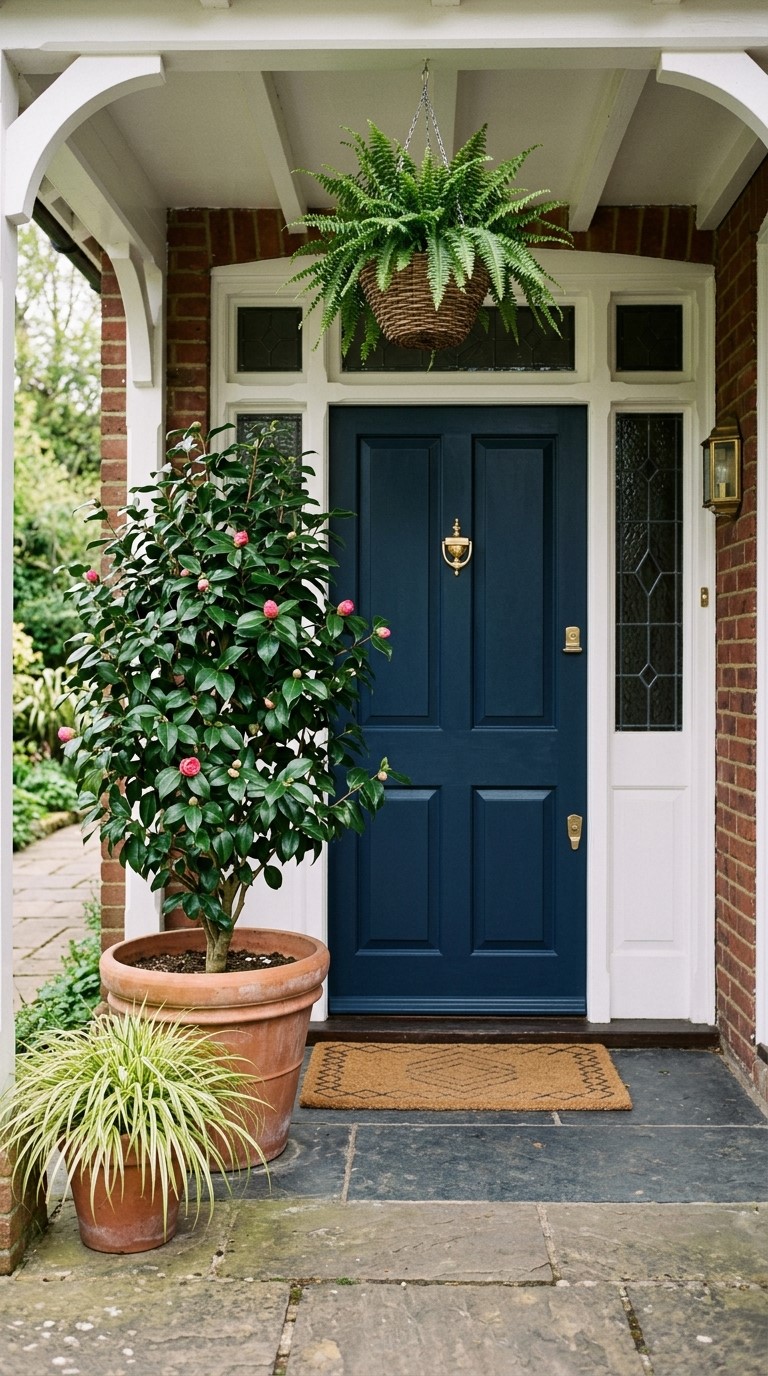
Front porch pairings using tall shade plants for porch with purpose
Shaded porches can look somber. Too much dark green and you start expecting a casket. I break the mood with tall shade plants for porch that have variegation or unusual texture. A tall Japanese maple in a pot, even a green-leafed variety like Seiryu, has a lacy delicacy that reads as friendly rather than funereal. Underplant it with something low and bright, like a golden Japanese forest grass. The contrast keeps the eye moving. I also like a single tall camellia in a terracotta pot flanking the door. It says you care about the entrance without trying too hard to impress the mail carrier.
Covered porch watering hacks for tall potted plants for shade
A roof over your porch keeps rain off the plants. That sounds obvious, but people forget to compensate. Tall potted plants for shade under cover still need water, sometimes more than open-ground plants because tree roots are not there to share moisture. I check my porch pots with a finger stuck two inches into the soil. If it is dry, I water until it runs from the bottom. I also mist the leaves of my fatsia every few days in summer. It is not necessary for survival, but it keeps the dust off and the foliage looks glossier. Small payoff, easy work.
Tall Shade Plants for Deck Spaces: Softening Boundaries Without Blocking Views
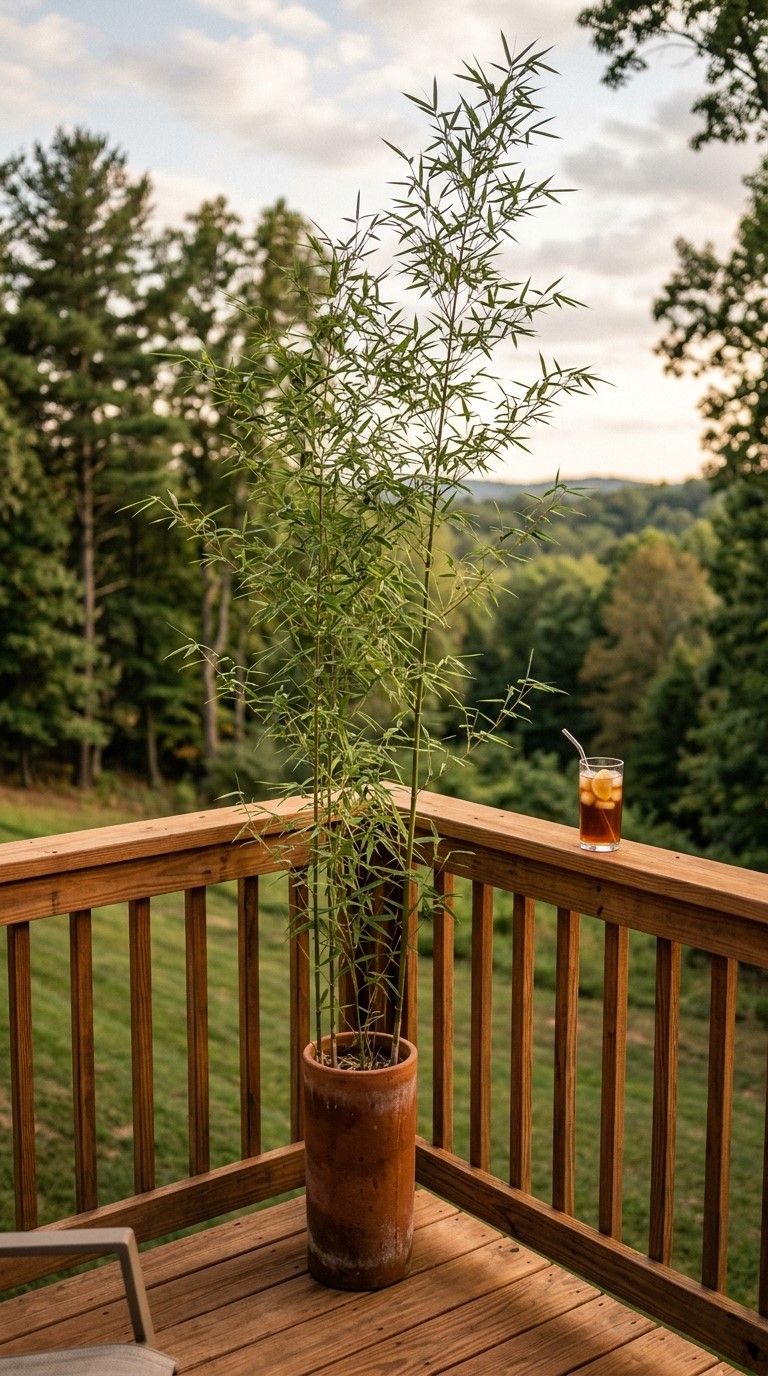
Deck railings and tall potted plants for shade: a compatibility guide
Decks are platforms in the air, and their railings define the edge. Tall potted plants for shade can either hide the railing or work with it. I prefer the latter. Place pots just inside the rail so the plants rise above the top bar but do not obliterate the view beyond. This works best with airy growers like tall fargesia bamboo or a slender camellia. Avoid anything that sprawls sideways, like a large hosta or a floppy hydrangea. You want vertical lines, not a green avalanche tumbling toward the lawn. The railing is the frame. The plant is the picture.
Matching container weight to deck load limits for tall shade plants for deck
Decks have weight limits, and saturated soil is heavy. A twenty-gallon pot can tip two hundred pounds when wet. Before you commit to tall shade plants for deck placement, check your structure. If the deck bounces when you jump, keep the big pots near the house where the joists have support. Move lighter, smaller containers toward the outer edge. I have seen a loaded deck sag like a tired hammock. It is not a good look, and it is definitely not a good sound. When in doubt, call a contractor. Cheaper than replacing the whole thing.
The Care Reality for Tall Shade Plants in Containers
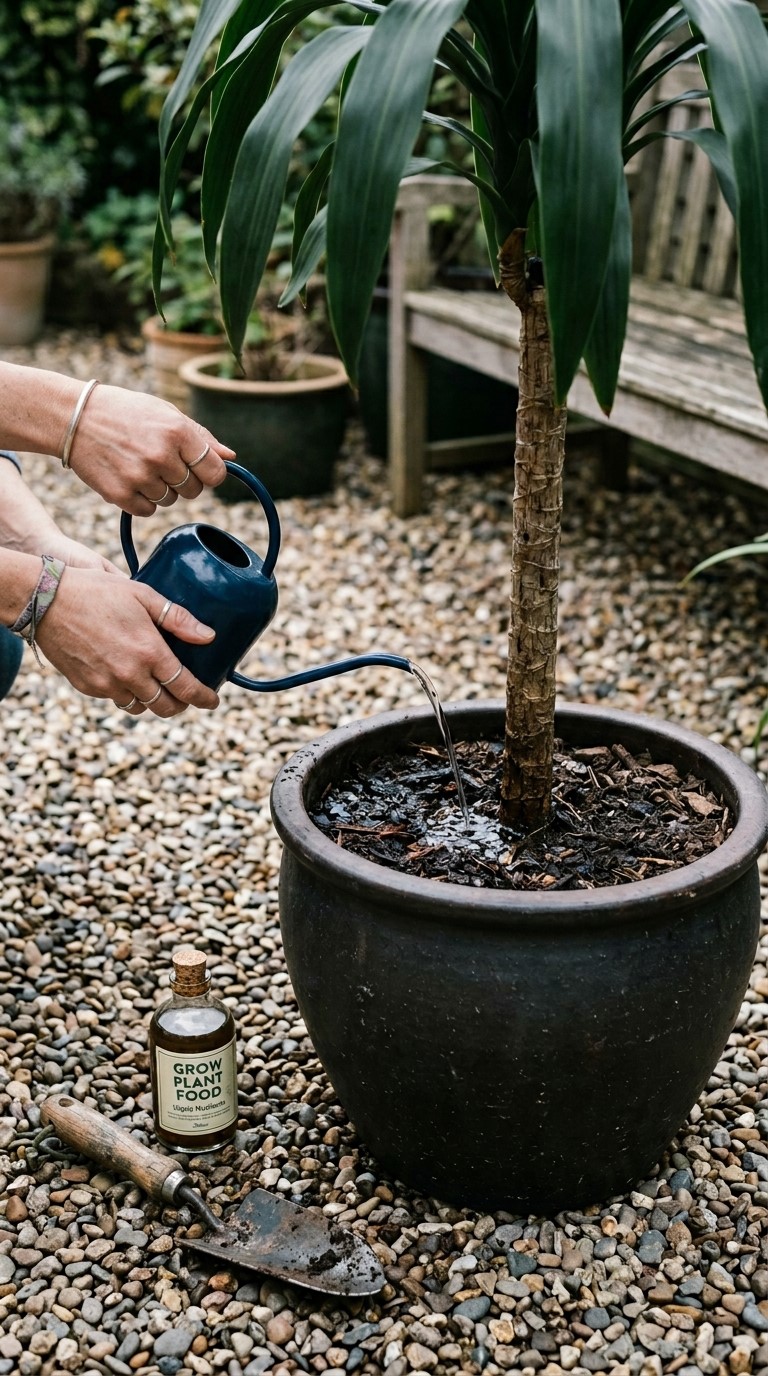
Feeding giants in small spaces
Tall plants in pots are hungry. They have exhausted the nutrients in their container by midsummer. I feed with a diluted liquid fertilizer every two weeks from April through August. I do not use slow-release pellets alone because shade and frequent watering wash them faster than the label admits. For leafy tall container plants for shade, I look for a formula higher in nitrogen. For bloomers like camellias and hydrangeas, I switch to something balanced once buds form. Do not overthink it. A half-strength feed on a regular schedule beats a full dose you forget to apply.
When to admit a plant is too tall for its pot
Plants outgrow containers. The signs are subtle at first: a drop in vigor, yellowing lower leaves, soil that dries out hours after watering. Then one day the pot cracks or the plant lists like a drunk at closing time. When a tall plant needs repotting, go up one size, not three. Too much soil stays wet too long, and the roots rot before they can fill the space. I repot my tall shade plants for pots every two to three years, usually in early spring before the growth spurt starts. It is messy. It is necessary.
Winter survival for tall container plants for shade in cold zones
Container plants freeze harder than ground plants because their roots are above the insulation line. In zones six and below, tall container plants for shade need protection. I wrap pots in bubble wrap or burlap and move them against the house where the eaves provide some cover. I do not water in winter unless the soil is bone dry and the temperature is above freezing. Evergreen plants still transpire, so check them on mild days. Deciduous plants like hydrangeas can survive a hard freeze if the pot is large enough. Small pots freeze solid and kill the roots. Size really is safety here.
What Happens When You Finally Look Up
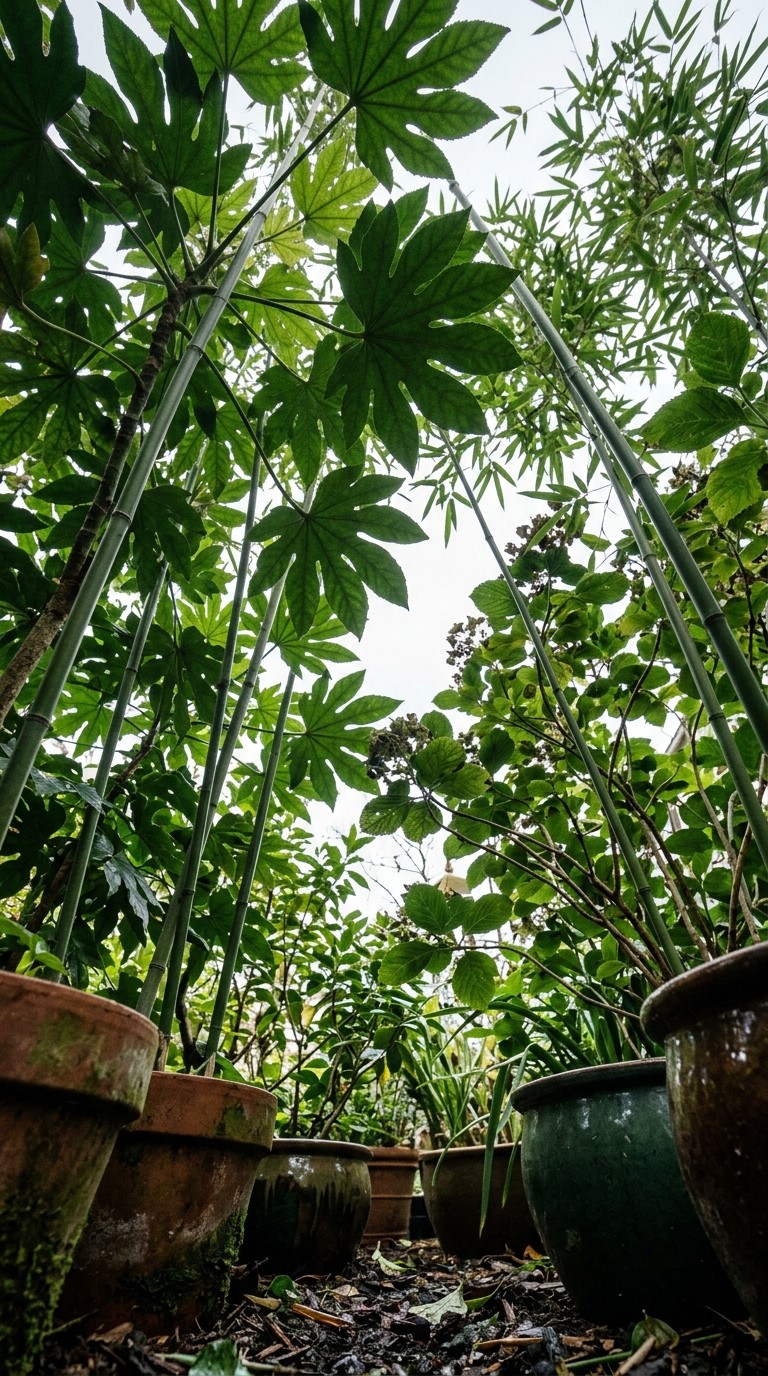
After three years of trial, error and one very unfortunate umbrella plant, my shady patio has height. There is a fatsia that brushes my shoulder when I walk past. A hydrangea that blooms at eye level. A bamboo screen that moves in the breeze and makes the whole space feel private without being closed off. The area still gets the same weak light it always did. But now the light has something to hit. Tall shade plants for pots did not change the weather or the architecture. They just gave the dim corner a backbone. That is enough. It is more than enough.
Start with one big pot and one plant that wants to grow up. The rest is patience and water. And maybe a drill for extra drainage holes.
