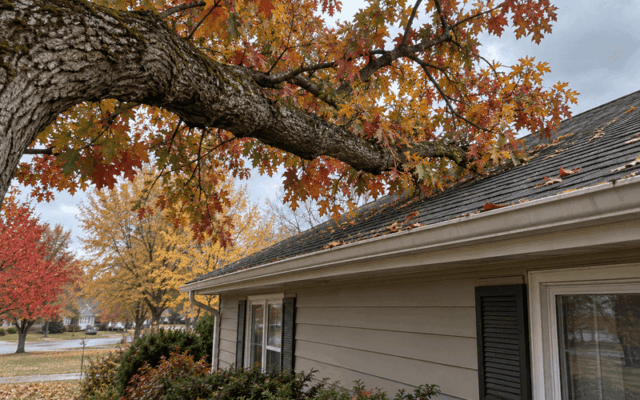
In Indiana, you can generally trim a neighbor’s branches back to your property line, as long as your cutting stays on your side. That is the practical guidance from a state police assistance FAQ, and it answers a question many homeowners ask while staring at limbs hanging over the yard.
The details matter, though, because a wrong cut can turn a small annoyance into a real dispute. Here is how to handle those branches with care.
What Indiana guidance says about overhanging branches

Here is the short version. An Indiana State Police employee-assistance FAQ says a neighbor can trim back branches to the property line.
For a homeowner with limbs hanging over the lawn, that is a useful starting point.
It helps to know what this guidance is and what it is not. It is a practical answer from a state-affiliated resource.
It is not a statute, and it is not a court ruling that gives anyone an unlimited right to cut every overhanging branch in every situation.
Several limits come with it. You need to know where the boundary actually runs, you should not enter the neighbor’s land without permission, and you should avoid cuts that could seriously damage the tree.
Trees growing on the boundary, trees that look hazardous, and jobs that are unsafe call for a different response.
You may also hear about Trice v. Kidwell, a 2024 Indiana Court of Appeals case.
It was a fact-specific trimming dispute, not proof of a general right to trim. It was also a memorandum decision, which is not binding precedent, though under Indiana Appellate Rule 65 qualifying post-2023 memorandum decisions may be cited for persuasive value.
Confirm where your property line falls
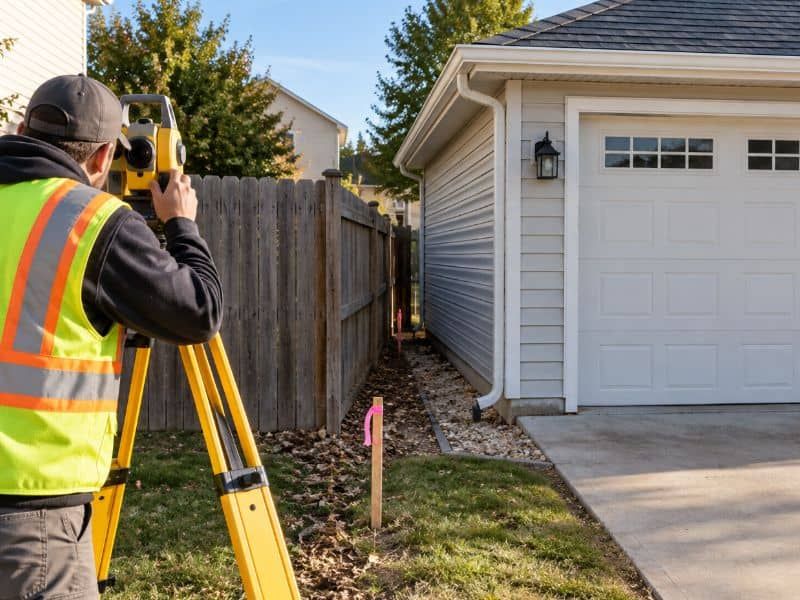
A fence, a hedge, or a row of shrubs might look like the boundary, but any of them can sit a little off the real line. Fences get built by earlier owners, and landscaping drifts over the years.
Guessing wrong means your cuts could land on the neighbor’s side without you realizing it.
Start with your property survey or plat, which often comes with closing papers. Look for metal pins or markers at the corners, and check county records if you cannot find your paperwork.
When the line is truly unclear, a licensed land surveyor can mark it.
Why bother? In Trice v.
Kidwell, whether the cuts crossed a property line became a question of facts and proof. Neighbors told different stories, and the court had to sort them out.
Photos help. Before you cut, take dated pictures showing the branches, the line markers, and the tree.
Staying inside the line is the whole point of the FAQ’s guidance, and it only works if you know where that line is. Even then, a confirmed boundary does not erase every possible risk.
Get permission before entering a neighbor’s land
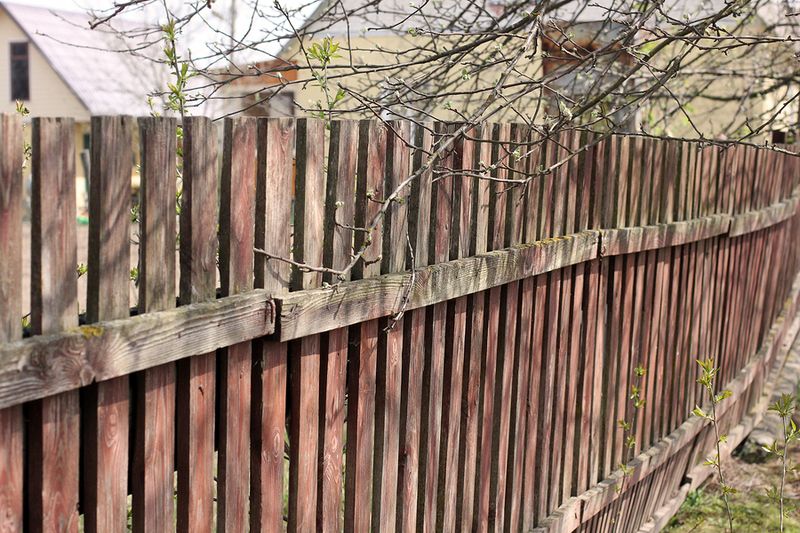
Keep your feet, your ladder, and your cutting on your own land. Walking into a neighbor’s yard to get a better angle, without asking, is where many trimming disagreements begin.
If you need access to do the job right, knock on the door and ask first.
A civil trespass claim, as described in Trice v. Kidwell, turns on whether the claimant possessed the land and whether the other person entered without right.
In that case, the court found the evidence did not establish an entry. That outcome rested on the proof in that dispute, not on a rule that anything goes.
Notice what this does not say. It does not say every tool or limb crossing a boundary counts as an entry, and it does not say such a crossing is automatically unlawful.
It simply shows how a court may look at the question, and that the answer depends on facts.
The practical lesson is simple. Ask for permission when you need to step onto the other property, keep cuts within your own, and consider a quick friendly note or text so the neighbor is not surprised.
A short conversation costs far less than a feud.
Avoid cuts that could seriously harm the tree
Trimming back to the line is one thing. Hacking a tree into a lopsided shape, or taking so much that it struggles to recover, is another.
The FAQ guidance is about trimming branches back, and it should not be read as permission to cut in any way, however harmful.
Consider what happened in Trice v. Kidwell.
The claims about tree damage were contested, and the allegations alone did not prove them. The court upheld the finding that the claim had not been proved.
That result does not set a damage threshold, and it does not mean harmful cuts never lead to trouble. It shows that evidence and circumstances matter.
A different tree, different cuts, and better proof could lead somewhere else.
So think about the tree as if it will be examined later. Remove only what hangs over your side, avoid cutting more than you need, and leave the tree in a healthy-looking state.
Photos before and after give you a record of what you actually did.
Make sound pruning cuts
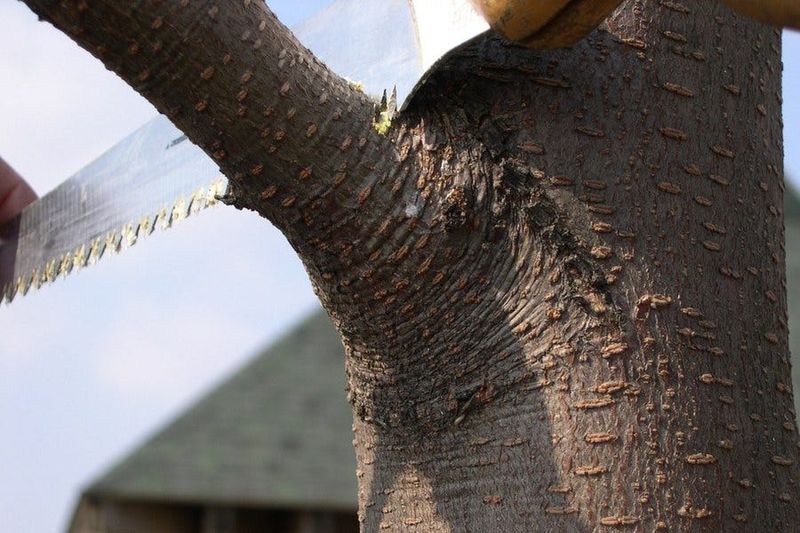
Good technique protects the tree and reduces avoidable harm. Indiana Department of Transportation pruning guidance offers a handy set of habits worth borrowing.
First, cut just outside the branch collar, the slightly swollen ring where a branch meets its parent limb. Second, avoid leaving stubs, which can heal poorly.
Third, do not top a tree by chopping off its upper growth.
The guidance also leans cautious: when you are unsure about a branch, it is better left uncut. That is a good rule for anyone working near a neighbor’s tree, where a questionable cut is hard to undo.
Treat all of this as sound practice, not a legal test. Following it does not guarantee a cut cannot harm a tree, and it does not shield you from a dispute.
It simply lowers the odds of doing needless damage.
A sharp, clean pruning tool also helps. Ragged cuts from a dull blade leave more injury than clean ones, so check your tools before you start.
Call a professional for utility lines or difficult work
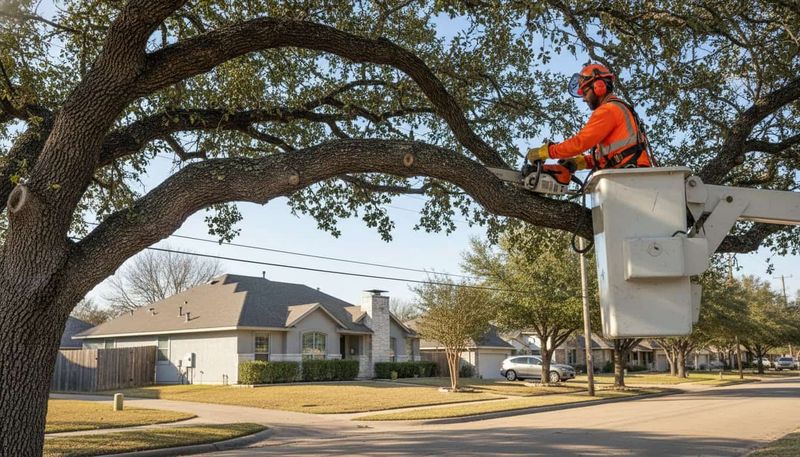
Some branches are not a do-it-yourself job, even when they clearly cross onto your property. A U.S.
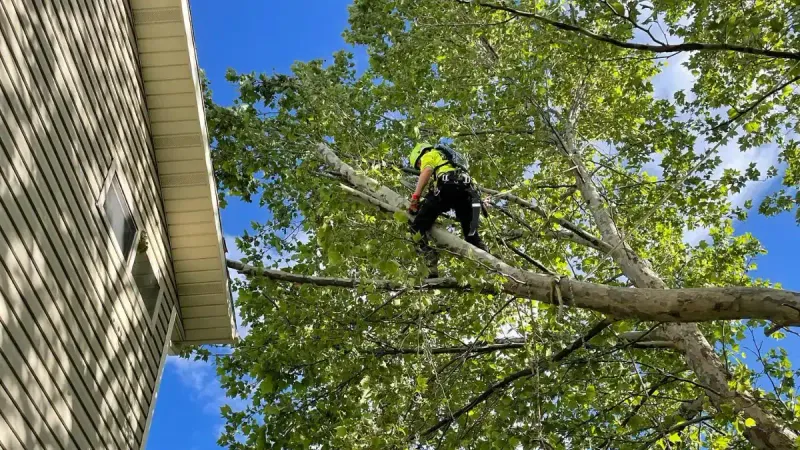
Forest Service tree owner’s manual advises against pruning branches within 10 feet of utility lines. It also recommends hiring an arborist when the work cannot be done with both feet on the ground or needs power equipment.
That means ladders, climbing, and chainsaws are a signal to stop and call someone. A branch hanging over your side does not make a risky job safe.
Falling limbs, electrical hazards, and slips from heights can cause serious injuries.
If a branch is tangled in or near power lines, contact the utility instead of reaching for a saw. You may come across rules for utility tree trimming, such as 170 IAC 4-9-7, or the state’s utility consumer counselor page on vegetation management.
Those apply to utilities, their agents, and contractors, not to ordinary homeowner pruning.
In other words, they are neither permission nor restriction for your weekend cutting. For anything high, heavy, or near wires, hiring a qualified arborist is the safer move.
A tree on the boundary is different
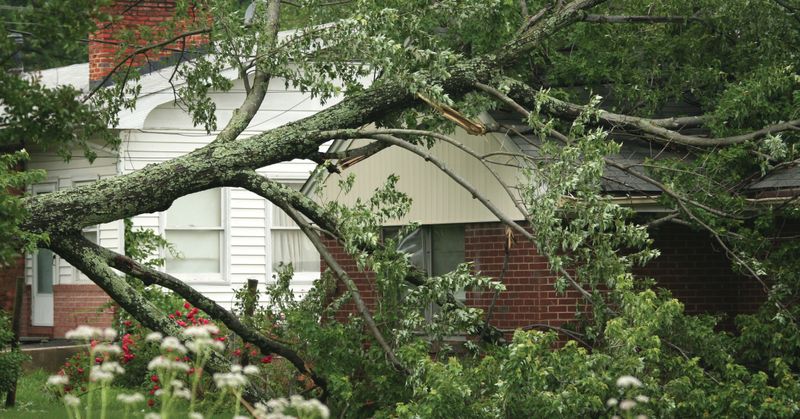
An overhanging branch and a boundary tree are not the same thing. With an overhanging branch, the trunk stands on one owner’s land and only the limbs reach across.
With a boundary tree, the trunk itself stands partly on both properties.
The Indiana FAQ describes trees like this as generally belonging to both owners. It says one co-owner generally may not remove a healthy tree without the other’s permission.
That is a very different situation from trimming a few limbs. Cutting down or heavily cutting a shared tree on your own could cause a real conflict, even if you meant well.
Do not apply this to every tree with branches over the line, though. Many trees stand wholly on one side, and the boundary-tree guidance is about the trunk location.
Check where the trunk meets the ground, compare it with your survey, and measure if you must.
If it looks like a shared tree, talk with your neighbor before doing anything major. Putting a plan in writing, even an email, can prevent misunderstandings later.
When the situation is murky, local legal advice is a reasonable next step.
A hazardous tree may need more than pruning
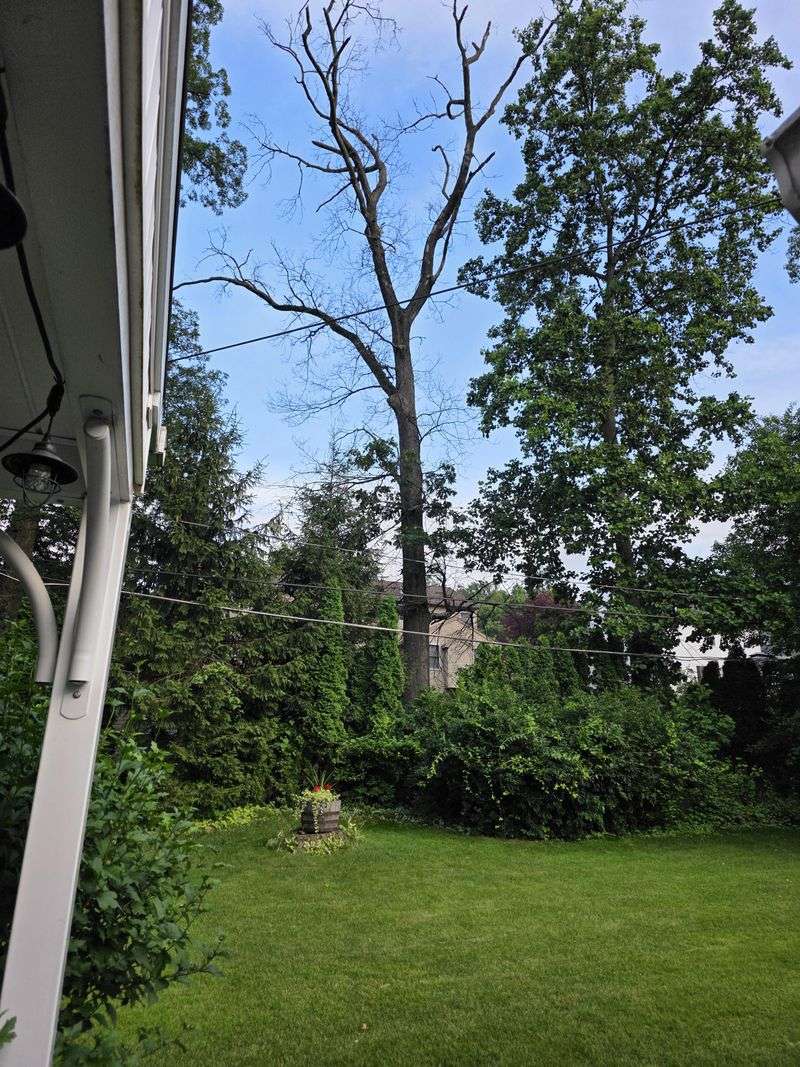
Sometimes the real worry is not a few branches in your yard. It is a tree that looks dead, split, leaning, or ready to drop limbs.
Cutting back the overhang may not fix that kind of problem, since the risk can come from the whole tree.
Indiana courts have addressed tree risks in a particular dispute. In Scheckel v.
NLI, a published 2011 opinion involving an urban or residential setting, the court recognized that a landowner has a duty of reasonable care to protect neighbors from unreasonable risks posed by trees on the land.
That does not mean a neighbor must pay for trimming. It also does not mean an owner is automatically liable whenever a limb falls.
It is one case with its own facts.
So what can you do? Take dated photos of the condition, such as dead branches, cracks, or fungus.
Tell the tree’s owner in a calm, clear message, ideally in writing, and keep a copy.
If nothing changes, check with your city or town about local rules and consider talking with a lawyer. An arborist can also assess the tree’s health.
A few cuts should not be assumed to solve the danger.
Keep the work limited and safe
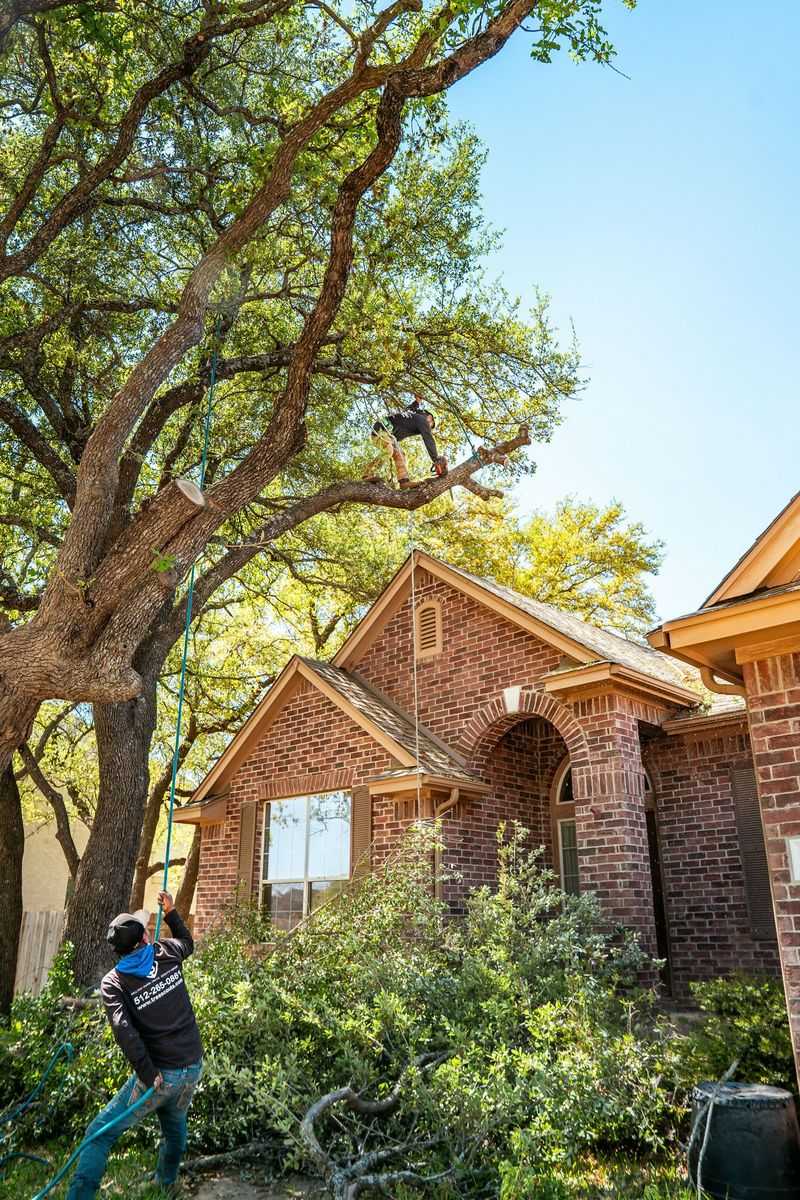
Confirm the line, keep your cuts on your side of it, ask before stepping onto the neighbor’s land, and skip any cut that could seriously hurt the tree. Leave hazardous or tricky work to professionals, as the Forest Service manual suggests.
A trunk standing on the boundary, or a tree that looks dangerous, calls for talking and getting advice rather than cutting. Guidance like the state police FAQ and cases like Scheckel are starting points, not guarantees.
The best fence between neighbors is often a friendly conversation held before the saw comes out.
Share this story