Get the latest garden guides in your inbox →
Gardening Latest
  • General Gardening
  • Lawn Care
  • Plant Care
  • Composting
  • Soil Health
  • Backyard
  • Garden Muse Magazine
  • General Gardening
  • Lawn Care
  • Plant Care
  • Composting
  • Soil Health
  • Backyard
  • Garden Muse Magazine
  • News
  • Gardening Calendar
  • Garden Structures
  • Vegetable Garden
  • Vertical Garden
  • Raised Beds
  • Hydroponics
  • General Equipment
  • Community Gardens
Garden Themes
  • Spiritual Garden
  • Hydroseeding
  • Seeding and Laying Sod
  • Artificial Grass
  • Lawn Care Equipment
  • Plants
  • Trees
  • Planting Tools
  • Composting Basics
  • Fertilizer
  • Alternative Growing Mediums
  • Front Yard
  • Backyard Activities
  • Landscaping
Gardening Latest

Explore by state

Which state is your garden in?

Currently viewing Indiana

All states

Northeast

  • Connecticut —
  • Delaware 36
  • Maine —
  • Maryland 22
  • Massachusetts 39
  • New Hampshire —
  • New Jersey 22
  • New York 32
  • Pennsylvania 32
  • Rhode Island —
  • Vermont —

Southeast

  • Alabama 22
  • Arkansas —
  • Florida 22
  • Georgia 23
  • Kentucky 36
  • Louisiana 21
  • Mississippi —
  • North Carolina 21
  • South Carolina 35
  • Tennessee 19
  • Virginia 21
  • West Virginia —

Midwest

  • Illinois 21
  • Indiana 24
  • Iowa 35
  • Kansas —
  • Michigan 23
  • Minnesota 21
  • Missouri 21
  • Nebraska —
  • North Dakota —
  • Ohio 23
  • South Dakota —
  • Wisconsin 37

Southwest

  • Arizona 22
  • Colorado —
  • Nevada —
  • New Mexico —
  • Oklahoma —
  • Texas 21
  • Utah —

West

  • Alaska —
  • California 22
  • Hawaii —
  • Idaho —
  • Montana —
  • Oregon —
  • Washington —
  • Wyoming —

No state matches that search.

Site menu

Gardening Latest
  • General Gardening
    • News
    • Gardening Calendar
    • Garden Structures
    • Vegetable Garden
    • Vertical Garden
    • Raised Beds
    • Hydroponics
    • General Equipment
    • Community Gardens
    Garden Themes
    • Spiritual Garden
  • Lawn Care
    • Hydroseeding
    • Seeding and Laying Sod
    • Artificial Grass
    • Lawn Care Equipment
  • Plant Care
    • Plants
    • Trees
    • Planting Tools
  • Composting
    • Composting Basics
  • Soil Health
    • Fertilizer
    • Alternative Growing Mediums
  • Backyard
    • Front Yard
    • Backyard Activities
    • Landscaping
  • Garden Muse Magazine

Explore

  • About GardeningLatest.com
  • Contact Us

Get the latest from the garden

New guides on lawn care, plants and backyard projects, sent when they go up.

Subscribe →

Follow

  • Facebook
  • X
  • Pinterest
  • YouTube
Indiana Gardening

Indiana Rhubarb Shoots Up Giant Flower Stalks Every Spring, and Here’s What That Means for Cutting Them Off

When a thick flower stalk rises from your rhubarb, you can cut it off near the base if you grow the plant…

DH

By Dale Hutchins

November 27, 2026 · 6 min read

Indiana Rhubarb Shoots Up Giant Flower Stalks Every Spring, and Here’s What That Means for Cutting Them Off
Indiana Rhubarb Shoots Up Giant Flower Stalks Every Spring, and Here's What That Means for Cutting Them Off

When a thick flower stalk rises from your rhubarb, you can cut it off near the base if you grow the plant for its leafstalks. The stalk is a normal part of the plant’s life, not a sign that it is dying.

Not every plant makes one, and the ones that do may be tall or small. Here is how to decide what to do with yours.

At a glance

Where
Indiana Gardening
Hardiness zone
6 −10 to 0°F
Read
6 minutes
Published
November 27, 2026

A flower stalk marks reproduction, not decline
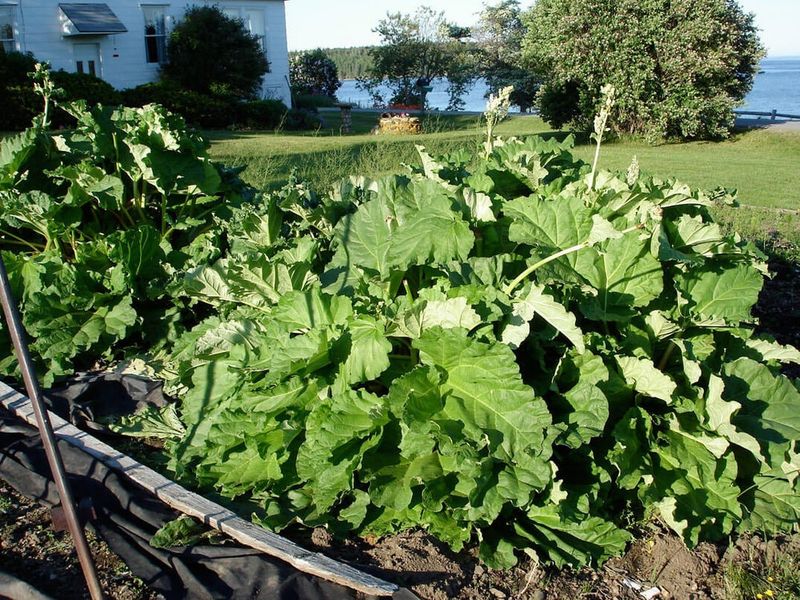
A flower stalk marks reproduction, not decline
© Bonnie Plants

Picture a stout, knobby shoot pushing up from the middle of your rhubarb clump, topped with a frothy cluster of creamy blossoms. That is the plant moving into its reproductive phase, the stage where it works toward making seed.

It looks dramatic, but it is part of ordinary rhubarb life.

One bloom does not mean the plant is dying. Purdue Extension guidance on rhubarb flowering treats the stalk as a normal event and says the edible leafstalks remain edible when the plant flowers.

Your rhubarb pie plans are safe.

Plenty of Indiana gardeners notice a flower stalk and assume something has gone wrong. In most cases, nothing has.

A single stalk tells you the plant is growing, and little else about its health.

You do have choices about what to do next. Some gardeners cut the stalk right away, and others let it bloom for a while.

The sections ahead cover why flowering happens, how to cut the stalk, and when repeated blooms are worth a closer look at how the plant is being cared for.

Why flowering varies from plant to plant
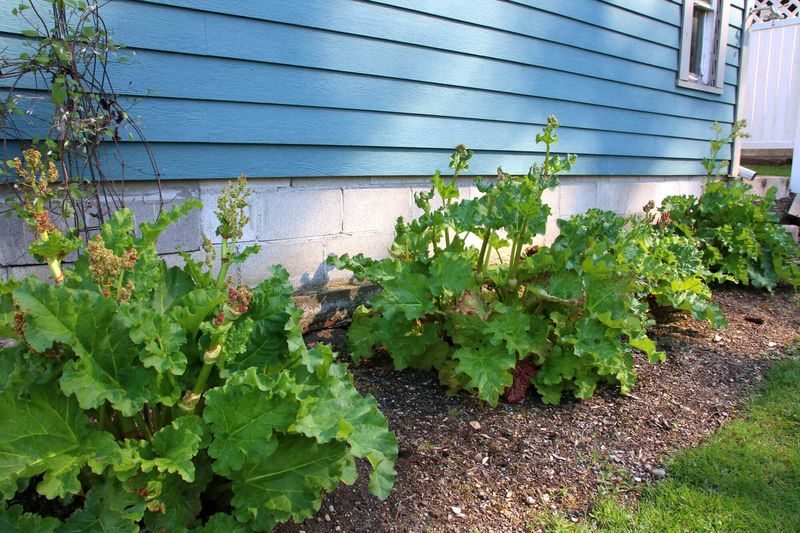
Why flowering varies from plant to plant
© The Daring Gourmet

Two rhubarb plants growing a few feet apart can behave very differently. One may send up a flower stalk while its neighbor stays leafy all season.

Rhubarb simply does not flower on a fixed schedule, so you cannot count on a stalk every spring.

Many of them, or new ones appearing year after year, is a reason to look at how the plant is doing.

Purdue points to several things that can influence flowering. Some cultivars are more prone to making seed stalks, and older, mature plants tend to flower more readily.

Weather matters too, since Purdue notes that heat above 90 degrees F, prolonged drought, and poor nutrition may also promote flowering.

These factors can overlap. A mature plant of a flower-prone variety, hit by a hot, dry stretch, may be more likely to bloom than a young plant in a mild year.

That is why one flower stalk cannot tell you the cause. It does not prove the soil is poor, the plant is too old, or the summer was too dry.

Treat it as a small clue, and look at the bigger picture of how the plant has done over several seasons.

Cut the stalk early when leafstalks are the priority
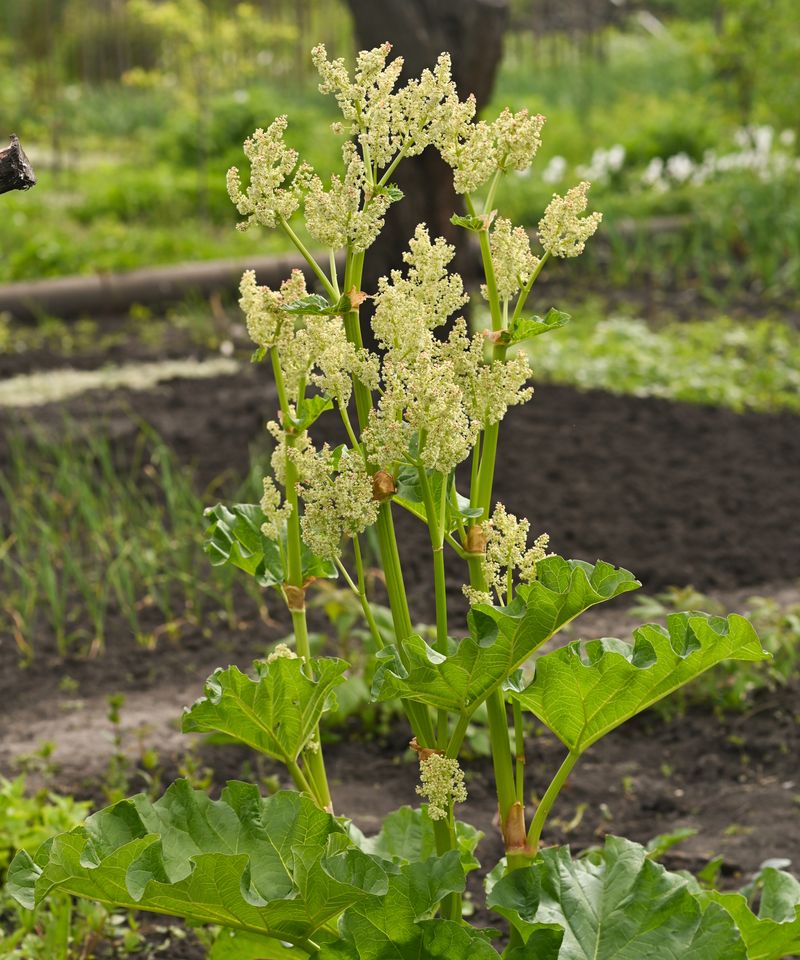
Cut the stalk early when leafstalks are the priority
© Gardening Know How

If you grow rhubarb for the edible leafstalks, cut the flower stalk as soon as you see it. Follow the stalk down to the base of the plant and cut it there with a clean knife or pruners.

Early cutting is easier too, since young stalks are softer.

The reason is about where the plant spends its energy. Flowering and seed production use resources that could go toward leaves and the reserves stored for next year.

Purdue recommends removing flower stalks when they first appear for exactly that purpose.

Cutting it off favors foliage, but it does not guarantee more or bigger leafstalks. Weather, plant age, and care all still play a part, so skip any promise of a bigger harvest.

Check the plant again over the next week or two. Rhubarb may send up another flower stalk, and if it does, you can simply cut that one too.

A quick look each time you water or harvest is plenty.

Keep the bloom if you value it
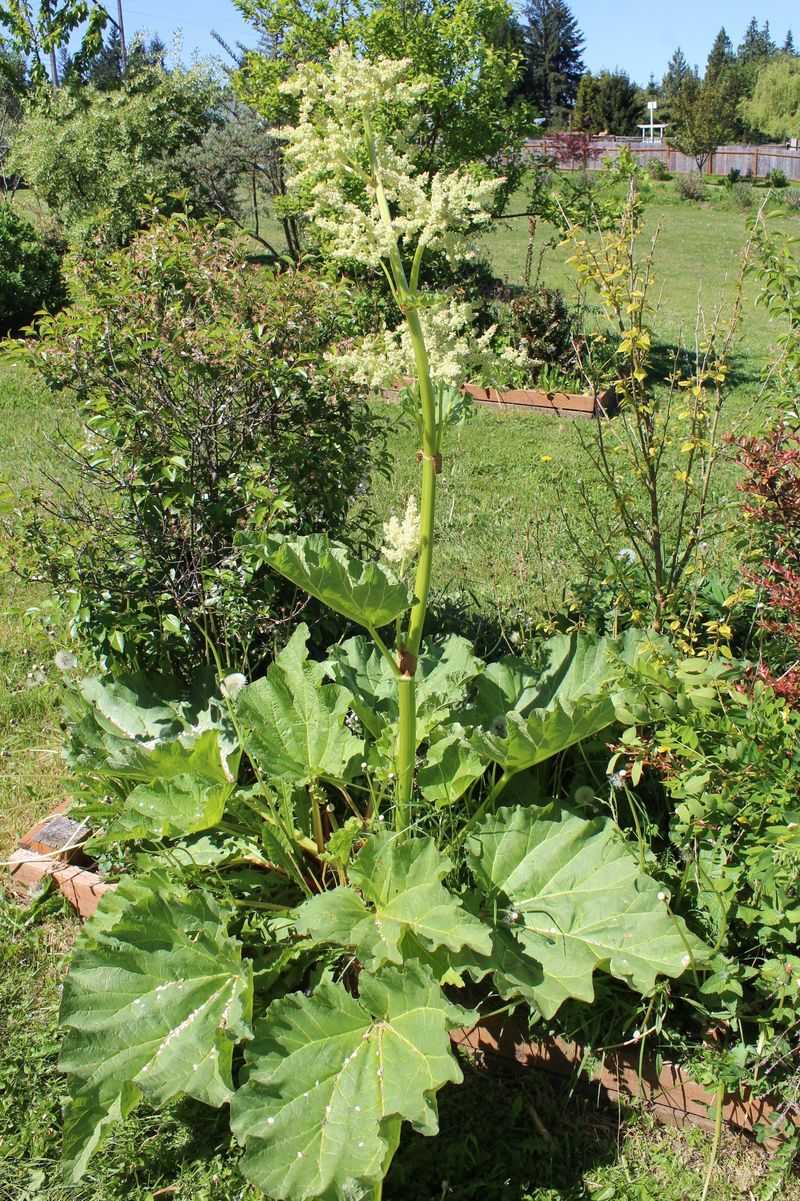
Keep the bloom if you value it
© Etsy

Plenty of gardeners enjoy the look of a blooming rhubarb. The tall, feathery plume adds height and an unusual texture to a vegetable bed, and pollinators may visit it.

Keeping it is a perfectly reasonable choice.

Purdue says you can let the flower bloom and then cut the stalk after flowering, before the seed matures. That timing lets you enjoy the display while still stopping the plant from finishing seed production.

The University of Alaska Fairbanks Extension gives similar advice for gardeners who want to keep the plant from setting seed.

Compare that with early removal. Cutting the stalk the moment it shows is the better fit when leafstalks are your main goal.

Waiting is better when the flowers matter to you as much as the harvest.

Neither path is an emergency. Pick the one that matches why you grow rhubarb, and check the stalk now and then so you remember to cut it once the blooms fade.

Repeated blooms can prompt a care check
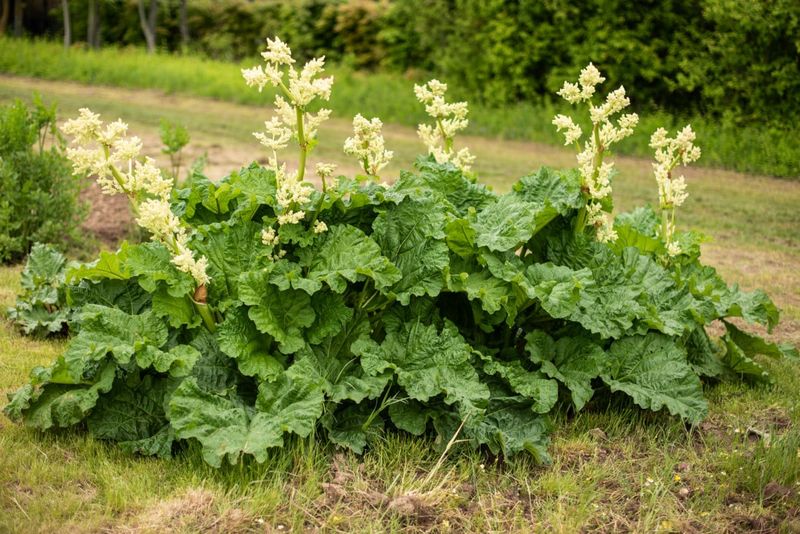
Repeated blooms can prompt a care check
© Rural Sprout

A lone flower stalk is easy to shrug off. Many of them, or new ones appearing year after year, is a reason to look at how the plant is doing.

Think of it as a cue to check, not as proof of a specific problem.

Start with the basics Purdue lists: the plant’s age, its variety, and any stress. Ask whether it has had steady water, decent soil, and room to grow.

South Dakota State University Extension says numerous flower stalks may signal stress, and suggests considering division when appropriate.

Division is one tool for renewing a tired clump. Wisconsin Extension recommends dividing clumps about every four or five years to maintain vigor.

Flowering by itself does not mean the plant needs dividing right now. If the leafstalks are still thick and plentiful, you may only need to water during dry spells and feed the bed.

If stalks are getting thin and the clump is crowded, division becomes a more sensible option.

Flowering does not make leafstalks poisonous
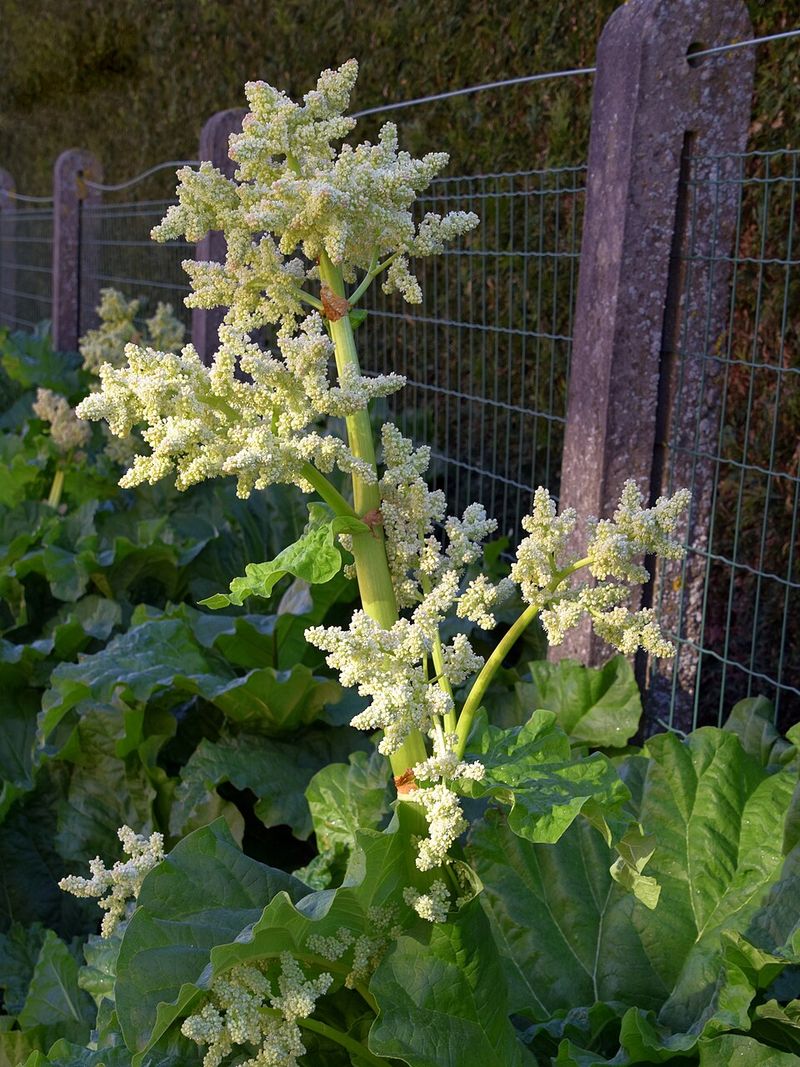
Flowering does not make leafstalks poisonous
© Laidback Gardener

Some gardeners worry that a bloom turns the whole plant toxic. It does not.

Purdue says the leafstalks remain edible when the plant flowers.

What matters is which part of the plant you eat. The leafstalks are the long, colorful stems you cook with.

The leaf blades are a different matter, because Purdue notes they contain much more oxalic acid than the stalks do. Oregon State Extension likewise says the leaves are toxic and the stems are safe to eat.

The flower stalk is its own part too, and South Dakota State University Extension says it is not edible. Cut it and compost it rather than cooking it.

A simple kitchen habit helps: trim off the leaf blades in the garden, set the flower stalk aside, and bring in only the leafstalks.

Protect the patch with a measured harvest
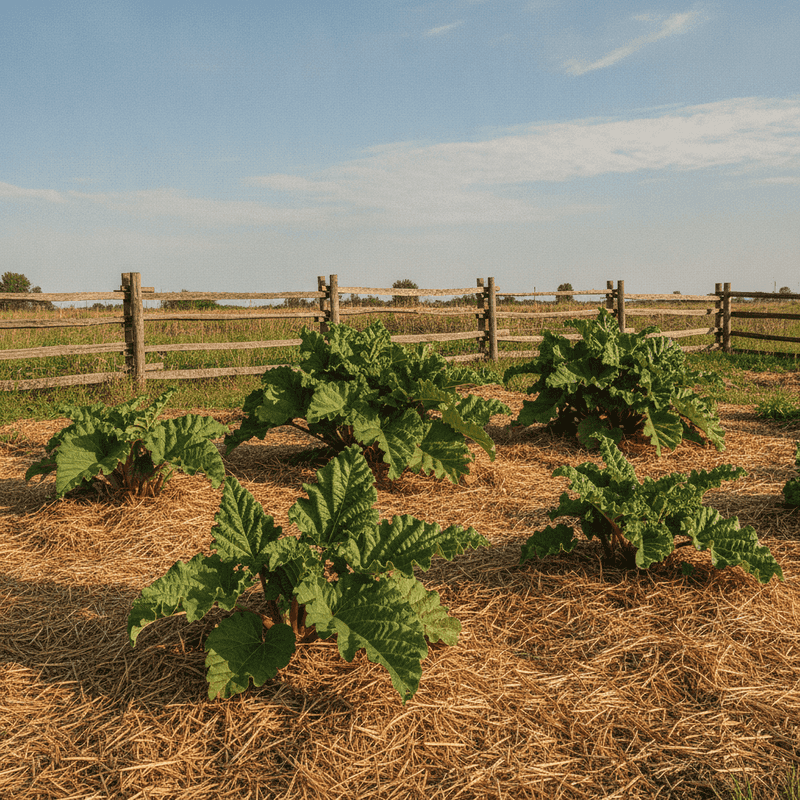
Protect the patch with a measured harvest
© Wild Hearth Life

Plant vigor depends a lot on how much you take. A patch that is harvested conservatively keeps more leaf area to feed the roots for next year.

That holds whether or not the plant has flowered, and flowering itself does not change the harvest schedule.

Guidance for young plants varies by state. Iowa State University Extension advises against harvesting during the first two years after planting.

South Dakota State University Extension advises no harvest in year one and only a light harvest in year two. Treat these as extension advice, not one universal rule.

For established plants, Iowa State suggests harvesting stalks that are 10 to 15 inches long and taking no more than half the mature stalks at a time. Pull and twist the stalks from the base rather than cutting them.

Iowa State also calls the belief that summer stalks turn poisonous erroneous. Summer stalks may be tougher, and the real reason to ease up is to protect the plant for the seasons ahead.

A rhubarb patch rewards patience, and a few stalks left standing are an investment.

Share this story
DH

Written by

Dale Hutchins

More from Dale Hutchins →

About Gardening Latest

Gardening Latest provides in-depth guides to maintaining and enhancing your garden and backyard. Learn how to make the most of the space you have and create a beautiful garden.

More about us →

Latest stories

  • North Carolina GardeningNorth Carolina Yuccas Pour Everything Into That Giant Flower Stalk, So Here’s When Cutting It Off Makes Sense

    North Carolina Yuccas Pour Everything Into That Giant Flower Stalk, So Here’s When Cutting It Off Makes Sense

    3 min ago
  • Michigan GardeningWhy Pavement Ants Pile Up Fresh Hills in Michigan Lawns Right After It Rains

    Why Pavement Ants Pile Up Fresh Hills in Michigan Lawns Right After It Rains

    8 min ago
  • Massachusetts GardeningRaking Leaves in Massachusetts? Here’s What We Know About the Northern Short-Tailed Shrew’s Venom

    Raking Leaves in Massachusetts? Here’s What We Know About the Northern Short-Tailed Shrew’s Venom

    13 min ago
  • California GardeningPull One Seedling and More Pop Up: This Invasive Tree Is Spreading Through California Neighborhoods

    Pull One Seedling and More Pop Up: This Invasive Tree Is Spreading Through California Neighborhoods

    18 min ago
  • New York GardeningThe Glossy Nuts New York Children Gather Every Fall Are Actually Poisonous

    The Glossy Nuts New York Children Gather Every Fall Are Actually Poisonous

    23 min ago

Gardening by state

Stories for your state, and the hardiness zone most of it gardens in.

Keep exploring

Read next

All Indiana Gardening →
Indiana GardeningYour Neighbor’s Tree Ended Up in Your Indiana Yard After the Storm, and Here’s Who Pays the Bill
Indiana Gardening

Your Neighbor’s Tree Ended Up in Your Indiana Yard After the Storm, and Here’s Who Pays the Bill

3 hr ago
Indiana GardeningCan You Trim a Neighbor’s Vine in Indiana? What the Law Does and Doesn’t Say
Indiana Gardening

Can You Trim a Neighbor’s Vine in Indiana? What the Law Does and Doesn’t Say

6 hr ago
Indiana GardeningSeeing a Red Fox in Your Indiana Yard This Winter? It’s Hunting, Courting, or Hunting for a Den
Indiana Gardening

Seeing a Red Fox in Your Indiana Yard This Winter? It’s Hunting, Courting, or Hunting for a Den

9 hr ago

More from Indiana Gardening

  • Coyotes Howling Outside Your Indiana Home After Dark Usually Have a Seasonal Reason, and Here’s What It Is

    Nov 25
  • Hoosiers Adding Celery To Their Plate Every Day Are Learning What It Does For Their Bodies

    Nov 24
Back to top

Leave a response Cancel

Your email address stays private. Required fields are marked with an asterisk.

Gardening Latest

In-depth guides to maintaining and enhancing your garden and backyard: how to make the most of the space you have, and how to make it beautiful.

  • Facebook
  • X
  • Pinterest
  • YouTube

We may earn a portion of sales from products or services that are purchased through our site as part of our affiliate partnerships with retailers.

Explore

  • About GardeningLatest.com
  • Contact Us
  • Terms and Conditions
  • Privacy
  • Editorial Note:
  • FTC Disclosure

Newsletter

New garden guides and seasonal tips, straight to your inbox.

We’ll email you a link to confirm. Unsubscribe any time.

Almost there! Check your inbox and tap the link to confirm.

© 2026 Gardening Latest. All rights reserved.

Back to top