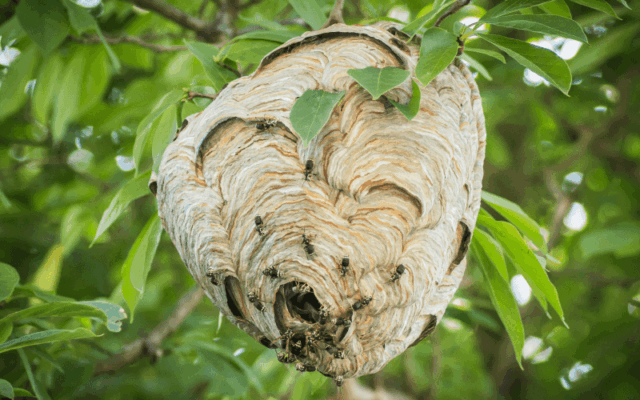
Those big gray paper balls hanging in bare Indiana trees are most often old bald-faced hornet nests. Leaves hid them all summer, and now that the branches are empty, they are easy to see.
The hornets that built them have normally died out by winter, so the nest is usually just an empty shell. A few details still matter, because some lookalikes exist and a nest is not always safe to poke at.
Why bare trees reveal paper nests
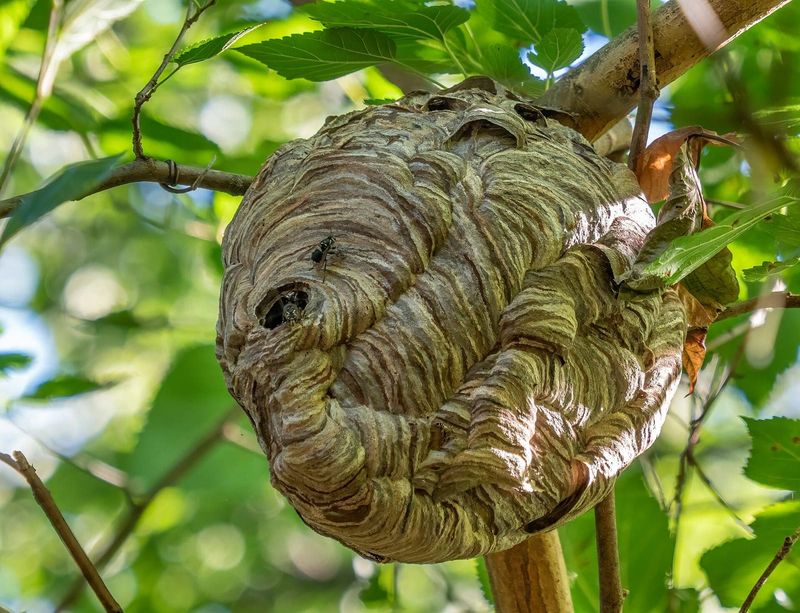
Walk past the same maple or oak in July and you may never notice what is hanging in it. Thick leaves hide a lot.
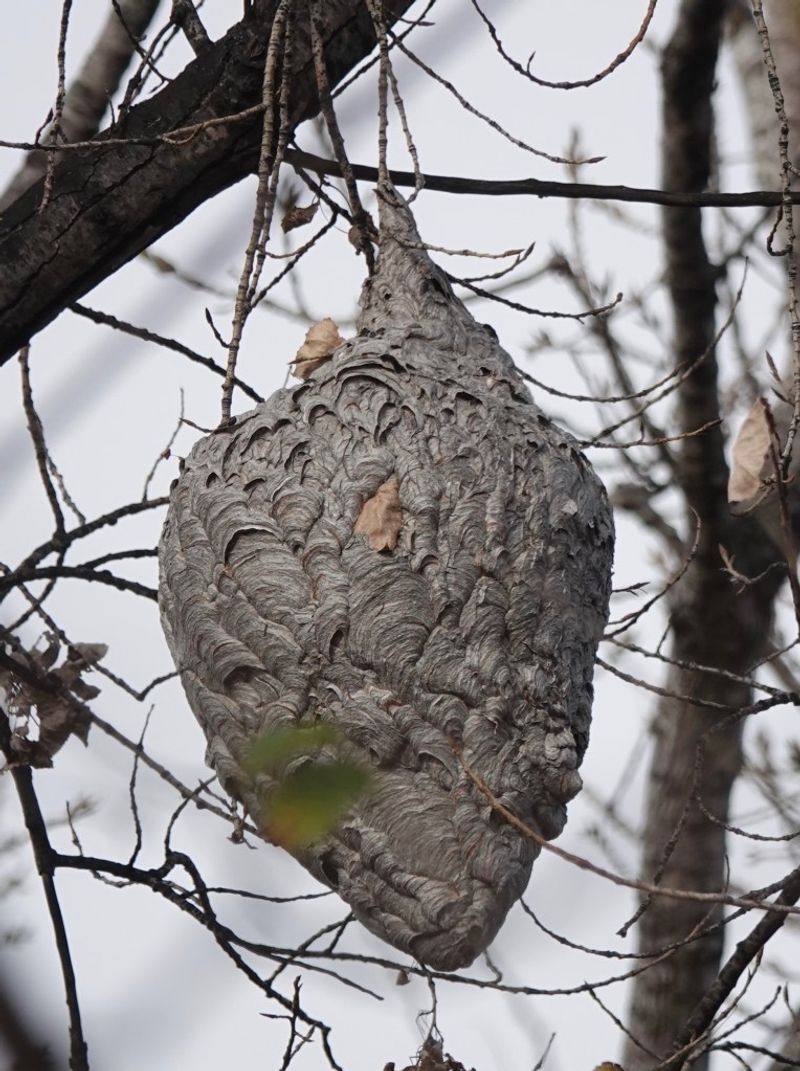
Once the foliage drops, a big gray bulb dangling from a branch suddenly stands out like an ornament nobody remembers hanging.
Missouri’s Department of Conservation notes that old, gray nests become visible in trees after leaf fall. That is why so many people report them in late fall and winter.
The nests were there all along; you just could not see them.
Bald-faced hornets build these nests from chewed wood fibers mixed with saliva. The result is a gray, papery envelope that wraps around layers of comb, where the young develop.
According to Iowa State Extension, nests are commonly suspended from tree branches, though they can also turn up on shrubs or buildings.
A large gray nest swinging from a branch fits the bald-faced hornet pattern well. Still, being easy to spot in a bare tree says nothing about who built it.
Visibility only tells you the leaves are gone.
A gray nest does not identify its maker
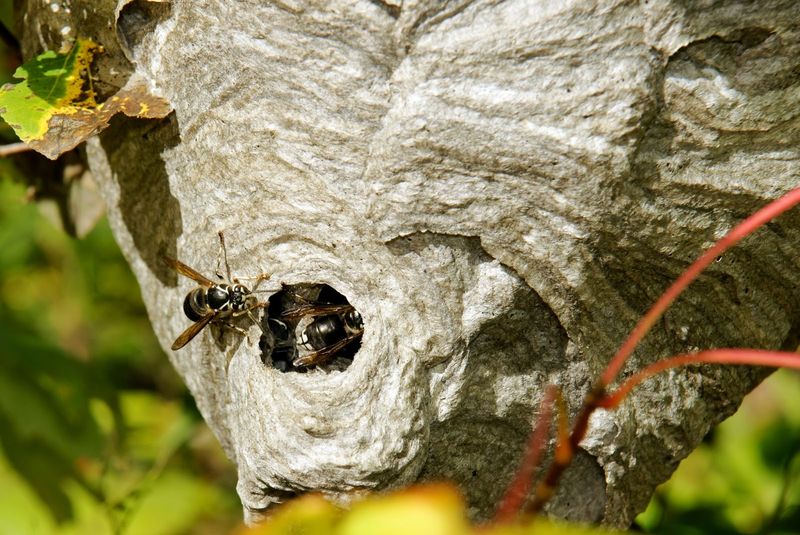
A large, enclosed, gray nest with one opening near the bottom is consistent with a bald-faced hornet nest. That description fits a lot of what you see in winter trees.
It does not prove anything, though.
Other aerial-nesting yellowjackets can build similar enclosed paper nests. Colorado State University Extension documents this lookalike problem, which means a nest photo by itself may not settle the question.
There is also a naming twist. Despite the name, the bald-faced hornet is not a true hornet.
As Iowa State Extension explains, it is a yellowjacket that picked up a common name that stuck. So the nest’s builder and its nickname do not quite match up.
Color is a weak clue. Weathered paper nests from several wasps fade to a similar gray, and size alone can mislead when a nest has been battered by wind or rain.
If you want a confident answer, you need more than a glance at a gray ball.
For most people, the practical takeaway is simple. Call it a probable bald-faced hornet nest if it looks the part, but keep your guess loose.
That attitude also keeps you from assuming anything about whether it is safe to disturb.
The colony normally dies out by winter
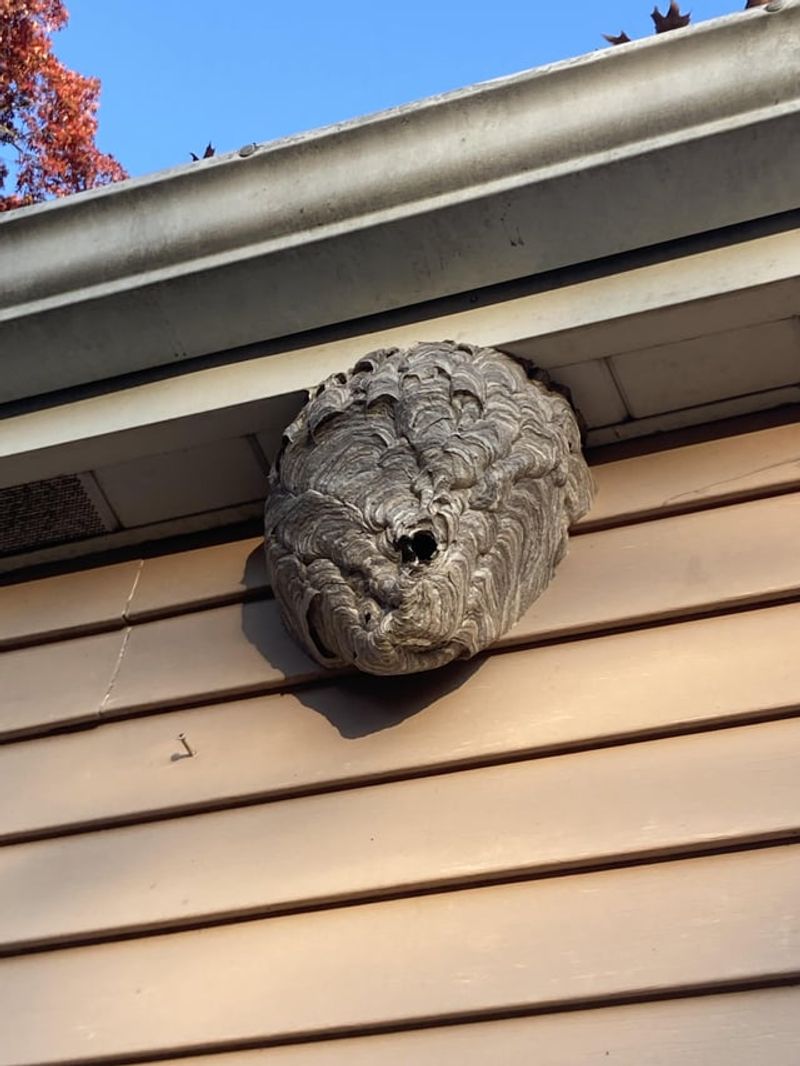
By the time winter settles in, a bald-faced hornet colony normally no longer lives in its nest. The workers, the males, and the founding queen die as the season ends, according to University of Maryland Extension.
What you see in a bare tree is typically an empty shell.
The decline follows the cooling weather, and it does not happen on a set schedule. A warm autumn can stretch activity out, while a cold snap can speed things up.
Iowa State’s guidance on collecting old hornet nests reflects the same idea of waiting until cold weather has done its work.
That is why no single date on the calendar works as a safety signal. One frost does not make every nest safe either.
Some colonies fade out gradually, and a nest in a sheltered spot may stay busy a bit longer than the one down the road.
So the usual pattern is reassuring, but it is a pattern and not a promise. If you still see insects coming and going, treat the nest as occupied and leave it alone.
Also keep in mind that an empty hornet nest is a separate matter from every insect that might be associated with the paper. The colony being gone is the normal expectation.
It is not a guarantee about all creatures near the nest.
New queens overwinter somewhere else
The story does not end with the colony. Late in the season, the nest produces new queens, and those newly mated queens are the survivors.
They slip away to sheltered places elsewhere, such as under bark, in leaf litter, or in other protected nooks, and wait out the cold.
In spring, each queen starts a new nest on her own. University of Maryland Extension describes this cycle, and Iowa State Extension notes that the old nest is not reused by a new colony.
The queens do not spend winter inside the nest you see in the tree.
Here is a nuance, though. An old nest can still shelter other creatures.
Colorado State University Extension notes that other insects, including European paper wasps, may use old nests as overwintering sites.
That is a different thing from bald-faced hornets coming back. It simply means paper left behind can be handy real estate for other insects.
It is one more reason not to knock down or tear into a nest just to see what is inside.
Let location and activity guide your next step
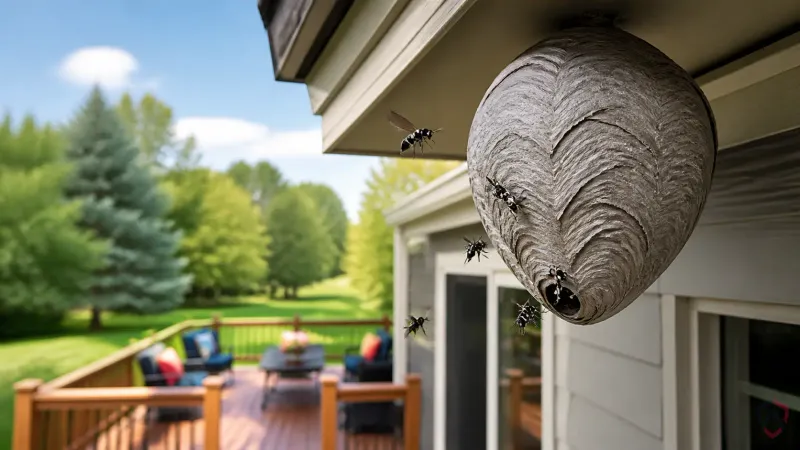
Where the nest hangs matters more than how big it looks. A nest high in a tree and away from regular human activity is generally fine to leave alone.
Out of sight and out of the way is usually the easiest solution.
Location changes the picture when people are close by. Iowa State Extension says nests in high-traffic places, like near a doorway or on a low branch where people work, may warrant control.
Think of a nest by a swing set or beside a path you mow around.
Never walk up to a nest or poke it to see whether anyone is home. Instead, watch from a safe distance on a sunny day.
NC State Extension says workers flying in and out of the opening at the bottom point to an active nest. If you see that, or if you are unsure what you are looking at, do not disturb it.
Do not knock down, burn, or spray a nest just because it is visible. Disturbing an active nest can set off defensive stings.
For nests that are large, high, hard to reach, or in a risky spot, consider a pest-control professional. The Indiana DNR advises weighing the nest’s location and calling a professional for very large or difficult nests.
This matters even more if anyone nearby has a sting allergy. If pesticide use is considered, follow the product label exactly.
Indiana residents can seek help with identification
If you cannot tell what built the nest you found, local help is available. The Indiana DNR Division of Entomology and Plant Pathology publishes weekly reviews with guidance on nests and who to contact.
It is a good starting point for Indiana-specific advice.
Purdue Extension is another place to look. Its Indiana 4-H insect flash cards describe the gray paper nests and note that these insects can sting if disturbed.
Neither resource can name every nest from a description or photo, but both can point you to the right people.
Photos taken from a distance, with notes on the nest’s height and location, will make any conversation easier. A gray ball in a bare tree is a good mystery to solve, as long as you solve it from the ground.
Share this story