Get the latest garden guides in your inbox →
Gardening Latest
  • General Gardening
  • Lawn Care
  • Plant Care
  • Composting
  • Soil Health
  • Backyard
  • Garden Muse Magazine
  • General Gardening
  • Lawn Care
  • Plant Care
  • Composting
  • Soil Health
  • Backyard
  • Garden Muse Magazine
  • News
  • Gardening Calendar
  • Garden Structures
  • Vegetable Garden
  • Vertical Garden
  • Raised Beds
  • Hydroponics
  • General Equipment
  • Community Gardens
Garden Themes
  • Spiritual Garden
  • Hydroseeding
  • Seeding and Laying Sod
  • Artificial Grass
  • Lawn Care Equipment
  • Plants
  • Trees
  • Planting Tools
  • Composting Basics
  • Fertilizer
  • Alternative Growing Mediums
  • Front Yard
  • Backyard Activities
  • Landscaping
Gardening Latest

Explore by state

Which state is your garden in?

Currently viewing Illinois

All states

Northeast

  • Connecticut —
  • Delaware 19
  • Maine —
  • Maryland 5
  • Massachusetts 21
  • New Hampshire —
  • New Jersey 5
  • New York 14
  • Pennsylvania 14
  • Rhode Island —
  • Vermont —

Southeast

  • Alabama 4
  • Arkansas —
  • Florida 5
  • Georgia 5
  • Kentucky 19
  • Louisiana 4
  • Mississippi —
  • North Carolina 3
  • South Carolina 18
  • Tennessee 1
  • Virginia 4
  • West Virginia —

Midwest

  • Illinois 4
  • Indiana 6
  • Iowa 18
  • Kansas —
  • Michigan 5
  • Minnesota 4
  • Missouri 3
  • Nebraska —
  • North Dakota —
  • Ohio 5
  • South Dakota —
  • Wisconsin 19

Southwest

  • Arizona 4
  • Colorado —
  • Nevada —
  • New Mexico —
  • Oklahoma —
  • Texas 3
  • Utah —

West

  • Alaska —
  • California 4
  • Hawaii —
  • Idaho —
  • Montana —
  • Oregon —
  • Washington —
  • Wyoming —

No state matches that search.

Site menu

Gardening Latest
  • General Gardening
    • News
    • Gardening Calendar
    • Garden Structures
    • Vegetable Garden
    • Vertical Garden
    • Raised Beds
    • Hydroponics
    • General Equipment
    • Community Gardens
    Garden Themes
    • Spiritual Garden
  • Lawn Care
    • Hydroseeding
    • Seeding and Laying Sod
    • Artificial Grass
    • Lawn Care Equipment
  • Plant Care
    • Plants
    • Trees
    • Planting Tools
  • Composting
    • Composting Basics
  • Soil Health
    • Fertilizer
    • Alternative Growing Mediums
  • Backyard
    • Front Yard
    • Backyard Activities
    • Landscaping
  • Garden Muse Magazine

Explore

  • About GardeningLatest.com
  • Contact Us

Get the latest from the garden

New guides on lawn care, plants and backyard projects, sent when they go up.

Subscribe →

Follow

  • Facebook
  • X
  • Pinterest
  • YouTube
Illinois Gardening

Those Dark Purple Berries Hanging on Pink Stems Along Illinois Fence Lines Are Poison for Your Dog

Those dark purple berries dangling from pink stems along an Illinois fence row can harm your dog if eaten.

WN

By Walter Novak

November 22, 2026 · 6 min read

Those Dark Purple Berries Hanging on Pink Stems Along Illinois Fence Lines Are Poison for Your Dog

Those dark purple berries dangling from pink stems along an Illinois fence row can harm your dog if eaten. The plant is easy to spot on a walk, and the berries look a lot like something a curious dog might sample.

Most dogs that nibble a berry or two may have no trouble, but nobody can promise that for every dog. Knowing what to look for and what to do next can keep a normal walk from turning into a scramble.

At a glance

Where
Illinois Gardening
Hardiness zone
6 −10 to 0°F
Read
6 minutes
Published
November 22, 2026

The fence-row clues point to pokeweed, not certainty
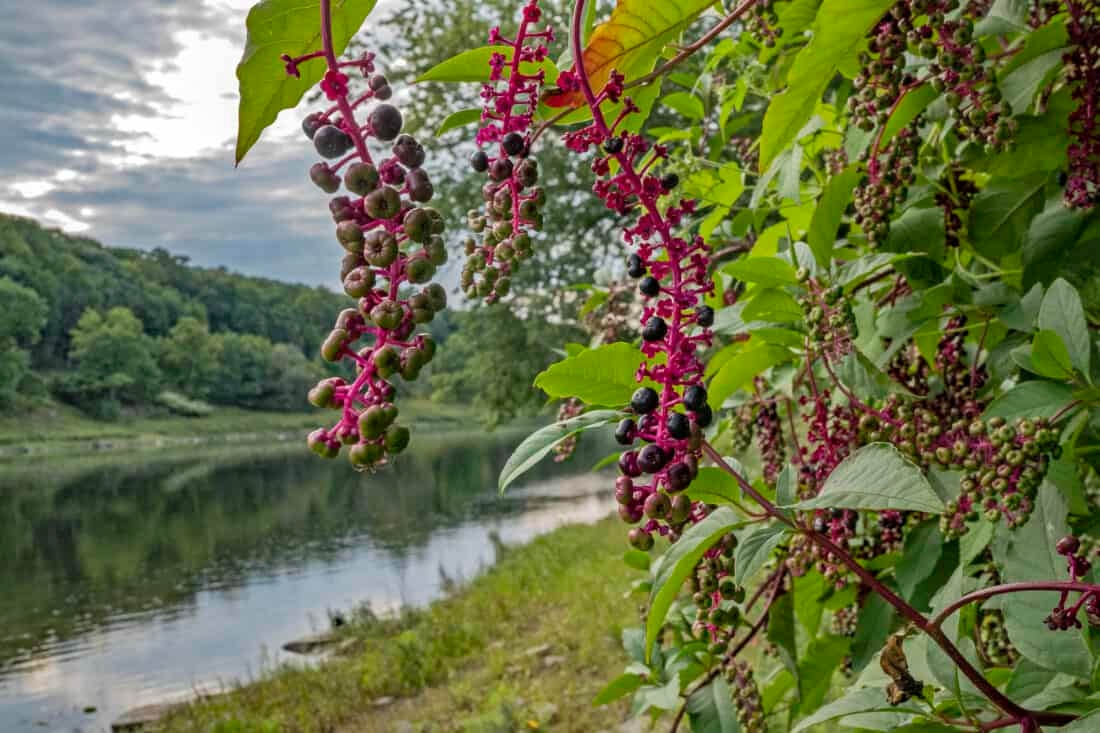
The fence-row clues point to pokeweed, not certainty
© Pith & Vigor

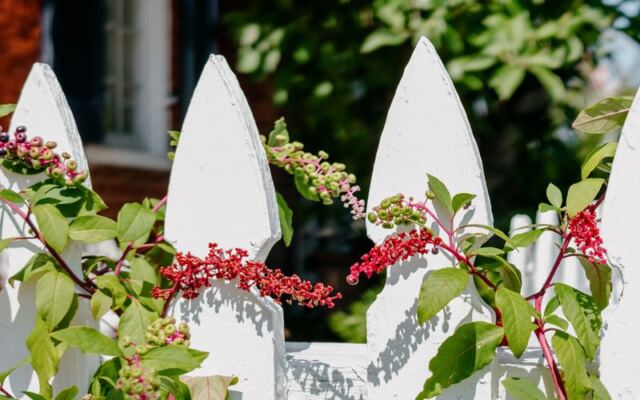
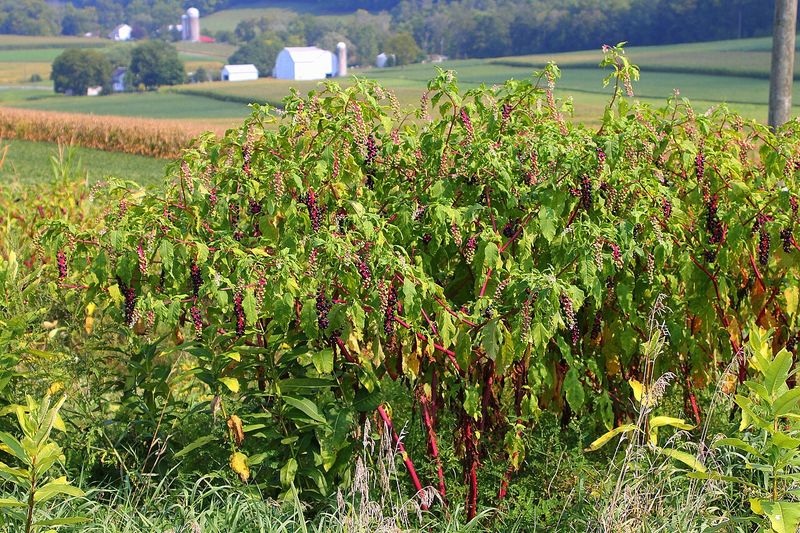
Picture a tall, bushy plant leaning over a fence row in late summer. The stems are a striking reddish-purple, the leaves are big and smooth, and long clusters of glossy dark purple berries droop downward.

That combination is consistent with American pokeweed, a native plant that turns up often along Illinois fences, field edges, and disturbed ground.

University of Illinois Extension describes pokeweed with berries growing on red stalks. A separate Illinois Extension piece on pokeweed and the natural world notes its fencerow habitat.

Those details line up well with the plant many walkers describe.

Still, no single clue settles the question. Plenty of plants have large leaves, and a reddish stem alone proves nothing.

The strongest hint comes from seeing several features together: the height, the broad leaves, the colored stems, and the elongated, hanging berry clusters.

Think of these clues as a way to spot a possible hazard, not as a final answer. A description or a photo cannot guarantee what a plant is.

If you are unsure, treat the plant as one your dog should not eat, and ask a local expert such as an Extension office to help confirm it.

Birds can eat the berries without making them safe for dogs
Birds can eat the berries without making them safe for dogs
© Wikipedia

Watch a pokeweed patch in fall and you will likely see birds working over the berries. Illinois Extension reports that songbirds use pokeweed berries as food.

It is easy to look at that scene and assume the fruit must be harmless.

Contact your veterinarian or an animal poison-control service for advice, rather than waiting to see whether symptoms appear.

That assumption does not carry over to dogs. A bird eating a berry tells you about the bird, not about a dog’s body.

Animals handle plant chemicals differently, and one species feeding on a plant says nothing about another.

Veterinary poison-control guidance treats pokeweed as a pet hazard. Pet Poison Helpline lists pokeweed as toxic to dogs and says all parts of the plant pose a risk if eaten, not just the berries.

So the clues from the fence row matter in a practical way. If you see tall reddish-purple stems and hanging dark berries, treat that plant as off limits for your dog’s mouth.

Shorten the leash, steer your dog away, and keep walking.

Signs can range from stomach upset to an emergency

Signs can range from stomach upset to an emergency
© The Spruce Pets

If a dog does eat pokeweed, what happens next varies. An American Kennel Club article quoting a veterinary toxicologist lists possible signs such as drooling, coughing, vomiting, diarrhea, appetite loss, and tremors.

More serious possibilities include lethargy, collapse, and shortness of breath.

Signs may show up within hours, but no one can say whether or when a particular dog will have any. Some dogs show nothing at all.

That range matters. The same AKC article says most reported cases involved no symptoms or mild stomach effects, while large ingestions can be more serious.

Pet Poison Helpline likewise says ripe berries may cause only mild signs or none, though ingestion can bring mouth irritation and stomach upset, and very large amounts may affect blood pressure or heart rate.

What about the amount? Pet Poison Helpline says the amount eaten, the pet’s size, and other individual factors all play a part.

Its guidance gives no dog-specific dose threshold, so there is no berry count you can treat as safe. A small dog, an older dog, or a dog that ate leaves or stems along with berries may not match anyone else’s story.

Call for guidance before trying any home treatment

Call for guidance before trying any home treatment
© Pet Care Tips, Grooming & Health Guides

If your dog may have eaten pokeweed, make a call first. Contact your veterinarian or an animal poison-control service for advice, rather than waiting to see whether symptoms appear.

Pet Poison Helpline’s contact page lists (855) 764-7661.

Do not try to make your dog vomit unless a veterinarian tells you to. Veterinary guidance in the AKC article says not to induce vomiting at home without instructions.

Home remedies can add problems of their own.

Go to urgent veterinary care right away if you see serious signs. Weakness, collapse, or trouble breathing all fit that category.

While you are on the phone, a few details help a lot. If it is safe, take a photo of the plant, since that helps with identification.

Then estimate what your dog ate, such as berries, leaves, or stems, how much, and when it happened.

Those details help the professional sort out how worried to be and what to do next. Pet Poison Helpline’s pokeweed page also directs owners toward professional advice after a suspected ingestion.

Having the number saved in your phone makes the call quicker.

Keep dogs from sampling plants along the route
Keep dogs from sampling plants along the route
© Reddit

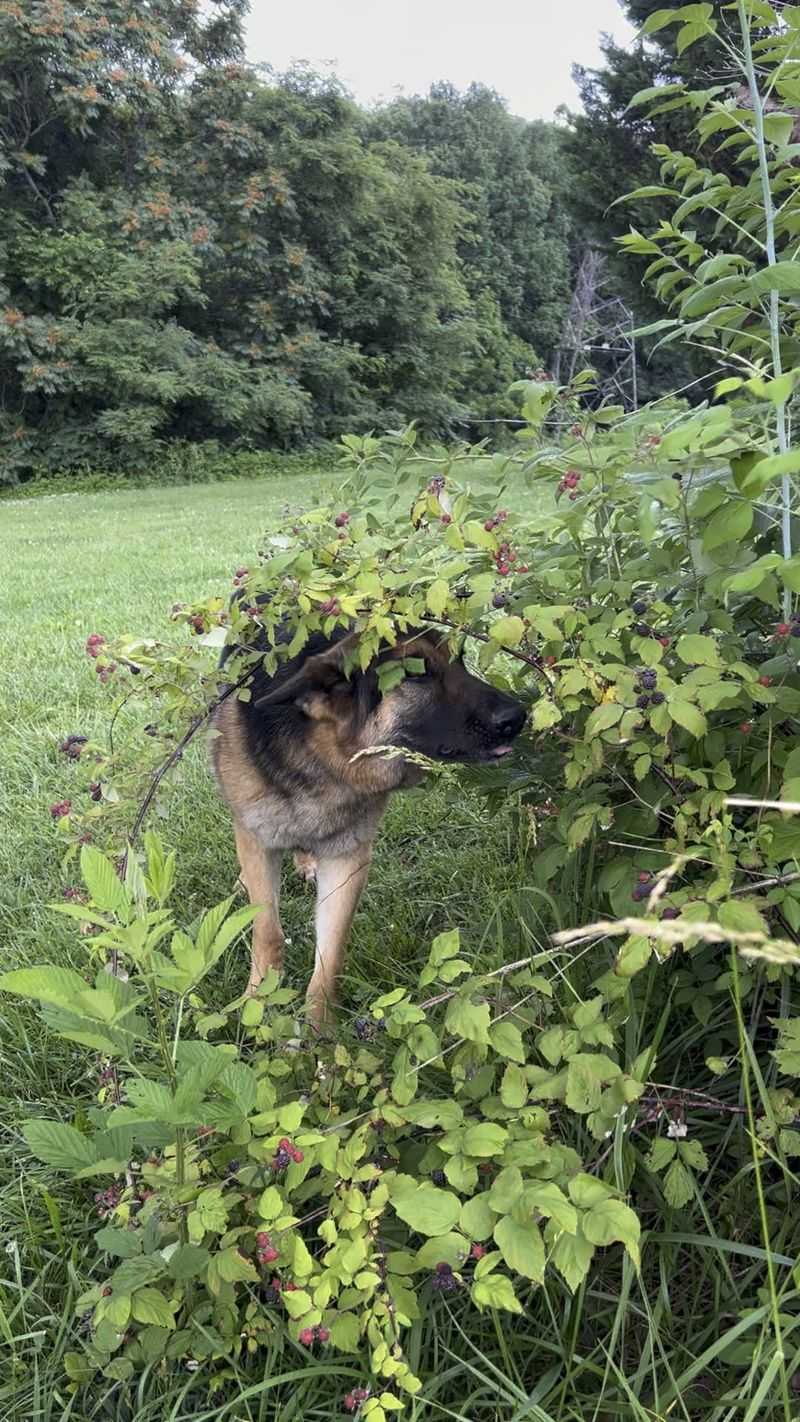
Prevention comes down to managing what your dog can reach. On walks past fence rows and field edges, keep your dog from eating unfamiliar berries, leaves, or other plant material.

That habit protects against pokeweed and plenty of other surprises.

A short leash helps near brush. A steady cue such as “leave it” can also pay off, especially for dogs that grab things at nose level.

If you spot tall reddish-purple stems with drooping dark clusters, move your dog to the other side of you and pass quickly.

Berries tend to catch a dog’s eye in late summer and fall, when they hang in heavy clusters. Fallen berries and plant bits on the ground can be just as tempting as the ones on the stem.

Pet Poison Helpline’s guidance says all parts of pokeweed are toxic to pets, so avoiding the whole plant is the simplest rule.

You may notice birds feeding on the berries and feel tempted to relax. Illinois Extension does describe songbirds using the berries, but that is a fact about birds.

For your dog, the precaution stays the same.

If you cannot be sure what a plant is, act as if it could be a problem and keep your dog’s mouth away from it.

Take a possible bite seriously and get advice

Take a possible bite seriously and get advice
© Quora

Pokeweed can harm dogs, yet a taste does not guarantee severe poisoning. Cases range widely, and the sources set no safe berry count, so guessing is a poor plan.

Pet Poison Helpline and the AKC article both point owners toward professional advice.

Keep your dog away from the plant, and if a bite may have happened, call a veterinarian or poison-control service instead of waiting or treating at home. A quick call costs little, and it replaces worry with a plan.

Share this story
WN

Written by

Walter Novak

More from Walter Novak →

About Gardening Latest

Gardening Latest provides in-depth guides to maintaining and enhancing your garden and backyard. Learn how to make the most of the space you have and create a beautiful garden.

More about us →

Latest stories

  • Minnesota GardeningWhat Those Tracks Crisscrossing Your Snowy Minnesota Yard Are Telling You About Nighttime Visitors

    What Those Tracks Crisscrossing Your Snowy Minnesota Yard Are Telling You About Nighttime Visitors

    4 min ago
  • Louisiana GardeningSomething Digs Through Louisiana Lawns Every Night, And By Morning You See The Damage

    Something Digs Through Louisiana Lawns Every Night, And By Morning You See The Damage

    16 min ago
  • Delaware GardeningStung by a Saddleback Caterpillar While Weeding in Delaware? Do These Things Right Away

    Stung by a Saddleback Caterpillar While Weeding in Delaware? Do These Things Right Away

    22 min ago
  • South Carolina GardeningThat Spider in Your South Carolina Closet Is Probably Not a Brown Recluse, Here’s What It Really Is

    That Spider in Your South Carolina Closet Is Probably Not a Brown Recluse, Here’s What It Really Is

    30 min ago
  • Kentucky GardeningSpot a Bobcat Slipping Along Your Kentucky Fence Line This Winter? Here’s What It Wants

    Spot a Bobcat Slipping Along Your Kentucky Fence Line This Winter? Here’s What It Wants

    36 min ago

Gardening by state

Stories for your state, and the hardiness zone most of it gardens in.

Keep exploring

Read next

All Illinois Gardening →
Illinois GardeningA Big Wheel-Shaped Web in Your Illinois Yard: What Made It, and When Spiders Bite
Illinois Gardening

A Big Wheel-Shaped Web in Your Illinois Yard: What Made It, and When Spiders Bite

3 hr ago
Illinois GardeningBrown Recluse Spiders Can Shelter in Illinois Garages: Here’s How to Handle Stored Items Safely
Illinois Gardening

Brown Recluse Spiders Can Shelter in Illinois Garages: Here’s How to Handle Stored Items Safely

Nov 13
Illinois GardeningThose Brown Bags Dangling From Your Illinois Arborvitae Have Something Alive Waiting Inside
Illinois Gardening

Those Brown Bags Dangling From Your Illinois Arborvitae Have Something Alive Waiting Inside

Nov 13

More from Illinois Gardening

  • Spot a Bobcat Slipping Along Your Kentucky Fence Line This Winter? Here’s What It Wants

    36 min ago
  • The Florida Yard Cleanup That Keeps Black Racers From Hanging Around Your Back Door

    42 min ago
Back to top

Leave a response Cancel

Your email address stays private. Required fields are marked with an asterisk.

Gardening Latest

In-depth guides to maintaining and enhancing your garden and backyard: how to make the most of the space you have, and how to make it beautiful.

  • Facebook
  • X
  • Pinterest
  • YouTube

We may earn a portion of sales from products or services that are purchased through our site as part of our affiliate partnerships with retailers.

Explore

  • About GardeningLatest.com
  • Contact Us
  • Terms and Conditions
  • Privacy
  • Editorial Note:
  • FTC Disclosure

Newsletter

New garden guides and seasonal tips, straight to your inbox.

We’ll email you a link to confirm. Unsubscribe any time.

Almost there! Check your inbox and tap the link to confirm.

© 2026 Gardening Latest. All rights reserved.

Back to top