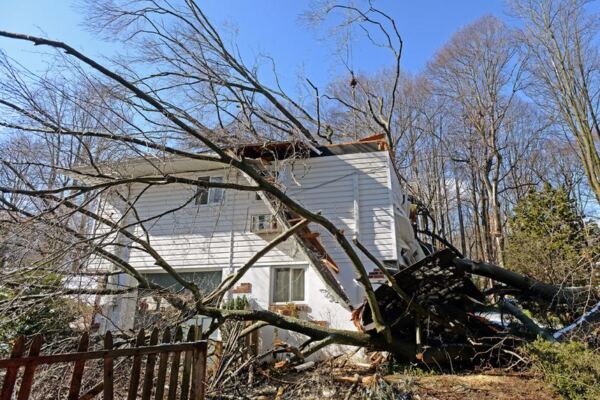
A mound that shows up after a Delaware downpour is a clue to look into, not proof that the rain created a new ant colony or that your lawn is in trouble. Most of the time, the story is much calmer than it looks.
A few simple checks can tell you whether ants made the mound, whether it matters, and what to do next. Knowing the steps can save you from needless worry and from the wrong kind of treatment.
Rain can change a nest without proving a new colony formed

Seeing a mound the morning after a storm feels like cause and effect. The rain came, and then the mound appeared.
But noticing a mound after a storm is not the same as knowing the storm built it. The mound may have been there for weeks, hidden by tall grass, and you only spotted it once the wet soil made it stand out.
Some real research shows why rain and nests can be linked. A field study of red imported fire ants in South China watched workers repair rain-damaged nest entrances and raise their mounds after rainfall.
The same study also saw some new mounds appear in its study area. So rain can prompt nest work, and new mounds can show up too.
That is where the lesson stops. The study looked at one species in one part of the world.
It does not tell us how every ant species behaves, how every storm affects nests, or what happened in a Delaware lawn.
Timing alone cannot tell you when a mound started or why. A repaired old entrance and a brand-new nest can look alike to a homeowner walking across the yard.
Think of the mound as a question worth asking rather than an answer. Your next job is simply to find out what made it, and whether it is causing any trouble at all.
Check whether ants made the mound
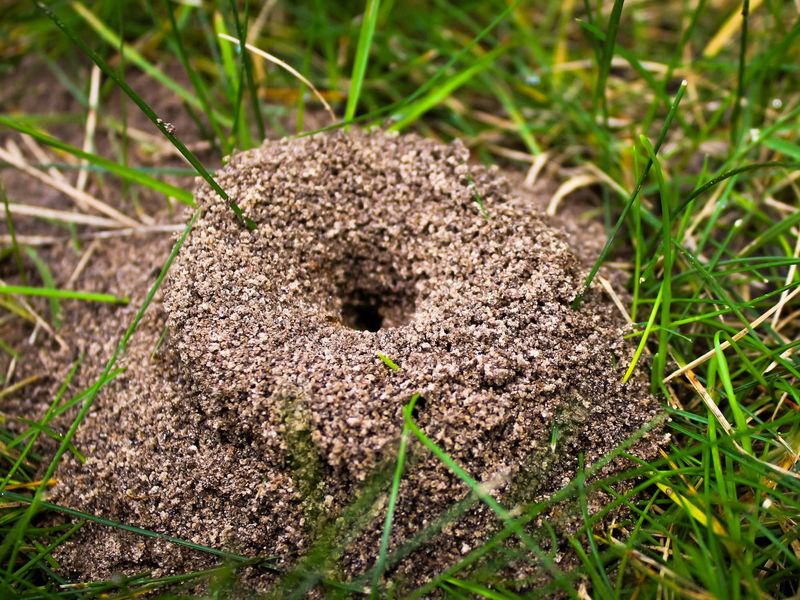
Before you decide anything, make sure ants are really behind it. Spend a few quiet minutes watching from a comfortable distance.
Look for ants walking in and out, carrying food, or moving soil, and look for a small nest entrance in or near the pile.
Not every mound-like feature is an ant nest. University of Maryland Extension describes several soil-nesting ants that make loose-soil mounds, and it also notes that rain can push other lawn invertebrates up to the surface or onto nearby pavement.
A pile of soil with no ants and no opening may have another source.
Resist the urge to name the ant from the shape of the pile. Mound appearance alone does not reveal the species, and different ants can leave similar heaps.
University of Minnesota Extension advises identifying the ants before choosing any control method.
If you want to identify them, watch and photograph the workers from a distance, or ask your local extension office for help. Do not poke, dig, or stir up a nest to get a better look.
If the ants are small, calm, and ordinary, that is useful to know. If you are unsure what you are dealing with, leave the nest alone and keep reading, because the next sections cover when caution matters.
Most lawn ant mounds are a nuisance, not a grass emergency
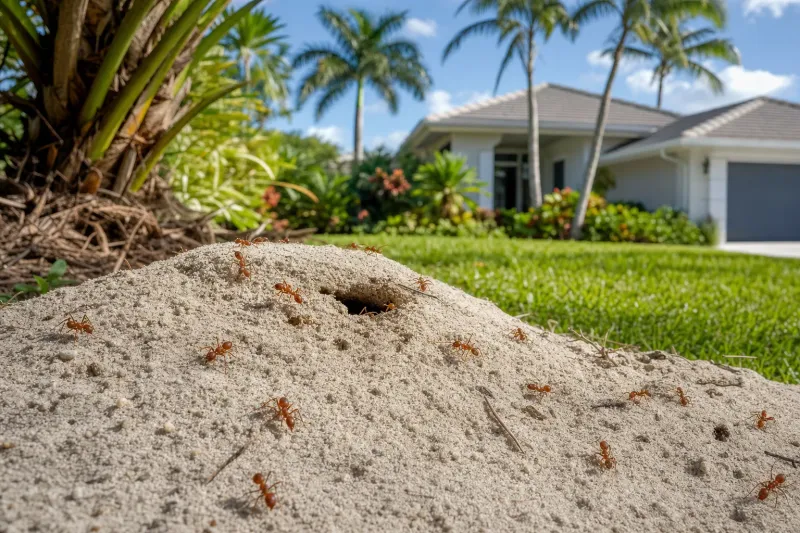
Many people assume ants are chewing up the lawn. Extension guidance says otherwise.
University of Minnesota Extension explains that lawn ants generally do not feed on or injure grass, so a mound is not a sign that the turf is being eaten.
That does not mean mounds are always welcome. Loose soil can look messy, and some larger mounds can get in the way of the mower.
Ants also prey on other insects, which is one small benefit of having them around.
Where grass is thin, mounds are easier to see and more annoying. University of Maryland Extension says high-mown, dense turf can make visible mounds less noticeable.
That is a cosmetic trick. It does not remove the nest, and it does not promise the ants will leave.
So ask a practical question about this one mound. Is it in a spot where you mow or walk?
Is it smothering a patch of grass or spoiling a spot you care about? If the answer is no, a few specks of soil may be all you have, and nothing needs to be done today.
Treat a suspicious imported fire-ant nest with caution

Fire ants deserve a careful, calm mention. In 2019, the Delaware Department of Agriculture issued an alert about tropical nursery stock.
It said red imported fire ants were not known to be established in Delaware, and it documented a detection in imported nursery stock in Sussex County.
The federal picture is similar. USDA APHIS lists the infested states, and Delaware is not among them today.
Still, that does not make an isolated detection impossible, and not every red ant is an imported fire ant. Most reddish ants in a Delaware yard are something else.
The 2019 alert describes imported fire ant mounds as potentially large and without a visible external opening. Treat those details as reasons for caution, not as a test.
Size and a missing opening cannot reliably tell you the species.
The key rule is simple: do not disturb a nest you suspect. Disturbed imported fire ants can swarm and sting repeatedly.
Skip the stick, the shovel, and the hose.
If you are unsure, contact your local extension office. You can also reach the Delaware Plant Industries section.
Its contact page lists 302-698-4577, so check that page to confirm the current information before you call. A photo of the ants taken from a safe distance can help.
Decide whether the mound needs action

Most lawn ant nests can simply be tolerated. They are part of the yard’s small wildlife, and a mound that sits quietly in a corner costs you nothing.
The point is to match your response to what the mound actually does.
According to University of Minnesota Extension, action becomes worth considering when a mound is damaging turf, getting in the way of mowing or walking, or creating a specific safety concern. Those are concrete problems you can see and describe.
Try a quick walk-through. Does the mower scalp the mound every week and spray soil around?
Do kids or pets play right beside it? Is it in a path where people trip?
A yes to any of these is a good reason to think about a response.
What is not a good reason is the calendar. A mound that turned up after a storm, sitting in a spot where nobody goes, does not call for blanket treatment.
Spraying the whole yard because of one pile treats a small cosmetic matter like an emergency, and it can harm helpful insects.
If you do have a real problem, write down where the mound is and what it interferes with. That note will help you pick a sensible step later, and it will keep the focus on impact instead of on the mere presence of ants.
Identify the ants before using a pesticide
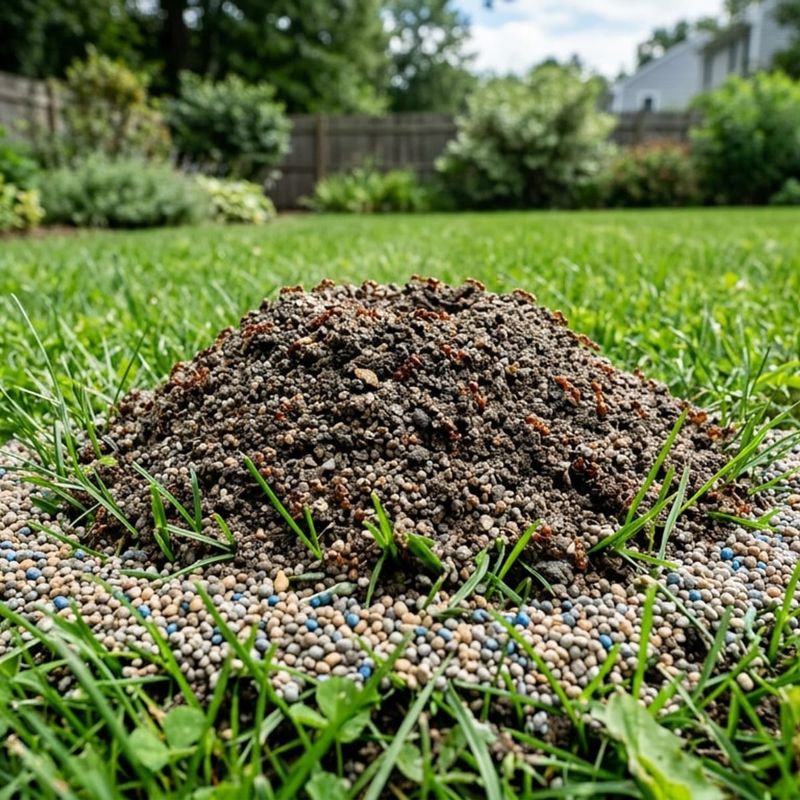
Treatment comes last, not first. It makes sense only when a mound causes a meaningful problem and you know which ant you are dealing with.
Different ants call for different approaches, and a product that suits one may be useless against another.
Some popular home tricks should be skipped entirely. University of Minnesota Extension lists flooding nests with water among ineffective control methods.
The same source warns that pouring gasoline into a nest is dangerous and pollutes the environment. Neither is a safe shortcut.
If you decide a pesticide is justified, read the label before you buy. Choose a product labeled for the site where you will use it, such as a lawn, and for the way you plan to apply it.
Then follow every direction on that label. EPA explains that using a pesticide inconsistently with its labeling violates federal law.
If you suspect imported fire ants, skip do-it-yourself treatment and call the contacts in the earlier section instead.
The order matters. Confirm that ants made the mound, decide whether it is a real problem, identify the species, and only then choose whether to act.
Often the best answer after all that is a mower set a little higher and a shrug.
Share this story