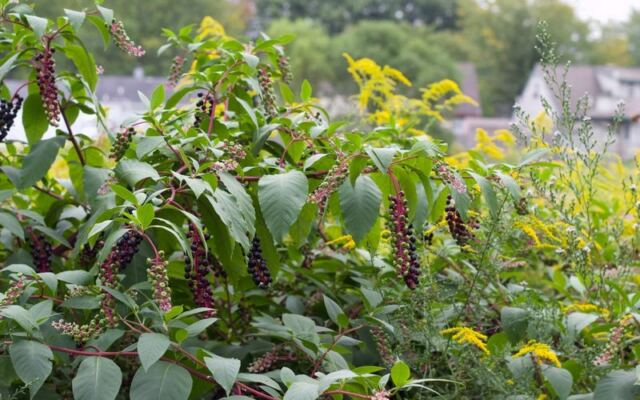
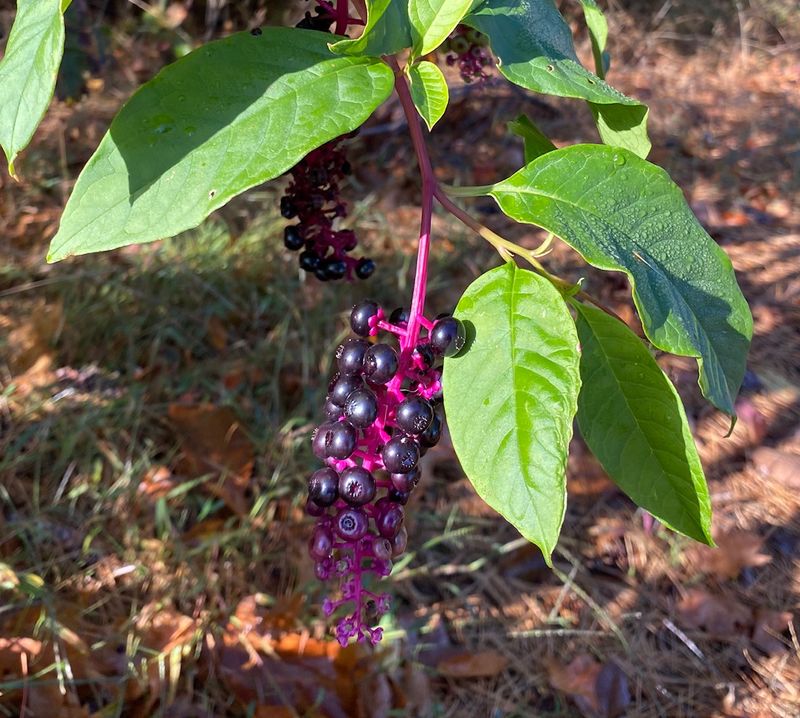
The tall plant with thick purple stems and shiny purple-black berries is most likely American pokeweed, also called common pokeweed. It grows in many parts of California, and its dark berry clusters catch the eye of almost every homeowner who spots them.
The berries look a bit like grapes, but the plant is poisonous if eaten. Here is how to confirm what you have, what to do about it, and how to keep kids and pets safe.
Check the whole plant for pokeweed clues
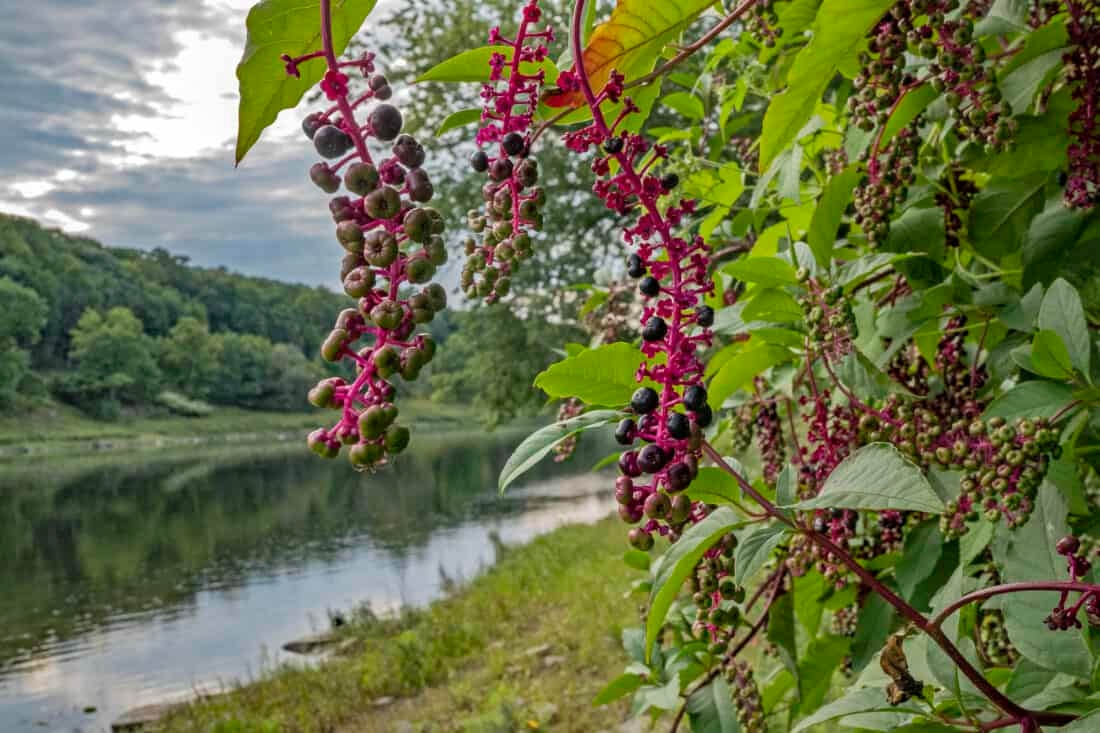
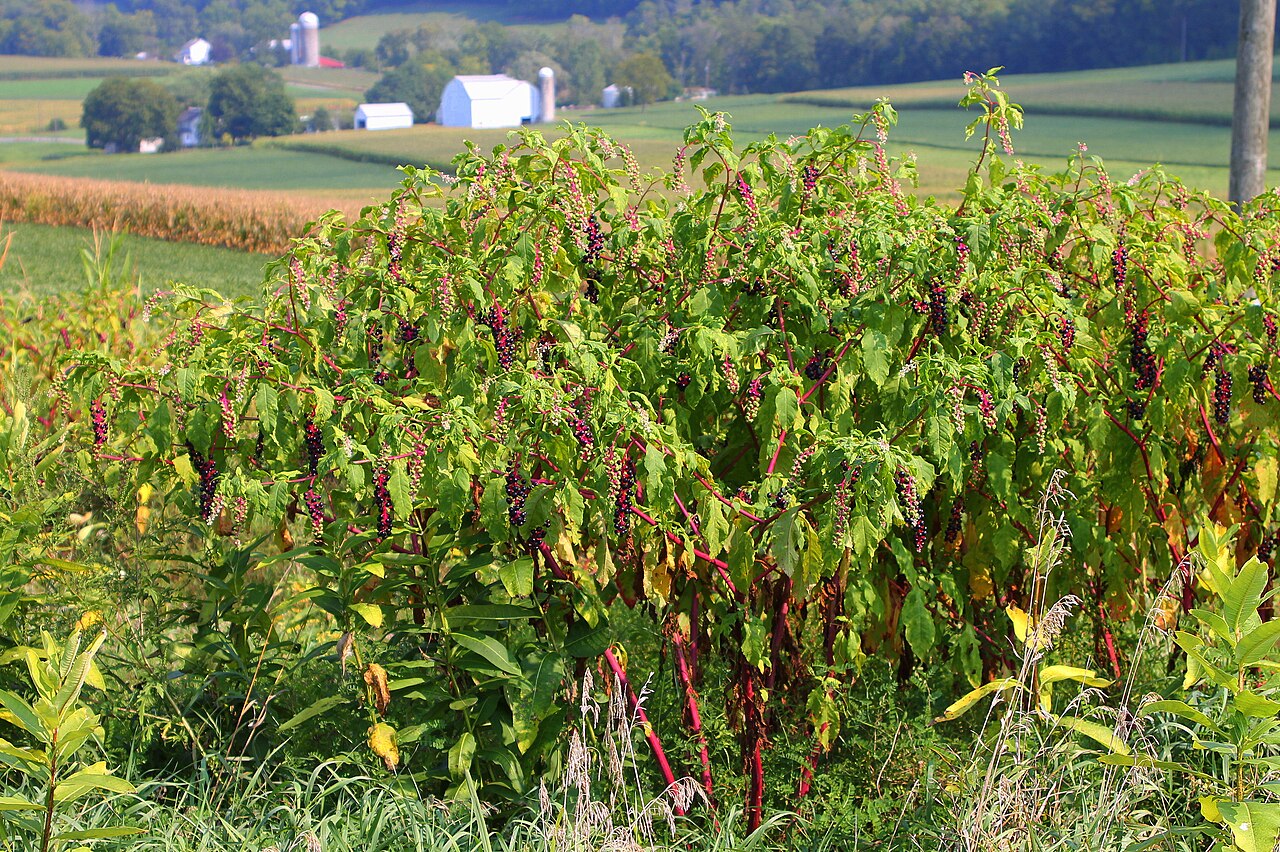
Start by stepping back and looking at the entire plant, not just the berries. Mature pokeweed can reach about 4 to 10 feet tall, according to UC IPM’s pokeweed guide.
That puts it well above most garden perennials, so a towering, bushy stranger is a good first clue.
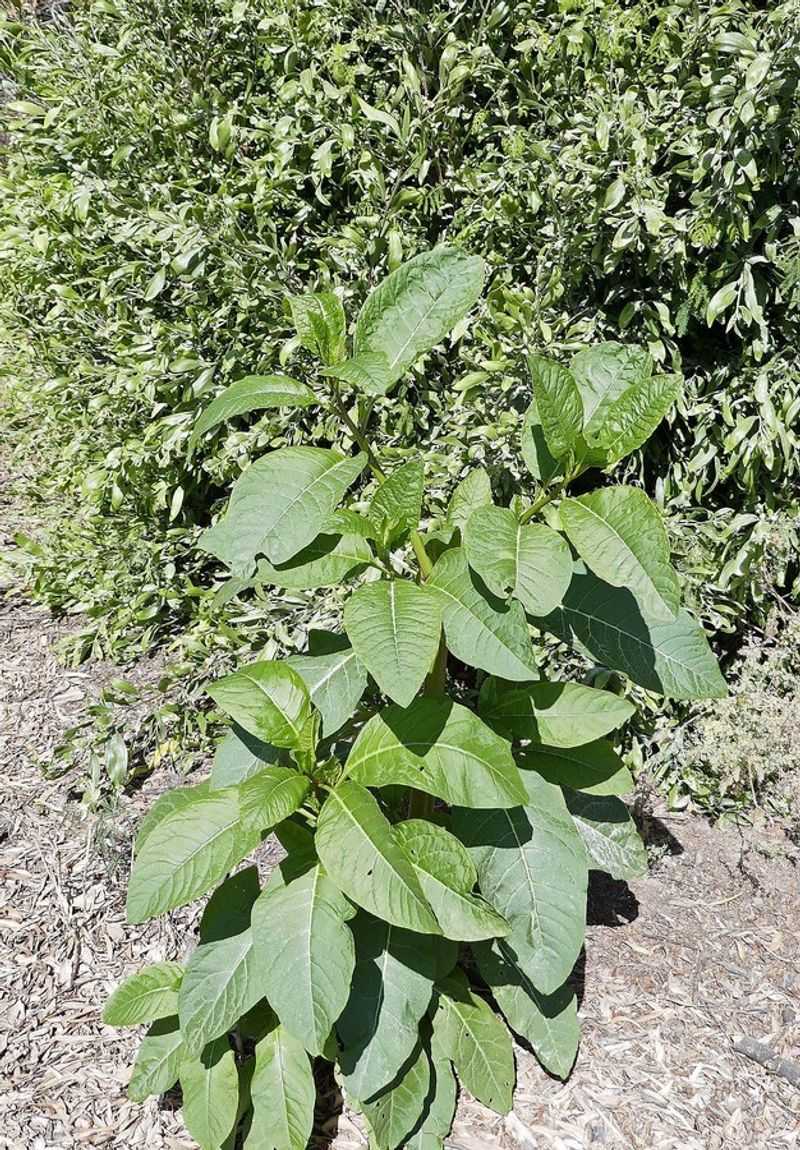
Next, look at the leaves. Pokeweed leaves are large, bright green, smooth along the edges, and arranged alternately along the stem, meaning they sprout one at a time rather than in pairs.
Then check the stems, which are stout and often tinted reddish or purple.
Flowers and fruit come next. The small, pale flowers form in long clusters, and they give way to nearly round, glossy purple-black berries.
As the fruit develops, those clusters may droop under their own weight, a detail also noted in the UC identification gallery entry for common pokeweed.
No single feature settles the question. Many plants produce dark berries, so color alone proves very little.
When the height, leaf layout, stem color, flower clusters, and berry clusters all line up, pokeweed becomes a strong, likely answer.
Without a photo or someone examining the actual plant, though, the identification stays probable rather than certain. If you are unsure, take clear pictures of the leaves, stem, and berry clusters and ask your local UC Cooperative Extension office to take a look.
What California sources say about pokeweed
Pokeweed is not a newcomer that appeared overnight. UC sources describe it as established in California, including the Central Valley, the coast from Mendocino to San Diego, and parts of the Sierra Nevada, as laid out in UC’s pokeweed page.
The UC weed gallery calls it an occasional weed in the state.
Those sources confirm that the plant is here. They do not show that yard sightings have recently jumped, so it is fair to say you may notice it, but there is no evidence of a sudden or unusual spread.
The plant also has an official invasive-plant rating. The California Invasive Plant Council gives it a Limited rating in its pokeweed profile.
In Cal-IPC’s terms, that means the plant is invasive, but its statewide impacts are relatively minor, or there is not enough information to justify a higher rating. It can still be stubborn or troublesome in particular spots.
That rating is a separate thing from the state’s agriculture rules. CDFA runs its own weed-rating system, which CDFA explains on its Encycloweedia page, and Cal-IPC reports no CDFA rating for pokeweed.
So it should not be called a state-listed noxious weed.
Birds spread the berries, but that does not make them safe
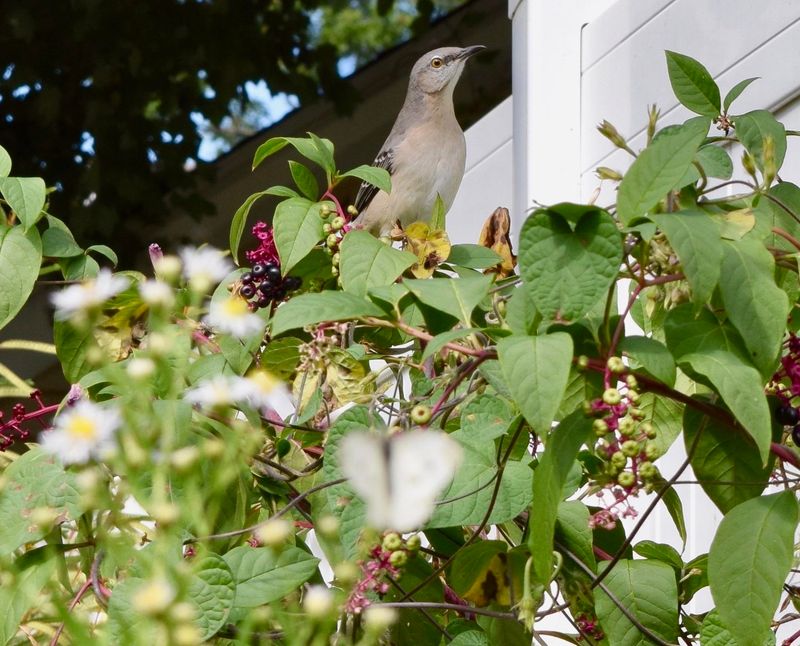
Watch a pokeweed plant in late summer and you may see birds feasting on the fruit. They swallow the berries, fly off, and drop the seeds elsewhere, which is one way the plant shows up in new corners of a yard.
UC IPM notes that birds eat the berries and help spread the seeds.
It is tempting to think that if birds can eat them, people and pets can too. That is a risky guess.
Wildlife often handles foods in ways that humans and household animals cannot.
Animal poison experts say the opposite. Pet Poison Helpline’s pokeweed page lists the plant as a concern for pets, so a bird snacking on the fruit tells you nothing about whether your dog or toddler could.
The practical takeaway is about seeds as much as safety. A single heavily loaded plant can seed a wide area through bird droppings, so berries left on the stems can mean new seedlings next year.
Keep every part away from people and pets
The clearly documented danger from pokeweed is eating it. UC IPM says that all parts of the plant can be toxic if swallowed, and the roots are especially dangerous.
The berries contain smaller amounts of poison, according to MedlinePlus, but that is not a reason to treat them as a snack.
The simplest rule is not to eat any part of the plant. Teach children that shiny berries in the yard are look-only, and keep dogs and other pets from chewing stems, leaves, or fallen fruit.
Digging pets deserve extra watching because roots are the most toxic portion.
You may hear that people have eaten pokeweed for generations. That history exists, but it involved special preparation, and mistakes have caused poisonings.
Medical guidance does not recommend eating it, because safety is not guaranteed even after cooking. No recipe or method is offered here for that reason.
Touching is a different matter. The Missouri Poison Center reports that handling the plant may irritate skin, especially if the skin is broken.
That does not mean brushing past a stem commonly causes severe poisoning, but gloves are a sensible choice when working near it.
Know where to turn after a possible ingestion
If a person may have swallowed any part of pokeweed, call Poison Help at 1-800-222-1222 right away. MedlinePlus advises this step after a possible exposure.
The call connects you with experts who can tell you what to do for your situation.
Do not try to make the person vomit unless poison control or a clinician specifically tells you to. Home guesses can make things worse, so let the experts guide each step.
For a dog, cat, or other pet, call your veterinarian or a pet-poison resource. Pet Poison Helpline’s pokeweed page is one place to start.
Have details ready, such as the pet’s size, what part was eaten, and roughly when.
A few quick habits make those calls easier. Take a photo of the plant, and keep a piece of it in a bag if you can do so safely, so the responder knows what was involved.
Save the poison number in your phone ahead of time.
Prevention is the easier path. Keep berries and other plant parts out of reach, and clean up fallen fruit.
The Missouri Poison Center points to ingestion as the main worry, so ordinary touch is not the concern here.
Remove berries and plan to check for regrowth
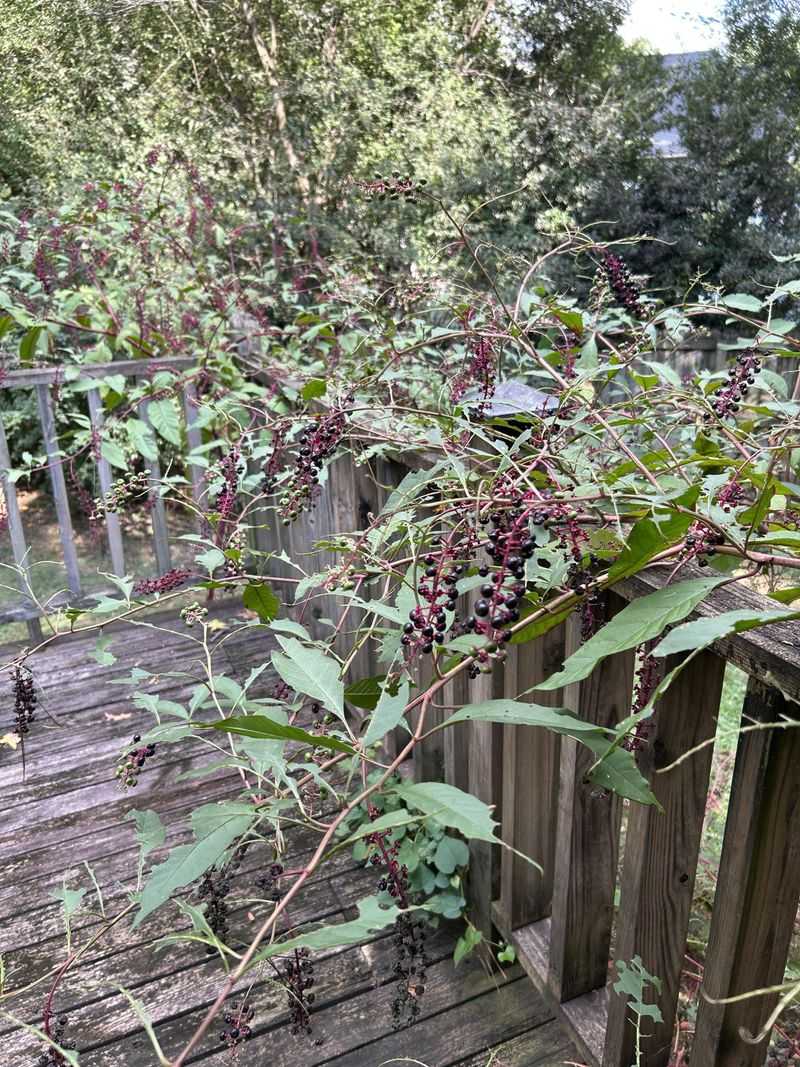
Size matters when you decide how to remove pokeweed. UC IPM says hand-pulling works for small plants.
Wear gloves and long sleeves, and try to get the whole root out.
Established plants are tougher. They grow a large taproot, and if big pieces stay in the ground, the plant may regrow.
The stems die back after frost, so a bare patch in winter does not mean the job is done.
If berries are already ripening, take them off first. Put them in a bag and throw them in the trash so the seeds do not start new plants.
Oregon State University Extension also recommends trashing flowers and berries and then watching for regrowth and seedlings.
Do not count on quick fixes for big plants. UC IPM says household vinegar is not effective on mature pokeweed, and contact herbicides do not control established perennial plants.
Plan on follow-up visits through spring and summer. Pull seedlings while they are small, and recheck the spot where the root was.
Patience beats any shortcut with this one.
Share this story