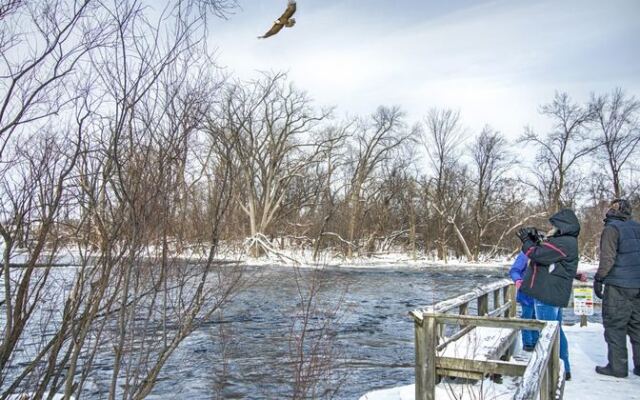
When Wisconsin rivers freeze over, bald eagles go looking for the few spots where the water stays open and the fish are easy to grab. Some towns along the Mississippi and Wisconsin Rivers end up hosting dozens, even hundreds, of these huge birds at once.
Watching them swoop, perch, and squabble over a meal is one of the best free shows of the cold season. Here are ten places where you can see them for yourself, plus a few tips to make your trip a success.
1. Sauk City and Prairie du Sac
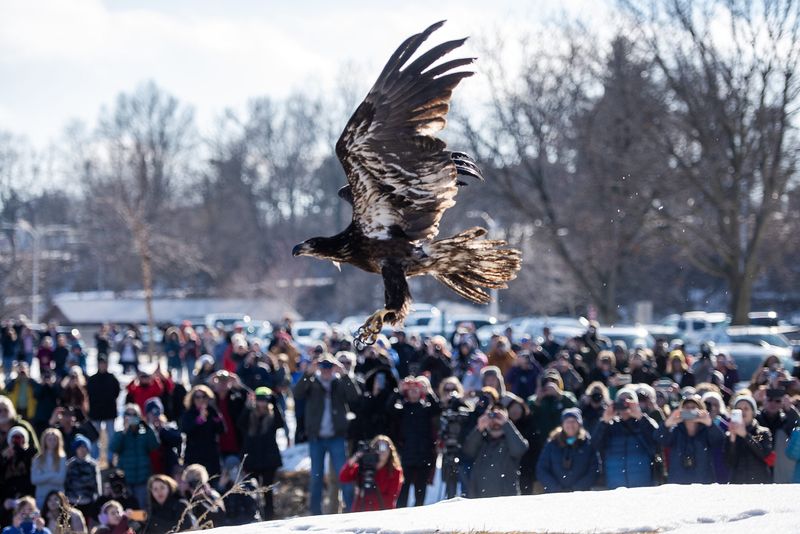
Picture a frosty January morning with steam rising off the Wisconsin River and white heads dotting every tall tree. That scene plays out year after year in Sauk City and Prairie du Sac.
The dam just upstream keeps the water churning and ice-free, so fish stay within easy reach.
Locals have been celebrating their feathered visitors for decades with Bald Eagle Watching Days, usually held in January. The event features live raptor shows, guided bus tours, and spotting scopes set up along the riverwalk.
Families come from all over the state to join in.
The best viewing spot is the overlook in Prairie du Sac near the dam. Get there early, since eagles are most active in the first few hours after sunrise.
2. Cassville
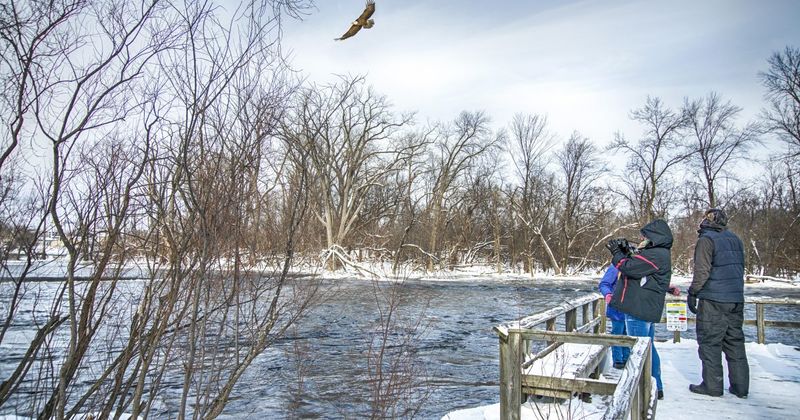
Tiny Cassville has a big reputation among bird lovers. Sitting on the Mississippi River in Grant County, this village sees warm water flowing from nearby industry and the lock system, which keeps patches of river open all winter long.
Bald Eagle Days here draws crowds each January with indoor programs and outdoor viewing. Nelson Dewey State Park, perched on the bluffs above town, gives you a high view of birds riding the wind currents along the cliffs.
You might even spot eagles roosting in the park’s oak trees.
Fun fact: Cassville also runs one of the last car ferries on the upper Mississippi, though it shuts down in winter. Come back in summer for a ride and a whole different view of eagle country.
3. Prairie du Chien
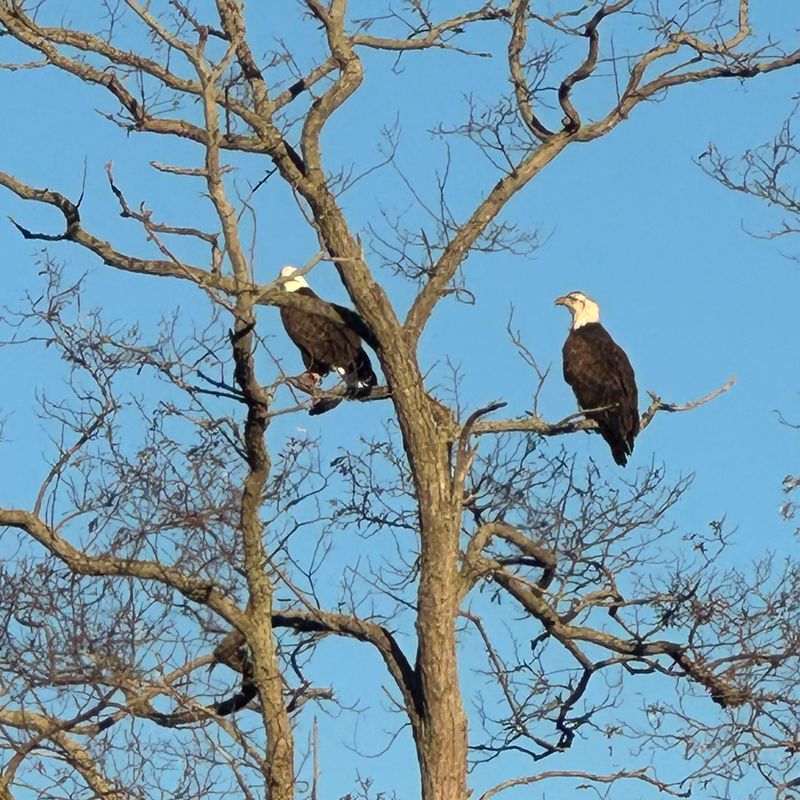
Ever watched two eagles fight midair over a single fish? Prairie du Chien is a great place to catch that kind of drama.
As one of the oldest towns in Wisconsin, it sits where the Wisconsin River meets the Mississippi, creating plenty of moving water.
Lock and Dam 10 just south of town is a hot spot. Fish get stunned passing through the dam, and eagles know it.
They line up on the ice edges waiting for an easy lunch.
St. Feriole Island and the riverfront parks offer easy parking and short walks to the water. Bring a thermos of cocoa and settle in, because the action can come in bursts.
4. Ferryville
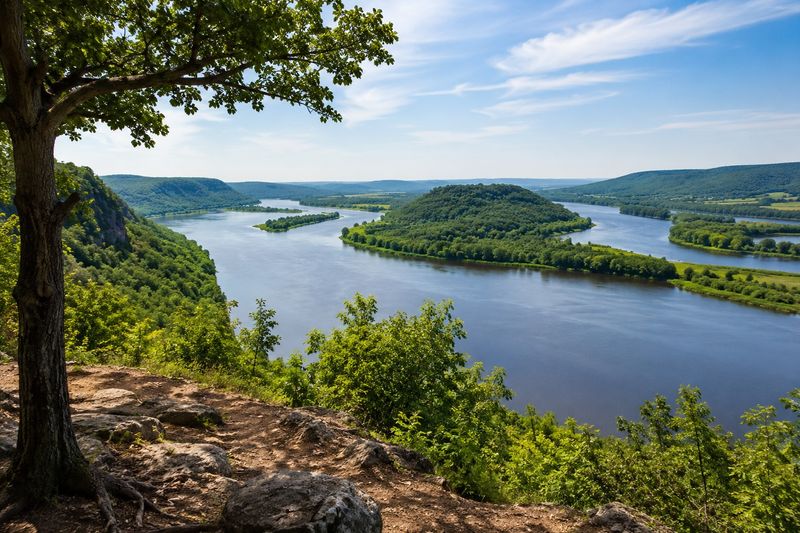
Quiet and laid-back, Ferryville is the kind of place where you might have an eagle all to yourself. The village stretches along Highway 35, one of the prettiest drives in the Midwest, with the Mississippi on one side and towering bluffs on the other.
A public observation deck in town gives you a clear look across the backwaters. Eagles hunt the open channels and rest in tall trees on the islands.
Winter is fantastic, but this area also has year-round nesting pairs.
Since it is small, you will not find big crowds or festivals. That makes it perfect for photographers who want calm, patient shooting time.
5. Alma
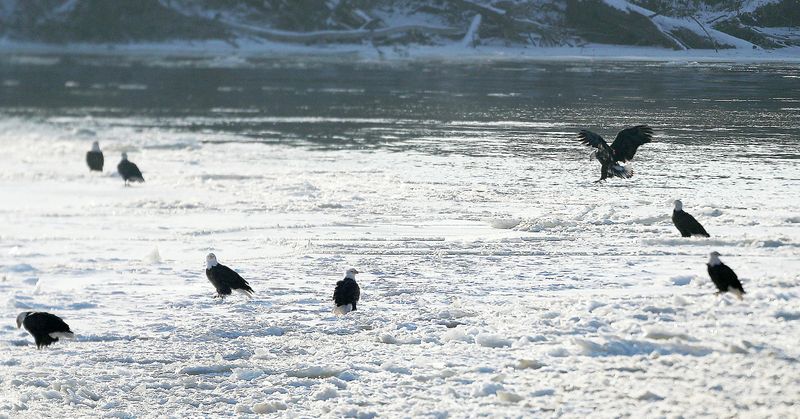
Alma feels like a town frozen in time, with brick buildings tucked against steep bluffs. In winter, the Mississippi below Lock and Dam 4 stays open, and eagles gather in impressive numbers.
A viewing platform right by the lock lets you watch birds dive for fish just a short distance away. Buena Vista Park, high above town, offers a sweeping view of the river valley.
On clear days you can see eagles soaring below you, which is a strange and thrilling feeling.
The nearby Rieck’s Lake Park is famous for tundra swans in the fall, so birders often plan trips that cover both seasons.
6. La Crosse
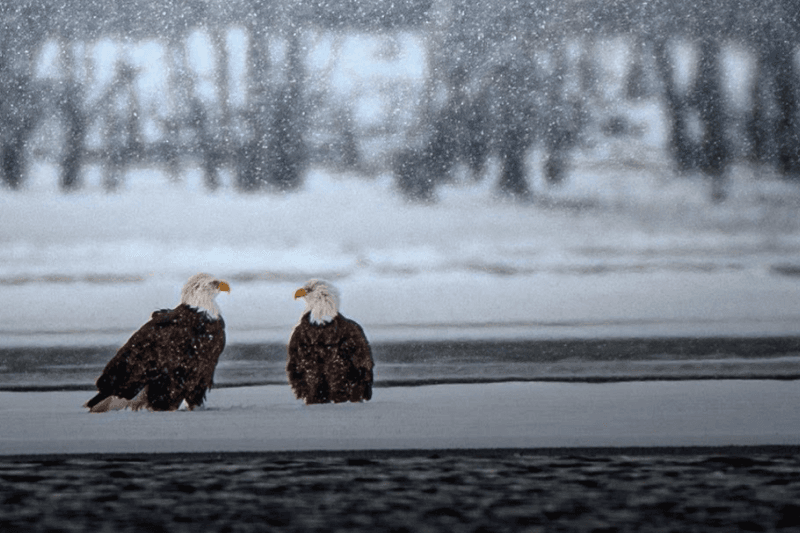
City life and wild eagles might not seem like a match, but La Crosse proves otherwise. Three rivers meet here, the Mississippi, Black, and La Crosse, and their currents keep patches of water flowing even in deep cold.
Riverside Park downtown gives you sidewalk views of eagles cruising over the water. For a wilder setting, head to the marsh trails or Grandad Bluff for a bird’s-eye perspective.
Lock and Dam 7, just north in Minnesota, is another short drive away.
After warming up, you can grab dinner in town without a long drive. It is an easy choice for families who want nature and comfort in one trip.
7. Wisconsin Dells
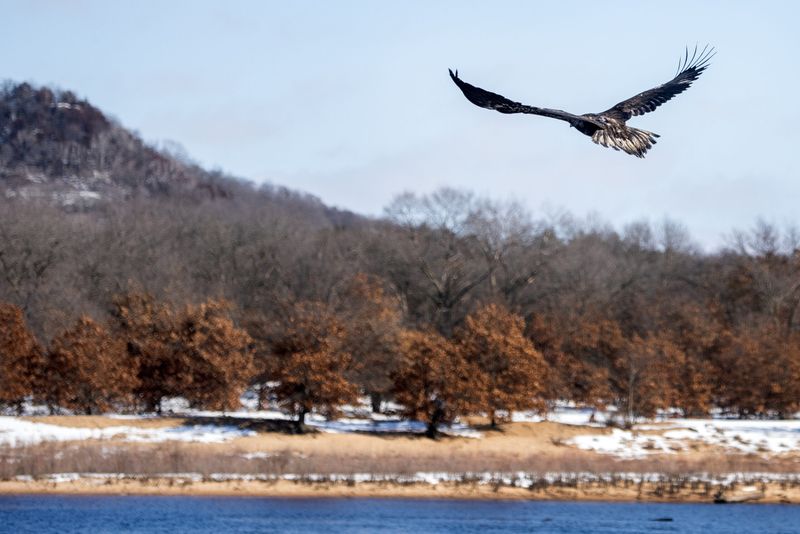
Most people think of water parks when they hear the name. In winter, though, the Wisconsin Dells trades splashing kids for soaring raptors.
The dam in town keeps the river open, and eagles follow the fish.
Sandstone cliffs and pine trees make a dramatic backdrop for photos. Bald Eagle Days in the area has offered guided tours and talks with raptor experts.
You can also check river viewing spots near the dam in downtown.
Since indoor water parks stay open all year, you could watch eagles in the morning and swim in the afternoon. Not many winter trips offer that combo.
8. Petenwell and Castle Rock Dams
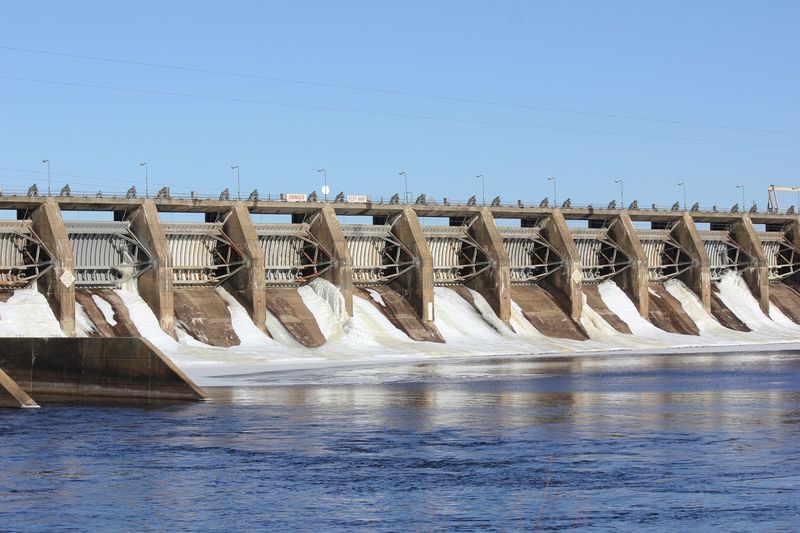
Central Wisconsin hides a lesser-known eagle hangout below the Petenwell and Castle Rock dams. These large flowages on the Wisconsin River create turbulent water downstream, the kind eagles love.
Fewer tourists make the trip, so viewing feels peaceful. Park near the dam areas and scan the trees on both banks.
Counts here can climb surprisingly high during cold snaps.
Dress warmly, since open country means strong wind. A pair of binoculars will help you pick out the younger brown eagles, which take about five years to grow their white heads.
9. Fox River in Green Bay and De Pere

Eagles cheering on the Packers? Not quite, but they do spend winters along the Fox River near Green Bay.
The De Pere dam keeps water moving, and fish like walleye draw both anglers and raptors.
The Fox River Trail and De Pere Riverwalk give you paved paths with great sightlines. It is a fun place to watch eagles compete with gulls and ice fishermen for the catch.
Only a few decades ago, eagles were nearly gone from this area due to pollution and DDT. Seeing them back is a real success story for cleaner water.
10. Tips for Respectful Eagle Watching
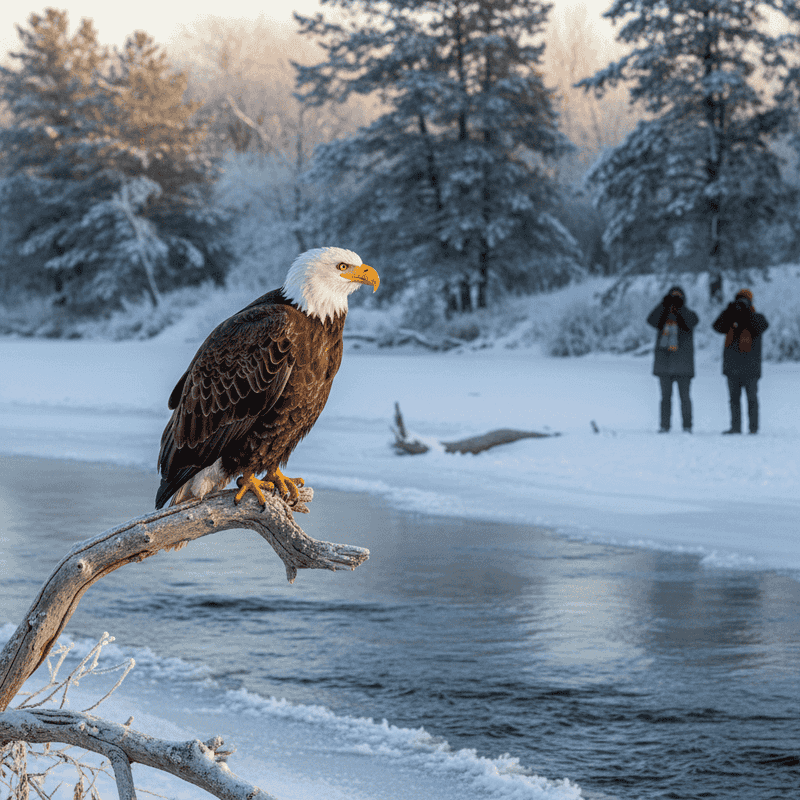
A little care goes a long way. Eagles use winter energy carefully, and every time they get spooked and fly off, they burn calories they badly need.
Stay in your car or at official overlooks when possible, since vehicles act like moving blinds. Keep at least a few hundred feet away, and never toss food or try to lure birds closer.
Binoculars or a spotting scope will bring the view right to you.
Mornings are usually best, especially on very cold days when ice limits open water. Dress in layers, pack hand warmers, and be patient.
The payoff of watching a wild eagle snag a fish is worth every chilly minute.
Share this story