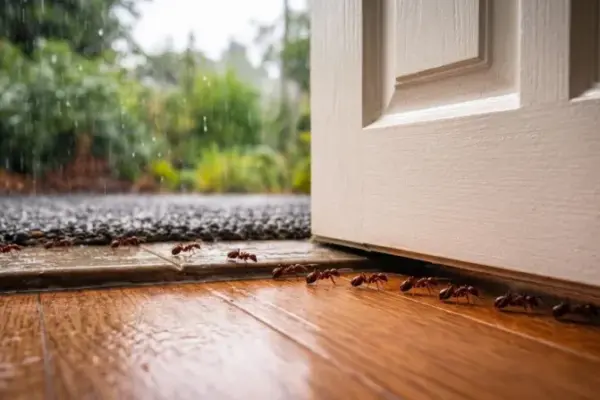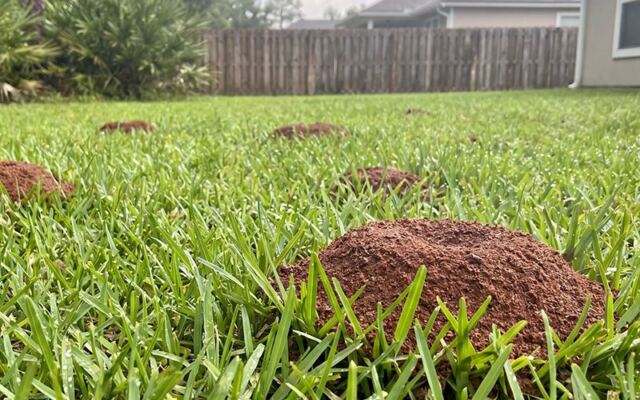
Those fluffy new soil piles that pop up after a Texas rain are telling you that fire ants were already there, and now you can see them. The rain did not make the ants.
It changed what you can spot on the surface. Knowing what a mound can and cannot show helps you avoid wasted money and sore ankles.
Here is how to read the signs and decide what to do next.
A fresh mound can make existing activity easier to see
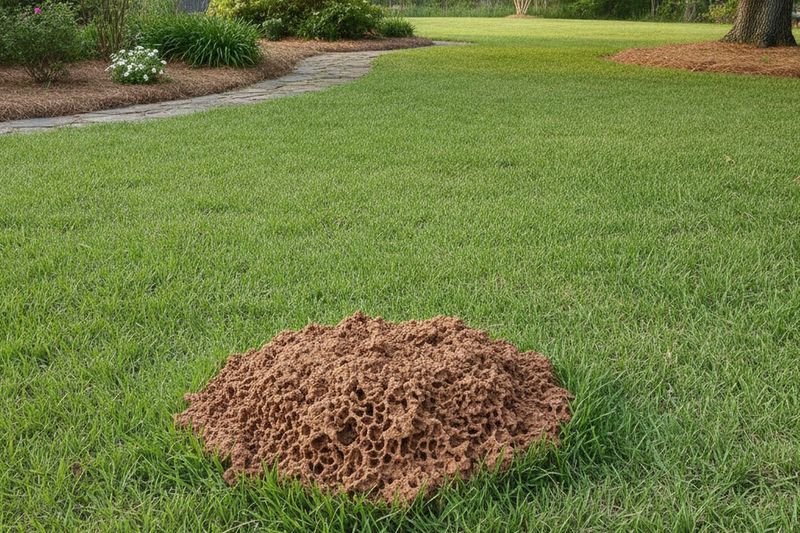
Walk out after a good soaking and a mound that seems to have appeared overnight may be sitting in the grass. Ordinary rain often makes a colony, or its mound, much easier to notice.
Texas A&M school pest guidance explains that rain can make ants that were already present more noticeable.
That means a new-looking mound does not prove your yard suddenly has more ants. It is a sign of visible activity, not a head count.
The colony may have been there for a long time, just tucked deeper and less obvious.
Dry weather plays a part in this too. When the ground is parched, colonies may sit deeper and their mounds can flatten out or fade from view.
University of Texas fire ant researchers note that mounds that vanish in dry spells are not necessarily dead, which is why they can seem to return with the first big rain.
There is more than one way to explain a mound that looks brand new. The ants may have moved up in the soil, rebuilt a mound that washed down, or shifted to a spot nearby.
From the surface alone, you cannot tell which of those happened.
So treat the mound as a clue rather than a verdict. It says ants are active at that spot.
It does not say how large the colony is, how fast it is growing, or whether rain had anything to do with its start.
Wet soil can move brood higher in the nest
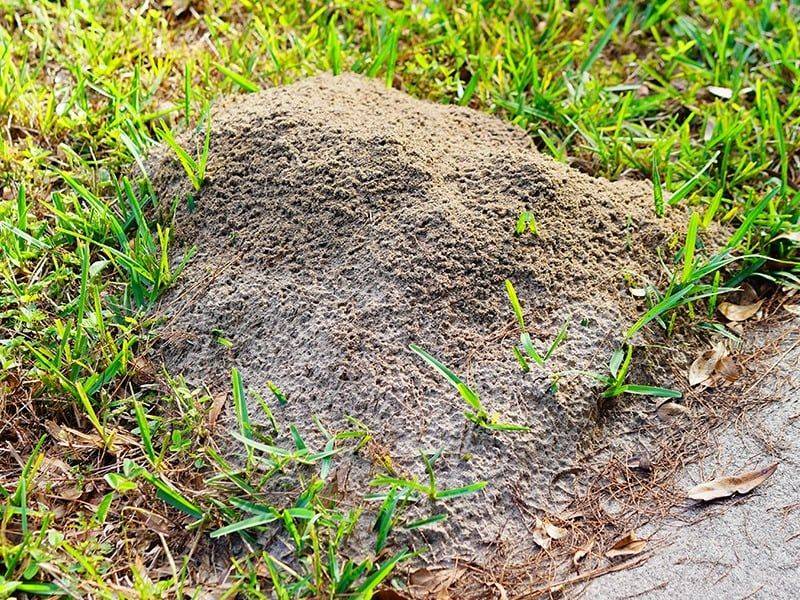
Soaked ground changes life inside a nest. When soil becomes saturated, ants may carry their brood, which means eggs, larvae, and pupae, higher up where the air is better.
University of Texas researchers describe colonies sitting deeper in dry weather and rising when conditions turn wet.
With the brood closer to the surface, more workers are busy near the top of the soil. That activity is easier to spot, and the soil they push up can form a taller, fluffier mound.
A lab demonstration from the same university shows how this works. In a University of Texas demonstration, ants in saturated soil moved toward the top along with their brood.
It is a helpful picture of the mechanism, but it does not mean every colony in every yard responds in exactly the same way.
Brood movement also does not mean rain created a colony. The eggs and larvae were already there, just relocated within the nest.
Nor does it mean the whole colony is crowded into the mound you see.
Think of it like a family moving upstairs when the basement gets damp. Everyone is still in the same house, only now you can see more of them at the windows.
The house itself, with its many rooms, stays largely out of sight.
The visible soil pile is only part of the nest

Under every mound is a network you never see. According to Texas fire ant biology resources, fire ants rely on underground tunnels, and nests can reach well below the soil pile.
The mound is simply the part that reaches the daylight.
Because of that, a mound cannot map the nest. It will not tell you how far the tunnels spread or where every ant is at a given moment.
The queen is not necessarily sitting under the top of the pile.
Size is a shaky guide as well. Texas A&M fire ant research points out that soil type, moisture, and other conditions affect mound dimensions, while galleries extend underground.
A tall mound on sandy, damp soil might sit on a modest colony, and a low one might hide a large one.
Rain adds another wrinkle. Ants may repair a mound that storms flattened, or they may relocate part of their activity to a new spot.
Both are possible after wet weather, and a mound’s look cannot prove which one took place.
A useful habit is to notice patterns instead of single piles. Several mounds close together, or the same spot rebuilt after each storm, tell you more than one dramatic mound ever could.
Rain, flooding, and flying ants signal different things
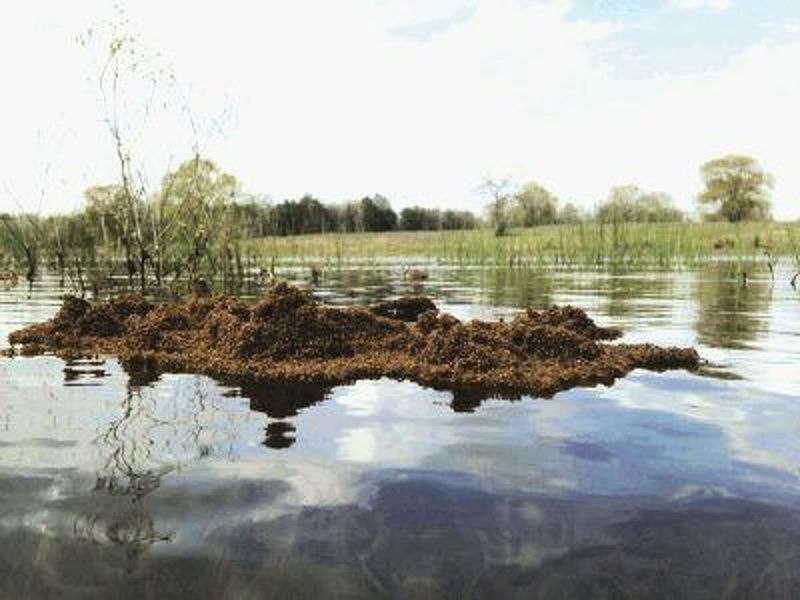
Not all wet weather is equal. A steady rain or afternoon storm usually just makes mounds and workers more visible.
Severe flooding is another story, and the Texas fire ant FAQ describes colonies leaving their nests and rafting on the water when floods hit.
That rafting behavior is rare compared with everyday rain. Most post-storm mounds are not the result of a flood-driven move, so there is no need to assume the worst when your yard only got a good soaking.
Flying ants are a separate matter. Winged reproductive ants may take to the air after rainy periods, as Texas fire ant biology information explains.
These flights have nothing to do with workers rebuilding or showing up at a mound.
Seeing a mound, or seeing a flight, does not prove that a new queen founded a colony in your yard. Many winged ants never start a nest, and a fresh mound may belong to a colony that has been there for months.
If you want a practical test, look at timing and scale. A swarm of winged ants in the air is a flight.
A crowd of ants on floodwater is a flood response. A new soil pile after a normal rain is most often existing activity coming into view.
Identify a mound without disturbing it
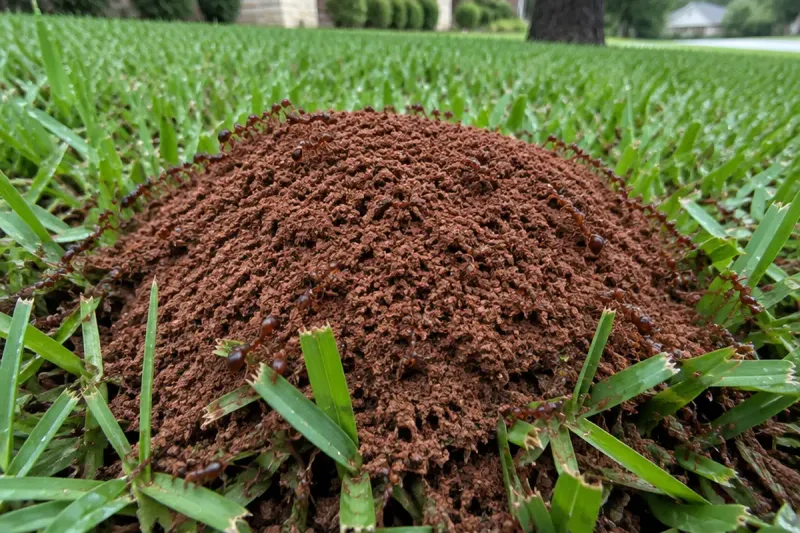
Start by looking, not poking. Texas A&M’s identification guidance points to fluffy, worked soil, often with no obvious central opening.
Workers of varying sizes are another clue.
Texas A&M also notes that red imported fire ants tend to pour out and climb nearby vertical surfaces when a mound is disturbed. Do not use that as a test.
Never kick, dig into, stand on, or otherwise disturb a mound to inspect it, because disturbed ants can sting in large numbers.
Plenty of other ants build soil mounds, and not every pile is a red imported fire ant mound. Texas also has native ants, including native fire ants, and Texas A&M native ant information shows how varied they are.
A mound’s look alone may not settle it.
If you are unsure what you have, contact your local Extension office before buying anything. Identification matters because the Texas A&M AgriLife Extension publication ties its control advice to correctly identified imported fire ants, and broad pesticide use can harm helpful native species.
Sting safety is simple. CDC guidance advises people not to disturb or stand near mounds.
Get emergency medical care for severe symptoms after a sting, such as trouble breathing, serious swelling, or chest pain.
Choose treatment based on the yard’s needs

Once you know what you are dealing with, match the response to the yard. Individual mound treatment can suit smaller areas, or yards where keeping native ants matters.
Broader action fits larger problems.
For lawns with about five or more mounds per quarter-acre, Texas A&M’s Two-Step method is described as a good fit. It combines broadcast bait with treatment of individual nuisance mounds.
That is a guideline, not a rule that every yard at that count must be treated, and Texas A&M’s overview of control methods lays out other options.
Timing matters for bait. Apply it to dry ground while ants are foraging, and only when no rain is expected for 24 to 48 hours.
Bait is slow-acting, so do not expect mounds to vanish overnight, and always follow the product label.
Home remedies deserve caution. Hot or boiling water is not a guaranteed colony fix.
Texas A&M estimates it kills ants about 60% of the time, and it can kill surrounding grass or other plants.
The Extension publication on the Two-Step method and other approaches is a good place to compare choices before you buy.
A mound after rain is a nudge to look closer, not a signal to panic.
Share this story