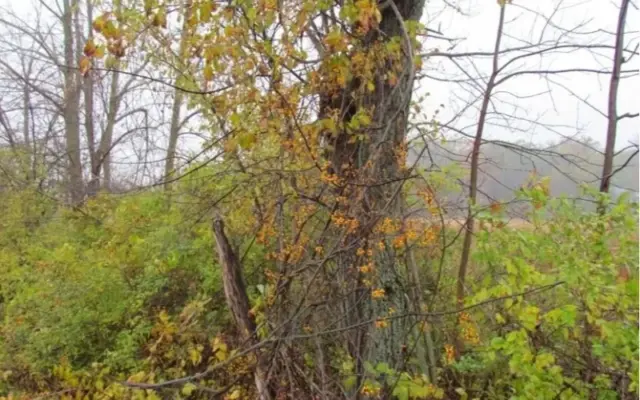
Those bright berries bursting along a vine in an Indiana tree may look festive, but the plant can squeeze and harm the tree holding it up. Oriental bittersweet is a nonnative climbing vine, and it can wrap trunks, shade leaves, and add heavy weight to branches.
Indiana also has a native bittersweet that looks similar, so a quick check matters before anyone starts cutting. Here is how to tell them apart and what to do safely.
How the vine can damage trees
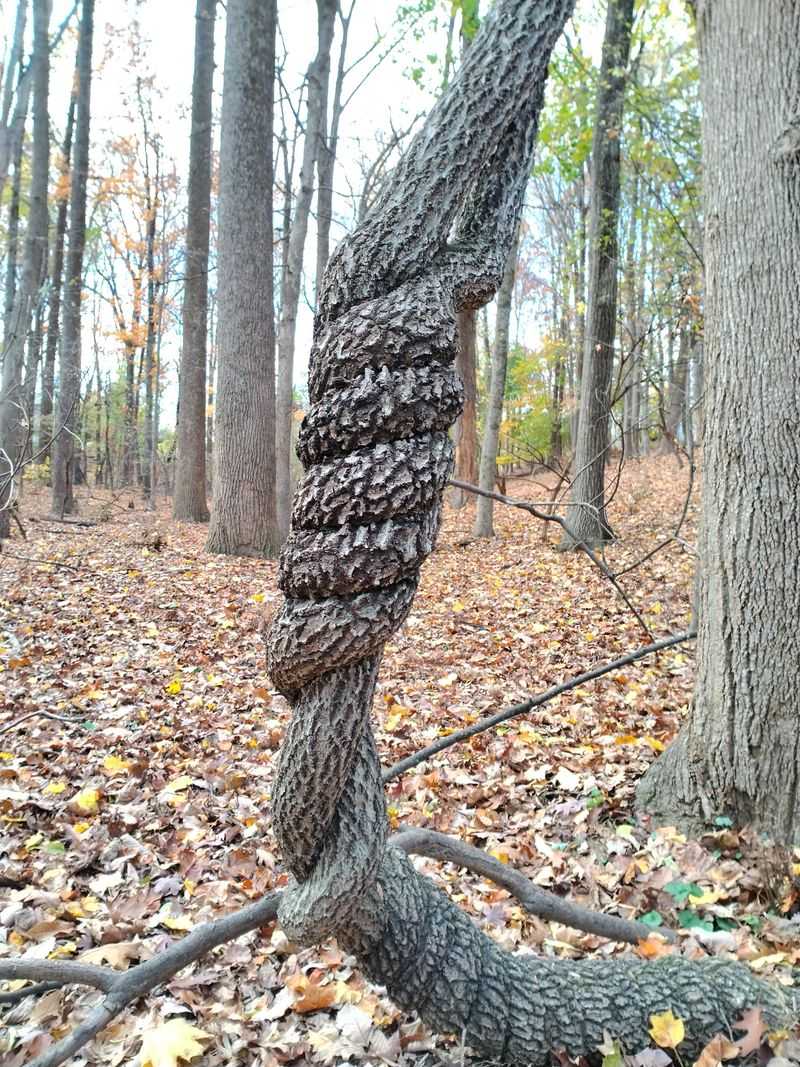
Oriental bittersweet (Celastrus orbiculatus) is a nonnative, woody climbing vine that has been recorded in Indiana. It climbs by twining around whatever it can reach, including saplings, shrubs, and mature trees.
Over time, the stems thicken into ropes that can tighten around a host.
That tight wrapping can girdle trunks and branches, which means it squeezes the layer just under the bark that moves water and food. Dense vine growth can also shade the host’s leaves and the plants below it.
A tree that gets less light has less energy to work with, especially if it was already stressed.
Weight is another problem. A canopy loaded with vine leaves and stems catches more wind and holds more ice, so branches are more likely to snap in a storm.
A USDA Forest Service assessment of oriental bittersweet in northern forests describes these kinds of impacts on forest trees and other plants.
These are risks, not guarantees. How much harm a vine does depends on how long it has been growing, how large it is, and how healthy the tree is.
Still, the USDA Forest Service species review shows why a vine that has reached the canopy deserves attention. A young tree with vines winding up its trunk is the most worrying case, since it has the least strength to spare.
Check where the fruit clusters grow
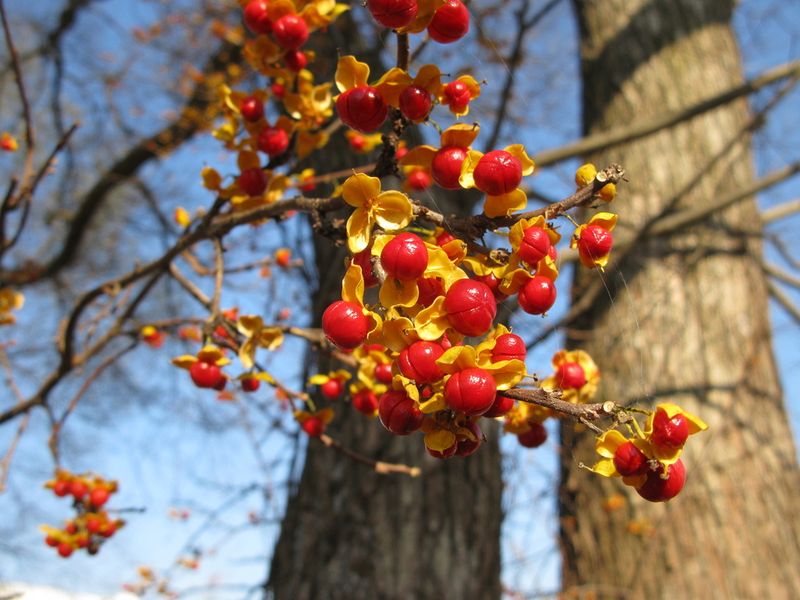
Color is a poor guide here, because both bittersweets have showy fruit. Placement is the better clue.
Indiana’s Oriental bittersweet fact sheet points to where flowers and fruit sit on the stem.
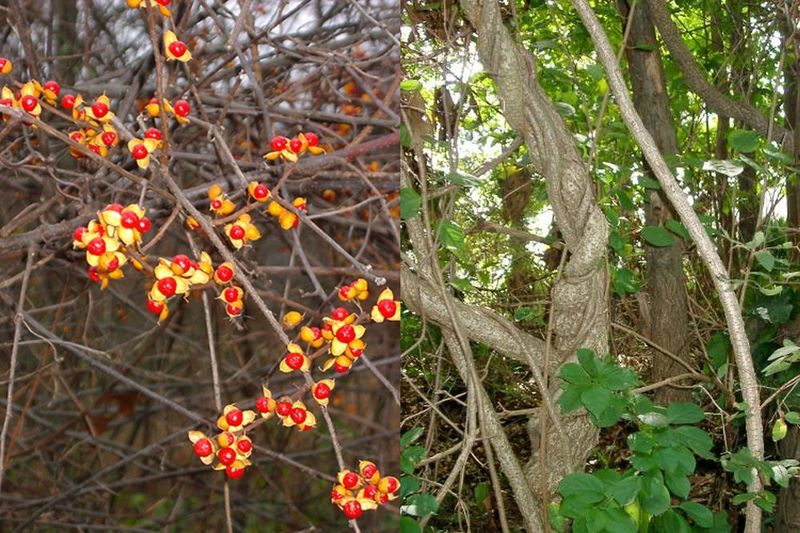
On Oriental bittersweet, the clusters grow in small groups along the stem, tucked into the leaf axils, which are the spots where a leaf stalk meets the stem. On native American bittersweet (Celastrus scandens), the clusters grow at the ends of the branches instead.
A University of Illinois Extension comparison lays out the same difference side by side.
Look closely at the fruit itself. The outer capsule on Oriental bittersweet is yellowish to yellow-orange, not truly bright orange.
When it splits open, it exposes red or red-orange fleshy coverings around the seeds.
Leaf shape will not settle the question either. The leaves are alternate on the stem, but their shapes can vary, so treat them as a supporting detail only.
If the vine has no fruit or flowers yet, wait for them or get help before deciding what you have.
What Indiana’s rule prohibits
Indiana treats this plant as a regulated invasive. The state Department of Natural Resources lists Asian bittersweet, Celastrus orbiculatus, among the plants covered by the Terrestrial Plant Rule, as shown on the DNR page on terrestrial invasive plants.
Under that rule, it is illegal to sell, gift, barter, exchange, distribute, transport, or introduce listed plants in Indiana. That covers more than nursery sales.
Handing cuttings to a neighbor or moving the plant to another property would fall under the same list of prohibited actions.
This matters in autumn, when the fruiting stems are sometimes cut for wreaths and arrangements. Fruit-bearing stems can carry seeds, so moving them around is exactly what the rule is meant to prevent.
DNR also invites reports of suspected invasive species and prefers that they include photos. If you find a vine you think is Oriental bittersweet, a clear picture of the stem, the leaves, and the fruit placement gives staff something useful to work with.
Remove small plants with their roots
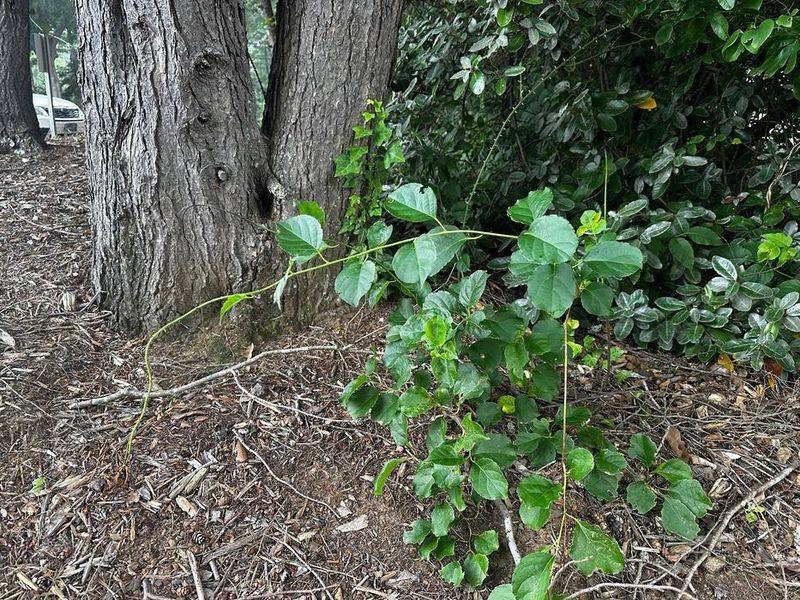
Small plants offer the best chance for an easy win. If the infestation is new and the vines are young, hand-pulling can work, but only when you get the roots out too.
Soft, damp soil makes that much easier, so a day after rain is a good time to try.
Loosen the soil around the base with a trowel or digging fork, then lift the whole plant. A stem snapped off at the surface leaves the root behind, and University of Maryland Extension guidance on Oriental bittersweet notes that established plants can resprout.
Bag any fruit-bearing pieces rather than leaving them on the ground, so the seeds do not get a fresh start.
Plan to come back. Mark the spot on a calendar and check it through the growing season and again the next year.
New shoots or missed seedlings are common, and control often takes repeated follow-up.
This method is for small, newly established plants only. A vine with a thick trunk or one climbing high into a tree needs a different approach.
Control established vines without pulling them down
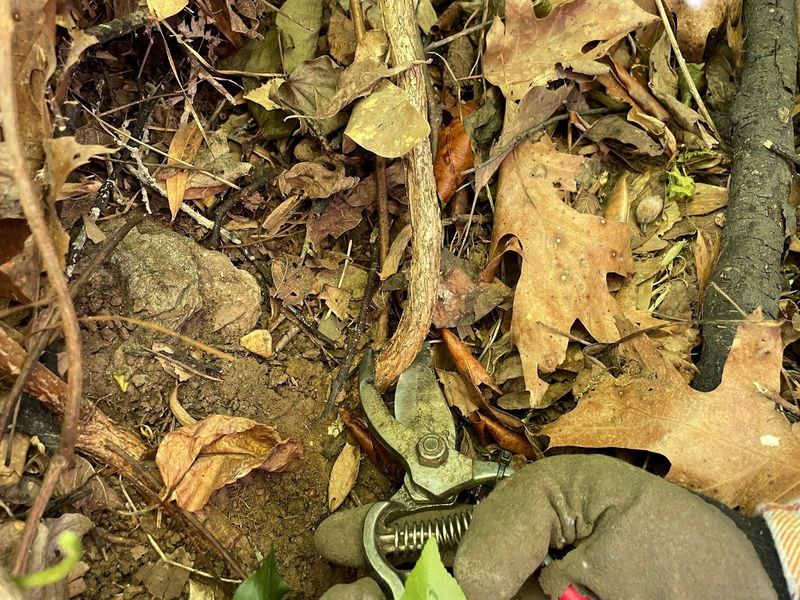
Once a vine has grown thick and climbed into a tree, the plan changes. Cutting the stem near the ground can stop it from climbing further, because the upper growth loses its connection to the roots.
The catch is that the roots may stay alive and send up new shoots.
For that reason, cutting is usually just the first step. University of Maryland Extension describes pairing cutting with follow-up control of regrowth, and the USDA Forest Service species review also covers how resprouting affects control.
One cut or one treatment should not be expected to wipe out an infestation or save a tree.
If you consider herbicide, read the label for the specific product you plan to use and follow it exactly, along with any local rules. There is no single product, strength, or schedule that fits every site.
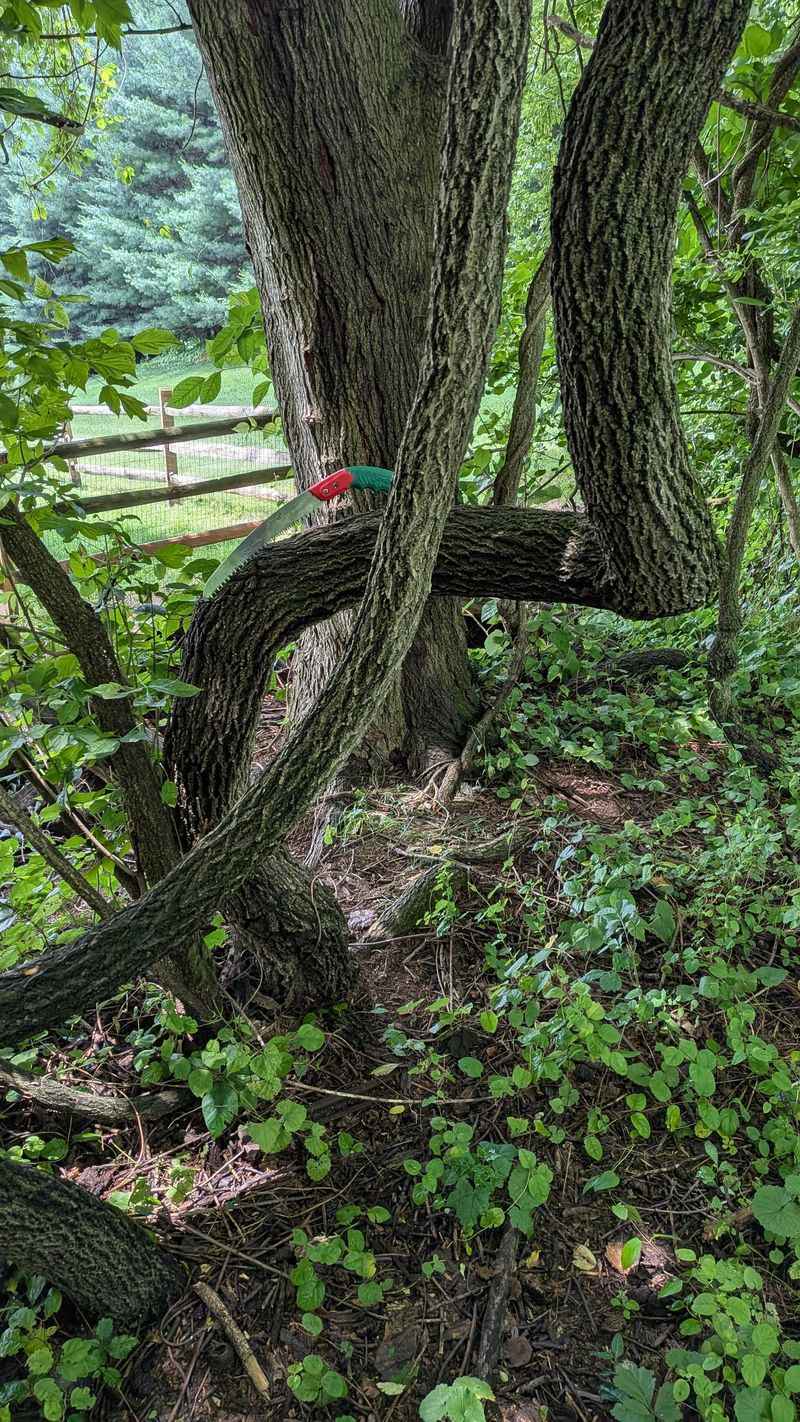
Do not yank the cut vine out of the tree. Ontario Invasive Plant Council best practices warn that falling vines or branches can injure people, and pulling can break limbs or harm the host tree.
Leave the severed upper growth in place so it can dry out, decompose, and fall on its own. Wear gloves, eye protection, and a hard hat while cutting.
For large vines or those reaching into the high canopy, hire a qualified tree care or invasive plant professional.
Confirm the plant before taking action
Start with the fruit or flower placement, since the Illinois Extension comparison and Indiana’s fact sheet both rely on it. If you are still unsure, take photos and ask an expert before cutting anything.
Match the method to the job: roots and follow-up for small plants, careful cutting for big ones, and professional help up high. Keep in mind that Ontario’s best practices advise against pulling large vines down.
A festive-looking vine is still a vine that deserves a second look.
Share this story