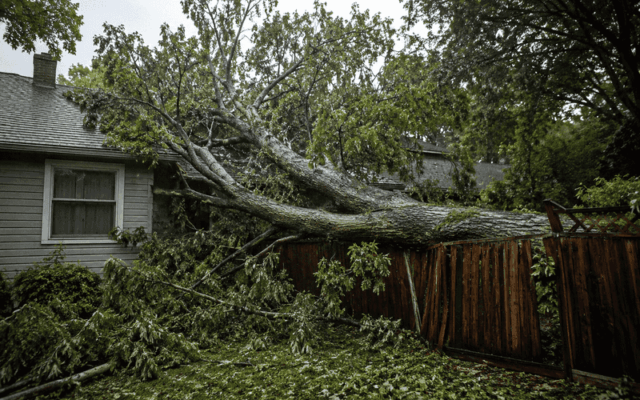
When a neighbor’s tree lands in your Ohio yard, you usually start by calling your own homeowners insurer if the loss may be covered. The tree’s owner does not automatically owe you money just because the tree grew on their land.
Who pays often depends on what the owner knew about the tree before it fell. Here is how repairs, cleanup, and liability usually sort out.
Stay clear of power-line hazards
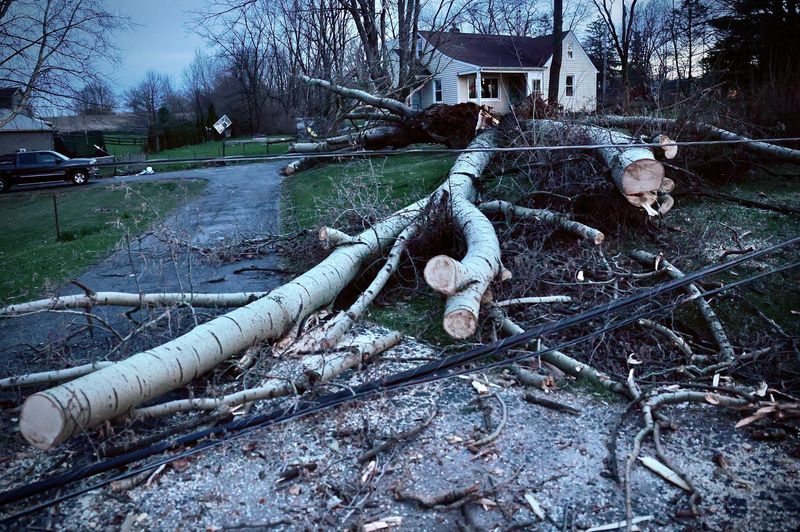
Before anything else, look up and around. If a fallen tree may be touching a power line, stay away from it, and keep children and pets back as well.
A line that looks dead can still carry deadly current.
Do not touch or move a downed line, and do not try to cut or drag the tree while a line could be involved. Ohio’s Public Utilities Commission guidance says to contact emergency personnel and your electric utility instead.
Wait until the utility or emergency crews say the area is safe. Money questions can wait a few hours, and nothing in your yard is worth a risk to your life.
Start with your homeowners insurer
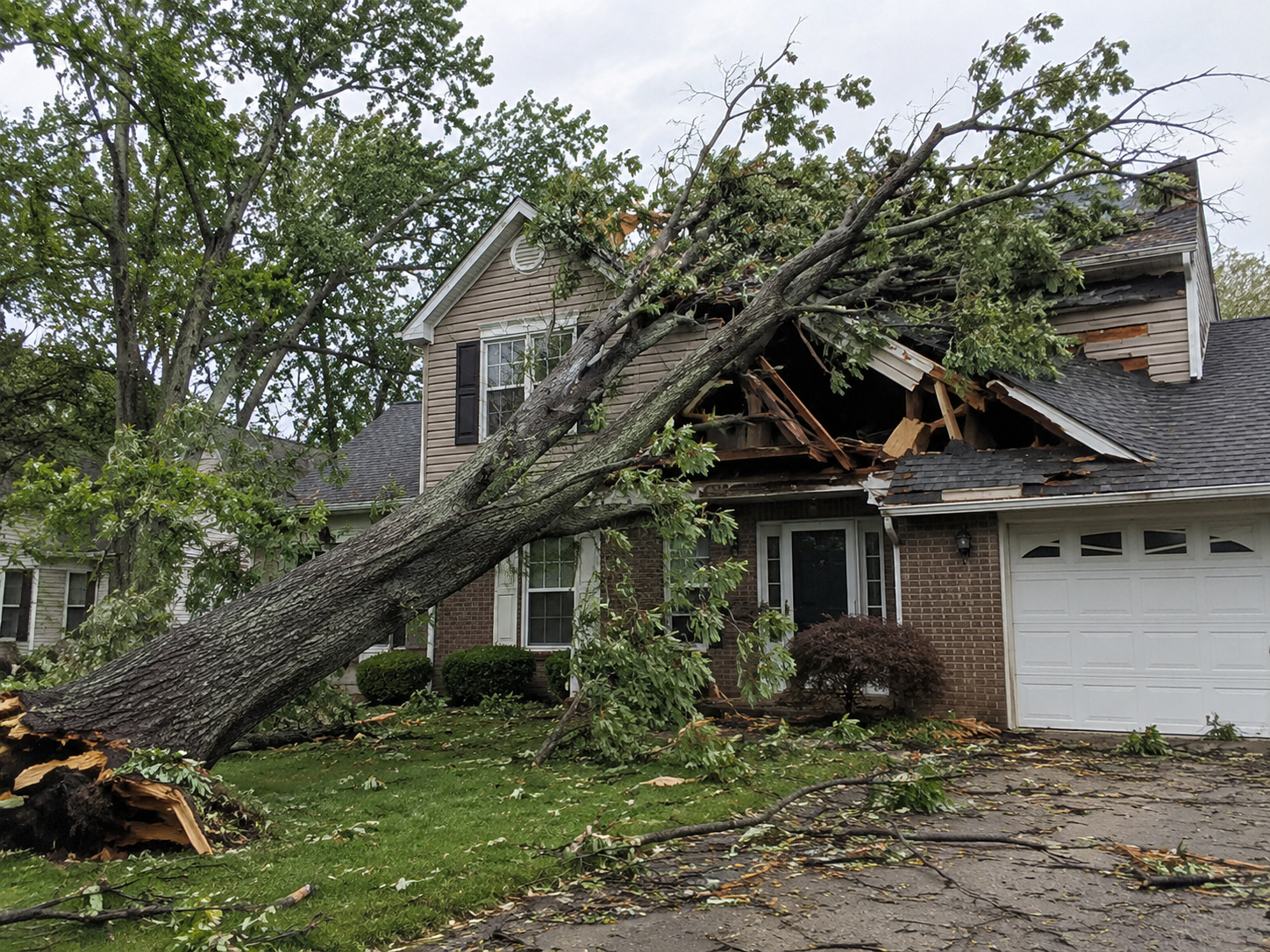
Most damaged homeowners begin with their own insurance company, as long as the loss may be covered. Waiting to prove a neighbor was at fault can delay repairs.
Your insurer can look at the damage under your own policy first.
The Ohio Department of Insurance explains that standard property policies generally cover many kinds of storm damage. If a tree hits an insured home, garage, or fence, the policy may pay for repairs and for removing the tree.
Debris-removal benefits can be more limited, especially when the tree did not hit other property.
Whether you get paid depends on the policy, the covered cause of loss, your deductible, and any limits or exclusions. Read your policy or ask your agent how a fallen tree is treated.
No one can promise a payout before the claim is reviewed.
It also helps to know there are two different kinds of coverage here. Your own property coverage, sometimes called first-party coverage, pays for damage to your home and structures.
Your neighbor’s personal-liability coverage is different, because Ohio’s homeowners insurance guide describes it as protection for claims that the insured caused damage through negligence.
That means your neighbor’s insurer usually becomes involved only if someone makes a claim that the neighbor was negligent.
The tree’s origin does not decide liability
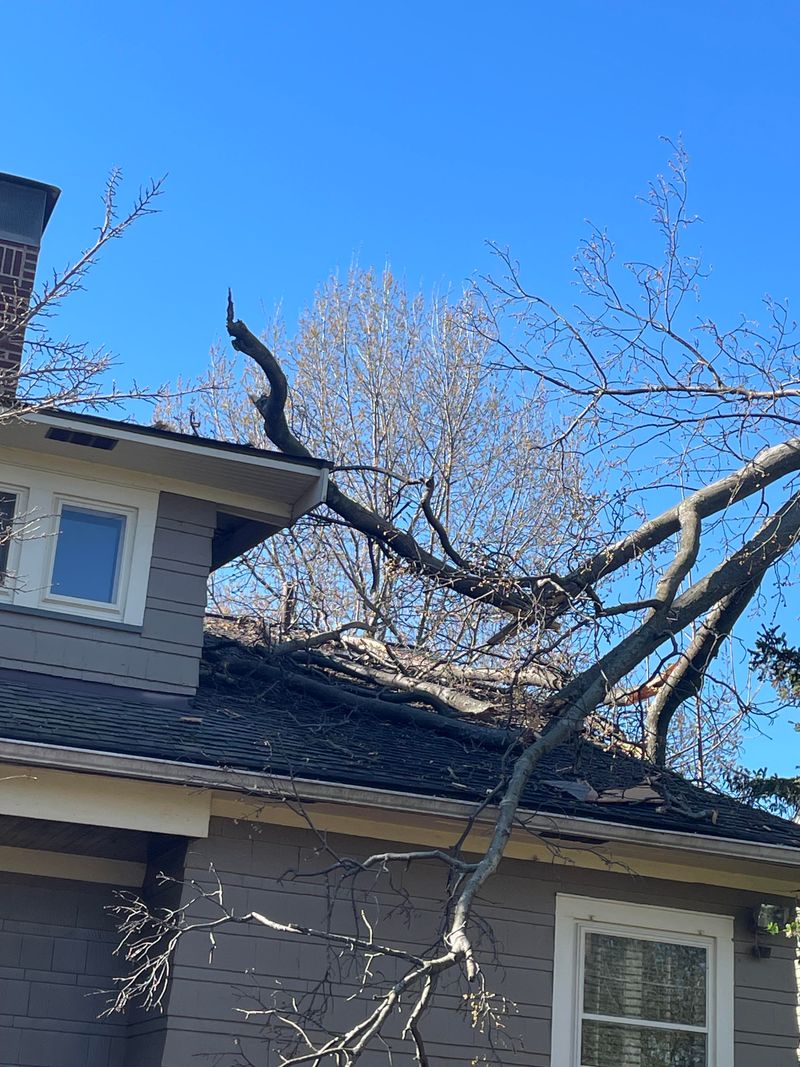
It feels natural to think the owner of the tree must pay. In Ohio, it is not that simple.
A neighbor is not automatically liable just because the tree grew on their property.
Liability generally depends on negligence. Courts ask whether the owner knew, or reasonably should have known, that the tree posed a danger and then failed to use reasonable care.
Ohio decisions such as Rababy v. Metter treat that kind of notice of a hazard as central.
Knowing about a danger is called actual notice. Should-have-known is called constructive notice.
A healthy tree that a storm knocks down does not, by itself, establish negligence, because nobody could have predicted that failure.
A storm does not wipe out every claim, though. If the owner had notice of a dangerous condition, such as a rotting trunk, a possible negligence claim may remain.
Allen v. Memering is another Ohio case that shows how courts look at what the owner knew.
Keep two paths separate in your mind. One is your own insurance claim for your damage.
The other is a possible claim against your neighbor for negligence, which personal-liability coverage may respond to if one is made. You can pursue the first without winning the second.
Warnings and tree conditions can matter
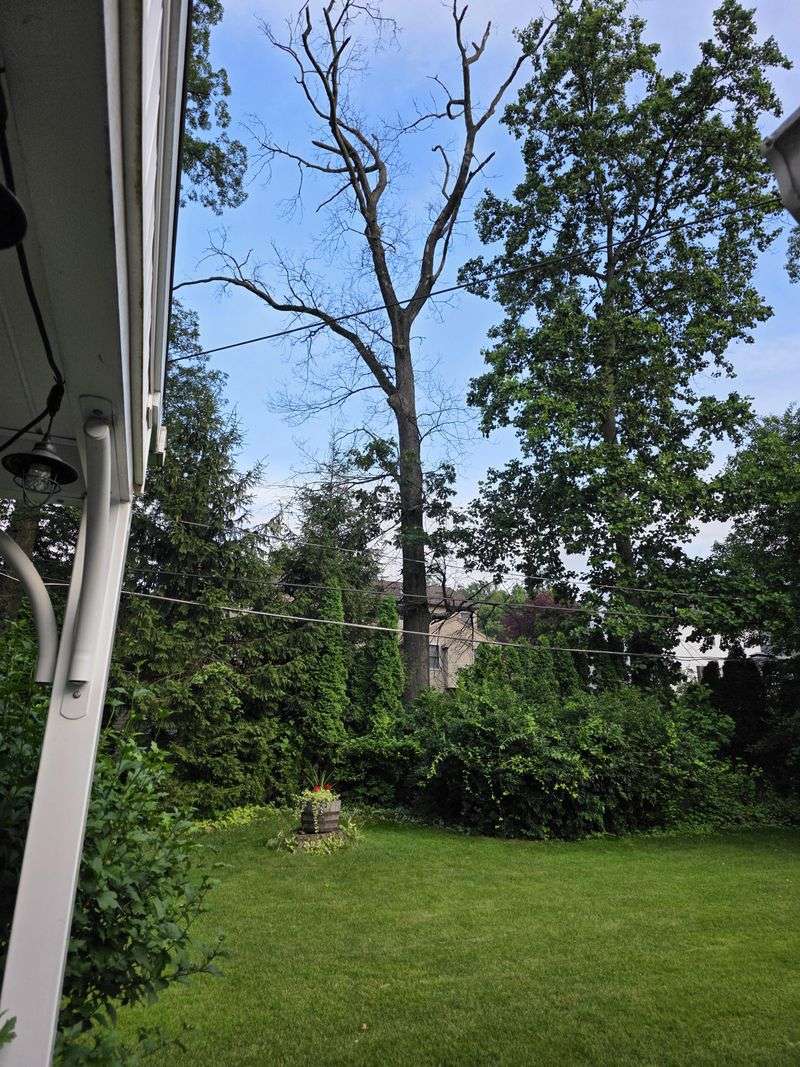
Picture a tree with a split trunk, dead limbs, or a lean that grows worse each year. If it falls, a court may ask whether the owner could have seen those problems.
That is the idea behind constructive notice.
Visible problems can be evidence on the question of notice. A neighbor’s earlier warning, such as a note or a text asking about the tree, can be evidence too.
Neither one automatically proves negligence, and neither works like a checklist that decides the case.
Courts look at the whole picture: the condition of the tree, what the owner knew or should have known, how it fell, and what proof exists. Rababy v.
Metter shows how those details shape the outcome.
Setting matters as well. Ohio cases treat urban and rural properties differently when it comes to inspection and what an owner reasonably should have noticed, as discussed in Allen v.
Memering. A single tree on a small city lot may be judged differently than one in a large wooded rural tract.
So there is no one inspection rule for every yard. The same warning could carry more weight in one setting than another.
Repairs, cleanup, and tree ownership are different questions
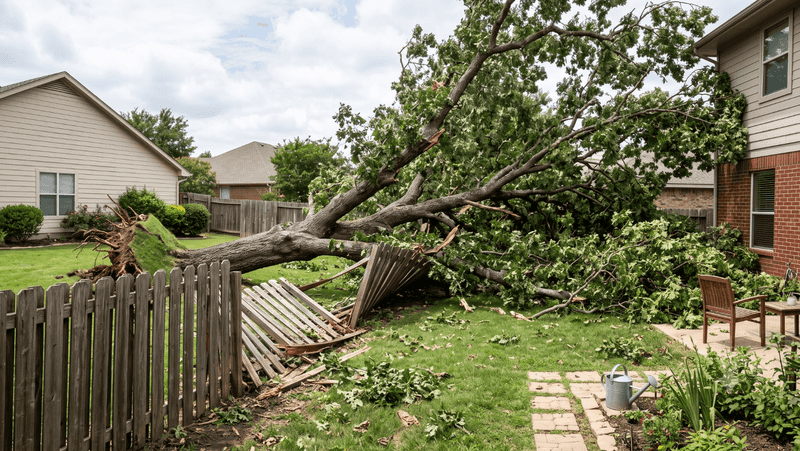
After a tree falls, three separate questions come up. Who pays to fix the damage?
Who clears the debris? And who owns the wood?
Each can have its own answer.
Repair costs may be covered by your homeowners policy, subject to your deductible and its terms. If a negligence claim against the tree’s owner is supported, that may also affect who ultimately bears repair costs.
The Ohio Department of Insurance notes that deductibles and debris-removal limits may apply.
Cleanup is often a property-owner job. Ohio State University Extension describes debris on the affected property as generally falling to that property’s owner.
Policy terms, liability findings, and local rules can change that, so it is not an absolute rule.
Ownership of the tree is a third matter. In Brand v.
Ogle, an Ohio appellate court recognized the tree owner’s continuing ownership interest in the fallen trunk. The court reversed part of a judgment after the trunk was taken and sold without permission.
So landing in your yard does not hand you the whole tree. Before you haul away or sell valuable timber, talk with your neighbor and get permission.
Document the damage and report it
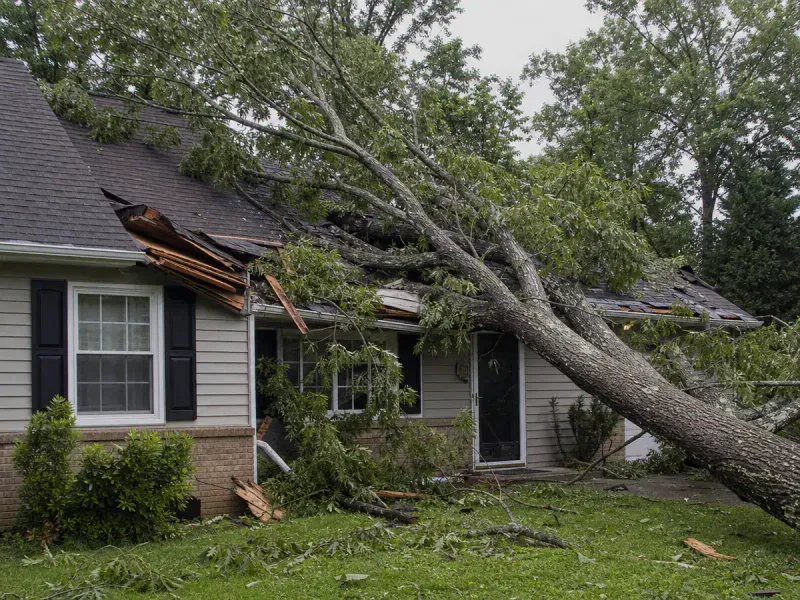
Once the scene is safe, grab your phone. Take wide photos of the whole yard, then close-ups of the damage, the broken trunk, and the roots.
Add a short video walk-through and note the date and time.
Report the damage to your insurer promptly. The Ohio Department of Insurance encourages policyholders to document losses and check their policy terms.
Ask what the adjuster needs and keep copies of every email and receipt.
Save anything that shows the tree’s history, too. Old photos, texts, or letters about a leaning trunk, dead limbs, or a past warning to your neighbor may help show whether the owner had notice.
Under cases like Rababy v. Metter, such records may be relevant, but they do not guarantee a finding against the tree’s owner.
Your insurance claim and any negligence question stay separate as insurers look at the facts. Your claim for your own damage does not depend on proving fault.
Do not throw away the evidence before it has been reviewed, and take pictures before any cleanup crew arrives.
Let the policy and evidence guide the next steps
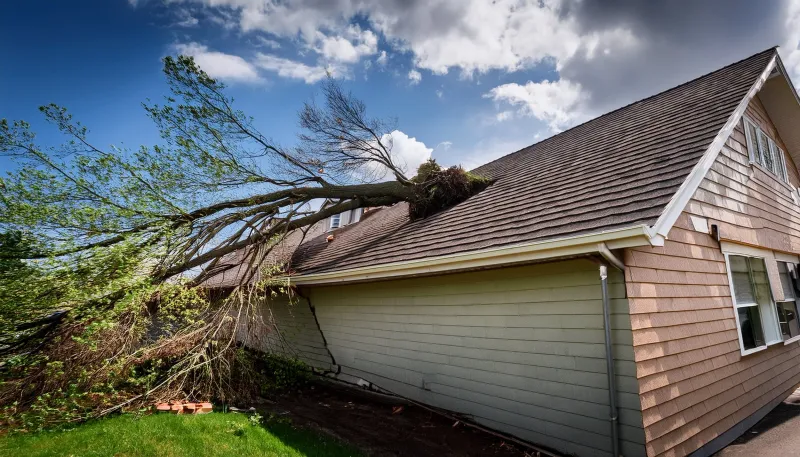
Most often, you call your own insurer first if the loss may be covered. A separate liability claim against the tree’s owner may follow only if evidence shows notice and negligence.
Your policy terms and the facts of the fall shape what happens, as Ohio case law does.
Repairs, debris costs, and ownership of the wood are separate questions, and Brand v. Ogle is a reminder on that last one.
A fallen tree is a bad day, but a calm neighbor and good records can keep it from becoming a bad year.
Share this story