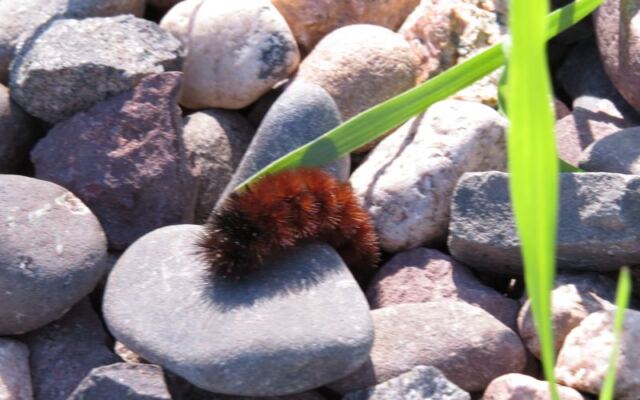
A fuzzy black-and-rust caterpillar humping across your driveway in autumn looks tiny and fragile. Yet this animal can live through some freezing that would kill most insects.
The real story is more interesting, and more complicated, than the popular claim that it freezes solid and wakes up fine. Here is what scientists have measured, and what the winter-forecast folklore gets wrong.
Why are woolly bears crossing driveways now?
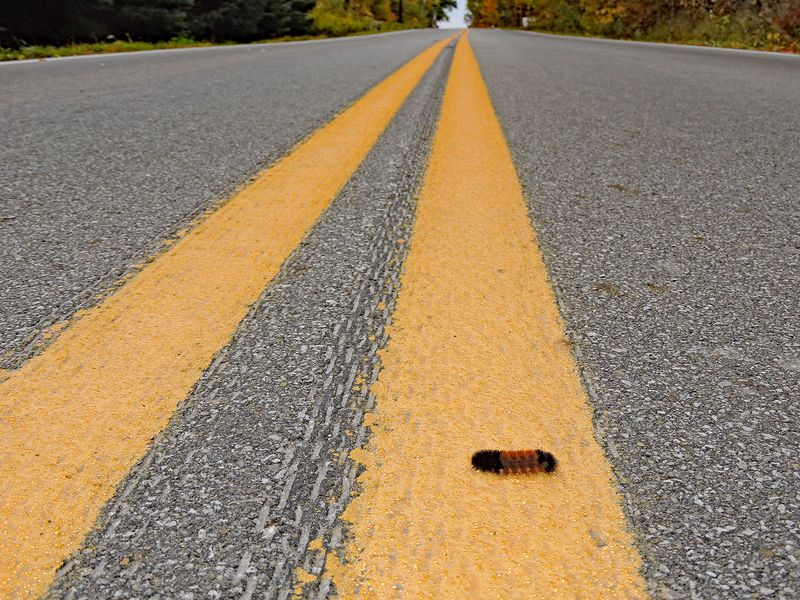
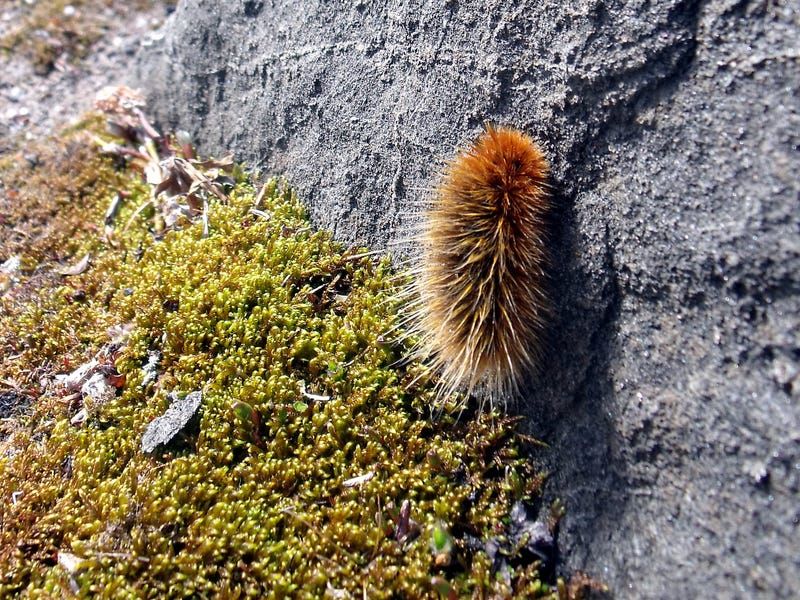
The familiar black-and-rust caterpillar is the larva of the Isabella tiger moth, Pyrrharctia isabella. Not every fuzzy caterpillar is a woolly bear, so a quick look at the pattern matters.
The classic one has a rusty middle band with black at both ends.
According to the USA National Phenology Network, nearly mature caterpillars commonly wander in autumn before they settle into shelter. They overwinter in places such as leaf litter or under boards and rocks.
Once the weather turns cold, they become inactive.
That wandering explains many driveway sightings. A caterpillar on pavement is most likely on the move, searching for a spot to tuck in, not aiming for your driveway on purpose.
Open pavement just happens to be hard to avoid when you are a small animal crossing a yard.
Timing varies from place to place and from year to year. The network describes this behavior across much of the species’ range, so nobody can promise a fixed Wisconsin calendar date.
If you spot one on a mild October afternoon or a chilly November morning, either is consistent with this seasonal search for shelter.
Cold acclimation changes the caterpillar’s chemistry
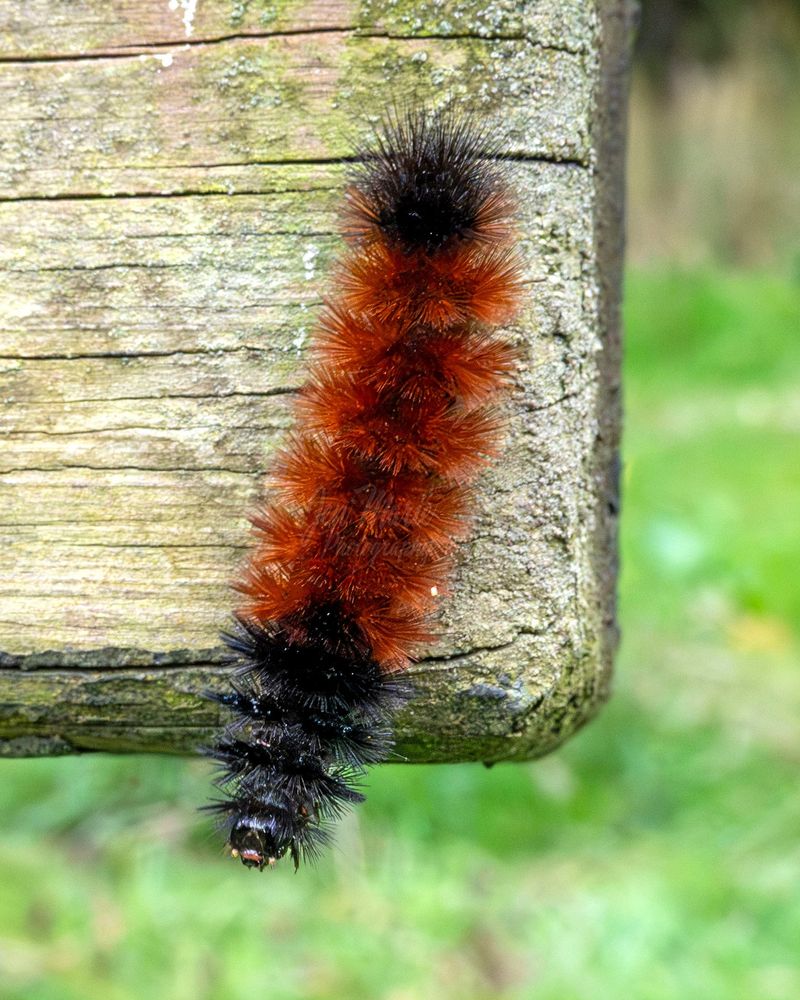
A caterpillar that has been through gradual cooling is not the same animal that crawled around in summer. Cold acclimation changes its body fluids.
One key change is a buildup of glycerol, a compound that helps limit damage when freezing happens.
Researchers call glycerol and similar compounds cryoprotectants. A study of freeze temperature and survival found glycerol in the caterpillars’ body fluid.
Another paper on triggering cryoprotectant synthesis reported that cold acclimation and dehydration can prompt the caterpillar to make these protective compounds.
You will often hear this called antifreeze. That is a loose comparison, and it can mislead.
Glycerol and related chemicals help cells cope with freezing, but the research does not show that the caterpillar produces antifreeze proteins or that it stays liquid in the cold.
Think of it as a shield, not a force field. The chemistry lowers the odds of injury when ice forms in parts of the body.
It does not make the animal immune to winter.
How much freezing can they survive?
Lab results are impressive, but they come with fine print. In a Journal of Experimental Biology study, caterpillars were acclimated at 5°C for 18 weeks.
All of them survived a week frozen at -20°C, and all survived seven freeze-thaw cycles at that temperature. None survived freezing at -80°C.
Freezing here does not mean the whole caterpillar turns to ice. Earlier research on ice formation measured partial ice formation, so some body water stays unfrozen.
A separate team got a different picture. In a repeated-freezing experiment, five freeze-thaw cycles raised mortality to almost 30 percent and caused tissue damage.
The two studies used different protocols, so neither result can be stretched to cover all repeated freezing.
Neither one gives a universal outdoor limit either. Your backyard has wind, snow cover, moisture, and temperature swings that no lab copies exactly.
Movement after thawing is not proof of recovery. Some caterpillars moved soon after thawing and still died in the following weeks.
Surviving the freeze is only part of the story.
The color bands are not a winter forecast
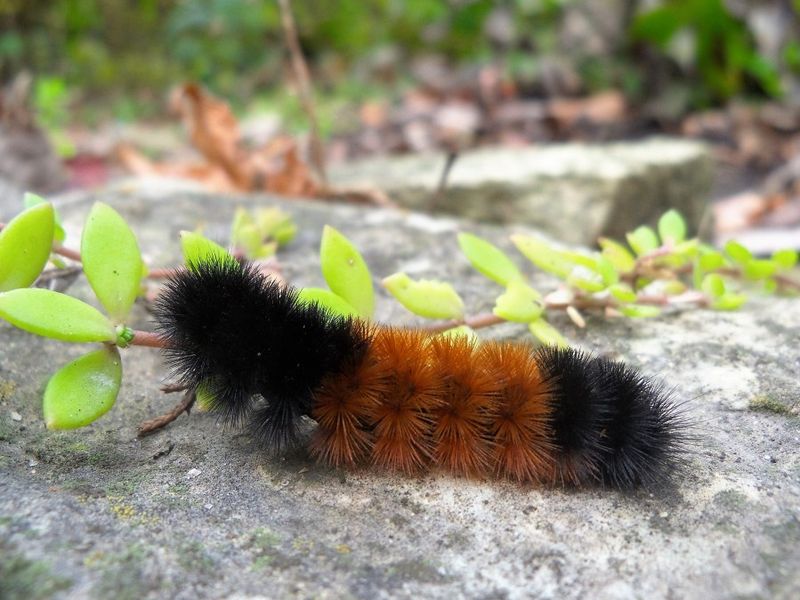
Folklore says a wide rusty band means a mild winter, and a lot of black means a harsh one. It is a fun tradition, and many towns celebrate it with woolly bear festivals.
As a forecast, though, it does not hold up.
The National Weather Service in La Crosse explains that color reflects factors such as age, feeding, and species, not the severity of the coming winter. Band width, hairiness, and even the direction a caterpillar crawls are not reliable clues about snow or cold.
Development matters a lot. The USA National Phenology Network notes that the rusty center band widens with molts.
So an older caterpillar can look different from a younger one on the very same lawn.
Here is a quick test for yourself. Collect a handful of caterpillars from one yard and compare them.
You will probably find several different patterns, all from the same weather.
Enjoy the tradition as a seasonal ritual. Just check an actual forecast before you plan your snow tires.
A nearby shelter is a cautious option for one on pavement
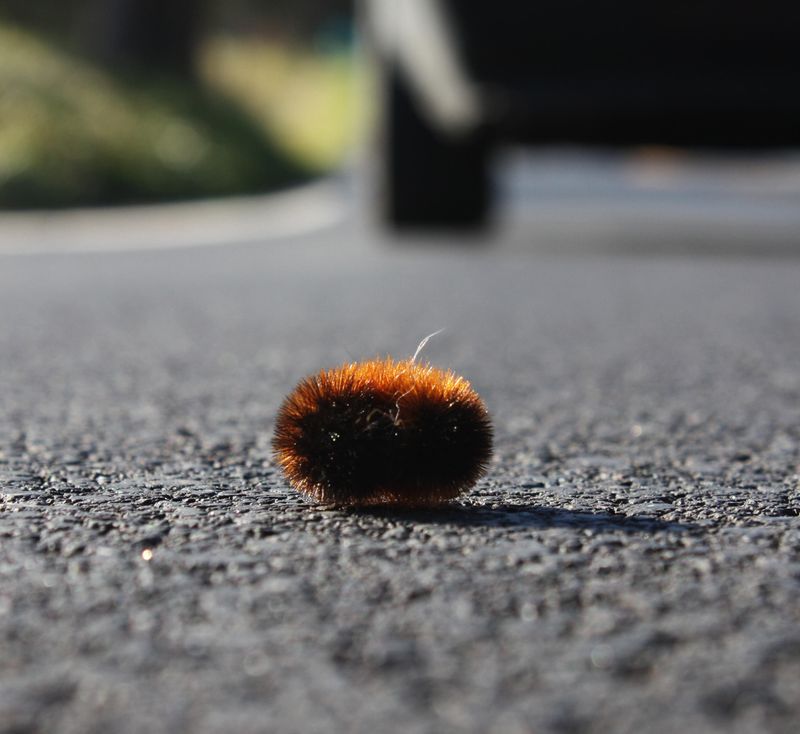
Most woolly bears crossing a driveway will do fine on their own. If one is in immediate danger, say on a spot where cars are pulling in, you may choose to move it a short distance.
A nearby pile of leaf litter or another sheltered spot fits what the USA National Phenology Network describes as overwintering habitat.
That is a reasonable idea, not a proven rescue method. No source gives a special handling procedure, and moving a caterpillar cannot promise it will survive.
Only do it if you are confident about what you are looking at.
Identification matters, because not every fuzzy caterpillar is a woolly bear. UMass Extension says woolly bear hairs are not stinging hairs, but sensitive people may still get skin irritation.
Other caterpillars can cause stronger reactions. The National Capital Poison Center offers general guidance on caterpillar stings.
If you are unsure of the species or have sensitive skin, skip bare hands and use a leaf or a stiff piece of paper to nudge it along.
The real winter story
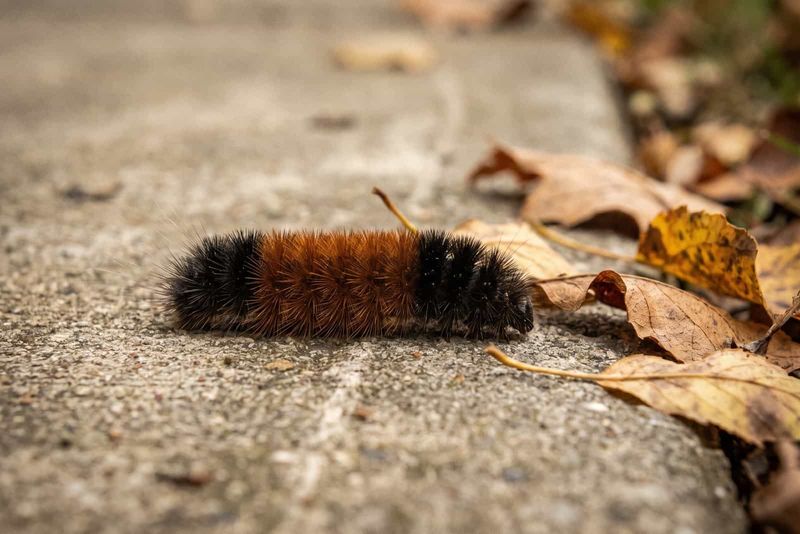
Woolly bears have a remarkable but conditional cold tolerance. As laboratory work shows, some survive freezing under set conditions, yet freezing can still injure or kill them.
Their bands, according to the National Weather Service, tell us nothing about the winter ahead.
The caterpillar is not a prophet. It is a small survivor with good chemistry and a bit of luck.
Share this story