Porcupines in Wisconsin can strip the bark off trees in winter and early spring, and a barrier that blocks them is the best way to stop the damage. The chewing can leave bare, pale patches on trunks and branches that are easy to spot once you know where to look.
Some of that damage is minor, but some can kill part of a tree. Here is how to confirm the cause, judge the harm, and protect your trees.
Porcupines feed on trees in winter and early spring
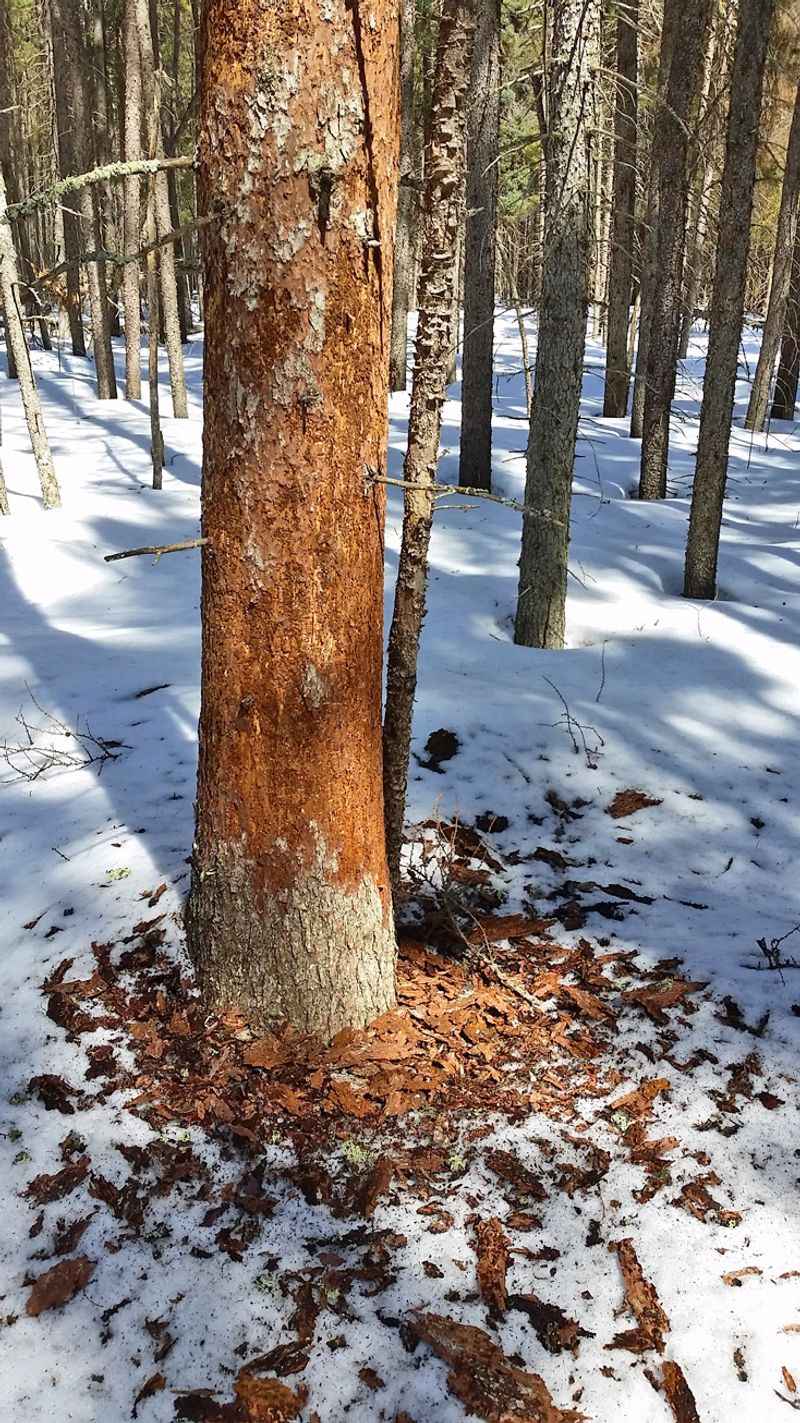
When snow covers the ground and green food is scarce, porcupines turn to trees. They eat the inner bark and the cambium, the thin living layer just under the bark that carries water and nutrients.
According to Wisconsin DNR forestry staff, they can strip bark from trunks and branches.
Both conifers and hardwoods can be hit. Wisconsin DNR reports a slight preference for conifers such as pines, but porcupines feed on many tree species.
A maple or oak is not automatically safe just because it is not an evergreen.
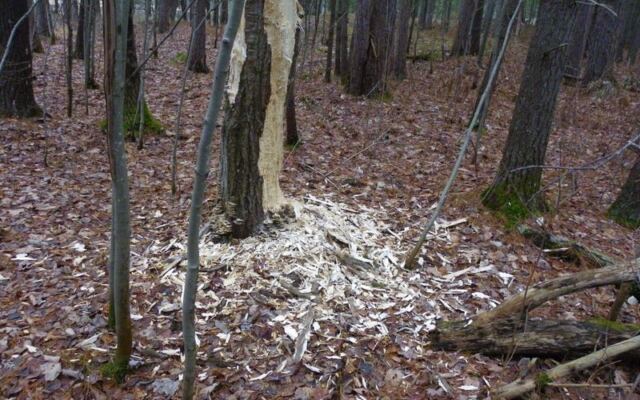
The feeding is not limited to one tree part, either. Trunks and higher branches can both lose bark, and the marks tend to stand out in late winter, when the stripped wood looks pale against darker bark, as described in a Wisconsin DNR winter damage report.
Keep the scope in perspective. Winter and early-spring feeding can happen in Wisconsin yards, but it does not strike every yard, every tree, or every stretch of winter.
The sources reviewed do not say how common the problem is statewide, and they do not give homeowner cost figures.
So the goal is not to panic. It is to look closely at your own trees, work out what animal is responsible, and decide whether protection makes sense for the ones that matter most to you.
Check the marks before blaming porcupines
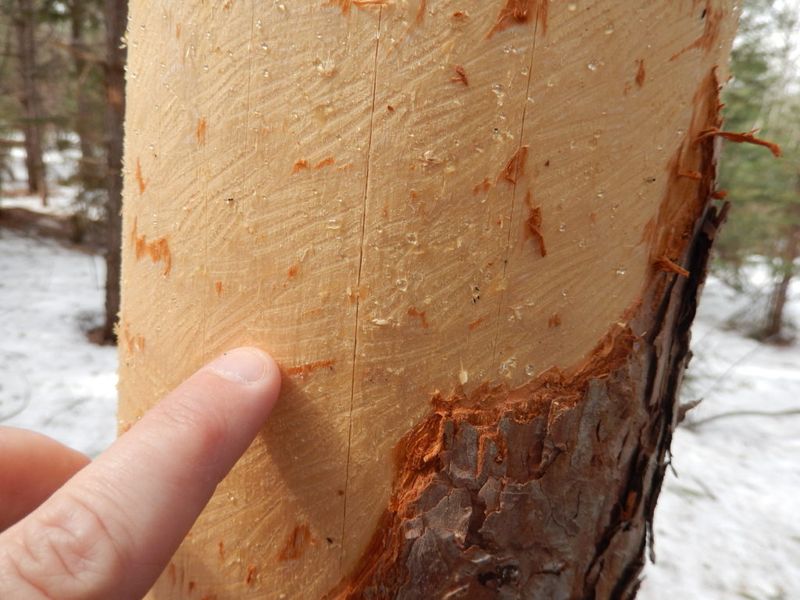
Bare patches on a trunk do not point to one culprit. Squirrels also strip bark, and their damage can look a lot like a porcupine’s.
Looking at bark loss alone is not enough to name the animal.
Start with the tooth marks. Wisconsin DNR says porcupine tooth scrapes are about 1/8 inch wide, while squirrel scrapes are about 1/16 inch wide.
Get close, take a photo with a ruler beside the marks, and compare the widths.
Then gather other clues. Porcupines may leave larger chunks of bark than squirrels do.
You might also find visible pellets on the ground beneath the tree. Treat these as hints that add up, not as proof on their own.
It helps to look at more than one spot. Check the trunk, the lower limbs, and the snow or soil under the tree.
Tracks in fresh snow, if you have them, can add context, though the sources here focus on tooth marks, bark chunks, and pellets.
If the clues disagree, say a few wide scrapes but no pellets, stay open to either animal. Getting the cause right matters because the fix for one animal may not fit the other, and a wrong guess can waste time and materials.
A complete girdle can kill the tree above it
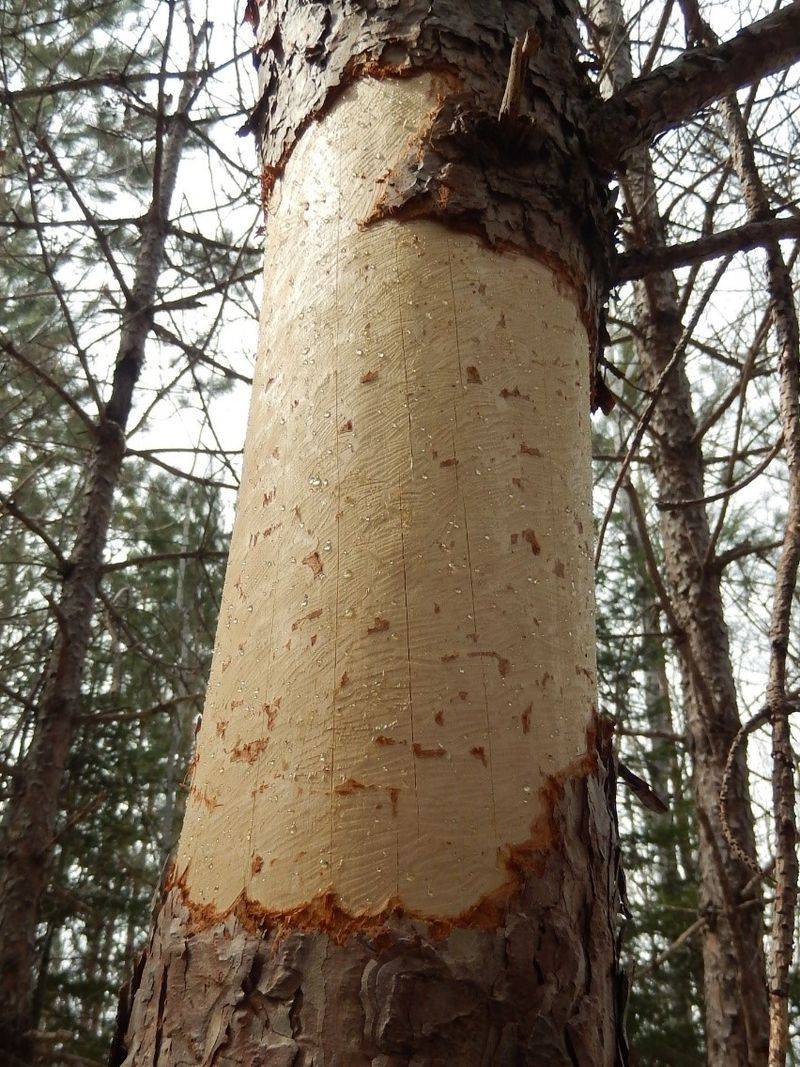
How much bark is gone, and where, matters more than the fact that some is missing. When feeding removes bark all the way around a trunk or branch, that is called girdling.
As Wisconsin DNR explains, the part above a complete girdle can die.
Think of the bark and cambium as the tree’s plumbing. Cut that line all the way around, and nothing can move past the break.
A girdled branch may be lost, and a girdled trunk puts everything above the wound at risk.
Partial bark loss is a different story. A tree or branch with bark missing on only one side is not necessarily doomed.
It may keep growing and form callus tissue, the rough growth that gradually closes over a wound.
Be patient with nearly girdled spots, though. Parts that are almost, but not quite, ringed can show delayed wilting or dieback, so a branch that looks fine in March may struggle by summer.
Walk around each damaged trunk or limb and look at every side. Note how much of the circumference is stripped.
Even so, appearance alone cannot tell you a tree’s future, so watch for leaf-out and new growth through the season.
Use a barrier that blocks access
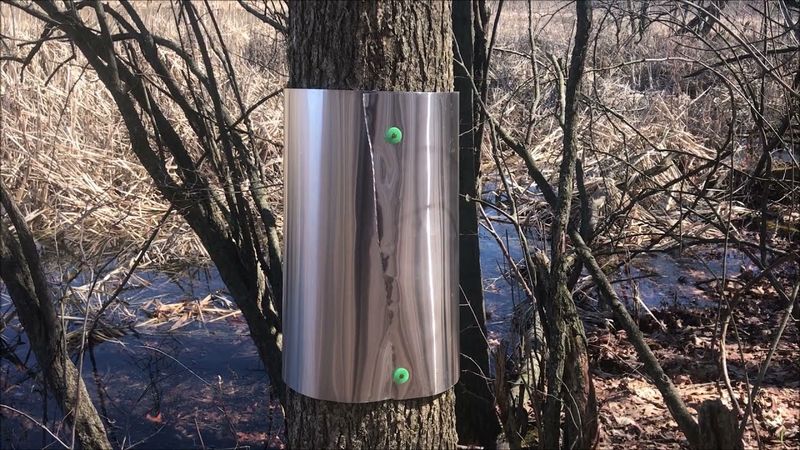
The most dependable idea is to physically keep the animal away from the tree. Wisconsin DNR says that in some situations trees can be fenced or wrapped with smooth metal sheeting.
That wording is cautious on purpose. These options may help, but they are not guaranteed fixes.
For more detail, look to Utah State University Extension. It describes a 30-inch-wide aluminum flashing band around the trunk.
That is Utah guidance, not Wisconsin-specific field advice, so treat it as a starting point.
Before you buy anything, ask where the animal actually travels. A trunk band will not help if the porcupine can reach the canopy another way, such as through a neighboring tree whose branches touch yours.
A barrier only works if it blocks the route to the vulnerable tree or area.
Check guards often. A band that fit well in winter can squeeze a growing trunk later.
Adjust it or remove it if it constricts or injures the tree, and skip the idea of a tight, permanent wrap.
As for sprays and repellents, do not count on them. Utah State University Extension says published research has not shown any product to be effective against porcupines.
Assess damage before pruning
Late winter and spring are good times to inspect, since stripped wood is easy to see then. Wisconsin DNR also notes that the damage can get harder to spot as the exposed wood darkens, so a quick look in summer may miss what was obvious in March.
Photos taken early give you something to compare against later.
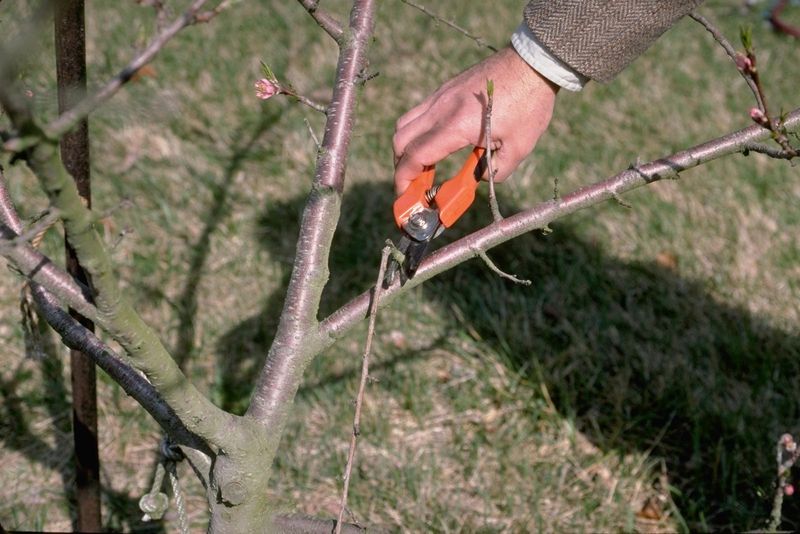
Wisconsin DNR says girdled branches can be pruned. If you decide to cut, find the branch collar, the slightly swollen ring where a branch joins the trunk or a larger limb, and make your cut so that it stays intact.
Guidance from UW-Madison Extension generally advises against wound paint or dressing, so leave the cut bare.
Not every damaged branch needs to come off right away. Since nearly girdled parts can show delayed dieback, waiting to see how the tree leafs out can save you from cutting something that would have recovered.
If damage is extensive or keeps happening, bring in help. A local wildlife biologist can talk through options for the animal, and a qualified tree-care professional can judge the tree.
Big limbs and high cuts are also jobs better left to people with the right gear.
Give porcupines space and check rules before trapping
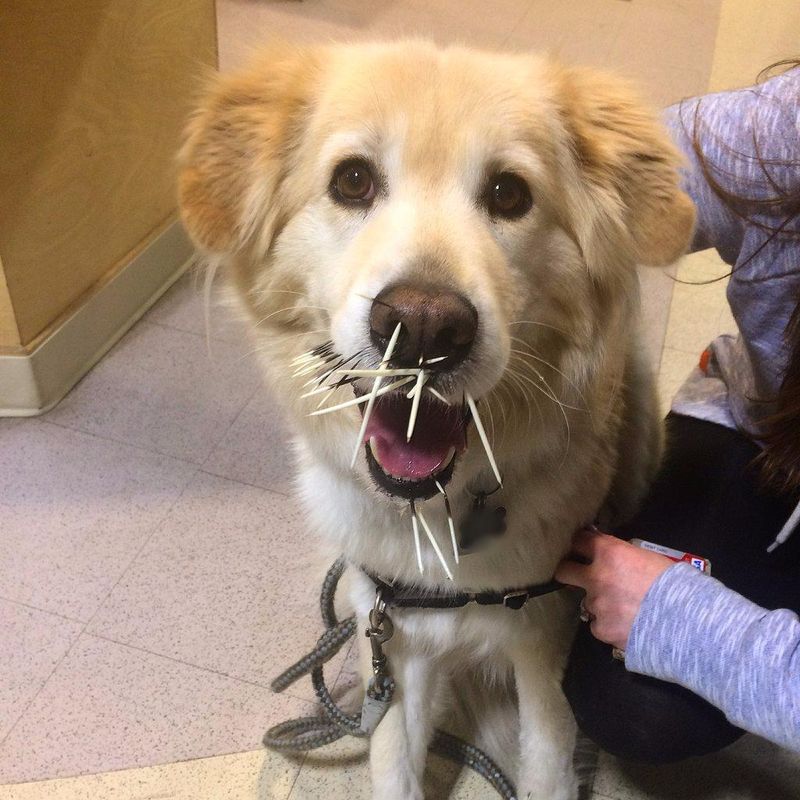
If you spot a porcupine, back away slowly and leave it alone. Utah State University Extension gives that same advice and notes that pets can be injured by quills.
Do not try to handle or corner the animal.
Pets need extra care. Bring dogs inside at dusk and overnight if you know a porcupine is visiting, and keep them leashed near trees where you have seen feeding.
A curious pet and a frightened porcupine are a bad mix.
Some homeowners wonder about trapping. Wisconsin DNR lists porcupines as unprotected, and its online trapping regulations say landowners or occupants may trap unprotected species causing damage or nuisance without a trapping license.
That summary is not a how-to guide, and it is not blanket permission for every control method.
Read the current DNR requirements before you do anything, since rules can change. A calm approach, a good barrier, and a little distance usually beat a confrontation.
Share this story