Get the latest garden guides in your inbox →
Gardening Latest
  • General Gardening
  • Lawn Care
  • Plant Care
  • Composting
  • Soil Health
  • Backyard
  • Garden Muse Magazine
  • General Gardening
  • Lawn Care
  • Plant Care
  • Composting
  • Soil Health
  • Backyard
  • Garden Muse Magazine
  • News
  • Gardening Calendar
  • Garden Structures
  • Vegetable Garden
  • Vertical Garden
  • Raised Beds
  • Hydroponics
  • General Equipment
  • Community Gardens
Garden Themes
  • Spiritual Garden
  • Hydroseeding
  • Seeding and Laying Sod
  • Artificial Grass
  • Lawn Care Equipment
  • Plants
  • Trees
  • Planting Tools
  • Composting Basics
  • Fertilizer
  • Alternative Growing Mediums
  • Front Yard
  • Backyard Activities
  • Landscaping
Gardening Latest

Explore by state

Which state is your garden in?

Currently viewing South Carolina

All states

Northeast

  • Connecticut —
  • Delaware 13
  • Maine —
  • Maryland 3
  • Massachusetts 15
  • New Hampshire —
  • New Jersey 3
  • New York 9
  • Pennsylvania 9
  • Rhode Island —
  • Vermont —

Southeast

  • Alabama 3
  • Arkansas —
  • Florida 3
  • Georgia 3
  • Kentucky 14
  • Louisiana 2
  • Mississippi —
  • North Carolina 1
  • South Carolina 13
  • Tennessee —
  • Virginia 2
  • West Virginia —

Midwest

  • Illinois 2
  • Indiana 4
  • Iowa 13
  • Kansas —
  • Michigan 3
  • Minnesota 2
  • Missouri 2
  • Nebraska —
  • North Dakota —
  • Ohio 3
  • South Dakota —
  • Wisconsin 14

Southwest

  • Arizona 3
  • Colorado —
  • Nevada —
  • New Mexico —
  • Oklahoma —
  • Texas 2
  • Utah —

West

  • Alaska —
  • California 3
  • Hawaii —
  • Idaho —
  • Montana —
  • Oregon —
  • Washington —
  • Wyoming —

No state matches that search.

Site menu

Gardening Latest
  • General Gardening
    • News
    • Gardening Calendar
    • Garden Structures
    • Vegetable Garden
    • Vertical Garden
    • Raised Beds
    • Hydroponics
    • General Equipment
    • Community Gardens
    Garden Themes
    • Spiritual Garden
  • Lawn Care
    • Hydroseeding
    • Seeding and Laying Sod
    • Artificial Grass
    • Lawn Care Equipment
  • Plant Care
    • Plants
    • Trees
    • Planting Tools
  • Composting
    • Composting Basics
  • Soil Health
    • Fertilizer
    • Alternative Growing Mediums
  • Backyard
    • Front Yard
    • Backyard Activities
    • Landscaping
  • Garden Muse Magazine

Explore

  • About GardeningLatest.com
  • Contact Us

Get the latest from the garden

New guides on lawn care, plants and backyard projects, sent when they go up.

Subscribe →

Follow

  • Facebook
  • X
  • Pinterest
  • YouTube
South Carolina Gardening

7 South Carolina Critters That Look Venomous Enough to Clear a Yard but Are Completely Harmless

Every summer, South Carolina neighbors grab shovels and scream at creatures that never meant them any harm.

BR

By Beau Rutledge

November 19, 2026 · 5 min read

7 South Carolina Critters That Look Venomous Enough to Clear a Yard but Are Completely Harmless

Every summer, South Carolina neighbors grab shovels and scream at creatures that never meant them any harm. Some of the scariest-looking animals in the Palmetto State are actually helpful garden guests that eat pests and keep nature in balance.

Knowing which critters are safe can save you a panic attack and save an innocent animal’s life. Here are seven yard visitors that look dangerous but are really just misunderstood.

At a glance

Where
South Carolina Gardening
Hardiness zone
8 10 to 20°F
Read
5 minutes
Published
November 19, 2026

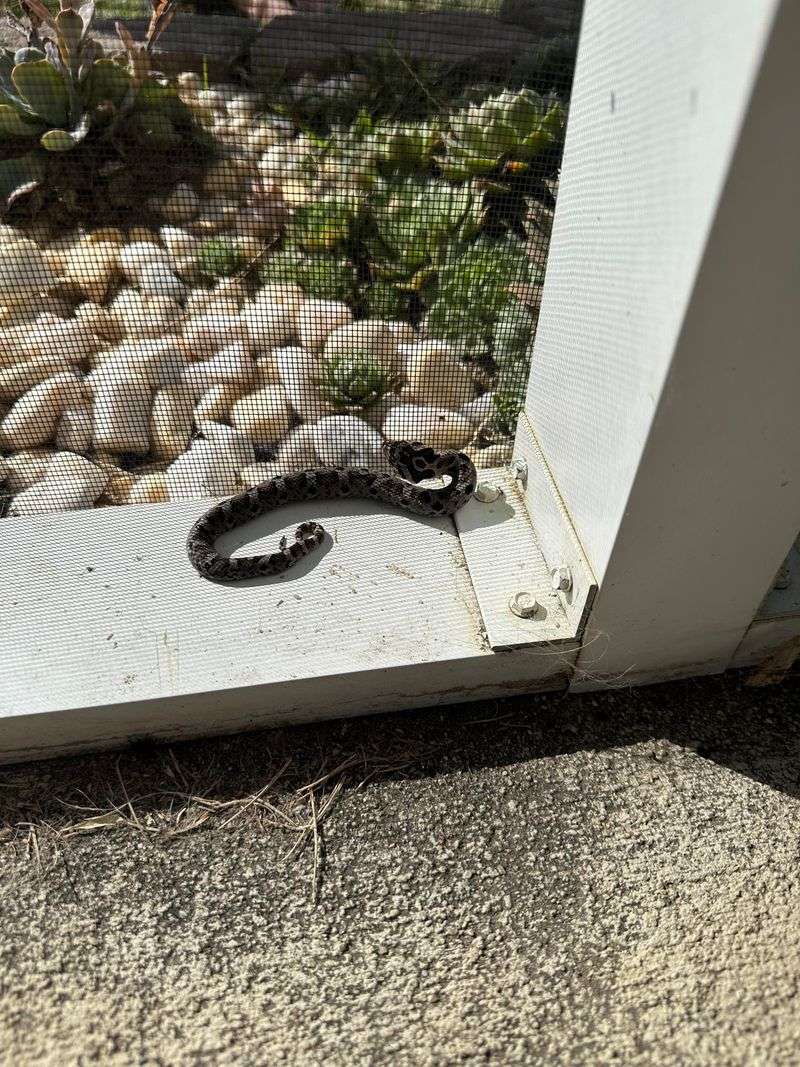
1. Eastern Hognose Snake

Eastern Hognose Snake
© Reddit

Picture a snake that hisses, flattens its neck like a cobra, and then flips over and plays dead with its tongue hanging out. That over-the-top performance belongs to the eastern hognose, the drama queen of the Lowcountry.

People often call it a spreading adder, which makes it sound far scarier than it is.

Hognose snakes almost never bite people, even when picked up. Their whole defense plan is a bluff, and if you flip a fake-dead hognose right side up, it will often roll back over to keep the act going.

Honestly, it deserves an award.

These snakes love sandy soil and feed mostly on toads, which they dig up with their upturned snouts. If one shows up in your yard, enjoy the show and let it move along.

2. Scarlet Kingsnake
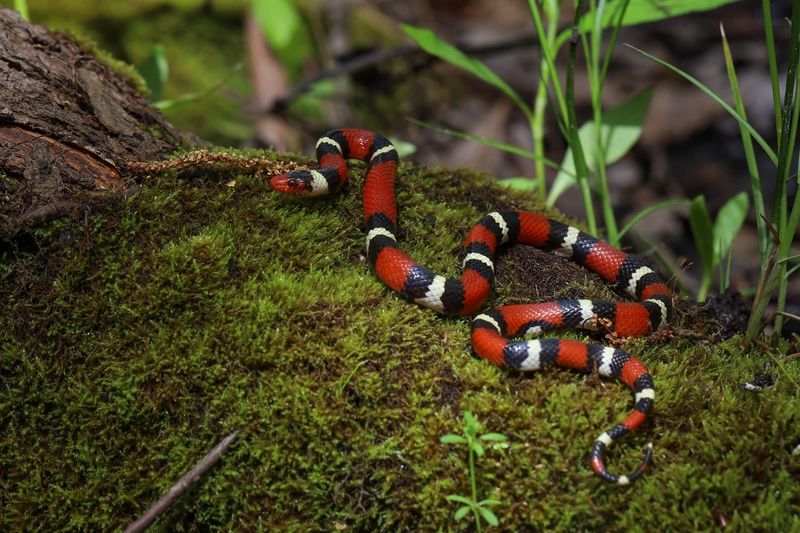
Scarlet Kingsnake
© nkfherping

Red touches black, friend of Jack. Many Southern kids learn that rhyme to tell the scarlet kingsnake apart from the venomous coral snake, and it works well in South Carolina.

On the kingsnake, the red bands sit next to black ones, not yellow.

The eastern glass lizard has no legs, but it has eyelids and ear openings, two things real snakes lack.

Scarlet kingsnakes are small, usually under two feet long, and spend most of their time hiding under loose bark or rotting logs. They eat lizards, skinks, and even other small snakes.

You might live near one for years and never notice.

Their bright colors are a clever copycat trick called mimicry. Predators see those stripes and back off, which is exactly what this shy little snake wants.

3. Brown Water Snake
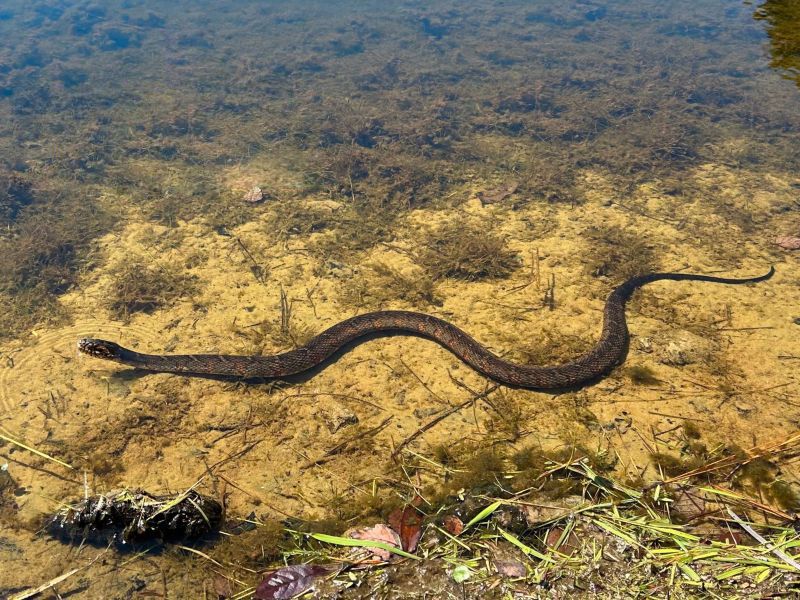
Brown Water Snake
© Bland Landscaping

Ask almost any South Carolina fisherman about a snake on a dock, and they will swear it was a cottonmouth. Most of the time, it was actually a brown water snake.

Thick bodies, dark blotches, and a habit of basking over water make them easy to mix up.

Here is a helpful clue. Brown water snakes usually drop into the water and swim away fast, while cottonmouths tend to stand their ground.

Water snakes also swim with their bodies mostly underwater, while cottonmouths float high like a pool noodle.

Fair warning, a cornered water snake may bite and release a stinky musk. Still, it has no venom at all.

Give it space and it will gladly leave you alone.

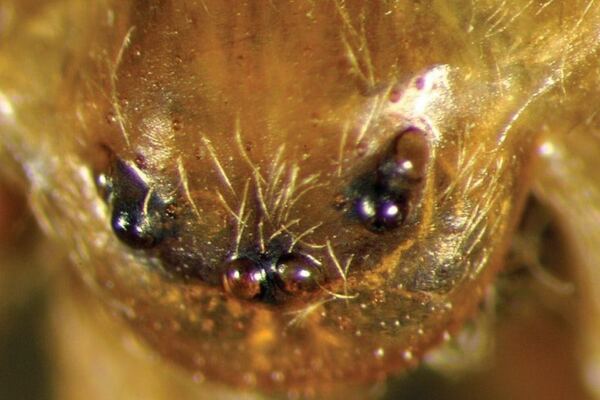
4. Six-Spotted Fishing Spider
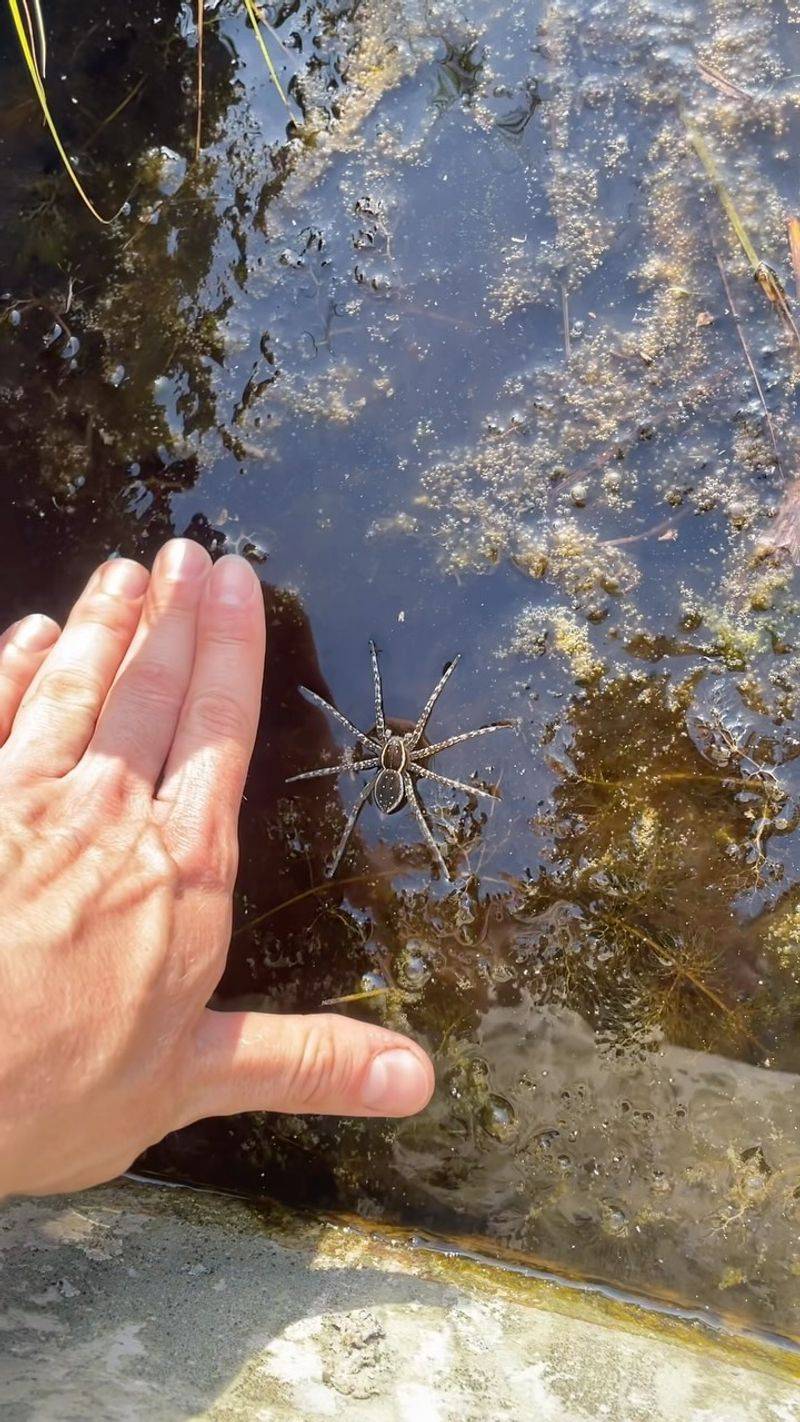
Six-Spotted Fishing Spider
© coastal__cole

Nothing wakes you up like a spider the size of your palm skating across the pond. Six-spotted fishing spiders can walk on water, dive under the surface, and even catch tiny fish.

That sounds like something from a monster movie, but they are no threat to people.

These spiders hang out near ponds, marshes, and swimming pools across the state. They wait at the edge with their front legs touching the water, feeling for ripples.

When something wiggles, they pounce.

A bite is rare and feels about like a bee sting at worst. Mostly, they just want to fish in peace.

5. Eastern Glass Lizard
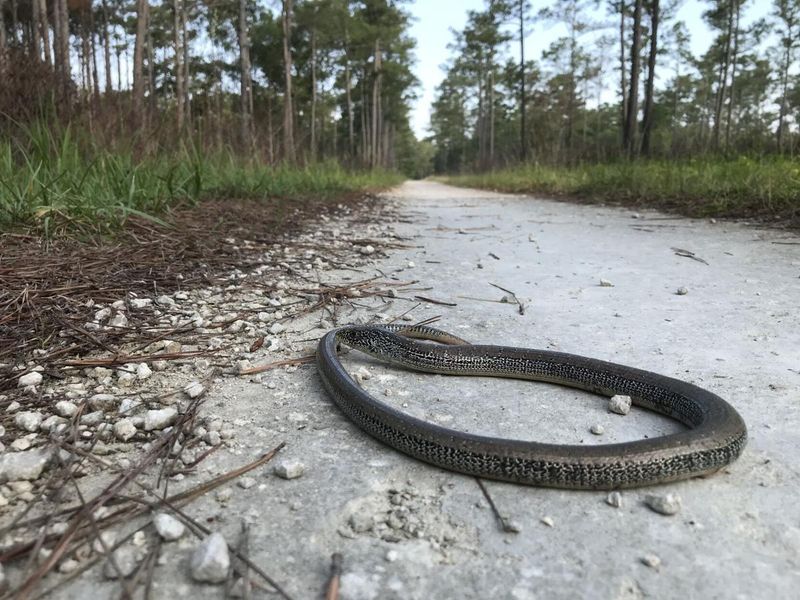
Eastern Glass Lizard
© Post and Courier

Surprise, this snake is not a snake. The eastern glass lizard has no legs, but it has eyelids and ear openings, two things real snakes lack.

Look closely and you will see it blink at you.

Its name comes from a wild escape trick. When grabbed, its long tail can snap off into pieces, wiggling around to distract a predator while the lizard slips away.

Old stories even claimed it could put itself back together, which sadly is just a myth.

Glass lizards eat insects, spiders, and snails in sandy coastal yards. They do not have venom, so admire that glossy striped body and let it be.

6. Cicada Killer Wasp
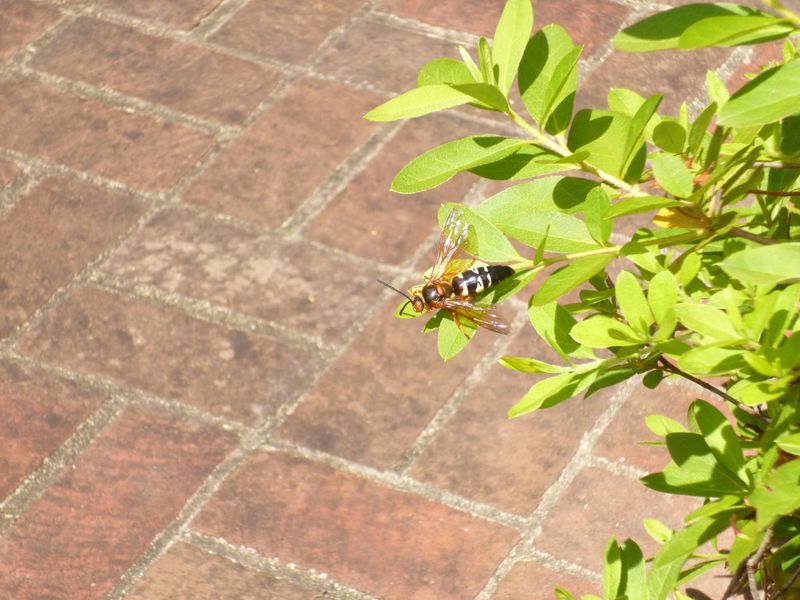
Cicada Killer Wasp
© Clemson HGIC – Clemson University

Around July, homeowners notice giant wasps buzzing low over their lawns and dive-bombing anyone who walks by. Meet the cicada killer, a nearly two-inch insect that looks like a hornet on steroids.

Yet the scariest part is mostly the size.

Males are the ones zooming at you, and they cannot sting at all. Females can, but they save their stingers for cicadas, which they carry back to underground burrows to feed their young.

Getting stung by one is very unusual.

They help control cicada numbers and vanish by late summer. Mow around their holes for a few weeks and everyone wins.

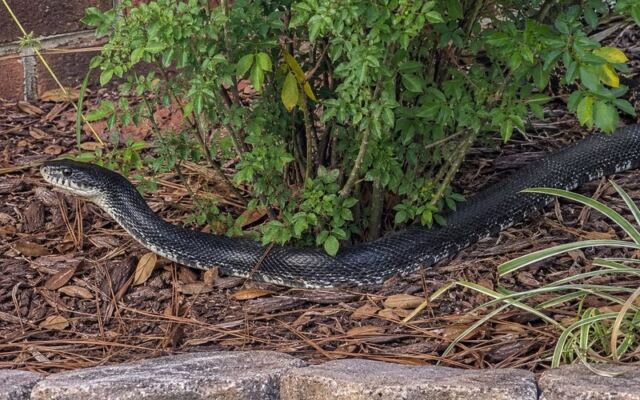
7. Black Rat Snake
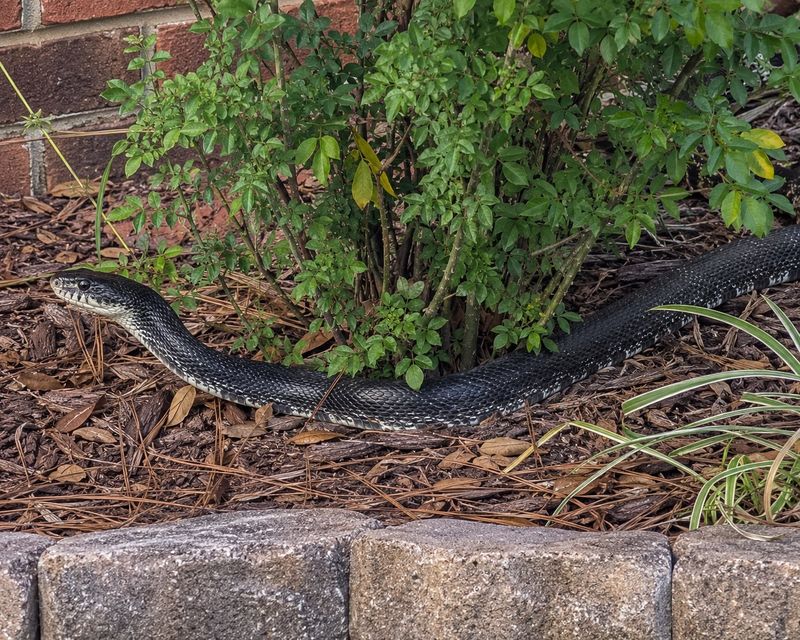
Black Rat Snake
© lexcountygardenclub.sc

Grandparents across South Carolina have a saying: a black snake in the barn is worth more than a cat. The black rat snake, often called the chicken snake, can grow over six feet long and climb straight up a tree.

Seeing one on your porch rafters is a real heart-stopper.

Even so, these snakes are fantastic neighbors. They gobble up rats and mice that spread disease and chew wires.

Some people say they even keep venomous snakes away, though that part is more legend than science.

When nervous, a rat snake may freeze into a kinked shape or rattle its tail in dry leaves. No venom, no danger, just a big, hungry pest controller doing free work.

Share this story
BR

Written by

Beau Rutledge

More from Beau Rutledge →

About Gardening Latest

Gardening Latest provides in-depth guides to maintaining and enhancing your garden and backyard. Learn how to make the most of the space you have and create a beautiful garden.

More about us →

Latest stories

  • Wisconsin GardeningHere’s What To Do Next If You Spot A Yellow Jacket Nest Near Your Wisconsin Home

    Here’s What To Do Next If You Spot A Yellow Jacket Nest Near Your Wisconsin Home

    36 min ago
  • Iowa GardeningHearing Coyotes Howl Near Your Iowa Home Late at Night? Here’s What It Really Means

    Hearing Coyotes Howl Near Your Iowa Home Late at Night? Here’s What It Really Means

    37 min ago
  • Massachusetts GardeningHearing Scratching in Your Massachusetts Walls at Night? Flying Squirrels Are One Possibility

    Hearing Scratching in Your Massachusetts Walls at Night? Flying Squirrels Are One Possibility

    1 hr ago
  • Delaware GardeningA Virginia Opossum Crossing Your Delaware Yard on a Cold Night Is Generally Normal Wildlife Activity

    A Virginia Opossum Crossing Your Delaware Yard on a Cold Night Is Generally Normal Wildlife Activity

    1 hr ago
  • Kentucky GardeningKentucky’s Northern Short-Tailed Shrew Has a Venomous Bite, and Your Fallen Leaves Make Good Habitat

    Kentucky’s Northern Short-Tailed Shrew Has a Venomous Bite, and Your Fallen Leaves Make Good Habitat

    1 hr ago

Gardening by state

Stories for your state, and the hardiness zone most of it gardens in.

Keep exploring

Read next

All South Carolina Gardening →
South Carolina GardeningHere’s What It Means When South Carolina Collards Shoot Up a Tall Flower Stalk, and Whether to Cut It Off
South Carolina Gardening

Here’s What It Means When South Carolina Collards Shoot Up a Tall Flower Stalk, and Whether to Cut It Off

1 hr ago
South Carolina GardeningArmadillo Holes in Your South Carolina Lawn This Winter: A Possible Clue, Not Proof
South Carolina Gardening

Armadillo Holes in Your South Carolina Lawn This Winter: A Possible Clue, Not Proof

6 hr ago
South Carolina GardeningSouth Carolina Yards Hide These Venomous Creatures, And Here’s How To Tell Each One Apart
South Carolina Gardening

South Carolina Yards Hide These Venomous Creatures, And Here’s How To Tell Each One Apart

Yesterday

More from South Carolina Gardening

  • Why You May Hear Coyotes Howling After Dark in South Carolina

    Nov 17
  • If a Saddleback Caterpillar Stings You in Your South Carolina Garden, Here’s What to Do Right Away

    Nov 17
Back to top

Leave a response Cancel

Your email address stays private. Required fields are marked with an asterisk.

Gardening Latest

In-depth guides to maintaining and enhancing your garden and backyard: how to make the most of the space you have, and how to make it beautiful.

  • Facebook
  • X
  • Pinterest
  • YouTube

We may earn a portion of sales from products or services that are purchased through our site as part of our affiliate partnerships with retailers.

Explore

  • About GardeningLatest.com
  • Contact Us
  • Terms and Conditions
  • Privacy
  • Editorial Note:
  • FTC Disclosure

Newsletter

New garden guides and seasonal tips, straight to your inbox.

We’ll email you a link to confirm. Unsubscribe any time.

Almost there! Check your inbox and tap the link to confirm.

© 2026 Gardening Latest. All rights reserved.

Back to top