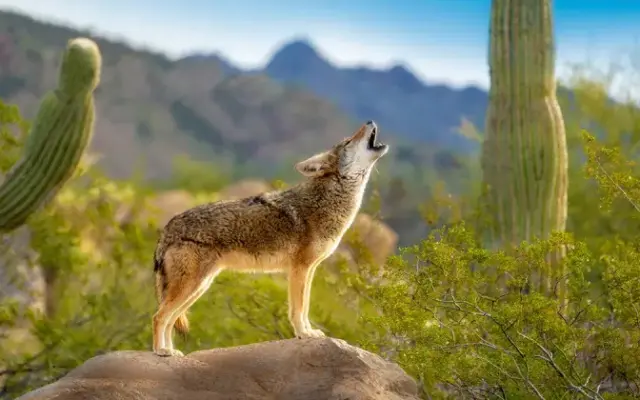
A long, wavering howl drifts through the dark, and suddenly everyone on the porch goes quiet. It is easy to picture a crowd of wild animals right outside the fence.
The truth is more ordinary, and knowing it helps you stay calm while still protecting your pets. Here is what those night sounds can mean and what to do about them.
What a coyote howl communicates
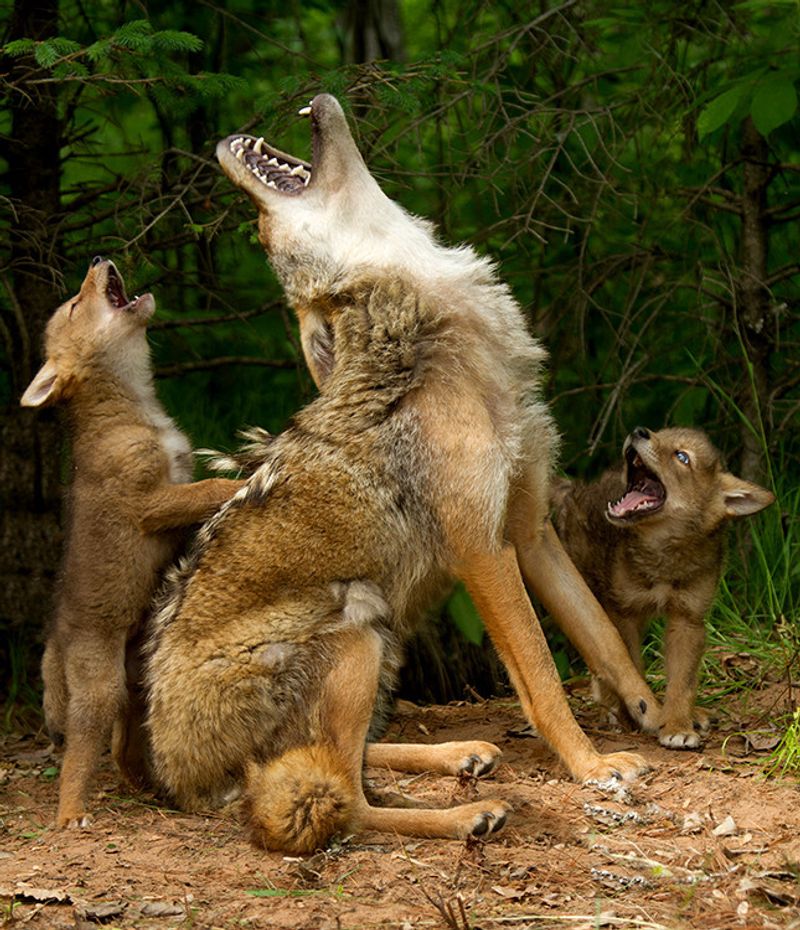
Coyotes talk to each other with a whole set of sounds. Howls, barks, and yips each get used in different moments, and a single animal can mix them together.
According to Clemson Extension, howls can help coyotes locate or regroup with family members and announce territory to other coyotes. Think of it as a mix of a phone call and a property sign.
One animal might be saying where it is, another might be answering, and a neighbor may simply be getting the message that the area is taken.
Because a howl can serve more than one purpose, nobody can read a specific meaning into one particular call. You can say what howls generally do, but you cannot decode a single night’s song with confidence.
It also helps to drop the image of a huge hunting pack. Coyote social groups are often built around a family, and some coyotes live and travel alone.
A howl might come from one animal, a pair, or a small family.
The South Carolina Department of Natural Resources also notes that coyotes use varied vocalizations to communicate. That is the key point for homeowners.
A howl is a message between coyotes. It is not a message aimed at you, your yard, or your dog, and the sound alone is not proof of a threat to people or pets.
Why you may hear calls after dark
Evenings are quiet. Traffic fades, lawn mowers stop, and the neighborhood settles down, so sounds that were there all along suddenly stand out.
A howl that might get lost in the daytime hum can seem startling at ten o’clock.
Coyotes are also active when the sun is down. The South Carolina DNR says they are most active at night and in the early morning during hot summer weather.
In other conditions, daytime activity can happen too, including when few people are around. So howling is not strictly a nighttime habit, and darkness itself is not what causes the calls.
Distance matters as well. Coyote calls can travel a long way, though how far depends on conditions such as terrain, wind, and background noise.
Research on coyote vocal responses, like this study of elicited calls, shows how much calling can differ by place, season, and whether an animal lives in the area or is passing through.
That means hearing a howl near your home tells you where you were standing when you heard it. It does not tell you where the coyote was.
The animal could be across a field, past a creek, or on the far side of a wooded lot.
If you want to know whether coyotes are really using your property, look for what you can see instead. Daylight sightings, tracks, or overturned trash say far more than a sound drifting across the dark.
Why a chorus can sound larger than it is
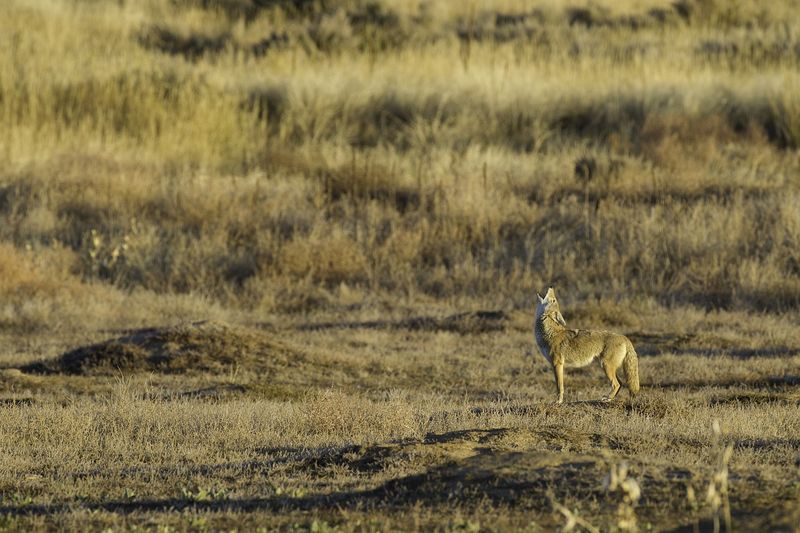
A wild burst of yips and howls can sound like dozens of animals. Your ears can easily be fooled, because coyotes change pitch quickly and their voices overlap and bounce around.
The South Carolina DNR warns that two coyotes can sound like many more. So a loud chorus is not a headcount, and it does not show that a big group is gathered nearby.
Science backs up the caution. In a 2017 listening study, 427 people heard recordings of coyotes and tried to guess how many animals were calling.
Nearly 90 percent overestimated the real number.
That study used recordings and participants in southern Texas. It is not a count of South Carolina coyotes, and it does not say how many live in your county.
What it does show is how unreliable guessing by ear can be.
So the next time a chorus rises from the dark, try a calmer thought. You may be hearing a pair, a small family, or a few animals answering each other.
You simply cannot tell the number from the sound.
Leave the counting to wildlife professionals. Your job is to notice real signs on the ground, not to tally voices in the night.
Seasonal patterns do not identify a particular call
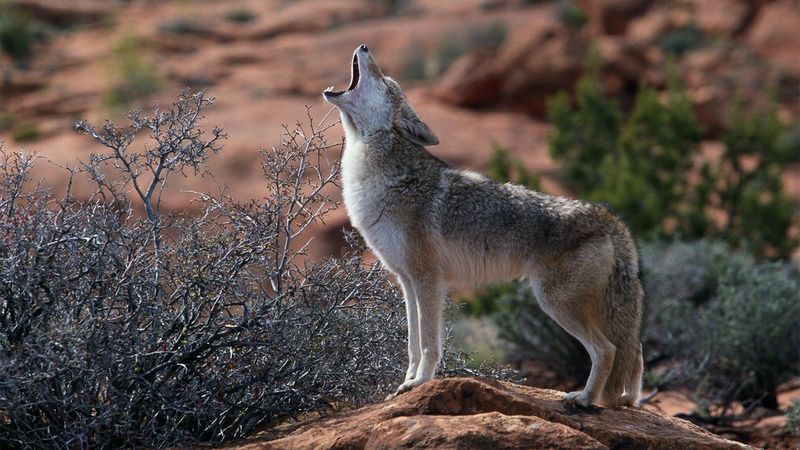
Winter and early spring get a lot of attention in coyote talk, because that is breeding season. The details differ a little depending on who you ask.
Clemson Extension places South Carolina breeding activity broadly from January through March, while the SCDNR describes the peak as mostly February and March.
Treat those dates as background, not a decoder ring. A howl on a February night does not prove breeding behavior, and a howl in July does not mean something odd is going on.
Calling really does vary. Research on coyote responses to played-back calls, such as this elicited-call study, found that responsiveness can shift with location, season, and whether an animal is a resident or a transient.
Weather and human activity can change how often coyotes are out and about as well.
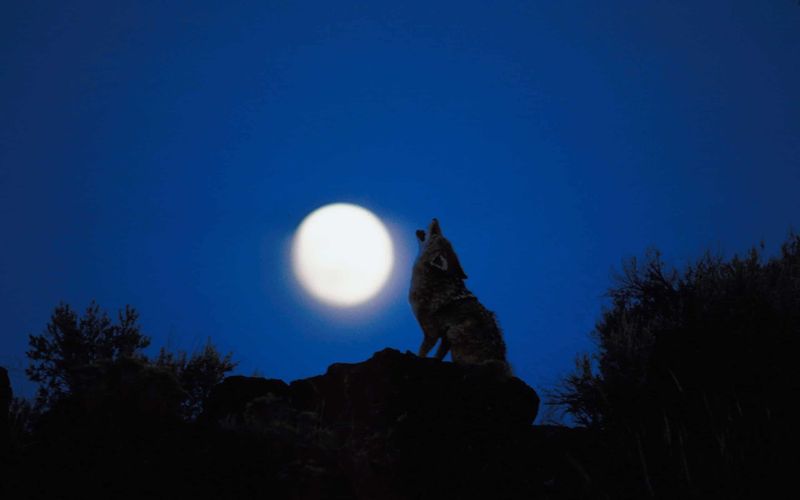
What about the full moon? It makes a great story, but it is folklore rather than a solid explanation.
A coyote study on lunar conditions found no positive link between howling and moonlight intensity. That does not mean the moon can never matter, only that it is not a reason to expect howls or to explain one.
The calendar and the sky can set the scene, but they cannot tell you why one animal called on one night.
When a howl is not a safety warning
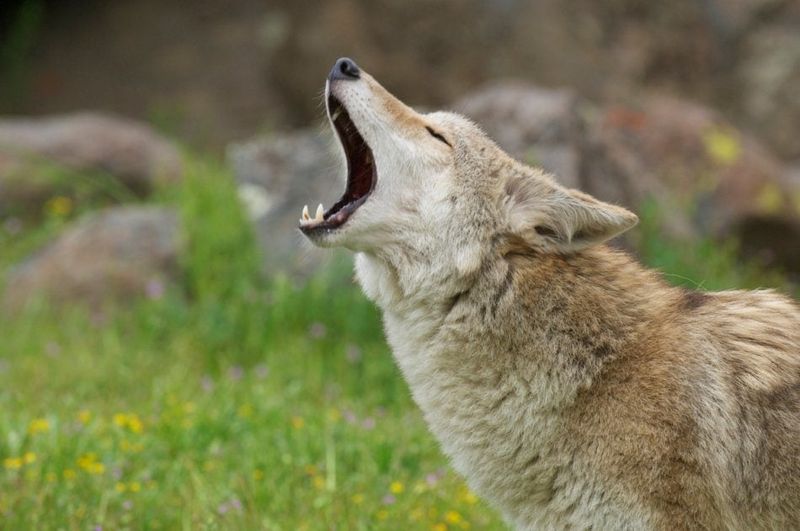
Hearing a howl and meeting a coyote are very different things. A sound from somewhere out in the dark does not mean a coyote is heading for your yard, picking out your pet, or about to attack.
By itself, it is not a reason to call anyone or take action.
Behavior is what deserves your attention. Coyotes that approach people, stalk, or act aggressively are the real concern.
The SCDNR advises professional handling of coyotes that show aggressive behavior, so call the agency or a licensed wildlife professional rather than trying to deal with the animal yourself.
Pet owners have good reason to stay alert. According to the DNR coyote species page, coyotes sometimes prey on pets.
Still, a vocalization alone does not show that your pet is being targeted, so the smart response is sensible habits instead of worry.
Do not try to feed, trap, poison, or handle a coyote. Poison is dangerous to pets and other wildlife, and no toxicants are registered for coyote control in South Carolina.
If you find a wild animal that seems sick or injured, keep your distance. The South Carolina Department of Public Health says not to approach or handle it.
Keep children and pets away and contact the proper authorities.
Reduce attractants and respond safely
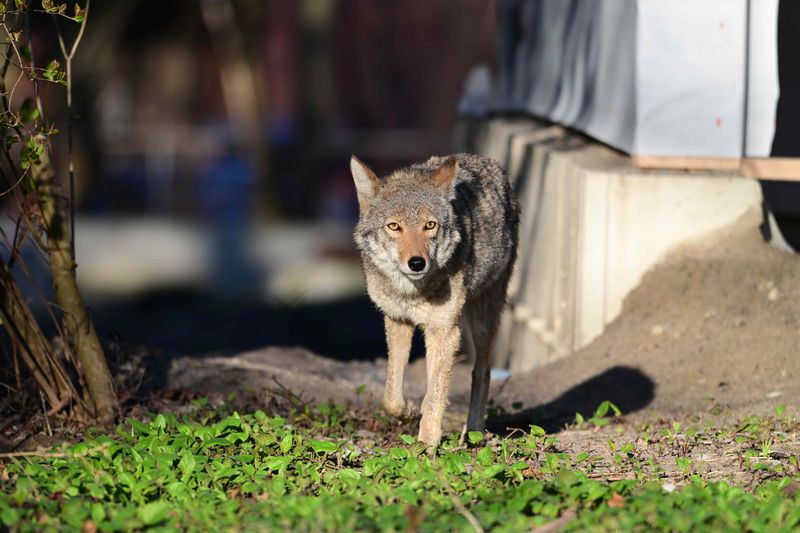
Good habits around the house do far more than worrying about night sounds ever could. The SCDNR suggests feeding pets during the day and picking up food and bowls before dark.
Small pets should be supervised outside, and any pet you walk should stay on a short leash.
Little changes add up. Bring bowls in after the last meal, check the porch before bed, and stay within arm’s reach of a small dog in the yard after sundown.
Keep lights on and the yard tidy so there is little reason for wildlife to linger.
If you do come face to face with a coyote, stay calm and do not run. The SCDNR advises acting assertively.
The National Park Service adds a few steps: make yourself look bigger, make noise, and keep children and pets close.
Stand tall, raise your arms, and use a firm voice. Clap, shout, or wave something in your hands while you move your family and pets away from the animal.
Contact a professional if the coyote keeps approaching or acts aggressively.
Judge risk by what a coyote does, not by what you hear. A howl is just a neighbor talking in the dark.
Share this story