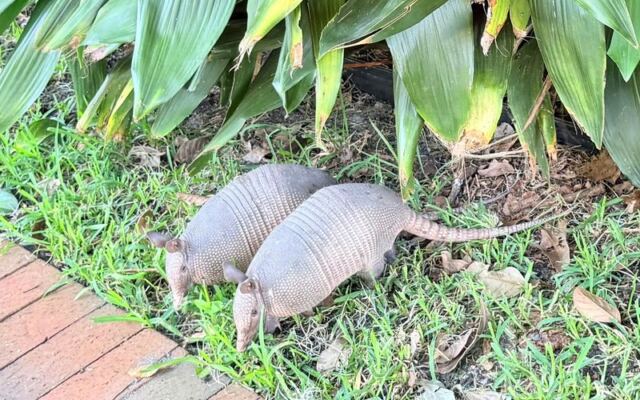
Small holes in your lawn can be frustrating, especially when the grass looks torn up after a cold stretch. Nine-banded armadillos are one possible cause in South Carolina, but they are not the only one.
Learning to read the clues helps you choose a calm, sensible response. Here is how to tell what you are really looking at.
A statewide armadillo range cannot date a yard visitor
A 2025 distribution study reports that nine-banded armadillos are established throughout South Carolina. That is a statewide finding.
It does not mean every yard has one, and it does not mean any single yard just got a new visitor.
The history matters here. A 2014 paper reported that the range had reached central South Carolina.
The 2025 study reports establishment across the whole state. So “spreading” describes change over roughly a decade, not something that happened last month on your street.
The newer study relies on compiled occurrence records and a distribution model. Those tools show where the species has been recorded and where it is likely to live.
They are not a head count of yards, and they say little about how many armadillos live in your particular neighborhood.
The study also discusses climate change, land-use change, and at least one human-assisted release in Florida as factors in the species’ wider expansion. None of that explains why one animal showed up near your fence.
If you see holes in winter, treat the statewide range as background information only. It cannot tell you when a digger arrived, or whether it was an armadillo at all.
A better question is practical: what do the holes and the damage around them actually look like? The next sections walk through that.
A pattern of shallow holes offers clues, not proof
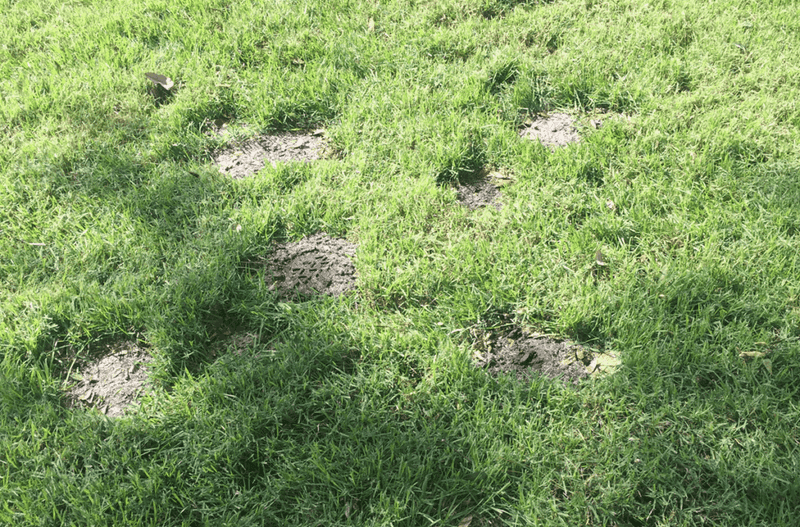
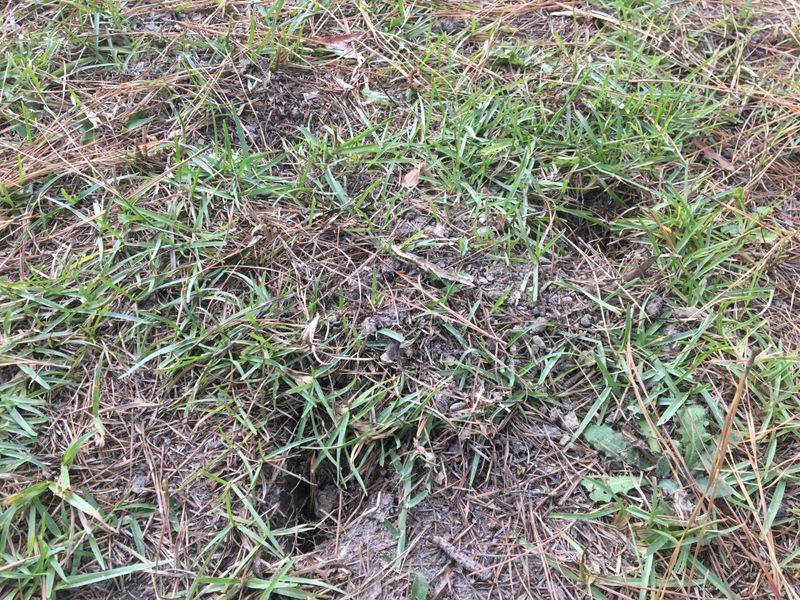
Picture a handful of small, cone-shaped pits scattered across the grass. Clemson Extension describes armadillo foraging holes as typically 1 to 3 inches deep and 3 to 5 inches wide.
Armadillos make them while searching for insects and grubs in the soil.
One hole tells you very little. Several holes, especially with other signs nearby, tell you more.
Look for rooted-up patches of turf, uprooted ornamental plants, disturbed insect mounds, or broken yellow-jacket nests.
Even then, these clues only suggest armadillo activity. They do not confirm which animal did the digging.
Other wildlife and even lawn pests can leave messy ground, so a pattern is a starting point rather than a verdict.
Season adds another trap. Finding fresh-looking damage in winter does not date the hole, and it does not show when an animal arrived in the area.
A hole can look new for reasons that have nothing to do with the calendar, such as recent rain softening the soil or a mowing pass exposing it.
Try walking the yard in daylight and noting where holes cluster. Photograph them with a coin or ruler for scale.
That small record helps you compare damage over several days and decide whether the problem is growing or fading.
Foraging pits are not armadillo burrows
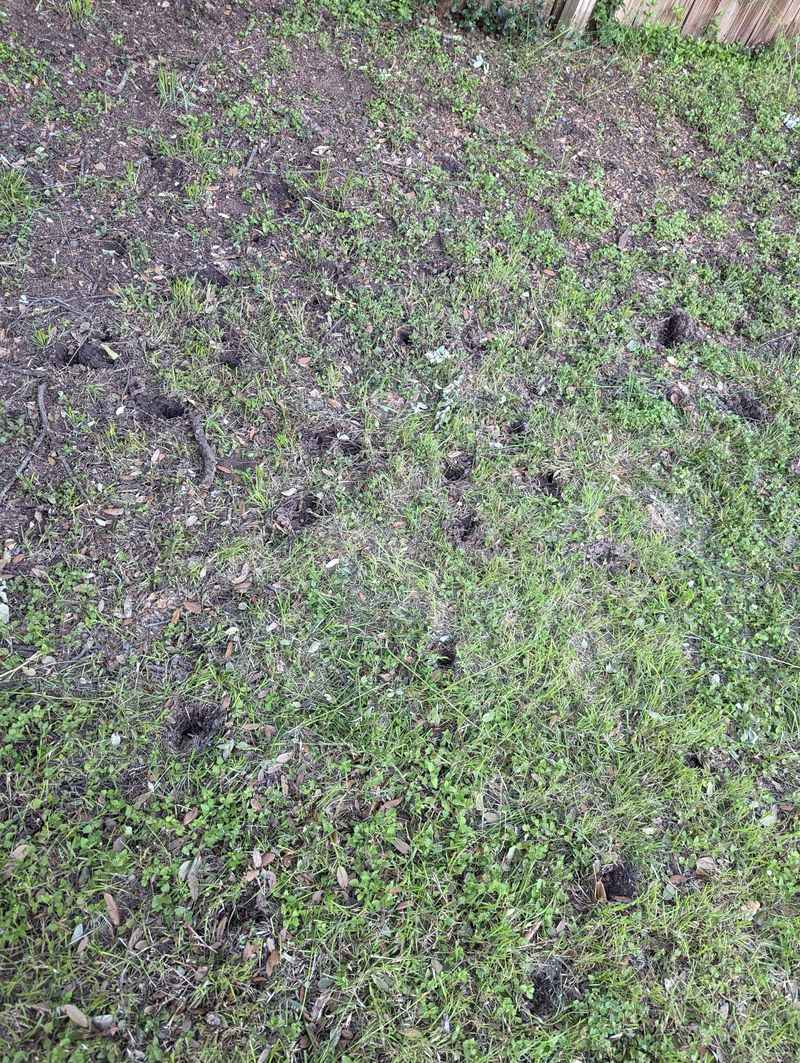
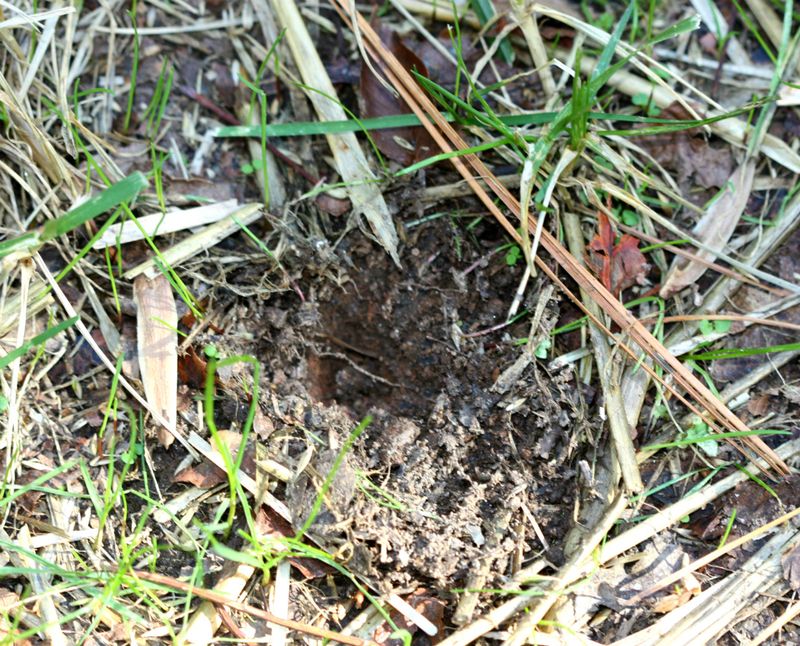
Size separates the two. According to Clemson’s armadillo fact sheet, foraging holes are small and shallow, around 1 to 3 inches deep and 3 to 5 inches across.
They are feeding stops, dug quickly while an animal works through the soil for food.
Burrows are a different matter. Clemson describes them as about 7 to 8 inches across and potentially quite deep.
An armadillo uses a burrow for shelter, and it may keep several burrows within one area rather than a single den.
That difference helps you avoid two common mistakes. The first is calling every lawn divot a den.
A scattering of little pits does not mean a burrow sits beneath your shed.
The second is assuming that feeding holes prove a burrow is close by. They may, but they may not.
An animal can forage in your yard and shelter somewhere else entirely.
If you do find a larger opening, check the edges and the surrounding ground before you decide anything. Look near brush piles, under decks, and along fence lines, since those are places that offer cover.
Measure what you find, and write it down. Accurate measurements make it easier to sort feeding damage from shelter, and they keep you from reacting to the wrong problem.
Winter activity can shift toward warmer parts of the day
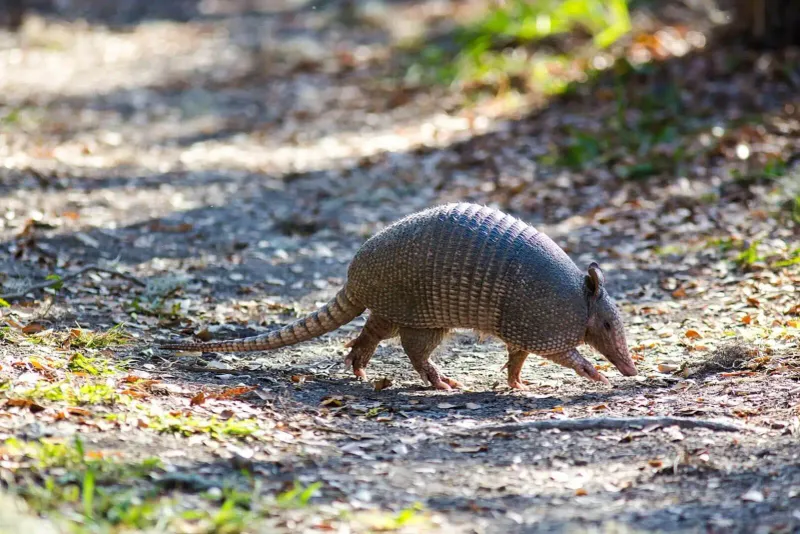
Armadillos are generally nocturnal, and Clemson notes that they avoid temperature extremes. That detail matters in January.
Cold nights are not comfortable for an animal with little body fat and thin insulation.
According to University of Georgia Extension, armadillos can stay active in winter, and their activity often shifts toward warmer parts of the day. So an armadillo might forage on a mild afternoon instead of in the dead of night.
This corrects a popular assumption. Fresh winter damage does not prove that something is digging every night.
It could come from a single outing, or from several, and the soil cannot tell you which.
Timing also will not identify the digger. Damage you spot at dawn, or a sighting at noon, does not by itself show that the animal is an armadillo or when it showed up.
If you want to learn more, watch the yard at different times on a few mild days. A trail camera or simple notes about when holes appear can help.
Keep the goal modest: you are gathering clues about a pattern, not building a case about a newcomer.
Reduce cover and treat fencing as an imperfect barrier
Start with the easiest change: take away hiding places. Clemson recommends removing brush or cover near areas where armadillos are active.
Piles of limbs, dense groundcover along a fence, and tangled corners all give a shy animal somewhere to rest.
Fencing is the next option, and it takes some effort. Clemson’s guidance calls for a fence at least 3 feet high, buried 12 to 18 inches deep.
In sandy soil, which is common in much of South Carolina, the buried part should go deeper.
Armadillos are strong diggers, which is why the buried portion matters as much as the height. A fence that stops at the dirt line invites them to tunnel beneath it.
Bending the bottom edge outward underground is a common way to make the barrier harder to dig under.
Treat fencing as an exclusion option, not a guarantee. Clemson cautions that armadillos can jump 3 to 4 feet if provoked, so a determined animal may clear a barrier of minimum height.
Because of the cost and labor, many homeowners fence only the areas that matter most, such as a vegetable garden or a prized flower bed. Pairing a smaller fence with cleared cover gives you a lower-impact plan that fits the real size of the problem.
Trapping requires a plan for the captured animal
Before a trap goes anywhere near your yard, check current rules and decide what happens to the animal afterward. A lawful, humane plan comes first.
Setting a trap without one can leave you holding an animal you cannot legally move.
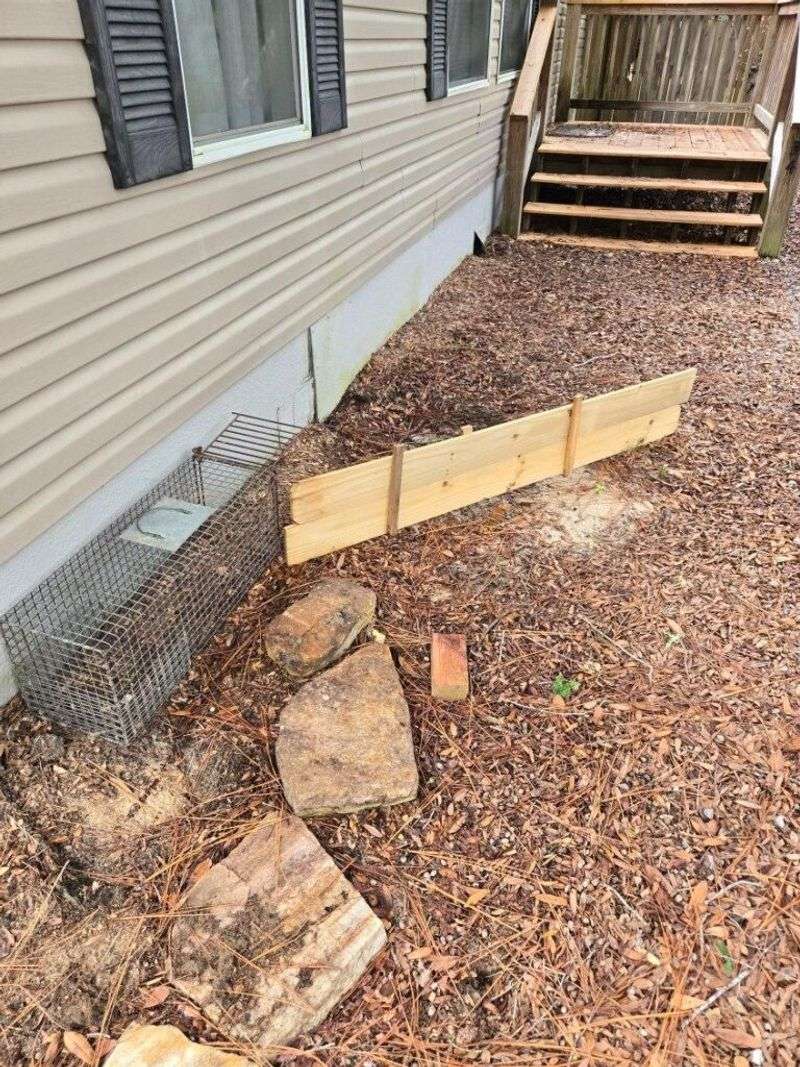
Both Clemson’s fact sheet and SCDNR’s armadillo guidance describe cage traps. The idea is to place the trap along a travel path, a fence, or the side of a structure, where an armadillo already tends to walk.
Boards set up as wings help funnel the animal toward the opening. When wings are used, bait is not necessary.
That keeps the setup simpler and avoids attracting other wildlife.
The disposition question is firm. South Carolina guidance does not allow captured armadillos to be transported and released somewhere else.
Driving one to a park or a relative’s farm is not an acceptable shortcut.
That is why the plan must exist before the trap is set. Contact SCDNR or a licensed nuisance wildlife professional if you are unsure what is allowed where you live.
Check traps often, handle them with care, and remember that trapping addresses one animal, not the conditions that drew it to your lawn.
Poison and repellents are not dependable fixes
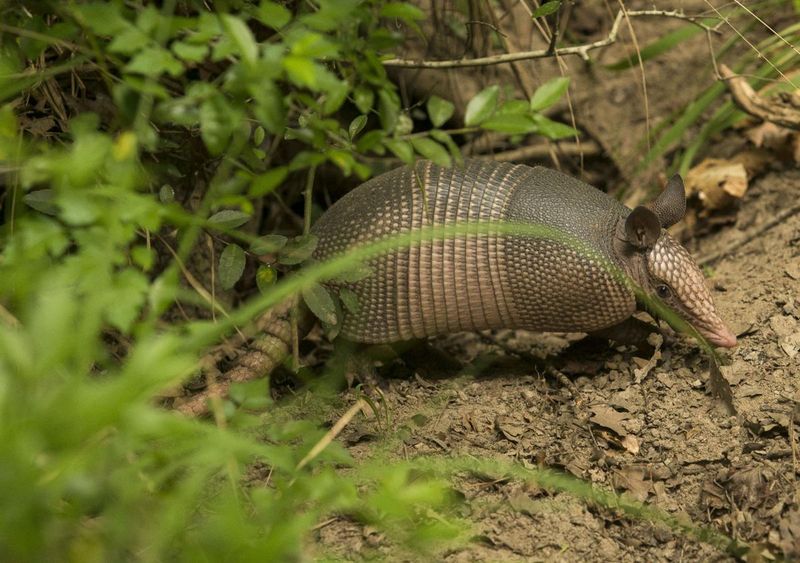
When lawn damage keeps coming back, a quick product can look tempting. The facts are less encouraging.
Clemson reports that no toxicants are registered for use on armadillos, so poison is not an approved option.
The same fact sheet says no frightening devices or repellents are known to be effective. That covers things like noisemakers, lights, and scent products that promise to send a digger packing.
Spending money on them may only delay a more useful response.
One detail can confuse shoppers. Clemson notes that a commercial mole-and-gopher repellent lists armadillos on its label.
A label mention is not proof that the product reliably controls armadillos, and it should not be read as a promise.
There is also a practical reason to be cautious. Armadillos dig mainly for insects and grubs, so a product aimed at another animal may not touch the real draw.
Treating the wrong problem wastes time while the turf keeps suffering.
Poison also carries risks for pets, children, and other wildlife. If you want to act, the lower-impact steps covered earlier, such as clearing cover and fencing key areas, rest on firmer ground than a bottle or a bag.
Treat a winter hole as a clue, then choose a measured response
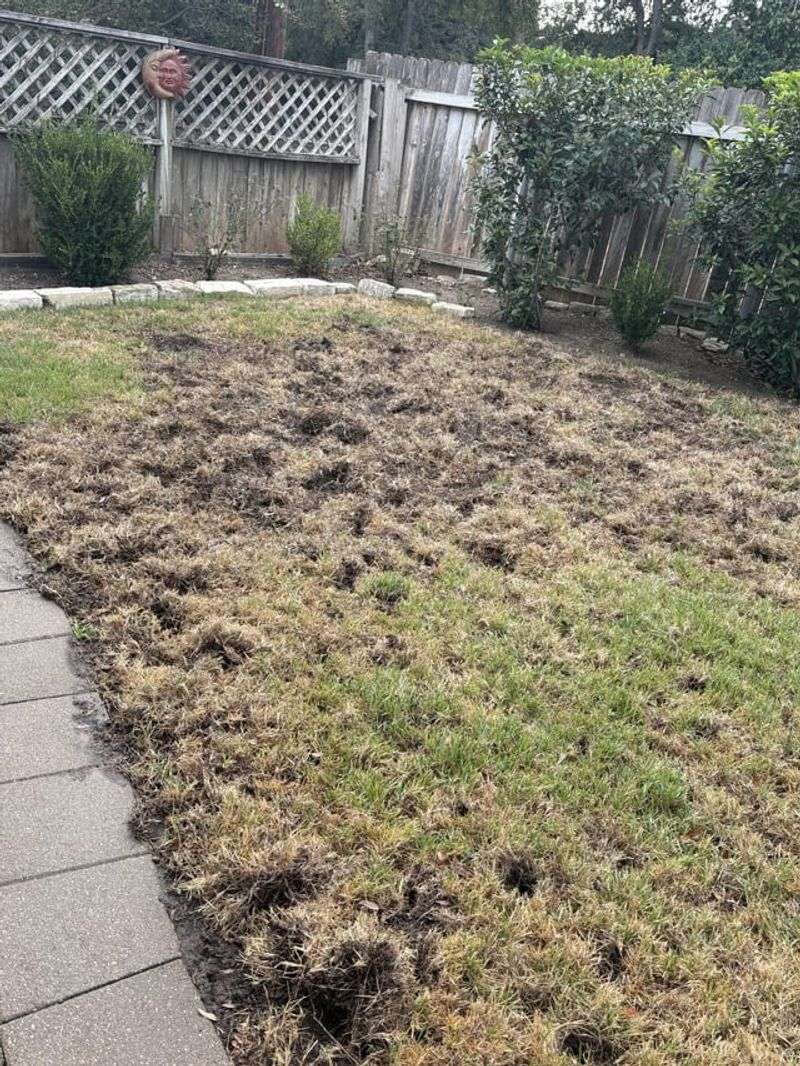
Start by looking at the whole pattern: how many holes, how big, and what else was disturbed. Then separate small feeding pits from larger burrows, since they point to different situations.
Only after that should you weigh the prevention or trapping options already covered.
Winter timing cannot confirm what made the holes or when it arrived, a point both Clemson and UGA Extension help explain.
A hole is a question, not an answer. Let the evidence build before you act.
Share this story