Some of the trees shading Virginia yards right now are not supposed to be here at all. They came from other continents, often planted on purpose because they grew fast or looked pretty in spring.
Over time, many of them escaped into forests and fields, pushing out native plants that birds, bees, and butterflies need to survive. If you spot any of the eight trees below on your property, taking them out could be one of the best things you do for your yard and your local wildlife.
1. Tree of Heaven
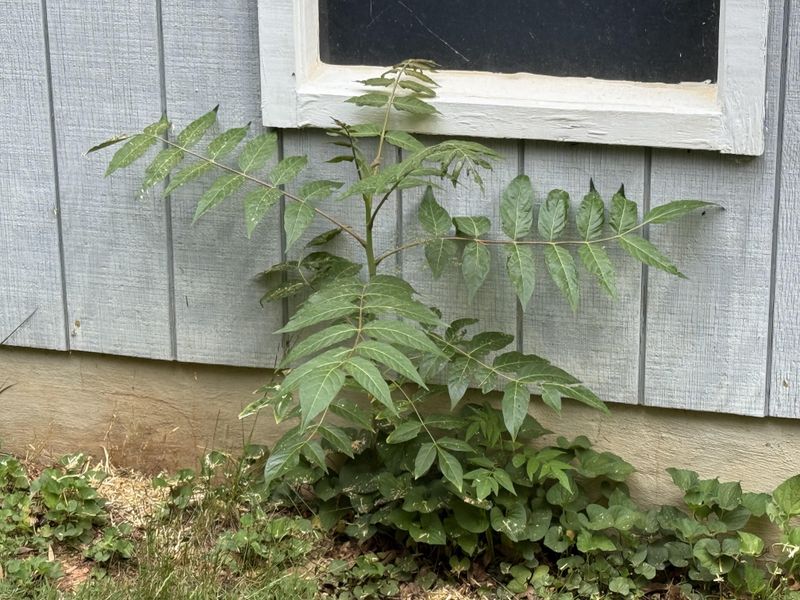
Crush a leaf from a tree of heaven and you will understand why some folks call it stinking sumac. The smell has been compared to rancid peanut butter, and that is one of the nicer descriptions.
Despite the lovely name, few trees cause more trouble in Virginia.
Originally from China, it arrived in the late 1700s as a garden curiosity. Today it sprouts from sidewalk cracks, highway medians, and forgotten corners of nearly every county in the state.
One tree can drop hundreds of thousands of seeds a year, and its roots release chemicals that make it hard for other plants to grow nearby.
There is an even bigger reason to act. Tree of heaven is the favorite host of the spotted lanternfly, a pest now chewing through Virginia vineyards and orchards.
Removing it helps slow that spread.
Be warned, though: cutting it down alone usually backfires. The stump responds by sending up dozens of root suckers.
Experts recommend treating the tree with herbicide first, often using a hack-and-squirt method in summer, then removing it once it dies.
2. Callery Pear
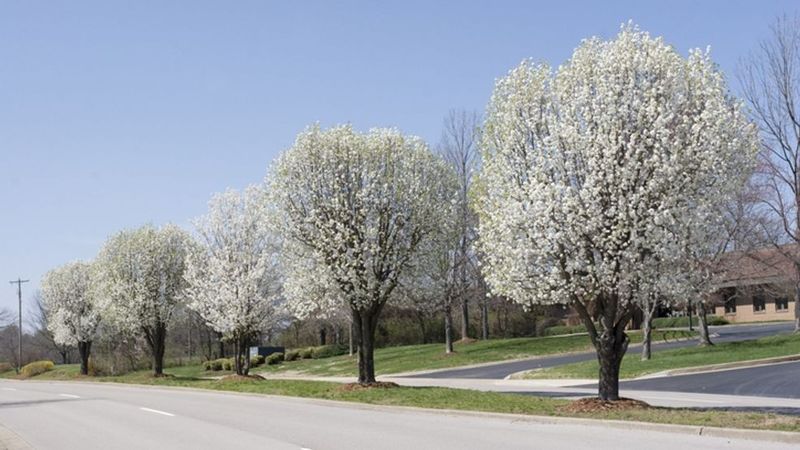
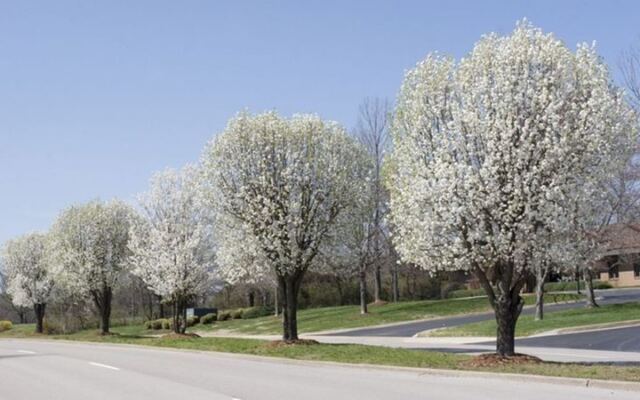
Every April, Virginia neighborhoods turn white with blossoms, and plenty of people wrinkle their noses at the same time. Callery pear flowers have a smell often likened to rotting fish.
Charming, right?
The Bradford pear, its best-known variety, was sold for decades as a tidy, sterile street tree. The trouble started when different varieties cross-pollinated.
Suddenly the trees were making fruit, birds were spreading seeds, and thorny wild pear thickets began taking over fields and roadsides.
Homeowners have another headache to consider. The branches grow at tight angles, so the trees often split apart in storms, sometimes landing on cars, roofs, or power lines.
Many Bradford pears fall apart before they even reach 25 years old.
Virginia has taken notice, and the state added Callery pear to its invasive plant list. Some cities even run bounty programs, trading free native trees for cut-down pears.
Serviceberry or redbud make beautiful spring-blooming replacements without the stink.
3. Princess Tree
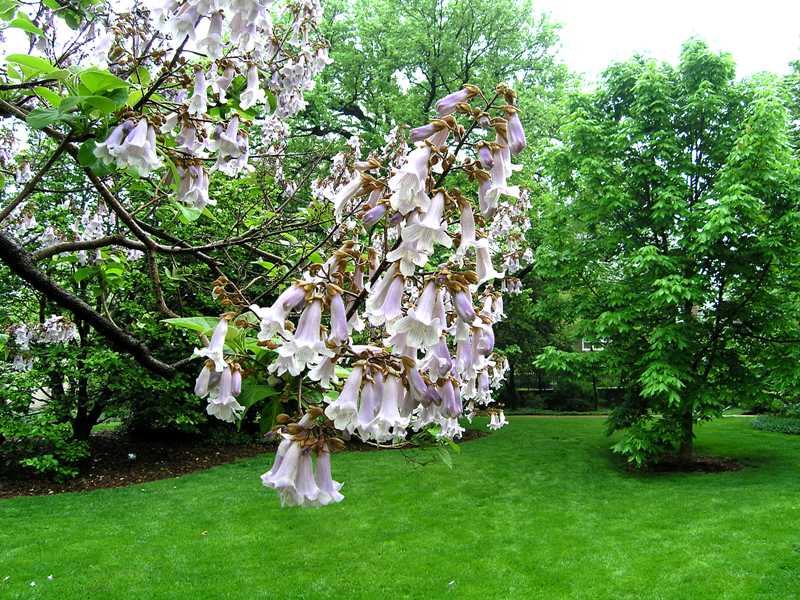
Picture purple, trumpet-shaped flowers dangling from a tree with leaves as big as dinner plates. The princess tree, or Paulownia, looks like something out of a storybook.
Sadly, its behavior is closer to a villain than a royal.
Here is a fun bit of history. Seeds of the princess tree were once used as packing material for porcelain shipped from China.
When the crates were opened and emptied, the seeds scattered, and the tree got a head start in America.
A single tree can produce around 20 million tiny winged seeds a year. They blow easily into disturbed soil, steep slopes, and even rock walls.
Young trees can shoot up 15 feet in one season, quickly crowding out slower native species.
If one is growing in your yard, act while it is small. Pulling seedlings works well, while larger trees need cutting and herbicide on the stump to stop resprouting.
4. Mimosa
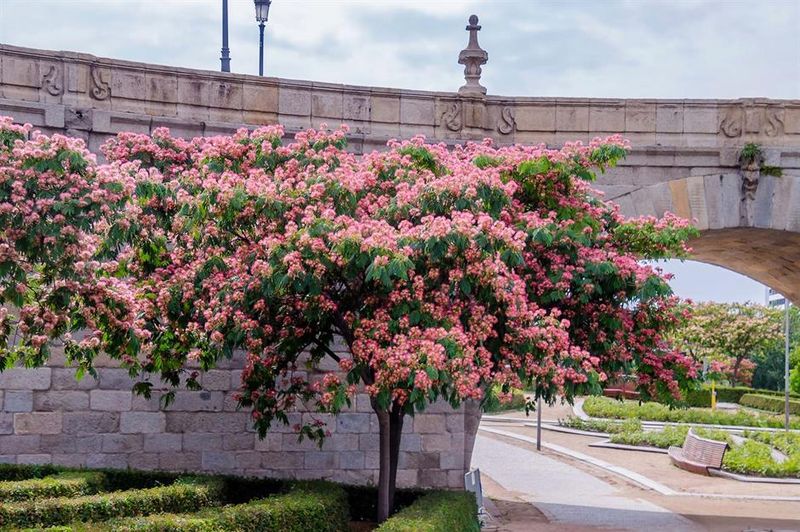
Grandma probably had one. With its pink powder-puff blooms and soft, fern-like leaves, the mimosa tree has been a nostalgic Southern favorite for generations.
Hummingbirds love it, and kids love watching its leaves fold up at night.
That sweet image hides a sneaky problem. Each summer the tree produces long, flat seed pods packed with hard seeds that can stay alive in the soil for years.
Before long, baby mimosas pop up all over the yard and along nearby streams.
In the wild, these trees form dense stands that block sunlight from native plants. They also tend to be short-lived and weak-wooded, so they often drop limbs or die from a fungal disease called mimosa wilt.
Letting go of a sentimental tree can sting. Swapping it for a native fringe tree or buttonbush can keep that soft, frilly summer look while giving local insects something they actually need.
5. Norway Maple
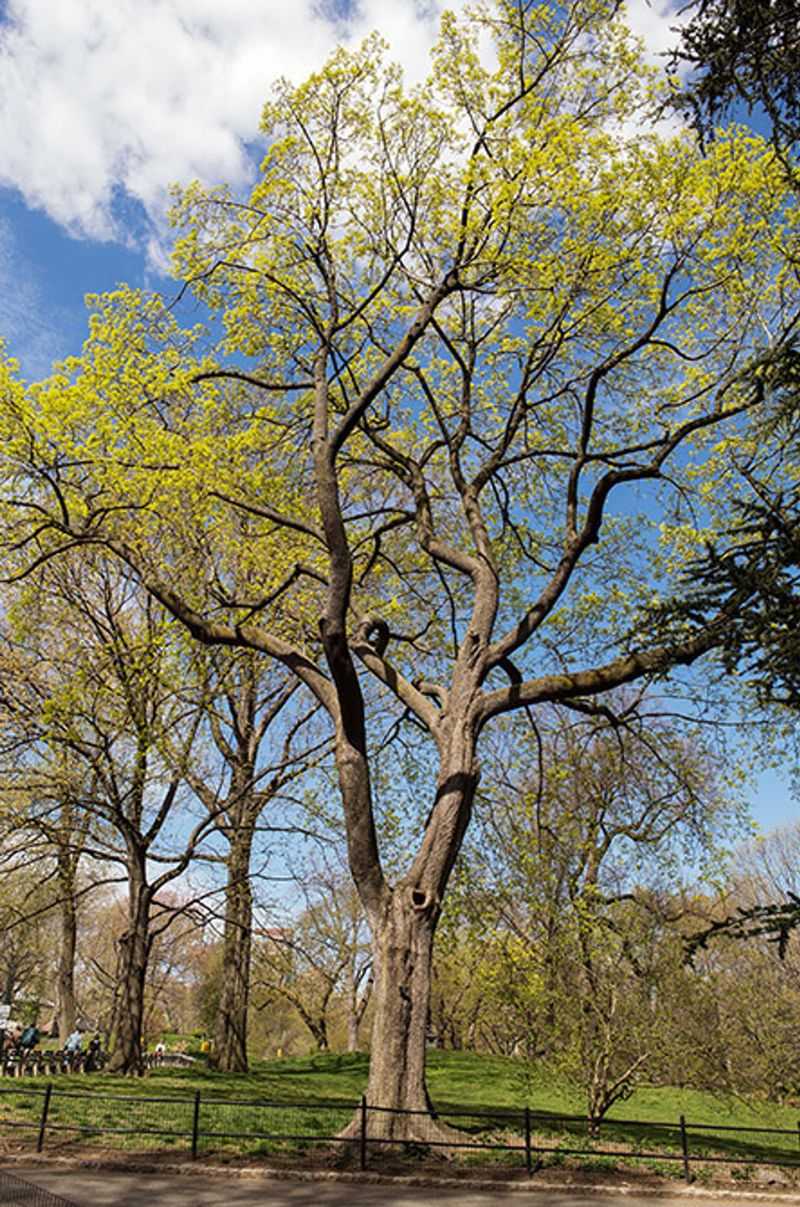
Ever wonder why the grass under a certain shade tree never grows? If that tree is a Norway maple, you have found your culprit.
Its thick canopy casts some of the deepest shade around.
Brought from Europe in the 1700s, Norway maples became popular street trees because they tolerate pollution, poor soil, and tough city conditions. That toughness is exactly what makes them a problem.
They spread into woods and outcompete native sugar and red maples.
Telling them apart is easier than you might think. Snap a leaf stem and look for milky white sap.
Native maples have clear sap, so that drop of white is a dead giveaway.
Their shallow roots can also lift sidewalks and choke out garden beds. Replacing one with a native red maple gives you similar shade and brilliant fall color, plus far more value for caterpillars and the songbirds that feed on them.
6. White Mulberry
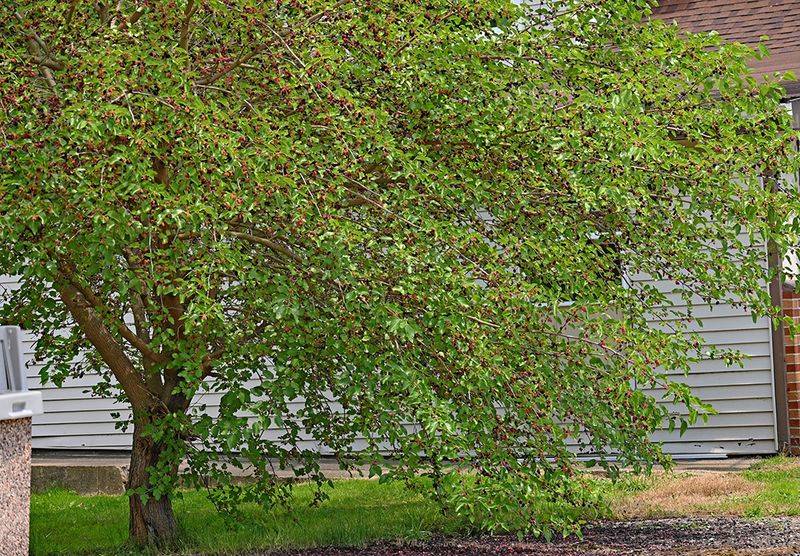
Back in colonial times, Virginia leaders had a big dream: a booming silk industry. They encouraged settlers to plant white mulberry, the favorite food of silkworms.
The silk business flopped, but the trees stuck around.
Today white mulberry grows almost everywhere, from fence lines to vacant lots. Birds gobble up the sweet berries and drop the seeds far and wide.
You might also notice purple stains all over your car, patio, and deck in early summer.
The biggest concern is what it does to a native cousin. White mulberry crossbreeds easily with the native red mulberry, and over time this mixing threatens the red mulberry’s survival as a distinct species.
Its pollen is also a strong allergy trigger for many people. Some towns have even restricted planting fruiting male trees because of it.
If you want a fruit tree for the birds, a native red mulberry or persimmon is a smarter choice.
7. Siberian Elm
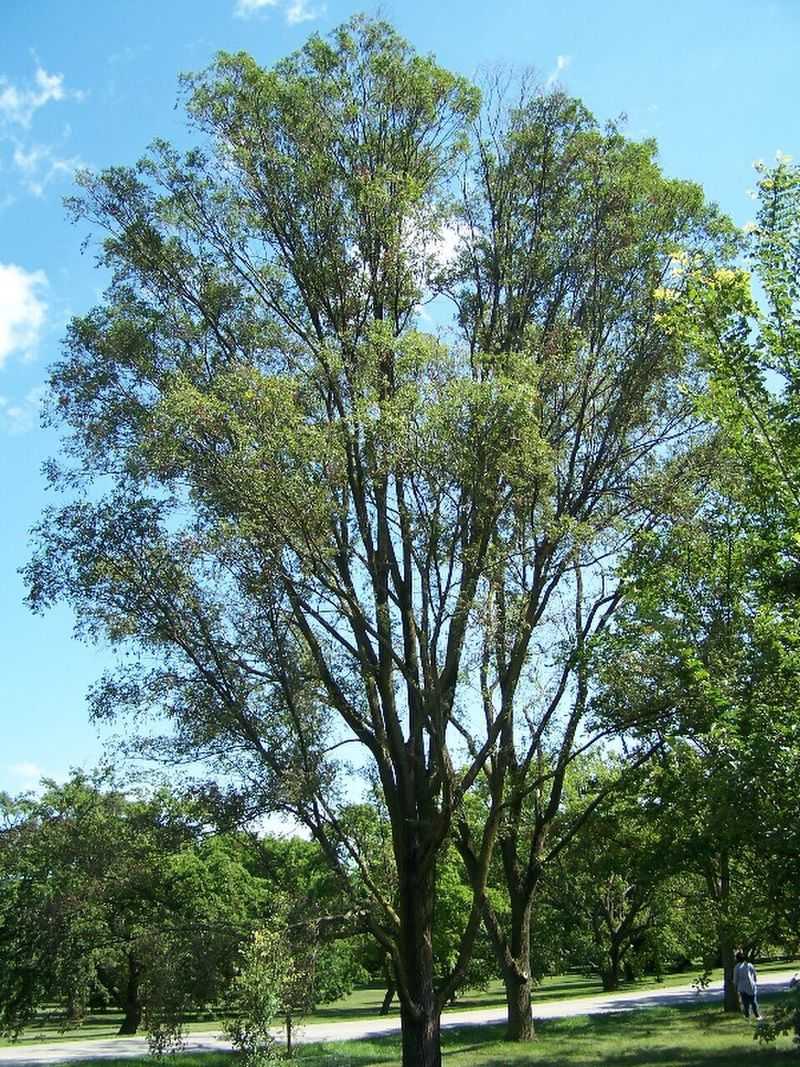
Here is a quick statistic that says a lot: a single Siberian elm can drop tens of thousands of papery seeds each spring. Homeowners often find them piled in gutters, clogging drains, and sprouting in flower beds within days.
Native to Asia, this elm was planted widely because it shrugs off drought and resists Dutch elm disease, which wiped out many American elms. It seemed like a perfect substitute.
It was not.
The wood is brittle, so limbs crack and fall during windstorms and ice. Trees often look ragged, with dead branches and weird growth.
Seedlings also invade prairies, fields, and roadsides, especially in sunny, disturbed spots.
Look for small, simple leaves with toothed edges that are only one to three inches long. That small size helps separate it from native elms.
Removing young trees early saves you money, since mature ones can become hazards near houses and fences.
8. Chinaberry
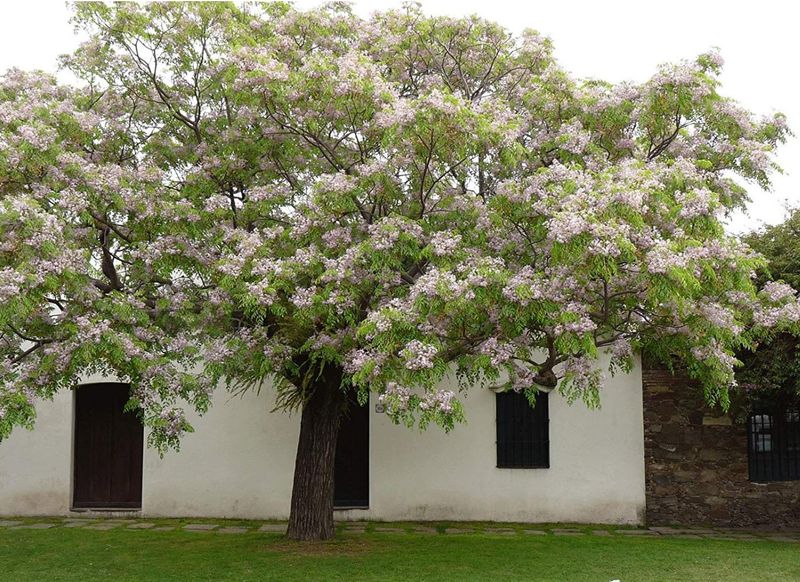
Kids in the old South used to pick chinaberries for slingshot ammo. Those hard yellow marbles still hang on the branches long after leaves drop in fall, making the tree easy to spot in winter.
What many people do not realize is that those berries are poisonous. They can make children, dogs, cats, and livestock seriously sick if eaten.
Birds can handle them, however, and they spread the seeds well beyond your property line.
Chinaberry came from Asia in the 1800s as a fast-growing shade tree with fragrant lilac-colored flowers. Now it shows up mostly in southern and eastern Virginia, where it forms thick clumps and sends up root sprouts.
Families with pets or young kids have extra reason to remove it. Cut larger trees and treat the stump, then keep an eye out for new sprouts.
A native black gum or sassafras offers lovely fall color without the toxic fruit.
Share this story