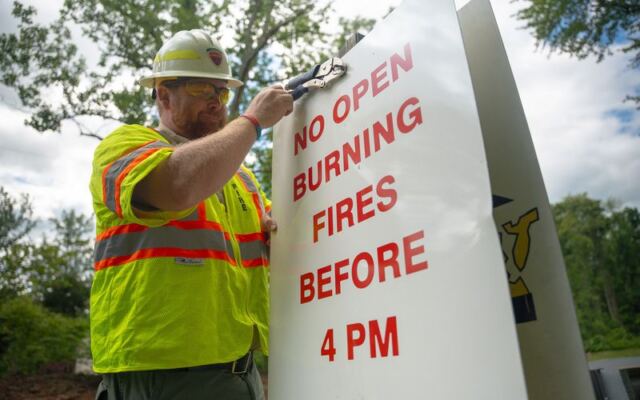
Virginia has a burning rule that can get homeowners in trouble for lighting leaves too early in the day. It is called the 4 PM Burning Law, and it runs from February 15 through April 30.
Many people mix it up with November 30, the end of fall fire season, and that mix-up leads to mistakes. Here is what the rule really says, who it covers, and what a violation can cost.
November 30 marks fall fire season, not the 4 PM law
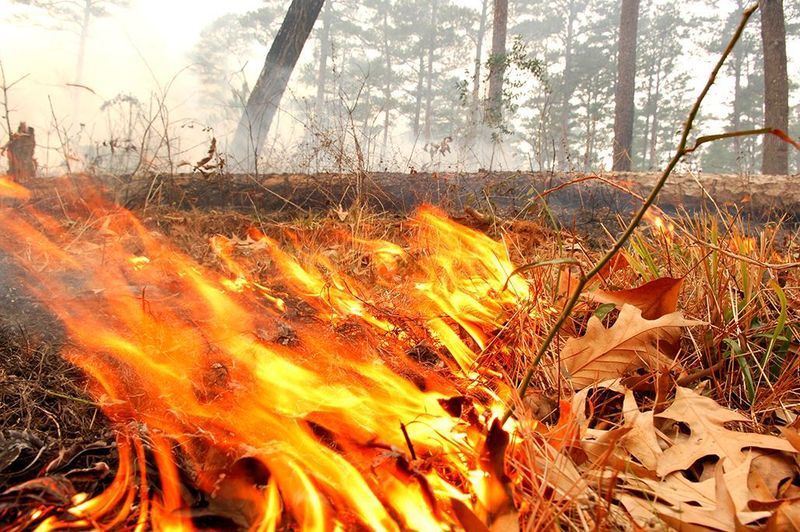
Two Virginia fire terms get tangled every fall, and the confusion starts with one date. November 30 is the end of fall fire season, which is a wildfire-risk period defined by the Department of Forestry.
It is a label for the time of year when dry leaves and grass make wildfires more likely.
The 4 PM Burning Law is something else. It is a state rule found in Section 10.1-1142 of the Code of Virginia, and it runs from February 15 through April 30.
It does not run through November 30, so that date is not the law’s deadline.
So what does November 30 mean for your leaf pile? On its own, not much.
It does not unlock burning the next day, and it does not automatically make burning before that date illegal under the 4 PM law.
Whether you can burn leaves depends on several things working together: the statewide timing rule, other state conditions, local ordinances, and the weather on the day. Local rules and temporary restrictions are a separate layer, and they can limit burning even when the state timing rule does not apply.
The sections below take each piece in turn.
When does the statewide timing rule apply?
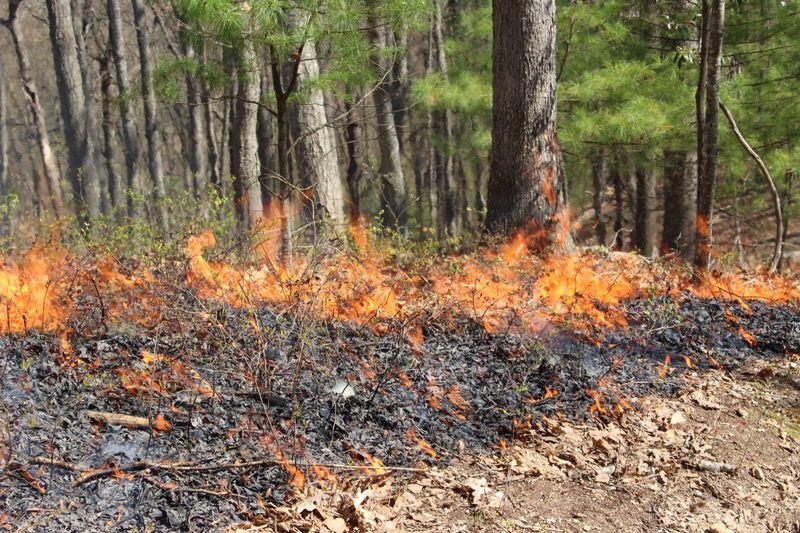
The statewide timing rule has a set season. It applies from February 15 through April 30, which is the stretch when spring winds and dry ground make wildfires spread easily.
Outside those dates, the 4 PM law does not set the hours for your fire.
During that window, covered burning is allowed only between 4 p.m. and midnight. A fire lit at noon or at 2 p.m. falls outside the legal hours, and one still burning after midnight does too.
Distance matters just as much as the calendar. According to the Department of Forestry’s explanation of the law, it does not apply when the burn is more than 300 feet from woods or flammable vegetation that could carry fire to the woods.
The rule generally covers fires within 300 feet of specified woodland, brushland, or a field with dry grass or other flammable material. It is not a rule for every outdoor fire everywhere.
A fire in a wide, bare yard far from any of those areas may fall outside it, though local rules can still apply.
The statute also lists exceptions. Section 10.1-1142 carves out certain fires set to protect crops from frost and qualifying prescribed burns.
Those exceptions are narrow and are not meant for ordinary yard cleanup.
A homeowner raking leaves in March near a wooded lot is exactly the person this rule targets. Measure the distance first, check the date, and then think about the clock.
A leaf-burning allowance is not blanket permission
Virginia’s open-burning regulation does allow some leaf burning, but only with strings attached. Under 9VAC5-130-40, on-site burning of leaves and yard trimmings on private property is permitted under specified conditions.
One of those conditions concerns trash and yard waste pickup. The allowance applies when no regularly scheduled collection service is available at the adjacent street or road.
If a crew already comes by for yard debris, the burning allowance may not be open to you.
Think of it as a door that opens only when certain boxes are checked. Living in a place without pickup is one box, and it is not the only one.
The regulation lists further conditions, so read it or ask your locality before assuming you qualify.
The allowance also does not cancel other rules. If you are within 300 feet of covered flammable areas between February 15 and April 30, the 4 PM law’s hours still apply to your fire.
Local ordinances and other applicable laws remain in play too. A neighbor who says, “The state lets us burn leaves,” is describing only part of the picture.
Permission under one rule is not permission under all of them.
The 150-foot rule adds a separate duty
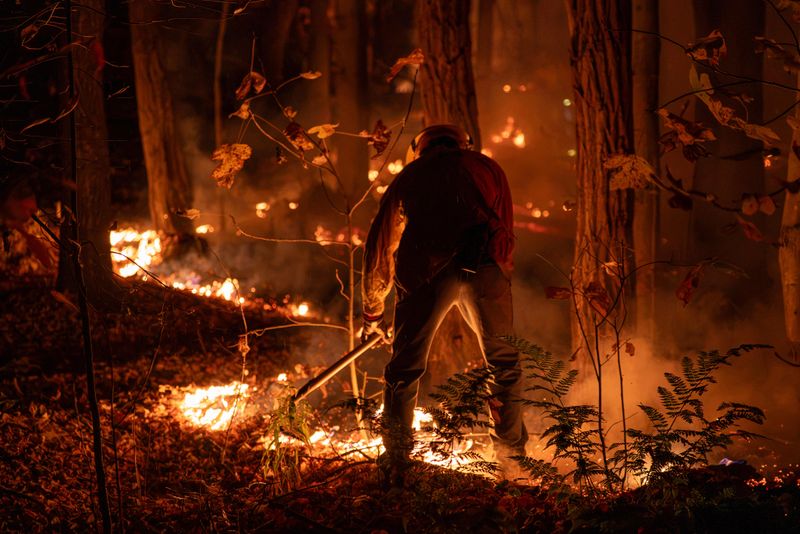
Here is a second number to keep straight: 150 feet. Section 10.1-1142 includes a separate duty for people who build or use an open-air fire within 150 feet of specified woodland, brushland, or dry grass.
Under the statute, that person must attend the fire and extinguish it before leaving. Walking away from a smoldering pile to run an errand is not allowed in that zone.
This duty has nothing to do with the clock. The 4 p.m. to midnight window and the 300-foot distance belong to the February 15 through April 30 timing rule.
The 150-foot attendance requirement is its own obligation and should not be folded into that schedule.
A quick example shows the difference. Say a pile sits 200 feet from a wooded lot.
In spring, the timing rule could cover it, so the hours matter, but the 150-foot attendance duty would not be triggered by distance alone.
Move that same pile to 100 feet from the trees, and both ideas can apply. You would need to follow the timing hours during the spring window and also stay with the fire until it is out.
Treat the two numbers as separate questions. One asks when you may burn, and the other asks who must stay put and put it out.
A violation can bring more than one kind of cost
Breaking the burning law is a criminal matter, not just a warning. A violation of Section 10.1-1142 is a Class 3 misdemeanor, according to the Code of Virginia.
For that class of offense, Section 18.2-11 sets a maximum fine of $500. That figure is a ceiling, not a price tag.
The law does not say every violation ends in a $500 fine, and the outcome depends on the case and the court.
The money does not necessarily stop there. If a forest fire results from a violation, the responsible person may also owe the Commonwealth its suppression expenses.
Those are the costs of fighting the fire.
That second cost can dwarf the fine. Crews, equipment, and time add up quickly when a small yard fire escapes into woods, and the bill is a separate matter from the misdemeanor itself.
The practical lesson is simple. Most of the risk comes not from a mistaken clock reading but from a fire that gets away, so the legal exposure and the physical danger tend to grow together.
Local restrictions can change the answer
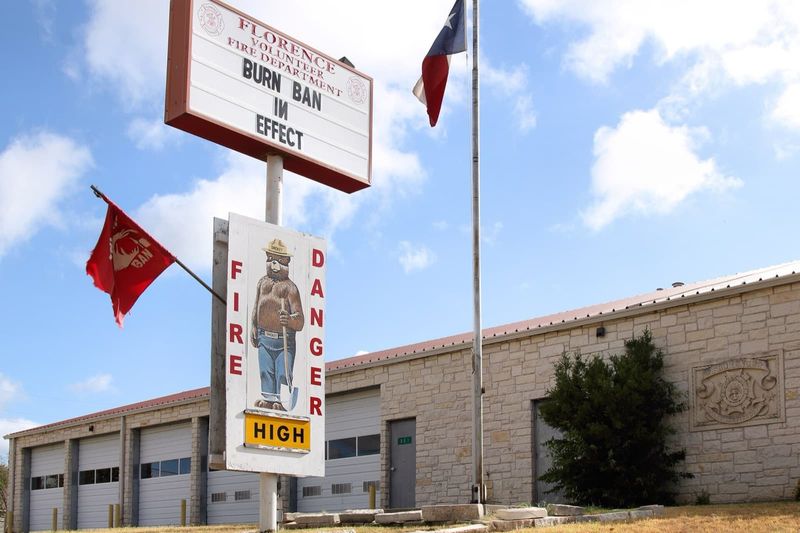
State timing is only one piece of the puzzle. Counties, cities, and towns can set their own rules, and some are stricter than the state’s.
A leaf burn that fits the 4 PM law may still be banned where you live.
Temporary restrictions matter too. The Department of Forestry keeps a page on local burn restrictions, and these can appear when conditions turn dry or windy.
The best habit is to check with your local government or fire department before you light anything. A short phone call can settle in minutes what a long search might leave unclear.
Written lists can go out of date. The Virginia DEQ’s list of local open-burning ordinances warns that local rules may have changed and should be confirmed with the locality.
So treat any list, including that one, as a starting point. Ask whether burning is allowed at all, whether a permit is needed, and whether any temporary ban is in effect today.
If burning is allowed, reduce the risk
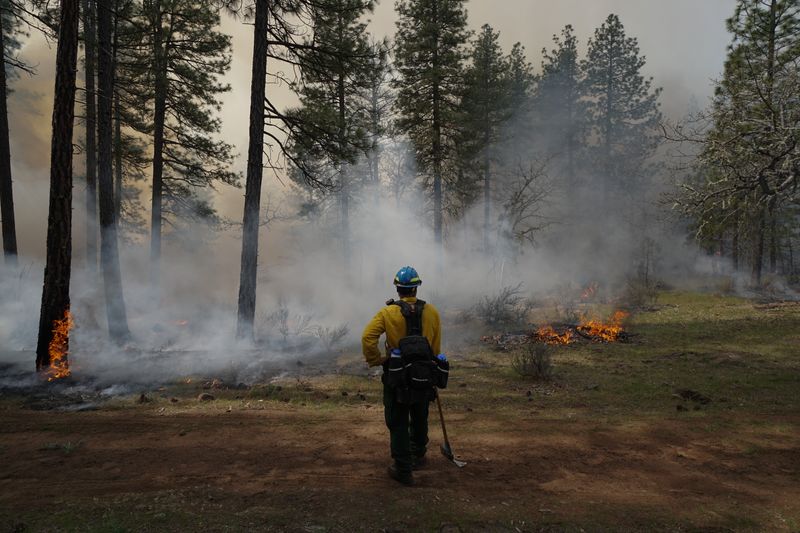
Even a legal burn can go wrong, and being allowed to light a fire is not the same as it being safe. The Department of Forestry’s Before You Burn guidance lays out sensible habits.
Start with the weather. Avoid burning on dry or windy days, since a gust can carry embers across a yard in seconds.
Next, shrink the job. Keep the pile small, and clear the vegetation around it so flames have nowhere to creep.
Have water and tools such as a hose, rake, and shovel within reach before you strike a match.
Stay with the fire until it is fully out, not just until the flames die down. If it escapes, call 911 right away instead of trying to handle it alone.
Remember that these steps do not replace legal checks. Local bans and temporary burn restrictions, described on the forestry agency’s local restrictions page, can still say no on a calm day.
Finally, consider skipping the fire. The agency suggests chipping or composting as alternatives, and shredded leaves make good mulch or compost with no smoke at all.
Check the date, distance, and local rules before lighting
Run through three checks before you light anything. First, look at the date and distance: between February 15 and April 30, the 4 PM law may apply if you are within 300 feet of covered flammable areas.
Second, confirm other rules with your locality, using the local restrictions page and a call to the fire department. Third, judge the day itself against the forestry safety advice.
November 30 never appears in that list, because it is not the end date of the 4 PM law. A calendar date can only tell you so much, but a dry, windy afternoon tells you plenty.
Share this story