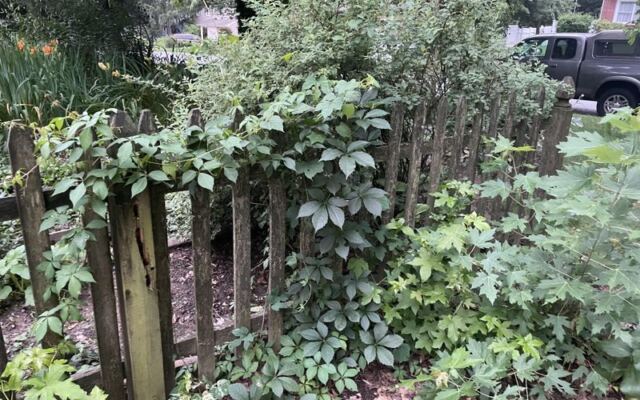
In Virginia, you can cut neighbor vines back to your property line at your own expense, and you do not have to prove they caused any damage first. That simple rule has some firm edges, though, and crossing them can turn a quick yard job into a legal headache.
Knowing where your line sits and what you may actually cut can save you money and stress. Here is how to handle a fence buried in someone else’s greenery before you pick up the pruners.
Virginia allows limited trimming to the property line
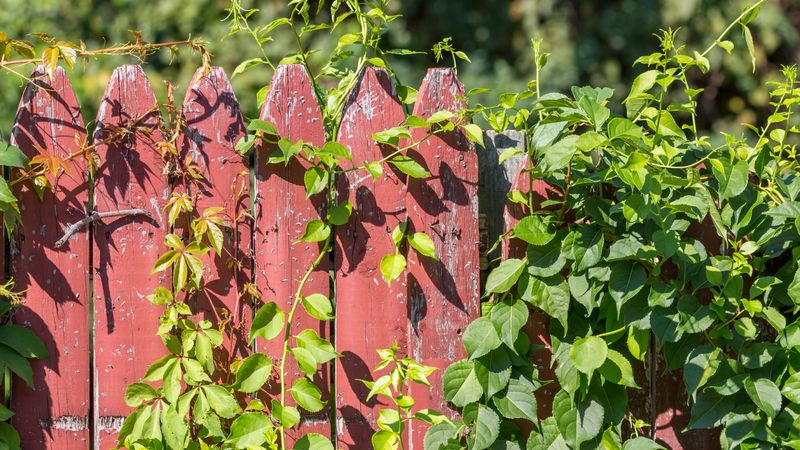
Here is the core rule. In Virginia, an owner may, at their own expense, cut back vegetation that reaches onto their land, trimming it to the property line, and does not have to show that the growth is causing harm.
The Supreme Court of Virginia stated that rule in Fancher v. Fagella, and the Court of Appeals repeated it later in a published bamboo dispute.
Those cases speak about trees and plants in general, so the rule is relevant to vines. Neither case, however, decides the exact situation of a vine swallowing a fence, so treat the rule as a strong starting point rather than a guarantee for every setup.
Think of this as limited self-help. You are allowed to remove the part of the plant that physically intrudes on your land, and Virginia Cooperative Extension describes it as removing the greenery to the least extent necessary.
You do not gain ownership of the plant, and you do not gain a right to remove all of it.
Because the right stops at the boundary, the boundary matters before the first cut. If you guess wrong about where your land ends, you may be cutting growth that sits on your neighbor’s side.
Confirm the line first, then decide how much trimming you actually need to do.
You also pay for the work. The neighbor has no duty to reimburse you simply because their vine crossed over, so budget for tools, time, or a hired crew.
Does the fence mark the boundary?
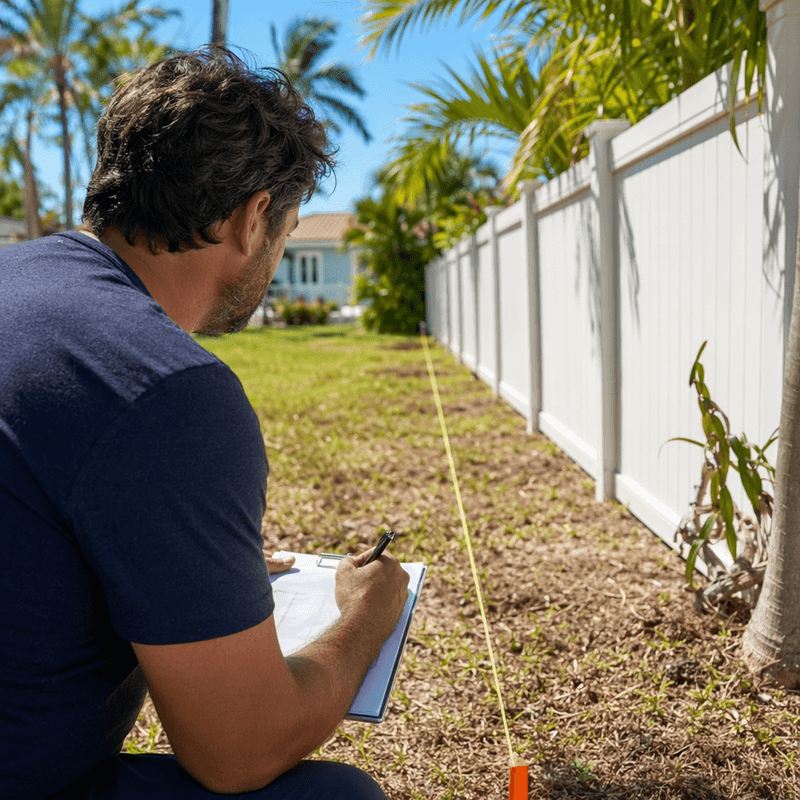
Many people assume the fence is the property line. It often is close, but a fence is not proof of where one lot ends and the next begins.
Fences get built a little to one side, replaced in a new spot, or put up long before anyone checked the deed.
The Court of Appeals’ bamboo case shows how this can play out. That published opinion involved a disputed fence and a disputed boundary, which is a good reminder that the fence alone may not settle the question.
It does not mean your fence is misplaced, only that you should not rely on it without checking.
Start with your deed and your plat, which are usually available from your closing papers or the county land records office. Look for iron pins or markers at the corners of the lot.
Those clues can help, but they are not always easy to read or to find.
If the line is still unclear, pause. A licensed land surveyor can mark the boundary, and a real estate attorney can explain what to do if the fence and the survey disagree.
Fence ownership can raise its own questions, and Virginia Cooperative Extension’s fence law guide is a helpful place to learn the basics.
A few days spent confirming the line is far cheaper than a dispute over cuts made on the wrong side.
The right to trim is not a right to remove the whole vine
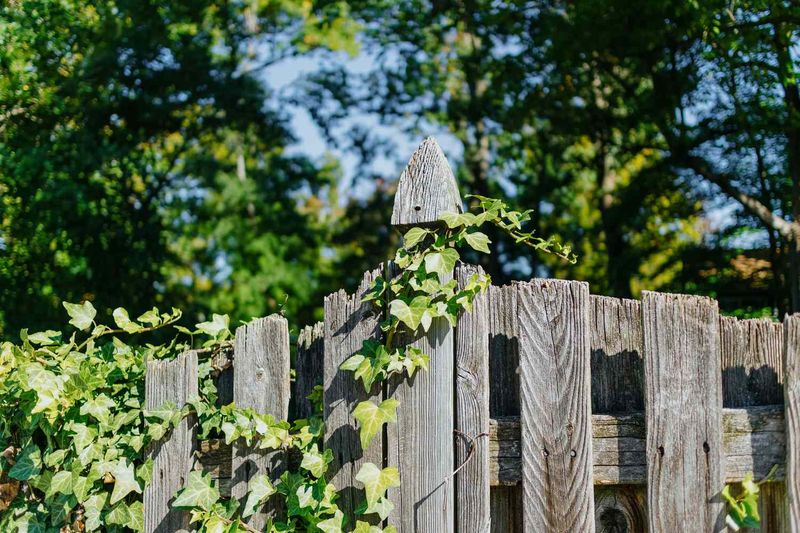
Once the boundary is verified, the job is narrow. Remove only the growth that physically intrudes onto your property, and only as much as you need to.
Cutting the vine at your line is one thing, and digging out its roots or stripping it from the neighbor’s side is something else entirely.
Try to avoid harming the neighbor’s plant or their fence while you work. A vine that has wrapped around fence boards or wires can be tricky, and pulling it loose may bend, crack, or loosen the fence.
If the fence belongs to your neighbor, damaging it could create a separate problem for you.
Virginia Code § 18.2-140 adds another reason for care. The statute prohibits cutting or injuring a plant found growing or being on another person’s land without written permission, subject to the exceptions it lists.
In plain terms, you should not step onto the neighbor’s land or cut growth that remains there.
The statute is not a ready answer for every vine rooted on one side and spreading across a fence. Where a cut could kill or badly hurt a plant rooted next door, the safer path is to ask first.
Extension guidance on the least necessary removal supports that cautious approach.
A friendly note or conversation can help. Many neighbors will agree to trim their own vines, and a written okay from them removes most doubt about what you may do.
When does encroachment become a nuisance?

Trimming and suing are two different things. Trimming is a right you can use without proving any harm.
A claim for broader relief, such as money or a court order, is a separate path with a higher bar.
In Fancher, the court said a plant does not have to be called noxious before an injured neighbor may have a claim. It also said that mere encroachment, shade, or dropped leaves, flowers, or fruit does not by itself make vegetation a nuisance.
So a vine that looks messy, blocks some light, or drops debris is not automatically a legal nuisance.
What matters is actual property damage or an imminent danger of actual harm. Examples might include roots lifting a structure or growth that is clearly pushing a fence over, though each situation depends on its own facts.
Photos, dates, repair estimates, and written requests to the neighbor can all help show what happened.
The later bamboo case shows how this can look. The Court of Appeals opinion involved evidence that the bamboo spread from the neighbor’s yard and damaged the shingles on a shed.
That supports the possibility of broader relief when damage is shown, but it is not a rule that every vine, or every fence-covered vine, earns damages.
Even when a nuisance exists, a court’s response is not automatic. Damages or an order requiring the owner to act are possibilities that depend on the evidence, so talk with an attorney before counting on either.
A safer way to handle the vines
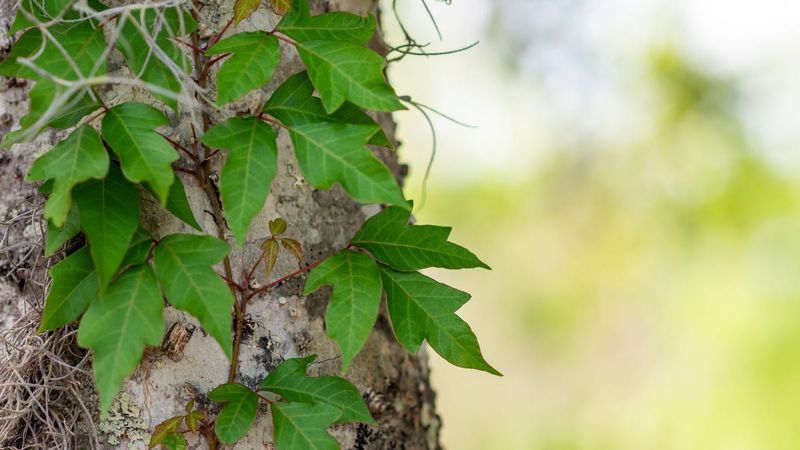
Before any cutting, figure out what the vine is. Poison ivy can grow along fence rows, and its oil, urushiol, can cause a skin reaction from every part of the plant.
Iowa State University Extension notes that even dead material can still trigger a rash.
Wear long sleeves, long pants, closed shoes, and waterproof gloves. Wash tools and clothes afterward, since the oil can cling.
Never burn poison ivy, because the smoke can cause breathing problems.
Resist the urge to yank. Pulling can snap the vine, spread sap onto your skin, and tug on a fence that may not be yours.
It is also a poor idea when a vine is tangled into a tree canopy, and Fairfax County’s invasive species guidance cautions against pulling vines out of trees. Falling limbs or a heavy vine coming down can cause injury.
Cut small, controlled sections on your side of the verified line, and stop when you reach it. If the vines are high, heavy, or wound through a large tree, consider a certified arborist or a licensed tree service instead of climbing a ladder yourself.
Keep the legal limits in mind as you work. Trimming only what intrudes, as described in Virginia Cooperative Extension’s fence guide, also tends to be the safer job physically.
Pause when ownership or plant identity is uncertain
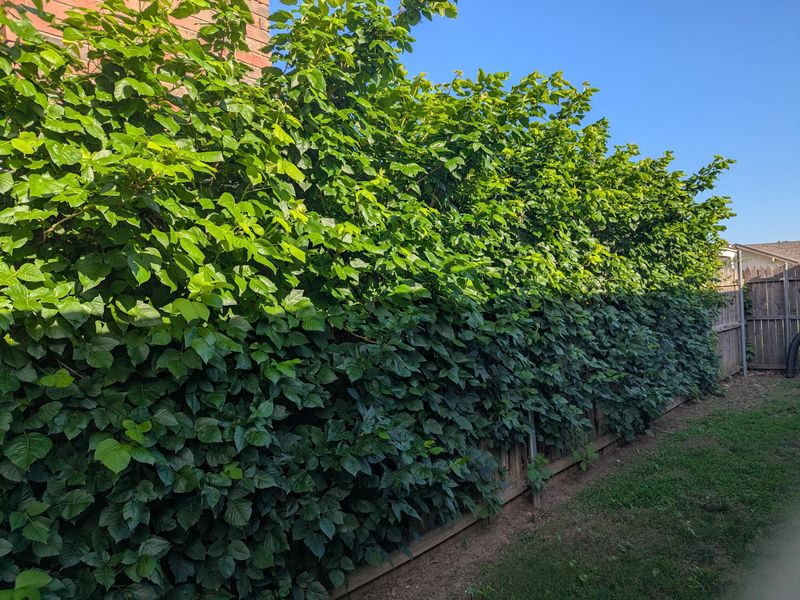
Think of the decision as a short path. Confirm the line, trim only growth that crosses it, and stop if a cut could harm a plant or fence whose owner is unclear.
When doubt remains, ask for permission, order a survey, or call an attorney.
Written permission matters because the Virginia statute turns on it for plants on another person’s land. Extension fence guidance can also help you sort out who owns what.
Remember that the right to trim does not by itself create a claim for damages. A vine only becomes a money matter when real harm can be shown.
A careful snip beats a hasty one, and a neighbor who agrees is worth more than any cut you can defend.
Share this story