Get the latest garden guides in your inbox →
Gardening Latest
  • General Gardening
  • Lawn Care
  • Plant Care
  • Composting
  • Soil Health
  • Backyard
  • Garden Muse Magazine
  • General Gardening
  • Lawn Care
  • Plant Care
  • Composting
  • Soil Health
  • Backyard
  • Garden Muse Magazine
  • News
  • Gardening Calendar
  • Garden Structures
  • Vegetable Garden
  • Vertical Garden
  • Raised Beds
  • Hydroponics
  • General Equipment
  • Community Gardens
Garden Themes
  • Spiritual Garden
  • Hydroseeding
  • Seeding and Laying Sod
  • Artificial Grass
  • Lawn Care Equipment
  • Plants
  • Trees
  • Planting Tools
  • Composting Basics
  • Fertilizer
  • Alternative Growing Mediums
  • Front Yard
  • Backyard Activities
  • Landscaping
Gardening Latest

Explore by state

Which state is your garden in?

Currently viewing Wisconsin

All states

Northeast

  • Connecticut —
  • Delaware 3
  • Maine —
  • Maryland 3
  • Massachusetts 5
  • New Hampshire —
  • New Jersey 3
  • New York 2
  • Pennsylvania 2
  • Rhode Island —
  • Vermont —

Southeast

  • Alabama 3
  • Arkansas —
  • Florida 3
  • Georgia 3
  • Kentucky 4
  • Louisiana 2
  • Mississippi —
  • North Carolina 1
  • South Carolina 3
  • Tennessee —
  • Virginia 2
  • West Virginia —

Midwest

  • Illinois 2
  • Indiana 4
  • Iowa 3
  • Kansas —
  • Michigan 3
  • Minnesota 2
  • Missouri 2
  • Nebraska —
  • North Dakota —
  • Ohio 3
  • South Dakota —
  • Wisconsin 4

Southwest

  • Arizona 3
  • Colorado —
  • Nevada —
  • New Mexico —
  • Oklahoma —
  • Texas 2
  • Utah —

West

  • Alaska —
  • California 3
  • Hawaii —
  • Idaho —
  • Montana —
  • Oregon —
  • Washington —
  • Wyoming —

No state matches that search.

Site menu

Gardening Latest
  • General Gardening
    • News
    • Gardening Calendar
    • Garden Structures
    • Vegetable Garden
    • Vertical Garden
    • Raised Beds
    • Hydroponics
    • General Equipment
    • Community Gardens
    Garden Themes
    • Spiritual Garden
  • Lawn Care
    • Hydroseeding
    • Seeding and Laying Sod
    • Artificial Grass
    • Lawn Care Equipment
  • Plant Care
    • Plants
    • Trees
    • Planting Tools
  • Composting
    • Composting Basics
  • Soil Health
    • Fertilizer
    • Alternative Growing Mediums
  • Backyard
    • Front Yard
    • Backyard Activities
    • Landscaping
  • Garden Muse Magazine

Explore

  • About GardeningLatest.com
  • Contact Us

Get the latest from the garden

New guides on lawn care, plants and backyard projects, sent when they go up.

Subscribe →

Follow

  • Facebook
  • X
  • Pinterest
  • YouTube
Wisconsin Gardening

Touched a Hickory Tussock Caterpillar in Your Wisconsin Garden? Here’s What to Do

You reach for a leaf, and a fuzzy white caterpillar brushes your skin. Moments later, the spot starts to itch or burn…

HB

By Heidi Brandt

November 17, 2026 · 5 min read

Touched a Hickory Tussock Caterpillar in Your Wisconsin Garden? Here’s What to Do
Touched a Hickory Tussock Caterpillar in Your Wisconsin Garden? Here's What to Do

You reach for a leaf, and a fuzzy white caterpillar brushes your skin. Moments later, the spot starts to itch or burn.

Most of the time, the trouble comes from tiny defensive hairs, and a few calm steps can help right away. Here is how to handle it and when to get help.

At a glance

Where
Wisconsin Gardening
Hardiness zone
5 −20 to −10°F
Read
5 minutes
Published
November 17, 2026

The usual problem is contact with irritating hairs
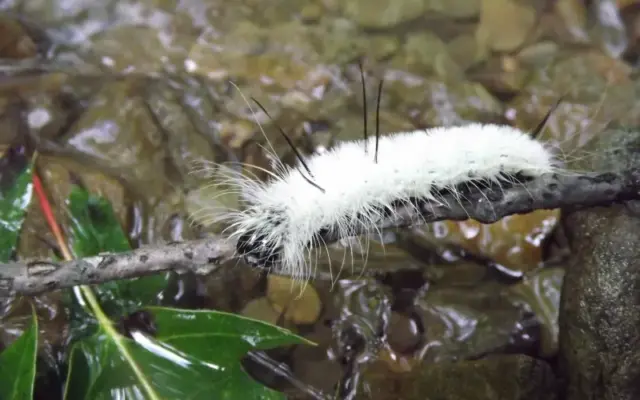
The usual problem is contact with irritating hairs
© h.lingel

Gardeners often say they were stung, and that is a fair way to describe how it feels. But a sting suggests venom injected through a spine or stinger, and that has not been confirmed here.

The usual reported effect is irritation from contact with the caterpillar’s defensive hairs.

According to Penn State Extension, those hairs are meant to put off predators, and they can cause a localized rash and itching on human skin. The same guidance says no systemic allergic reactions have been tied to this species, but it also notes an allergic reaction to a related tussock moth species.

So a serious reaction is not something to rule out completely.

Reactions vary from person to person. Someone with sensitive skin may react more strongly than someone who barely noticed the contact.

Where and how much skin touched the hairs also matters.

You may have seen reports that symptoms cleared within 24 hours. That comes from a poison-center review of 365 reported exposures to this species, and most of those were skin exposures.

The review drew on reported descriptions from one poison center in 1996 and 1997, so it cannot tell you how your own skin will respond.

Think of it as a general pattern, not a promise. Treat the area with care, watch how it changes, and keep the emergency signs later in this article in mind.

Remove hairs gently, then wash the skin

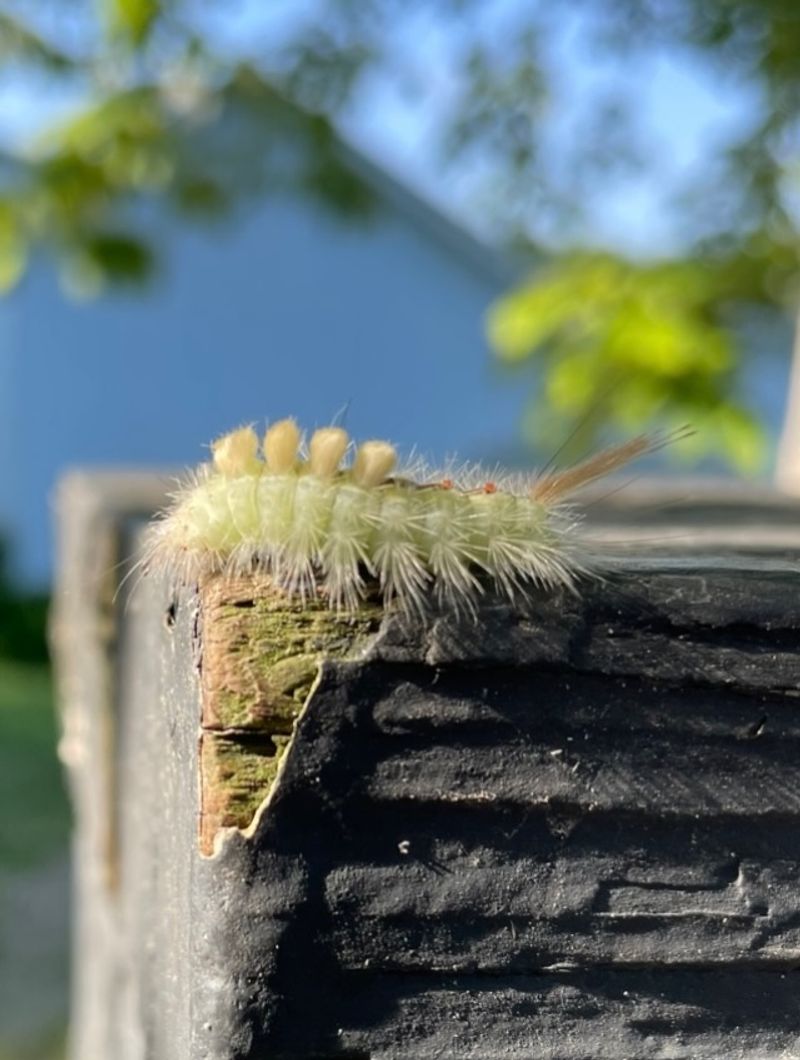
Remove hairs gently, then wash the skin
© Hilton Head Island Packet

Start by resisting the urge to scratch. Rubbing or brushing the spot can push tiny hairs deeper into the skin and spread them around.

If a caterpillar is still on you, remove it without bare-hand contact, using a stick, folded paper, or a gloved hand.

A hickory tussock caterpillar is typically white with black markings and tufts of hair.

Next, press a fresh piece of sticky tape onto the area where hairs seem embedded, then lift it straight off. Poison Control advises repeating this with new pieces of tape as needed.

Use a clean section each time so you are not putting hairs back on your skin.

After that, wash the area gently with soap and water. Skip scrubbing hard or scraping with a fingernail or razor, since that can make the irritation worse.

You may not need every step. Penn State Extension says washing may be enough when hairs are simply loose on the skin, while tape can help when they are embedded.

Once you are clean, change clothes if the caterpillar touched them, and handle those clothes carefully so stray hairs do not land on you again. A quick look at your hands and forearms before you go back to work is a smart habit.

Know when to seek medical help
Know when to seek medical help
© Poison Control

Most skin contact calls for first aid at home. For discomfort, a cold pack wrapped in a cloth can help.

Bare ice against irritated skin is not a good idea.

If you are unsure how to handle the exposure, call Poison Control at 1-800-222-1222. The specialists there can give guidance based on what touched you and how you feel.

Poison Control also says that caterpillar species differ in their effects, so describing the caterpillar or sending a photo can be useful.

Call 911 right away for trouble breathing or swallowing, fainting, or swelling of the face, lips, or tongue. Do not wait to see whether these signs pass.

Eyes and lungs need different handling than skin. If hairs get in an eye, rinse it with water and seek medical advice if the irritation persists.

If you breathe in hairs, MedlinePlus advises getting medical care.

A reaction that is spreading quickly or getting worse also deserves a call, even if none of the emergency signs have appeared yet.

Check the caterpillar’s identity before drawing conclusions
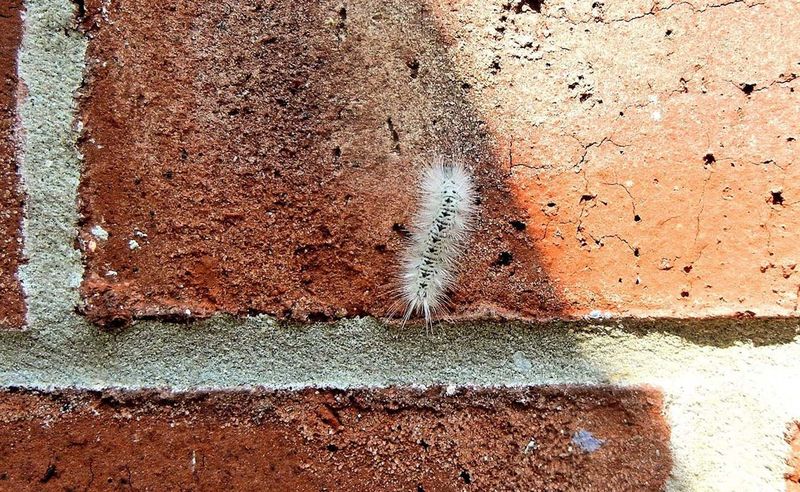
Check the caterpillar’s identity before drawing conclusions
© Farm and Dairy

A hickory tussock caterpillar is typically white with black markings and tufts of hair. That look is a helpful clue, but plenty of fuzzy caterpillars exist, and fuzziness alone does not tell you the species.

Many are harmless to touch.

The University of Wisconsin-Milwaukee Field Station places this species in Wisconsin, though its distribution is spotty. So you may go years without meeting one, and a guess based only on a fuzzy coat can easily be wrong.

Cocoons deserve the same respect. They can contain hairs, which means a cocoon tucked in leaf litter or on a log may cause irritation just as the caterpillar can, according to Penn State Extension.

If you are curious what you found, keep your distance. Take a clear photo with your phone, then share it with your county extension office or another local expert.

Do not pick it up to get a better look. A photo gives you an answer without another round of contact.

Reduce contact without overreacting to a sighting
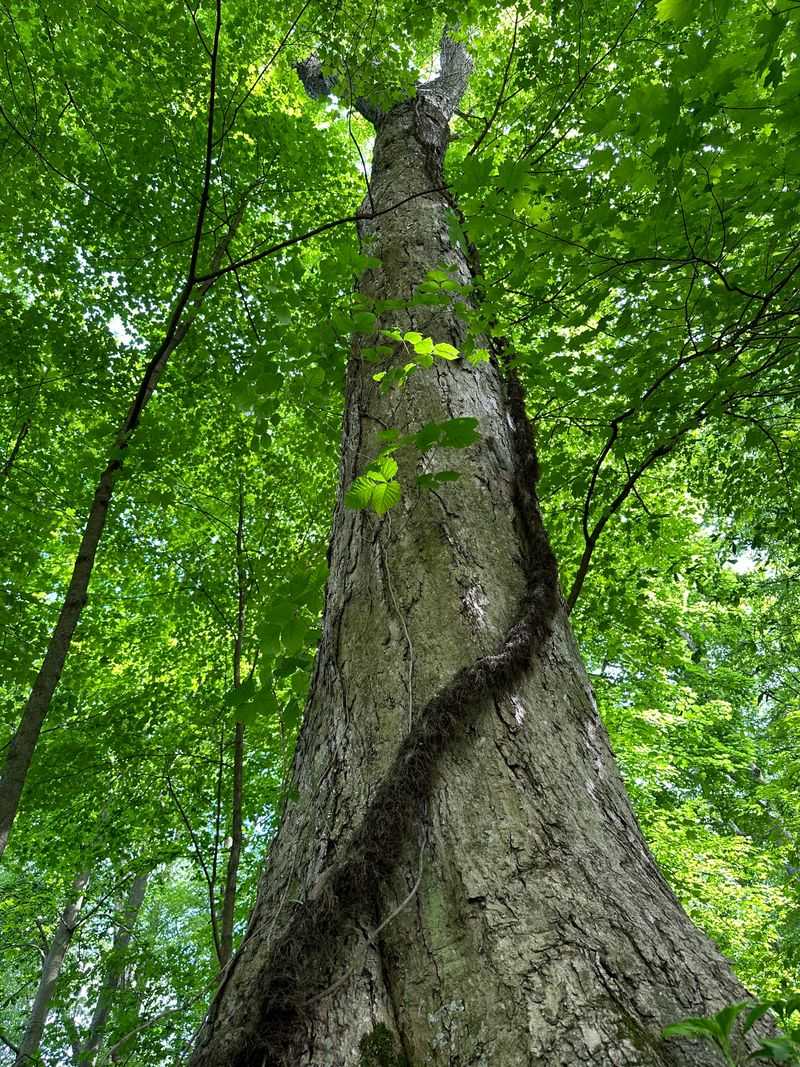
Reduce contact without overreacting to a sighting
© Reddit

Planning ahead is the easiest way to avoid a repeat. When you work under trees, wear gloves, long sleeves, and long pants so less skin is open to contact.

Tuck pant legs into socks if you are clearing brush or leaf litter.

Never pick up a caterpillar or cocoon with bare hands. If one is in your way, nudge it onto a piece of cardboard or use a stick, then move it to a spot away from where people work and play.

Check logs, firewood piles, and fence posts before you grab them.

Seeing a caterpillar does not mean you must spray. According to UMass Extension, mature trees often tolerate this feeding without any management in a typical year.

Chewed leaves on a big hickory or walnut are usually a cosmetic issue, not a crisis for the tree. Your own safety is the bigger concern, so the goal is to keep your skin away from the hairs.

If caterpillars gather near a play area or a doorway, mark the spot and keep children and pets clear until they move on.

Use the exposure and symptoms to guide your next step
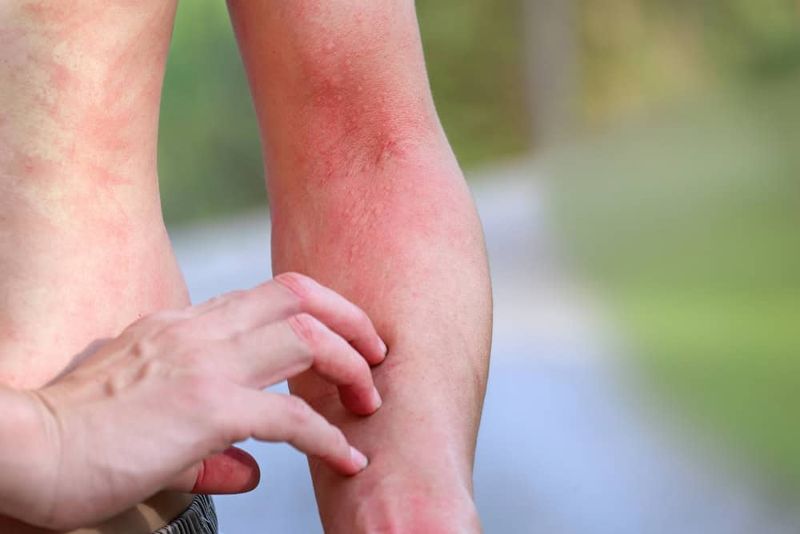
Use the exposure and symptoms to guide your next step
© A-Z Animals

Skin contact usually means no rubbing, gentle tape on embedded hairs, and a wash with soap and water. If you are unsure about the exposure or the reaction, Poison Control is at 1-800-222-1222.

Call 911 for trouble breathing or swallowing, fainting, or swelling of the face, lips, or tongue. A little caution outdoors goes a long way.

Share this story
HB

Written by

Heidi Brandt

More from Heidi Brandt →

About Gardening Latest

Gardening Latest provides in-depth guides to maintaining and enhancing your garden and backyard. Learn how to make the most of the space you have and create a beautiful garden.

More about us →

Latest stories

  • Iowa GardeningGot Stung by an Io Moth Caterpillar in Your Iowa Garden? Here’s What to Do Right Away

    Got Stung by an Io Moth Caterpillar in Your Iowa Garden? Here’s What to Do Right Away

    3 hr ago
  • Massachusetts GardeningDo These Five Things to Your Outdoor Spigots Before a Hard Massachusetts Freeze Splits Them

    Do These Five Things to Your Outdoor Spigots Before a Hard Massachusetts Freeze Splits Them

    4 hr ago
  • Delaware GardeningWhat Those Scratching Sounds in Your Delaware Attic Mean Once Cold Weather Hits

    What Those Scratching Sounds in Your Delaware Attic Mean Once Cold Weather Hits

    4 hr ago
  • Kentucky GardeningKentucky, This Is What Eating Celery Every Day Really Does To Your Body

    Kentucky, This Is What Eating Celery Every Day Really Does To Your Body

    4 hr ago
  • South Carolina GardeningCould a Tiny Venom-Suspected Shrew Live in South Carolina Yards? What We Know About the Southern Short-Tailed Shrew

    Could a Tiny Venom-Suspected Shrew Live in South Carolina Yards? What We Know About the Southern Short-Tailed Shrew

    4 hr ago

Gardening by state

Stories for your state, and the hardiness zone most of it gardens in.

Keep exploring

Read next

All Wisconsin Gardening →
Wisconsin GardeningWisconsin Yards May Host a Venomous Mammal That Averages Under an Ounce
Wisconsin Gardening

Wisconsin Yards May Host a Venomous Mammal That Averages Under an Ounce

18 hr ago
Wisconsin GardeningHearing Coyotes Howl Near Your Wisconsin Home at Night? What Their Calls Can and Cannot Tell You
Wisconsin Gardening

Hearing Coyotes Howl Near Your Wisconsin Home at Night? What Their Calls Can and Cannot Tell You

Yesterday
Wisconsin GardeningLeafless Vines in Wisconsin: Is Porcelain Berry the Culprit on Your Tree or Fence?
Wisconsin Gardening

Leafless Vines in Wisconsin: Is Porcelain Berry the Culprit on Your Tree or Fence?

Nov 15

More from Wisconsin Gardening

  • Could a Tiny Venom-Suspected Shrew Live in South Carolina Yards? What We Know About the Southern Short-Tailed Shrew

    4 hr ago
  • There’s a Venomous Mammal in Iowa That Weighs Up to 1 Ounce, and It Lives in Lawns and Underground

    18 hr ago
Back to top

Leave a response Cancel

Your email address stays private. Required fields are marked with an asterisk.

Gardening Latest

In-depth guides to maintaining and enhancing your garden and backyard: how to make the most of the space you have, and how to make it beautiful.

  • Facebook
  • X
  • Pinterest
  • YouTube

We may earn a portion of sales from products or services that are purchased through our site as part of our affiliate partnerships with retailers.

Explore

  • About GardeningLatest.com
  • Contact Us
  • Terms and Conditions
  • Privacy
  • Editorial Note:
  • FTC Disclosure

Newsletter

New garden guides and seasonal tips, straight to your inbox.

We’ll email you a link to confirm. Unsubscribe any time.

Almost there! Check your inbox and tap the link to confirm.

© 2026 Gardening Latest. All rights reserved.

Back to top