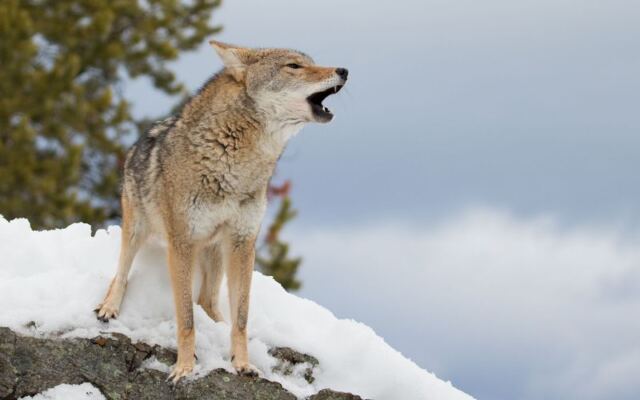
You are settling in for the evening when a wave of yips and howls drifts across the yard. It can feel eerie, and it makes many Iowans wonder what the coyotes are saying.
The calls do carry meaning, but not the kind you can translate word for word. Knowing what they can and cannot tell you helps you stay calm and keep your pets safe.
Coyote calls communicate presence, not a precise sentence
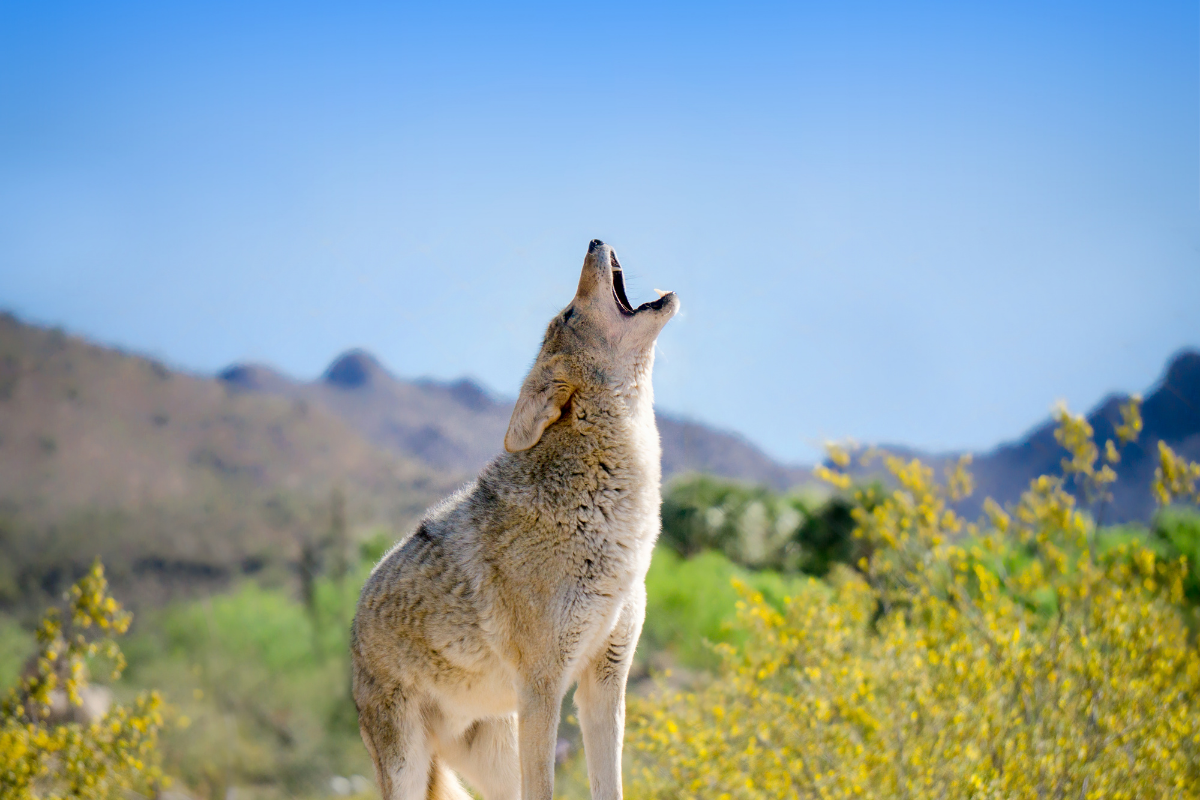
Coyotes make a mix of yips, barks, and howls, and each one is a form of communication. According to Iowa DNR guidance on coyotes, these calls are both territorial and social.
They announce a coyote family’s presence to other family groups, help defend territory, and strengthen bonds within the group.
So the “message” is a broad one. Think of it as a way of saying, we are here, this area is occupied, and we are staying in touch with each other.
That is very different from a sentence with a single meaning.
It is tempting to decode what you hear. A long wail might sound like a hunt, and a burst of yapping might sound like a celebration.
Nobody can reliably pin a specific event or intention on one howl or one chorus, and the Iowa DNR describes only the general functions of the calls.
That is the central answer to keep in mind as you read on. Coyote calls tell you that coyotes are around and active in some social or territorial way.
They do not tell you exactly what the animals are doing, how many there are, or whether anything is about to happen at your house.
Hearing them can actually be a small sign of a healthy local ecosystem. Family groups are keeping track of one another and of their neighbors, much like people checking in by phone.
Why are the calls often heard after dark?
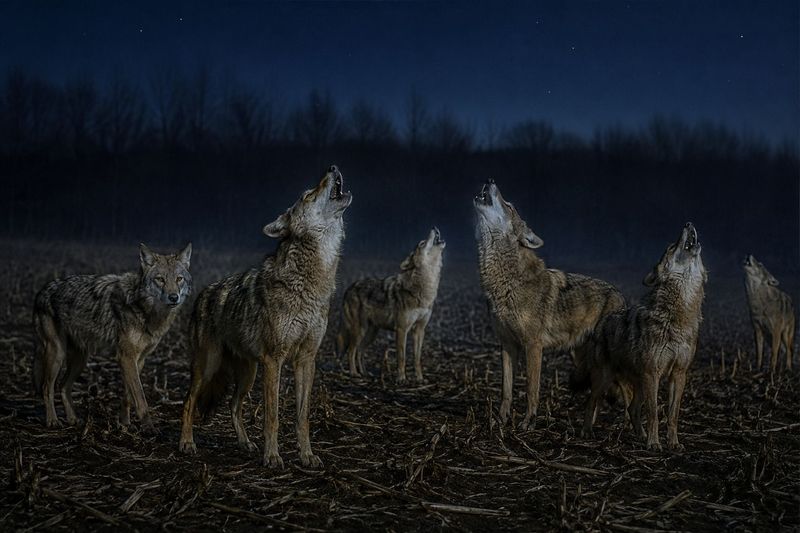
Evening is when many people first notice coyotes. Iowa DNR says coyotes commonly vocalize at dusk or during the first hour of darkness, which lines up with the time many of us are home, quiet, and listening.
That does not mean night is the only time they call. Coyotes can vocalize at other times too, and their schedule is not the same everywhere.
Activity patterns shift with how much people are around. The Iowa DNR notes that coyotes living in cities are especially active at night, when streets and parks are quieter.
In areas with fewer people, their activity tends to peak around dawn and dusk.
This helps explain why you might hear coyotes you almost never see. An animal moving through a neighborhood at 2 a.m. will likely go unnoticed by everyone except the light sleeper by an open window.
Coyotes are also wary by nature, and they tend to stay out of sight.
So if you hear calls after dark, treat it as ordinary timing. A practical step is to jot down when you hear them for a week or two.
If you notice a pattern, you will know when to bring pets in and when to keep a closer eye on the yard.
A chorus is not a reliable head count
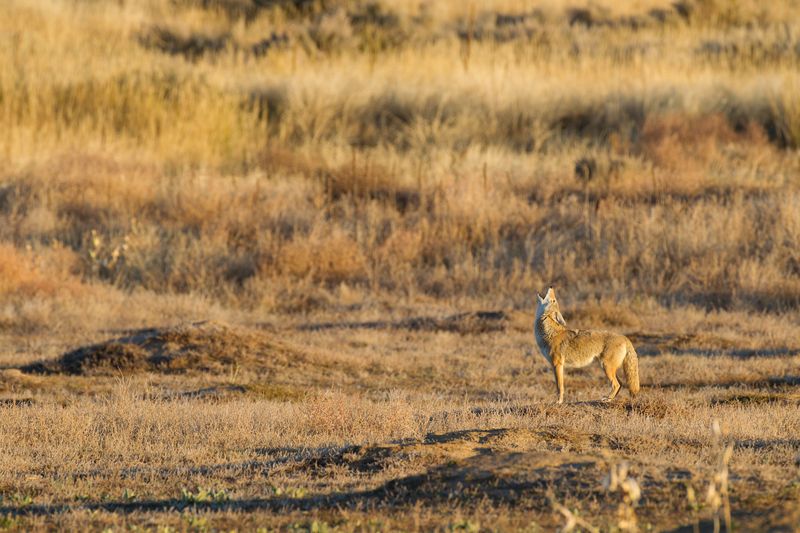
A burst of overlapping voices can sound like a whole crowd. Our ears pick up many pitches at once, and it is natural to assume each one belongs to a different animal.
A research team tested this idea. In a 2017 perception study, 427 participants listened to recordings of one to four coyotes.
On average, they overestimated the number of animals by nearly twofold.
There are limits to what that result means. The recordings came from captive coyotes in southern Texas, so the finding is not a universal rule for every listener or for wild coyotes in Iowa.
It also cannot tell you how many coyotes are near your home.
What it does offer is a good reason for caution. If trained ears and curious volunteers can be fooled, a person standing in a dark yard probably can be too.
Loud or complicated calls do not give you a dependable count, and they do not tell you where the animals are standing. Sound can bounce and carry, so a group that seems right behind the shed may be far off.
A simple takeaway is to describe what you heard as some coyotes rather than guessing at a number.
Does hearing a coyote mean your home is in danger?
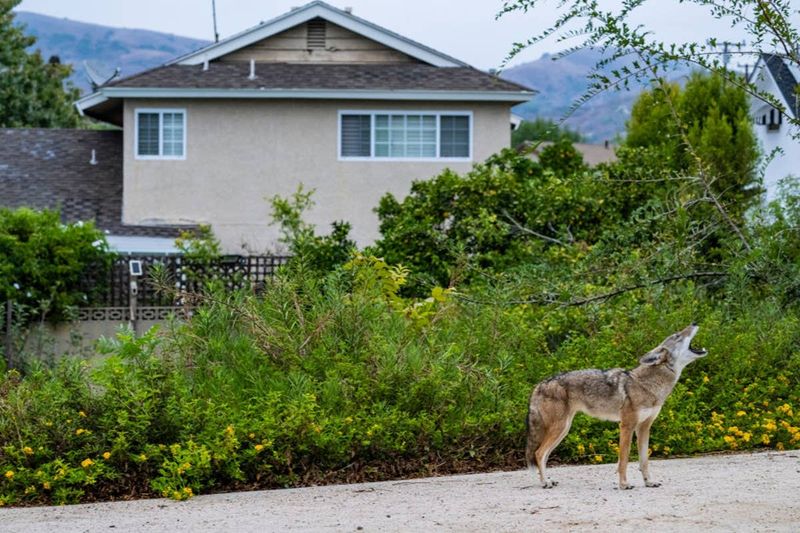
A howl in the distance is not a warning bell. Iowa DNR describes vocalizations as part of territorial and social behavior, so a call by itself does not show that a coyote is heading toward people or singling out your pets.
For general context, Florida’s wildlife agency says in its coyote FAQ that attacks on people are rare. That is Florida guidance and not an Iowa incident rate, but it helps keep worry in proportion.
The same guidance still urges people to avoid feeding coyotes, protect pets, and take unusually close or aggressive behavior seriously.
So what should you watch instead of the sound? Look at what you can actually see.
A coyote that keeps its distance and trots away is behaving as expected. One that lingers near people, shows no wariness, or acts boldly around a home deserves attention.
Pet risks are better handled through habits than through worry over howls. Supervising animals and removing food sources do far more than trying to read a call.
If you do see unusual behavior, note the time and place and call local authorities or the DNR. Your own observations are far more useful than a guess about what a howl meant.
Remove food sources that can attract coyotes

Food is the biggest reason a coyote lingers near a house. The steps recommended by Iowa DNR are simple and cost very little.
First, never feed coyotes, on purpose or by accident. Even a single handout can teach an animal that people mean food.
Next, secure your garbage and compost. Use bins with tight lids, and consider keeping them in a garage or shed until pickup day.
Compost piles with scraps are an easy target, so a closed container works better than an open heap.
Then walk your yard for the small things. Bring pet food dishes inside rather than leaving them on the porch.
Sweep up spilled birdseed under feeders, since seed draws rodents, and rodents draw coyotes. Pick up fallen fruit from apple, pear, or plum trees before it piles up.
A quick evening routine can cover all of this in five minutes. Check the bins, collect any bowls, and scan the lawn for fruit or seed.
Neighbors matter too. If one yard stays tidy and the next one does not, animals will favor the messy one, so a friendly word over the fence can help the whole street.
Protect pets and give coyotes room
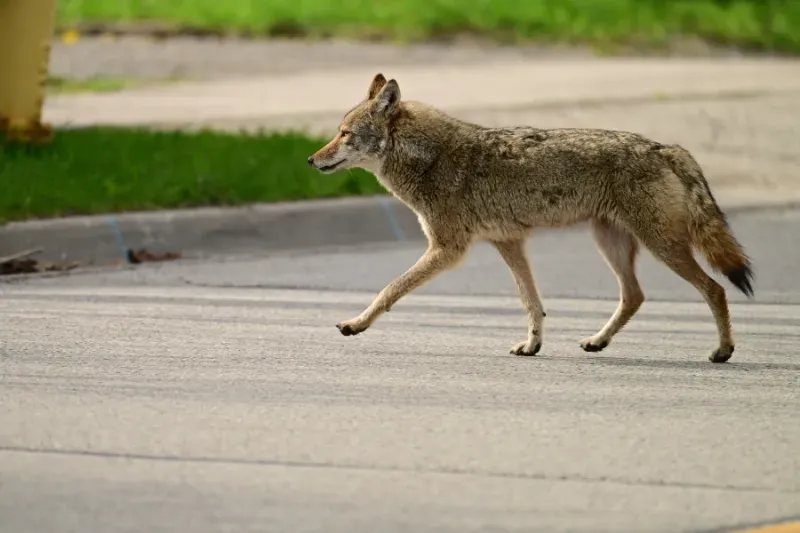
Pets are where coyote advice gets personal. Iowa DNR guidance notes that small dogs and cats can be at risk, and it recommends preventing pets from engaging with a coyote.
Start with supervision. Go outside with your pets, especially around dusk and in the first hours of darkness, when coyotes commonly call.
Keep cats indoors. Where coyotes are present, keep dogs close and on a leash.
If a coyote comes too close, the DNR recommends hazing. Yell, make noise, and make yourself look bigger.
The goal is to remind the animal that people are not something to approach, and you should never chase it or try to provoke it.
Some situations call for the opposite approach. Do not haze a coyote that appears sick, injured, cornered, or is with pups.
Give it plenty of space, step back, and bring pets inside.
In those cases, contact local authorities or the DNR for help. A coyote that looks unwell or is protecting young needs distance, not a confrontation.
Giving coyotes room is the safest choice for everyone. If you see one at a respectful distance, let it go on its way, and keep your own animals close until it has moved on.
Treat the howls as information, not a warning you can decode
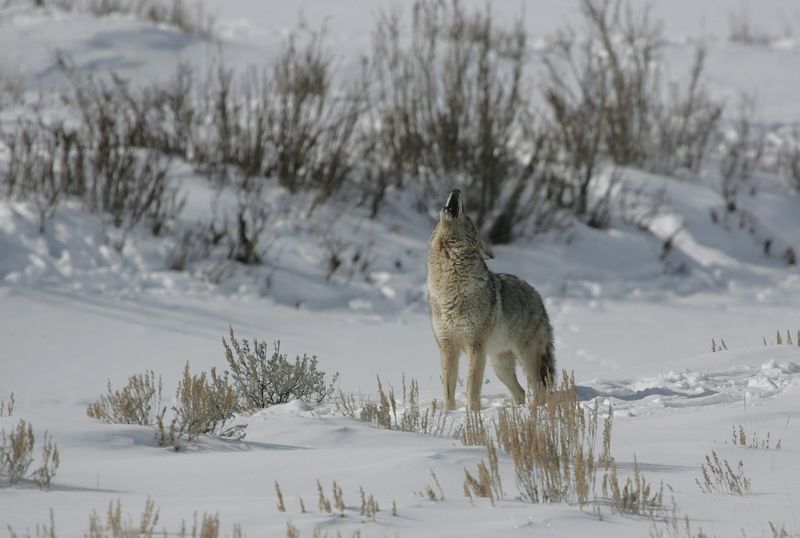
The calls tell you coyotes are nearby and active, nothing more. They are not a dependable translation, a head count, or a danger report.
Keep attractants locked down, keep pets close, and let what you actually see guide your choices, following Iowa DNR advice.
Next time the yips drift across the dark, you can simply listen. It is the sound of neighbors you rarely meet, keeping in touch.
Share this story