Get the latest garden guides in your inbox →
Gardening Latest
  • General Gardening
  • Lawn Care
  • Plant Care
  • Composting
  • Soil Health
  • Backyard
  • Garden Muse Magazine
  • General Gardening
  • Lawn Care
  • Plant Care
  • Composting
  • Soil Health
  • Backyard
  • Garden Muse Magazine
  • News
  • Gardening Calendar
  • Garden Structures
  • Vegetable Garden
  • Vertical Garden
  • Raised Beds
  • Hydroponics
  • General Equipment
  • Community Gardens
Garden Themes
  • Spiritual Garden
  • Hydroseeding
  • Seeding and Laying Sod
  • Artificial Grass
  • Lawn Care Equipment
  • Plants
  • Trees
  • Planting Tools
  • Composting Basics
  • Fertilizer
  • Alternative Growing Mediums
  • Front Yard
  • Backyard Activities
  • Landscaping
Gardening Latest

Explore by state

Which state is your garden in?

Currently viewing Iowa

All states

Northeast

  • Connecticut —
  • Delaware 5
  • Maine —
  • Maryland 3
  • Massachusetts 7
  • New Hampshire —
  • New Jersey 3
  • New York 2
  • Pennsylvania 2
  • Rhode Island —
  • Vermont —

Southeast

  • Alabama 3
  • Arkansas —
  • Florida 3
  • Georgia 3
  • Kentucky 6
  • Louisiana 2
  • Mississippi —
  • North Carolina 1
  • South Carolina 5
  • Tennessee —
  • Virginia 2
  • West Virginia —

Midwest

  • Illinois 2
  • Indiana 4
  • Iowa 5
  • Kansas —
  • Michigan 3
  • Minnesota 2
  • Missouri 2
  • Nebraska —
  • North Dakota —
  • Ohio 3
  • South Dakota —
  • Wisconsin 6

Southwest

  • Arizona 3
  • Colorado —
  • Nevada —
  • New Mexico —
  • Oklahoma —
  • Texas 2
  • Utah —

West

  • Alaska —
  • California 3
  • Hawaii —
  • Idaho —
  • Montana —
  • Oregon —
  • Washington —
  • Wyoming —

No state matches that search.

Site menu

Gardening Latest
  • General Gardening
    • News
    • Gardening Calendar
    • Garden Structures
    • Vegetable Garden
    • Vertical Garden
    • Raised Beds
    • Hydroponics
    • General Equipment
    • Community Gardens
    Garden Themes
    • Spiritual Garden
  • Lawn Care
    • Hydroseeding
    • Seeding and Laying Sod
    • Artificial Grass
    • Lawn Care Equipment
  • Plant Care
    • Plants
    • Trees
    • Planting Tools
  • Composting
    • Composting Basics
  • Soil Health
    • Fertilizer
    • Alternative Growing Mediums
  • Backyard
    • Front Yard
    • Backyard Activities
    • Landscaping
  • Garden Muse Magazine

Explore

  • About GardeningLatest.com
  • Contact Us

Get the latest from the garden

New guides on lawn care, plants and backyard projects, sent when they go up.

Subscribe →

Follow

  • Facebook
  • X
  • Pinterest
  • YouTube
Iowa Gardening

Iowa Yards Hide These Venomous Creatures, And Here’s How To Tell Each One Apart

Your backyard in Iowa might feel calm and safe, but a few small residents carry venom you should know about.

LP

By Lyle Petersen

November 18, 2026 · 5 min read

Iowa Yards Hide These Venomous Creatures, And Here’s How To Tell Each One Apart
Iowa Yards Hide These Venomous Creatures, And Here's How To Tell Each One Apart

Your backyard in Iowa might feel calm and safe, but a few small residents carry venom you should know about. Most of them want nothing to do with you and only bite or sting when they feel trapped.

Learning to spot the differences between them can save you a painful surprise or even a trip to the doctor. Here is a simple guide to the venomous critters hiding in Iowa grass, woodpiles, and garden sheds.

At a glance

Where
Iowa Gardening
Hardiness zone
5 −20 to −10°F
Read
5 minutes
Published
November 18, 2026

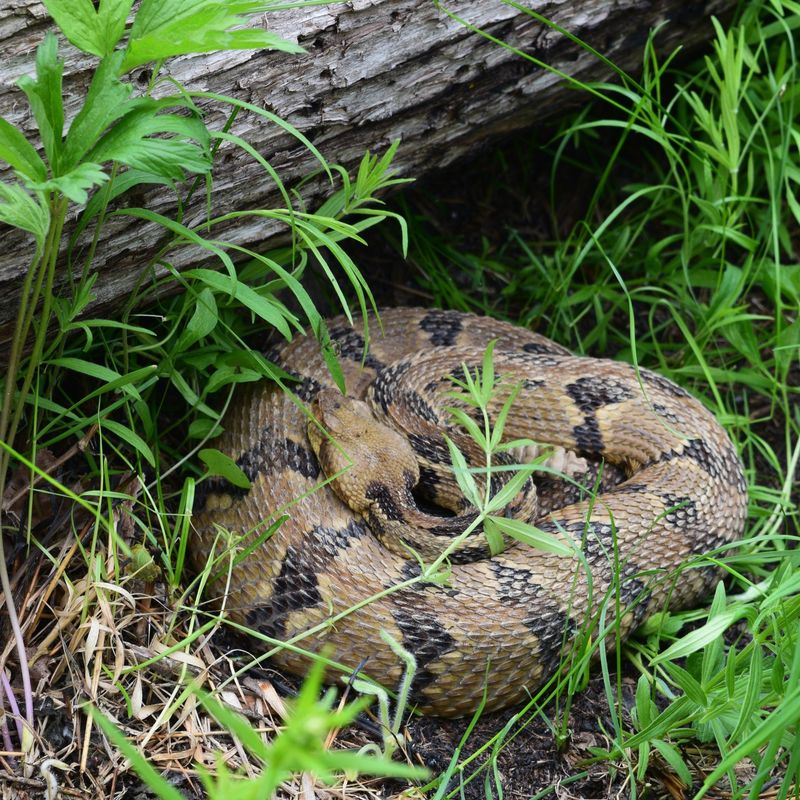
1. Timber Rattlesnake

Timber Rattlesnake
© iowadnr

Picture a quiet bluff along the Mississippi River, and you have found prime timber rattlesnake country. Iowa’s largest venomous snake can stretch past four feet, yet it often sits so still that hikers walk right by it.

The giveaway is the pattern. Look for dark, wavy bands shaped like the letter V across a tan, yellow, or gray body, plus a solid black tail ending in a rattle.

Many have a rusty stripe running down the middle of the back.

Yards near wooded hills and rocky ledges in eastern and southern Iowa are the most likely spots for a visit. If you hear that dry buzzing sound, back away slowly and give the snake plenty of room.

A bite is a medical emergency, so call for help right away rather than trying old tricks like cutting the wound.

2. Prairie Rattlesnake
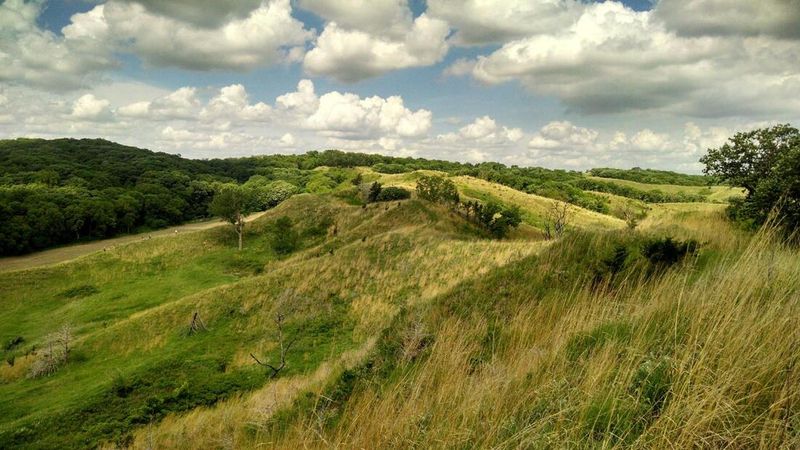
Prairie Rattlesnake
© News – GOLDEN HILLS RC&D

Few Iowans have ever seen one, and that rarity is exactly what makes the prairie rattlesnake special. It survives only in a tiny pocket of the Loess Hills in the far western part of the state.

Unlike the timber rattler, this snake wears rounded brown blotches on a greenish or tan body. Two pale stripes run along each side of its face, almost like it drew on eyeliner.

Its tail is banded instead of solid black, which is a handy clue. If you live near those dry, grassy hills, keep an eye on rock piles and prairie dog style burrows during warm months.

3. Eastern Massasauga
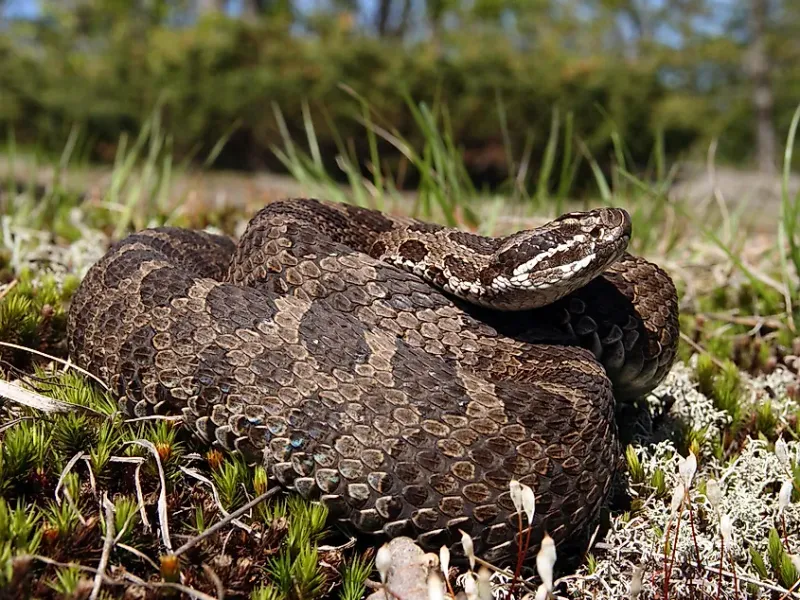
Eastern Massasauga
© Animals

Small, shy, and seriously endangered, the eastern massasauga is the rattlesnake most people mistake for a harmless snake. It usually measures only about two feet long.

You will spot rows of dark brown blotches running down a gray body, with a short, thick tail and a little rattle. Its rattle sounds more like a buzzing insect than a warning, so listen closely.

Flip over an old flowerpot, and you might meet a glossy black spider with a red mark that looks painted on.

Massasaugas love wet meadows and marshes, especially in eastern Iowa. Yards next to wetlands are the main places to watch.

If you find one, leave it alone and report the sighting to the Iowa DNR, since every snake counts for this species.

4. Copperhead
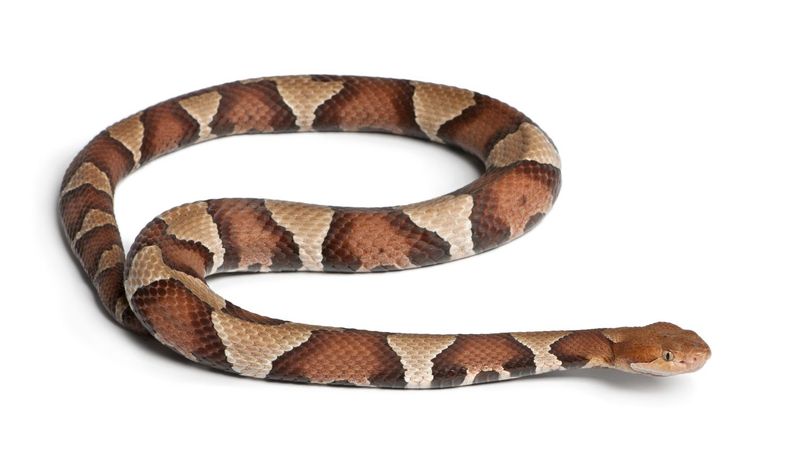
Copperhead
© ThoughtCo

Ask any snake expert for the easiest pattern to memorize, and they will point to the copperhead’s hourglass bands. Wide on the sides and skinny on the back, those chestnut shapes make this snake look like it is wearing a row of bow ties.

The head is a smooth copper color with no markings, which gives the snake its name. Babies have a bright yellow tail tip that they wiggle to lure frogs.

In Iowa, copperheads are very rare and found mainly in the southeast corner. They blend into dead leaves perfectly, so wear gloves when raking or moving firewood in that area.

5. Black Widow Spider
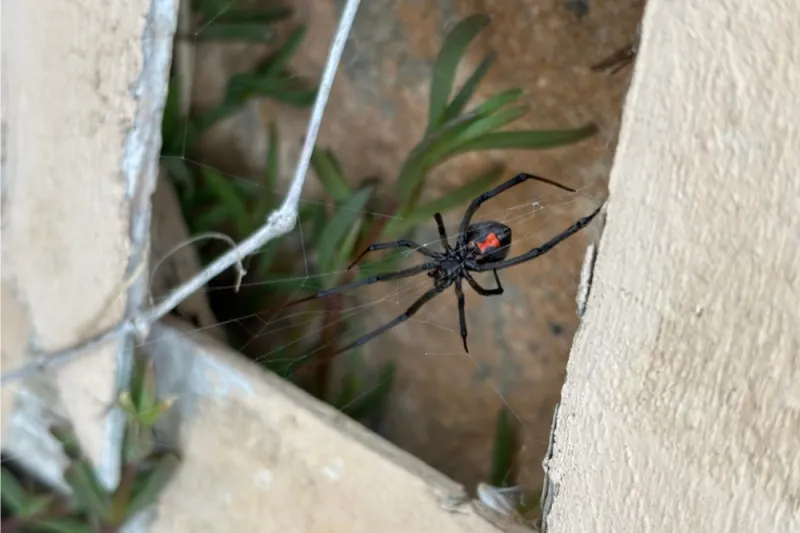
Black Widow Spider
© Insectio

Flip over an old flowerpot, and you might meet a glossy black spider with a red mark that looks painted on. The female black widow is famous for that red hourglass under her round belly.

Her web is messy and tangled, not neat like an orb weaver’s. She builds it in dark, quiet corners such as sheds, woodpiles, window wells, and under patio furniture.

Her venom affects nerves and can cause strong muscle cramps. Bites are uncommon and rarely deadly, but kids and older adults should get checked by a doctor.

Shake out gloves and boots that sit in the garage for a while.

6. Brown Recluse Spider
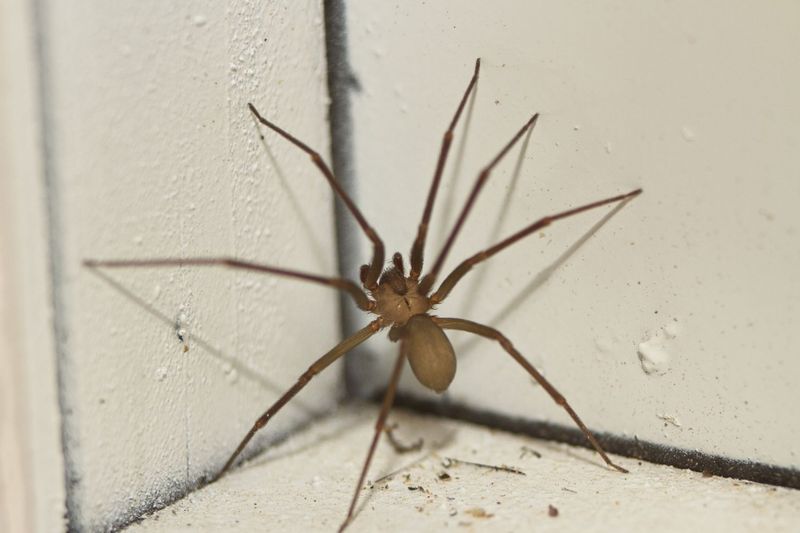
Brown Recluse Spider
© HEALTH

Here is a fun fact: brown recluses have six eyes instead of the usual eight. That tiny detail is one of the best ways to tell a real recluse from the many brown spiders that look similar.

Look for a tan body with a darker violin shape on the front section, with the neck of the violin pointing toward the rear. The legs are long, thin, and the same plain color with no stripes or spines.

Recluses show up mostly in southern Iowa, hiding in boxes, closets, and basements. Their bite can cause a slow-healing sore, so store items in sealed plastic bins and get any odd wound looked at.

7. Yellowjacket
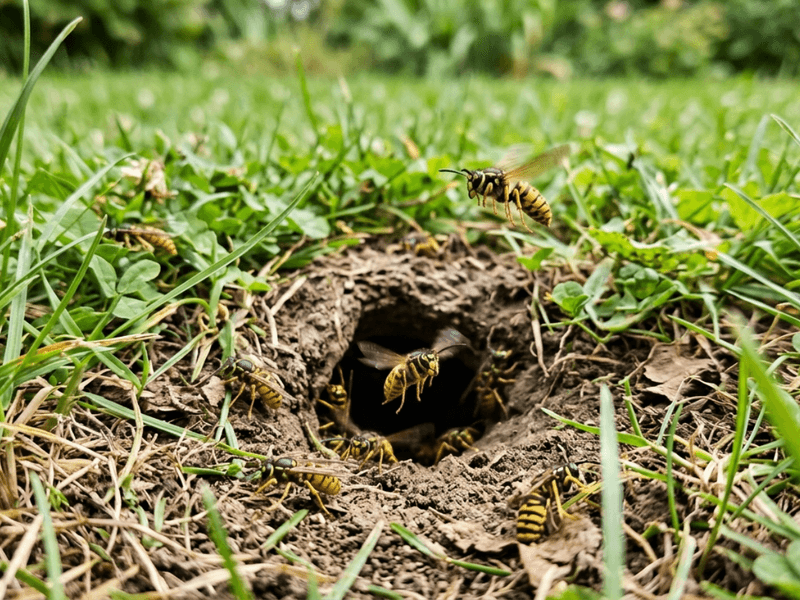
Yellowjacket
© The Economic Times

Late summer cookouts in Iowa have an uninvited guest who loves soda and hot dogs. Yellowjackets get bolder as the season goes on, buzzing around anything sweet or meaty.

They are smaller than most people expect, with sharp yellow and black bands and almost no fuzz. Many nest underground, so a hole in the lawn with insects flying in and out is a big warning sign.

Unlike honeybees, they can sting again and again. Mowing over a hidden nest is the classic way people get swarmed, so walk your yard first.

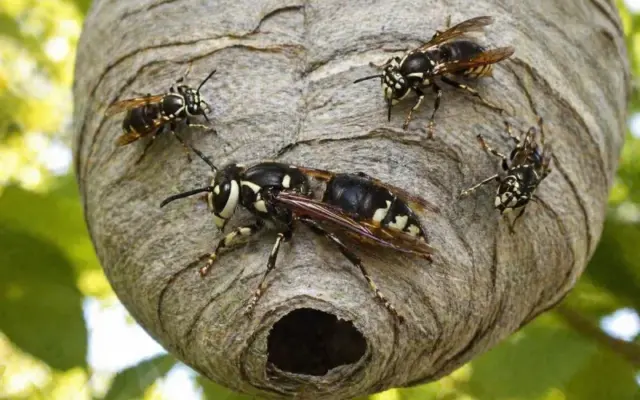
8. Bald-Faced Hornet
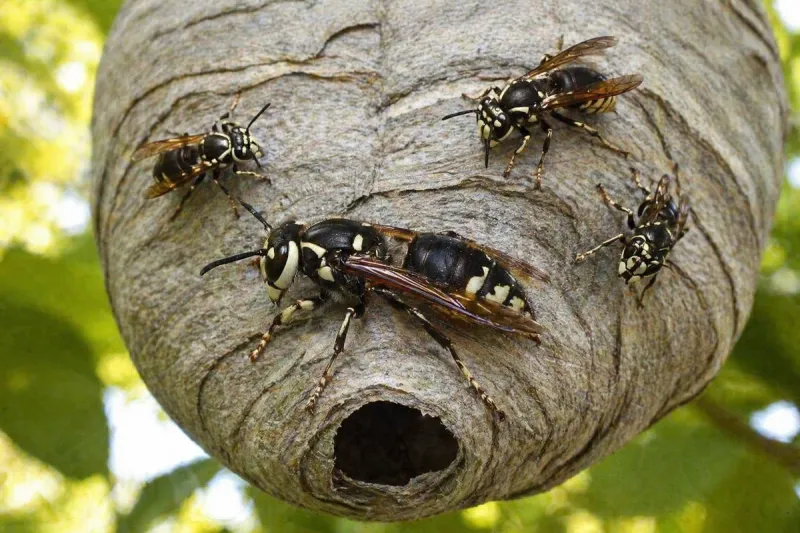
Bald-Faced Hornet
© Pest Me Off

That gray, football-shaped paper ball hanging in your maple tree? It belongs to the bald-faced hornet, and the builders inside take home defense very seriously.

Spotting the difference is easy once you know it. These hornets are black with white markings on the face and tail, not yellow like their cousins.

They are also larger and fly straight at anything that bumps their nest.

Nests can grow bigger than a basketball by fall. Keep kids and mowers away, and call a pro if the nest sits near a door or play area.

Winter frost ends the colony, and the empty nest is never reused.

Share this story
LP

Written by

Lyle Petersen

More from Lyle Petersen →

About Gardening Latest

Gardening Latest provides in-depth guides to maintaining and enhancing your garden and backyard. Learn how to make the most of the space you have and create a beautiful garden.

More about us →

Latest stories

  • Wisconsin GardeningWhat Happens To Your Body When You Eat Celery Every Day In Wisconsin

    What Happens To Your Body When You Eat Celery Every Day In Wisconsin

    9 hr ago
  • Massachusetts GardeningWhat Does a Dead Mouse on a Massachusetts Doorstep After Frost Really Tell You?

    What Does a Dead Mouse on a Massachusetts Doorstep After Frost Really Tell You?

    10 hr ago
  • Delaware GardeningProtecting Delaware Bigleaf Hydrangeas From Winter Cold: When a Leaf-Filled Cage Can Help Save Next Summer’s Blooms

    Protecting Delaware Bigleaf Hydrangeas From Winter Cold: When a Leaf-Filled Cage Can Help Save Next Summer’s Blooms

    10 hr ago
  • Kentucky Gardening7 Harmless Kentucky Critters That Send People Running Because They Look Venomous

    7 Harmless Kentucky Critters That Send People Running Because They Look Venomous

    11 hr ago
  • South Carolina GardeningWhy You May Hear Coyotes Howling After Dark in South Carolina

    Why You May Hear Coyotes Howling After Dark in South Carolina

    11 hr ago

Gardening by state

Stories for your state, and the hardiness zone most of it gardens in.

Keep exploring

Read next

All Iowa Gardening →
Iowa GardeningThose Coyote Howls You Hear Near Your Iowa Home After Dark Actually Have a Message
Iowa Gardening

Those Coyote Howls You Hear Near Your Iowa Home After Dark Actually Have a Message

14 hr ago
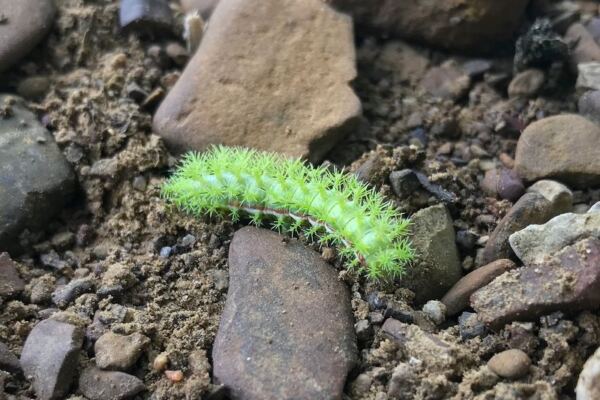
Iowa GardeningGot Stung by an Io Moth Caterpillar in Your Iowa Garden? Here’s What to Do Right Away
Iowa Gardening

Got Stung by an Io Moth Caterpillar in Your Iowa Garden? Here’s What to Do Right Away

19 hr ago
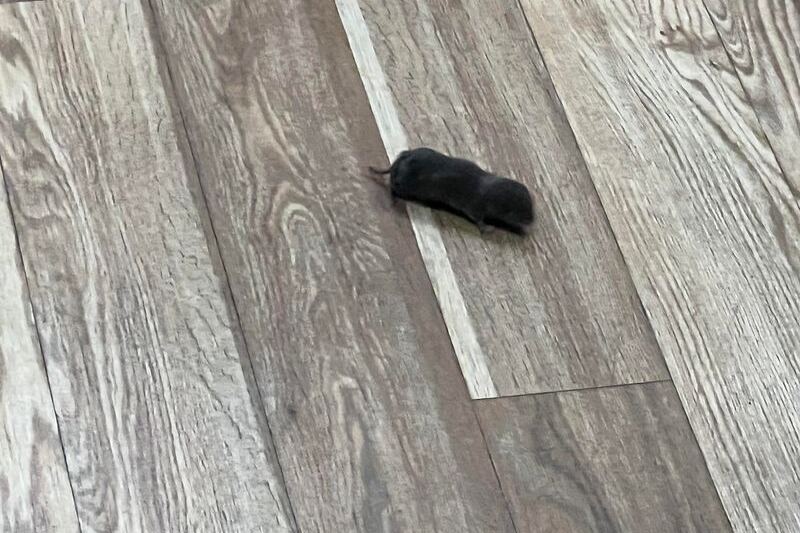
Iowa GardeningThere’s a Venomous Mammal in Iowa That Weighs Up to 1 Ounce, and It Lives in Lawns and Underground
Iowa Gardening

There’s a Venomous Mammal in Iowa That Weighs Up to 1 Ounce, and It Lives in Lawns and Underground

Yesterday

More from Iowa Gardening

  • 7 Harmless Kentucky Critters That Send People Running Because They Look Venomous

    11 hr ago
  • Why You May Hear Coyotes Howling After Dark in South Carolina

    11 hr ago
Back to top

Leave a response Cancel

Your email address stays private. Required fields are marked with an asterisk.

Gardening Latest

In-depth guides to maintaining and enhancing your garden and backyard: how to make the most of the space you have, and how to make it beautiful.

  • Facebook
  • X
  • Pinterest
  • YouTube

We may earn a portion of sales from products or services that are purchased through our site as part of our affiliate partnerships with retailers.

Explore

  • About GardeningLatest.com
  • Contact Us
  • Terms and Conditions
  • Privacy
  • Editorial Note:
  • FTC Disclosure

Newsletter

New garden guides and seasonal tips, straight to your inbox.

We’ll email you a link to confirm. Unsubscribe any time.

Almost there! Check your inbox and tap the link to confirm.

© 2026 Gardening Latest. All rights reserved.

Back to top