Spotting wasps zipping in and out of a hole in your yard can make your stomach drop. The good news is that a yellowjacket nest does not always need to be removed.
What you should do depends on where the nest is, who lives at your home, and whether the colony is still active. Here is how to think it through calmly and safely.
Keep Clear Before You Identify the Nest
Step one is simple: stay back. Keep children and pets away from the spot, and do not poke at the entrance, block it, or spray anything at it.
A nest that is left alone is far less likely to trigger a defensive response than one that is jostled.
If you can do it without walking close to the nest, mark the area with tape or cones set at a good distance. Cornell’s yellowjacket guidance suggests taping off the area and consulting an expert if an active colony poses a risk.
If getting near the nest to set up a barrier feels unsafe, skip it and simply steer everyone away from that part of the yard.
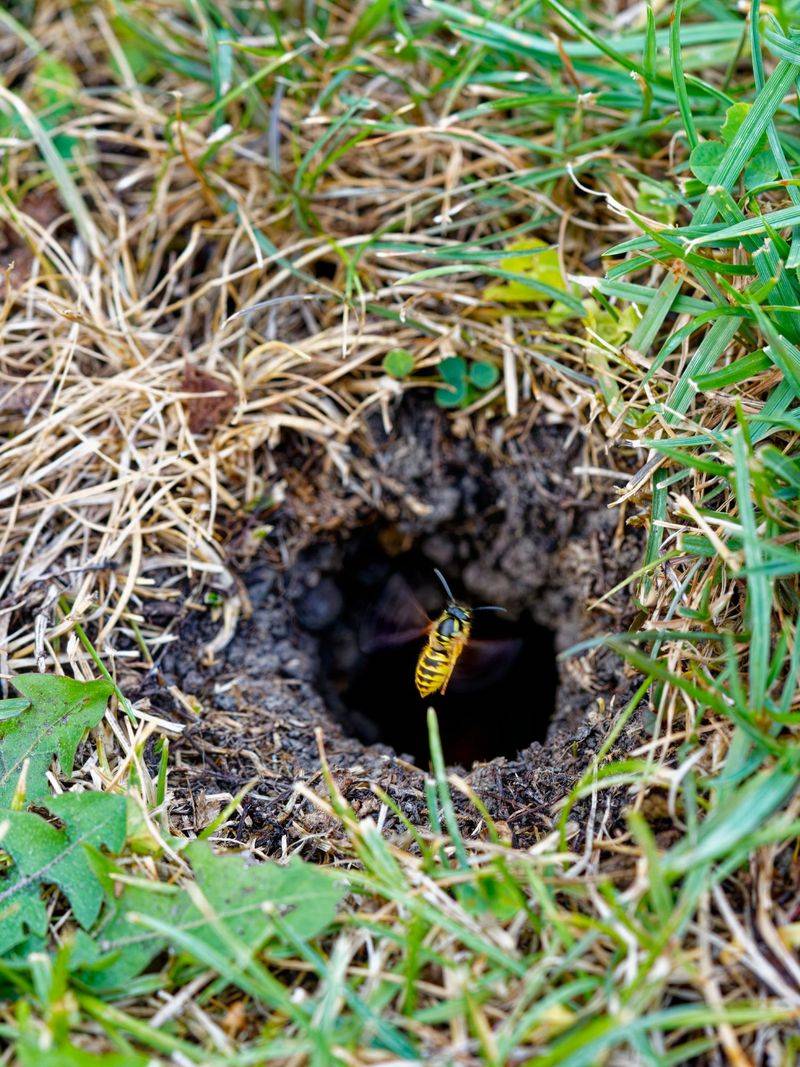
Watch for clues from a distance. A steady stream of insects flying into one spot, such as a small hole in the ground, a gap in a wall, or a crack in a foundation, can point to a nest you cannot fully see.
Yellowjackets often nest underground or inside voids, so the visible traffic may be the only sign.
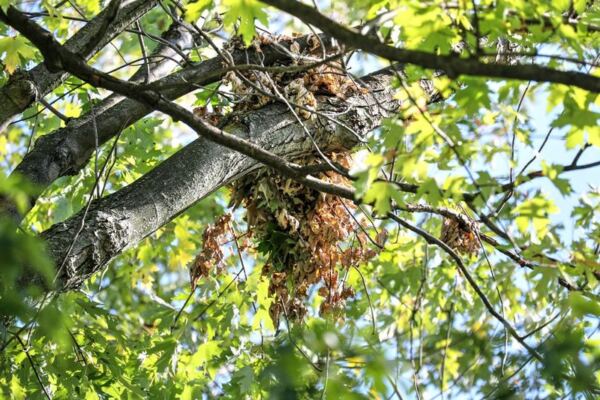
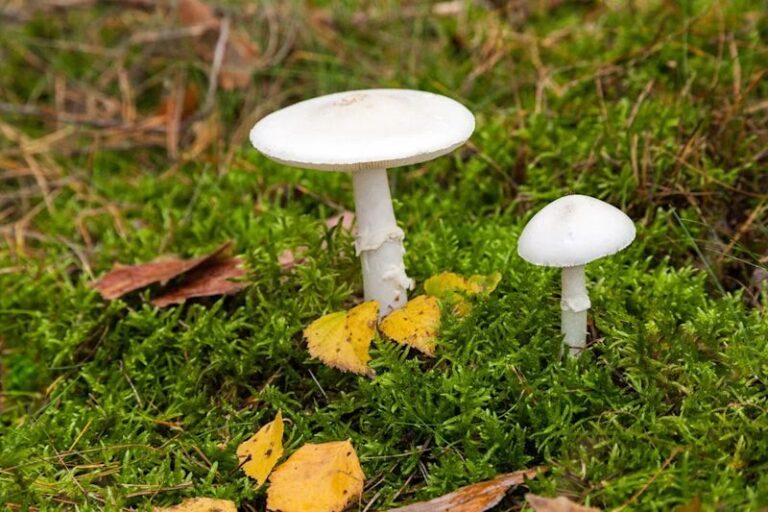
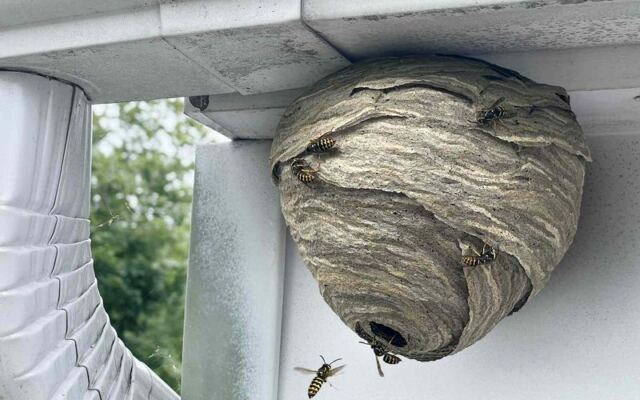
Do not assume every yellow-and-black insect or every papery structure belongs to a yellowjacket. Paper wasps, hornets, and other insects can look similar, and, as the University of Maine Cooperative Extension notes, control approaches differ among them.
If you are unsure what made the nest, leave it undisturbed and ask an expert to identify it. Keeping a safe distance comes first, and every other decision follows from it.
Where the Nest Sits Changes the Decision
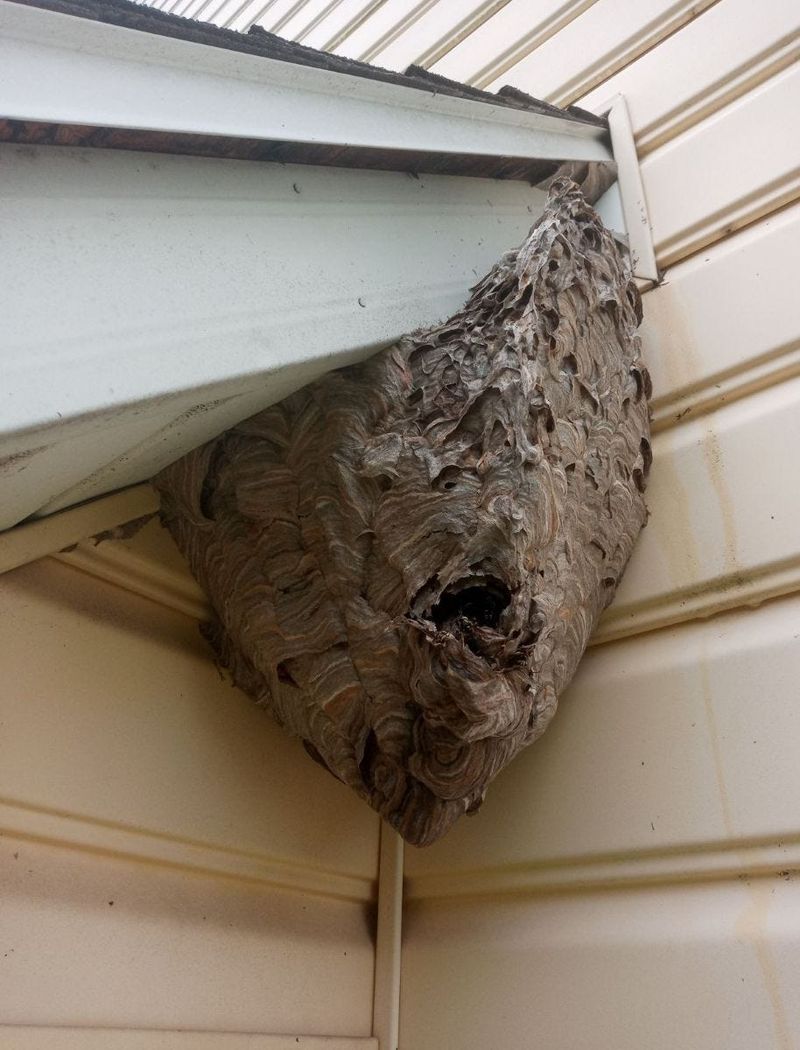
Location is the biggest factor in deciding what to do. A nest at the far edge of a property, well away from paths, play spaces, and patios, poses a very different risk than one beside your front steps.
Many households can reasonably leave the first kind alone and simply keep clear.
A nest by a doorway, walkway, play area, or other busy spot is another story. People walking past can bump into the colony’s defenses without ever seeing the nest.
Lawn mowers, trimmers, and kids running around can set off a defensive response, so these spots deserve more caution.
Household health matters too. If anyone at home has a known sting allergy, even a nest at moderate distance deserves serious attention, and it makes sense to talk with a professional sooner rather than later.
Penn State Extension’s stinging insect advice points to nest location, sting risk, and time of year as the things to weigh before acting. Cornell likewise recommends consulting an expert when an active colony puts people at risk.
So the question is not whether a nest exists, but who could run into it. Ask yourself how often people or pets pass within several feet of the entrance, and whether anyone in your home could react badly to a sting.
If the honest answer points to regular contact or real risk, call a pest-control professional. If not, careful distance may be enough.
Will a Late-Season Nest Die on Its Own?
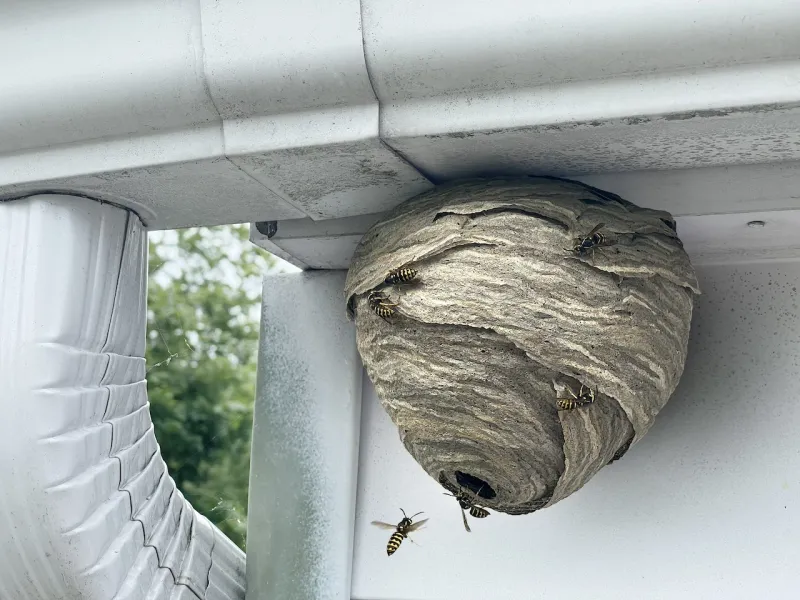
Often, yes, but not on a schedule you can count on. Yellowjacket colonies are generally annual.
The workers and the old nest typically die off with freezing weather, while mated queens overwinter in sheltered spots and start brand-new nests the next spring.
That is why a nest tucked safely out of the way late in the season may not be worth removing. As Penn State Extension explains, a fall nest may die naturally and may not need management if its location is tolerable.
The catch is that fall does not flip a switch. University of Minnesota Extension describes nests staying active until freezing temperatures arrive.
Timing and weather vary from year to year and place to place in New York, so there is no safe date to circle on the calendar.
Until the colony goes inactive, it remains a sting risk. Late in the season, yellowjackets may also be more noticeable around food and drinks, which can bring them close to people even when the nest itself is far off.
Here is the practical split. A nest far from where anyone walks, sits, or plays can often be watched from a distance and left to fade.
A nest near an entrance or a busy path is a present hazard, and waiting for cold weather means living with that risk in the meantime.
Wall and Attic Nests Call for a Professional
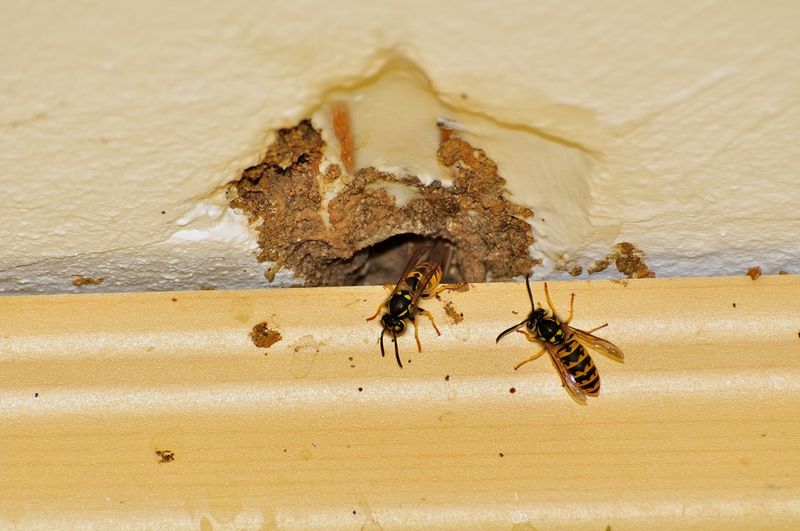
A nest hidden inside a wall, attic, or other building cavity is a different problem from one hanging in a tree. You cannot see how big it is, you cannot easily reach it, and the wasps are only a thin layer of wall away from your living space.
Resist the urge to plug the entrance. Trapped yellowjackets look for another way out, and Penn State Extension’s German yellowjacket page warns that they may chew through interior coverings and end up inside the house.
Opening the cavity yourself carries the same risk, with the added problem of releasing wasps right next to you.
Treating these nests is also tricky in practice. Reaching the right spot, working safely on a ladder, and handling a pesticide near wiring and insulation are all reasons the Penn State stinging insect guidance points toward professional help for nests that are hard to reach.
If you see wasps entering a crack in siding, a gap near a vent, or a hole in the foundation, keep people away from that area and call a pest-control company. Ask for advice before anyone seals or opens the space.
An abandoned, dead outdoor nest is a separate situation. Yellowjacket nests are generally not reused, so an inactive one outside is not the same as a live colony inside a wall.
Food Controls Help, but Traps Do Not Remove a Colony
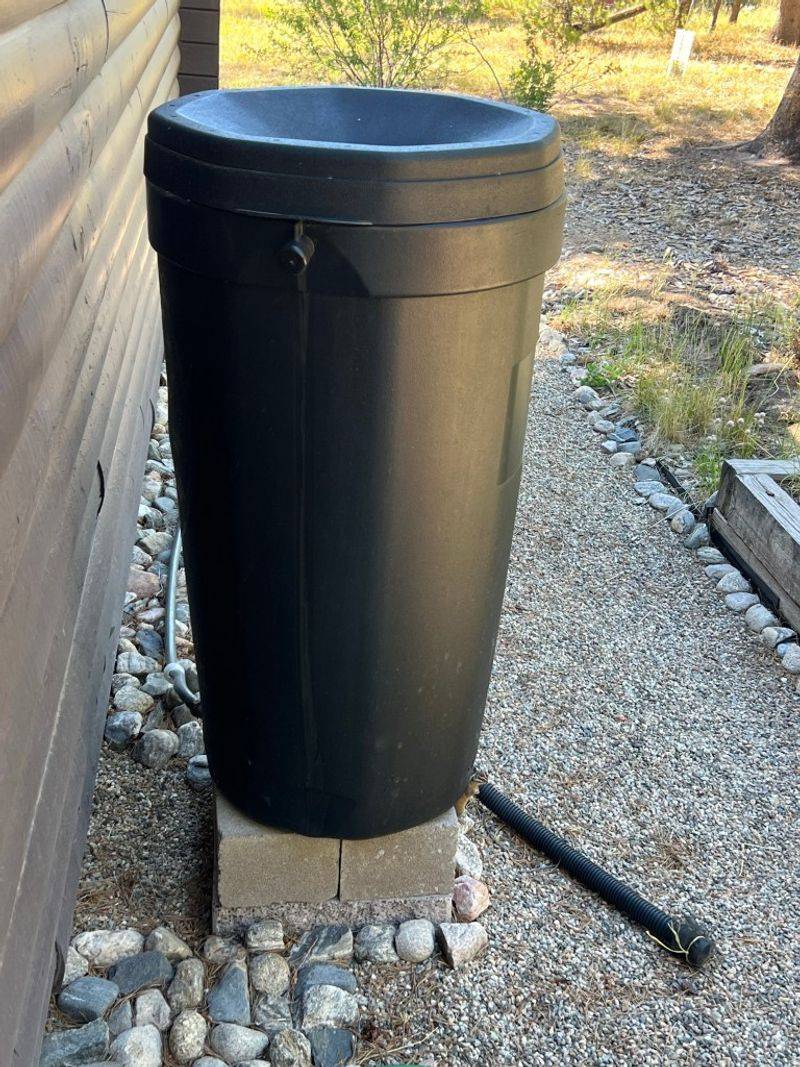
Foraging yellowjackets are drawn to meals, sweet drinks, and trash. Cutting down those temptations can reduce how often wasps bother your family, even if a nest is nearby.
Cover food and drinks when you eat outside, close garbage cans tightly, and wipe up spills and crumbs quickly. Cornell and the University of Maine Cooperative Extension both recommend these steps.
Sipping from clear cups or cans where you can see inside also helps you avoid swallowing a wasp by accident.
Traps are a different story. They may catch some foraging workers, and Cornell suggests they can draw wasps away from a sensitive spot such as a patio.
That can be a modest help.
They are not a dependable way to eliminate the nest, though. Penn State Extension says traps are unlikely to solve the problem completely, so a hazardous colony still needs a real plan.
Likewise, paper-bag decoys hung to scare wasps away are not backed by clear evidence.
Think of food controls and traps as ways to manage encounters, not as nest treatment. If the nest sits close to where your family spends time, tidy habits will not make that location safe.
Pesticide Work Requires More Than a Can
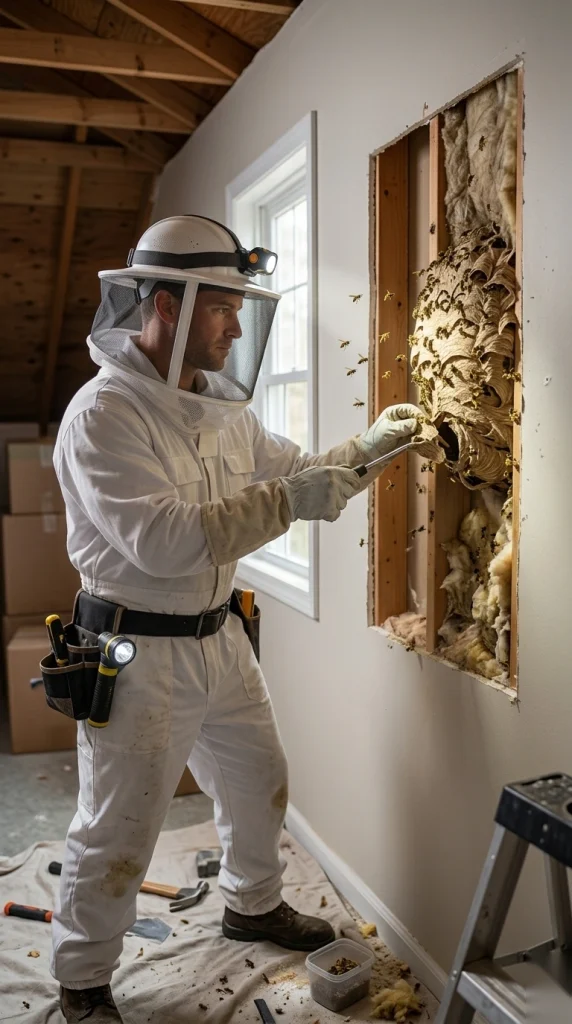
Grabbing a spray can may look like the quick fix, but nests that are hazardous, hidden, or hard to reach are best left to a professional. They have protective gear, know where to apply treatment, and can deal with a nest in a spot you could not safely get to.
If anyone does use a pesticide product, the label is the rule book, and every product is different. One current EPA-filed label advises treating from a safe distance, not standing directly beneath the nest, and keeping people and pets out until the spray dries.
It also warns about hazards to aquatic life and bees. Those directions belong to that product, so never assume another label says the same thing.
In New York, the Department of Environmental Conservation says certification is required for commercial pesticide applications, and it also describes a supervised apprentice pathway. This matters when you hire someone to apply pesticides, so it is fair to ask a company about its credentials.
It does not mean every person who deals with a nest needs the same certification.
Skip improvised methods entirely. Penn State Extension warns that fire can spread and cause injury or property damage, and that fuels such as gasoline or kerosene can be more toxic than appropriate insecticides.
Fire and fuels are never a safe way to destroy a nest.
A Severe Sting Reaction Needs Emergency Care
Most stings hurt and swell a bit, but a severe allergic reaction is a true emergency. Know the warning signs before anyone needs them.
Act right away if a person has trouble breathing, swelling of the throat or tongue, faintness, or other signs of a severe allergic reaction after a sting. The American College of Allergy, Asthma & Immunology advises that people with these symptoms use prescribed epinephrine as directed and seek emergency care.
If the person has an epinephrine auto-injector, use it according to the instructions from their doctor and the device. Then call 911 or get to an emergency department, even if the person starts to feel better.
Do not wait to see whether symptoms pass.
Move away from the nest first if you can do it safely, since more stings can happen near the colony. Have someone stay with the person and keep them as calm and still as possible while help is on the way.
If you live with someone who has a known sting allergy, make sure they carry their epinephrine and that others in the household know where it is and how to use it.
Use Risk, Not the Calendar, to Choose Your Next Step
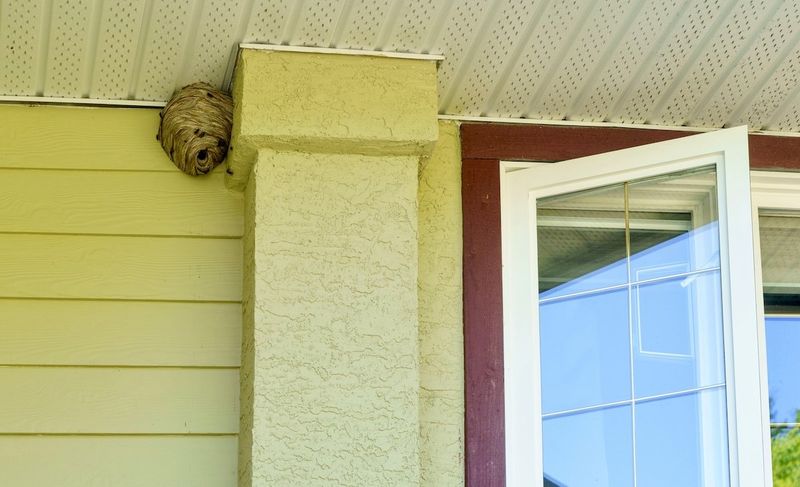
Start by keeping everyone clear of the nest. Then ask who uses the area, whether anyone has a known sting allergy, and whether the nest might be hidden in a wall, the ground, or another cavity.
Do not assume a fall colony is already gone, since nests can stay active until freezing weather.
A nest safely out of the way can often be left alone. A nest near people, pets, or an entrance is a current hazard, and Cornell and Penn State both point toward expert advice in that case.
A nest is only a problem where your life overlaps with it.
Share this story