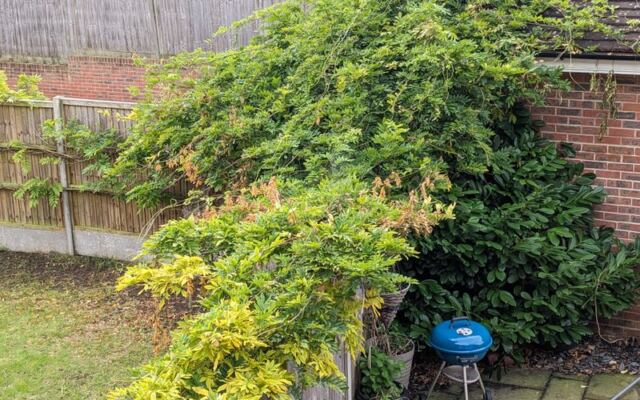
A vine creeps over the fence, and soon it is draping across your garden. Many homeowners wonder if they can just grab the clippers.
Pennsylvania has a clear court ruling about branches, but vines are a bit trickier. Here is what you can do, where the limits are, and how to avoid a bigger problem than a messy yard.
Pennsylvania’s branch rule gives homeowners a starting point
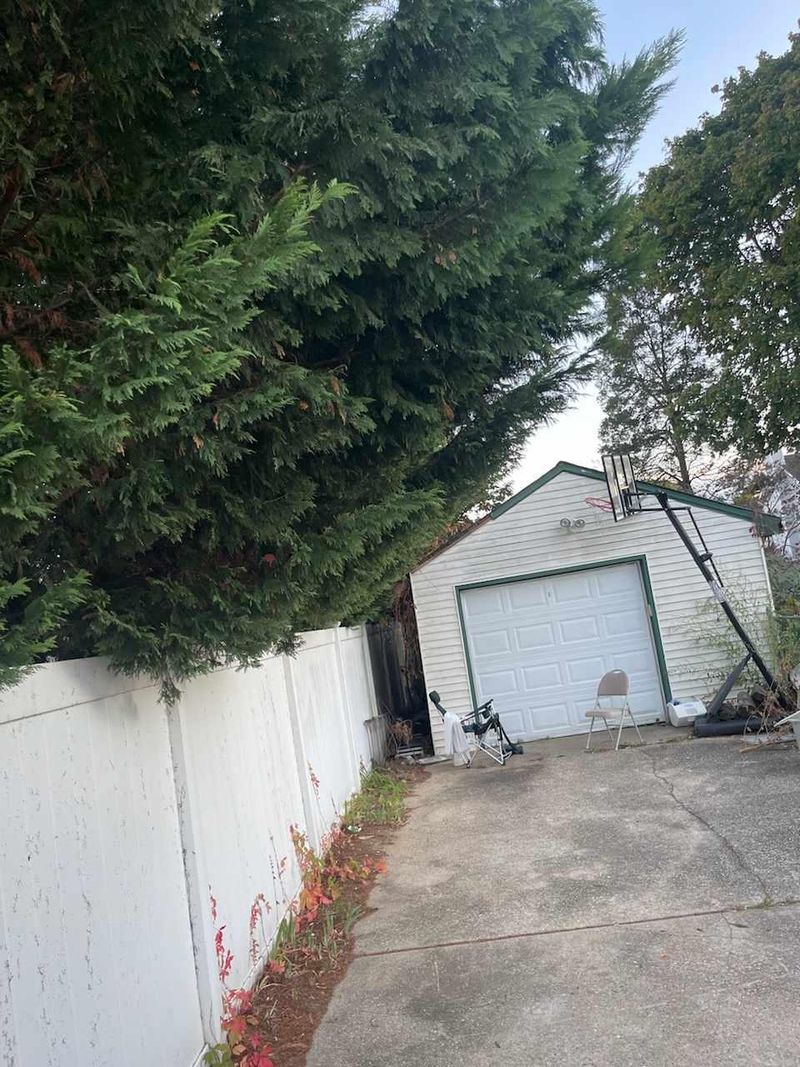
Pennsylvania courts have spoken directly about branches that cross a property line. In Jones v.
Wagner, a neighbor trimmed branches from a hemlock hedge that hung over the neighbor’s land. The Pennsylvania Superior Court held that the neighbor could trim the overhang and did not owe damages for doing so.
The court called an overhanging branch a technical trespass. That label matters because it means the person whose land is crossed does not have to wait for something to break, rot, or fall before acting.
Self-help trimming was allowed to the extent of the encroachment, and no proof of physical harm to the land was required.
The state’s 2025 Municipal Deskbook sums up the rule in much the same way. It tells readers that when limbs from a neighbor’s tree overhang their property, trimming back to the line is an option.
Think of this as a starting point rather than a final answer. The case was about tree branches, and it does not settle every question about every kind of plant.
The next section looks at how far that reasoning stretches when the growth is a vine instead of a limb.
Does the branch rule cover a neighbor’s vine?

The honest answer is: probably it points in your favor, but no one can say for certain. The sources reviewed do not turn up a Pennsylvania appellate decision squarely about ordinary vine growth over a fence.
That gap is the key caution for anyone reaching for pruning shears.
The case that does exist, Jones v. Wagner, involved branches from a hemlock hedge.
The opinion talks about encroaching trees, limbs, branches, and roots, and it refers to other vegetation too. Still, what the court actually decided concerned branches.
So the branch rule is strong guidance for a vine that hangs over your side. A court looking at a vine could reasonably lean on the same logic, since growth crossing a boundary looks much the same whether it comes from a limb or a tendril.
But strong guidance is not a guarantee, and nobody should claim a court has ruled on every vine.
None of this means you are stuck. Homeowners are not without options when growth crosses the line, and the rule on branches gives you a sensible model for acting carefully.
The next steps are about keeping your action inside the limits that model sets.
The property line—not the fence—sets the limit
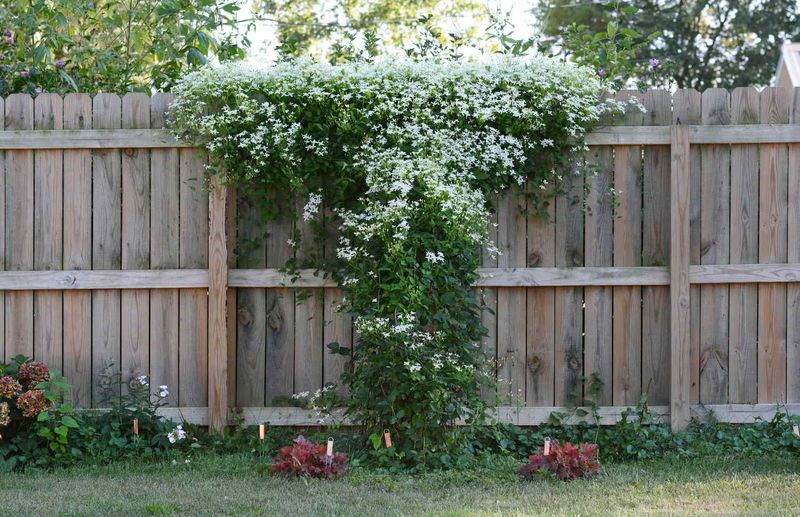
Fences wander. They get built a foot inside a line, a foot outside it, or wherever was easy at the time.
That is why the fence you stare at every morning may not mark the real edge of your lot.
In Jones v. Wagner, a fence separated the properties, yet the boundary line was what limited the trimming.
The court said a person may not cut branches beyond the extent to which they overhang. In plain terms, your right reaches only the growth that actually crosses onto your land.
Before you cut, confirm where the line truly runs. Good evidence includes your deed, a recorded plat, and a survey by a licensed surveyor.
The case does not itself require a survey, but a survey is a smart way to avoid guessing.
Here is a quick example. If the fence sits two feet inside your neighbor’s true line, a vine on your side of the fence may still be on their land.
Cutting it could turn a minor annoyance into a dispute where you are the one in the wrong.
Self-help stops at the encroachment
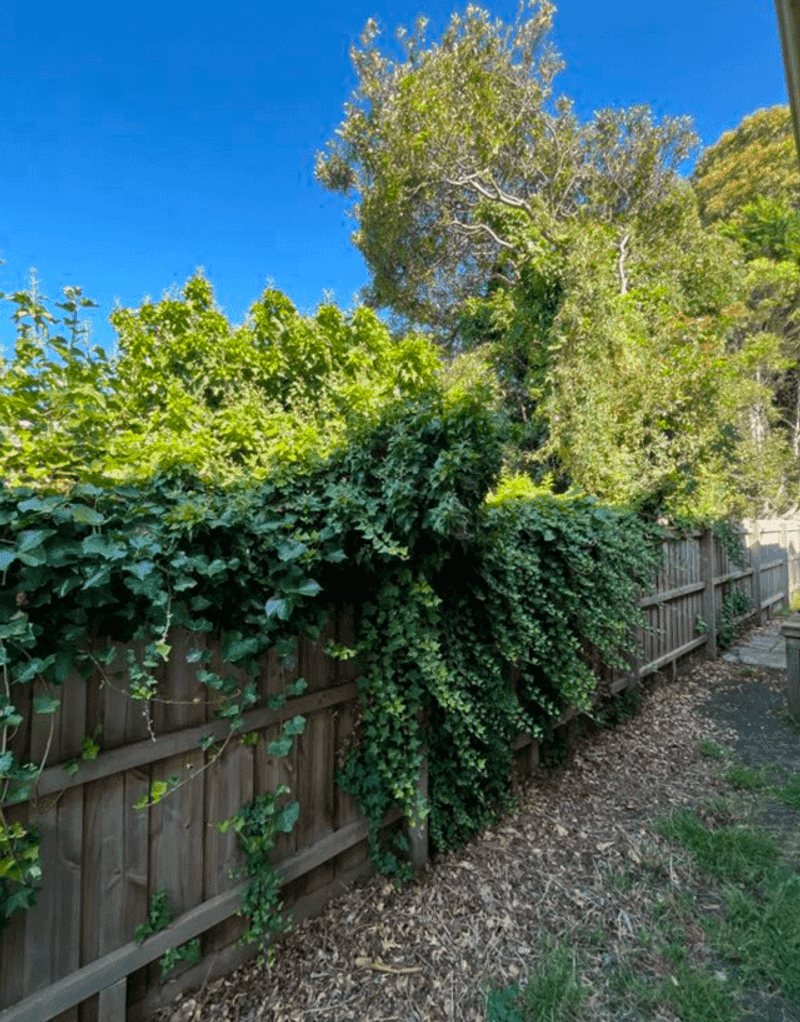
Trimming what hangs over your land is one thing. Reaching into your neighbor’s yard is another.
The rule from Jones v. Wagner supports cutting the encroaching growth, not broader interference with someone else’s property.
That means the sources reviewed do not give you permission to step across the boundary to reach a vine. They also do not support cutting down a plant rooted on the neighbor’s side, pulling out the whole plant, or damaging a fence to get at the growth.
The right is narrow: take back only the part that crosses onto your property.
What if the plant is a known troublemaker? The Pennsylvania DCNR keeps invasive plant fact sheets that cover vines such as English ivy and offer identification and management resources.
Those resources help you understand the plant, but they answer an ecological question, not a legal one.
Being invasive or simply annoying does not stretch the boundary rule. A gardener may want to rip out every trace of a pushy vine, yet the legal limit still sits at the property line.
If the problem is bigger than the overhang, talking with the neighbor or a local attorney is the better path.
Check the hazards before you prune
Before the first snip, take a moment to prepare. Photograph the overgrowth with dates, and consider mentioning it to your neighbor.
These are good relationship-management steps, but they are not legal requirements based on the sources reviewed.
Next, look closely at the plant. If it might be poison ivy, be careful.
Penn State Extension explains that it contains urushiol, which can cause an allergic skin reaction, and it describes protective ways to remove it. Bare-handed cutting or pulling is a bad idea.
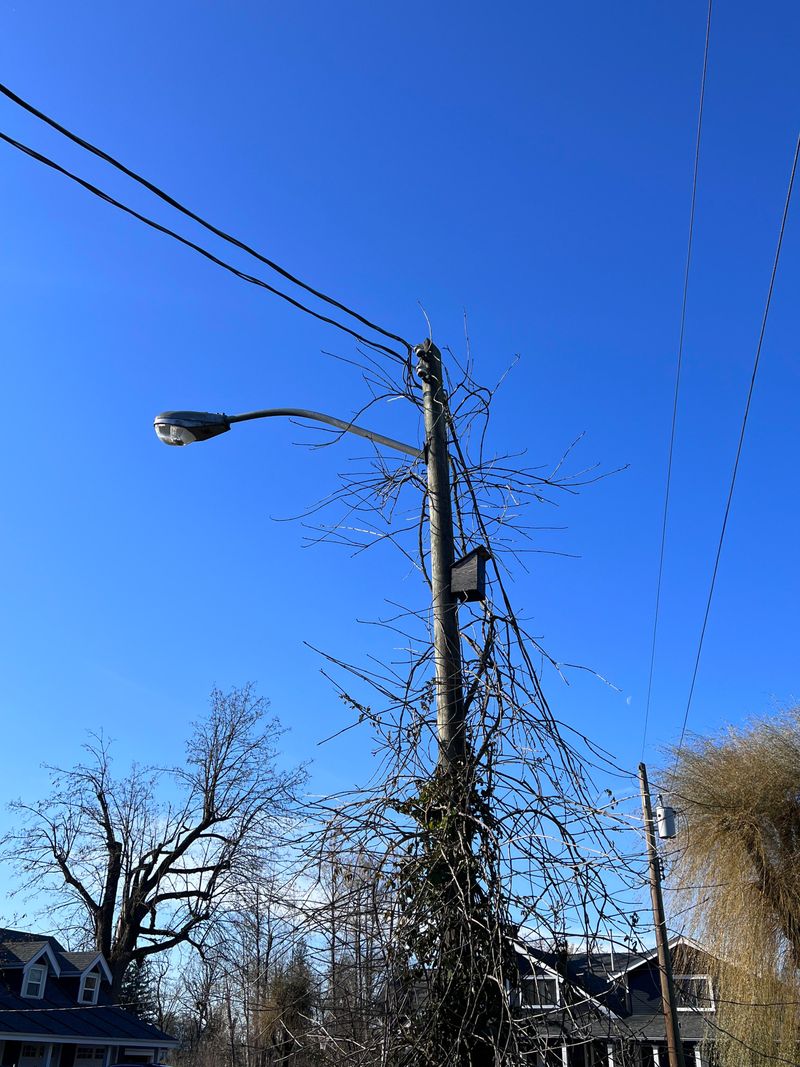
Then look up. Vines sometimes climb into wires.
Penn State Extension’s guidance on utility line clearance warns of electrocution risks when pruning near energized lines. If vegetation is tangled with or close to power lines, do not touch it.
Instead, call the utility company or a qualified professional. A tidy fence line is never worth a trip to the hospital.
A few minutes of checking can save you a rash, a shock, or a very awkward conversation.
Payment and timber damages are not automatic
Some people assume trimming gets them a check from the neighbor. Others worry the neighbor will demand money from them.
Neither outcome is automatic.
The court in Jones v. Wagner recognized that a landowner may seek remedies for a continuing overhang.
The Municipal Deskbook adds that reasonable expenses of self-help may be recouped. Even so, that does not mean you can send a bill and force payment.
If the neighbor disputes it, collecting would take a legal process.
Then there is the timber statute. Pennsylvania’s 42 Pa.C.S. § 8311 deals with damages for conversion of timber, which means standing trees, logs, or parts commonly sold as wood products.
Ordinary garden vines do not fit that definition.
So it would be a mistake to threaten a neighbor with multiple damages over trimmed vines, or to fear that trimming a vine triggers them. Keep receipts if you like, but treat any reimbursement as something that may be negotiated, not something you are owed.
Keep any cut narrow and on your side

Pennsylvania’s branch rule, from Jones v. Wagner, supports trimming actual encroachment without proof of harm.
For vines, the sources reviewed leave the exact answer open. Confirm the true boundary, stay on your own land, and respect poison ivy and power lines.
A good cut is a small one. The line on the ground, not the fence, is where your rights end.
Share this story