You flip on the porch light and there it is, a pale, pointy-faced animal shuffling across the frost. Many Delaware homeowners wonder if that means a problem, a perk, or nothing at all.
The answer is mostly nothing at all, with a few clues worth knowing. Here is how to tell a passing visitor from one that needs your attention.
A Delaware opossum is a normal nighttime visitor

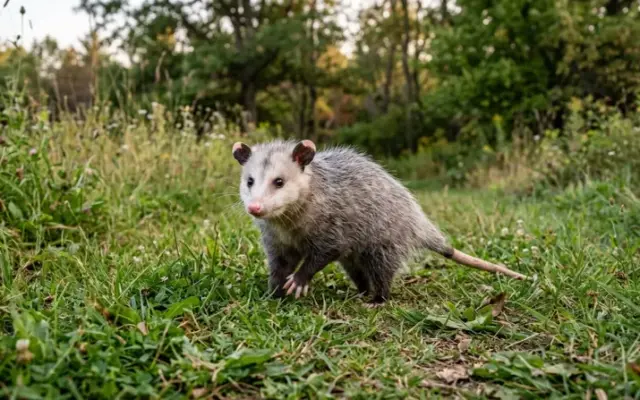
Delaware has only one native marsupial, and DNREC identifies it as the Virginia opossum. That makes the animal in your yard a true local, not an oddball newcomer.
Marsupials carry their young in a pouch, which is one reason opossums look so different from the squirrels and raccoons around them.
Opossums are mostly nocturnal omnivores, so a late-night stroll fits their usual routine. Pennsylvania’s wildlife agency describes them as animals that wander at night in search of a wide range of foods.
Your yard may simply be one stop on a long route through the neighborhood.
So what does a crossing mean? In most cases, it means an animal passed through.
It is not a reason to celebrate, and it is not a warning sign either. Spotting one does not tell you whether the animal lives nearby, and it certainly does not tell you whether it has gotten into your house.
Concern makes sense when there is evidence of trouble. Think of chewed or torn materials, trash strewn across the driveway, pets being disturbed, or an animal acting in a way that creates a safety risk.
Those are the things that turn a visitor into a problem. A quiet walk across the grass is not on that list.
If you see one, the easiest response is to enjoy the view from a window and let it move along. Bring pets inside, keep the porch light on if you like, and carry on with your evening.
What cold-weather sightings can—and cannot—tell you
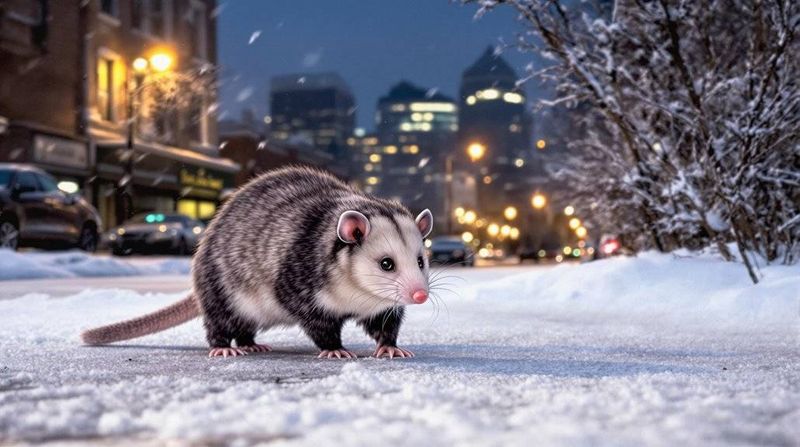
Cooler months can bring opossums into view, and there are a few reasons that may be true. Pennsylvania’s wildlife agency notes that opossums may spend more time feeding and improving their nests in fall and winter.
That is a description of what they do with their time, not proof that there are more opossums out and about.
The same agency says opossums may den during cold or snowy periods. In other words, winter habits shift with the weather.
Some nights an opossum stays tucked away, and other nights it comes out to look for food.
You may have heard that opossums peak in late fall. One study on the St. Louis Zoo grounds, a 2005 zoo behavior study, did observe a late-fall activity peak followed by less movement in winter.
That was one place, with one group of animals. It cannot tell you what is happening across Delaware, and it cannot explain why one showed up on your lawn last Tuesday.
Leaves are down in late fall, so you may also simply notice animals that were there all along. Longer nights mean more of the evening is dark, and you are more likely to be home and looking out a window.
One more point matters. A cold-night sighting does not mean the animal is in trouble.
It may be foraging, traveling, or heading back to shelter. Unless you see clear signs of injury, the best choice is to leave it alone.
A varied diet does not make an opossum tick control
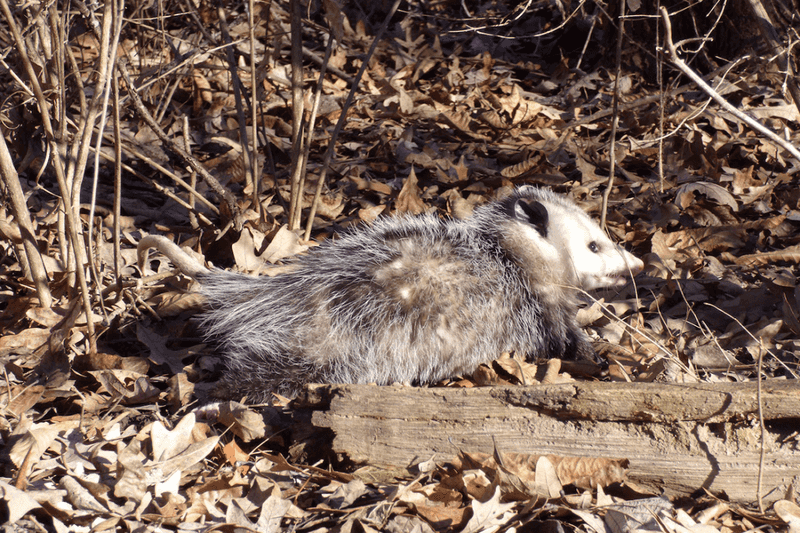
Ask what an opossum eats and the honest answer is almost anything. Pennsylvania’s wildlife agency lists insects, other invertebrates, fruit, carrion, and sometimes small mammals.
University of California pest experts describe a similar menu. So an opossum may eat some creatures people consider pests, but that is far from dependable pest control.
The tick claim is where the story gets stretched. You may have read that opossums eat thousands of ticks and keep yards tick-free.
That is not established.
Here is the key difference. Ticks can feed on opossums, but a tick on an opossum is not the same as an opossum eating ticks.
A 2009 experiment found that many ticks trying to feed on some hosts, including opossums, did not feed successfully. It did not show that wild opossums routinely eat those ticks or that they lower disease risk for people.
Later work looked inside the animals directly. A 2021 study found no ticks or tick parts in the stomachs of 32 opossums collected in central Illinois.
That is a small sample from one region, so it does not prove an opossum never swallows a tick. It does mean the big tick-eating numbers have no solid support.
As for disease, a review of wildlife hosts and ticks describes the broader effect as uncertain. Treat an opossum visit as neither a tick fix nor a tick threat.
Keep using proven habits such as tick checks after time outdoors and tidy, trimmed edges around your yard.
One yard crossing does not prove a home has an opossum
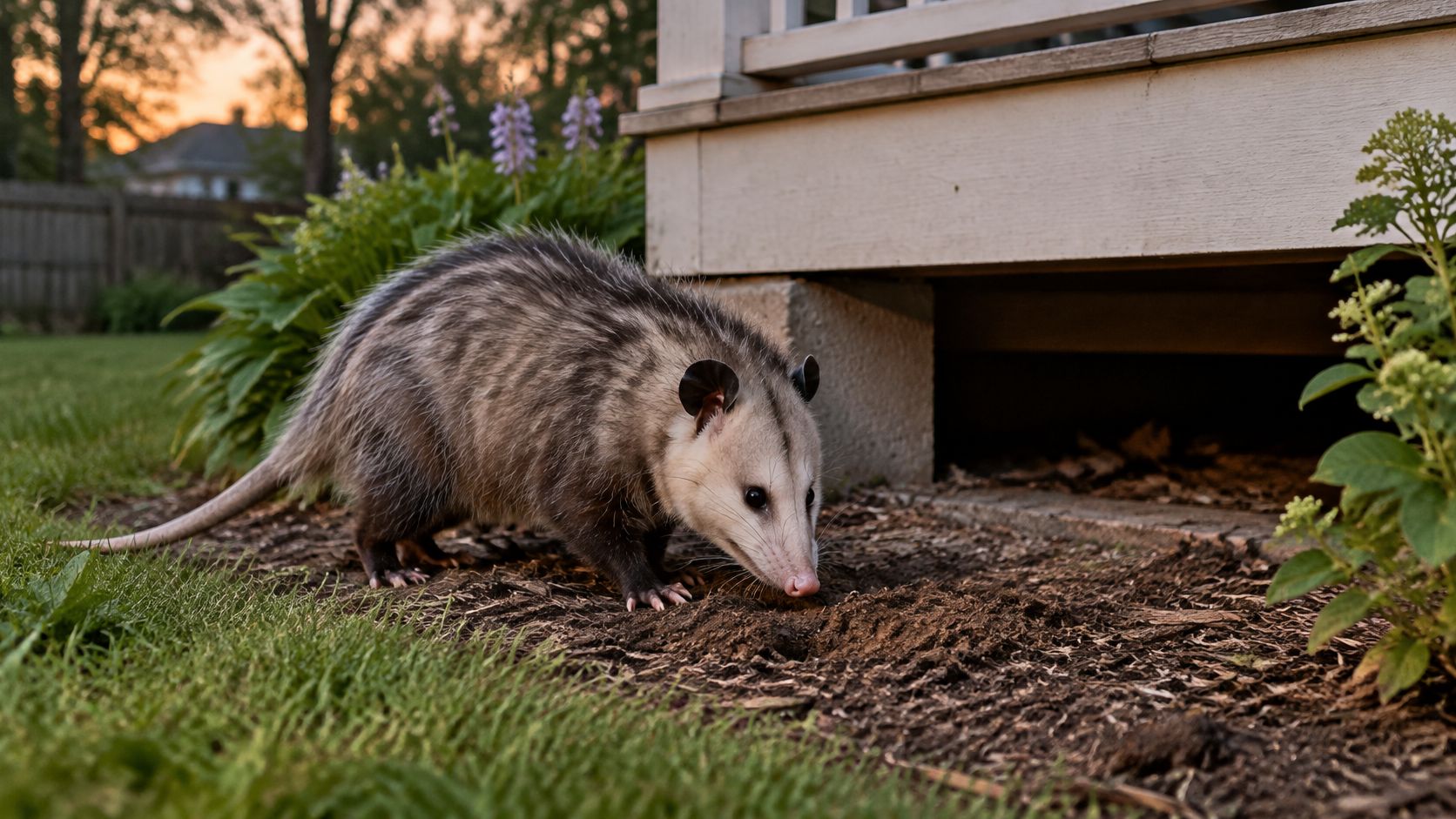
Picture two homeowners. One sees an opossum cross the lawn and keep going.
The other hears scratching under the floor every night and finds muddy tracks near the foundation. Only the second has a real clue about entry.
Opossums do use sheltered spots. UC pest management guidance lists porches, decks, sheds, and spaces beneath buildings as places they may settle.
That tells you where to look if you have other signs. It does not tell you that a passing animal went into your crawlspace.
A single sighting is just a sighting. The animal could be heading to a neighbor’s woodpile, a storm drain, or a hollow tree down the street.
Without more evidence, there is nothing to fix yet.
Delaware draws a helpful line here. DNREC describes a nuisance in terms of property damage, disruption of daily activities, or safety risks.
An animal simply being present does not meet that standard.
Clues that deserve a closer look include repeated noises at night, a lingering smell, torn insulation, disturbed soil around an opening, or droppings and tracks in the same spot. Seeing the same pattern several nights in a row matters more than seeing the animal once.
If none of those show up, it is fine to let the visit pass.
Confirm the animal has left before closing an opening
Suppose the signs keep coming back. Noises, tracks, or disturbed soil near the same gap all point toward repeated entry.
Before you grab a board or wire mesh, slow down, because closing an opening with an animal still inside can trap it.
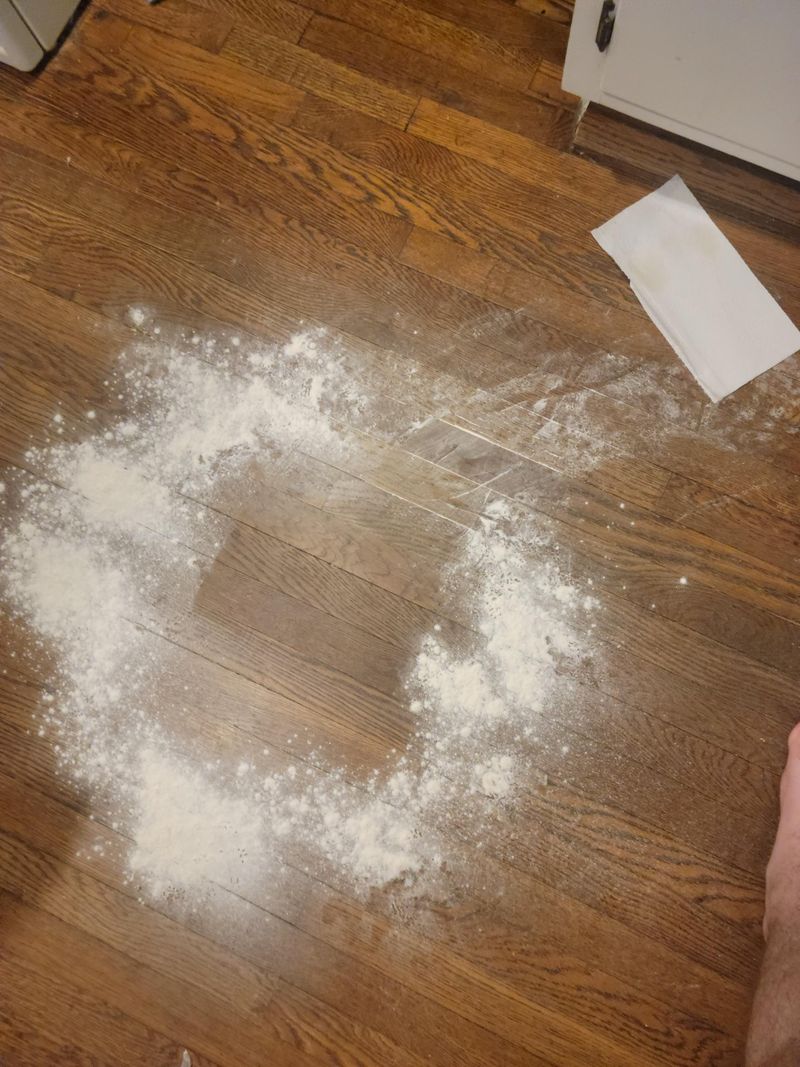
A flour tracking patch is one simple way to check. UC IPM describes this method as a way to look for footprints.
Spread a thin, smooth layer of flour at the opening, then look at it the next morning.
Fresh prints heading out suggest the animal is leaving. Prints heading in suggest it is returning.
If the patch stays clean for several nights, the space may no longer be in use, but keep watching for other signs.
Keep a few cautions in mind. Wear gloves if you need to clear flour or debris, and do not reach into dark spaces.
Give any animal you see plenty of room so it can leave on its own.
There is also the matter of young animals. If you are unsure whether babies might be inside, or if entry keeps happening despite your checks, call a qualified wildlife professional rather than sealing the gap right away.
They can assess the situation and handle it safely, and in a way that follows Delaware rules. Once you are sure the space is empty, closing it is a sound step.
Reduce attractants and keep your distance
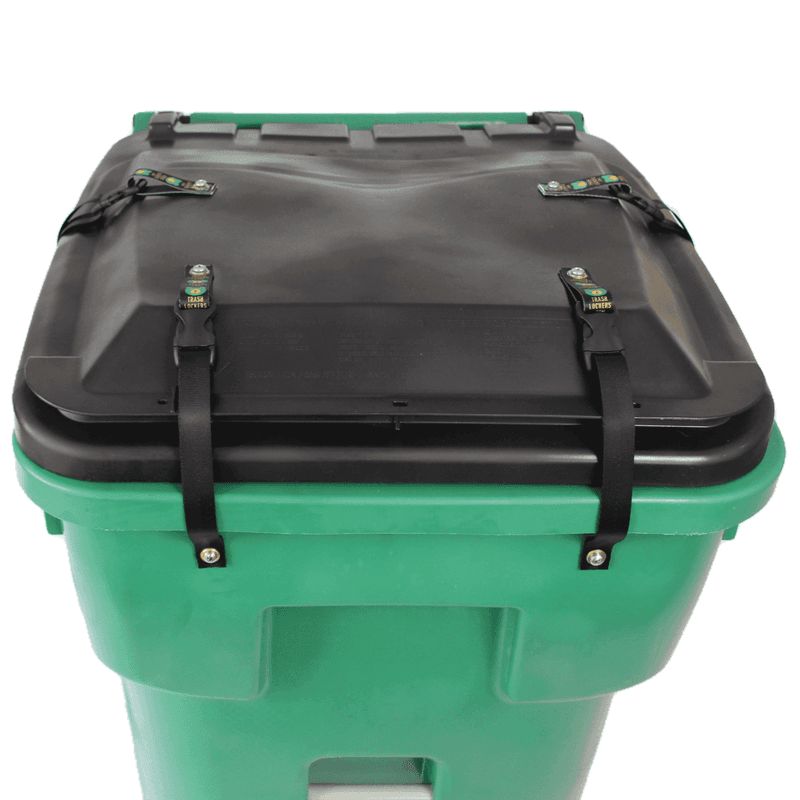
Most of the work happens before an opossum ever shows up. UC IPM advice is to secure garbage, remove outdoor pet food by nightfall, and clean up fallen fruit.
Use cans with tight lids, bring bowls inside at dusk, and rake up drops under apple, pear, or persimmon trees.
Never feed an opossum, even with a small snack. Feeding teaches wildlife to return and can draw more animals to the same spot.
Do not try to pick one up, either.
Keep people and pets away from wild animals. Bring dogs and cats in at night if you know one is around, and watch them on leashes during evening walks.
CDC guidance says that if someone is bitten or may have been exposed to rabies, they should contact the health department promptly.
Skip casual trapping and relocation. DNREC warns that moving wildlife can harm animals and spread disease, and rules limit where animals may be released.
Here is a simple rule to follow. If you see a single crossing, just watch.
If signs of entry keep returning, call a qualified wildlife professional. If anyone is bitten or possibly exposed, call the health department.
Most nights, the opossum is only passing through on its own errand.
Share this story